Can You Grow a Sweetclover in Far West Texas?

Far West Texas organic growers are evaluating Hubam sweetclover for forage, soil improvement and nitrogen fixation under challenging alkaline, saline and sodium-affected soil and water conditions.

Currently the Texas organic program has several producers farming in Far West Texas working with soils that have a high pH and some salt and sodium concerns. Their irrigation water also carries moderate levels of salts and sodium. These are not unusual conditions in Far West Texas, but they complicate crop selection. Over time, sodium can weaken soil aggregation, reduce water infiltration, and make it more difficult for roots to explore the soil. Salinity adds another stress because plants must use more energy to extract water from the soil. The goal is to continue to find and grow crops that can not only help the bottom line but add to soil fertility and overall soil health. That is a lot to ask of any crop but especially a sweetclover crop!

Hubam Sweetclover is a Surprise Crop

Hubam is an annual white sweetclover. It is a legume, which means it can form a relationship with nitrogen-fixing bacteria and obtain much of its nitrogen from the atmosphere rather than from purchased fertilizer. That is valuable in an organic farming system, but nitrogen fixation is only part of the story.

Sweetclover develops a strong taproot that can explore deeper portions of the soil profile. Those roots create channels, add organic matter below the soil surface, and help move carbon deeper into the soil. When the roots eventually die, the channels remain available for water movement, air exchange, soil organisms, and the roots of future crops. This “biological tillage” provides a living root that opens the soil while also feeding microbes, adding carbon, and protecting the surface. Also, Hubam has a history of performing on alkaline soils and even doing so with some salt and sodium problems.

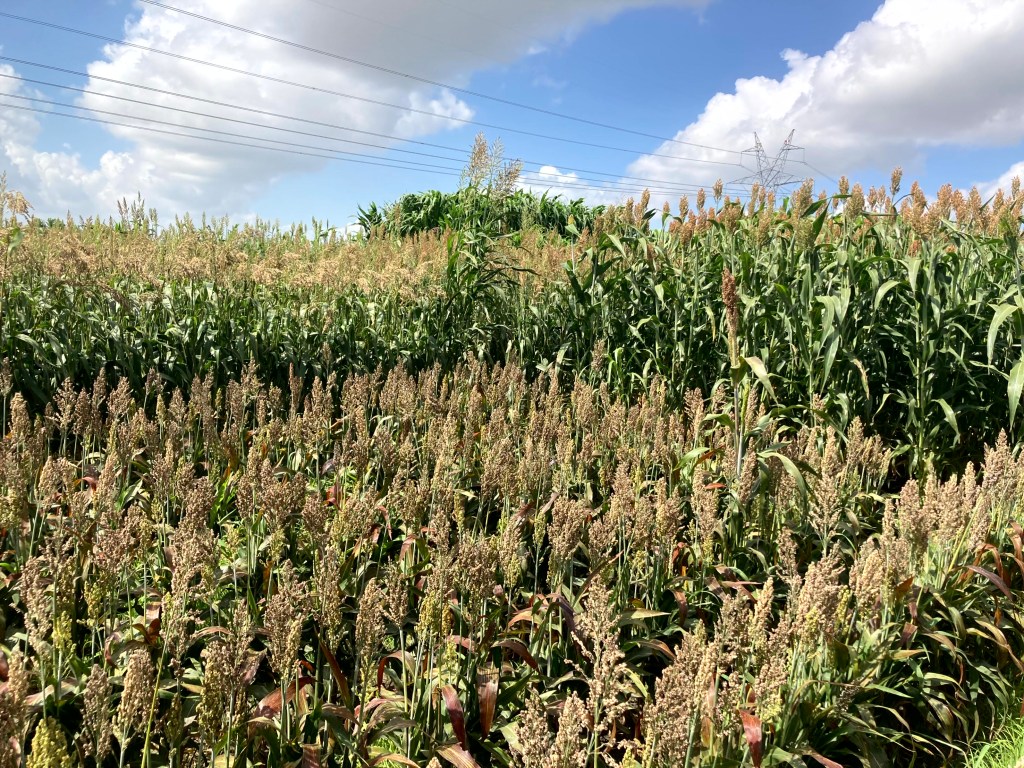
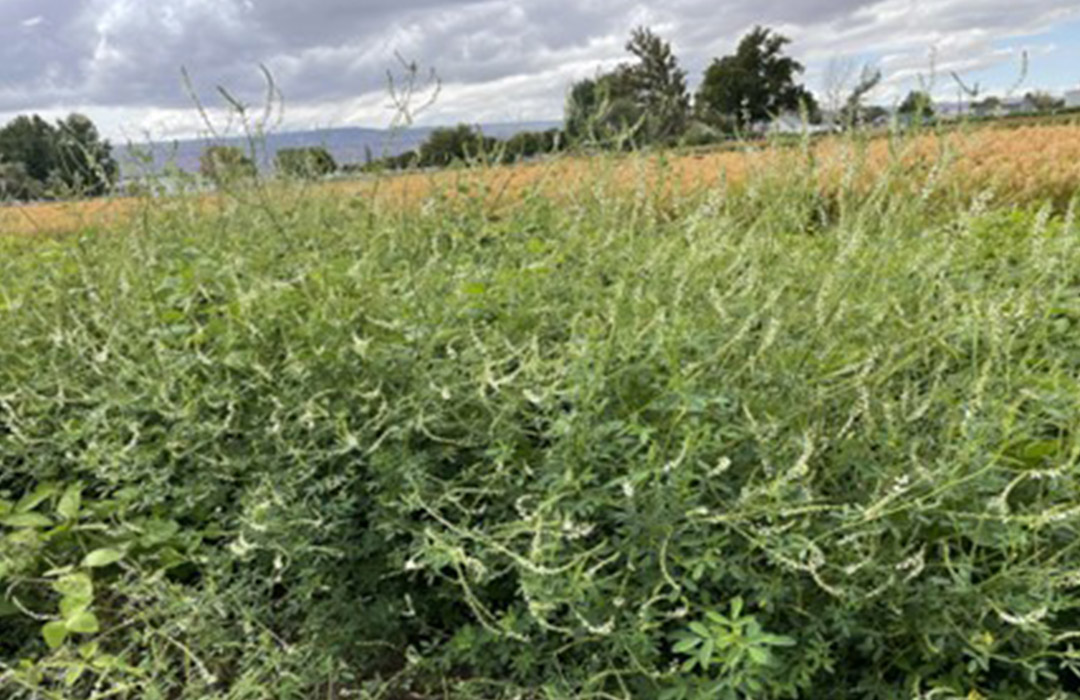
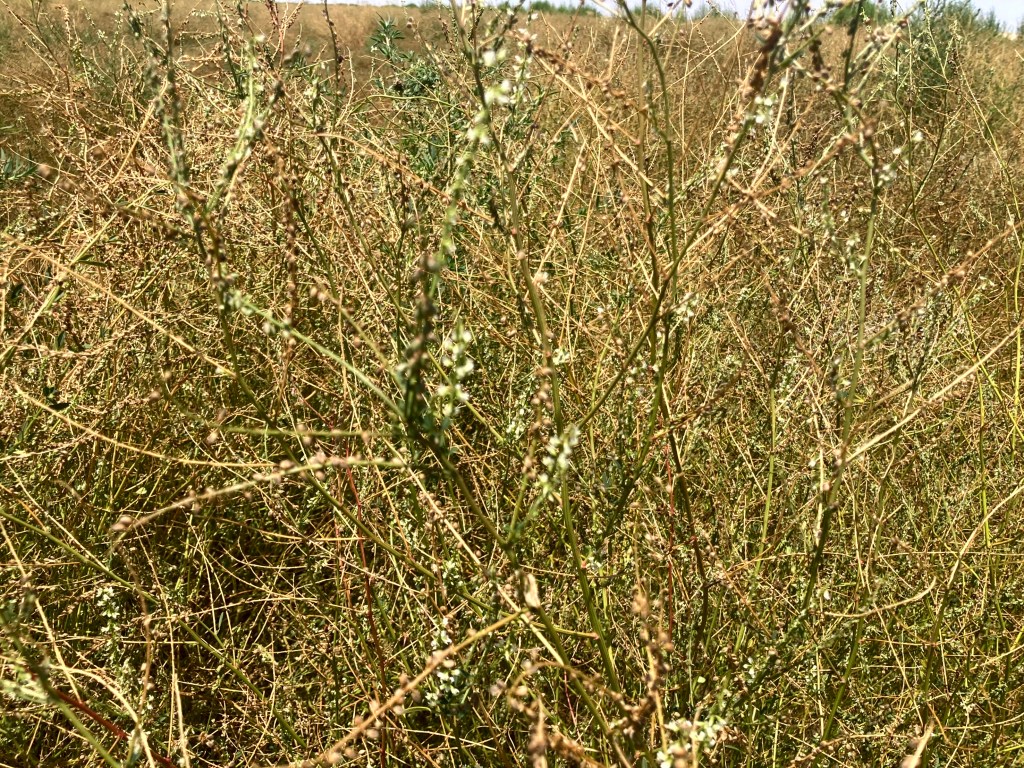
Recently, I was out in Far West Texas and got a chance to see my first field of Hubam Sweetclover and was surprised by the 5 to even 6 feet tall plants, heavily branched, and still productive even though it was the end of July and the crop was seeded out and going down. This is normal for a cool season clover, still the crop was demonstrating that an annual white sweetclover could survive and produce substantial forage and root mass even under some tough soil and water conditions. It is known to be about the most heat tolerant of all the clovers and as you can see will be growing and blooming late into summer. One source said it can get 10′ tall!

Can all that Hubam Sweetclover seed be harvested??

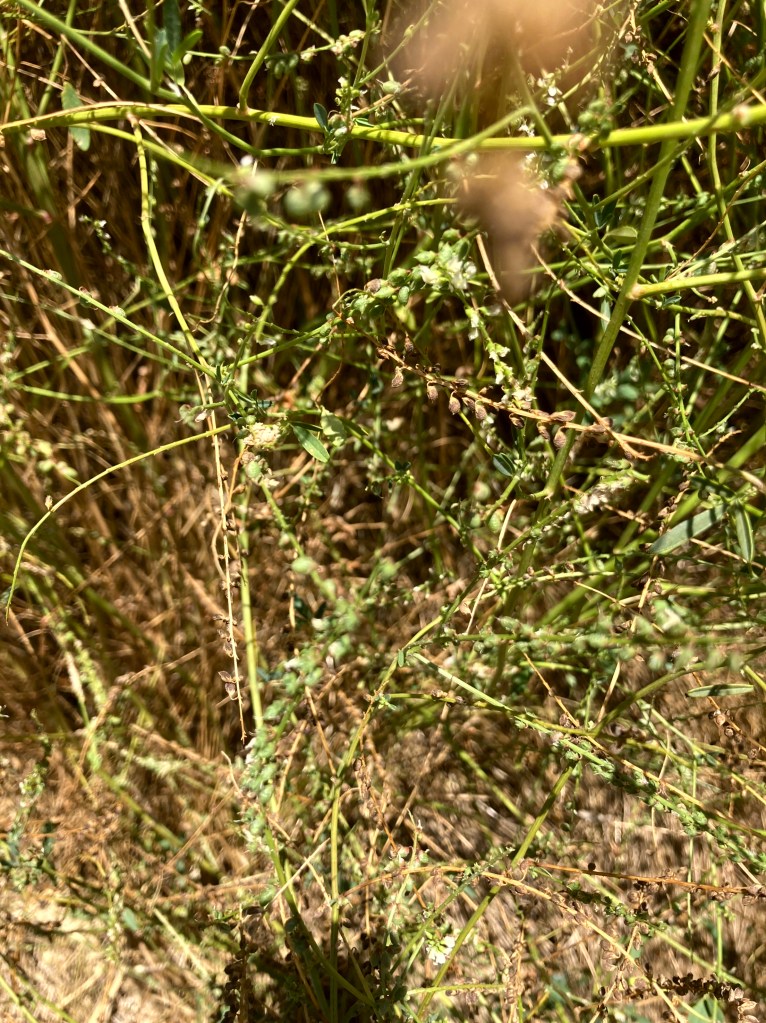
You can easily see from the picture that Hubam Sweetclover produces a lot of seed and is known for reseeding itself because of its good viable seed production. Unfortunately harvesting that seed for future use in other fields may be a real challenge. First, all sweetclover plants are indeterminate. That means the plant does not flower, mature, and dry down all at once. On the same plant you can see white flowers, green pods, mature brown pods, green stems, and drying stems which creates a harvest problem, when do you start? When the oldest seed is mature enough to harvest, the newest seed may still be immature. Waiting for the entire plant to mature increases the risk that the earliest, most mature seed will shatter and fall to the ground. Cutting earlier protects some of the mature seed but potentially leaves more immature seed in the windrow.

The crop is also tall and tangled. The large stems can remain green longer than the fine branches and seed pods. A combine may thresh dry seed but stall out processing heavy, moist stems. Swathing was recommended by most of the seedsmen I contacted. Darcy Turner at Turner Seed has decades of experience and he recommended swathing at about 50% dark brown to black seed. You can run a conventional swather, but the crimpers need to be open as wide as possible to minimize crushing and pod disturbance. We sure don’t want to strip off the seed with a crimper. Your combine needs a pickup attachment, but they are not too hard to find especially around any silage crop growers.

Lastly, you may be wondering if there is any problem with harvesting the seed to use either on your own farm or to sell to your neighbor – don’t worry it is not a protected variety and has been around for decades.

If You’re not into Seed Harvest, then What?

Talking with the Far West Texas farmers they like the Hubam Sweetclover but the seed is very hard to find – probably because it is so hard to harvest! That said we did discuss another variety developed because it was similar to Hubam but had some different or even better plant characteristics.

Silver River1 was developed and released through Texas A&M AgriLife Research. and is described in the Journal of Plant Registrations, Volume 11, Issue 2, pages 112–115.2 It is closely related in function and growth habit to Hubam and was selected primarily for resistance to sweetclover rust, a disease that can severely damage susceptible sweetclover plants. Published evaluations found Silver River to be similar to Hubam in maturity and forage production while having much greater rust resistance.

Rust may not be the first concern that comes to mind in the dry environment around Pecos. However, irrigation and a dense crop canopy can create humid conditions within the stand. Disease resistance is rarely a disadvantage, even when disease pressure is inconsistent. More importantly, Silver River may provide many of the same soil-building and forage functions as Hubam while being more available through several commercial seed sources. We haven’t tried it in Far West Texas yet but overall it has the potential and genetics to do really well – try a test plot and see.

Sweetclover as Hay

Both Hubam and Silver River can produce substantial forage, but sweetclover should not be managed exactly like alfalfa. As sweetclover matures, the main stems become large and woody. For hay, cutting time is critical and like other legumes earlier cutting generally provides better forage quality and finer stems, but it sacrifices some total tonnage and even root development. Later cutting produces more biomass but also increases stem size, slows drying, and reduces forage quality.

Sweetclover also requires special attention during curing since moldy sweetclover hay can develop dicoumarol, an anticoagulant associated with sweetclover bleeding disease in livestock. This risk comes from improperly cured or mold-damaged hay rather than from healthy plants standing in the field. Grazing is their strong suit, but they can be cut for hay and cattle love it!

  1. Silver River Annual Sweetclover ↩︎
  2. Registration of ‘Silver River’ Sweetclover ↩︎

A Pesticide Was Detected—What Does That Mean for My Organic Crop?

A pesticide residue detected on an organic crop does not automatically mean loss of certification. The pesticide, residue level, crop, possible source and production records all determine what happens next.

We are right in the middle of the growing season, which also means that many certified organic farmers are receiving their annual organic inspection. During some inspections, the inspector may collect plant tissue, harvested grain, fruit, vegetables, soil, water or another sample and send it to a laboratory for pesticide residue testing.

Then the farmer receives a message saying, “A pesticide residue was detected.”

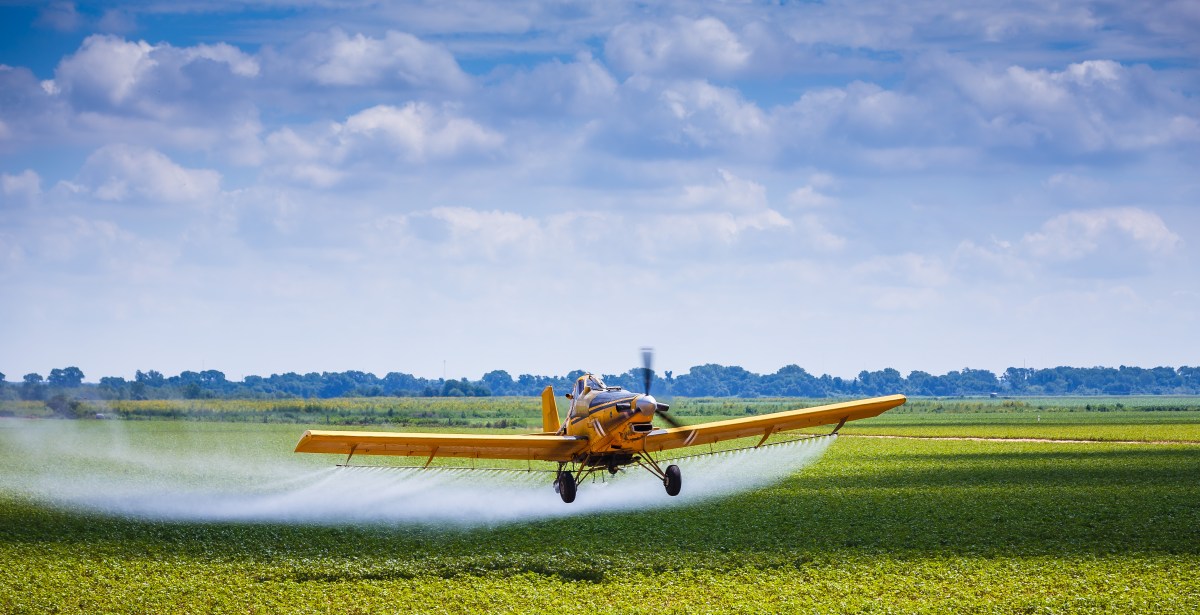
Those words can create some immediate panic! However, a pesticide detection does not automatically mean that your farm has lost organic certification or that you intentionally applied a prohibited pesticide. There is a process that the organic certifier must follow to determine what was detected, how much was found and where it may have come from.

Use Only Products Approved by Your Certifier

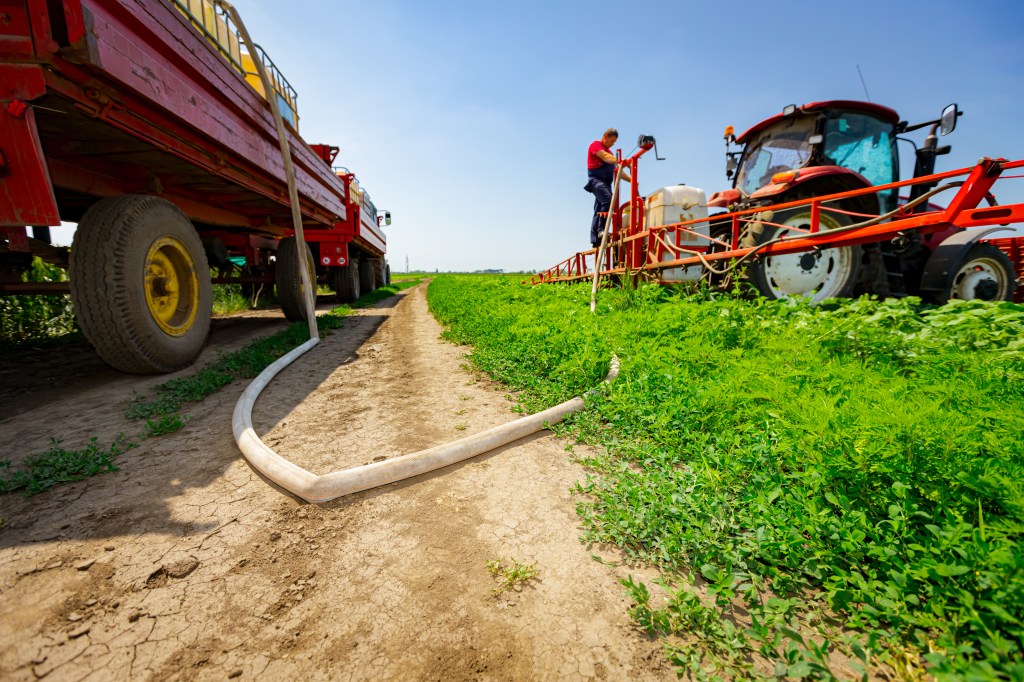
Let me start with the most important reminder: every material used on a certified organic farm should be approved by your certifier before it is applied. This includes pesticides, fertilizers, seed treatments, biological products, soil amendments, adjuvants, surfactants and even products used to clean equipment that may contact an organic crop. An OMRI listing is very helpful, but an OMRI-listed product should still be submitted to your certifier and included in your Organic System Plan before use. USDA states that all substances used on an organic operation must be approved by the operation’s certifying agent before use.

There are several reasons for this:

  • The product may only be allowed for certain uses.
  • The label formulation may have changed.
  • A product with a similar name may not be the same formulation.
  • The certifier may need to verify active and inactive ingredients.
  • Some allowed pesticides can only be used after preventive, cultural and biological controls have been documented.

My advice is simple: do not depend only on the OMRI logo on the container. Send the complete product label to your certifier and get written approval before application.

Why Are Organic Farms Tested?

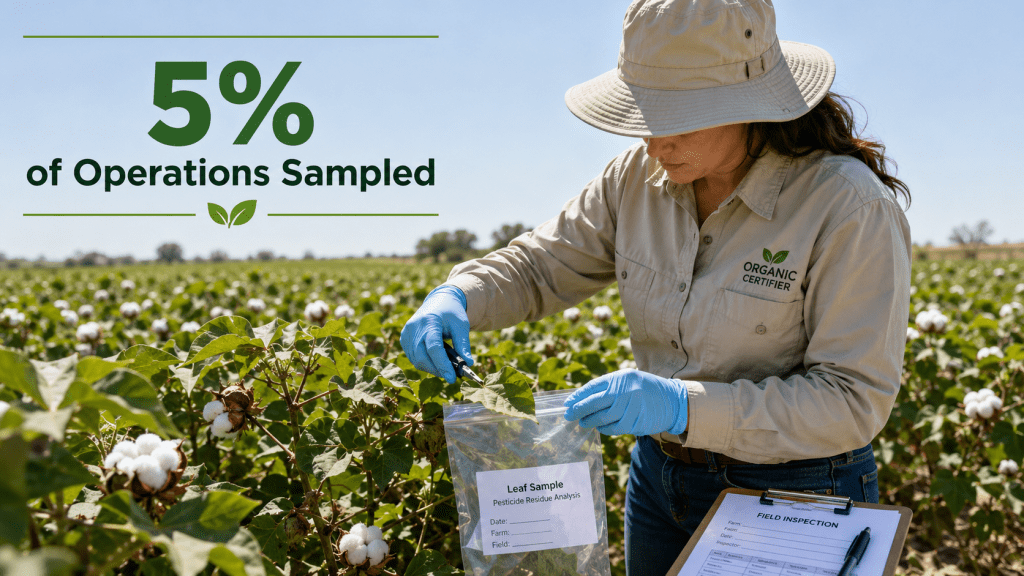
USDA requires organic certifiers to sample and test products from at least 5 percent of the operations they certify each year. A certifier with fewer than 30 certified operations must test at least one operation annually.

The certifier may select farms:

  • randomly;
  • because they produce a large volume of organic products;
  • because the crop or location presents a higher contamination risk;
  • because of a complaint or suspected problem; or
  • as part of an investigation.

Being selected for testing does not mean that the farmer is accused of wrongdoing. Testing is a normal part of protecting the integrity of the organic label. The certifier pays for this required periodic testing, and the sample must be collected by an authorized inspector, maintained under a proper chain of custody and analyzed by an accredited laboratory.

What Happens When Nothing Is Detected?

The easiest result is “not detected.” This means that the laboratory did not find any of the pesticides included in the laboratory screen above the method’s reporting limit. Remember that “not detected” does not necessarily mean that absolutely zero molecules were present. It means that the laboratory did not detect the pesticide at or above the level the test could reliably identify and report. A report may show glyphosate at >0.01 ppm which means it is there and detectable but at very low levels.

What Happens When a Pesticide Is Detected?

Remember you are in a farming area and pesticide residues can sometimes come from:

  • spray drift from a neighboring field;
  • contaminated irrigation water (especially in rice country);
  • contaminated harvest or transportation equipment;
  • inadequate cleanout of storage bins;
  • commingling during handling;
  • residues remaining from earlier land use; or
  • an input that contained an ingredient not disclosed on the label.

The certifier must consider the pesticide, the amount detected, the crop tested and the available production records.

The 0.01 ppm—or 10 Parts per Billion—Decision Point

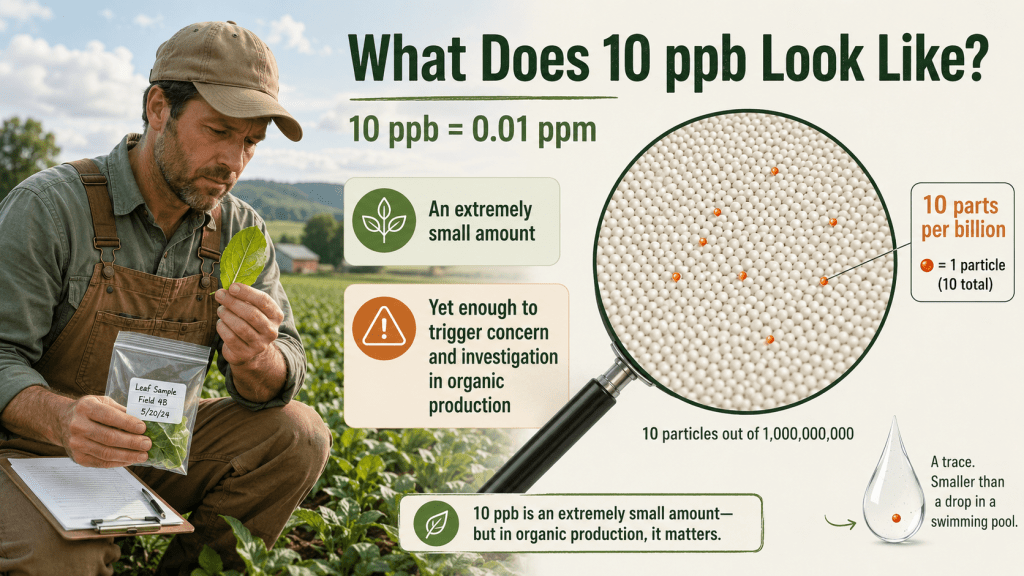
NOP guidance identifies 0.01 parts per million, or 10 parts per billion, as an important decision point. A concentration of 0.01 ppm is extremely small. It is roughly comparable to one second in a little more than three years. Modern laboratories can detect some pesticides at very low concentrations, which is why a laboratory may find a residue even when the farmer did not intentionally apply that pesticide.

When a prohibited pesticide is detected at or above 0.01 ppm, the certifier first determines whether EPA has established a legal tolerance for that pesticide on the particular crop or commodity tested.

That crop-specific detail is important. A pesticide may have:

  • one tolerance on cottonseed;
  • a different tolerance on corn;
  • another tolerance on vegetables; or
  • no legal tolerance at all on a particular crop (a pesticide is detected but one that is not for the crop being tested. I had an organic hay producer with a detected potato fungicide on the crop. Where did that come from?).

What Is an EPA Pesticide Tolerance?

An EPA tolerance is the maximum amount of a pesticide residue that may legally remain in or on a food or agricultural commodity. This is primarily a conventional pesticide and food-safety standard. It is not an organic pesticide allowance. The organic regulations use 5 percent of the EPA tolerance as the level at which an affected product must be excluded from organic sale.

For example, suppose EPA has established a tolerance of 1.0 ppm for a particular pesticide on a particular crop.

Five percent of that tolerance would be: 1.0 ppm times 0.05 = 0.05 ppm

The organic exclusion threshold would therefore be 0.05 ppm, or 50 parts per billion. This example means that if a residue is found in testing your crop that is greater than 0.05 ppm your crop cannot be sold as organic and you will get a notice of noncompliance.

Below 5 Percent of the EPA Tolerance

When the residue is at or below 5 percent of the EPA tolerance, the crop is not automatically excluded from organic sale solely because of the residue level.

However, the certifier may still investigate:

  • whether the farmer applied the pesticide;
  • whether spray drift occurred;
  • whether buffers were adequate;
  • whether shared equipment was properly cleaned;
  • whether storage and transportation protected the organic crop; and
  • whether the farmer followed the approved Organic System Plan.

If the farmer did not apply the pesticide and had reasonable preventive practices in place, the result may represent unavoidable contamination rather than a violation by the farmer. The certifier may still require corrective action. For example, the farmer may need to increase a buffer, improve equipment-cleaning records, communicate with a neighboring applicator or change how the harvested crop is stored.

Above 5 Percent of the EPA Tolerance

When testing detects a prohibited pesticide at a level greater than 5 percent of EPA’s tolerance for that pesticide on that commodity, the affected agricultural product cannot be sold, labeled or represented as organic. This does not necessarily mean that the entire farm immediately loses certification.

The certifier must determine what product the sample represents. Depending on the circumstances, the affected product could be:

  • one field;
  • one harvest lot;
  • one bin;
  • one truckload;
  • one storage unit; or
  • a larger quantity that was commingled.

Good field, harvest and storage records become extremely important. If a farmer can clearly show which field supplied each lot or bin, the certifier may be able to limit the problem to the affected product. When records are incomplete and several fields or loads have been mixed together, it may be difficult to separate the contaminated product from the rest of the crop.

What if There Is No EPA Tolerance?

Sometimes a laboratory detects a pesticide for which EPA has not established a tolerance on the tested crop. If there is no EPA tolerance and no applicable FDA action level, NOP guidance says that a prohibited pesticide residue above 0.01 ppm generally results in the affected product being excluded from organic sale. The certifier must also determine whether the result should be reported to EPA, FDA or the appropriate state agency. This is one reason that the name of the pesticide and the crop tested are just as important as the amount detected.

What if the Farmer Applied the Pesticide?

The 5-percent threshold does not create permission to use a prohibited pesticide. If an investigation shows that a prohibited pesticide was intentionally applied, the farmer may be out of compliance even when the residue detected is very low.

The certifier may consider:

  • exclusion of the affected crop from organic sale;
  • a notice of noncompliance;
  • suspension or revocation of certification; and
  • whether the field must complete a new 36-month transition period.

The basic organic requirement remains that prohibited substances cannot be applied to land during the 36 months before harvesting an organic crop. The residue level helps determine what happens to the product, but the investigation determines whether prohibited use occurred.

What Should a Farmer Do After Receiving a Positive Result?

First, do not panic—but do respond promptly.

I would recommend that the farmer:

  1. Ask for the complete laboratory report.
  2. Confirm the pesticide that was detected.
  3. Confirm the concentration in ppm or ppb.
  4. Ask whether EPA has a tolerance for that pesticide on the tested crop.
  5. Review all input and application records.
  6. Review neighboring pesticide applications and any drift concerns.
  7. Review equipment cleanout, harvest, storage and transportation records.
  8. Identify exactly which field, lot, bin or load the sample represents.
  9. Provide the certifier with any information that could help identify the source.
  10. Document corrective actions that may prevent another occurrence.

Do not immediately assume that a neighboring farmer caused the detection. The location of the sample, pesticide chemistry, timing of nearby applications, weather, field pattern and other evidence should be considered before reaching that conclusion.

Finally, a positive test may begin an investigation, but good practices and good records help tell the complete story.

More Resources

  • USDA Memo to Certifiers: Periodic Residue Testing of Organic Products. (AMS)
  • USDA NOP 2613: Responding to Results from Pesticide Residue Testing. (AMS)
  • USDA Organic Regulations, §§ 205.670–205.671. (eCFR)

Organic Certification Cost Share Program (OCCSP)

I got emails from several of the national organic groups telling me that the Cost Share program for organic certification was finally open. On one of the emails, they had a link to the website so I could actually see how the program was going to work. USDA Farm Service Agency (FSA) is still the place to go to sign up for most organic producers since you are probably there doing other business anyway.

Here is the Link: Organic Certification Cost Share

Who Is Eligible

Eligible OCCSP applicants include any certified organic producers or handlers who have paid organic certification fees to a USDA-accredited certifying agent.  OCCSP pays a maximum of $750 per certification category for crops, wild crops, livestock, processing/handling, and state organic program fees. The scopes must be listed on the producer or handler’s organic certificate to be eligible for OCCSP. 

Eligible costs include:  

  • Application fees and administrative fees for USDA organic certification 
  • Inspection fees for USDA organic certification, including travel costs and per diem for organic inspectors 
  • USDA organic certification costs, including fees necessary to access international markets with which AMS has equivalency agreements or arrangements 
  • State organic program fees 
  • User fees and sale assessments for USDA organic certification 
  • Postage for materials related to obtaining or renewing USDA organic certification 

Opportunity for State Agency Participation 

FSA will soon announce a 30-day application period for state agencies to apply through grants.gov to administer OCCSP.   

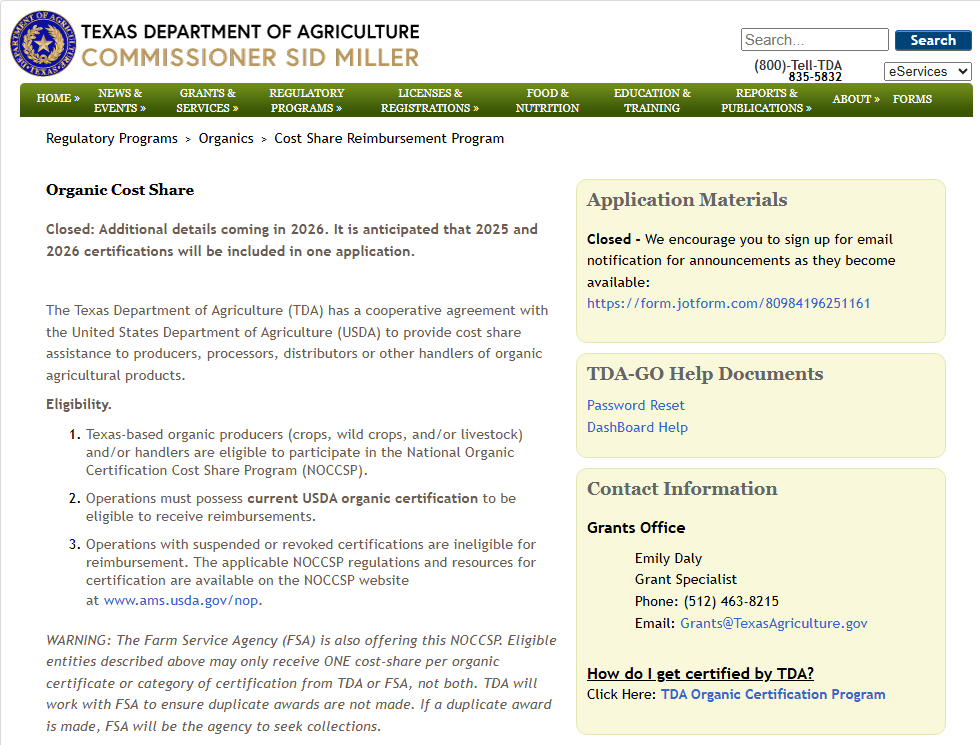
The state agency for Texas that does also handle the Cost Share program is the Texas Department of Agriculture or at least it has been! Typically, TDA has done it as an online application, and it has not mattered who your certifier is but simply that you follow the application process. This is what the current TDA website is showing but I am assuming it will be updated soon!

New World Screwworm Update for Texas Organic Livestock Producers

I am writing this post to try and keep you updated on the procedures, policies and movement of New World Screwworm in Texas.  I have had several internal meetings with Extension Entomologists, Livestock and Veterinarian Specialists recently to better understand the situation, get status reports and possible treatments.  I am also on a “Task Force” of organic livestock producers and industry organized by the Organic Trade Association to discuss organic options, treatments and processes in the wake of this rapidly moving infestation. This task force also includes Lia Sieler with the Western Organic Dairy Producers Alliance, and she has been extremely helpful for raising organic dairy and livestock issues and in developing resources that help organic producers.

Let me first address the issue of NWS detections and infested-zone movement restrictions.  The map below is from this web page and is updated frequently by the Texas Animal Health Commission.  Texas Animal Health Commission

You can click on the website address or the pictures below to see these pages in your browser.  

As you look at this picture or the map below, you can see that the NWS is making fast progress through Southwest Texas and moving north and east as new cases are found. Click on a picture to go to the webpage.

This is the statement on livestock movement: Warm-blooded animals moving outside of an infested zone must contact the TAHC to set up an inspection. During this inspection, an animal health official will fill out an animal movement certificate listing the product used for prevention or treatment and the animals’ official ID. This certificate will need to accompany the animal movement. Additional guidance can be provided during an initial inspection request call to TAHC and general guidance can be referenced in the Livestock Movement from a NWS-Infested Zone handout.

If you do end up in an infested zone and need to move livestock, then you will need to get an NWS Animal Movement Certificate.  As an Extension Specialist, I went through the training and am now an Authorized NWS-Certified Inspector as are many veterinarians, county extension agents, etc.  This screwworm is the same one we had in Texas when they had so much trouble getting eradicated till 1966 when it was finally done (I am old enough to remember that program).  They determined that part of the problem with eradication was that unrestricted livestock movement caused reinfestation issues.  Now with available prevention and treatment products, the already operating Sterile Fly program, and the restriction on animal movement from infested areas, they hope to get to eradication again much quicker.

Lastly, there are organic issues with any of the approved treatment options for NWS.  At this time, the approved/authorized NWS treatment and prevention products I am aware of are not allowed for use in certified organic livestock production.  At this time, organic producers should assume that use of currently authorized synthetic NWS treatment products may affect that animal’s organic eligibility, so treatment decisions should be carefully documented and coordinated with TAHC, your veterinarian, and your certifier.  What we are hoping to see happen is the possibility of using Ivermectin (was on the NOP approved but has since been removed from the approved list) in infested zones only to treat calves as a preventative to NWS because of open wounds (umbilicus, castration, etc.).  This is being discussed even as I write this, but – Ivermectin may be part of conventional NWS prevention or treatment protocols, but it is not currently allowed under USDA organic rules for NWS.

As we learn more, you will receive the information ASAP so that you can make adjustments.  For now, you should:

  1. Inspect your animals on a regular and consistent basis. Even tick wounds can be a place for flies to lay eggs.
  2. Report any suspected cases. You can report to the Texas Animal Health Commission, to an Extension Agent or Specialist, to your veterinarian.  Just report it so animal health officials can confirm the case and trigger the appropriate response, including sterile fly release where warranted.
  3. Protect by having a working relationship with your veterinarian who knows you are certified organic.  

WODPA Developed Posters

As I mentioned, Lia Sieler and the Western Organic Dairy Producers Alliance have been staying on top of this issue for organic dairy farmers. They have produced a couple of posters on New World Screwworm that are available to post in your milking parlor and hand out to your workers. One in English and one in Spanish. If you want to print them out it is best printed on 8.5 X 14 paper! Just click on a link below and it will open up in a new webpage.

English Version of New World Screwworm

Spanish Version of New World Screwworm

Please let me know if you have any questions or concerns. 

More Resources

Lessons from a Study on Hay Variability: Insights for Organic Producers

Hay quality can vary considerably among bales from the same field. Proper sampling and forage testing help organic livestock producers understand that variability and make better feeding decisions.

Technical content updated June 2026 to include recommendations for collecting representative hay samples.

Start with a Representative Hay Sample

I wrote this longer article back in October of 2024, but since we are in the midst of cutting hay right now, I thought an update would be a good thing! Before discussing the surprising variability found among individual hay bales from a single field, it is important to remember that a forage analysis is only as good as the sample submitted to the laboratory. Many producers still collect a handful of hay from the outside of a bale and send it for analysis. Unfortunately, this approach often provides misleading results because leaves, stems, and different portions of the bale are not represented equally.

The preferred method is to use a hay probe attached to a cordless drill and collect core samples from a minimum of 20 representative bales within a hay lot. A hay lot should consist of hay from the same field, cutting, forage type, and harvest period. I carry a bucket with me and put each core in the bucket as I sample a bale. The core sampler is a 24″ model since almost everyone has round bales today. The individual cores are combined into a single composite sample (the bucket), mixed thoroughly, and submitted to a forage testing laboratory.

The picture above is a clip I copied from a longer article in Hay and Forage Magazine, April 2025 edition. The article is just a good reminder of proper sampling, but the best part of the article is a list of all the places to order a hay probe. Just click on the picture or here Hay Probes to see the list!

How Much Can Hay Vary Within One Field?

When it comes to hay production, many farmers assume that bales harvested from the same field will contain similar nutrient levels. The differences across fields was evident in a recent article by Michael Reuter in Progressive Forage1. His article and data show us all, the significant differences even among bales from the same field. Understanding and managing these differences can make a big impact, especially for organic farmers who want to optimize livestock nutrition and maintain a consistent quality of forage.

The following table from the article1 presents the nutrient composition and analysis of 20 individual bales randomly sampled from an 86-acre hay field, which was managed as a unit and harvested all at the same time:

What the Bale Data Showed

The analysis of the 20 hay bales showed surprising variability in key nutrients such as Crude Protein (%CP), fiber content (measured as %ADF and %NDF), and essential minerals like Calcium (%CA) and Phosphorus (%P). Summary statistics of the nutrient composition are presented below:

Crude protein, for example, varied from 9.7% to 15.9%. This 6.2 percentage point difference could significantly influence the nutritional value of hay fed to livestock.

Fiber levels also differed substantially. The ranges in Acid Detergent Fiber (%ADF) and Neutral Detergent Fiber (%NDF) directly affect how digestible the hay is and how much livestock will eat. Calcium and phosphorus levels, which are critical for bone health and metabolic functions, also showed noteworthy differences between bales.

Why Does Hay Quality Vary?

Even within a field managed and harvested as one unit, soil fertility, plant maturity, species composition, moisture, weeds, topography and microclimate can vary enough to influence forage quality. In organic fields, uneven manure or compost distribution can add another potential source of spatial variability:

  1. Soil Fertility Differences: Organic amendments like compost or manure may not be evenly spread across the field. Variability in soil nutrients can cause different areas of the field to produce hay with varying nutrient levels.
  2. Crop Rotation and Plant Diversity: Rotating different crops or allowing natural diversity in the field is beneficial for soil health, but it can also lead to differences in how well each crop absorbs nutrients.
  3. Pest, Weed, and Microclimate Effects: Organic fields often have more variability in pest pressure, weed growth, and microclimates. These differences can lead to uneven growth, which in turn affects nutrient content.

Managing Hay Variability

To minimize these differences and provide more consistent forage quality, farmers can take several practical steps:

  • Soil Testing: Regularly test soil across different sections of the field. This helps identify nutrient deficiencies or hotspots, allowing targeted amendment application.
  • Even Amendment Application: When applying compost, manure, or other organic fertilizers, try to ensure even distribution across the field. Variability in amendment application is a key factor in nutrient inconsistency.
  • Use Cover Crops: Cover cropping can help improve soil structure and increase nutrient cycling, which leads to more uniform plant growth.
  • Monitor Harvest Stages: Harvesting at a consistent plant maturity stage across the field can help reduce variability. Plants harvested at different growth stages can differ significantly in nutrient content.
  • Matching Regular Soil and Forage Testing: Applying soil nutrients based on soil tests and then testing multiple hay bales gives a clearer picture of the overall nutrient profile from start to finish. Testing hay allows adjustments in livestock feeding to meet nutritional needs effectively and maybe even save money!

Why This Matters for Organic Livestock

In organic livestock systems, purchased feed supplements must meet USDA organic requirements, and compliant organic feed ingredients can be expensive. Maximizing the nutritional value and consistency of farm-produced forage can therefore reduce purchased-feed needs and improve ration management. Variable hay quality can significantly impact livestock health, as inconsistencies in nutrition may lead to reduced growth rates, lower milk production, or other health issues. Moreover, optimizing the quality of on-farm forage can reduce the need for expensive purchased supplements and any organic supplements are not cheap.

Maintaining consistent forage quality also supports animal welfare, which is a core value of organic and sustainable farming. Healthy, well-fed animals are more resistant to disease, aligning with the organic principle of promoting natural immunity and reducing intervention.

The Take-Home Message

Variability is a natural part of farming, but with informed management, we can turn that variability into an opportunity for learning and improvement—ultimately providing better feed for our livestock and keeping our farms resilient.

Sources and Further Reading

1.Data Source: October 1, 2024 issue of Progressive Forage written by Michael Reuter, Analytical Services Technical Manager at Dairy One Cooperative Inc. and Equi-Analytical Labs.

Organic Agriculture, Markets, and Trust: Emerging Trends for Texas Producers

Organic Agriculture as a Long-Term Strategy

Organic agriculture is increasingly revealing itself as more than simply a production system built around prohibited substances. Over the long term, it may be better understood as a biological and economic strategy centered on trust, resilience, traceability, and system function. While conventional agriculture often optimized around maximum efficiency, scale, and external inputs, organic agriculture has gradually emphasized relationships between soil biology, nutrient cycling, biodiversity, food quality, and consumer confidence. The USDA National Organic Program helped create a framework where consumers can trust production methods they cannot personally observe, making organic agriculture as much a transparency system as a farming system. At the same time, many long-term organic farmers increasingly report that mature organic systems (greater than 5-7 years) often become less dependent on purchased inputs as soil health, rotations, and biological regulation improve over time.

I hear often from farmers, bakers, dairy processors, and food manufacturers who frequently report differences in flavor, functionality, storage, processing quality, and handling characteristics that go beyond simple yield measurements. Meanwhile, rising transportation costs, supply-chain complexity, and consumer interest in traceability may and do, increasingly favor organic systems. Also, we are seeing technologies such as digital traceability, AI-driven compliance systems, and integrated recordkeeping beginning to reduce some of the traditional burdens associated with organic certification.

These broader trends are also becoming increasingly visible within organic grain and dairy markets themselves, where pricing is often shaped less by simple commodity production and more by quality, traceability, transportation, end use, and long-term supply relationships. Current (Jan. to May 2026) USDA AMS reports and organic market activity continue to show that organic agriculture operates through highly differentiated markets where buyer confidence, dependable supply, and product identity can significantly influence value.

Organic Market Report for Texas Organic Farmers

Organic markets continue to show strong differentiation by quality, delivery structure, end use, and contract type rather than functioning as simple commodity markets. Across grains and dairy, USDA AMS reports continue to show active forward contracting, regional price variation, and premiums tied to quality, storage, transportation, and dependable supply relationships. While organic market reporting remains in “short supply” in some Southern regions, including Texas, the overall market signals suggest that buyers continue working to secure reliable supplies of organic feed grains, food-grade products, and dairy inputs well ahead of delivery.

Organic Wheat

Organic wheat prices remain highly differentiated by class, protein, buyer type, delivery terms, and contract structure. In recent AMS reports, Soft Red Winter values often fall in the high single digits to low teens, while Hard Red Spring commands a stronger premium, with some flour-mill forward contracts reaching $20/bu. The main takeaway is that organic wheat is priced less as a generic commodity and more as a set of niche markets defined by end use, quality, freight terms, and whether the transaction is spot, bid, or forward contracted.

For Texas organic wheat farmers, this means harvest is also a marketing decision. Growers who can protect test weight, maintain protein, and keep grain clean and dry are in the best position to capture milling premiums, while those selling quickly into generic feed or elevator channels may leave money on the table. Before cutting, it is worth comparing buyers, delivery terms, and contract options, because in this market the details can matter as much as the wheat itself.

Organic Corn

Organic corn markets continue to show relatively strong and stable pricing compared to many other organic commodities, with much of the AMS-reported activity clustering around the mid-$10 per bushel range (but I see it steadily increasing). Prices still vary by location, contract structure, and whether the grain is old crop or new crop, but the overall pattern suggests a market supported by steady feed demand, active forward contracting, and ongoing regional supply shortages. Unlike organic wheat, where protein and milling quality create wider price separation, organic corn remains heavily influenced by livestock feed demand, freight costs, and regional availability.

For Texas organic corn growers, the message is to stay flexible and market carefully checking regularly on prices. Producers who can store grain, preserve quality, and deliver into specialty feed, dairy, poultry, or food-grade channels may be able to capture better returns than those forced to sell at harvest. Transportation costs and local buyer demand can make a meaningful difference, particularly in regions where organic feed supplies remain limited. Forward contracts (some but not all!) also remain important because they help secure long-term supply relationships and reduce risk in a market that continues rewarding dependable volume and consistent quality.

Organic Dairy

The USDA Organic Dairy Market News Report for May 4–15 provides a snapshot of current organic dairy market conditions rather than a policy or technical standards document. The report shows that organic milk demand remained strong during spring 2026, with U.S. sales of total organic milk products up 5.6 percent for March and organic whole milk sales also showing strong year-over-year growth. Retail organic dairy products, especially milk and yogurt, continue maintaining noticeable price premiums, reflecting continued consumer demand for organic dairy products and broader interest in food products associated with transparency, animal welfare, and ingredient sourcing.

The report also demonstrates how closely the organic dairy sector remains tied to feed markets and broader supply conditions. Organic grain and feed markets remain active, with some forward contracts extending into 2027, indicating that buyers continue working to secure future supply. For producers, the overall signal is that organic dairy demand and premium pricing remain solid, but feed costs, export movement, and retail advertising trends continue shaping a competitive market that remains sensitive to supply and input conditions.

Organic Soybeans

I know we don’t produce many organic soybeans, but they do indicate some import protein trends. Organic soybean markets continue showing some of the strongest structural support among major organic grain commodities, with pricing being driven largely by protein demand, livestock feed markets, and food-grade specialty channels. Unlike organic wheat, where class and milling quality create major price separation, soybean values appear more closely tied to dependable supply, identity preservation, and end use. AMS-reported activity suggests that forward contracting remains active, indicating that buyers continue working to secure long-term supply in a market where domestic production remains limited and imported soybeans still influence overall availability and pricing.

For Texas organic producers, soybeans provide an important lesson even where acreage remains limited. Organic soybean markets demonstrate how protein quality, cleanliness, storage, and buyer relationships increasingly shape value in organic agriculture. Food-grade and identity-preserved soybeans can carry significant premiums over generic feed channels, reinforcing the idea that organic crops are often marketed less as bulk commodities and more as differentiated products tied to specific supply chains. The continued influence of imported soybeans also highlights the importance of dependable domestic production capable of meeting both feed and food-grade demand.

As Texas organic markets continue developing, similar trends may increasingly influence corn, sorghum, wheat, peanuts, and other crops where end use, traceability, and dependable supply relationships become more important than simple yield alone.

Organic Integrity and Import Oversight Expand Under USDA SOE Rule

The USDA National Organic Program continues expanding oversight of imported organic products through the Strengthening Organic Enforcement (SOE) rule. New Organic Insider reports highlight how USDA is now using import certificate data, shipment tracking, and compliance analytics to identify irregular trade patterns and investigate potential fraud before products reach the marketplace. Several recent investigations involved imported organic products lacking valid import certificates, while another case involving raspberries from Mexico demonstrated how residue testing and traceability systems prevented contaminated products from entering U.S. commerce. The increased emphasis on farm-to-market traceability reflects USDA’s growing focus on maintaining consumer confidence and strengthening enforcement throughout global organic supply chains.

The newly released 2025 organic import data also provide a revealing picture of the modern organic marketplace. Total U.S. organic imports approached $12 billion in 2025 (total organic sales in the US are $76 billion), with Mexico representing more than 20% of total import value. Organic beef, coffee, bananas, blueberries, avocados, olive oil, and processed soybean products ranked among the largest import categories. The data reinforce that organic agriculture has become deeply connected to international supply chains and value-added food manufacturing systems rather than operating solely as a domestic farm commodity market.

For U.S. organic producers, these trends highlight both continued strong consumer demand for organic products and the increasing importance of traceability, market relationships, and maintaining trust in the organic label. For Texas organic farmers specifically, future competitiveness may depend less on maximizing volume alone and more on building dependable supply relationships, preserving quality, improving traceability, and positioning farms within regional food systems that value identity preservation, biological function, and long-term resilience.

Sources and Market References

This market analysis and commentary were developed using information from the following USDA and industry reports:

Additional market interpretation and analysis were developed through ongoing observations of organic grain, dairy, and specialty crop markets relevant to Texas organic producers.