Harvest is underway or approaching across much of Texas, so fertilizer for next year may not be at the top of anyone’s list right now. But for organic farmers, I think it deserves some attention before we get much farther into fall.
Commercial fertilizer prices have generally moved higher during 2026, particularly for nitrogen and phosphorus fertilizers. Current fertilizer market reports are also raising concerns about higher fertility costs for the 2027 crop. University of Illinois farm economists recently noted that nitrogen and phosphorus fertilizer prices are higher going into fall and that farmers are already beginning to make fertilizer purchasing decisions for 2027.1
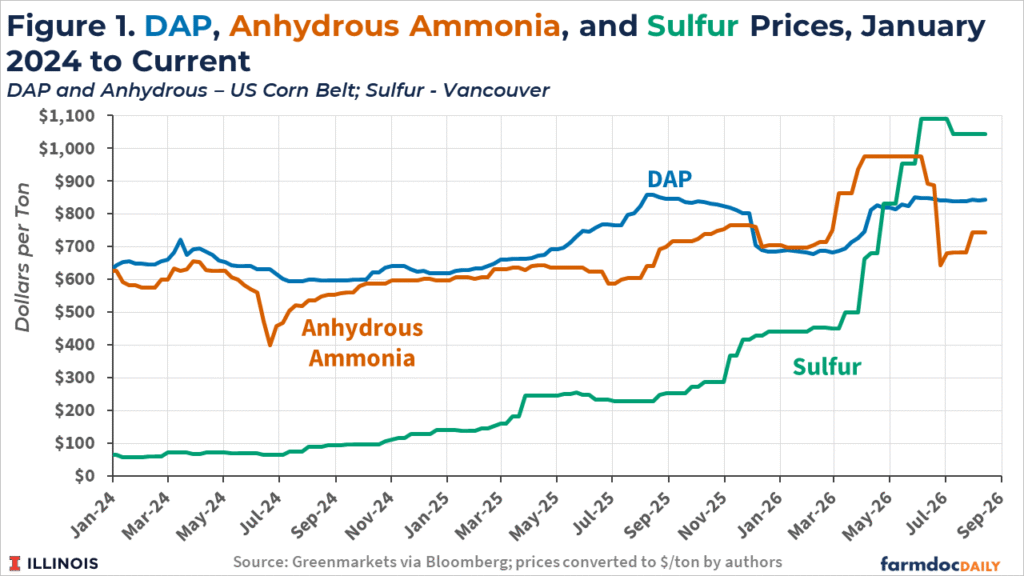
Farmdoc Daily graph showing DAP, anhydrous ammonia, and sulfur prices from January 2024 through September 2026. DAP and anhydrous ammonia prices increased during 2025 and remained elevated in 2026, while sulfur prices rose especially sharply, climbing from below $300 per ton in early 2025 to more than $1,000 per ton in mid-2026. Source: GreenMarkets via Bloomberg; graph by farmdoc Daily, University of Illinois.
Why should an organic farmer care about the price of urea, DAP, or anhydrous ammonia when those products are not part of an organic fertility program?
Because conventional fertilizer prices help determine the value of manure, compost, poultry litter, and other nutrient sources that organic farmers depend upon.
When commercial nitrogen, phosphorus, and potassium become more expensive, manure and compost become more valuable to conventional farmers as alternative fertilizer sources. A farmer who may not normally consider poultry litter or manure can quickly become interested when the nutrients in that material cost substantially less than purchasing the same nutrients in a fertilizer blend.
That means organic farmers may face more competition for the same products they routinely use.
In January, I normally update my “What Is the True Cost of Compost or Manure?” calculations using current fertilizer and manure prices. The purpose is to compare the nutrient value of manure or compost with the cost of replacing those same nutrients using conventional fertilizer.
Those January 2026 calculations already showed why this matters. One poultry manure source priced at about $43 per ton contained nutrients with a calculated fertilizer replacement value of more than $100 per ton before considering hauling and application costs. As conventional fertilizer prices rise, that replacement value rises as well—even though the manure itself has not changed.
This does not mean every organic producer should rush out and buy whatever manure or compost is available. Nutrient analysis still matters. Transportation matters. Application cost matters. Phosphorus loading matters. And organic producers still need to verify that any material they use complies with their Organic System Plan and certification requirements.
But I do think it means we should start asking questions now.
If you know you will need manure, compost, poultry litter, pelleted fertilizer, or another organic fertility product for the 2027 crop, contact your supplier. Ask what they expect to have available. Ask about price. Get a current nutrient analysis. Calculate how many tons you are likely to need. And perhaps most importantly, find out whether that material can be reserved or contracted ahead of time.
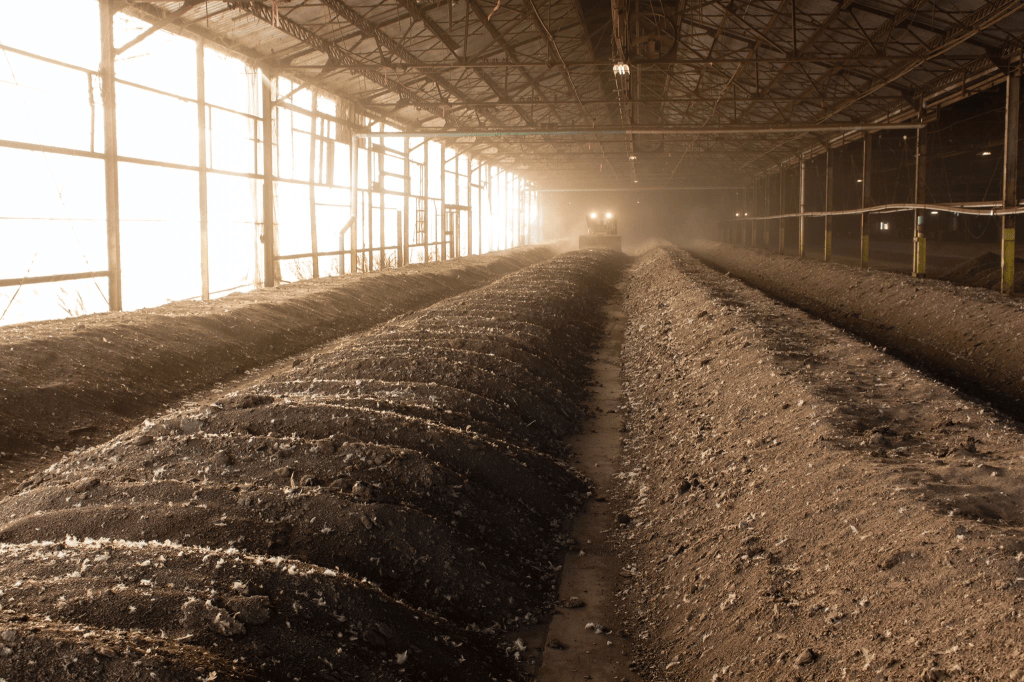
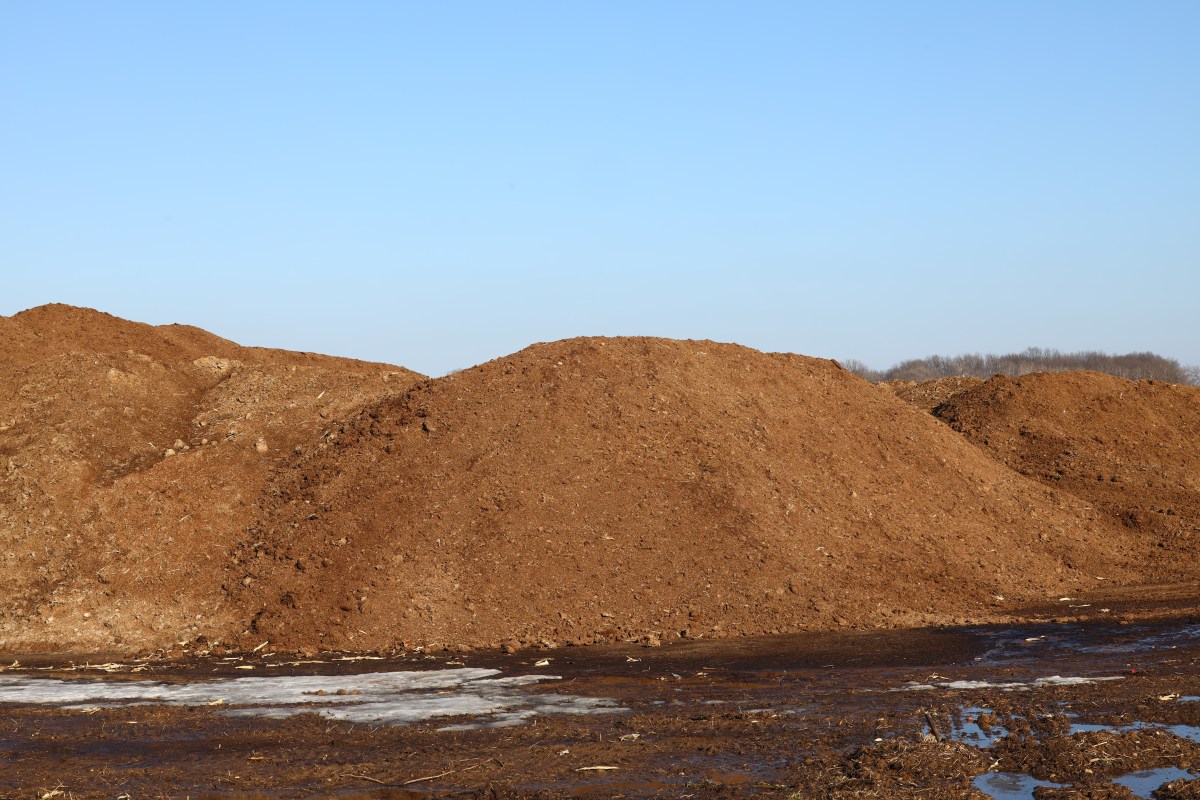
Rows of composting poultry litter are turned and managed inside a covered composting facility. The windrows help promote aeration and controlled decomposition, producing a more uniform organic fertilizer material for agricultural use. Photo courtesy of ViaTrac Fertilizer, used from the ViaTrac Fertilizer photo gallery: https://viatracfertilizer.com/gallery/
Waiting until January or February may mean entering the market after many conventional farmers have already begun looking for the same nutrients.
There is still considerable uncertainty in fertilizer markets, and I am not trying to predict exactly what fertilizer will cost next spring. Retail prices can lag wholesale markets because of inventories, transportation, and purchasing decisions made months earlier.
For an organic farmer, the important message is simpler:
Do not wait for fertilizer prices to tell you that manure and compost have become valuable. Someone else may have already figured that out.
I will update the full compost and manure cost comparison again in January as I normally do. But between now and then, it may be worth making a few phone calls and making sure your 2027 fertility supply is still going to be there when you need it.
References:
- Paulson, N., G. Schnitkey, C. Zulauf, and A. Dhakal. 2026. “Sulfur and Increasing Phosphate Fertilizer Prices.” farmdoc daily 16(152), Department of Agricultural and Consumer Economics, University of Illinois at Urbana-Champaign, August 25, 2026. ↩︎
Other Resources
- Using Google Earth and Web Soil Survey to Understand Your Fields
- What the Haney Test Revealed: Biological Benefits of Cover Crops in Action
- What is the True Cost of Compost (or manure)?
- How Organic Farming Practices Revive Soil Health and Microbial Diversity: Evidence from DNA Studies
- Soil testing, soil results, soil test labs
- Organic fertilizer: what is it, what are the rules, and where do you buy it?
- What is the True Cost of Compost (or manure)?
- Increasing Soil Organic Matter Through Organic Agriculture
- Balancing Soils