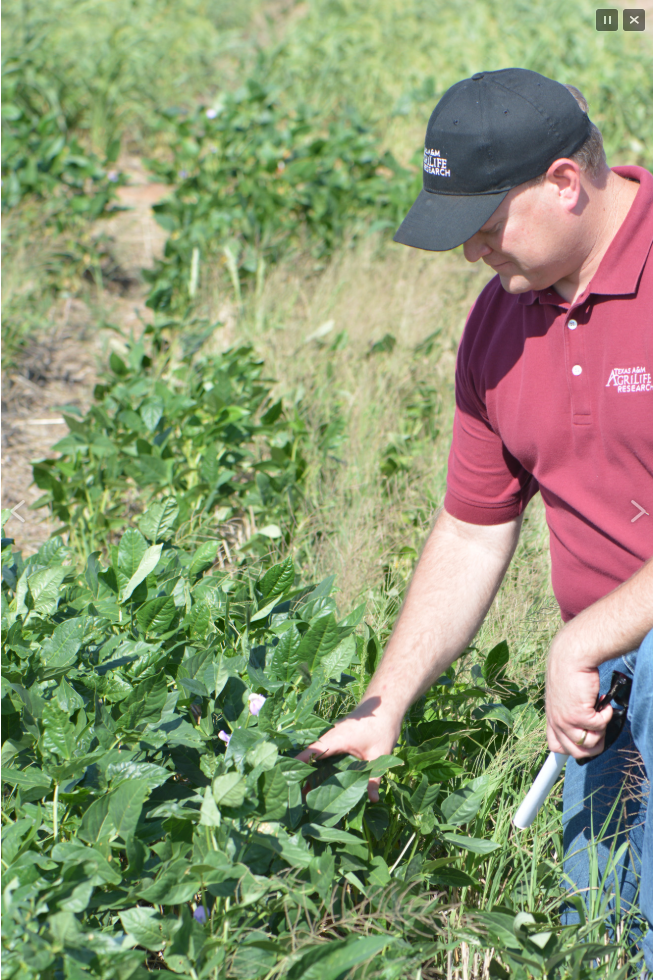
Dr. Paul DeLaune looks at Texas A&M’s newly released Ace cowpea being grown in a cover crop scenario. (Texas A&M AgriLife photo by Kay Ledbetter)
Technical content last updated: October 7, 2026
This page is periodically updated as new Texas research, cowpea varieties, organic production information, markets, and seed sources become available.
Table of Contents
Cowpea Production in Texas
Cowpea (Vigna unguiculata) is one of those crops that can be confusing simply because we call it so many different things. In Texas, most farmers are more likely to call it a blackeye pea, field pea, southern pea, cream pea, purple-hull pea, or simply peas than a cowpea. They are all part of the same remarkably diverse warm-season legume species.
Cowpea is especially well suited to Texas because it thrives under conditions that challenge many other legumes. It is a warm-season crop with excellent heat tolerance and relatively good drought tolerance, and it can grow on soils and under rainfall conditions where crops such as soybean may struggle. Today, Texas remains one of the important U.S. cowpea-producing states. Nationally, most vegetable cowpea production has historically been concentrated in Texas, California, and other southern states.1
Cowpea also has a long agricultural history in Texas. By the middle of the twentieth century, black-eyed peas were grown throughout the state, with important commercial production in East Texas and expanding production in the Rio Grande Valley. Henderson County and the Athens area became major centers for production, processing, and shipping.2 During the 1940s and 1950s, Texas commonly harvested tens of thousands of acres of black-eyed peas, and some years exceeded 100,000 acres.
What makes cowpea unusual is the number of ways we can use the same crop. Texas farmers have historically grown cowpeas for fresh peas, dry edible grain, hay, grazing, livestock feed, green manure, and soil improvement. That remains true today. A vegetable grower may harvest immature or mature-green peas for consumers, while a grain producer may allow the seed to dry for food markets. A livestock producer may graze or bale the crop, and a row-crop farmer may grow exactly the same species as a summer cover crop between cash crops. Historic USDA publications likewise described cowpea as one of the major leguminous crops of the Southern states, grown both for forage and soil improvement as well as for human food.3 For a historical perspective, USDA’s 1920 publication Cowpeas: Culture and Varieties provides an excellent snapshot of how cowpea was grown and used across the Southern United States more than a century ago. Many of the crop’s roles described then—forage, soil improvement, food, and rotation—remain relevant today.
Cowpea’s value in organic systems goes beyond its tolerance of Texas summers. Like other legumes, cowpea forms a symbiotic relationship with Bradyrhizobium bacteria that allows the plant to obtain nitrogen from the atmosphere. When properly nodulated, the crop can meet much of its own nitrogen requirement while producing high-protein forage or seed. When cowpea residue remains in the field, some of that biologically fixed nitrogen becomes available to subsequent crops. This ability to produce useful biomass while requiring little or no supplemental nitrogen is one reason cowpea can fit particularly well into organic crop rotations.
Modern Texas research is now bringing renewed attention to the crop. Texas A&M AgriLife researchers are developing cowpeas specifically for Texas environments, including short-season types, improved grain and protein characteristics, stress tolerance, and varieties that can fit between major cash crops. Current Texas A&M AgriLife breeding work is targeting short-season cowpeas that can fit profitably into existing Texas cropping systems.
That short-season concept could be especially valuable in organic farming. Cowpea can potentially fit between winter grains or into other windows where a grower wants a warm-season crop that produces biomass, fixes nitrogen, suppresses weeds, provides forage, or generates a second cash crop without occupying the field for an entire season.
Uses of Cowpea
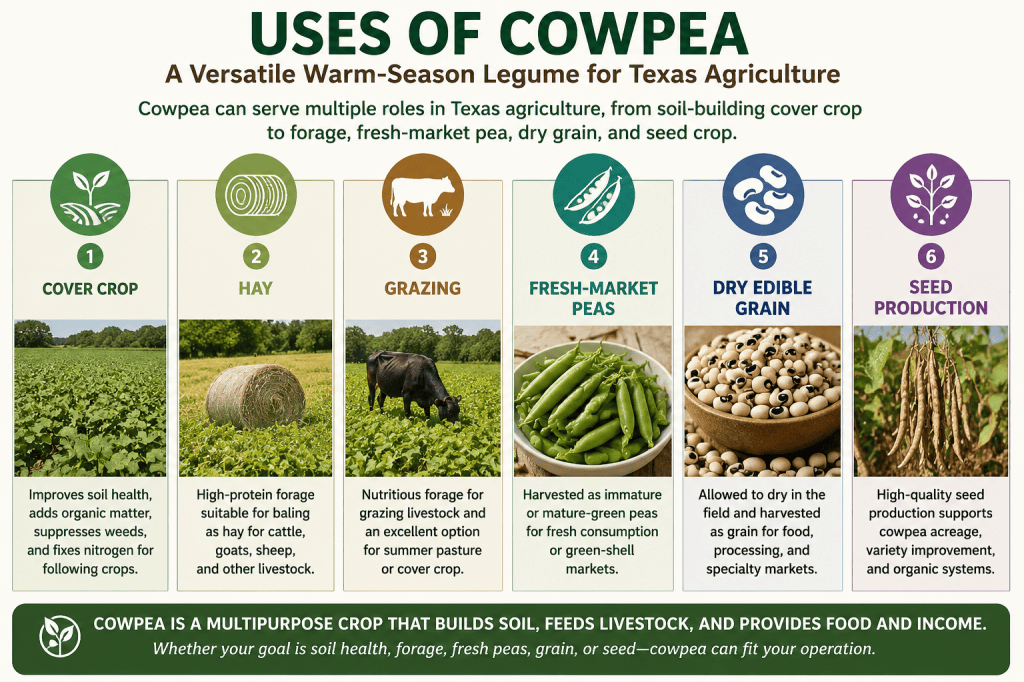
One of the strengths of cowpea is its versatility. A Texas producer may grow essentially the same species as a cover crop, high-quality forage, pasture, fresh vegetable, dry edible grain, or seed crop. However, the characteristics that make a good cowpea for one use may be very different from those needed for another. Variety selection should therefore begin with the intended use and market.
Cover Crop
Cowpea is one of the better warm-season legumes for organic cropping systems in Texas because it grows rapidly in hot weather, produces substantial biomass, competes well with summer weeds once established, and fixes atmospheric nitrogen through its association with Bradyrhizobium bacteria.
A productive cowpea cover crop can provide several benefits:
- add biologically fixed nitrogen to the cropping system;
- produce residue and organic matter;
- protect the soil from wind and water erosion;
- provide rapid summer ground cover;
- suppress weeds through shading and competition; and
- provide a rotational break between other cash crops.
USDA plant guides report that well-grown cowpea cover crops can produce several thousand pounds of dry matter per acre and potentially contribute substantial nitrogen to a following crop.4 5 The actual nitrogen benefit depends greatly on biomass production and, importantly, on how much of the crop is removed from the field. A cowpea grown entirely as a cover crop returns considerably more nutrients than one harvested for hay or grain.
Cowpea can be especially useful during otherwise unproductive summer periods in organic rotations—for example, following wheat and before another fall or winter crop. Short-season varieties may make these opportunities even more practical.
Hay
Cowpea can produce a high-quality, protein-rich summer hay, either alone or in mixtures with warm-season grasses such as sorghum-sudangrass or millet. The leaves provide much of the forage quality, so varieties with good leaf retention, relatively fine stems, high biomass production, and suitable maturity are desirable.
Hay production changes the role of cowpea in the rotation. The plant may fix considerable nitrogen, but when the aboveground crop is baled and removed, much of the nitrogen contained in that forage leaves the field with the hay. The soil-health and nitrogen benefits therefore should not be assumed to be the same as those from a terminated cover crop.
Texas A&M has previously developed forage-oriented cowpeas such as Ace, 6 selected for forage and hay production as well as cover-crop use. Current Texas A&M breeding efforts continue to include cowpeas specifically suited to forage and cover-crop systems.7
Grazing
Cowpea can provide nutritious warm-season grazing when perennial pastures slow during summer or when it is incorporated into an annual forage system.
For grazing, I would look for somewhat different characteristics than I would for hay:
- strong early growth;
- good leaf production;
- upright or semi-upright growth that remains accessible to livestock;
- standability;
- tolerance of defoliation; and
- some ability to regrow after grazing.
Cowpea can also be included in mixtures with warm-season grasses, where the grass contributes structure and additional forage while the cowpea contributes protein and nitrogen fixation.
One caution is that regrowth varies considerably among cowpea varieties and with the stage at which they are grazed. A variety developed primarily for grain production may not persist after grazing nearly as well as one selected for forage characteristics. Grazing management and variety therefore need to be considered together.
Fresh-Market Peas
In Texas we commonly know edible cowpeas as blackeye peas, southern peas, cream peas, purple-hull peas, or field peas. These can be harvested as immature pods, mature-green peas for shelling, or fully dried seed.
Fresh mature-green peas can be a relatively high-value crop, particularly for direct markets, farmers markets, roadside sales, local grocery markets, and processors. Consumer demand tends to be strongly influenced by regional preference. Blackeyes, creams, crowders, and pinkeye-purple hull types all have established markets in the South.
Commercial southern-pea yields can vary considerably, but southeastern Extension information reports shelled fresh-pea yields commonly in the range of roughly 1,000–2,000 pounds per acre,8 depending on variety and harvest method.
For a fresh-market grower, the highest-yielding variety is not necessarily the most profitable. An upright variety that concentrates pods near the top of the plant and can be harvested efficiently may be worth considerably more than a sprawling variety requiring several hand harvests.
Dry Edible Grain
Allowing cowpea seed to mature and dry creates an entirely different market. Dry cowpea is an important food pulse internationally and provides a relatively high-protein grain for human diets.
Traditional blackeye peas remain one market, but interest is expanding beyond conventional blackeyes. Cowpea can supply protein for:
- packaged dry beans;
- milling and flour;
- ingredient markets;
- ethnic and specialty foods;
- export markets; and
- emerging plant-protein products.
For dry grain, producers need to emphasize grain yield, maturity, standability, seed size, seed-coat color, uniformity, harvestability, cooking quality, and buyer specifications.
Specialty and export markets make buyer communication particularly important. Seed appearance that is acceptable in one market may be unacceptable in another.
Texas A&M’s current cowpea breeding effort emphasizes high-yielding, short-season cowpeas adapted to Texas as well as improved nutritional value. Short-season varieties could make cowpea particularly useful as both a cash crop and a rotational crop within Texas production systems.9
Seed Production
Cowpea also presents opportunities for commercial seed production, particularly as interest grows in cover crops, organic production, specialty grain markets, and improved Texas-adapted cultivars.
Seed production requires another set of characteristics:
- uniform maturity;
- good standability at harvest;
- resistance to seed shattering;
- high germination and vigor;
- uniform seed size and appearance;
- disease-free seed;
- varietal purity; and
- good mechanical harvest characteristics.
New varieties being developed specifically for Texas conditions may expand this opportunity. Texas A&M’s Specialty and Organic Crop Breeding Program is developing cowpeas for short-season production, organic systems, improved nutritional quality, forage and cover-crop use, and tolerance to heat, drought, salinity, disease, and insect.10
For organic producers, seed production may become particularly important because availability of suitable certified organic cowpea seed remains limited for many varieties and market classes.
Variety Selection
Important Cowpea Traits by Intended Use
| Intended use | Most important variety traits |
|---|---|
| Cover crop | Rapid emergence, early biomass, canopy closure, nitrogen fixation, weed competition, appropriate maturity |
| Hay | High biomass, leafiness, fine stems, good leaf retention, forage quality, harvestable maturity |
| Grazing | Palatability, standability, regrowth, persistence after defoliation, biomass |
| Fresh-market peas | Flavor, seed size, attractive appearance, high shell-out, concentrated pod set, ease of harvest |
| Dry edible grain–Domestic or Export | Grain yield, uniform maturity, standability, seed size/color, cooking quality, market acceptance; buyer specifications may include seed color, size, eye type, moisture, splits, purity, residues |
| Seed production | Uniform maturity, standability, reduced pod shattering, seed vigor, germination, varietal purity |
Examples of Cowpea Varieties by Use
Many cowpea varieties are multipurpose, so these categories should be viewed as a guide rather than a strict classification. A variety selected for one use may also perform well for another, but the most important traits change with the market or production goal.
| Variety or type | Best fit/use | Important characteristics | Comments |
|---|---|---|---|
| Ace | Hay, forage, cover crop | High biomass, good forage quality, earlier flowering than Iron & Clay | Texas A&M AgriLife forage cowpea from Overton |
| Iron & Clay | Cover crop, grazing, forage | Vigorous growth, high biomass, widely adapted | Long-used southern forage/cover crop standard |
| Red Ripper | Cover crop, forage, grazing | Vigorous vine growth, biomass production | Older southern forage/soil-building type |
| TAMC 101 | Cover crop, forage | Strong canopy development, biomass, N accumulation | Developed through Texas A&M cowpea breeding |
| Texas Cream 40 | Fresh market, dry edible | Cream-colored seed, good eating quality, determinate growth | Traditional southern pea type |
| Zipper Cream | Fresh market | Large cream pea, good flavor, relatively easy shelling | Popular specialty fresh-market type |
| Pinkeye Purple Hull types | Fresh market, dry edible | Recognizable market class, attractive seed, strong consumer demand | Several cultivars available |
| California Blackeye types | Dry edible grain | Uniform blackeye seed, established food market | Important commercial grain class |
| TAMC 241 | Dry grain, rotational crop | Short season, high protein | New Texas A&M material |
| TAMC 243 | Dry grain, rotational crop | Short season, high protein | New Texas A&M material |
| TAMC 244 | Dry grain, rotational crop | Short season, high protein; blackeye market type | Especially interesting for food-grain markets |
Seed appearance can also determine market acceptance, particularly for fresh-market, dry edible, and export cowpeas.
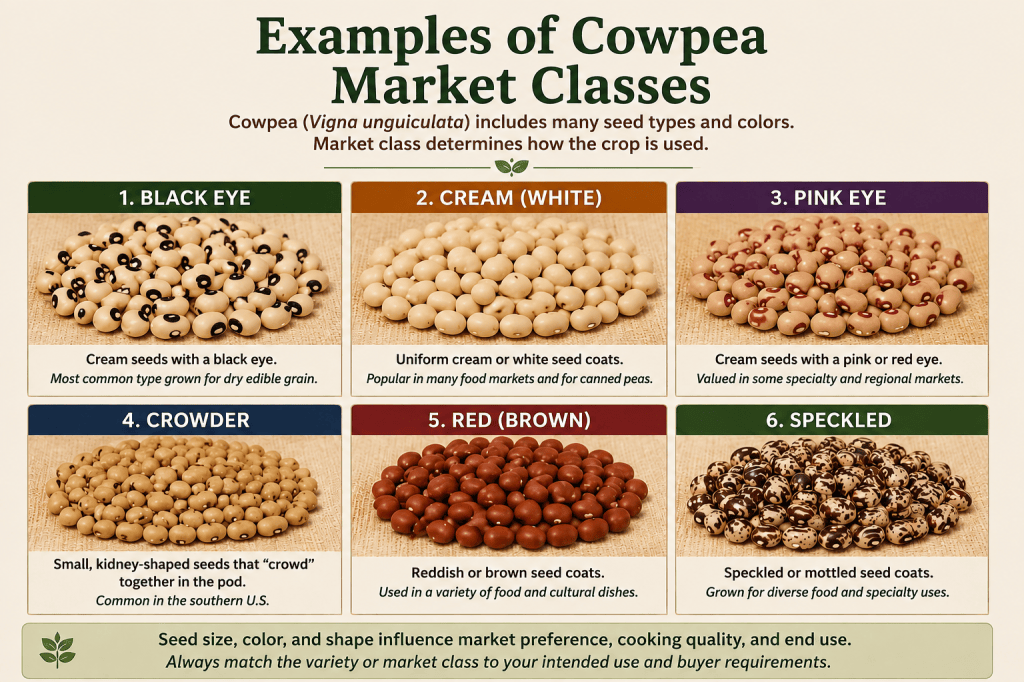
Variety availability changes from year to year. Organic producers should also verify whether certified organic or untreated seed is available before finalizing a variety choice.
Seed Sources
Cowpea seed is available from several regional and national seed companies, but variety availability can change considerably from year to year. Some suppliers specialize primarily in forage and cover-crop cowpeas, while others offer a much broader selection of fresh-market and dry edible southern peas.
For organic production, growers should first look for certified organic seed of the desired variety. When an appropriate organic variety is not commercially available, untreated nonorganic seed may be allowed under the USDA organic regulations when the required organic seed search and documentation requirements are met.11 Treated seed generally cannot be used unless the treatment itself is allowed for organic production.
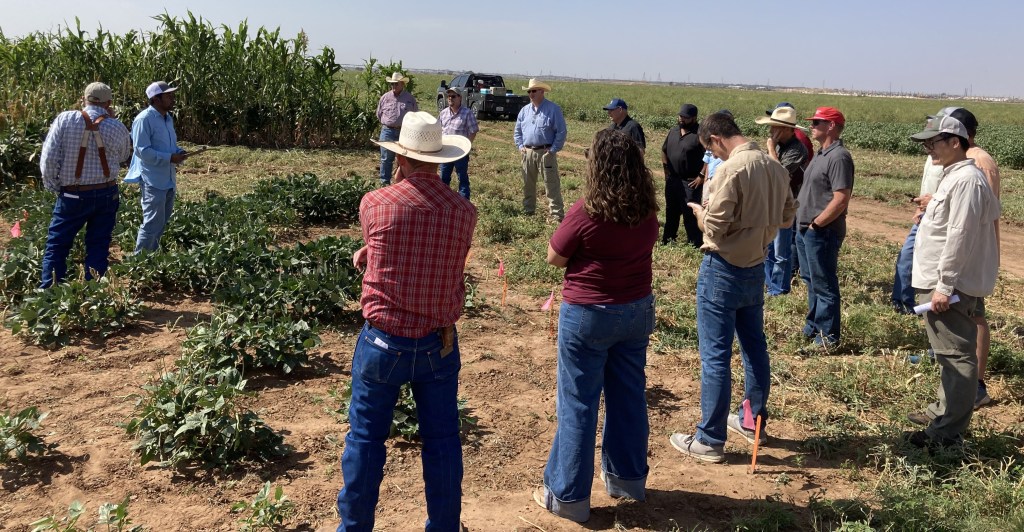
Texas organic growers viewing cowpea breeding and variety work during an Organic Variety Production Tour near New Deal, Texas. Photo: Texas A&M AgriLife Organic
Texas A&M cowpea varieties: Several newer cowpea varieties developed by Texas A&M AgriLife are moving through seed increase and commercialization. Seed availability and quantities may therefore vary. The registrations for TAMC 241, TAMC 243, and TAMC 244 state that seed will be available through Texas A&M AgriLife Foundation Seed. Growers should confirm current availability before making production plans.
Several suppliers currently offer cowpea seed useful to Texas growers:
- Turner Seed, Breckenridge, Texas – a particularly useful source for field-scale forage and cover-crop cowpeas. Current offerings include Ace, Iron & Clay, California Blackeye, and Red Ripper, as well as cowpea inoculant. Turner lists seed by field-scale planting rates and is therefore a logical starting point for larger-acreage production.
- Willhite Seed, Poolville, Texas – offers one of the broader selections of edible southern peas, including Texas Cream 40, Texas Cream 8, Zipper Cream, California Blackeye, Pinkeye Purple Hull types, Top Pick Pinkeye, crowders, and other specialty peas. This makes Willhite especially useful for fresh-market or food-grain producers and for obtaining smaller quantities for variety testing.
- Seedway – supplies commercial vegetable seed and currently lists several southern pea/cowpea varieties, including Texas Cream 40, Texas Cream 12, and Texas Cream 8. Seed treatment status should be checked carefully because some commercial lots are sold as treated seed.
- Urban Farmer – carries a broad selection of cowpeas and southern peas, including food types such as Pinkeye Purple Hull and Zipper Cream. It may be particularly useful when growers need smaller quantities of specialty varieties.
Other regional vegetable-seed companies may also carry cowpeas, and local seed dealers can sometimes obtain bulk quantities that are not shown in online catalogs.
A note for organic growers
Seed availability should be checked before the production plan is finalized. A variety may have excellent agronomic or market characteristics but be of little practical value if suitable seed cannot be obtained.
When buying cowpea seed for organic production, verify:
- variety and lot identity;
- certified organic or untreated status;
- germination;
- seed purity;
- seed treatment, if any;
- inoculation status;
- seed size, because this affects pounds of seed required per acre; and
- whether enough seed is available for the intended acreage.
For specialty fresh-market, grain, export, or seed-production contracts, growers should also confirm the buyer-required variety or market class before purchasing seed. A blackeye, cream pea, purple-hull, or other cowpea may all grow successfully in Texas while serving very different markets.
Planting and Establishment
Cowpea is generally easy to establish when planted into warm soil with good seed-to-soil contact and adequate moisture, but stand establishment can be poor when seed is placed into cool, wet soil or planted too deep. Southern pea production guides commonly recommend waiting until soil temperatures are at least about 65°F, with warmer soils giving more rapid and uniform emergence. Oklahoma State is more conservative for commercial production and recommends waiting until soil temperatures have been 70°F or above for several days.12
For Texas, I would emphasize that cowpea is a warm-season crop, so planting date should be driven more by soil temperature and the production window than by a single statewide calendar date. Plant cowpea when soil temperature at planting depth has reached about 65–70°F and has remained in that range for at least five consecutive days. This is more useful than relying on a single minimum temperature because Texas spring weather can fluctuate considerably. Consistently warm soil promotes faster germination, more uniform emergence, and a stronger initial stand. In South Texas and the Lower Rio Grande Valley, planting can begin much earlier than on the High Plains. In northern and western Texas, growers should avoid planting into marginally warm soils simply because the calendar says spring has arrived.
Maturity – Under Texas conditions, many cowpea varieties mature in roughly 60–90 days, with short-season bush types often maturing earlier and vining or later types taking longer.
Seeding Rate, Row Spacing, and Plant Population
Cowpea seeding recommendations can be confusing because they may be expressed as pounds per acre, seeds per foot of row, or total seeds per acre. These numbers are all related and should be considered together.
Seed size also varies substantially among cowpea varieties. USDA-NRCS information commonly uses about 4,000 seeds per pound, while evaluations of different cowpeas have reported roughly 4,100 to 7,000 seeds per pound.13 This means that planting the same number of pounds per acre can result in very different plant populations.
For example, consider a cowpea planted in 30-inch rows at 4 seeds per foot:
- 30-inch rows provide about 17,424 row-feet per acre
- 4 seeds per foot × 17,424 row-feet = 69,696 seeds per acre
- At 5,000 seeds per pound, that requires only about 14 pounds of seed per acre
- If the seed lot is 90% germination, about 15.5 pounds per acre would be needed to provide approximately 69,700 viable seeds
The basic relationships are:
Seeds per acre = row-feet per acre × seeds per foot
Pounds of seed per acre = desired seeds per acre ÷ seeds per pound
Row spacing therefore matters. University of Georgia recommendations for commercial southern peas commonly use about 4–6 seeds per foot for bush types and 1-2 seeds per foot for vining types, with row spacing adjusted for variety, equipment, cultivation, and harvest method.14
A few examples show how quickly population changes:
| Row spacing | Seeds/ft | Approx. seeds/acre |
|---|---|---|
| 20 inches | 4 | 104,500 |
| 30 inches | 4 | 69,700 |
| 36 inches | 4 | 58,100 |
| 30 inches | 6 | 104,500 |
| 36 inches | 6 | 87,100 |
There is no single ideal population for every cowpea. Fresh-market and grain cowpeas may be planted in rows that accommodate cultivation and harvest, while forage and cover-crop cowpeas are often planted at greater populations to encourage rapid canopy closure and biomass production.
For organic production, row spacing is also part of weed management. Narrower rows and adequate plant populations can produce faster canopy closure and greater competition with summer weeds. However, row spacing must still accommodate the planter, cultivator, harvest equipment, and growth habit of the variety.
The practical recommendation is simple: choose the row spacing and desired plants per foot first, calculate the seed population needed, and then use the actual seeds per pound and germination of the seed lot to determine pounds of seed per acre. Do not select a seeding rate based on pounds per acre alone.
Planting Depth
Southern pea production recommendations generally place cowpea seed about ¾ to 1¼ inches deep under normal conditions. In heavier soils or where crusting is a concern, shallower placement is usually safer. On coarse-textured soils where surface moisture is limited, somewhat deeper planting may be justified if moisture is present.15
The key is to place the seed into firm, moist soil without burying it unnecessarily deep. Cowpea seedlings are vigorous, but excessive depth delays emergence and increases the time seedlings remain vulnerable to soilborne disease, insects, and crusting.
Seedbed and Soil Moisture
A uniform seedbed improves emergence and makes cultivation easier. Oklahoma State recommends preparing a relatively clod-free seedbed for commercial southern pea production, particularly where mechanical harvest is planned.16
Cowpea has good drought tolerance once established, but that does not mean it establishes well in dry soil. Seed needs adequate moisture for rapid germination and root development. If irrigation is available, the better strategy is usually to plant into existing moisture or irrigate soon enough after planting to produce uniform emergence.
One Organic Point That Matters
For organic growers, rapid and uniform establishment is not simply a stand-count issue. It is one of the first weed-management tools. A cowpea stand that emerges uniformly and closes the canopy quickly can compete strongly with summer weeds. A thin or uneven stand leaves sunlight, water, and nutrients available to weeds and may require substantially more cultivation later.
That makes good seed, accurate seeding rate, proper depth, warm soil, and uniform emergence part of the organic weed-management program, not just planting details.
Inoculation and Fertility
Cowpea is a legume, so one of its major advantages is the ability to obtain much of its nitrogen through a symbiotic relationship with Bradyrhizobium bacteria. These bacteria infect the roots and form nodules where atmospheric nitrogen is converted into forms the plant can use. That process can greatly reduce the need for added nitrogen fertilizer, but only when the correct bacteria are present and nodulation is successful. Oklahoma State specifically recommends inoculating cowpea seed with the proper inoculum,17 and USDA-NRCS guidance lists cowpea with the cowpea-group rhizobia used for Vigna unguiculata.18
Inoculation
Cowpea should be inoculated with the correct cowpea-group Bradyrhizobium, especially in fields where cowpea or another compatible host has not been grown recently. The inoculant contains living bacteria, so product handling and application are important.
A current commercial example is Exceed® Peat for Peanut/Cowpea/Lespedeza/Mung Bean, which contains Bradyrhizobium sp. (Vigna) and is labeled for organic use.19 Its directions call for 2.5 oz of peat inoculant per 50 lb of seed, applied with about 8.5 oz of clean, cool, non-chlorinated water per 50 lb of seed. The treated seed should be planted promptly; if planting is delayed more than 24 hours, the label calls for reinoculation.
The label also gives useful guidance for fields with no history of the crop: where the host legume has never been grown, it recommends using a higher inoculation rate—about 1.5 to 2 times the normal rate—or combining peat and liquid inoculants.
Because these are living bacteria, inoculants should be protected from heat, drying, and direct sunlight. Freshly inoculated seed should not be left exposed on a hot planter, truck bed, or in direct sun.
For organic growers, the inoculant itself must be acceptable for organic production. The Exceed cowpea product is specifically labeled For Organic Use and carries OMRI listing language.
Check the Nodules
Inoculation should not end when the seed goes into the ground. I like to pull several plants about 3–5 weeks after emergence and look at the roots.
A successfully nodulated cowpea should have numerous nodules on the taproot and lateral roots. Cut several open. Active nodules are normally pink to reddish inside, indicating that nitrogen fixation is occurring. Small white or pale nodules may be immature or ineffective.
This simple field check can tell us much more than assuming that “cowpea fixes nitrogen.”
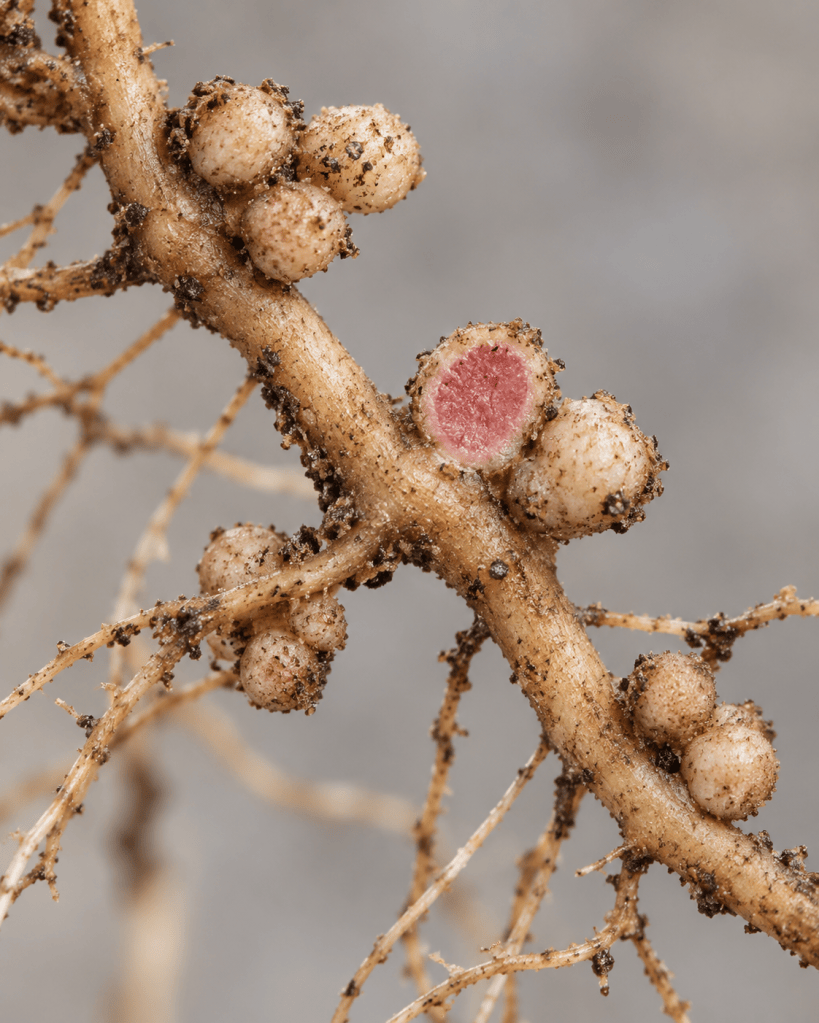
Cowpea root nodules. Active nitrogen-fixing nodules are typically pink to reddish inside when effective Bradyrhizobium symbiosis is occurring. Photo: Texas A&M AgriLife Organic
Nitrogen Fertility
A well-nodulated cowpea generally does not require substantial supplemental nitrogen. Oklahoma State emphasizes that legumes produce nitrogen for their own growth through biological nitrogen fixation, while phosphorus and potassium recommendations for cowpea should be based on soil-test levels.20
This is important because excessive available nitrogen can actually work against what we are trying to accomplish. When readily available soil nitrogen is abundant, legumes rely less on biological nitrogen fixation. Excessive nitrogen can also encourage rank vegetative growth, delay maturity, make harvest more difficult, and increase disease problems. University of Georgia likewise cautions against excessive nitrogen in southern peas.21
For an organic producer, that means cowpea usually should not be treated like corn or sorghum and supplied heavily with manure, compost, or other high-N fertilizers. If the soil already has substantial residual nitrogen, the crop may grow very well while fixing less atmospheric nitrogen.
Phosphorus, Potassium, and Other Nutrients Still Matter
Nitrogen fixation does not eliminate the need for balanced fertility. Cowpea still requires adequate phosphorus, potassium, sulfur, and micronutrients, and these should be based on a soil test.
Phosphorus is particularly important for root development, energy transfer, and nodulation, while potassium supports water relations, stress tolerance, and overall plant growth. Oklahoma State’s fertility tables show increasing phosphorus and potassium recommendations as soil-test levels decline, while requiring little or no additional fertilizer when soil-test levels are already sufficient.22
For organic systems, nutrient sources might include compost, manure, rock-based materials, or other allowed fertilizers, but the same principle applies: apply nutrients because the soil and crop need them, not simply because cowpea is being grown organically.
How Much Nitrogen Does Cowpea Leave for the Next Crop?
This is where the answer becomes more complicated.
Cowpea may fix a substantial amount of nitrogen during the season, but nitrogen fixed by the plant is not automatically equal to nitrogen available to the following crop. What happens to the cowpea biomass matters enormously.
If the entire crop is terminated and incorporated or left as residue, much of the nitrogen contained in the plant remains in the system. If cowpea is harvested for hay, grain, or seed, a significant amount of that nitrogen leaves the field with the harvested product.
Oklahoma State gives an average residual nitrogen credit of about 30 lb N/acre following cowpea, while also emphasizing that only a fraction of the nitrogen fixed by legumes remains available when much of the crop is harvested.23
I would therefore avoid saying that cowpea simply “adds X pounds of nitrogen per acre.” A better way to think about it is:
Nitrogen benefit to the next crop = nitrogen fixed and recycled in crop residue, minus nitrogen removed in harvested forage or grain, plus the effects of residue decomposition and soil conditions.
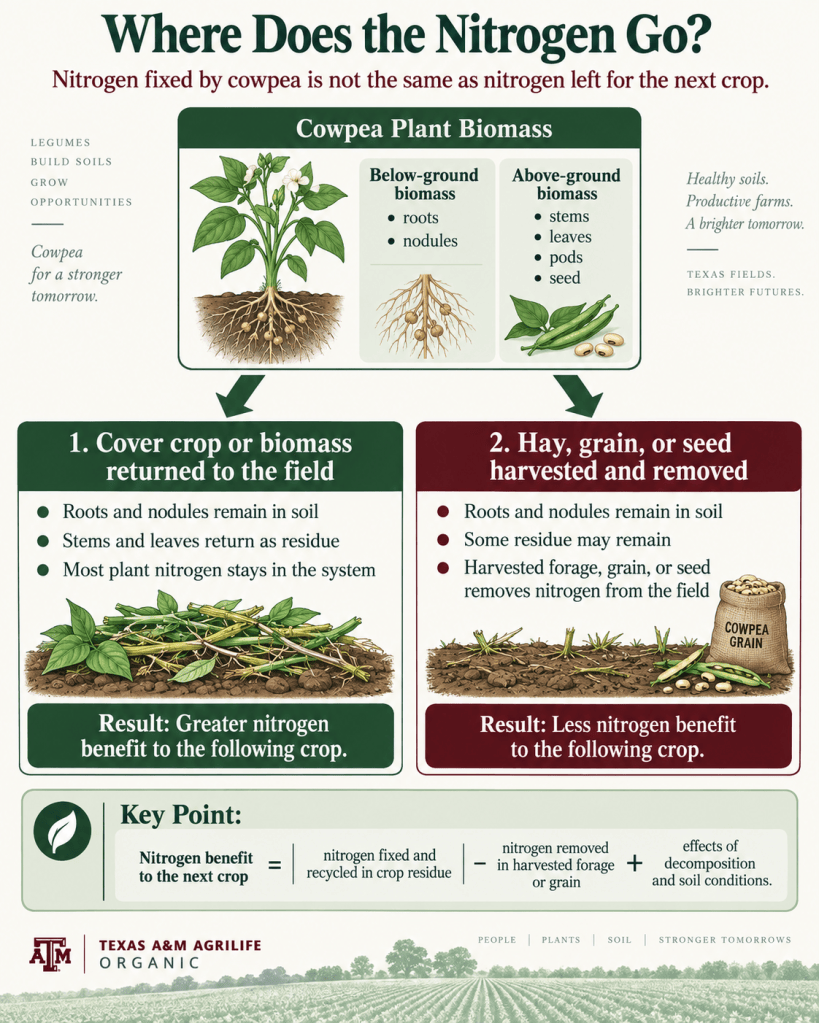
That distinction is particularly important when comparing cowpea uses. A cowpea cover crop terminated at high biomass may provide a meaningful nitrogen contribution to the next crop, while a high-yielding hay crop may export much of the nitrogen it fixed.
One Organic Point That Matters
For organic production, successful nodulation is part of the fertility program.
A relatively inexpensive packet of the correct inoculant can substitute biologically for a considerable amount of purchased nitrogen, but only if the bacteria survive, infect the roots, and form effective nodules. That makes proper inoculation, good soil fertility, adequate moisture, and checking nodulation after emergence some of the most important fertility practices in an organic cowpea crop.
The goal is not simply to grow a green crop. It is to establish an effective cowpea-Bradyrhizobium partnership that allows the crop to supply much of its own nitrogen while fitting the fertility needs of the entire rotation.
Weed Management
Cowpea can become a very competitive crop once it develops enough canopy, but the first few weeks after emergence are the critical period. Organic weed control should therefore focus on starting clean, removing weeds while they are very small, and protecting the crop until the rows begin to close.
Start with a Clean Seedbed
A clean seedbed is the foundation of organic cowpea weed control. Tillage before planting should eliminate existing weeds and prepare a uniform seedbed for planting and later cultivation. Where time and moisture allow, a stale seedbed can also be useful: prepare the seedbed early, allow a flush of weeds to emerge, then destroy those seedlings shallowly before planting.
The important idea is to avoid beginning the season with weeds already competing with the cowpea.
Control Weeds When They Are Small
The easiest weed to control mechanically is one that has just germinated. Soon after planting and during early crop development, blind cultivation with a rotary hoe or tine weeder can remove very small weeds before they become established. These tools work best when weeds are in the white-thread to cotyledon stage and the soil surface is dry enough for uprooted seedlings to desiccate.
This is the same approach used successfully in many Texas organic row-crop systems: begin with the rotary hoe or tine weeder, then move to more aggressive between-row cultivation as the crop becomes established. My broader resource page discusses these mechanical weed-control approaches in more detail.24
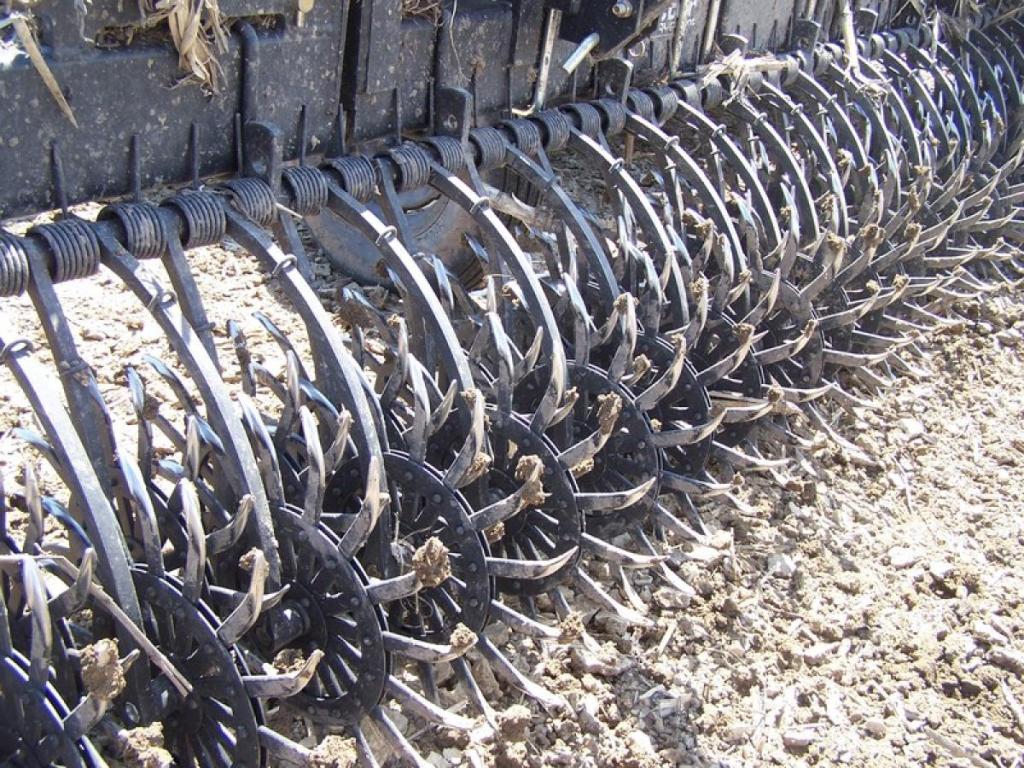
Yetter 3400/3500 Standard Rotary Hoe. Picture – Yetter Farm Equipment
Cultivate Until the Cowpea Can Take Over
Once the crop is large enough to tolerate cultivation, sweeps or other row-crop cultivators can control weeds between the rows. Cultivation should be shallow enough to avoid unnecessary root pruning while still cutting weeds below the soil surface.
As cowpea develops, the objective changes from repeatedly cultivating the field to helping the crop develop a competitive canopy as quickly as possible. Adequate plant population and appropriate row spacing become part of weed management because faster canopy closure reduces the light available to later-emerging weeds.
That is one reason planting and weed management are closely connected: a thin or uneven cowpea stand is much harder to keep clean than a uniform, vigorous stand.
Timing Matters More Than the Number of Cultivations
A field may receive several mechanical operations, but the number of passes is less important than hitting the weeds at the right stage.
A rotary hoe used against two-inch pigweed is already late. Sweeps trying to remove established weeds are much less effective than the same equipment used when weeds are small. Organic weed management works best as a series of timely operations rather than as a rescue treatment after weeds become obvious.
A practical sequence for many Texas fields may look like:
clean seedbed → rotary hoe or tine weeder → sweeps or cultivator → repeat as needed → canopy closure
Hand hoeing may still be needed for weeds that escape within the row, particularly where those weeds could produce seed and increase problems in future crops. The cost of those escapes can be substantial. In Texas organic peanut production, hand-hoeing costs can exceed $200 per acre when early weed escapes are not controlled.
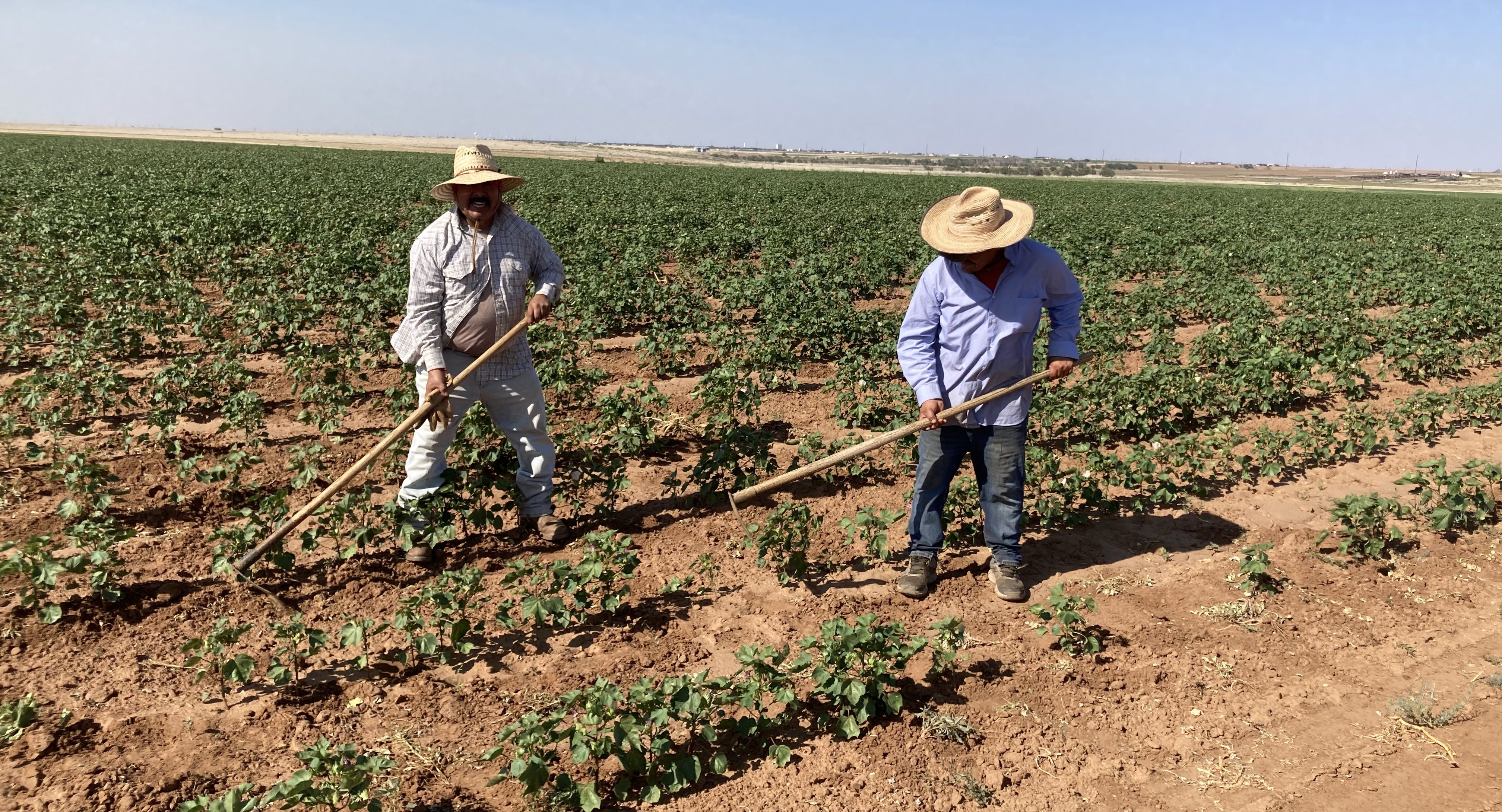
Hand hoeing can become necessary when early weed escapes are not controlled, adding significant labor and cost. Photo: Texas A&M AgriLife Organic.
One Organic Point That Matters
With cowpea, the goal is not to keep cultivating all season. The goal is to stay ahead of weeds long enough for the crop canopy to become one of the weed-control tools.
A vigorous, uniform cowpea stand can suppress later-emerging weeds through shading and competition. That makes good stand establishment, appropriate plant population, timely cultivation, and rapid canopy closure all part of the organic weed-management system, not separate practices.
Insects, Nematodes and Diseases
Cowpea can tolerate a fair amount of insect feeding and still produce a crop, but several pests can become economically important, especially when the crop is being grown for fresh peas, dry grain, or seed rather than simply as a cover crop. Organic management should begin with regular scouting, conservation of beneficial insects, and treatment only when pest pressure threatens yield or market quality.
Several organically acceptable products are specifically labeled for black-eyed peas or cowpea. Depending on the pest and product label, options include Beauveria bassiana, azadirachtin products, and physical or barrier products such as Entrapment. The important point is to match the pest, crop, and current label before application. The current organic product list includes materials labeled for black-eyed peas/cowpea and relevant pests such as aphids, thrips, stink bugs, and weevils. 25 Always follow product labels and check with your certifier before treatment.
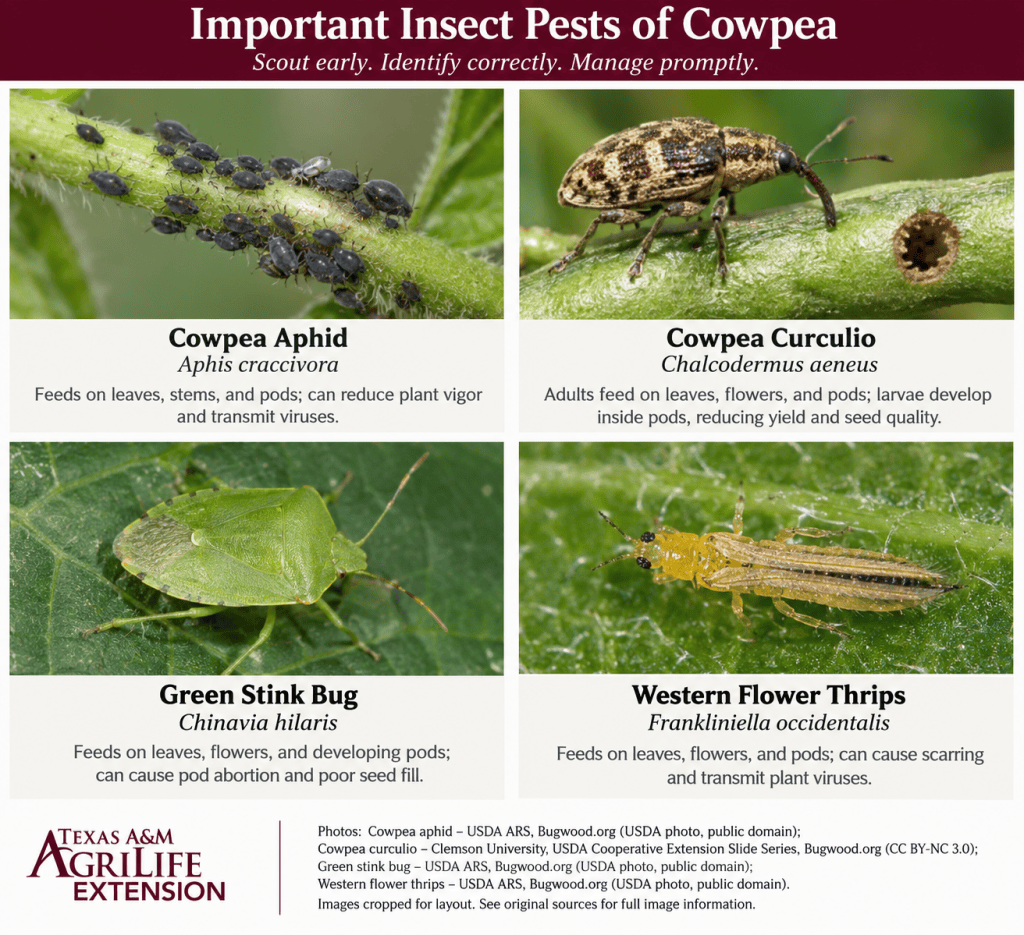
Thrips
Thrips can injure young seedlings and later feed in flowers. Heavy infestations may stunt plants, distort new growth, and interfere with flowering and pod set.
A vigorous, rapidly growing stand is the first defense. If treatment is needed, organically acceptable products labeled for black-eyed peas or cowpea include biological, botanical, and physical-control products such as Beauveria bassiana, azadirachtin, and Entrapment. Coverage is important because thrips often feed in protected areas of the plant.
Aphids
Cowpea aphid can build rapidly on terminals, stems, and the undersides of leaves. Heavy populations remove plant sap, reduce vigor, and produce honeydew. Aphids can also transmit viruses, so they may be important even before direct feeding injury becomes severe.
Natural enemies such as lady beetles, lacewings, syrphid fly larvae, and parasitoid wasps can provide substantial biological control. For that reason, preserving beneficial insects should be part of the management strategy.
If populations continue to increase, organically acceptable products labeled for cowpea or black-eyed peas include Beauveria bassiana, azadirachtin products, and physical-control products such as Entrapment. Beauveria bassiana labels specifically include cowpea aphid among the target pests.
Stink Bugs and Other Pod Feeders
Stink bugs become especially important after pods begin forming. Adults and nymphs insert their mouthparts through the pod wall and feed directly on developing seed. Damage may result in shriveled, discolored, malformed, or poorly germinating seed, which can substantially reduce the value of a fresh-market, dry-grain, or seed crop.
Organic options are more limited than for soft-bodied insects, but biological and botanical materials can provide suppression when applied against smaller populations and with good coverage. Beauveria bassiana products labeled for black-eyed peas include stink bugs among their target pests.
Because pod-feeding insects directly affect marketable seed, scouting should increase as flowering begins and continue through pod fill.
Cowpea Curculio
Cowpea curculio can be one of the most damaging pests of southern peas. Adults puncture developing pods to feed and lay eggs, and larvae develop inside the pea. Even relatively modest infestations can create serious quality losses in fresh or dry edible peas.
Organic management should combine rotation, sanitation, destruction of crop residue, avoidance of continuous cowpea production, and biological control where appropriate.
Beauveria bassiana is particularly interesting for organic curculio management. University of Georgia research found that a B. bassiana soil treatment produced the greatest reduction in overwintering cowpea curculio emergence among the treatments tested, with about a 58% reduction compared with the untreated check.26
UGA also notes that B. bassiana strain GHA products can reduce survival of late-instar larvae, pupae, and newly emerged adults during the soil phase of the curculio life cycle. However, heavy curculio infestations remain difficult to control, so preventive cultural practices and early scouting are especially important.
Root-Knot Nematodes
Root-knot nematodes are one of the most important nematode concerns for cowpea in Texas, particularly on sandy soils and in fields where susceptible crops are grown repeatedly. Infected roots develop characteristic galls, and heavily affected plants may become stunted, yellow, less efficient at taking up water and nutrients, and more susceptible to drought stress.
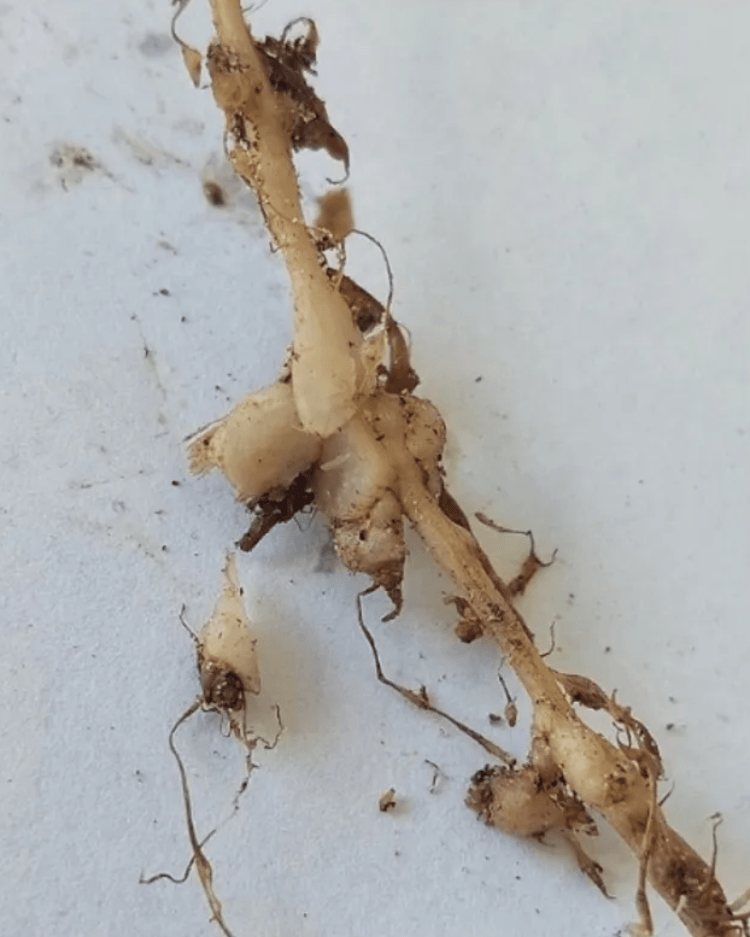
Cowpea root with root-knot nematode galls caused by Meloidogyne spp.. Photo Credit: David Hébert, UF/IFAS – Nitrogen-Fixing Legume Nodules
Variety resistance is one of the best tools where resistant material is available. Rotation can also help, although rotation crops must be selected carefully because root-knot nematodes have a very broad host range.
Organic growers also have effective biological nematicide options. Two examples are:
NemaClean® 10% WP from Certis Biologicals contains Purpureocillium lilacinum strain PL11 and is labeled for root-knot and several other plant-parasitic nematodes.27 It can be applied as a soil drench, in-furrow treatment, banded application, or through irrigation systems.
LALNIX® ACT DC from Lallemand Plant Care contains Purpureocillium lilacinum strain 251 and is an OMRI-listed biological nematicide for root-knot and numerous other plant-parasitic nematodes. The fungus attacks nematode eggs and other life stages in the soil.28
These products are most useful when incorporated into an overall nematode-management program rather than treated as stand-alone rescue treatments.
Diseases
Cowpea can be affected by seedling diseases, root rots, Fusarium wilts, bacterial diseases, viruses, and foliar diseases. Disease pressure depends greatly on variety, seed quality, weather, drainage, crop rotation, and insect pressure.
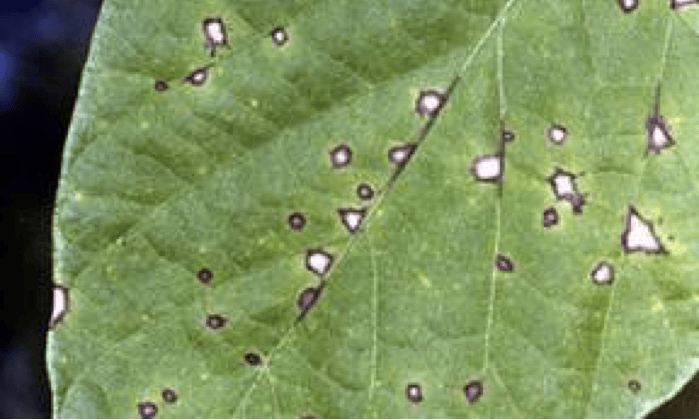
Cercospera leaf spot. Source: Image source: ICAR Research Complex, India. See University of Georgia Cooperative Extension, Crop Profile for Cowpeas in Georgia.29
The strongest organic disease-management tools are preventive:
- start with high-quality, disease-free seed;
- use resistant varieties where available;
- rotate away from cowpea and other susceptible hosts;
- avoid poorly drained or waterlogged fields;
- maintain balanced fertility rather than excessive vegetative growth;
- reduce unnecessary plant injury;
- control volunteer cowpea and legume weeds that may harbor pathogens or virus vectors; and
- manage insects such as aphids that can transmit viruses.
Biological fungicides can also have a place in an organic program. For example, Bacillus pumilus products such as Sonata are labeled across broad crop groups that include black-eyed peas.30 Their usefulness will depend on the particular disease, timing, and current product label.
One Organic Point That Matters
Organic insect and disease management should not begin with the question, “What can I spray?”
A better sequence is:
scout → identify the problem → determine whether it is increasing → consider beneficial organisms and crop stage → evaluate potential economic or market damage → treat only when needed
This is particularly important in cowpea because the crop can tolerate some feeding, while beneficial insects may keep aphids and other pests below damaging levels. At the same time, pests such as cowpea curculio, stink bugs, and root-knot nematodes can directly affect seed quality or yield and may justify a much more active management program.
The goal is not a completely pest-free field. The goal is to protect crop yield and market quality while using biological, cultural, and organically approved tools in a coordinated system.
Irrigation and Drought Management
Cowpea is relatively drought tolerant, but drought tolerance does not mean the crop will produce maximum yield without adequate water. Supplemental irrigation can substantially improve biomass and seed production when rainfall is limited, especially during the hot, dry periods common in Texas.
Cowpea has several traits that help it cope with water stress, including stomatal closure, reduced leaf area, and root systems capable of accessing deeper soil moisture. However, drought tolerance varies considerably among varieties and breeding lines. Some genotypes maintain growth and yield much better than others under limited water.
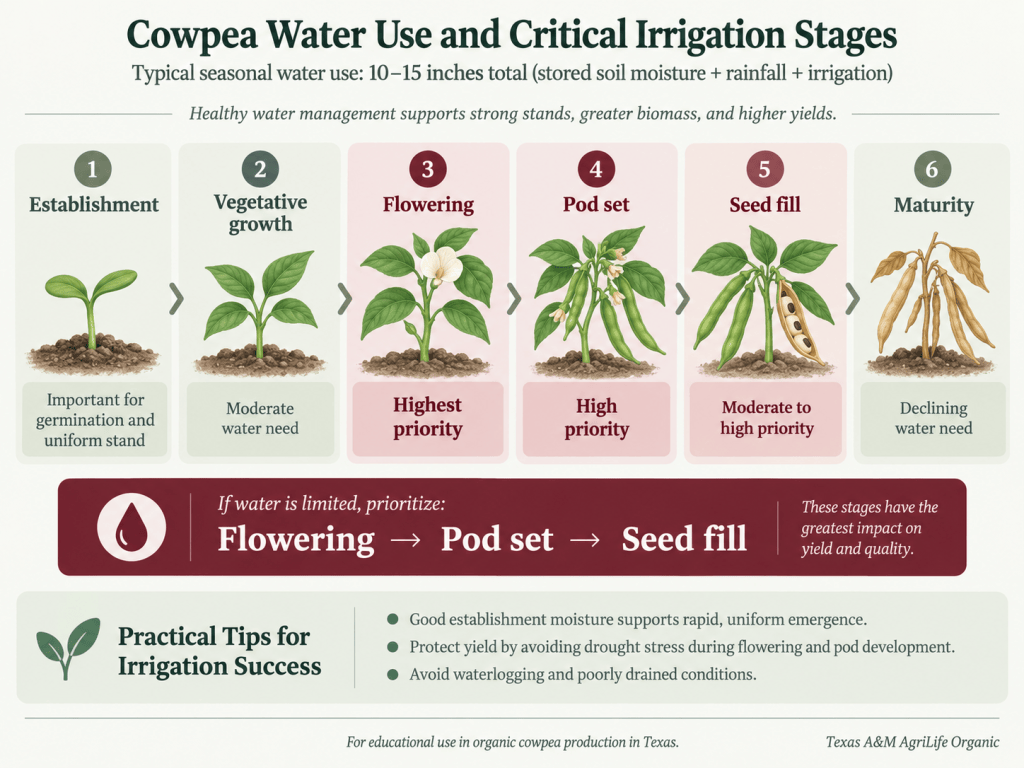
Texas A&M sources indicate cowpea generally requires about 10 to 15 inches of total seasonal water, including stored soil moisture, rainfall, and irrigation.31 Water demand is not equal across the season, however, and the most critical period is from just before flowering through pod set and early seed fill.
Establishment Moisture
Adequate soil moisture is important for rapid germination, uniform emergence, and early root development. A crop that emerges unevenly because of dry soil will usually remain uneven through the season.
If irrigation is available, planting into good soil moisture is preferable to planting dry and waiting for rainfall. Once established, cowpea can tolerate periods of limited moisture better than many other legumes, but prolonged stress can still reduce canopy development, biomass, flowering, and yield.
Protect Flowering and Pod Development
If irrigation water is limited, flowering should receive the highest priority, followed by pod set and seed fill.
Recent Mississippi State research found flowering to be the most drought-sensitive stage of cowpea development.32 Drought during flowering increased flower abortion and reduced yield potential, while vegetative stages such as branching were considerably more resilient. Seed fill was also sensitive to water stress.
For fresh-market and grain production, the practical priority is:
flowering → pod set → seed fill
Water stress during these stages can reduce pod number, seed size, and marketable yield.
Irrigation Should Match the Intended Use
The amount of irrigation justified for cowpea depends greatly on how the crop will be used.
A cover crop may not need to be irrigated for maximum biomass if the primary goals are soil cover, nitrogen fixation, weed suppression, and rotational benefit.
A hay or grazing crop may justify additional irrigation when the added water produces enough forage to offset the irrigation cost.
A fresh-market or dry-grain crop generally has a stronger economic reason to protect flowering and pod development because drought stress at those stages directly reduces marketable yield and quality.
This is why a single irrigation recommendation does not fit every cowpea production system.
Avoid Waterlogging
Cowpea performs best in warm, well-drained soils and generally does not tolerate prolonged saturated conditions well. Excess water reduces oxygen in the root zone, restricts root growth and nodulation, and can increase seedling and root diseases.
The goal is therefore not to keep the soil continuously wet. It is to maintain enough available moisture to support growth while avoiding prolonged saturation.
One Organic Point That Matters
For organic production, good water management supports more than yield. Adequate moisture helps maintain rapid canopy development, weed competition, active root growth, nodulation, nutrient uptake, and soil biological activity.
At the same time, excessive irrigation can increase weeds, disease pressure, nutrient movement, and production costs.
The practical goal is to take advantage of cowpea’s natural drought tolerance while protecting the growth stages that matter most. If irrigation water is limited, establish the crop well and prioritize flowering, pod set, and seed fill rather than trying to maintain uniformly wet soil throughout the season.
Harvest and Post-Harvest Handling
Harvest timing depends entirely on how the cowpea crop will be used. A cowpea grown as a cover crop may be terminated while still green and actively growing, while hay, grazing, fresh-market peas, dry grain, and seed production each require a different harvest stage. The important point is to choose the harvest stage that preserves the value you are trying to obtain from the crop.
Cover Crop Termination
For a cowpea grown primarily as a cover crop, termination timing involves balancing biomass production, nitrogen contribution, soil moisture use, and ease of termination.
Cowpea biomass continues to increase as the crop develops, but stems become more fibrous as plants mature and pods begin forming. SARE recommends incorporating cowpea while the crop is still green when rapid decomposition and nutrient release are desired.33 Cowpea residue generally breaks down relatively quickly in warm conditions, allowing relatively rapid nutrient release, so it generally decomposes and releases nitrogen relatively quickly.
Organic growers can terminate cowpea by mowing, grazing, tillage, or combinations of these practices. SARE notes that cowpeas may be mowed or rolled to suppress regrowth before incorporation. Mowing or rolling alone may suppress growth but does not always completely kill cowpea, particularly while plants are still vigorous. Shallow tillage following mowing can provide more complete termination.
Where soil moisture is limited, particularly in western Texas, termination should occur early enough that the cover crop does not unnecessarily use water needed for the following cash crop.
Grazing
Cowpea can provide high-quality warm-season grazing, but grazing management should protect enough leaf area and growing points to allow regrowth when another grazing period is desired.
Varieties differ considerably in their response to grazing. Vigorous forage types with good standability and regrowth are better suited to repeated grazing than many grain-oriented varieties. Stocking rate and grazing duration should be adjusted to forage availability rather than grazing the crop down to bare stems.
Grazing also changes the nutrient balance compared with hay harvest. Much of the nitrogen and other nutrients consumed by livestock are returned to the field through manure and urine, although they are redistributed rather than returned uniformly.
Hay
Cowpea can produce excellent summer hay with relatively high protein and good feeding value. The challenge is balancing forage quality against tonnage.
In its cowpea chapter, SARE reports that cowpea forage is at high feeding value when pods are fully formed and the first pods begin to ripen. Waiting longer may increase tonnage, but stems become coarser and leaf loss increases as the crop matures.
Leaf retention is particularly important because much of the forage quality is concentrated in the leaves. Hay should therefore be handled carefully once dry enough to bale to minimize leaf shatter.
When cowpea hay is removed from the field, remember that much of the nitrogen and other nutrients contained in the aboveground biomass leave with the hay. The rotational nitrogen benefit will therefore be considerably different from that of a cowpea cover crop left entirely in the field.
Fresh-Market and Green-Shell Peas
Southern peas can be harvested at three general stages:
green snap → green shell → dry pea
Green snap peas are harvested while the pod is still tender. Green-shell peas are harvested after the peas have filled the pod but before the seed has fully dried.
For commercial processing, Oklahoma State reports that green-shell peas are commonly harvested when approximately 35–40% of the pods have dried.34 Commercial snap-bean harvesters may be used on bush and semi-vining varieties, while processors may use mobile viners that shell and clean the peas in the field.
Fresh-market growers may hand harvest several times, especially with indeterminate or vining varieties that continue setting pods over an extended period. Multiple harvests can increase total marketable yield, but labor requirements increase substantially. Oklahoma State reports that repeated hand harvests of vining types may increase green-pea yields by about 25% compared with a single harvest.35
For fresh-market production, harvest timing should emphasize seed size, appearance, tenderness, flavor, and shell-out, not simply maximum biological yield.
Dry Edible Grain
Dry peas are allowed to mature until the pods and seed have dried sufficiently for mechanical harvest. Small-grain combines can be used, but settings should be adjusted carefully because cowpea seed can be damaged by excessive cylinder or rotor speed and aggressive threshing.
Oklahoma State notes that small-grain combines are commonly used for dry cowpea harvest.36 Variety growth habit also matters because pods on some varieties are carried relatively close to the ground, making low cutting height important for reducing harvest losses.
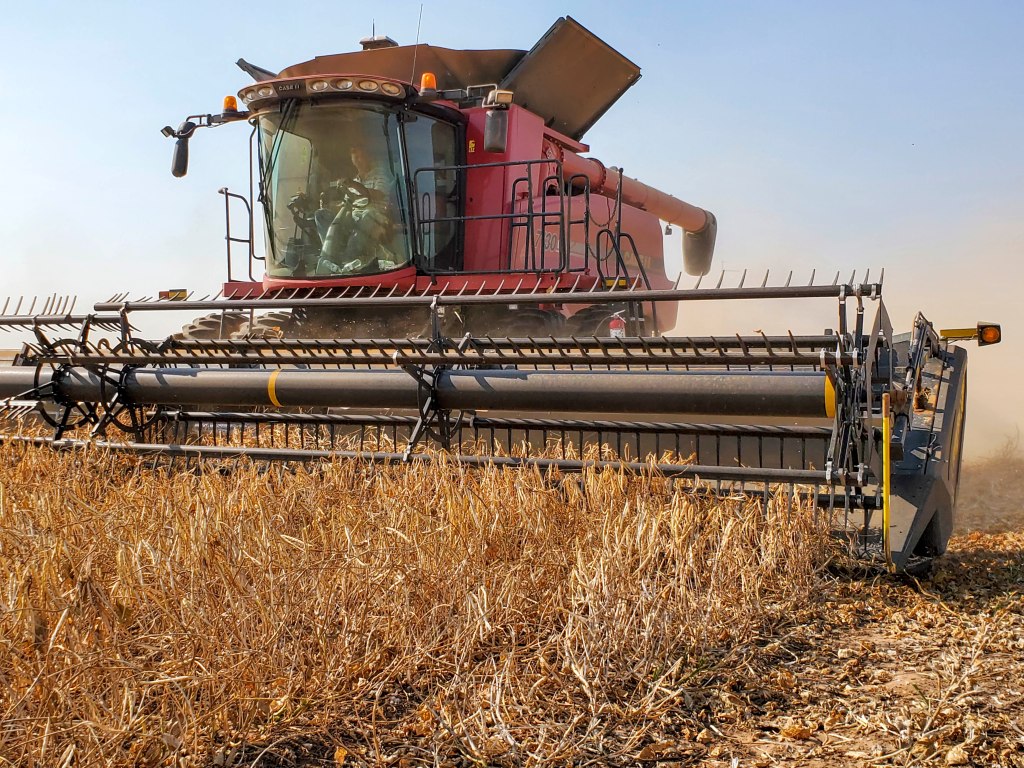
Commercial combine harvest of a dry-seeded cowpea crop. Small-grain combines are commonly used for dry cowpea harvest, with careful adjustment needed to minimize seed damage. Photo: Texas A&M AgriLife Organic.
Dry cowpea should not remain in the field unnecessarily after maturity. Mature pods can become brittle, increasing the potential for pod shattering, weathering, discoloration, insect damage, and seed-quality loss.
Harvest should therefore be based on pod and seed maturity rather than simply waiting for every plant in the field to become completely dry.
Seed Production
Cowpea grown for planting seed requires greater attention to harvest and handling than cowpea intended only for food or feed.
The objective is not simply to harvest the greatest number of pounds. Seed must retain:
- high germination;
- strong seedling vigor;
- varietal purity;
- physical integrity;
- freedom from serious seedborne disease; and
- good storage quality.
Mechanical damage during combining, augering, cleaning, and conveying can reduce germination even when the seed looks acceptable. Equipment should therefore be adjusted to handle seed as gently as practical.
After harvest, planting seed should be cleaned, dried to a safe storage moisture, and stored under cool, dry conditions. Stored dry cowpea can also be attacked by the cowpea weevil (Callosobruchus maculatus), an important pest of stored seed. University of Georgia notes that this insect attacks dried cowpea seed after harvest rather than the crop in the field.37
One Organic Point That Matters
Harvest is also the point where organic integrity can be lost very quickly.
Combines, grain carts, trucks, augers, cleaners, shellers, bins, and packaging equipment that have handled conventional crops should be adequately cleaned before handling organic cowpea.38 That cleaning should also be documented.
For an organic producer, post-harvest handling is therefore part of production—not something that begins after the crop is finished.
The goal is to maintain the identity and integrity of the crop from:
field → harvest equipment → transportation → cleaning → storage → buyer
Markets and Quality
Cowpea is unusual because the market can be more important than yield in determining which variety should be grown. A high-yielding cowpea may have little value if its seed color, size, eye pattern, cooking characteristics, or maturity do not match what the buyer wants.
For that reason, producers growing cowpea as a cash crop should identify the market before purchasing seed whenever possible.
Oklahoma State specifically emphasizes that buyer preference should be considered when selecting southern pea varieties and notes that processors commonly specify the variety to be grown.39 Market classes differ in growth habit, pod color, seed color, eye color, and seed shape.
Fresh-Market Peas
Fresh-market quality is strongly influenced by local consumer preference. Blackeye, cream, crowder, and pinkeye-purple hull peas may all be cowpeas, but consumers often regard them as distinctly different products.
Important fresh-market characteristics include:
- attractive seed color and appearance;
- uniform seed size;
- tenderness;
- flavor;
- high shell-out percentage;
- freedom from insect injury;
- ease of shelling; and
- enough maturity concentration to make harvest economical.
For direct-market producers, a variety with excellent flavor and recognizable market identity may be worth considerably more than one selected simply for maximum yield.
Dry Edible Grain
Dry edible cowpea enters a more standardized grain market, but appearance and food quality remain important.
Depending on the buyer, quality specifications may include:
- market class or variety;
- seed-coat color;
- eye color and pattern;
- seed size;
- uniformity;
- moisture;
- broken or split seed;
- foreign material;
- insect damage;
- weather damage or discoloration;
- cooking characteristics; and
- pesticide residue requirements.
Traditional blackeye peas have an established U.S. market, but cowpea can also enter specialty food, ingredient, ethnic, milling, and export markets.
Specialty and Export Markets
Specialty markets make buyer communication before planting especially important.
The Korean cowpea market is a good example.40 A buyer may not simply want “cowpea.” The intended use may require a particular seed color, size, eye pattern, cooking quality, or processing characteristic.
In that situation, the sequence should be:
buyer specification → market class → variety → seed source → production
rather than growing a cowpea first and trying to find a market later.
A physical seed sample or photograph from the buyer can sometimes be more informative than a variety name because market terminology is not always consistent between countries.
Forage Markets
Hay and grazing markets evaluate cowpea differently from food markets. Important characteristics include:
- forage yield;
- crude protein and digestibility;
- leaf-to-stem ratio;
- maturity;
- palatability;
- freedom from weeds;
- proper curing; and
- bale or forage condition at sale.
A forage producer therefore may deliberately select a variety that would be undesirable for a food market because leafiness, biomass, and regrowth are more important than seed appearance.
Seed Markets
Seed production can become a particularly valuable niche because interest in cowpea is expanding for cover crops, forage, organic rotations, food markets, and newer improved varieties.
Planting seed must meet standards beyond ordinary grain quality. Buyers expect good germination, vigor, purity, correct varietal identity, and appropriate seed health.
For newer Texas A&M cowpea varieties, commercial opportunity will also depend on licensing, foundation or breeder seed increase, and availability of certified seed classes.41 Some new TAMC material may therefore appear in research publications before farmers can purchase commercial quantities.
One Organic Point That Matters
For organic producers, a market should be evaluated not only by price but by whether the entire production and handling system can meet the buyer’s requirements.
A specialty buyer may require:
certified organic status + a specific variety or market class + seed-quality specifications + residue expectations + segregation and traceability
That makes the marketing decision part of the production decision.
For a cowpea cash crop, I would encourage growers to ask one question before they plant:
“What exactly does my buyer want to receive?”
The answer may determine the variety, planting population, harvest method, storage system, and ultimately whether the crop is profitable.
References
- Osipitan, O.A.; Fields, J.S.; Lo, S.; Cuvaca, I. 2021. “Production Systems and Prospects of Cowpea (Vigna unguiculata (L.) Walp.) in the United States.” Agronomy 11:2312. https://doi.org/10.3390/agronomy11112312 ↩︎
- Texas Almanac, 1956-1957, book, 1955; Dallas, Texas. (https://texashistory.unt.edu/ark:/67531/metapth117138/: accessed August 17, 2026), University of North Texas Libraries, The Portal to Texas History, https://texashistory.unt.edu; crediting Texas State Historical Association. ↩︎
- USDA. Legume Hays for Milk Production. Farmers’ Bulletin 1573. ↩︎
- Sheahan, C.M. 2012. Plant Guide for Cowpea (Vigna unguiculata). USDA Natural Resources Conservation Service, Cape May Plant Materials Center, Cape May, New Jersey. ↩︎
- USDA Natural Resources Conservation Service. 2024. Cowpea Cover Crop Fact Sheet. ↩︎
- Smith, G., and M. Rouquette, Jr. 2022. Forage Legumes for Texas 2022. Research Center Technical Report 2022-2. Texas A&M AgriLife Research and Extension Center, Overton, Texas. ↩︎
- Texas A&M AgriLife. 2020. “Texas A&M releases new Ace cowpea.” Department of Soil and Crop Sciences. ↩︎
- University of Georgia Cooperative Extension. 2017. Crop Profile for Cowpeas in Georgia. Bulletin 1480. University of Georgia College of Agricultural and Environmental Sciences. ↩︎
- Ravelombola, W., B.B. Singh, R. Lindsey, S.C. Murray, C. Trostle, A. Manley, S. Stephens, J. Cason, B. Bennet, and R. Sutton. 2026. “Registration of short-season and high-protein cowpea TAMC 241, TAMC 243, and TAMC 244.” Journal of Plant Registrations 20:e70054. ↩︎
- Texas A&M AgriLife Research and Extension Center at Vernon. Specialty and Organic Crop Breeding Program. ↩︎
- USDA Agricultural Marketing Service, National Organic Program. Seeds and Planting Stock Practice Standard, 7 CFR §205.204. ↩︎
- Oklahoma State University Extension. Southern Pea Production. ↩︎
- USDA Natural Resources Conservation Service. 2018. Evaluation of Cowpea and Mung Bean Varieties. Final Study Report MT-16-001. Bridger Plant Materials Center, Bridger, Montana. ↩︎
- Coolong, T., and D.M. Granberry. 2017. Commercial Southern Pea Production. University of Georgia Cooperative Extension, Circular 485. ↩︎
- Coolong, T., and D.M. Granberry. 2017. Commercial Southern Pea Production. University of Georgia Cooperative Extension, Circular 485. ↩︎
- Oklahoma State University Extension. Southern Pea Production. ↩︎
- Oklahoma State University Extension. Southern Pea Production. ↩︎
- USDA Natural Resources Conservation Service. 2024. Cowpea Cover Crop Fact Sheet. ↩︎
- Visjon Biologics. Exceed® Peat for Peanut, Cowpea, Lespedeza and Mung Bean: Specimen Label. ↩︎
- Zhang, H., and B. Raun, eds. Oklahoma Soil Fertility Handbook. Oklahoma State University Extension. ↩︎
- Coolong, T., and D.M. Granberry. 2017. Commercial Southern Pea Production. University of Georgia Cooperative Extension, Circular 485. ↩︎
- Zhang, H., and B. Raun, eds. Oklahoma Soil Fertility Handbook. Oklahoma State University Extension. ↩︎
- Zhang, H., and B. Raun, eds. Oklahoma Soil Fertility Handbook. Oklahoma State University Extension. ↩︎
- Whitney, B. 2023. Organic Weed Control. Texas A&M AgriLife Organic. ↩︎
- Texas A&M AgriLife Organic. Organic Materials/Products current product list. ↩︎
- University of Georgia College of Agricultural and Environmental Sciences. Management of Overwintering Cowpea Curculio in Southern Peas. ↩︎
- Certis Biologicals. NemaClean® 10% WP product information. ↩︎
- Lallemand Plant Care. LALNIX® ACT DC product information. ↩︎
- University of Georgia Cooperative Extension. 2017. Crop Profile for Cowpeas in Georgia. Bulletin 1480. ↩︎
- U.S. Environmental Protection Agency. Sonata® ASO Master Label. EPA Reg. No. 264-1153. Active ingredient: Bacillus pumilus strain QST 2808. ↩︎
- Trostle, C. 2001. Optimum Irrigation for Black-Eyed Peas in West Texas. Texas A&M AgriLife Research & Extension Center at Lubbock. July 20, 2001. ↩︎
- Poudel, S., L.V. Sankarapillai, and R. Bheemanahalli. 2025. “Cowpea: A Nutrient-Rich Pulse for Extreme Environments.” CSA News. Mississippi State University. ↩︎
- Sustainable Agriculture Research and Education (SARE). Cowpeas. In Managing Cover Crops Profitably. ↩︎
- Oklahoma State University Extension. Southern Pea Production. ↩︎
- Oklahoma State University Extension. Southern Pea Production. ↩︎
- Oklahoma State University Extension. Southern Pea Production. ↩︎
- University of Georgia Cooperative Extension. 2017. Crop Profile for Cowpeas in Georgia. Bulletin 1480. ↩︎
- USDA Agricultural Marketing Service, National Organic Program. 7 CFR §205.272 — Commingling and Contact with Prohibited Substances Prevention Practice Standard. and also, USDA NOP Guidance 5025 ↩︎
- Oklahoma State University Extension. Southern Pea Production. ↩︎
- Kim, D.-K., K. Iwar, K. Ochar, S.-Y. Park, E.-B. Go, K.-D. Lee, and S.-H. Kim. 2024. “Cowpea (Vigna unguiculata) Cultivation and Breeding in the Republic of Korea: Advances and Future Perspectives.” Agronomy 14(11):2679. ↩︎
- Texas A&M AgriLife Research and Extension Center at Vernon. Specialty and Organic Crop Breeding Program. ↩︎
Other Resources
Just click on the image or link to see!





Discover more from Texas A&M AgriLife Organic
Subscribe to get the latest posts sent to your email.


