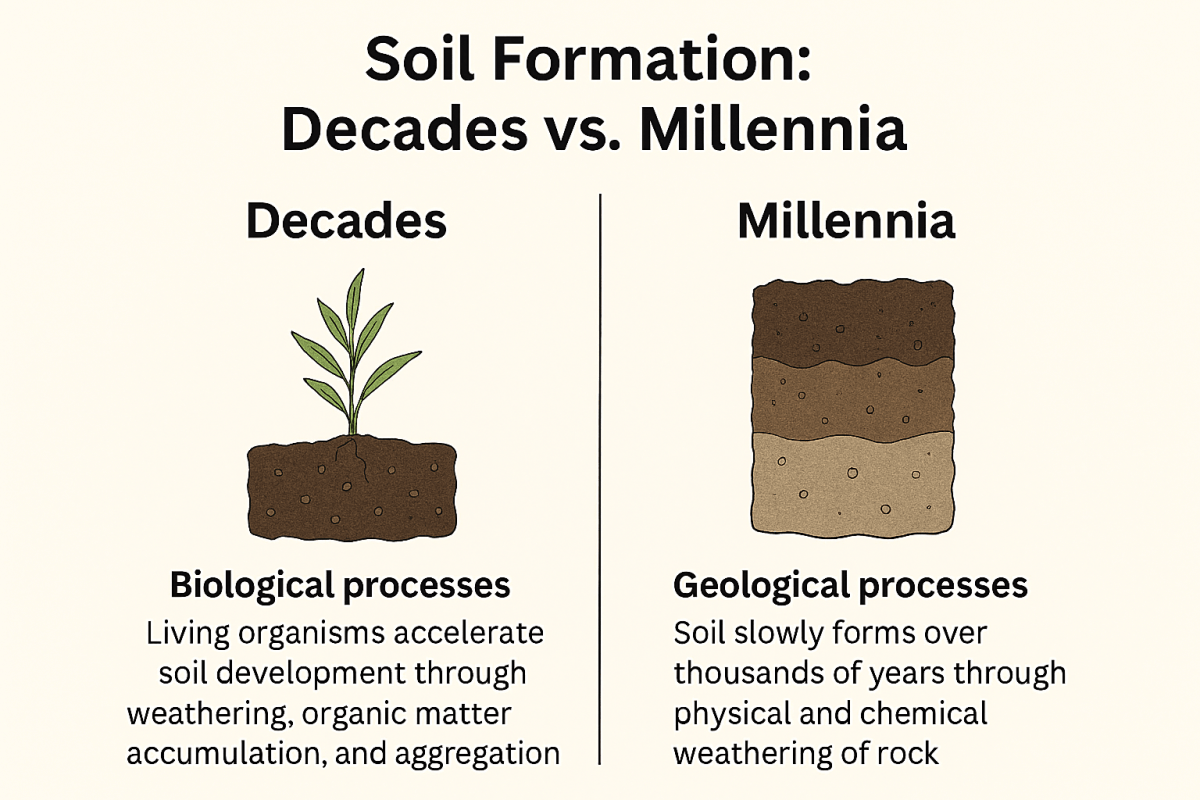
Most of us grew up hearing that “soil takes thousands of years to form.” That statement is still true for deep, fully developed soils with strong horizon development. But what I’ve come to appreciate more and more—especially when working with organic and regenerative growers—is that the early stages of soil formation can move much faster than we were taught.
In the right conditions, soil can develop measurable structure and function on a decadal timeline (2-3 decades). The key reason is simple: biology accelerates soil formation.
Soil Formation Starts When Life Colonizes Minerals
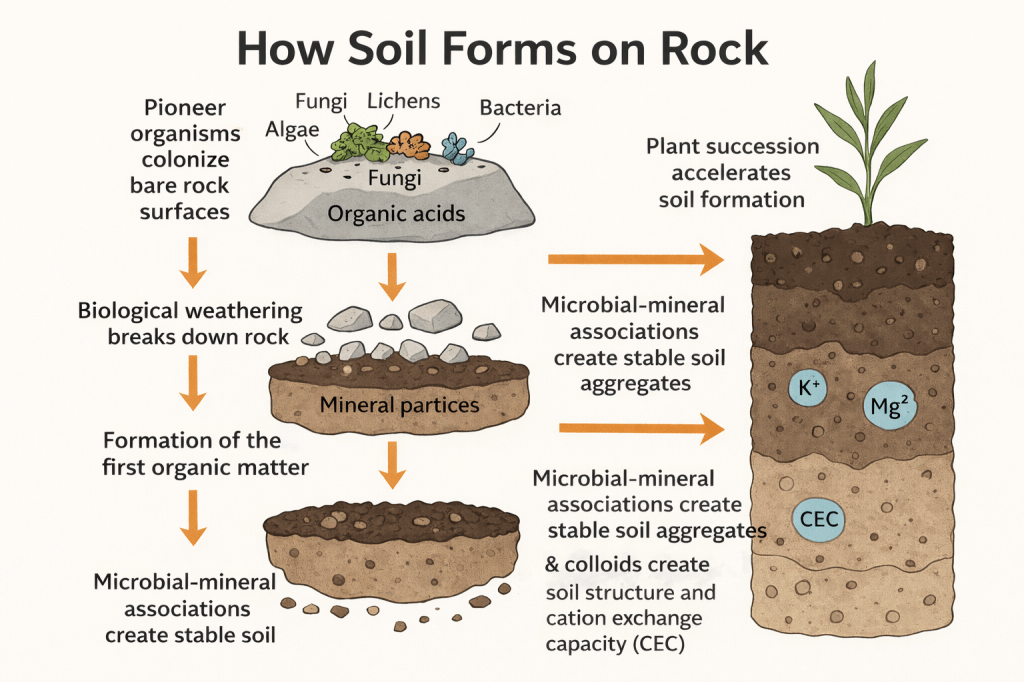
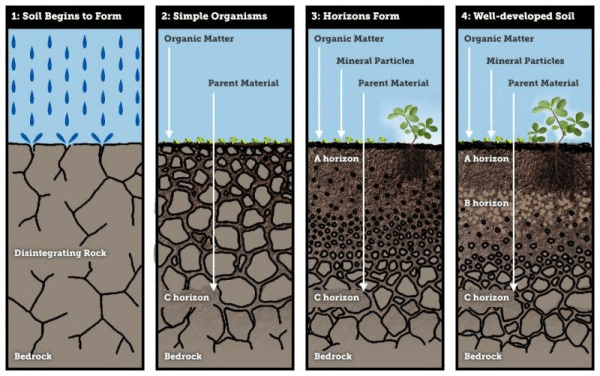
Pedogenesis (soil formation) begins when organisms colonize bare mineral material—rock, ash, subsoil, or exposed parent material. The first colonizers are “pioneer organisms” that can survive with very little water and almost no nutrients. These include:
These organisms don’t just “live on rock.” They actively change it. They attach to mineral surfaces, grow into microcracks, and begin chemically and physically transforming the material into something more soil-like.1
Biological Weathering Is Faster Than Purely Geological Weathering
Once microbes and fungi are present, weathering becomes a biological–geochemical process.
Chemical weathering
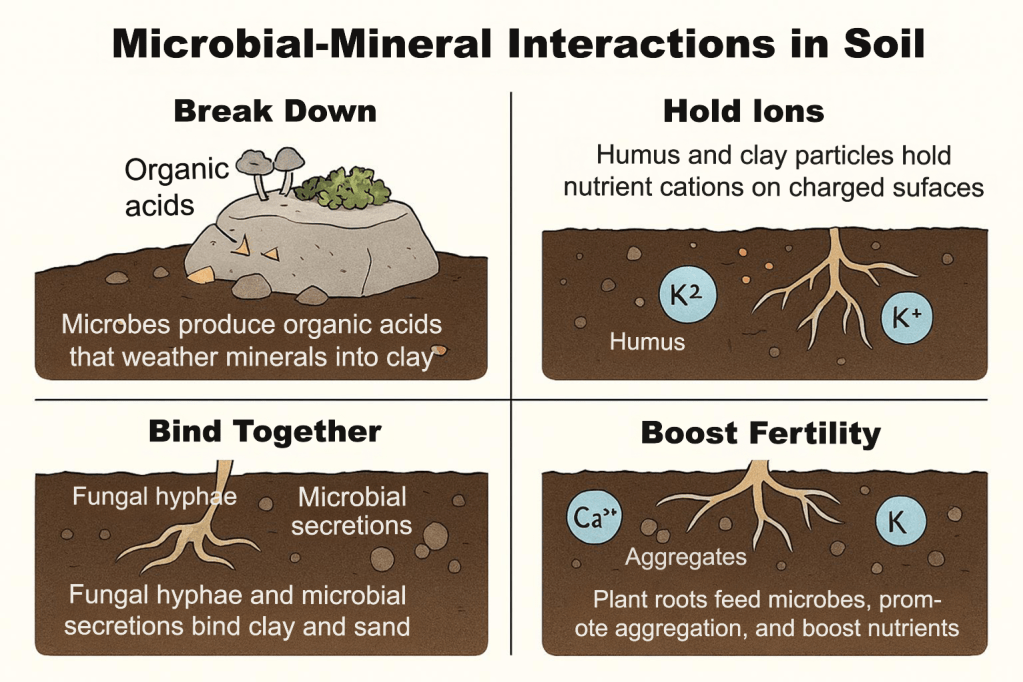
Organisms produce compounds such as organic acids and chelators that dissolve minerals and release nutrients like:
calcium (Ca²⁺)
magnesium (Mg²⁺)
potassium (K⁺)
phosphorus (PO₄³⁻)
Carbon dioxide from respiration also forms carbonic acid in water, which further increases mineral dissolution. These acids powerfully dissolve parent material.
Physical weathering
Fungal hyphae and plant roots widen cracks. Wet–dry cycles and freeze–thaw cycles fracture material. Windblown dust can add fine mineral particles. The result is more surface area and faster breakdown.
In short, biology makes the parent material more reactive and easier to transform.
Organic Matter and Clay Create Nutrient-Holding Capacity
As the pioneer organisms mentioned above die and recycle, organic residues accumulate. Even small organic inputs matter (adding compost/grow cover crop) because they start forming organo-mineral associations—the foundation of stable soil.
At the same time, primary minerals weather into secondary minerals (including clays and short-range-order minerals, depending on parent material). Both clays and humified organic matter carry negative charge, which contributes to:
CEC (cation exchange capacity) — the soil’s ability to hold and supply nutrient cations like Ca²⁺, Mg²⁺, K⁺, and NH₄⁺.
This is a major transition point: the soil begins to function as a nutrient reservoir rather than a leaching-prone mineral surface.
A good example of rapid stabilization and soil development occurs in volcanic ash materials, which are highly reactive and can form strong mineral–organic associations relatively quickly.2
Aggregation: The “Soil Structure” Breakthrough
One of the clearest signs that soil is forming rapidly is the development of aggregation—stable crumbs and clods that resist slaking and erosion.
Aggregation is built biologically through:
fungal hyphae physically binding particles
microbial extracellular polymers (EPS) acting as glue
root exudates stimulating microbial activity
As aggregation increases, the soil improves in:
water infiltration
pore space and aeration
erosion resistance
root penetration
drought resilience
This is why many growers can “feel” soil improvement within a few years when biological activity is high.
Why Decadal Soil Development Is Plausible
Traditional statements about soil taking thousands of years usually refer to fully developed soil profiles under slow geologic weathering. But modern evidence supports that early soil formation can proceed rapidly when:
biological activity is high
parent material is reactive
vegetation establishes quickly
erosion is controlled
carbon inputs are consistent
So, time matters, but biology often controls the rate—especially in early pedogenesis.3
What This Means for Organic and Regenerative Production
Organic and regenerative systems often accelerate soil development because they intentionally support the same drivers that build soil in nature:
living roots longer during the year (cover crops, perennials)
high biomass carbon inputs (residue retention, mulches)
reduced disturbance where possible
organic amendments that stimulate microbial activity
When we manage for biology, we aren’t “creating soil out of thin air.” But we are increasing the processes that build soil structure, nutrient retention, and resilience faster than many people expect.
Bottom Line
Soil formation is not just slow geology. It is an active biological process. Under the right conditions, the early stages of pedogenesis—weathering, organic matter accumulation, clay development, and aggregation—can produce measurable improvements in soil function within decades, and sometimes even sooner.
That’s encouraging science for anyone trying to rebuild soil health on real farms in real time.
Picture – RhizeBio.com (Decoding Nutrient Availability with DNA Soil Testing for Agriculture)
In recent years, scientific advances in DNA sequencing have allowed us to delve deeper into the hidden world of soil microbiomes—complex ecosystems of bacteria, fungi, and other microorganisms that play a crucial role in soil health. For certified organic farms, where soil vitality is central to crop productivity, DNA testing has become a powerful tool to track the rejuvenation of soil microbial life. Here are several case studies and research examples showing how organic practices can bring “dead” or degraded soils back to life, backed by peer-reviewed studies and long-term trials.
1. Rodale Institute’s Farming Systems Trial (FST)
The Rodale Institute’s Farming Systems Trial (FST) in Pennsylvania, one of the longest-running studies of its kind, has provided compelling evidence on how organic practices restore microbial life in soils. Comparing conventional and organic farming systems, the trial found that organic soils had higher microbial diversity and biomass, which supported better nutrient cycling, drought resilience, and overall soil health. This microbial community improvement was observed within just a few years of organic management.
Seufert, V., Ramankutty, N., & Foley, J. A. (2012). Comparing the yields of organic and conventional agriculture. Nature, 485(7397), 229-232. doi:10.1038/nature11069
2. University of California, Davis – Russell Ranch Sustainable Agriculture Facility
At the Russell Ranch Sustainable Agriculture Facility, part of UC Davis, researchers compared organic and conventional farming systems to understand their impact on soil health. DNA sequencing revealed that organic plots contained a significantly higher abundance of beneficial microbes, such as Actinobacteria and Proteobacteria, which are essential for decomposing organic matter and supplying nutrients to plants. Improvements in microbial diversity were observed within three years, showing how quickly organic management can enhance soil life.
Supporting Study: Bowles, T. M., Acosta-Martínez, V., Calderón, F., & Jackson, L. E. (2014). Soil enzyme activities, microbial communities, and carbon and nitrogen availability in organic agroecosystems across an intensively managed agricultural landscape. Soil Biology and Biochemistry, 68, 252-262. doi:10.1016/j.soilbio.2013.10.004
University of California, Davis. Russell Ranch Sustainable Agriculture Facility. Retrieved from: https://russellranch.ucdavis.edu
3. USDA-ARS Study on Organic Transition in Salinas Valley, California
In California’s Salinas Valley, a USDA-ARS study focused on soil health during the transition from conventional to organic practices. DNA analysis was used to track microbial changes over time, showing that organic practices led to increased populations of beneficial organisms like Pseudomonas (known for disease suppression) and mycorrhizal fungi (which assist in nutrient uptake). Even heavily degraded fields showed signs of microbial recovery within three to five years under organic management.
The graph below illustrates how microbial diversity increased over several years under organic management, similar to what was observed in the USDA-ARS study in the Salinas Valley.
Supporting Study: Schmidt, J. E., Gaudin, A. C. M., & Scow, K. M. (2018). Cover cropping and no-till increase diversity and symbiotrophratios of soil fungal communities. Soil Biology and Biochemistry, 129, 99-109. doi:10.1016/j.soilbio.2018.10.010
USDA Agricultural Research Service (ARS). Organic Agriculture Research and Extension Initiative (OREI). Retrieved from: https://www.ars.usda.gov
4. The DOK Trial in Switzerland (FiBL – Research Institute of Organic Agriculture)
The DOK trial in Switzerland, a long-term study by the Research Institute of Organic Agriculture (FiBL), compares biodynamic, organic, and conventional systems. DNA sequencing and microbial analysis have shown that the organic and biodynamic plots consistently feature higher microbial diversity and functionality. Within the first few years, these systems already showed greater resilience and microbial activity compared to conventional plots, highlighting the role of organic practices in fostering a healthy, living soil ecosystem.
Supporting Study: Mäder, P., Fließbach, A., Dubois, D., Gunst, L., Fried, P., & Niggli, U. (2002). Soil fertility and biodiversity in organic farming. Science, 296(5573), 1694-1697. doi:10.1126/science.1071148
FiBL – Research Institute of Organic Agriculture. DOK Trial: Long-Term Farming Systems Comparison in Switzerland. Retrieved from: https://www.fibl.org
5. Organic Almond and Grape Vineyards in California
In California, several almond and grape vineyards that transitioned to organic practices have used DNA analysis to monitor soil microbial changes. Within a few years, they reported a rise in beneficial mycorrhizal fungi and reduced pathogen levels, signaling a healthier, more resilient soil system. DNA sequencing tracked these positive shifts, confirming that organic management can replace harmful microbes with beneficial ones in soil over time.
Supporting Study: Steenwerth, K. L., & Belina, K. M. (2008). Cover crops enhance soil organic matter, carbon dynamics and microbiological function in a vineyard agroecosystem. Applied Soil Ecology, 40(2), 359-369. doi:10.1016/j.apsoil.2008.06.006
Hannula, S. E., & van Veen, J. A. (2016). The role of AM fungi in organic agriculture. Applied Soil Ecology, 96, 64-72. doi:10.1016/j.apsoil.2015.05.011
The Role of DNA Analysis in Understanding Soil Revival
DNA analysis has been a game-changer in soil science, allowing researchers to observe the specific microbial changes that occur when fields transition from conventional to organic management. By tracking shifts in microbial diversity and function, DNA testing provides clear, measurable evidence of how organic practices promote a healthy, balanced soil microbiome.
These studies illustrate that soil health restoration is achievable within a relatively short time under organic practices. While soils subjected to long-term conventional management may initially appear “dead” or lacking in microbial diversity, the examples above demonstrate that organic farming can foster microbial resilience and diversity, creating a foundation for sustainable, productive agriculture.
Organic farming practices have been shown to significantly improve soil health and microbial diversity compared to conventional farming methods. This article on recent DNA studies provides compelling evidence for the benefits of organic practices on soil ecosystems (eOrganic, 2023).
Increased Microbial Diversity and Abundance
Organic farming leads to greater microbial diversity and abundance in soils. Research in the Netherlands found that organically managed soils had higher numbers and more diverse populations of beneficial soil organisms compared to conventionally managed soils (Hartmann et al., 2015). Similar results were observed in banana plantation soils in Taiwan, with organic soils showing greater microbial diversity (Lehman et al., 2015). This increased microbial diversity is crucial for soil health, as it improves nutrient cycling, water retention, and disease suppression.
Enhanced Bacterial Communities
DNA studies reveal specific changes in soil bacterial communities under organic management. Organic systems show higher abundance of beneficial bacterial phyla like Acidobacteria, Firmicutes, Nitrospirae, and Rokubacteria (Hartmann et al., 2015). These bacterial groups correlate with improved soil biochemical properties and increased crop yields in organic systems (Lehman et al., 2015).
Improved Fungal Associations
Organic practices foster beneficial fungal relationships in the soil. Arbuscular mycorrhizal fungi (AMF) colonization is higher in organic soils (Hannula & van Veen, 2016). AMF extend plant root systems, improving water and nutrient uptake, especially in challenging conditions like drought or high soil salinity.
Soil Organic Matter and Carbon Sequestration
Organic farming significantly increases soil organic matter content. The National Soil Project found organic soils averaged 8.33% organic matter content versus 7.37% in conventional soils (National Soil Project). Organic soils showed higher levels of sequestered carbon (4.1% vs 2.85%) and a greater percentage of organic matter in stable forms (57.3% vs 45%). This increased organic matter improves soil structure, water retention, and carbon sequestration potential.
Nitrogen Fixation and Nutrient Cycling
Organic practices enhance natural nutrient cycling processes. Research suggests organic soybean plants may develop more extensive fine root systems and nitrogen-fixing nodules compared to conventional crops (Lehman et al., 2015). The diverse microbial communities in organic soils contribute to more efficient nutrient cycling and availability for plants (Hartmann et al., 2015).
Soil Enzyme Activity
Organic management boosts soil enzymatic activity. Higher levels of alkaline phosphatase and β-glucosidase activity are observed in organic systems (Bowles et al., 2014). These enzymes play crucial roles in organic matter decomposition and nutrient release.
In conclusion, DNA studies provide strong evidence that organic farming practices revitalize soil health by fostering diverse and abundant microbial communities, improving soil structure, enhancing nutrient cycling, and increasing carbon sequestration. These benefits create a more resilient and sustainable agricultural ecosystem.
Sources for Further Reading:
Hartmann, M., Frey, B., Mayer, J., Mäder, P., & Widmer, F. (2015). Distinct soil microbial diversity under long-term organic and conventional farming. The ISME Journal, 9(5), 1177-1194. doi:10.1038/ismej.2014.210
Lehman, R. M., Cambardella, C. A., Stott, D. E., Acosta-Martínez, V., Manter, D. K., Buyer, J. S., … & Halvorson, J. J. (2015). Understanding and enhancing soil biological health: The solution for reversing soil degradation. Sustainability, 7(1), 988-1027. doi:10.3390/su7010988
These resources provide additional insights into how soil biology supports agriculture and the role of organic practices in enhancing microbial diversity.
Soil sampling is an essential practice in agriculture, providing a foundation for informed decision-making regarding soil management and crop production. The process involves collecting soil samples from multiple locations within a field to analyze for nutrient content, pH levels, organic matter, and other soil properties. This analysis offers a snapshot of the soil’s health and fertility, guiding farmers and agronomists in customizing fertilizer applications and other soil amendments to meet the specific needs of their crops. By tailoring these practices based on soil test results, producers can optimize plant growth, increase crop yields, and reduce the risk of over-application of fertilizers, thereby minimizing environmental impact.
The benefits of soil sampling extend beyond the immediate improvement of crop production. It plays a crucial role in sustainable agriculture by helping to maintain soil health over the long term. Healthy soil supports a diverse microbial ecosystem, improves water retention and drainage, and enhances the soil’s ability to store carbon, contributing to the mitigation of climate change. Moreover, by understanding the soil’s condition, farmers can adopt practices that prevent soil degradation, such as erosion and nutrient depletion, ensuring the land remains productive for future generations. Thus, regular soil sampling is a key tool in the pursuit of sustainable farming, enabling the efficient use of resources while protecting and enhancing the natural environment.
Taking a proper soil test involves a series of steps to ensure the accuracy of the soil sample, which in turn, provides reliable data for making informed agricultural decisions. Here is a detailed list of how to conduct a proper soil test:
Planning the Sampling Strategy: Determine the appropriate time and pattern for sampling. Ideally, soil should be sampled at the same time each year, avoiding periods immediately after fertilizer application. Divide the field into uniform areas based on soil type, topography, previous crop history, and apparent soil variability.
Gathering the Right Tools: Equip yourself with a clean, rust-free soil probe, auger, and/or shovel, and a plastic bucket. Avoid using metal containers which can contaminate the soil sample with trace metals.
Sampling Depth: Collect soil samples at a consistent depth. For annual crops, a depth of 6-8 inches is typical, whereas for perennials, samples may be taken from a deeper profile, depending on the root zone of the crop.
Collecting the Soil Sample: In each area, collect soil from at least 15-20 random spots to avoid bias. Mix these sub-samples in the plastic bucket to form a composite sample. This approach ensures the sample represents the overall area rather than specific spots.
Labeling and Documentation: Clearly label each sample with a unique identifier, noting the sampling date, location, depth, and any other relevant information. This step is crucial for keeping records and interpreting the results accurately.
Preparing the Sample for Analysis: Allow the soil to air-dry at room temperature; avoid heating or sun-drying as this can alter the soil chemistry. Once dry, remove stones, roots, and other debris, and break up clumps. A quart-sized sample is typically sufficient for laboratory analysis.
Choosing a Laboratory: Select a reputable soil testing laboratory that uses methods appropriate for your region’s soils. Provide the laboratory with detailed information about your crop, previous fertilizer applications, and any specific concerns you have.
Interpreting the Results: Once you receive the soil test report, review the recommendations on fertilization and soil amendment. If necessary, consult with an agronomist or extension specialist to understand the implications for your specific situation and crops.
Implementing Recommendations: Use the soil test results to adjust your fertilization strategy, applying nutrients according to the crop’s needs and the soil’s current status. This targeted approach helps avoid overuse of fertilizers, promoting environmental sustainability and economic efficiency.
Monitoring and Adjusting: Soil testing should be a regular part of your farm management practice. Re-test soils in each field every 2-3 years or more frequently if significant amendments have been made, to monitor changes in soil health and fertility over time.
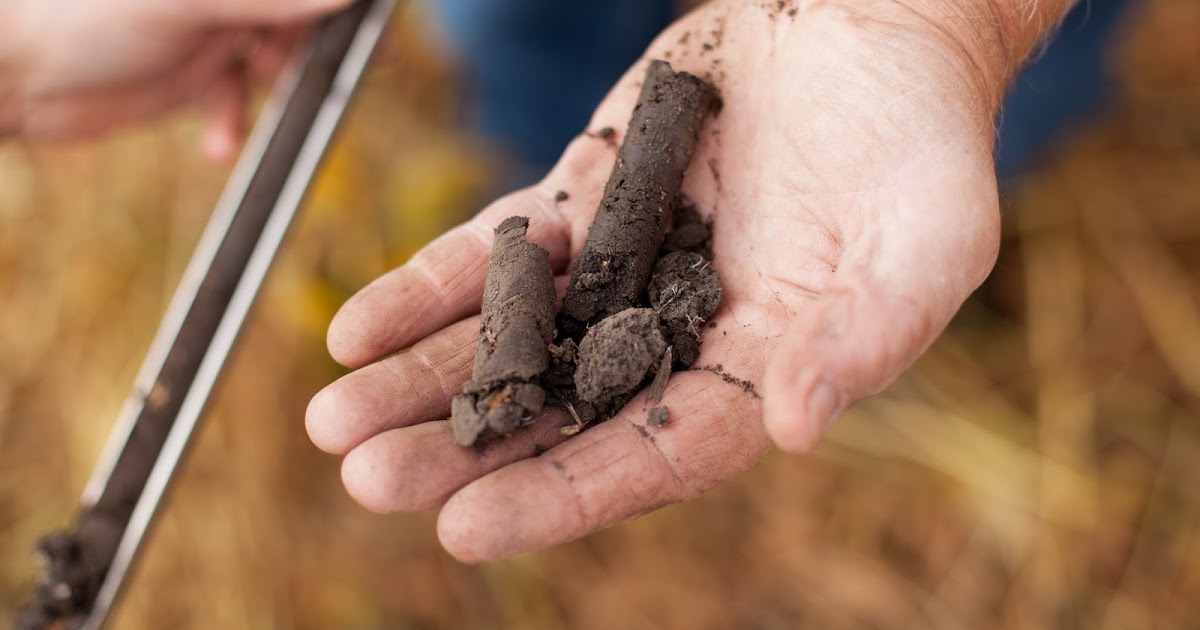
Above is a standard soil probe that will last you for years – well worth the cost. Next is a picture of WD-40 which is a great spray for the probe to keep the soil from sticking in the probe. Clay soils can be difficult to get “out” but WD-40 eliminates the issue.
Following these steps ensures that the soil testing process is thorough, and the results are reliable, forming a solid basis for sustainable soil management and crop production strategies.
What does a soil test tell you about soil?
Soil testing encompasses a range of analyses that evaluate different aspects of soil health, soil properties, and soil fertility, providing critical information for agricultural management and environmental assessment. Here are several key types of soil tests commonly conducted:
pH Test: Measures the acidity or alkalinity of the soil on a scale from 1 to 14. Soil pH affects nutrient availability to plants and microbial activity in the soil. A pH of 7 is neutral, values below 7 are acidic, and values above 7 are alkaline.
Nutrient Content Test: Assesses the levels of essential nutrients, including nitrogen (N), phosphorus (P), potassium (K) (often referred to as NPK), calcium (Ca), magnesium (Mg), sulfur (S), and micronutrients like iron (Fe), manganese (Mn), copper (Cu), zinc (Zn), boron (B), molybdenum (Mo), and chlorine (Cl). This test helps in determining fertilizer needs.
Organic Matter Test: Evaluates the amount of organic matter in the soil, which influences water retention, nutrient availability, and soil structure. High organic matter content is beneficial for soil health and plant growth.
Soil Texture Test: Determines the proportions of sand, silt, and clay in the soil. Texture affects water retention, drainage, and nutrient availability, and it guides management practices such as irrigation and cultivation.
Cation Exchange Capacity (CEC) Test: Measures the soil’s ability to hold and exchange cations (positively charged ions) such as calcium, magnesium, and potassium. CEC is influenced by soil texture and organic matter content and affects soil fertility.
Electrical Conductivity (EC) Test: Assesses the soil’s electrical conductivity, which is an indicator of salinity levels. High salinity can affect plant growth by inhibiting water uptake.
Lime Requirement Test (Buffer pH Test): Determines the amount of lime needed to adjust the soil pH to a desirable level for crop production. This is crucial for acidic soils needing pH correction.
Soil Water Holding Capacity: Measures the amount of water the soil can hold and make available to plants. This is important for irrigation planning and drought management.
Soil Aggregate Stability: measure how well aggregates hold together during a disturbance event. These tests can predict soil risks or management needs and track changes to soil overtime. The SLAKES APP is a great tool that is easy to use on your smartphone.
Heavy Metal Test: Identifies the presence and concentration of heavy metals such as lead (Pb), arsenic (As), cadmium (Cd), and mercury (Hg), which can be toxic to plants and humans at high levels.
Soil Health Tests: These are comprehensive tests that may include biological indicators such as microbial biomass, enzyme activities, and earthworm counts, assessing the overall health and biodiversity of the soil.
Soil Tests Typically Taken
Of course, a normal soil test or what you might call a Regular Soil Test discussed above is a must. These are not usually expensive, +/- $15 or more with micronutrients. This test is mostly meaningless unless I have previous year’s results to see what is going on. I have taken literally thousands of soil samples and often I will see something show up that is off the charts. I am not known to panic when I see a problem because I am not going to react to that test unless I know it has steadily been a problem that is just getting worse. For instance, we can see pH swings in sand from one year to the next. Before I lime a soil, I may take a second sample just to verify I need lime. $15 soil test is cheaper than $60 per acre lime application.
Second, I like to have a Haney Soil Testdone to get an idea of the availability of many nutrients in an organic system and to better understand the overall “healthiness” of the soil. It is not cheap compared to the typical soil test. Most labs charge $50 so you don’t usually just send everything in for a Haney Test. Again, the results are only good if you have several years’ worth of data to see if you are getting better.
Next, is the Soil Wet Aggregate Stability Test. This test used to assess the ability of soil aggregates to resist disintegration when exposed to water.
Last, is the PLFA Test or Phospholipid Fatty Acid Test. This test measures the biomass of the microbes in the soil and is one of the tests that is currently being conducted to determine the microbial population of soil. See down below for more.
This is an example of soil test costs from one lab. They are all about the same price from multiple labs.
Haney Soil Health Test
The Haney Soil Health Test is a comprehensive analysis designed to evaluate the overall health and fertility of the soil through a holistic approach. Developed by Dr. Rick Haney, a research soil scientist with the USDA, this test goes beyond conventional chemical nutrient analysis by incorporating measurements of soil organic matter, microbial activity, and the potential for nitrogen and phosphorus mineralization. The test employs a unique set of assays, including the Solvita CO2-Burst test, which measures the amount of carbon dioxide released from the soil after rewetting dry soil to assess microbial respiration and activity. This is an indicator of the soil’s biological health and its ability to cycle nutrients.
Additionally, the Haney Test evaluates the water extractable organic carbon (WEOC) and water extractable organic nitrogen (WEON), which are believed to more accurately reflect the pool of nutrients that are readily available to plants than traditional extraction methods. By assessing both the chemical and biological fertility of the soil, the Haney Test provides a more integrated view of soil health, guiding farmers in optimizing their management practices to support sustainable agriculture. The results from the Haney Test can help in making more informed decisions on the application of fertilizers and amendments, aiming to enhance soil health, reduce environmental impact, and improve crop yields by fostering a more vibrant and resilient soil ecosystem. This test is particularly valuable for those engaged in regenerative agriculture and organic farming, as it aligns with the principles of nurturing soil life and function to achieve productive and sustainable farming systems.
The Haney Soil Health Test provides a comprehensive set of results that offer insights into both the chemical and biological aspects of soil health. The test results typically include several key indicators:
Soil Health Score: A composite index that reflects the overall health of the soil, integrating various test components to give a summary assessment. This score helps in comparing the health of different soils or the same soil over time.
Water Extractable Organic Carbon (WEOC): Measures the amount of organic carbon that is easily available in soil water, indicating the potential food source for microbes.
Water Extractable Organic Nitrogen (WEON): Indicates the level of organic nitrogen available in soil water, which can be readily used by plants and soil organisms.
CO2-C Burst (Carbon Mineralization): Assesses microbial respiration by measuring the burst of carbon dioxide released from the soil after it is moistened, indicating active microbial biomass and soil organic matter decomposition rate. This number will be between a low of <10 and a very high score is >200. This will be in parts per million or mg/kg which is the same.
Soil pH: The acidity or alkalinity of the soil, which affects nutrient availability and microbial activity.
Electrical Conductivity (EC): A measure of the soil’s electrical conductivity, which can indicate salinity levels that might affect plant growth.
Extractable Phosphorus, Potassium, Magnesium, Calcium, and other nutrients: Provides information on the levels of these essential nutrients that are available for plant uptake, based on water extractable methods.
Nitrate-Nitrogen and Ammonium-Nitrogen: Measures the inorganic forms of nitrogen available in the soil, which are directly usable by plants.
Cation Exchange Capacity (CEC): Indicates the soil’s ability to hold and exchange cations (positively charged ions) important for plant nutrition.
Organic Matter %: The percentage of soil composed of decomposed plant and animal residues, indicating the potential of soil to retain moisture and nutrients.
Recommendations for Fertilizer and Lime Applications: Based on the test results, specific recommendations are made to address nutrient deficiencies or pH imbalances, tailored to the crop being grown and the goals of the farmer.
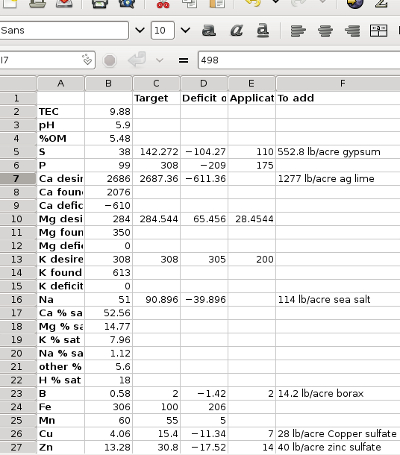
These results (see below for a sample) offer a detailed picture of the soil’s current condition, highlighting areas where improvements can be made to enhance soil health, fertility, and productivity. By focusing on both the biological and chemical facets of soil health, the Haney Test guides farmers towards more sustainable and efficient management practices, emphasizing the importance of soil life in agricultural ecosystems.
Soil Wet Aggregate Stability Test
Soil wet aggregate stability testing is a method used to assess the ability of soil aggregates to resist disintegration when exposed to water. This test is crucial for understanding soil structure, which plays a vital role in the soil’s ability to support plant growth. In this method, soil aggregates are placed on a sieve and submerged in water, where they are subjected to gentle agitation to simulate natural conditions such as rainfall. The stability of these aggregates is then measured by determining how much of the soil remains intact after exposure to water. The results provide valuable insights into the soil’s resistance to erosion, its ability to retain water, and its overall structural integrity.
The importance of wet aggregate stability testing lies in its direct relationship to soil health and crop productivity. Stable aggregates improve water infiltration and retention, reducing the risk of surface runoff and erosion, which can lead to nutrient loss and reduced soil fertility. Additionally, well-structured soils with high aggregate stability allow roots to penetrate more easily, access nutrients, and withstand environmental stresses such as drought. For growers, maintaining high aggregate stability is essential for sustaining healthy crops and promoting long-term soil fertility, making this test a critical component of comprehensive soil health assessments.
The four methods you can use for measuring soil aggregate stability include: Slaking image analysis, Cornell Rainfall Simulator, Wet Sieve Procedure, Mean Weight Diameter
Slaking Image Analysis:
Overview: This method uses a smartphone app, like SLAKES, to capture and analyze images of soil aggregates submerged in water. The app tracks the degree to which the aggregates break apart (slake) over time. (easy to download to your smartphone and I can even use it!)
Why It’s Used: It offers a quick, accessible way to assess aggregate stability in the field without the need for specialized lab equipment. For farmers, this method is very easy and practical to use, making it ideal for routine soil health monitoring, though it may lack the precision needed for scientific research.
Overview: Soil aggregates are placed under a simulated rainfall, and the test measures how well the soil resists breaking apart and eroding. The simulator mimics natural rainfall to assess the soil’s response.
Why It’s Used: This method is particularly useful for understanding soil erosion potential and how soil structure withstands actual rainfall events. For farmers, it provides insights into how well their soil can handle heavy rains, though it typically requires access to specialized equipment only available at a few labs.
Wet Sieve Procedure:
Overview: In this method, soil aggregates are placed on a series of sieves and submerged in water. The sieves are then mechanically agitated to simulate natural conditions like water flow. The amount of soil that remains on the sieves is measured to determine stability.
Why It’s Used: It is a widely recognized and precise laboratory method for quantifying the stability of soil aggregates under wet conditions. Farmers might find this method less accessible due to its complexity, but it provides highly reliable data that can inform long-term soil management decisions. Typically used by researchers.
Mean Weight Diameter (MWD):
Overview: This method calculates the average size of soil aggregates that remain stable after being subjected to wet sieving. It provides a single value that reflects the overall stability of the soil.
Why It’s Used: MWD is a commonly used metric in soil science because it offers a straightforward way to compare the stability of different soils and management practices. For farmers, this method can be useful for tracking the impact of different practices on soil structure over time, though it’s usually conducted in a lab setting.
Using the PLFA Soil Health Test
The Phospholipid Fatty Acid (PLFA) analysis is a powerful tool for assessing soil health, focusing on the microbial community within the soil. Phospholipid fatty acids are components of cell membranes in all living organisms, and their presence and composition in soil samples can provide detailed information about the microbial community structure, including bacteria, fungi, actinomycetes, and other soil organisms.
How the PLFA Test Works
The PLFA test involves extracting phospholipids from a soil sample and then analyzing the fatty acid components. Each group of microorganisms has a unique fatty acid profile, allowing scientists to identify and quantify the types of microbes present in the soil. This information can be used to assess biodiversity, microbial biomass, and the balance of fungal to bacterial communities, which are critical indicators of soil health and ecosystem function.
Importance of PLFA Analysis for Soil Health
Microbial Biomass: The total amount of microbial biomass is a direct indicator of soil organic matter decomposition and nutrient cycling capabilities. High microbial biomass often correlates with healthy, fertile soil.
Community Composition: The composition of the microbial community can indicate the soil’s condition and its ability to support plant growth. For example, a higher fungal to bacterial ratio is often found in soils with good structure and organic matter content.
Soil Stress and Disturbance: Changes in microbial community composition can also indicate soil stress, contamination, or the impact of agricultural practices such as tillage, crop rotation, and the use of fertilizers or pesticides.
Baseline and Monitoring: Establishing a baseline microbial community profile allows for the monitoring of changes over time, assessing the impact of management practices on soil health.
Applications of PLFA Analysis
Agricultural Management: Helping farmers and agronomists understand the impact of farming practices on soil microbial communities and, by extension, soil health and crop productivity.
Environmental Assessment: Evaluating the restoration of soil ecosystems following contamination or disturbance.
Research: Advancing our understanding of soil microbial ecology and its relationship to plant health, climate change, and ecosystem services.
Advantages and Limitations
The PLFA test offers a direct, rapid assessment of living microbial biomass and community structure, providing valuable insights into soil health that are not captured by chemical soil tests alone. However, it requires specialized equipment and expertise to perform and interpret, and the cost may be higher than traditional soil tests. Despite these limitations, the PLFA analysis remains a critical tool for comprehensive soil health assessment, guiding sustainable soil management and conservation efforts.
Great publication you can read on understanding these Soil Health Tests. Just click the link below:
The “take home” message is not soil testing only, but records of soil tests you can see over time!
Trace Genomics Testing
Thanks to Dr. Justin Tuggle for sending this information to me about Trace Genomics. This is a fairly new company that basically tells you what kinds of microbes you have in the soil, good or bad, to then help make decisions of what you need to do. It may be a new variety, a biostimulant or a soil treatment. I would like to see some producers try this new test and share some examples of what it can do. Click here to see their webpage.
A quote from Trace Genomics
“We engage in hi-definition DNA sequencing down to the functional gene level. This lets us mine the soil microbiome to identify specific functions, commonly referred to as “indicators,” which can provide actionable insights to help you maximize soil health. One example is a phosphorus solubilization indicator, which analyzes the quantified capability of microbes in the soil to release bound phosphate and make it plant available.”
“In just one soil test you get insights covering more than 70 crops and more than 225+ pathogens. TraceCOMPLETE pairs unmatched soil analysis with hi-definition genomic sequencing to deliver an unrivaled collection of pathogen and nutrient insights. It can drive agronomic action in your most critical decision areas to help you make meaningful management decisions.“
Soil Labs: this is not a complete list by any means but simply a guide.
This blog is overly long because of the discussion of different biostimulants. Scroll through first and pick out parts you are interested in and to understand the overall theme.
The concept of biostimulants in agriculture has evolved over centuries, with ancient practices hinting at the use of natural substances to enhance plant growth. However, the modern understanding of biostimulants began in the early 20th century. The term “biostimulant” encompasses a diverse array of products, including microbial inoculants (the bacteria and fungi we use for pests or to help plants fight pests), humic and fulvic acids, seaweed extracts, and other naturally derived substances. These materials are known for their ability to enhance plant growth, health, and productivity, often by influencing various physiological processes.
Scientific Recognition
In the mid to late 20th century, as the scientific community began to understand plant physiology better, the interest in biostimulants increased. Studies started to explore the mechanisms by which these natural substances could influence plant growth, nutrient uptake, and stress tolerance. By the late 20th century, the use of biostimulants was increasingly recognized as a component of sustainable agriculture practices, complementing the use of synthetic fertilizers and pesticides.
Regulatory Path for Biostimulants
Early Regulation
Initially, biostimulants fell into a grey area in terms of regulation. They were not strictly categorized as fertilizers or pesticides, which led to a lack of clear regulatory guidelines. This ambiguity sometimes resulted in inconsistencies in quality and efficacy among products in the market.
Current Regulatory Landscape
As the market for biostimulants grew, the need for regulatory frameworks became apparent. In the European Union, for instance, biostimulants are being integrated into the existing fertilizing products regulation (EU) 2019/1009, which sets criteria for their placement in the market and ensures their safety and efficacy. In the United States, the Agricultural Improvement Act of 2018 (Farm Bill) included provisions that recognize the unique nature of plant biostimulants and initiated the process of establishing a formal definition and regulatory pathway.
The Plant Biostimulant Act of 2023 is introduced
This bill excludes plant biostimulants (i.e., a substance, micro-organism, or mixture thereof that supports a plant’s natural processes independently of the biostimulant’s nutrient content) from regulation under the Federal Insecticide, Fungicide, and Rodenticide Act. The bill also requires the Department of Agriculture to study the types of plant biostimulants and practices of plant biostimulant use that best achieve certain results, such as increasing organic matter content. This has been introduced into both the Senate and House and has bipartisan support. Unfortunately, it is on hold because of the Farm Bill discussions and vote.
Research and Development of Biostimulants Worldwide
Overview
Research and development (R&D) in the field of biostimulants is a rapidly evolving area, driven by the growing need for sustainable agricultural practices. Biostimulants are recognized for their potential to enhance plant growth, increase crop yield, and improve plant resilience against stressors such as drought, salinity, and extreme temperatures. The global focus on biostimulant R&D reflects a shift towards eco-friendly and efficient farming techniques.
Key Areas of Research
Mechanism of Action: Understanding how biostimulants work at the molecular and cellular levels is crucial. Research is focused on identifying the active components in biostimulants and how they interact with plant physiology, including nutrient uptake, hormone regulation, and stress response.
New Product Development: Researchers are exploring various natural sources like algae, beneficial microbes, and plant extracts to develop new biostimulant products. There is also an interest in synthesizing novel compounds that mimic the action of natural biostimulants.
Formulation Technology: Developing effective formulations that ensure the stability and bioavailability of biostimulant compounds is a key research area. This includes nano-formulations and encapsulation technologies that enhance the delivery and efficacy of biostimulants.
Synergistic Combinations: Combining biostimulants with other agricultural inputs, such as fertilizers and biopesticides, to achieve synergistic effects is an emerging field. This research aims to maximize crop yield and quality while minimizing environmental impact.
Soil Health and Microbiome Studies: Understanding the interaction between biostimulants and the soil microbiome is vital. Research in this area focuses on how biostimulants can influence soil microbial communities to benefit plant growth and soil health.
Global Research Initiatives
Europe: The European Union has been at the forefront in funding research projects on biostimulants, focusing on sustainability and efficacy. Projects under the Horizon 2020 program, for instance, aim to develop innovative biostimulant products and assess their impact on crop productivity and resilience.
United States: The USDA and various academic institutions are conducting extensive research on biostimulants. The focus is on both developing new biostimulant products and understanding their role in sustainable agriculture systems.
Asia: Countries like China and India are increasingly investing in biostimulant research, with a focus on developing products suited to local crop varieties and farming practices. The research often involves traditional knowledge and natural resources unique to the region.
Challenges in Research and Development
Standardization and Regulation: One of the main challenges is the lack of standardization in terms of what constitutes a biostimulant. This affects the regulation, efficacy testing, and market acceptance of new products.
Scalability and Cost-Effectiveness: Developing biostimulant products that are both effective at a large scale and cost-effective for farmers remains a challenge, especially in developing countries.
Environmental Impact Assessment: Understanding the long-term impacts of biostimulants on soil health and the wider ecosystem is essential but complex, requiring long-term studies.
Future Directions
Precision Agriculture Integration: Integrating biostimulants with precision agriculture technologies to optimize their application and efficacy is a promising future direction.
Tailored Solutions: Developing biostimulants tailored to specific crop needs, environmental conditions, and agricultural practices is likely to be a focus, especially with the advancement in genomics and plant science.
Global Collaboration: Enhanced global collaboration and knowledge sharing among researchers, industry players, and policymakers are crucial for advancing the field of biostimulants.
Different Types of Biostimulants
Humic and Fulvic Acids as Biostimulants in Agriculture
Overview
Humic and fulvic acids are natural organic compounds found in humus, the decomposed matter in soil. They are key components of soil organic matter and play a significant role in soil health and plant growth. As biostimulants, these substances have gained attention for their ability to improve soil properties, enhance nutrient uptake, and stimulate plant growth.
Composition and Origin
Humic Acids: Larger molecules that are soluble in alkaline solutions. They are formed through the microbial decomposition of plant and animal matter and are an integral part of the soil’s organic matter.
Fulvic Acids: Smaller molecules than humic acids and are soluble in water at all pH levels. They are more readily absorbed by plants due to their smaller size.
Key Functions in Agriculture
Soil Structure Improvement: Enhance soil structure, leading to better water retention, aeration, and tilth. This creates a more conducive environment for root growth and microbial activity.
Nutrient Availability: Chelate soil nutrients, making them more available to plants. They can increase the efficiency of nutrient uptake, particularly in the case of micronutrients.
Root Growth and Development: Stimulate root growth and branching, which enhances the plant’s ability to absorb water and nutrients.
Plant Metabolism and Stress Resistance: Influence various aspects of plant metabolism, leading to increased plant vigor and resistance to stress factors like drought, salinity, and extreme temperatures.
Enhancement of Microbial Activity: Promote the growth and activity of beneficial soil microorganisms, which play a crucial role in nutrient cycling and organic matter decomposition.
Application Methods
Soil Application: Incorporated into the soil directly or through irrigation systems.
Foliar Sprays: Applied directly to plant foliage, where they are absorbed through the leaves.
Benefits
Improved Plant Health and Yield: Plants treated with humic and fulvic acids often exhibit improved growth, higher yields, and better quality.
Environmental Sustainability: Contribute to sustainable agricultural practices by enhancing soil health and reducing the need for chemical fertilizers.
Enhanced Nutrient Use Efficiency: Reduce nutrient leaching and increase the effectiveness of fertilizers.
Considerations and Challenges
Source and Quality Variation: The effectiveness of humic and fulvic acids can vary significantly depending on their source and extraction method.
Compatibility with Other Agricultural Inputs: It’s important to consider their compatibility when used in conjunction with other fertilizers and biostimulants.
Research and Standardization: Ongoing research is needed to further understand their mechanisms of action and to standardize products for consistent agricultural use.
Conclusion
Humic and fulvic acids are valuable biostimulants in agriculture, offering a range of benefits for soil health and plant growth. Their natural origin and multifaceted action on plants and soils align well with the goals of sustainable and efficient agricultural practices. By enhancing nutrient availability, stimulating root development, and improving soil structure, these substances hold significant promise for improving agricultural productivity in an environmentally friendly manner.
Seaweed Extracts as Biostimulants in Agriculture
Overview
Seaweed extracts, derived mainly from marine algae, have been used as biostimulants in agriculture for decades. They are rich in a variety of bioactive compounds, including vitamins, minerals, amino acids, and plant hormones. These extracts have gained popularity for their ability to enhance plant growth, improve stress tolerance, and increase crop yields.
Composition
Macro and Micro Nutrients: Seaweed is a natural source of essential nutrients like nitrogen, phosphorus, potassium, calcium, magnesium, sulfur, and trace elements.
Plant Growth Regulators: Contains natural plant hormones such as auxins, cytokinins, and gibberellins, which are crucial for plant growth and development.
Amino Acids and Vitamins: Provide a range of amino acids and vitamins that serve as building blocks and cofactors in various metabolic processes in plants.
Biostimulant Compounds: Include complex polysaccharides such as alginates and carrageenans, which can improve soil structure and water retention.
Benefits in Agriculture
Enhanced Plant Growth and Development: The presence of natural growth hormones and nutrients promotes vigorous plant growth, root development, and higher yields.
Improved Stress Resistance: Enhance plant resilience against environmental stresses such as drought, salinity, and extreme temperatures.
Increased Nutrient Uptake and Efficiency: Improve the uptake and utilization of nutrients from the soil.
Soil Health Improvement: Polysaccharides in seaweed extracts can improve soil texture, aeration, and moisture retention, benefiting the overall soil ecosystem.
Boosting Natural Defense Mechanisms: Some compounds in seaweed extracts can trigger plants’ natural defense systems, increasing their resistance to pests and diseases.
Application Methods
Foliar Application: Spraying onto plant leaves for direct absorption of nutrients and active compounds.
Soil Application: Applied to the soil to benefit root systems and improve soil quality.
Types of Seaweed Used
Ascophyllum nodosum: Commonly used due to its rich composition of bioactive substances. Ascophyllum nodosum is widely used in agriculture as a source of natural fertilizers and biostimulants. It is rich in nutrients such as potassium, nitrogen, and micronutrients, as well as growth-promoting compounds like alginates, mannitol, and phytohormones.
Sargassum, Laminaria, and Fucus: Other types also used for their beneficial properties.
Challenges and Considerations
Quality and Concentration: The effectiveness of seaweed extracts can vary based on their quality, concentration, and the extraction process.
Application Timing and Rate: Determining the optimal application timing and rate is crucial for maximizing benefits.
Research and Standardization: Ongoing research is needed to understand the mechanisms of action fully and to standardize products for consistent results.
Conclusion
Seaweed extracts are a potent and versatile group of biostimulants in agriculture, offering a natural and sustainable way to enhance plant growth, improve crop resilience, and boost soil health. Their multi-faceted benefits, coupled with a growing interest in sustainable agricultural practices, make them an increasingly popular choice among farmers and agronomists. As research continues to advance, the use of seaweed extracts is expected to play a significant role in the future of agricultural biostimulants.
Protein Hydrolysates as Biostimulants in Agriculture
Definition
Protein hydrolysates are complex mixtures of polypeptides, oligopeptides, and amino acids that are derived from the hydrolysis of proteins. Hydrolysis is a chemical process in which a protein molecule is broken down into smaller peptide fragments and amino acids, facilitated by enzymes or acids.
Types of Protein Hydrolysates
Animal-Based: Derived from animal proteins such as casein, collagen, or fish proteins.
Plant-Based: Derived from plant protein sources like soy, wheat, and alfalfa.
Production Process
The production of protein hydrolysates involves breaking down proteins using either:
Enzymatic Hydrolysis: Using specific enzymes to cleave protein chains. This method is preferred as it allows for more control over the size and composition of the resulting peptides and is generally considered more environmentally friendly.
Acid or Alkaline Hydrolysis: Using acid or alkaline solutions to break down proteins. This method is less specific and can lead to the destruction of some amino acids.
Characteristics
Solubility: Highly soluble in water, making them suitable for various applications.
Nutritional Value: Rich in amino acids, which are the building blocks of proteins, essential for plant growth.
Functionality: The smaller peptides and amino acids can be readily absorbed and utilized by plants.
Applications in Agriculture as Biostimulants
Enhancing Plant Growth: Provide readily available amino acids and peptides for plant uptake, promoting growth.
Stress Tolerance: Help plants to mitigate stress from environmental factors like drought, salinity, and extreme temperatures.
Nutrient Uptake: Facilitate the uptake of nutrients from the soil, improving overall plant nutrition.
Soil Health: Contribute to soil fertility by providing organic nitrogen and stimulating beneficial microbial activity.
Benefits
Sustainable Alternative: Offer a more environmentally friendly alternative to traditional chemical fertilizers.
Efficiency: Improve the efficiency of nutrient use by plants.
Versatility: Suitable for a wide range of crops and agricultural systems.
Considerations
Quality and Composition: The effectiveness of protein hydrolysates can vary depending on their amino acid composition and the method of hydrolysis.
Regulatory Aspects: Subject to agricultural and food safety regulations, which can vary by region.
Conclusion
Protein hydrolysates, as biostimulants, represent an innovative approach in sustainable agriculture, contributing to enhanced plant growth and resilience. Their role in improving nutrient uptake and soil health, coupled with their environmental benefits, underscores their growing importance in modern agricultural practices.
Chitosan as Biostimulants in Agriculture
Overview
Chitosan, a natural biopolymer derived mainly from the exoskeletons of crustaceans such as crabs, shrimp, and lobsters, is gaining recognition as an effective biostimulant in agriculture. It is produced by deacetylating chitin, a major component of crustacean shells. As an agricultural biostimulant, chitosan offers various benefits for plant growth, yield enhancement, and disease resistance.
Properties and Mechanism of Action
Elicitor of Plant Defense Responses: Chitosan is known for its ability to elicit natural defense mechanisms in plants, making them more resistant to fungal pathogens and pests.
Enhancement of Plant Growth: It can stimulate seed germination, root development, and overall plant growth.
Improvement in Stress Tolerance: Chitosan helps plants withstand abiotic stresses such as drought, salinity, and heavy metal toxicity.
Promotion of Nutrient Uptake: It can enhance the efficiency of nutrient uptake from the soil, particularly micronutrients.
Applications in Agriculture
Seed Treatment: Coating seeds with chitosan can improve germination rates and seedling vigor.
Soil Amendment: Application to soil enhances soil health and stimulates beneficial microbial activity.
Foliar Spray: Spraying chitosan solutions on plant leaves can boost plant immunity and overall health.
Benefits
Disease and Pest Resistance: By inducing systemic resistance, chitosan reduces the need for chemical fungicides and pesticides.
Improved Crop Yield and Quality: Enhanced nutrient uptake and stress tolerance lead to better crop yield and quality.
Biodegradability and Environmental Safety: As a natural, biodegradable compound, chitosan is environmentally friendly and safe for use in organic farming.
Challenges and Considerations
Source and Purity: The effectiveness of chitosan as a biostimulant can vary depending on its source and degree of purification.
Regulatory Aspects: The use of chitosan in agriculture is subject to regulatory approvals, which can vary by region.
Application Strategies: Determining the optimal concentration, timing, and method of application is crucial for maximizing its effectiveness.
Research and Development
Ongoing research is focused on optimizing the use of chitosan as a biostimulant, including the development of chitosan-based nanoparticles for targeted delivery and enhanced efficacy.
Conclusion
Chitosan represents a promising, sustainable approach in agricultural biostimulants. Its multifaceted benefits, including enhanced plant growth, improved stress tolerance, and reduced reliance on chemical pesticides, align with the goals of sustainable and eco-friendly farming practices. As research continues to unfold its potential, chitosan is poised to play a significant role in the future of agriculture, particularly in the context of integrated pest management and organic farming.
Beneficial Microbial Inoculants (Mycorrhizae and Bacteria) as Biostimulants in Agriculture
Overview
Beneficial microbial inoculants, including mycorrhizal fungi and specific beneficial bacteria, are increasingly recognized as vital biostimulants in sustainable agriculture. These microorganisms form symbiotic relationships with plants, enhancing nutrient uptake, improving soil structure, and increasing plant resilience to stressors.
Mycorrhizae
Types: The two primary types are Arbuscular Mycorrhizal Fungi (AMF), which associate with the roots of most crop plants, and Ectomycorrhizal Fungi, which associate mainly with trees.
Function: Mycorrhizae extend the root system via their hyphal networks, significantly enhancing the plant’s ability to absorb water and nutrients, especially phosphorus and micronutrients.
Benefits: Increase nutrient and water uptake, improve soil structure, enhance resistance to pathogens and stressors like drought, and reduce the need for chemical fertilizers.
Beneficial Bacteria
Types: Includes rhizobia, which form nodules on legume roots and fix atmospheric nitrogen, and other genera like Azospirillum, Bacillus, and Pseudomonas, which promote plant growth through various mechanisms.
Function: These bacteria can fix nitrogen, solubilize phosphorus, produce plant growth-promoting hormones (like auxins and gibberellins), and induce systemic resistance against a range of plant pathogens.
Benefits: Enhance nutrient availability and uptake, promote growth, improve plant health and yield, and increase resilience to environmental stressors.
Application Methods
Seed Treatment: Coating seeds with microbial inoculants to ensure early colonization and benefit during critical growth stages.
Soil Application: Applied directly to the soil or through irrigation systems to colonize the root zone.
Foliar Sprays: Some microbial formulations can be applied as foliar sprays to enhance plant growth and induce systemic resistance.
Benefits in Agriculture
Enhanced Nutrient Uptake: Especially important for nutrients like nitrogen and phosphorus, leading to reduced fertilizer dependency.
Improved Soil Health: Microbial activity can improve soil structure, organic matter content, and overall soil fertility.
Increased Plant Resilience: Enhanced resistance to biotic and abiotic stressors, including pests, diseases, drought, and saline conditions.
Sustainable Farming Practices: Contribute to the sustainability of agricultural systems by reducing the need for chemical inputs and enhancing soil biodiversity.
Challenges and Considerations
Species-Specific Interactions: The effectiveness of microbial inoculants can be highly specific to the plant species and environmental conditions.
Quality and Viability: Ensuring the viability and effectiveness of microbial inoculants during storage and application.
Integration with Agricultural Practices: Effectiveness can be influenced by farming practices, soil type, and environmental conditions.
Future Perspectives
Advanced Formulations: Development of more robust, effective formulations and delivery systems.
Genetic and Metabolic Research: Understanding the genetic and metabolic pathways involved in microbe-plant interactions for more targeted applications.
Integration with Other Biostimulants: Synergistic use with other biostimulants and biofertilizers for holistic plant and soil health management.
Conclusion
Beneficial microbial inoculants, including mycorrhizae and bacteria, are crucial components of modern sustainable agriculture. They offer a natural, effective way to enhance plant growth, improve soil health, and reduce the environmental impact of farming practices. As the understanding of these microbial interactions advances, their role in agriculture is expected to expand, offering significant potential for improving crop productivity and sustainability.
Amino Acids and Peptides as Biostimulants in Agriculture
Overview
Amino acids and peptides, the building blocks of proteins, are emerging as significant biostimulants in agriculture. They are involved in various physiological and metabolic processes in plants and can be derived from plant or animal protein hydrolysis. Their use in agriculture promotes plant growth, enhances nutrient uptake, and improves stress tolerance.
Key Characteristics
Amino Acids: Organic compounds that form proteins. Essential amino acids, which plants cannot synthesize, are particularly important as biostimulants.
Peptides: Short chains of amino acids that can act as signaling molecules, influencing various plant growth processes.
Mechanism of Action
Growth Promotion: Some amino acids function as precursors to plant hormones, promoting growth and development.
Stress Response: Certain amino acids help plants cope with abiotic stress like drought, salinity, and extreme temperatures by acting as osmoprotectants or antioxidants.
Nutrient Uptake and Assimilation: Facilitate the uptake of nutrients, particularly nitrogen, and their assimilation into essential plant compounds.
Enhancing Photosynthesis: Some amino acids can influence chlorophyll concentration and photosynthetic activity.
Sources and Production
Hydrolyzed Protein: Produced by hydrolyzing plant or animal proteins. The method of hydrolysis (enzymatic, acid, or alkaline) can affect the composition and efficacy of the final product.
Biotechnological Production: Genetically modified microorganisms can be used to produce specific amino acids in large quantities. This is not approved for organic use and probably never will be. This can cause issues since a company may have both a conventional and organic product with similar names!
Applications in Agriculture
Foliar Application: Spraying amino acid or peptide solutions directly on plant leaves for quick absorption.
Soil Application: Applying to the soil to improve nutrient availability and root absorption.
Seed Treatment: Enhancing seed germination and early seedling growth.
Benefits
Enhanced Growth and Yield: Contribute to increased biomass, fruit set, and overall crop yield.
Improved Stress Tolerance: Equip plants to better withstand environmental and physiological stressors.
Nutrient Use Efficiency: Increase the efficiency of nutrient use, reducing the need for conventional fertilizers.
Soil Health: Beneficial for soil microbial activity and overall soil health.
Challenges and Considerations
Concentration and Formulation: Determining optimal concentrations and formulations for different crops and conditions.
Cost-Effectiveness: Balancing the cost of production and application with the benefits gained.
Environmental Impact: Assessing the long-term impact on soil and plant health.
Future Perspectives
Tailored Solutions: Developing specific amino acid and peptide formulations tailored to specific crop needs and environmental conditions.
Integrated Nutrient Management: Combining with other biostimulants and biofertilizers for a more holistic approach to plant nutrition.
Advanced Research: Further research into the specific roles of different amino acids and peptides in plant physiology and stress response.
Conclusion
Amino acids and peptides hold great promise as biostimulants in agriculture, offering a sustainable and effective means to enhance plant growth, improve crop yields, and increase stress resilience. Their integration into modern agricultural practices aligns well with the increasing focus on sustainability and efficiency in crop production.
Plant Extract-Based Biostimulants in Agriculture
Overview
Plant extract-based biostimulants are natural formulations derived from various plant tissues (leaves, roots, seeds, etc.) and are increasingly used in agriculture to enhance plant growth, yield, and resilience to stress. These biostimulants contain a complex mixture of bioactive compounds like phytohormones, vitamins, enzymes, flavonoids, and other secondary metabolites that positively influence plant physiological processes.
Composition and Active Compounds
Phytohormones: Natural plant hormones such as auxins, gibberellins, and cytokinins, which regulate plant growth and development.
Secondary Metabolites: Compounds like flavonoids, alkaloids, and terpenoids, which play roles in plant defense and stress tolerance.
Vitamins and Enzymes: Essential for various metabolic activities within plants.
Antioxidants: Protect plants from oxidative stress caused by environmental factors.
Mechanism of Action
Growth Stimulation: Phytohormones in plant extracts can promote cell division, elongation, and differentiation, enhancing overall plant growth.
Enhanced Nutrient Uptake: Improve the efficiency of nutrient absorption and utilization.
Stress Mitigation: Help plants to better withstand abiotic stresses like drought, salinity, and extreme temperatures.
Improved Crop Quality and Yield: Positively impact flowering, fruit set, and seed production, leading to higher yields and better quality produce.
Sources of Plant Extracts
Herbal Extracts: Extracts from plants like nettle, comfrey, and horsetail are popular due to their rich composition of growth-promoting substances.
Seaweed Extracts: Already established in agriculture for their biostimulant properties.
Other Plant Sources: Various other plants, each with unique compounds beneficial to plant growth and health.
Application Methods
Foliar Sprays: Direct application to the plant foliage for quick absorption.
Soil Application: Enhancing soil quality and root system development.
Seed Treatment: Boosting seed germination and early seedling vigor.
Benefits
Sustainable Agriculture: Offer a more natural and environmentally friendly approach to enhancing crop performance.
Reduced Chemical Use: Can reduce reliance on synthetic fertilizers and pesticides.
Broad-Spectrum Efficacy: Effective on a wide range of crops due to their complex and varied composition.
Challenges and Considerations
Consistency and Standardization: Ensuring consistency in the concentration and composition of active ingredients.
Research and Validation: Need for more scientific research to fully understand their mechanisms of action and to optimize their use.
Regulatory Aspects: Subject to agricultural regulations, which can vary by region.
Future Perspectives
Tailored Formulations: Developing customized extracts based on specific crop needs and environmental conditions.
Synergistic Combinations: Combining plant extracts with other biostimulants or biofertilizers for enhanced effects.
Advanced Extraction Techniques: Employing novel extraction methods to maximize the efficacy and purity of the biostimulants.
Conclusion
Plant extract-based biostimulants represent a growing segment in the field of sustainable agriculture, offering an eco-friendly alternative to enhance plant growth and resilience. Their diverse range of bioactive compounds makes them adaptable to various agricultural needs, paving the way for their increased use in enhancing crop productivity and sustainability.









 Texas A&M AgriLife Organic