The Organic Certification Cost Share Program can reimburse certified organic producers and handlers for eligible certification expenses. For 2026, OCCSP provides up to $750 per certification scope, including crops, livestock, wild crops, processing/handling, and state organic program fees.
I got emails from several of the national organic groups telling me that the Cost Share program for organic certification was finally open. On one of the emails, they had a link to the website so I could actually see how the program was going to work. USDA Farm Service Agency (FSA) is still the place to go to sign up for most organic producers since you are probably there doing other business anyway.
Eligible OCCSP applicants include any certified organic producers or handlers who have paid organic certification fees to a USDA-accredited certifying agent. OCCSP pays a maximum of $750 per certification category for crops, wild crops, livestock, processing/handling, and state organic program fees. The scopes must be listed on the producer or handler’s organic certificate to be eligible for OCCSP.
Eligible costs include:
Application fees and administrative fees for USDA organic certification
Inspection fees for USDA organic certification, including travel costs and per diem for organic inspectors
USDA organic certification costs, including fees necessary to access international markets with which AMS has equivalency agreements or arrangements
State organic program fees
User fees and sale assessments for USDA organic certification
Postage for materials related to obtaining or renewing USDA organic certification
Opportunity for State Agency Participation
FSA will soon announce a 30-day application period for state agencies to apply through grants.gov to administer OCCSP.
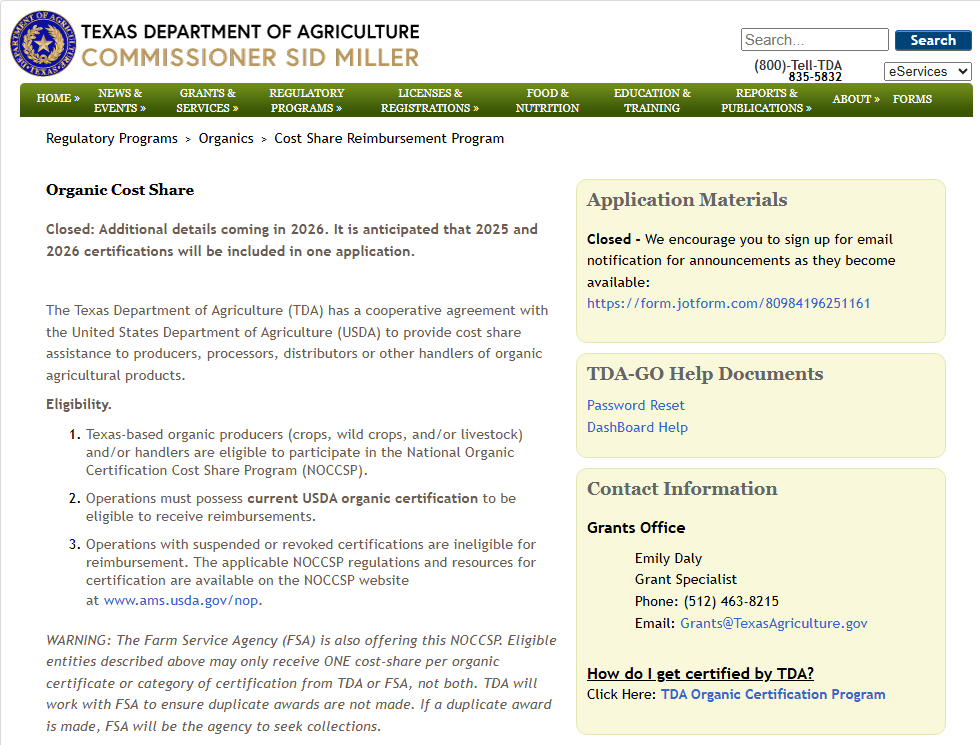
The state agency for Texas that does also handle the Cost Share program is the Texas Department of Agriculture or at least it has been! Typically, TDA has done it as an online application, and it has not mattered who your certifier is but simply that you follow the application process. This is what the current TDA website is showing but I am assuming it will be updated soon!
Organic markets are increasingly shaped by quality, traceability, buyer relationships and trust. This update looks at 2026 trends in organic wheat, corn, dairy and soybeans, along with stronger USDA oversight of imported organic products and what these changes may mean for Texas producers. Texas A&M AgriLife Organic
Organic Agriculture as a Long-Term Strategy
Organic agriculture is increasingly revealing itself as more than simply a production system built around prohibited substances. Over the long term, it may be better understood as a biological and economic strategy centered on trust, resilience, traceability, and system function. While conventional agriculture often optimized around maximum efficiency, scale, and external inputs, organic agriculture has gradually emphasized relationships between soil biology, nutrient cycling, biodiversity, food quality, and consumer confidence. The USDA National Organic Program helped create a framework where consumers can trust production methods they cannot personally observe, making organic agriculture as much a transparency system as a farming system. At the same time, many long-term organic farmers increasingly report that mature organic systems (greater than 5-7 years) often become less dependent on purchased inputs as soil health, rotations, and biological regulation improve over time.
I hear often from farmers, bakers, dairy processors, and food manufacturers who frequently report differences in flavor, functionality, storage, processing quality, and handling characteristics that go beyond simple yield measurements. Meanwhile, rising transportation costs, supply-chain complexity, and consumer interest in traceability may and do, increasingly favor organic systems. Also, we are seeing technologies such as digital traceability, AI-driven compliance systems, and integrated recordkeeping beginning to reduce some of the traditional burdens associated with organic certification.
These broader trends are also becoming increasingly visible within organic grain and dairy markets themselves, where pricing is often shaped less by simple commodity production and more by quality, traceability, transportation, end use, and long-term supply relationships. Current (Jan. to May 2026) USDA AMS reports and organic market activity continue to show that organic agriculture operates through highly differentiated markets where buyer confidence, dependable supply, and product identity can significantly influence value.
Organic Market Report for Texas Organic Farmers
Organic markets continue to show strong differentiation by quality, delivery structure, end use, and contract type rather than functioning as simple commodity markets. Across grains and dairy, USDA AMS reports continue to show active forward contracting, regional price variation, and premiums tied to quality, storage, transportation, and dependable supply relationships. While organic market reporting remains in “short supply” in some Southern regions, including Texas, the overall market signals suggest that buyers continue working to secure reliable supplies of organic feed grains, food-grade products, and dairy inputs well ahead of delivery.
Organic Wheat
Organic wheat prices remain highly differentiated by class, protein, buyer type, delivery terms, and contract structure. In recent AMS reports, Soft Red Winter values often fall in the high single digits to low teens, while Hard Red Spring commands a stronger premium, with some flour-mill forward contracts reaching $20/bu. The main takeaway is that organic wheat is priced less as a generic commodity and more as a set of niche markets defined by end use, quality, freight terms, and whether the transaction is spot, bid, or forward contracted.
For Texas organic wheat farmers, this means harvest is also a marketing decision. Growers who can protect test weight, maintain protein, and keep grain clean and dry are in the best position to capture milling premiums, while those selling quickly into generic feed or elevator channels may leave money on the table. Before cutting, it is worth comparing buyers, delivery terms, and contract options, because in this market the details can matter as much as the wheat itself.
Organic Corn
Organic corn markets continue to show relatively strong and stable pricing compared to many other organic commodities, with much of the AMS-reported activity clustering around the mid-$10 per bushel range (but I see it steadily increasing). Prices still vary by location, contract structure, and whether the grain is old crop or new crop, but the overall pattern suggests a market supported by steady feed demand, active forward contracting, and ongoing regional supply shortages. Unlike organic wheat, where protein and milling quality create wider price separation, organic corn remains heavily influenced by livestock feed demand, freight costs, and regional availability.
For Texas organic corn growers, the message is to stay flexible and market carefully checking regularly on prices. Producers who can store grain, preserve quality, and deliver into specialty feed, dairy, poultry, or food-grade channels may be able to capture better returns than those forced to sell at harvest. Transportation costs and local buyer demand can make a meaningful difference, particularly in regions where organic feed supplies remain limited. Forward contracts (some but not all!) also remain important because they help secure long-term supply relationships and reduce risk in a market that continues rewarding dependable volume and consistent quality.
Organic Dairy
The USDA Organic Dairy Market News Report for May 4–15 provides a snapshot of current organic dairy market conditions rather than a policy or technical standards document. The report shows that organic milk demand remained strong during spring 2026, with U.S. sales of total organic milk products up 5.6 percent for March and organic whole milk sales also showing strong year-over-year growth. Retail organic dairy products, especially milk and yogurt, continue maintaining noticeable price premiums, reflecting continued consumer demand for organic dairy products and broader interest in food products associated with transparency, animal welfare, and ingredient sourcing.
The report also demonstrates how closely the organic dairy sector remains tied to feed markets and broader supply conditions. Organic grain and feed markets remain active, with some forward contracts extending into 2027, indicating that buyers continue working to secure future supply. For producers, the overall signal is that organic dairy demand and premium pricing remain solid, but feed costs, export movement, and retail advertising trends continue shaping a competitive market that remains sensitive to supply and input conditions.
Organic Soybeans
I know we don’t produce many organic soybeans, but they do indicate some import protein trends. Organic soybean markets continue showing some of the strongest structural support among major organic grain commodities, with pricing being driven largely by protein demand, livestock feed markets, and food-grade specialty channels. Unlike organic wheat, where class and milling quality create major price separation, soybean values appear more closely tied to dependable supply, identity preservation, and end use. AMS-reported activity suggests that forward contracting remains active, indicating that buyers continue working to secure long-term supply in a market where domestic production remains limited and imported soybeans still influence overall availability and pricing.
For Texas organic producers, soybeans provide an important lesson even where acreage remains limited. Organic soybean markets demonstrate how protein quality, cleanliness, storage, and buyer relationships increasingly shape value in organic agriculture. Food-grade and identity-preserved soybeans can carry significant premiums over generic feed channels, reinforcing the idea that organic crops are often marketed less as bulk commodities and more as differentiated products tied to specific supply chains. The continued influence of imported soybeans also highlights the importance of dependable domestic production capable of meeting both feed and food-grade demand.
As Texas organic markets continue developing, similar trends may increasingly influence corn, sorghum, wheat, peanuts, and other crops where end use, traceability, and dependable supply relationships become more important than simple yield alone.
Organic Integrity and Import Oversight Expand Under USDA SOE Rule
The USDA National Organic Program continues expanding oversight of imported organic products through the Strengthening Organic Enforcement (SOE) rule. New Organic Insider reports highlight how USDA is now using import certificate data, shipment tracking, and compliance analytics to identify irregular trade patterns and investigate potential fraud before products reach the marketplace. Several recent investigations involved imported organic products lacking valid import certificates, while another case involving raspberries from Mexico demonstrated how residue testing and traceability systems prevented contaminated products from entering U.S. commerce. The increased emphasis on farm-to-market traceability reflects USDA’s growing focus on maintaining consumer confidence and strengthening enforcement throughout global organic supply chains.
The newly released 2025 organic import data also provide a revealing picture of the modern organic marketplace. Total U.S. organic imports approached $12 billion in 2025 (total organic sales in the US are $76 billion), with Mexico representing more than 20% of total import value. Organic beef, coffee, bananas, blueberries, avocados, olive oil, and processed soybean products ranked among the largest import categories. The data reinforce that organic agriculture has become deeply connected to international supply chains and value-added food manufacturing systems rather than operating solely as a domestic farm commodity market.
For U.S. organic producers, these trends highlight both continued strong consumer demand for organic products and the increasing importance of traceability, market relationships, and maintaining trust in the organic label. For Texas organic farmers specifically, future competitiveness may depend less on maximizing volume alone and more on building dependable supply relationships, preserving quality, improving traceability, and positioning farms within regional food systems that value identity preservation, biological function, and long-term resilience.
Sources and Market References
This market analysis and commentary were developed using information from the following USDA and industry reports:
USDA AMS National Organic Feed Grain and Feedstuffs Report, January 1, 2026 – April 27, 2026
Additional market interpretation and analysis were developed through ongoing observations of organic grain, dairy, and specialty crop markets relevant to Texas organic producers.
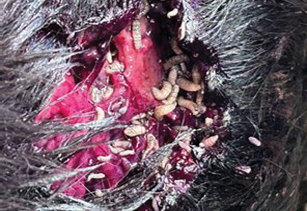
New World Screwworm (NWS, Cochliomyia hominivorax) is recognized as a highly destructive pest.¹,² NWS fly larvae, also known as maggots, invade the tissue of living animals, resulting in severe and often fatal injuries. This species can infest warm-blooded hosts, including livestock, pets, wildlife, humans, and even birds.²
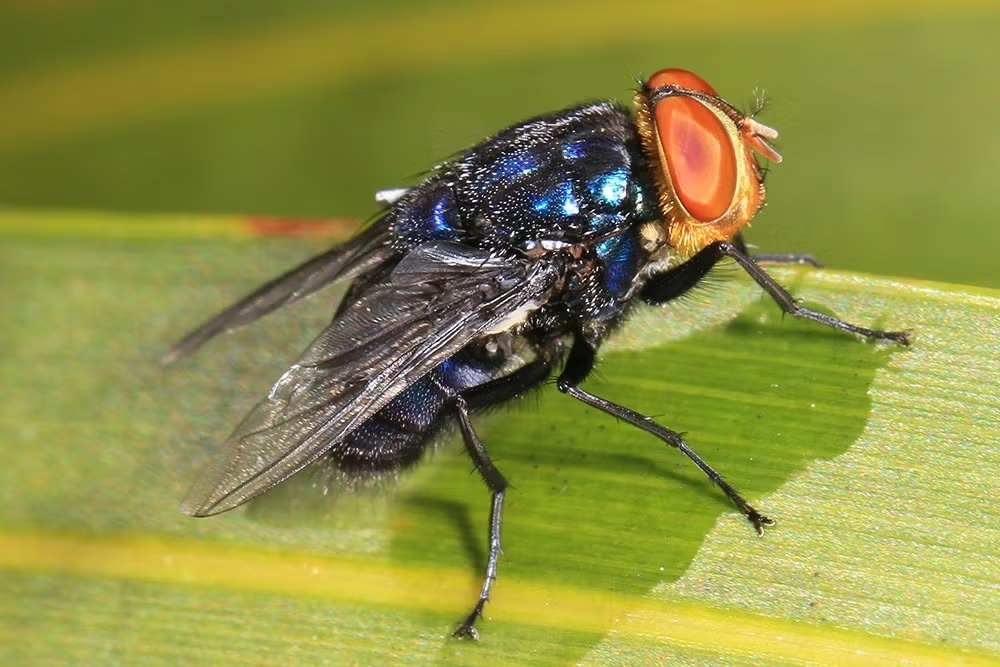
Top and middle photos courtesy of CDC, bottom photo Marcy Ward, New Mexico State University.
The term “screwworm” is derived from the larvae’s characteristic feeding behavior, where they burrow into wounds in a manner like a screw penetrating wood.¹ Maggots inflict significant harm by tearing at host tissue with their sharp mouth hooks; consequently, the wound may enlarge and deepen as additional larvae hatch and feed on viable tissue.² The impact of NWS infestations can be substantial, frequently leading to life-threatening conditions for affected animals. Adult screwworm flies are comparable in size to common houseflies or slightly larger and are distinguished by orange eyes, metallic blue or green bodies, and three dark stripes along their backs.¹
Historically, screwworm caused severe economic losses in U.S. livestock production prior to eradication efforts, with annual losses estimated in the hundreds of millions of dollars (mid-20th century values).⁴
USDA Strategy and Sterile Insect Technique
Central to eradication efforts is the sterile insect technique (SIT), a scientifically validated area-wide pest control method.⁵
Female NWS flies mate only once, so mating with a sterile male prevents reproduction and collapses the population over time.³,⁵ Sterile flies are released by air or ground, with aerial dispersal preferred for covering large areas. USDA produces sterile flies at the COPEG facility in Panama and is expanding domestic capacity at the Rio Grande Valley in Texas.¹
The sterile insect technique has been credited with the successful eradication of screwworm from the United States and much of Central America.³
Organic Considerations
For organic producers, livestock health care practices are governed under 7 CFR §205.238 of the National Organic Program regulations, which require preventive health care and prompt treatment of illness or injury.⁶
While APHIS provides guidance for detection and reporting,¹ there is very limited organic-specific direction currently available. Organic Materials Review Institute (OMRI) listings can be consulted to determine compliance of specific insecticides. ⁷ Typical insecticide suppression of New World screwworm is not highly effective because larvae can infest wounds in wildlife hosts, so control relies primarily on detection, surveillance, and sterile male release rather than routine spray applications. ⁴
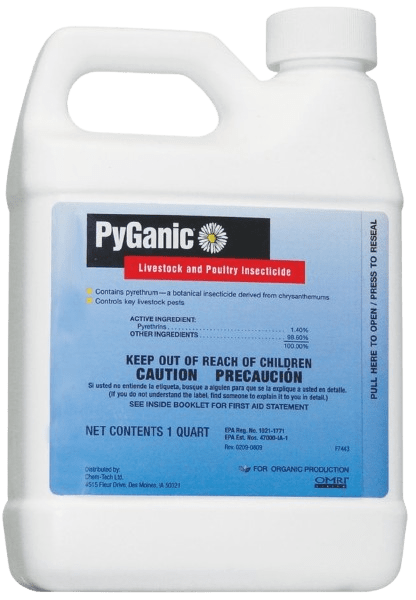
PyGanic is the only organic product labeled for livestock to kill adult flies, in particular blow flies. There are some other products for livestock but labeled as repellants. It is a natural pyrethrum product and falls within the same broad insecticide class referenced in federal guidance for adult fly control.8 However, there is currently no published data evaluating PyGanic specifically against New World Screwworm adults or larvae. Therefore, its potential role would be limited to adult fly suppression rather than eradication, and it should be considered as part of a broader management response rather than a stand-alone solution.
Moxidectin Use in Organic Livestock
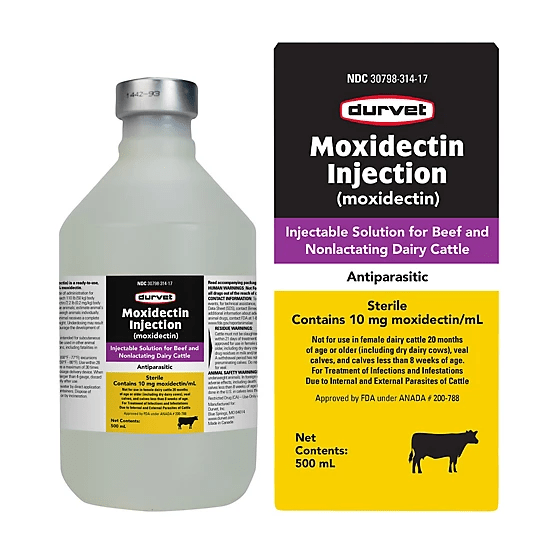
Example of Moxidectin Injection which is sold in stores and online. Be sure to check with your certifier before using any product in your operation and especially moxidectin since it is only allowed in severe parasitism. The current treatment for NWS is “Dectomax” which means your animal would be removed from organic certification.
Organic livestock producers may be familiar with moxidectin because it is permitted under USDA National Organic Program (NOP) regulations for the treatment of severe parasitism when preventive organic management practices are not adequate. Questions have recently arisen regarding whether moxidectin could play a role in managing New World Screwworm (NWS) infestations. While FDA recommendations for NWS treatment in cattle currently focus on approved products containing doramectin (Dectomax), research conducted with Old World Screwworm (OWS) has shown that injectable moxidectin can provide substantial protection against myiasis and reinfestation in cattle of OWS.9 However, these studies involved OWS rather than NWS, and there is currently limited information available regarding the effectiveness of moxidectin against New World screwworm. As a result, any expectations regarding NWS control should be considered preliminary until additional research becomes available. At present, moxidectin should be viewed as a potential area for future investigation rather than a proven NWS treatment option.
Producer Prevention and Reporting
Producers should:
Monitor livestock closely for wounds or signs of infestation.¹
Minimize injury risks by inspecting facilities and equipment.
Treat livestock and potential wounds promptly with approved products. If wounds are infected with NWS then report and treat with approved products.
Prevent introduction by controlling animal movement.
If screwworm is suspected, it must be reported immediately to State animal health officials and APHIS to enable rapid containment.¹
² University of Florida Institute of Food and Agricultural Sciences. (2025). New World screwworm: Cochliomyia hominivorax (Primary screwworm). EDIS Publication IN1146. https://edis.ifas.ufl.edu/publication/IN1146
³ Krafsur, E. S., Whitten, C. J., & Novy, J. E. (1987). Screwworm eradication in North and Central America. Parasitology Today, 3(5), 131–137. https://pubmed.ncbi.nlm.nih.gov/15462936/
⁵ Sterile Insect Technique (Scientific Foundation) Vreysen, M. J. B., Robinson, A. S., & Hendrichs, J. (Eds.). (2007). Area-wide control of insect pests: From research to field implementation. Springer. https://www.iaea.org/topics/sterile-insect-technique
9Hassan, E., Al-Karogholli, A. Y., Hassan, A., & Al-Ani, M. (2005). Comparative efficacy of Moxidectin and Ivermectin in cattle naturally infected with old world screw worm larvae. https://doi.org/10.33899/ijvs.2005.46740
Great picture by USA Rice at the recent Western Rice Conference, January 15th in El Campo.
Organic rice production in Texas continues to evolve, with advancements in weed control, fertility management, and ratoon cropping showing promising results. This update covers the latest developments, challenges, and resources available to organic rice growers, with implications for both organic and conventional production systems.
Advancements in Organic Rice Production
1. Enhancing Yields with Ratoon Crop Production Texas researchers are leading efforts to improve ratoon crop yields in organic rice. This practice of harvesting a second crop from the stubble of the first offers a sustainable way to maximize productivity without replanting, making it an attractive option for organic farmers. Paragraph from study below:
“To enhance nitrogen availability, the researchers utilized organic-approved inputs such as compost and cover crops, finding that an equivalent of 90 pounds of nitrogen per acre was optimal for achieving the greatest yields, with greater rates offering no additional advantage. This insight helps farmers optimize nitrogen inputs using sustainable sources, saving costs while promoting organic practices.”
2. Organic Variety Trials – 2023 Organic variety trials conducted in Garwood, Texas, showed promising results. These trials not only help identify suitable varieties for organic systems but also aid in improving overall seed supply for future seasons.
Variety Average
Dry (lbs./ac.)
Dry (Bu./ac.)
Dry (barrels/ac.)
XP753
7233
160.7
44.6
RT7401
7091
157.6
43.8
RT7301
6716
149.2
41.5
RT7302
7263
161.4
44.8
XL723
6760
150.2
41.7
Overcoming Challenges in Organic Rice Production
1. Weed Control Innovations Weeds remain a major challenge for organic rice farmers. Here are some key tools and practices being used:
Northern Jointvetch Control: The bioherbicide LockDown (Colletotrichum gloeosporioides f. sp. Aeschynomene) has shown great effectiveness. This live organism must be applied with a surfactant, offering a cost-effective solution.
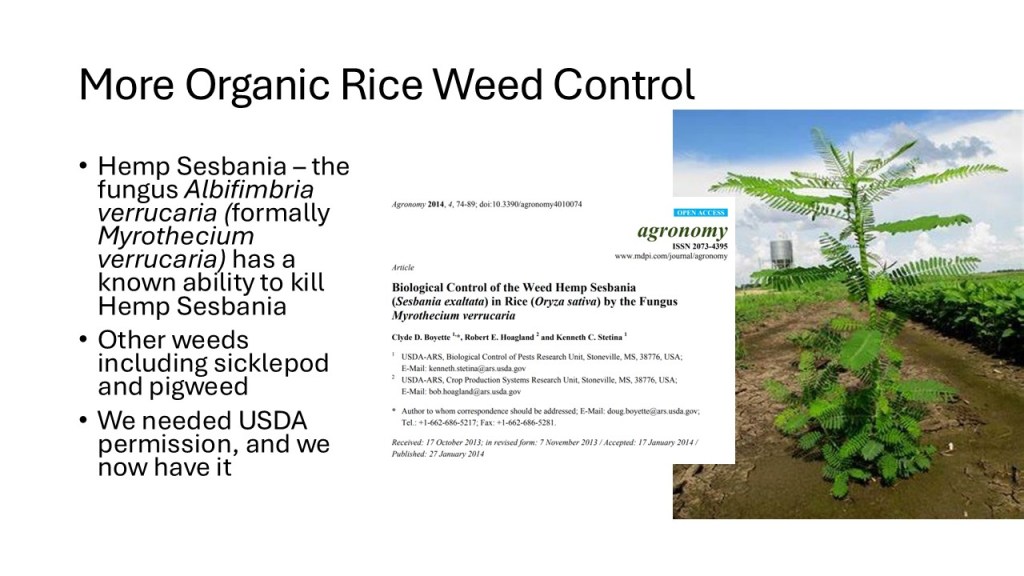
Hemp Sesbania Management: USDA-approved use of Albifimbria verrucaria (formerly Myrothecium verrucaria) has demonstrated success against hemp sesbania and other weeds like sicklepod and pigweed.
Water-Seeding Method: The pinpoint flood system effectively suppresses weedy rice by creating anaerobic conditions that inhibit germination.
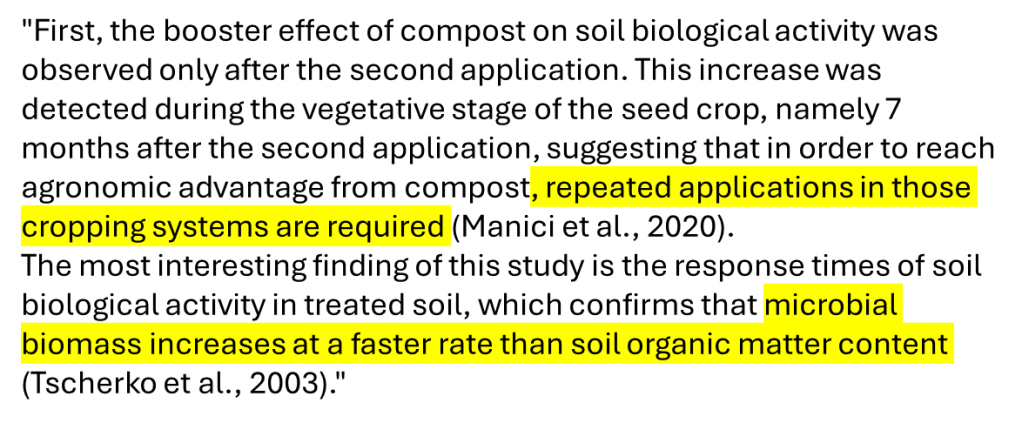
2. Organic Fertility Programs Organic rice growers are adopting long-term fertility strategies, including the use of compost and biostimulants. Research highlights the importance of repeated compost applications to boost soil biological activity and improve yields.
Biostimulants in Focus: Biostimulants such as humic acids, seaweed extracts, and microbial inoculants can enhance plant growth. However, product quality remains inconsistent, necessitating thorough testing and careful application.
Market Trends and Opportunities
The organic rice market faces challenges related to supply chains, international competition, and fraud. Key issues include:
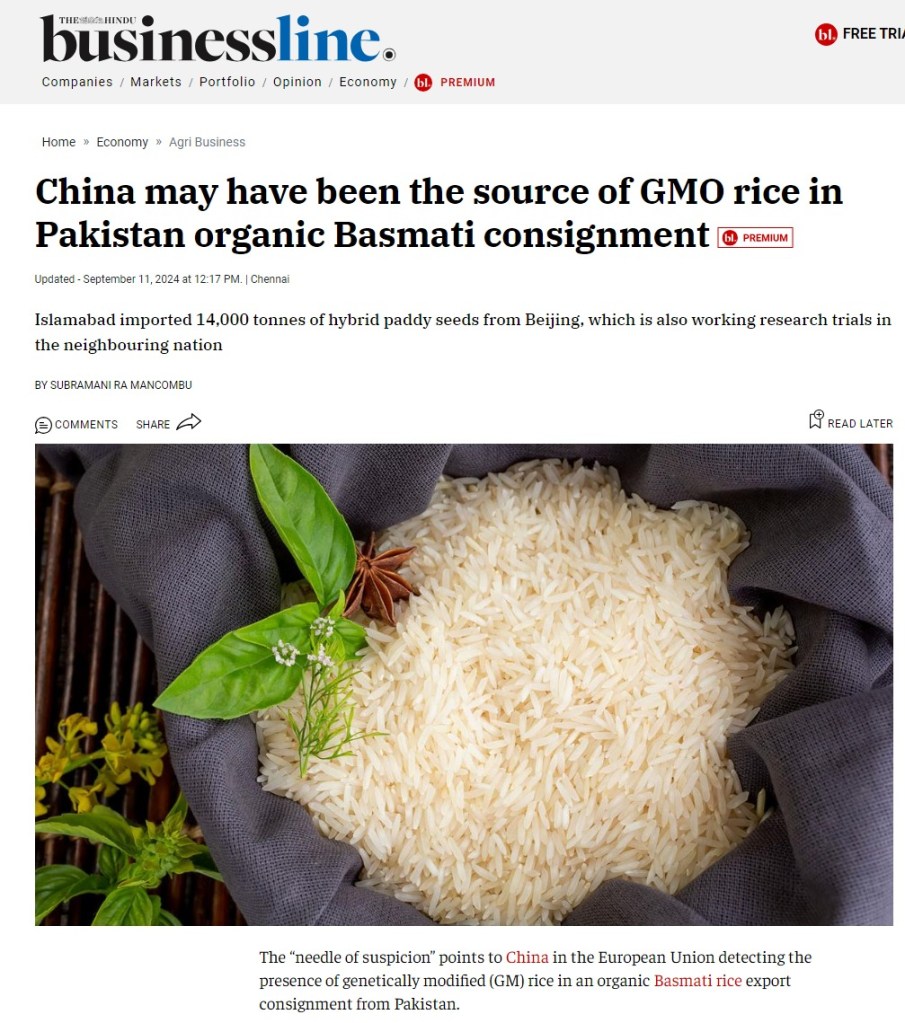
GMO concerns, especially in Mexico and China.
Limited seed supply due to adverse weather conditions in 2024, which impacted production in Texas.
Picture of an article in an Indian News Post showing “GMO” rice sent to Europe!
Despite these hurdles, Texas continues to work to expand organic rice production. Programs like the Transition to Organic Partnership Program (TOPP) are equipping farmers with mentorship, community-building opportunities, and technical training to support successful transitions to organic farming.
Resources for Organic Farmers
Texas A&M AgriLife Extension Organic Program provides a range of resources to support organic rice growers:
Podcasts:On TOPP of Organic offers insights into organic production practices.
Newsletters: Subscribe to bimonthly and monthly newsletters for the latest updates.
Workshops and Field Days: Covering topics such as certification, conservation planning, and marketing.
The Future of Organic Rice in Texas
Organic rice production has been a rapidly growing industry with vast potential but there are plenty of struggles right now. By addressing challenges like weed control and fertility management, and leveraging mentorship and research programs, Texas farmers can lead the way in sustainable and organic agriculture.
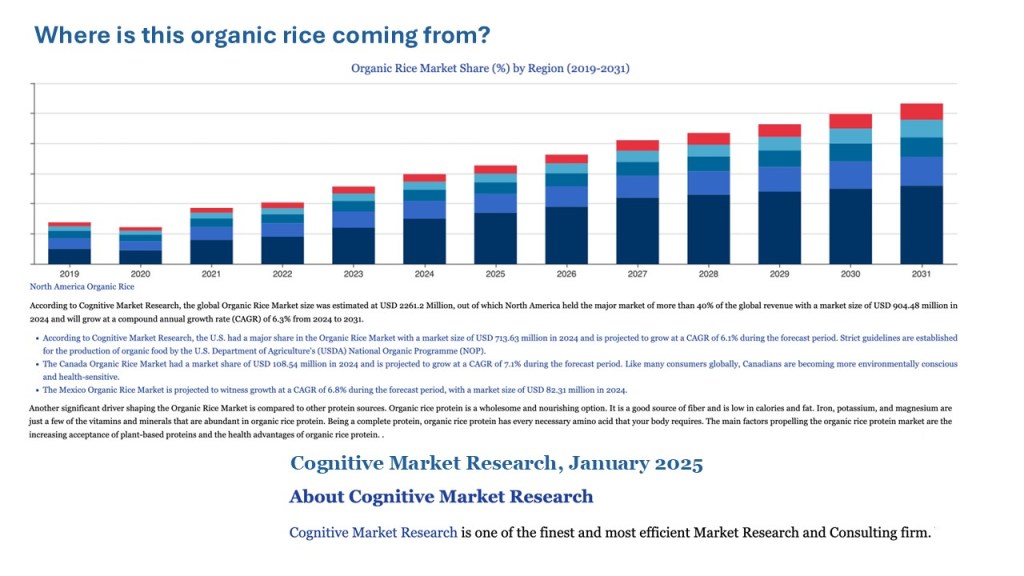
Lastly, this information is from Cognitive Market Research off their website. I took a picture of this graph showing that Organic Rice sales are growing tremendously and will continue to grow. I have rice growers say to me that people have quit buying organic rice and they believe this because our organic rice farmers can’t get contracts to grow organic rice. The problem is not that our US consumers don’t buy organic rice it is that organic rice imports are filling that demand – NOT Texas organic rice producers! So, I ask the question, “Where is this organic rice coming from?”
Last year USDA put out the call for grant applications for the Organic Market Development Grant program. This was a chance to apply for up to $3 Million in grant funds with a match or up to $100,000 for equipment with no match. The Organic Market Development Grant (OMDG) program supports the development of new and expanded organic markets to help increase the consumption of domestic organic agricultural commodities. The program focuses on building and expanding capacity for certified organic production, aggregation, processing, manufacturing, storing, transporting, wholesaling, distribution, and development of consumer markets. OMDG aims to increase the availability and demand for domestically produced organic agricultural products and address the critical need for additional market paths.
Texas organic producers have excelled in their efforts, submitting a multitude of grant applications, and the results are now in. Below, discover the exceptional organic projects that have been chosen to enhance organic agriculture in Texas for the foreseeable future.
Promotion of Organic Yaupon Tea as a Domestic Alternative to Imported Tea Distributed to The Foodservice Industry
Recipient: Yaupon Holly Tea, LLC, Cat Spring, TX
This project aims to increase the American consumer awareness of organic yaupon tea as a replacement for imported tea via the food service sector. An Organic Yaupon Marketing Plan will increase opportunities for consumer exposure to organic yaupon tea while also allowing for additional customers, buyers, and parties to participate in the domestic organic yaupon tea industry. Yaupon is a caffeinated plant native to North America and rich in polyphenols and antioxidants like imported tea. By using a hybrid of traditional tea preparation methods, organic yaupon tea has an almost indistinguishable flavor profile from imported green and black tea served in both hot and iced tea. Cat Spring Yaupon has created a cohesive marketing and outreach plan to increase the amount of organic yaupon tea served in restaurants, cafes, hotels, and spas. This plan incorporates the opportunity to promote and support additional organic yaupon producers through the American Yaupon Association while also supplying to tea companies who would otherwise be selling imported tea to their food service customers. This will also allow restaurants to substitute imported tea on their menus with organic yaupon tea thus giving their customers and guests an opportunity to sample and fall in love with the incredible domestic organic yaupon tea.
Diversifying Organic Supply Chains for Small Producers in the Rio Grande Valley
Recipient: Triple J Organics, LLC, Mission, TX
Triple J Organics is a minority-owned certified organic citrus orchard in Mission, Texas established in 1995. Triple J manages 25 acres of certified organic citrus groves, primarily of Ruby Red grapefruit and early season oranges, as well as Navel Oranges, Meyer Lemons, Tangerines, and Tangelos in smaller quantities. This project will increase consumption of locally produced organic orange juice in the Rio Grande Valley and increase the profitability and long-term viability of Triple J Organics through special purpose equipment purchases that allow Triple J to process 32,000 lbs. of “waste”, or seconds, oranges into fresh juice and deliver it safely to customers in the Valley. The project will target school districts as potential customers, as well as supermarkets, restaurants, health food stores, daycare facilities, and eldercare facilities as needed. Beneficiaries include Triple J Organics, local schools and businesses who purchase the new product, as well as other organic citrus growers in the Valley who may be able to cooperate and aggregate to produce a higher margin value-added product.
Steelbow Farm: Expanding Access to Local, Organic Produce in Central Texas
Recipient: Steelbow Farm LLC, Austin, TX
Steelbow Farm is seeking to broaden its delivery range and increase local food access and supply chain resilience by procuring a delivery vehicle. The overarching purpose of the proposed project is to expand access to local, organic produce by eliminating the current constraint of distance and delivery radius, while simultaneously addressing the growing demand for product in the current marketplace. Currently, Steelbow Farm has demand for their product that exceeds their capacity because they do not have a vehicle and therefore have a limited delivery range. This bottleneck is hampering Steelbow Farm’s ability to rise to the organic market demands. They believe access to this equipment would drastically improve access to organic produce, as they could radically increase their customer base and range. For context, currently, within Travis County, only .06% of food is produced locally. The Austin and Travis County areas are seeing a decline in the amount of vegetable farms and farmland, which are disappearing at an alarming 16.8 acres a day. Amidst these startling statistics, this business is thriving and demand for their produce is extremely high. Steelbow Farm wants to be able to meet the market demand and fill the gap within the local food system. As organic vegetable producers, they are striving to increase the percentage of local food consumed within their community.
Enhancing Organic Dairy Production and Market Access in Texas
Recipient: Armagh Fine Foods LLC dba Armagh Creamery, Dublin TX
The primary goal of this project is to enhance and expand the production capabilities of the Armagh Creamery organic farming and dairy operations. By acquiring essential equipment, the project aims to achieve increased efficiency, product diversification, and expanded distribution. This equipment will enable us to venture into new product lines, including heavy cream and butter, expand production of existing products, and streamline the production process, reducing the workload on current employees and enhancing overall efficiency for creating new butter product lines. The acquisition of a delivery vehicle will significantly improve distribution capabilities, allowing us to reach local retailers and drop locations in Central, North, and West Texas. This expansion will promote the availability of organic dairy products to a wider consumer base. The specific objectives of this project are two-fold: 1) to scale yogurt production to the full daily capacity of 10,000 units per day, two days a week. This increase will enable us to supply more retailers throughout Texas and cater to the growing demand in the direct-to-consumer market and 2) to expand raw milk and cream production to 600 gallons a day for 3-4 days a week, resulting in a weekly output of 1800 to 2400 gallons. This expansion will further support the direct-to-consumer market and provide ample resources for the planned heavy cream and butter product lines.
Expanding Capacity and Improved Quality of Organic Cotton
RKH Gin LLC, dba Woolam Gin is a primarily woman owned ginning facility that has processed organic cotton for 33 years, being the first United States to do so. It is located in a high poverty area in Lynn County, Texas and serves other high poverty areas including Dawson and Terry Counties. Woolam Gin is seeking a grant award to purchase and install equipment to expand the services and improve processing to increase production of organic cotton for farmers which will improve overall market production of the beneficial product. The overarching project purpose is to improve efficiency, therefore improving outcomes for farmers and the organic market. The equipment will increase production from 25 bales an hour to up to 40 bales an hour. The increase in processing will improve the housing time of cotton in the warehouse which will improve the grades and facilitate earlier entry into the marketplace, benefiting farm producers, processors, and consumers. Faster processing will improve turnaround for the farmer and further increase production possibilities. The primary partners and collaborators of the project will include participating organic farmers, the project manager, project supervisor, gin manager and other supporting human resources workers. This grant award will create improved markets and expand processing capacity which in turn will enrich market availability and further development of production resources and production.
Texas Organic Market Development & Promotion
Recipient: Texas Department of Agriculture, Austin, TX
The Texas Department of Agriculture (TDA) will use a multi-faceted approach to promote local organic producers in the produce, grains, dairy, and fiber markets. Though these industries are each unique in their production, the issues they experience are similar. These challenges include, but are not limited to, lack of knowledge among consumers of each industry’s availability/benefits, existing gaps between producers and buyers that result in barriers for growth, and an absence of public resources that assist organic farmers from promoting themselves more efficiently. Through this project, TDA will increase local consumer knowledge, support activities to develop new markets, increase demand for domestically produced organic agricultural products, and provide additional market paths for organic farmers in Texas. Goals of this project include: 1) increase public knowledge of Texas organic agriculture industry, 2) provide opportunities to improve market share and sales of local organic producers, and 3) build new connections between Texas producers and potential buyers to accomplish these goals. TDA Marketing will produce new marketing materials targeted for the organic industry, assist organic producers with attending trade shows relevant to their respective industries, facilitate business to business interactions, and run a social media campaign that highlights each industry. These activities will strengthen the relationships between Texas organic crop/product producers and buyers, as well as better inform the public on the availability and benefits of Texas organic products. These relationships would aid in ongoing efforts to strengthen the supply chain issues, build on current opportunities with Texas agriculture associations, assist historically underserved communities, and increase demand for locally produced organic products. To further assist the organic industries of Texas, TDA will assist in the production of the Field View Organics program. This program aims to identify organic operations across the state and mark them for aerial spraying companies to help prevent potential chemical drift or contamination of organic crops. By supporting this initiative, TDA will protect the current organic producers across the state and alleviate potential concerns for new members wanting to enter the industry.
Here is the entire list of projects funded by USDA for the entire country. This list should give you some ideas for submitting an application for the next grant program that come along! Organic Grant Winners