

Organic Isn’t Just a Production System—It’s a Promise!

From Farm to Consumer: Why Organic Markets Need Transparency and Storytelling to Grow

In our recent “Texas Organic News” newsletter, I conducted a single question survey and the question was: “What’s standing in the way of producing and/or selling more organic products?”
Here are the results from the 1,360 newsletters sent out – only 32 responses! In this survey you could only pick one answer for the question and here are the results so far.

  • Lack of grower contracts or reliable customers for organic products — 13 responses (40.6%) This is a question about demand for organic production or products, which ever segment you are involved in. If we don’t get customers, we don’t get paid!
  • Paperwork and certification take too much time or effort — 8 responses (25%) Of course everyone in organic says this is a problem but it ranks second behind selling more organic products.
  • Competition from imported organic products that reduce grower contracts or retailer profitability — 5 responses (15.6%) I thought this might be more of an issue and it is for some commodities but right now it ranks third.
  • Not enough profit margin in organic production or sales — 2 responses (6.3%)
  • Growers: Not enough organic inputs or supplies to grow efficiently — 3 responses (9.4%)
  • Handlers: Not enough consistent organic product available to sell — 1 response (3.1%)

Although overall response numbers have been low, I think the pattern is clear: the two largest barriers identified by producers are market access (customers/contracts) and certification/time-burden. These aren’t simply agronomic issues—they point to deeper economic and institutional challenges in our organic systems. We need to do a better job attracting customers and we need to improve certification systems to make them easier and cheaper.

Transaction Costs and What the Survey is Telling Us

When I review your responses through the lens of transaction cost economics, I see how these barriers are really about the extra costs of doing business in organic—not just the cost of production. A cost is anything that takes up time or money both of which are scarce. Scarce means if you do this one thing you can’t be doing another thing. If you have to spend a lot (time and/or money) on certification or finding customers/contracts, you have to get it back from the products or you have to quit!

  • The largest barrier, lack of reliable customers, highlights search, matching, and information-costs. If you don’t know who will buy your product or what contract terms look like, you carry higher risk and uncertainty. Organic struggles with this every day of every month of every year!
  • The second barrier, certification and paperwork burden, is about compliance, monitoring and institutional costs. The farm work, the record-keeping, the audit visits—even before you sell—these costs eat into margins. USDA NOP has discussed some of this and even talked about some streamlining and simplifying proposals, but we are still a long way from it.
  • Lastly, weak contracts or imports or even hard to find markets point to market thinness and pricing transparency. When markets aren’t transparent, when contracts are hidden or inconsistent, the organic market players struggle to negotiate fairly or spend too much time struggling to be in the market.

In short: to expand organic production and meaningful sales in Texas, the US or the world, we must look beyond just “how do I grow it organically?” and ask:
How do I connect reliably with a buyer, how do I keep my certification cost manageable, and how does the market signal value all the way through the chain?

Organic as a Credence Good

Here’s a key idea: organic products are credence goods (belief or acceptance that something is true or valid). That means consumers (a shopper in HEB) cannot easily verify for themselves many of the important attributes—crop rotation, chemical input avoidance, processing protocols, supply-chain segregation. Instead, they rely on trust signals: certifications, labels, audits, inspections.

  1. Integrity of production and supply chain systems — the farm-to-shelf process must be robust and verifiable. Organic has built this into its system with legal force while most or all others do not come close. Non-GMO is a label that is highly trusted too, but they have experienced problems recently with this part of their label. Lost trust is almost impossible to get back.
  2. Clear communication of value to the consumer — if consumers don’t understand the organic claim or don’t believe it has value, the premium disappears. Right now there are many, many stories about how “something” is better than organic. This tells me organic has set the standard all are trying to beat but this bombardment without a response also weakens organic’s message.

The newsletter survey results align exactly with this: producers are facing market access problems (demand side) and compliance burdens (supply side). Both sides are inherent to credence-good systems. You’re not just farming or manufacturing differently—you’re participating in a system of trust. Right now, organic agriculture has the highest rated system of trust according to survey after survey. Unfortunately, our customers are not valuing that “trust” as much as they used to do simply because they are being bombarded with so many choices that look similar but are not at all similar to Certified Organic! Step up and reinforce that message now, before we lose it!

Every Part of the Value Chain Must Be a Promoter
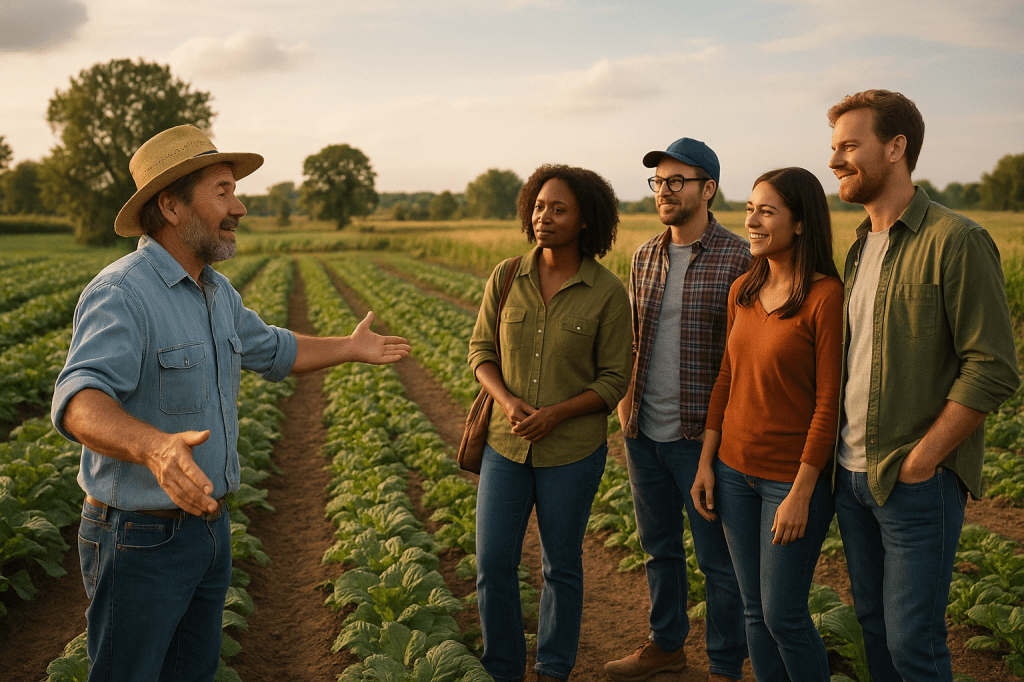
In a business built on trust (credence goods), production alone isn’t enough. The value behind the organic label depends on every actor in the chain actively understanding and communicating that value.

  • Farmers need to ask: What story am I giving my buyer about how I grew this crop and why it matters? Have you ever given your buyer a letter with your crop that tells your story? You send a certificate but why not more?
  • Handlers must ask: How am I representing the farms I source from, and how am I passing that value and the value I add to retailers or final buyers?
  • Retailers and brands should ask: Am I explaining to consumers why this product commands a premium, beyond just placing it on the shelf? FYI – Retailers usually make more off organic products than conventional!
  • Certifiers and institutions must ensure: I maintain the trust-signal, yes—but do I also support the chain in telling the story in a credible, consistent way? Is your certifier making sure “you,” their customer is promoted?

If any link fails to actively promote the value, the trust signal weakens. Here’s what it means in practice:

  • Transparency up and down the chain: Farms must provide clear information to handlers; handlers must pass that to retailers; retailers must convey the value to consumers—and that consumer feedback should circle back into production and market planning. You may be paid for a product in organic, but your “name” goes with that product all the way to the consumer!
  • Active marketing of integrity: The organic label is a trust-signal. If it isn’t actively promoted, consumers may forget what it stands for or assume it doesn’t matter. This is especially true in an age of so much label confusion.
  • Shared responsibility: It’s not enough for a farmer to get certified and think the rest of the chain will carry the message. Every actor must see themselves as part-of the collective promoter of the label’s meaning and the products value.
  • Feedback loops: The final customer’s expectations shape what comes back up the chain. Growers should listen to what consumers care about, and that should influence how they position their production and communicate with buyers.
  • Value-chain transparency equals value creation: The more visible the chain, the more confident the consumer, the stronger the premium, the more stable the market. Hidden trade, opaque pricing, and weak storytelling all erode trust and hinder growth.

Final Thought

The very simple and easy survey I sent in a newsletter has highlighted what many of us already sense: participating in organic isn’t simply about adopting different growing practices. It’s about being part of a system built on trust, communication, and shared value. Certification and production matter—but they are only half the story. The lack of participation (only 30 out of 1360) in this simple, one question survey is telling me that certified organic entities (farms, handlers, retailers, certifiers) have not figured out everyone has a part to play in this “credence good” or it becomes just another “good” to purchase.

If you choose to farm organic, you’re not just choosing a way to grow.
You’re choosing to be part of a movement built on trust, and you’re signing up to help tell the story. You are paying a lot to be part of this movement.

When we, as farmers, handlers, retailers—and even consumers—understand this and act on it, we reduce hidden costs, build stronger markets, and make organic not just viable, but sustainable and profitable.
Hi-A Corn Field Day Brings Farmers, Researchers, and Industry Together

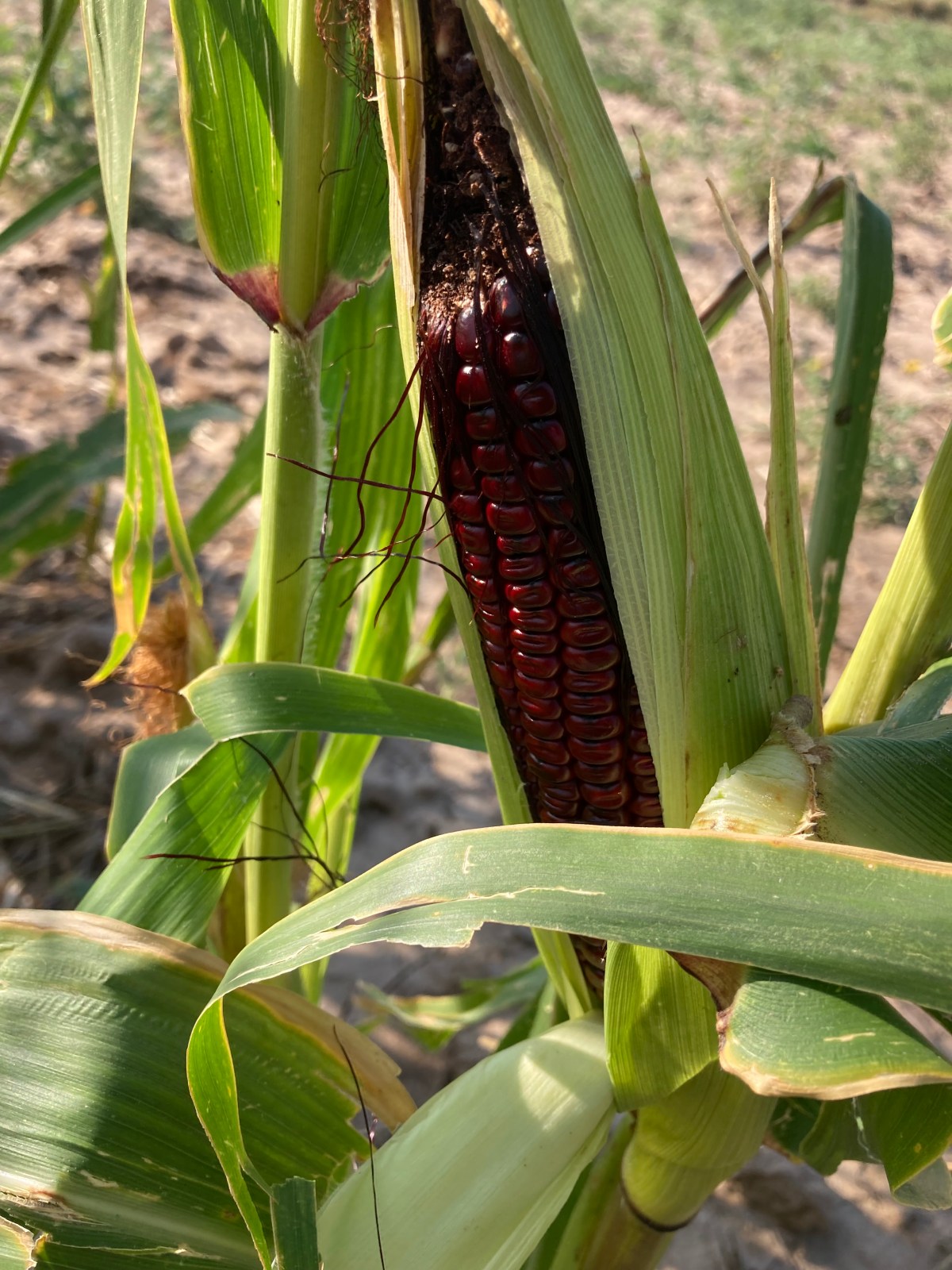
On Thursday, July 31, 2025, the Texas A&M AgriLife Research Halfway Station hosted a Hi-A Corn Breeding and Genetics Field Tour and Research Forum that brought together around 30 participants, including farmers, researchers, seed companies, and agricultural lenders. The event highlighted the exciting potential of Hi-A (high anthocyanin) corn varieties in both production and food markets.

Hi-A Corn Variety Plots at the Halfway Research Station

Field Tours and Research Highlights

The day began with a welcome from Dr. Todd Baughman, followed by an introduction from Dr. Wenwei Xu, Regents Fellow and corn breeder at Texas A&M AgriLife Research in Lubbock.

Dr. Xu has led the development of Hi-A corn varieties, including TAMZ 102, which is known for its deep purple kernels and high anthocyanin content. His work has focused on combining yield performance with enhanced nutritional traits, creating hybrids that perform well in the field while offering health-promoting properties. The Hi-A program under Dr. Xu’s leadership has become a cornerstone of innovation for Texas A&M AgriLife, linking plant breeding with food and health research.

Participants then toured Hi-A corn plots at the Halfway Research Center before traveling to Helms Farms to view large field-scale strip trials. These demonstrations highlighted how Hi-A and short-season hybrids are performing under West Texas growing conditions. Mr. Ken Igo, Halfway Farm Chemicals discussed on-farm performance results at the Edmonson location.

Hi-A Corn Varieties at the Helms Farm. Dr Xu is discussing the variety performance.

The tour then returned to the Halfway Research Center where Dr. Tim Paape (USDA-ARS) provided updates on breeding, genetics, genomics, and metabolism research. Tim Paape is a Research Geneticist with the United States Department of Agriculture (USDA), who works in the areas of plant and crop genetics, genomics, and molecular biology. He is directly employed with the USDA-ARS Responsive Agriculture Food Systems Research Unit (RAFSRU) located on the Texas A&M College Station campus.

After Dr. Paape spoke, I was able to share about the opportunities for organic corn in Texas, focusing on how Hi-A varieties can align with organic markets where consumer demand for nutritionally dense and colorful grains continues to grow.

Dr. Tim Paape introducing Hi-A Corn to HHS Secretary Kennedy when the Secretary visited the TAMU Campus in early July.

Joe Longoria, president of CASA RICA Tortillas in Plainview, shared his experience using this corn in commercial tortilla production, noting its excellent qualities for both flavor and nutrition. Joe is committed to the healthy food movement and talked about his interest in continuing to showcase healthy grains in his products.

From Research to Food

One of the highlights of the day was the luncheon, where participants tasted enchiladas, chips, and tortillas all made with Hi-A corn. The deep color and flavor of these products come from naturally high anthocyanin content in TAMZ 102. A big thanks to Joe Longoria and Casa Rica for providing the Hi-A chips and tortillas. Amazingly there were no chips or tortillas left after lunch!!

This hands-on experience helped bridge the gap between the research plots and the food plate, showing how agricultural innovation can quickly translate into consumer products.

Building Toward the Future

The classroom event did conclude with an informal Research Forum, where scientists, producers, and industry leaders discussed strategies for integrating breeding, production, and commercialization of Hi-A corn. By combining genetics research with market development, this crop has potential not only in specialty food markets but also in animal nutrition.

A Shared Success

The Field Day was a success thanks to the collaboration of researchers, growers, and industry leaders. With Hi-A corn gaining momentum, it’s encouraging to see strong partnerships forming around this crop. The tortillas, chips, and fresh ears we shared at lunch gave everyone a taste of what the future of corn could look like—nutrient-rich, flavorful, and farmer-driven.

Big thanks and a great deal of appreciation to the Texas Corn Producers Board, Southern SARE, High Plains Underground Water Conservation District, and USDA-ARS. These outstanding groups not only helped fund this important work but attended the field day as well!

Milling, Baking, Planting Organic Wheat: What Farmers Need to Know

When organic wheat growers choose a variety, they aren’t just planting seed—they’re planting bread, tortillas, and the reputation of their crop in the marketplace. That’s why milling and baking quality matter as much as yield. Extension Specialists and Wheat Researchers have been digging into an important question for growers: how do milling quality and baking quality fit into variety choice, especially for organic systems? These traits, along with protein and yield, play a direct role in what millers want and what farmers get paid for.

Milling Quality vs. Baking Quality

  • Milling quality is about how efficiently a kernel turns into flour. Seed size, uniformity, and hardness all affect milling yield.
  • Baking quality is about what happens in the bakery—how dough handles, rises, and produces bread or tortillas that buyers want.

Testing happens at several levels. The Cereal Quality Lab at College Station does preliminary evaluations, while the USDA and Wheat Quality Council conduct full baking and milling trials with multiple mills and bakeries. Every TAM variety is rated, and those scores directly influence variety release decisions.

Variety Highlights for Organic Wheat Growers

TAM 114

Mid-season hard red winter wheat prized for excellent milling and baking quality, solid yield potential, and strong adaptability.

  • Strengths: Excellent dough properties, solid straw strength, good grazing ability, drought tolerance, and winterhardiness. Moderately resistant to stripe, leaf, and stem rusts as well as Hessian fly; good acid soil tolerance.
  • Consistently appears on “Pick” lists for irrigated and limited irrigation systems thanks to its stable performance.
TAM 115

A dual-purpose variety offering both grain yield and grazing potential, with enhanced disease and insect resistance.

  • Strengths: Excellent milling and baking quality, large seed, high test weight, strong drought tolerance, and resilience against leaf, stripe, and stem rust, greenbug, and wheat curl mite (which contributes to Wheat Streak Mosaic Virus (WSMV) resistance).
  • Adapted across High Plains, Rolling Plains, Blacklands, and even Western Kansas/Eastern Colorado. Performs well under irrigation and good dryland conditions—but less reliable under severe dryland stress due to lower tillering capacity.
TAM 205

TAM 205 is a newer dual-purpose variety known for its strong milling and baking quality paired with unmatched disease resistance. It is highly adaptable across systems and is a strong option for both grain and forage.
Strengths:

  • Exceptional milling and baking quality
  • Good forage potential
  • Broad resistance (leaf, stripe, stem rust; WSMV; Fusarium head blight)
  • High test weight and large seed
TAM 113

A reliable dryland performer with good grain and forage potential, especially under stress.

  • Strengths: Solid grain yield, decent milling quality, and forage use. Early maturing with strong emergence and tillering – valuable in challenging environments. Offers resistance to stripe, leaf, and stem rusts.
  • Remaining a steady Dryland “Pick” in High Plains trials thanks to its adaptability.

Reminder: Organic farmers need to make seed purchase arrangements early (well before planting season) to ensure they have an adequate supply of untreated seed.

Protein Content vs. Protein Functionality

Farmers often watch protein percent, but researchers emphasize that protein functionality—how protein behaves in dough—is more important. While there’s no easy field test for this, variety choice remains a strong predictor.

When evaluating economics, consider total protein yield (bushels × protein percent). Sometimes a lower-yielding but higher-protein field can be more profitable than a high-yield, low-protein one.

Of course, protein levels don’t appear out of thin air. They’re the result of fertility, management, and soil health—areas where organic systems work a little differently than conventional.

Nitrogen and Organic Systems

One point of clarification: organic wheat does not suffer from a “late-season nitrogen challenge” so much as it requires planning ahead for higher yields. Excellent varieties and management can unlock yield potential, but only if soil fertility is built to support them.

  • Cover crops can provide up to 100 lbs of nitrogen per acre.
  • Manure composts from chicken or dairy sources can supply around 40 lbs of nitrogen per 1,000 lbs applied.
  • These are slow-release, biologically active forms of nitrogen. They need to be managed in advance so nutrients are available as the wheat grows.
  • Liquid organic N sources exist, but they are generally too expensive to justify based on the modest yield increases in wheat.

This means success in organic wheat fertility comes from building the soil and feeding the crop over the long term, not chasing protein with late-season nitrogen shots. The key takeaway is that organic fertility is a long game—cover crops and compost must be planned well in advance to match the yield potential of high-quality varieties like TAM 114 and TAM 205.

TAM Varieties and Seed Saving

Beyond fertility, seed access and seed-saving rights also matter to organic growers when planning for the future. All TAM varieties are public releases and not under Plant Variety Protection. Farmers can legally save and replant TAM seed for their own use. This is especially valuable in organic systems where untreated seed availability can be limited.

Why This Matters

In conventional systems, buyers reward bushels. In organic systems, millers and bakers want quality along with yield. Understanding both milling and baking traits—and managing fertility to match variety potential—helps organic growers capture more value.

As we look ahead, TAM 114 remains a cornerstone for organic production, but TAM 205 is quickly emerging as a variety that combines yield, quality, and resilience. With the right fertility planning and variety choice, Texas organic wheat can continue to meet both market demand and farmer profitability.

By combining resilient TAM varieties with thoughtful organic fertility planning, Texas wheat growers can continue to deliver grain that is profitable on the farm and dependable in the marketplace.

Resources for Growers

Avian Influenza H5N1 Hits Dairy Herds Hard: What the New Study Reveals

A recent study in Nature Communications1 investigates the impact of highly pathogenic avian influenza (HPAI) H5N1 on dairy cattle—highlighting concerning health and economic consequences that warrant attention in organic and conventional dairy farming alike.

What Happened on the Farm

  • Researchers examined a 3,876‑cow dairy herd in Ohio affected by H5N1 in Spring 2024.
  • About 20% of cows showed clinical signs—such as fever, reduced feeding, and mastitis, leading to a dramatic milk loss lasting around 7 days, with many cows quarantined.

Substantial Milk Production Declines

  • Clinically infected cows experienced a steep drop: from ~77 lbs./day to ~24 lbs./day, persisting at reduced levels for up to 60 days after diagnosis.
  • Over 60 days, milk output per cow fell by nearly ~2,000 lbs., a huge hit to productivity.

Hidden Infections: Subclinical Cases Are Common

  • Serum tests on 637 cows found 89% had been exposed to H5N1.
  • Among these, around 76% never showed clinical signs, maintaining normal milk yields despite infection.
  • This suggests widespread but often unnoticed infection—highlighting the need for proactive monitoring.

Economic Impact: Nearly $1,000 Loss per Cow

  • Clinical infection led to an estimated $950 loss per cow, accounting for lost milk, culling, and replacement costs.
  • The total for this one herd was a staggering ~$737,500.

Why This Matters

  • Extended milk loss even after cows recover points to lasting damage—likely from virus replication in mammary tissue causing severe mastitis.
  • Subclinical infection prevalence underscores the importance of surveillance and early detection tools (e.g., monitoring rumination and milk yield trends).
  • Risk factors: cows in mid-to-late lactation and higher-parity animals were most affected.
  • Transmission during milking is suspected—pointing to milking hygiene and protocols as possible control points.

From the Field: Cornell’s Perspective

Cornell University highlighted in Phys.org2 that pasteurization kills the virus, so consumer milk remains safe. However, at the farm level, the outbreak is an economic crisis—on par with the large losses seen in poultry, though less government support exists for dairy.

Take‑Home Messages for Farmers

  1. Vigilant monitoring: Falling rumination or milk yield—especially during HPAI outbreaks—may signal infection before symptoms appear.
  2. Review milking biosecurity: Strengthen cleaning protocols between cows to reduce spread.
  3. Prepare economically: Understand that even a few cases can cascade into massive financial losses.
  4. Surveillance matters: Regular serology can detect infections early in both lactating and dry cows.

Start Early Protecting Organic Dairy Replacements

To help protect calves from H5N1 infection through contaminated waste milk, organic producers have a practical tool: citric acid acidification. I wrote about this simple, NOP-compliant method can inactivate the virus and reduce bacterial pathogens without the need for pasteurization. To learn how to implement this low-cost strategy on your farm, read my full article here: A New Organic Tool Against H5N1 in Calves: Citric Acid in Waste Milk.

Resources & References

  1. The impact of highly pathogenic avian influenza H5N1 virus infection on dairy cows, Peña‑Mosca et al., Nature Communications, 2025 ↩︎
  2. Avian flu has major economic costs for dairy industry. (2025, July 15). Phys.org. Retrieved July 17, 2025, from Phys.org agriculture news section ↩︎

A New Organic Tool Against H5N1 in Calves: Citric Acid in Waste Milk

As organic dairy producers, you do a lot with less—less antibiotics, less synthetic inputs, and often less infrastructure than our conventional neighbors. But you are no less committed to calf health and biosecurity. And now, with the emergence of the H5N1 avian influenza strain in dairy cattle, we all are facing a new challenge that demands creative, organic-compliant solutions.

I read about a possible treatment for organic dairy producers in an article written by Maureen Hanson in the May/June Bovine Veterinarian1. A very practical tool we have at our disposal is citric acid powder—an affordable, National Organic Program (NOP)-allowed substance that can be used to acidify waste milk and protect our calves from pathogens, including the H5N1 virus.

The Problem: Infected Milk Transmits H5N1

USDA researchers have confirmed that H5N1 is shed in the milk of infected cows—even up to two weeks before those cows show any signs of illness. In a controlled study, Holstein calves fed raw milk from infected cows contracted the virus within days. Although symptoms were mild—fever, nasal discharge, lethargy—the virus was confirmed in lung, lymph, and tonsil tissue. All calves had to be euthanized for analysis.

What does this mean for organic dairy farmers? If we’re feeding raw, unpasteurized waste milk—especially from cows not yet showing symptoms—we may be unknowingly exposing our calves to a highly contagious virus.

The Challenge: Most Organic Farms Don’t Pasteurize Waste Milk

Pasteurizers are expensive, and many small to mid-sized organic dairies don’t have them. In fact, even fewer than 50% of large-scale dairies pasteurize their waste milk. So what’s the alternative?

The Solution: Citric Acid Powder – Affordable, Organic, and Proven

Researchers at UC Davis have confirmed that acidifying waste milk with citric acid to a pH of 4.1–4.2 completely inactivated the H5N1 virus—and it did so within six hours in controlled lab trials2. This method worked not just on typical waste milk, but also on colostrum and milk from treated cows—broadening its relevance for real-world dairy operations.

For organic producers without access to pasteurization equipment, this presents an ideal alternative:

  • Application Rate: 6 grams of food-grade citric acid per liter of milk (be sure to test milk pH after adding)
  • Target pH: 4.1
  • Effectiveness: Deactivates H5N1 and reduces other pathogens (see below)
  • Cost: ~10 cents per liter (this depends on the rate and cost to purchase)
  • Time Required: Six hours contact time before feeding

Citric acid is approved under the USDA National Organic Program and is easy to source, store, and apply. It requires no heat, no specialized equipment, and is safe for both calves and farm workers.

Citric acid powder sometimes called “lemon salt”

UC Davis researchers concluded that acidification is a practical, sustainable, and accessible tool to prevent the spread of H5N1 and other harmful microbes in preweaned calves. Compared to more complex systems like lactoperoxidase activation, citric acid stood out as the most straightforward and consistently effective method. UC Davis researchers are planning to conduct more tests but so far this treatment looks to be a way to prevent future infections.

Why This Works for Organic Producers

Citric acid is permitted under the USDA National Organic Program for this kind of use. It’s also widely available, easy to store, and can be scaled up or down depending on how much milk you’re feeding.

In organic systems, where animal health starts with prevention and careful management, this method offers a simple and economically viable tool for protecting calf health and stopping the spread of disease without compromising organic integrity. Be sure to source “feed grade” or “food grade” with the organic seal to ensure it is the right product and can be used in organic feeds.

Beyond H5N1: Broader Pathogen Control

Acidifying milk doesn’t just stop H5N1. It helps reduce bacterial loads in general—particularly Salmonella, E. coli, and Mycoplasma—which can all challenge young calves. In other words, citric acid is a broad-spectrum line of defense, not just a response to a single threat for waste milk fed to calves.

Final Thought: Protecting Calves in Beef-on-Dairy Programs

In today’s dairy world—organic or not—many producers are using sexed semen to retain replacement heifers and breeding the rest of the herd to beef sires. The resulting calves often leave the dairy within a few days as part of beef-on-dairy programs, where they are raised off-site for beef markets.

That means the responsibility for disease prevention starts on the dairy, even if the calf doesn’t stay there long. If calves receive waste milk contaminated with H5N1 in those first critical days, they could carry the virus into the next phase of production—putting entire systems at risk.

By acidifying your waste milk with citric acid, you can cost-effectively reduce that risk from day one. It’s a low-cost, NOP-compliant biosecurity step that protects animal health, supports the beef-on-dairy market, and upholds the integrity of your organic operation.

As always, I need to remind certified organic producers to check with their certifiers before making any changes to their Organic System Plan and check with your veterinarian who develops your herd health plan.

We have the tools. Let’s use them wisely.


  1. Inspired by: “Calf Milk Poses H5N1 Risk, Too” by Maureen Hanson – Bovine Veterinarian, May/June 2025
    https://www.bovinevetonline.com ↩︎
  2. Crossley, B.M., Pereira, R.V., Rejmanek, D., Miramontes, C., & Gallardo, R.A. (2025). Acidification of raw waste milk with citric acid inactivates highly pathogenic avian influenza virus (H5N1): An alternative to pasteurization for dairy calves. Journal of Dairy Science, 108(5), 3456–3465. doi:10.3168/jds.2025-00051 https://www.ucdavis.edu/news/killing-h5n1-waste-milk-alternative-pasteurization ↩︎

Organic Beef Demand is on the rise!

Organic Beef is Booming: Why Texas Ranchers Should Take Notice

Organic beef is no longer a niche product—it’s a fast-growing category with powerful momentum. According to the Organic Trade Association’s 2024–2025 Organic Market Report, organic beef sales surged 36.7% last year. That’s the highest growth rate of any food category—and the most significant gain in the organic beef market in 20 years.

This demand is fueled by consumers looking for:

  • Clean, hormone- and antibiotic-free protein
  • Animal welfare
  • Environmental stewardship

However, much of this market is currently being supplied by imports—primarily from Australia and Uruguay. That’s where Texas ranchers come in.

Texas Has the Cattle—Now It Has more Processors

Texas leads the nation in cattle production, yet very few certified organic beef operations have emerged in the state. The reason? Lack of access to certified organic meat processing facilities.

That’s now changing.

Two Texas processors are leading the way:

  • All Hale Meats near Wolfforth, close to Lubbock
  • Huse’s Country Meats in Malone, TX (east of Hillsboro)

Huse’s, a long-standing family-owned processor known for quality smoked meats, has recently become certified organic, thanks in part to rancher Larry Widman of Leafy Creek Farm. Larry helped initiate and complete the certification process so he could market his own beef—and he continues to assist other ranchers with organic slaughter scheduling.

To schedule your organic cattle for processing:
📧 widman@leafycreekfarm.com
📱 325-330-2170

Modeling Success: Open Range Beef in Nebraska

Texas ranchers can look to Open Range Beef in Nebraska as a blueprint. Run by Tim Goodnight, this company processes and markets organic beef across multiple channels—from retail and foodservice to private label and club stores. Their success proves that domestic supply chains can work—when producers and processors are aligned.

Contact Tim Goodnight 🌐 openrangebeef.com

Why Texas Is Ideal for Organic Beef

Texas has a unique opportunity:

  • Abundant native rangeland well-suited to low-input, organic grazing
  • Proximity to two certified organic processors
  • A central location to serve local, regional, and statewide markets

With the infrastructure in place, ranchers can now tap into the fastest-growing sector in organic food.

One potential outlet is Pederson’s Natural Farms in Hamilton, TX, known for high-quality natural meats. As supply increases, retailers like Pederson’s—and others—can become key distribution points for Texas-grown organic beef.


Could Tariffs and Trade Changes Open the Door Further?

While Australia and Uruguay currently supply a large share of organic beef imports, this supply chain is vulnerable to:

  • Global trade shifts
  • Export restrictions
  • Increased transportation costs
  • Potential U.S. tariffs on imported meat

As U.S. policymakers and trade organizations review food security and prioritize resilient domestic supply chains, we may see fewer imports and greater opportunities for U.S.-based production. That’s good news for ranchers with the capacity to go organic—and for consumers looking for American-grown, organic, and ethically raised meat.


Next Steps for Ranchers

If you’re in Texas and run a cow-calf, grass-fed, or finished beef operation, now is the time to:

  1. Explore organic certification of your pastures and practices.
  2. Connect with a certified processor like Huse’s or All Hale Meats.
  3. Develop local markets—co-ops, farm stores, health food outlets, and online direct-to-consumer sales.

This isn’t just about beef—it’s about building a more local, more ethical, and more profitable Texas-based food system.