Organic Beef is Booming: Why Texas Ranchers Should Take Notice
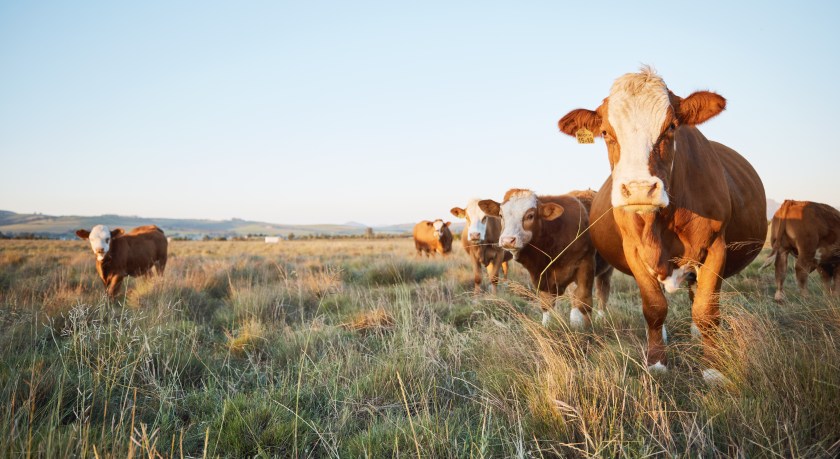
Organic beef is no longer a niche product—it’s a fast-growing category with powerful momentum. According to the Organic Trade Association’s 2024–2025 Organic Market Report, organic beef sales surged 36.7% last year. That’s the highest growth rate of any food category—and the most significant gain in the organic beef market in 20 years.
This demand is fueled by consumers looking for:
Clean, hormone- and antibiotic-free protein
Animal welfare
Environmental stewardship
However, much of this market is currently being supplied by imports—primarily from Australia and Uruguay. That’s where Texas ranchers come in.
Texas Has the Cattle—Now It Has more Processors
Texas leads the nation in cattle production, yet very few certified organic beef operations have emerged in the state. The reason? Lack of access to certified organic meat processing facilities.
That’s now changing.
Two Texas processors are leading the way:
All Hale Meats near Wolfforth, close to Lubbock
Huse’s Country Meats in Malone, TX (east of Hillsboro)
Huse’s, a long-standing family-owned processor known for quality smoked meats, has recently become certified organic, thanks in part to rancher Larry Widman of Leafy Creek Farm. Larry helped initiate and complete the certification process so he could market his own beef—and he continues to assist other ranchers with organic slaughter scheduling.
To schedule your organic cattle for processing: 📧 widman@leafycreekfarm.com 📱 325-330-2170
Modeling Success: Open Range Beef in Nebraska
Texas ranchers can look to Open Range Beef in Nebraska as a blueprint. Run by Tim Goodnight, this company processes and markets organic beef across multiple channels—from retail and foodservice to private label and club stores. Their success proves that domestic supply chains can work—when producers and processors are aligned.
Abundant native rangeland well-suited to low-input, organic grazing
Proximity to two certified organic processors
A central location to serve local, regional, and statewide markets
With the infrastructure in place, ranchers can now tap into the fastest-growing sector in organic food.
One potential outlet is Pederson’s Natural Farms in Hamilton, TX, known for high-quality natural meats. As supply increases, retailers like Pederson’s—and others—can become key distribution points for Texas-grown organic beef.
Could Tariffs and Trade Changes Open the Door Further?
While Australia and Uruguay currently supply a large share of organic beef imports, this supply chain is vulnerable to:
Global trade shifts
Export restrictions
Increased transportation costs
Potential U.S. tariffs on imported meat
As U.S. policymakers and trade organizations review food security and prioritize resilient domestic supply chains, we may see fewer imports and greater opportunities for U.S.-based production. That’s good news for ranchers with the capacity to go organic—and for consumers looking for American-grown, organic, and ethically raised meat.
Next Steps for Ranchers
If you’re in Texas and run a cow-calf, grass-fed, or finished beef operation, now is the time to:
Explore organic certification of your pastures and practices.
Connect with a certified processor like Huse’s or All Hale Meats.
Develop local markets—co-ops, farm stores, health food outlets, and online direct-to-consumer sales.
This isn’t just about beef—it’s about building a more local, more ethical, and more profitable Texas-based food system.
In organic livestock production, finding effective natural alternatives to synthetic inputs is both a challenge and an opportunity. Recently, I came across two compelling articles in Bovine Veterinarian magazine that shed light on the potential of essential oils—particularly oregano oil—as substitutes for synthetic feed additives like ionophores. The November/December 2024 edition featured Maureen Hanson’s article, “OREGANO: Not Just for Pizza Anymore,” which explored oregano essential oil as a natural alternative.1 Similarly, the March/April 2025 issue included Hanson’s follow-up piece, “Hello Essential Oils and Goodbye Ionophores?”2 These articles highlighted emerging research suggesting essential oils could be a potential livestock production enhancement and when you get two articles on the same subject you begin to notice!
Why Replace Ionophores?
Ionophores are antimicrobial compounds commonly used in conventional livestock production to manipulate rumen microbial populations. For example, monensin—a widely used ionophore—improves feed efficiency and daily weight gains by promoting favorable rumen fermentation. However, ionophores are prohibited in organic systems due to their synthetic nature and concerns about antibiotic resistance. Consumer demand for cleaner food has also prompted scrutiny of ionophore use in several countries.
For organic producers, this presents a challenge: how can we maintain or improve herd performance and health without compromising organic standards or animal welfare? This is where essential oils are gaining attention as viable alternatives.
Essential Oils Show Promise in Cattle
A recent study led by Dr. Jaymelynn Farney at Kansas State University3 evaluated the use of essential oils in stocker cattle diets. In this trial, 281 steers were divided into two groups: one group received minerals with an ionophore (monensin), while the other received minerals containing a proprietary blend of essential oils—including garlic, oregano, cinnamon, lemongrass, and capsaicin.
The results were strikingly similar:
Cattle fed essential oils gained an average of 2.13 pounds per day over 90 days.
Cattle fed ionophores gained 2.15 pounds per day.
Mineral intake and total weight gain were nearly identical between groups.
Interestingly, the essential oil mix was slightly less expensive than the ionophore mix. While no significant differences in cattle behavior were observed, Farney noted a mild increase in heart rate among cattle fed essential oils—a potential indication of vasodilation (increased blood flow), which is a known effect of certain essential oils.
Oregano – Origanum vulgare, also known as wild marjoram
Improving Calf Health with Oregano Oil
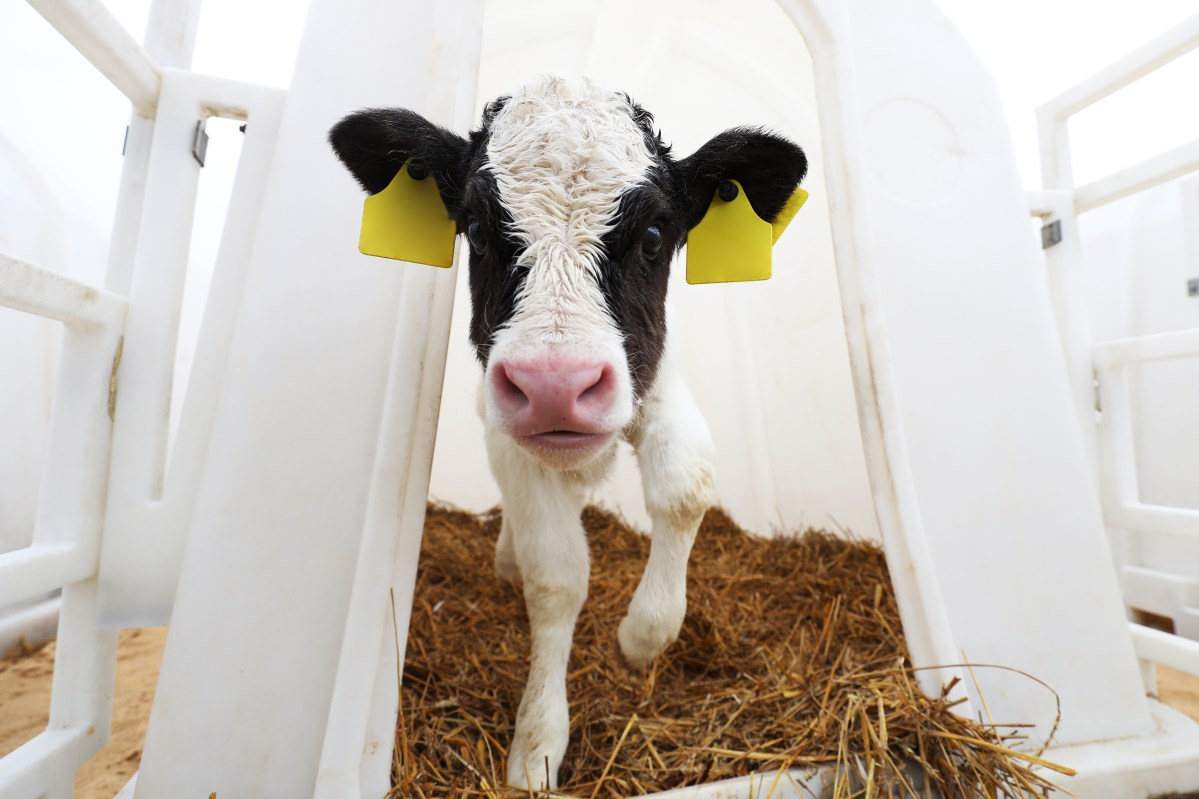
On the dairy side, a study conducted at Aristotle University in Greece4 investigated the use of oregano essential oil to combat diarrhea in newborn Holstein calves. Neonatal diarrhea is a common issue for dairy producers, especially those adhering to organic standards that restrict antibiotic use.
In this study:
Calves treated with a daily oregano oil drench for their first 10 days of life experienced fewer days with diarrhea.
Treated calves had lower overall diarrhea severity and shorter illness duration.
The need for antibiotics and supportive therapies was significantly reduced.
These findings are particularly relevant for organic dairy producers who often face challenges maintaining calf health without relying on conventional medications.
Practical Takeaways
So that you can get a general idea of the approximate amounts these studies are using when feeding oregano essential oil.
For Dairy Cows
Recommended dosage is 15 ml/day/cow for 28 days.
Product Price: A quart (946 ml) of Orego-Stim Liquid costs $35.
Daily Cost per Cow: 15 ml/946 ml × 35 = $0.550 per day per cow.
Total Cow Cost – 28 Days Treatment × $0.550/day = $15.54 per cow
For Dairy Calves
Product Price: A quart (946 ml) of Orego-Stim Liquid costs $35
Maintenance Dosage: 2 ml/day/calf mixed into milk until weaning.
Extra Support Dosage: 10 ml/day/calf for 10 days, followed by 2 ml/day/calf until weaning.
Daily Cost per Calf
Maintenance: 2 ml/946 ml × $35 =$0.074 per day per calf
Extra Support: 10 ml/946 ml × $35 = $0.37 per day per calf
Total Cost for Weaning Period (56 days)
Extra Support Dosage: 10 days at $0.370/day = $3.70
Maintenance Dosage: Remaining 46 days at $0.074/day = $3.40
Total Cost: $3.70 + $3.40 = $7.10 per calf
Replacing Monensin with Oregano in Grower Diets
Another study by researchers in China5 examined oregano essential oil as a replacement for monensin in grower diets for weaned Holstein bulls over a 240-day trial. Bulls fed oregano oil achieved weight gains comparable to those fed monensin. However, when both oregano oil and monensin were administered together, performance decreased—suggesting an antagonistic interaction between these two compounds.
This finding underscores the importance of using oregano oil as a standalone tool rather than combining it with synthetic additives (monensin).
Why This Matters for Organic Producers
These studies offer promising insights into how essential oils can support health and productivity in organic livestock systems. Specifically:
They help reduce disease pressure, such as calf diarrhea.
They align with consumer preferences for natural products.
When derived from non-synthetic sources, they comply with USDA organic regulations.
Additionally, the Kansas State trial demonstrated that essential oils can be cost-effective compared to conventional feed additives like ionophores. However, it’s important to note that outcomes may vary depending on factors such as livestock species, diet composition, management practices, and sourcing of essential oils.
Considerations Before Adopting Essential Oils
While these findings are encouraging, producers should approach essential oils with careful consideration:
Efficacy: Results may vary depending on formulation quality and livestock conditions.
Cost: Although some trials suggest cost savings, market variability could affect affordability.
Regulatory Compliance: Ensure that any essential oils used meet USDA organic certification requirements.
Potential Risks: High doses or improper formulations could lead to toxicity or unintended interactions with other feed components.
Further research is needed to fully understand how essential oils perform across diverse production systems, but these results do hold promise!
Where to Learn More
If you’re interested in experimenting with essential oils in your operation, here are a few extra resources:
Calsamiglia et al., 2007. “Essential oils as modifiers of rumen microbial fermentation.” Journal of Dairy Science.6
Greathead, 2003. “Plants and plant extracts for improving animal productivity.” Proceedings of the Nutrition Society.7
Katsoulos, P.D., et al. (2017). “Evaluation of the in-field efficacy of oregano essential oil administration on the control of neonatal diarrhea syndrome in calves.” Research in Veterinary Science, 115:478-483.↩︎
Wu, J., et al. (2020). “Dietary supplementation with oregano essential oil and monensin in combination is antagonistic to growth performance of yearling Holstein bulls.” Journal of Dairy Science, 103(9):8119-8129.↩︎
Calsamiglia et al., (2007). “Essential oils as modifiers of rumen microbial fermentation.” Journal of Dairy Science↩︎
I take the Bovine Veterinarian Magazine and appearing in the March/April 2025 edition (picture below) was this interesting article on dairy calf personality by Maureen Hanson. The article rang all kinds of “bells” for me because organic dairy production requires more than just certified feed and pasture. It demands a different kind of cow—one that can thrive with lower intervention, recover from stress without antibiotics, and mature into a productive milking animal under the constraints and values of organic systems. Maureen Hanson wrote her article based on a 2024 peer-reviewed study from the University of Kentucky (Journal of Dairy Science, https://doi.org/10.3168/jds.2023-24257)1 and this study offers a compelling new tool for organic dairy production: personality-based calf selection.
Bovine Veterinarian – March/April 2025
Calf Personality Predicts Future Performance
In the study, 49 Holstein calves were assessed using a series of behavioral tests designed to evaluate their responses to novelty and stress. Through principal component analysis of their behavior, researchers identified three personality traits:
Fearful: slower to approach novelty, more time spent being alert but not engaging
Active: higher movement across all tests, more physical exploration
Explorative: more interaction with objects and environment, less time inactive
These traits were then statistically correlated with detailed data from automatic calf feeders and wearable accelerometers tracking feeding behavior and activity. The results were striking:
Active calves consumed more starter grain, reached intake benchmarks earlier, and had significantly higher average daily gain (ADG) across all periods.
Explorative calves, surprisingly, had lower starter intake and lower ADG specifically during the weaning period.
Fearful calves showed no consistent associations with feed intake or growth but were clearly slower to engage with novel environments—a potential early marker for stress sensitivity.
Implications for Organic Dairy: Observation is Prevention
Organic systems are built on the foundation of preventive health, yet many dairy owners and managers are disconnected from the earliest stages of calf development. Calf rearing is often delegated to extremely capable managers but often few of the decision-makers (probably you since you are reading this) spend the time to observe how calves respond to their first illness, their first separation, or their first group housing experience.
This study confirms that those early responses matter. Calves that are more active adapt better to weaning and start feeding more quickly, leading to stronger growth and rumen development—two key goals in organic dairy management. Explorative behavior, meanwhile, may suggest curiosity but could signal greater sensitivity to changes, especially during stressful transitions.
You Can’t Manage What You Don’t Observe
The beauty of this research is that it doesn’t require high-tech tools to be useful. Yes, wearable accelerometers and automated feeders give precise measurements, but a skilled observer can spot:
Calves that hesitate or vocalize excessively when encountering new objects or people
Calves that walk their pens often versus those that stand still
Calves that seek out grain early versus those that delay
Even 20 minutes per pen per day, using a simple observation sheet for behavior categories like “explores new object,” “approaches person,” or “walks pen,” could help identify high-potential calves for organic dairy production systems.
A Call to Action for Organic Dairy
Early-life behavior should become part of calf selection and culling decisions in organic systems. Just as we select against structural flaws or poor production genetics, we should begin identifying calves whose temperament makes them a poor fit for organic environments. Resilience (something of extreme importance in organic dairying) is not just physical; it is behavioral.
These steps can help producers:
Reduce calfhood mortality and illness
Improve long-term health and lifetime milk production
Target breeding decisions for greater resilience
Stay within the boundaries of organic treatment rules
The goal isn’t just healthier calves. It’s to create a herd that is biologically compatiblewith organic practices. Personality is not just a curiosity. It’s a management tool. And for organic dairy, it might be one of the most important ones we haven’t been using.
Use this tool I developed during the first 10–14 days of life (or whatever fits your operation) to assess each calf’s temperament and adaptability. Score each behavior during structured (regular) observation sessions or low-stress test scenarios (not when moving to a new pen!). Click: Calf Behavior Tool
Observation Category
Behavior Description
Scoring Notes
Novelty Approach
Time to approach a new object (e.g., colored bucket, ball) placed in pen
Score each calf twice during the observation window to account for variability. Calves with consistently high scores in movement, feeding curiosity, and play behavior may be more biologically suited to organic dairy systems. Those with consistently low or fearful responses may require extra care—or may be poor candidates for organic retention.
Woodrum Setser, D., Proudfoot, K., Costa, J.H.C., Marchant-Forde, R.M., Bewley, J.M., & Cantor, M.C. (2024). Individuality of calves: Linking personality traits to feeding and activity daily patterns measured by precision livestock technology. Journal of Dairy Science, 107(5), 4512–4527. https://doi.org/10.3168/jds.2023-24257↩︎
Dr. Sushil Paudyal is Assistant Professor of Dairy Science at Texas A&M and an outstanding dairy researcher. Dr. Paudyal has a great interest in both nutrition and health issues in dairy cows, but he also likes to study these kinds of interactions in organic dairy cows. Sushil and I have been teaming up over the past couple of years on a few projects and we are starting one this fall (October 2024) that is very interesting.
In partnership with Kent Nutrition Group, we’re conducting a feeding trial involving a Humic Acid Substance, specifically Menefeed MFG 150, with pens of lactating organic dairy cows. We’ll compare a group that receives Menefeed MFG 150 to a non-fed group and then switch the groups for another phase of the study. This “crossover” design will help us better understand how the supplement impacts these animals.
Our focus will be on three main areas:
Milk Yield and Composition: We’ll monitor how Menefeed MFG 150 affects both the quantity of milk produced and its quality, including components like fat and protein content.
Health Status: By analyzing blood serum tests, we aim to understand how this humic acid substance might influence cow health—looking at factors like immune function and overall vitality.
Rumination and Milk Conductivity: Using sensors, we plan to track rumination time and milk conductivity, which can give insights into digestive efficiency and udder health.
Menefeed MFG 150 is OMRI-listed, meaning it meets the requirements for use in organic systems, which is crucial for our organic dairy trial. The humic substances used in Menefeed MFG 150 are derived from Freshwater Reed-Sedge Peat, a mined product that undergoes mechanical processing to become suitable for animal feeding.
What are humic substances?
Humic substances are organic compounds that come from the decomposition of plant and microbial materials. You may already be familiar with humic and fulvic acids from their use in improving soil health or as foliar plant sprays (link to humic and fulvic acid info for crops). These substances have been shown to have many beneficial properties, although their exact mechanisms can sometimes be mysterious. Research has shown mixed results—sometimes they provide a clear benefit, and other times they don’t—but the potential benefits keep us intrigued.
In dairy cows, recent studies suggest that humic substances like Menefeed MFG 150 may improve rumen fermentation, enhance nutrient utilization, and even support the immune system. If these effects prove true, and if we see an increase in milk production, this trial could lead to a win-win situation for organic dairy farmers, helping them achieve greater production while maintaining cow health.
(This article first appeared in “Texas Dairy Matters” and has since been published in Texas Ag and Dairy Review. I have had an opportunity to work with some of these technologies and these researchers on an organic dairy investigating the potential to improve both mastitis control and long-term animal health. Bob Whitney)
Non-Antibiotic Management of Mastitis in Dairy Cattle
1 Graduate Research Assistant 2 Assistant Professor. Department of Animal Sciences, Texas A&M AgriLife Extension Service, The Texas A&M University System
Mastitis is a common and costly disease affecting dairy cattle worldwide. It is characterized by inflammation of the mammary gland, typically caused by bacterial infection. Mastitis is typically managed on dairy herds with intramammary antibiotics. However, not all mastitis events respond to treatment with antibiotics, depending on the pathogen associated with the disease event and cow level factors. In addition, prudent and appropriate use of antibiotics is an essential step in achieving antimicrobial stewardship in dairy farms. In some management systems such as organic systems, the use of antibiotics is restricted (USDA, 2017). This presents the need to explore options to manage mastitis without the use of antibiotics.
In this article, we discuss. some strategies currently being evaluated by our group to manage mastitis events.
A) Acoustic pulse technology:
Acoustic pulse technology, APT, has emerged as a promising non-antibiotic therapy for managing mastitis in dairy cattle. Specifically adapted for treating mastitis, APT uses repeated projectile collisions with an anvil connected to the treatment head. These collisions generate low-incidence shockwaves or acoustic pulses that are transferred non-invasively to the affected mammary gland tissues. Similarly to ultrasound therapy, ATP uses sound waves to deliver energy. However, APT delivers lower-frequency sound waves that can penetrate deeper into tissues compared to ultrasound therapy. The therapeutic effects of APT include promoting recovery, reducing inflammation, and potentially improving blood flow and immune responses (Leitner et al., 2021). Recent studies have shown positive outcomes, such as increased recovery rates, reduced culling and additional milk yield in APT-treated cows compared to controls (Blum et al., 2023). This innovative approach offers an alternative to antibiotics, contributing to udder health and overall dairy cow welfare.
B) Cold laser therapy:
Cold laser therapy, also known as low-level laser therapy, has been explored as a potential non-antibiotic treatment for mastitis in dairy cattle. Cold laser therapy is currently used by many veterinarians as an alternative therapy approach to manage inflammation in small and large animals, including horses. This technology works on the principle of “photobiomodulation,” which refers to a therapeutic technique that uses light energy to stimulate cellular processes. In the context of dairy cattle, photobiomodulation has gained attention for its potential benefits in various aspects of herd health and productivity. There are reports of this technology used to promote wound healing and tissue repair. Photobiomodulation can accelerate wound healing and tissue repair by promoting cellular metabolism and enhancing blood flow. The technology can also help with pain management as the anti-inflammatory effects of photobiomodulation can help alleviate pain and discomfort. It has particularly been useful for managing conditions like lameness or joint inflammation (Gard et al., 2017).
Photobiomodulation has been explored as an adjunctive therapy for mastitis treatment. By reducing inflammation and promoting immune responses, it may aid in faster recovery. Light-emitting diodes, LEDs, or lasers are used to deliver specific wavelengths of light to targeted areas for a specific duration. Treatment protocols vary, but sessions are typically short and non-invasive. Although research is ongoing by our group, the results have indicated potential benefits. In à separate study, the laser irradiation resulted in a 16.6% increase in recovery, indicated by regression of signs of inflammation and a decrease in the somatic cell counts. Supportive treatment with laser irradiation increased recovery rates by 24.2% (Malinowski, et al., 2019). However, further studies are needed to establish its efficacy by evaluating optimal duration and wavelength combination for mastitis and somatic cell count management.
C) Plant molecule-based compounds:
One of the new tools for mastitis management that is getting attention is called antibiofilm compounds derived from plant molecule-based a non-antibiotic therapy for compounds. Mastitis-causing bacteria form and maintain biofilm through the process of quorum sensing. Bacteria produce biofilms as a survival strategy, especially in challenging environments. Biofilm protects the bacteria as a shield preventing immune cells from directly reaching the bacteria. The plant-based molecules use quorum sensing science to disrupt communication between selected mastitis-causing bacteria (Herrema et al., 2023). The components can block bacterial communication and influence their behavior such as biofilm formation. This process is called quorum quenching or quorum sensing inhibiting. In bacteria, the formation of biofilms is controlled by quorum sensing, QS, signaling genes and their products. Various inhibitors/compounds can disturb the QS signaling cascade and are used as an alternative therapy to optimize biofilm-related challenges. Reducing bacterial QS signaling by proprietarily selected plant molecules is possible because they possess inhibitory activity against bacterial and fungal biofilms. There are claims this technology promotes overall herd health and longevity of cows.
(The plant molecule-based compounds currently being evaluated are produced by AHV International. Some organic dairy producers are reporting varied success with these treatments, but more work is being done to evaluate their use. Bob Whitney)
References:
Blum, S.E., Krifuks, O., Weisblith, L., Fleker, M., Lavon, Y., Zuckerman, A., Hefer, Y., Goldhor, O., Gilad, D., Schcolnic, T. and Leitner, G., 2023. Evaluation of acoustic pulse technology as a non-antibiotic therapy for intramammary infections: Assessing bacterial cure biofilm vs. recovery from inflammation. Frontiers in Veterinary Science, 10, p.1079269.
Gard, J. 2017. Laser Therapy in Food-Animal Practice. Laser Therapy in Veterinary Medicine: Photobiomodulation, 423-430.
Herrema, F., Bieleman, H., Hoekstra, M. and Gomes, J., 2023. Longevity and Milk Production Improvement in Dairy Cows Using Plant-Derived Products. J Vet Heal Sci, 4: 128-140.
Leitner, G., Papirov, E., Gilad, D., Haran, D., Arkin, O., Zuckerman, A. and Lavon, Y., 2021. New treatment option for clinical and subclinical mastitis in dairy cows using Acoustic Pulse Technology (APT). Dairy, 2: 256-269.
Malinowski, E., Krumrych, W. and Markiewicz, H., 2019. The effect of low intensity laser irradiation of inflamed udders on the efficacy of antibiotic treatment of clinical mastitis in dairy cows. Veterinaria italiana, 55: 253-260.
USDA, AMS 2017. National Organic Program (NOP); Organic Livestock. and Poultry Practices. A rule by the Agricultural Marketing Service. The Federal Register.
If you are interested in growing organic peanuts, they are a great crop and an excellent rotation to other non-legume crops. Fortunately, peanut varieties have never been developed with genetic engineering and so there is no worry about that issue. The potential is there for breeders, but the industry has stayed away from that type of breeding because of consumer preferences. Be sure that any seed treatments applied are OMRI approved and okayed by your certifier.