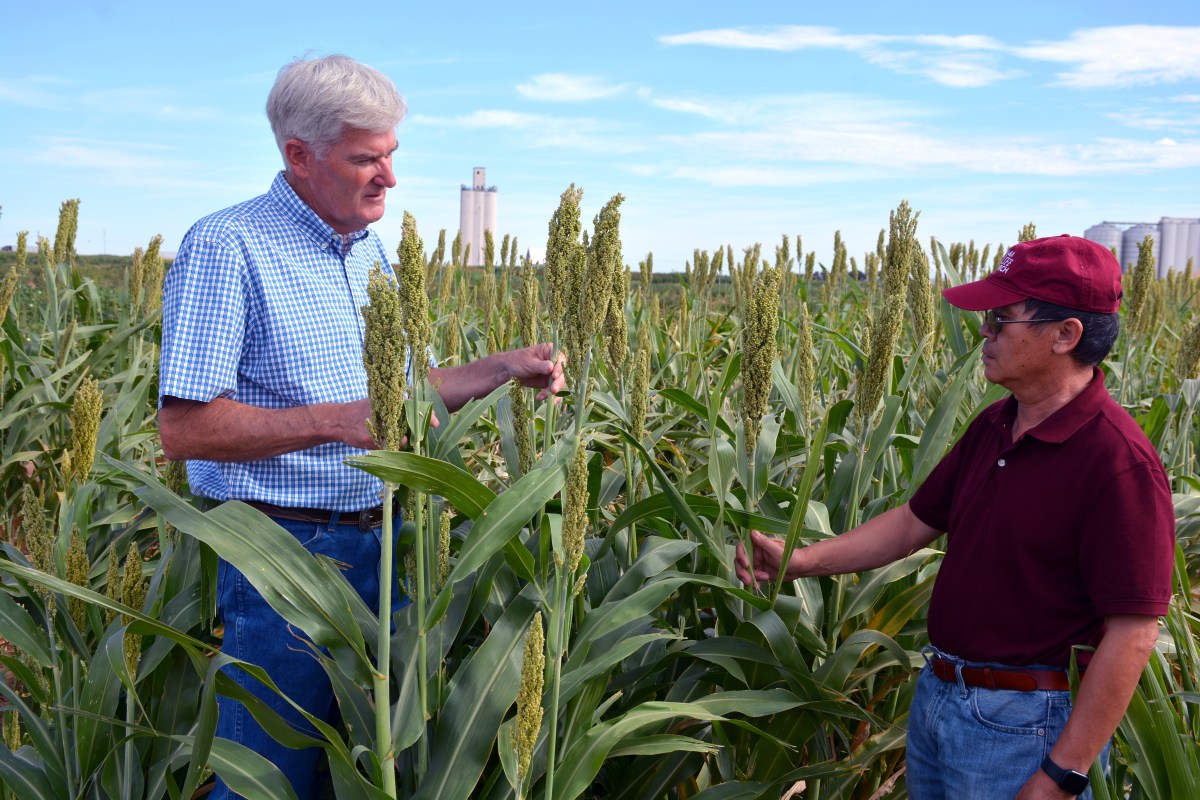
This material is adapted from a presentation prepared for the 2026 Global Sorghum Conference, held September 14–18 in Lubbock, Texas. The Conference was hosted by Texas Tech University in partnership with the Global Sorghum Association and the conference brought together more than 400 participants from 20 countries. The next conference will be held in Australia in a few years, and I certainly hope to attend!
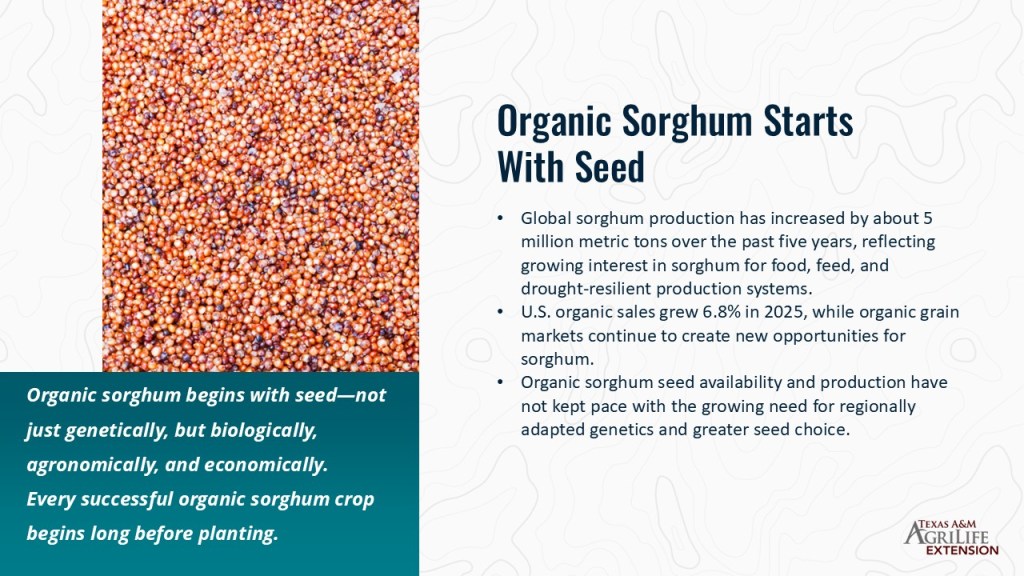
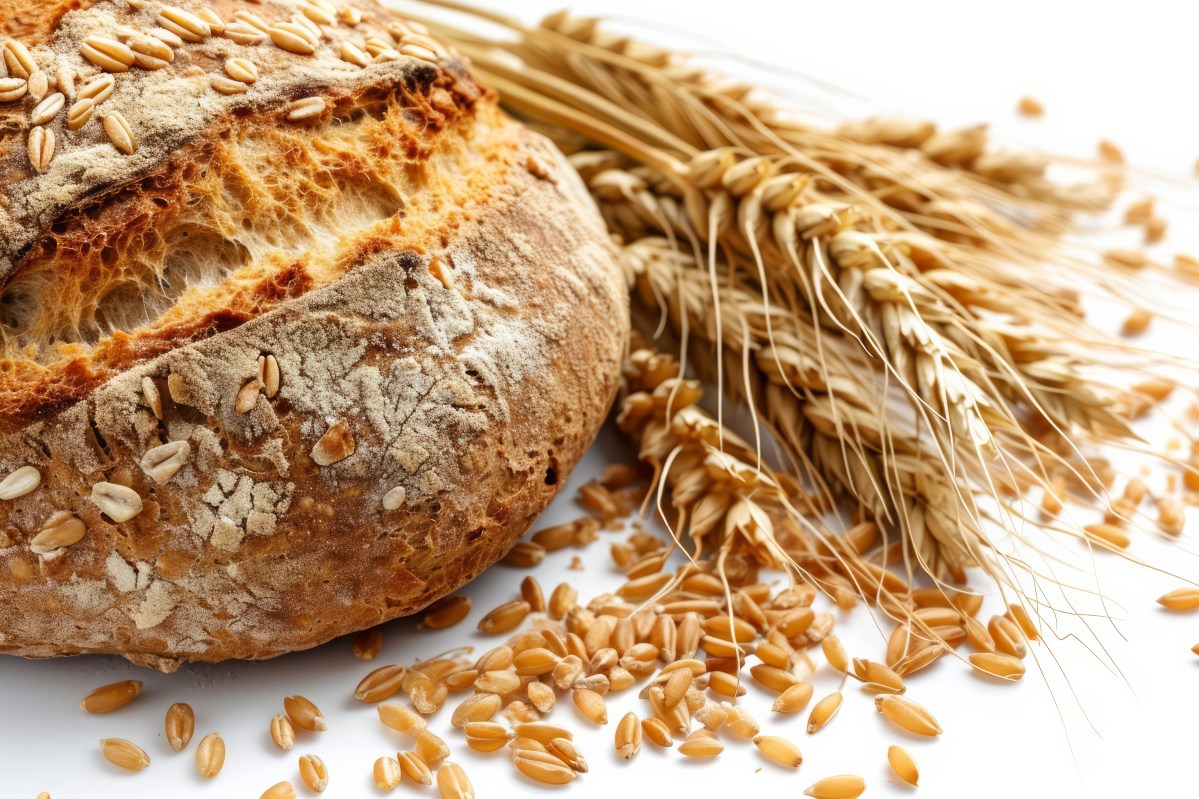
Figure 1. Organic sorghum begins with genetics, but successful seed systems also depend on biological performance, agronomic adaptation, and market availability.
Organic Sorghum Starts With Seed
Sorghum fits organic agriculture particularly well. It is drought and heat adapted, works in rotations, and can serve grain, forage, livestock, and increasingly specialty food markets.
But there is a bottleneck.
The farmer can only plant the genetics that somebody is willing and able to put in a seed bag.
In my experience, organic sorghum seed availability has not kept pace with the need for regionally adapted genetics and greater seed choice.
So, when I say organic sorghum begins with seed, I mean that every successful crop begins long before the planter enters the field.
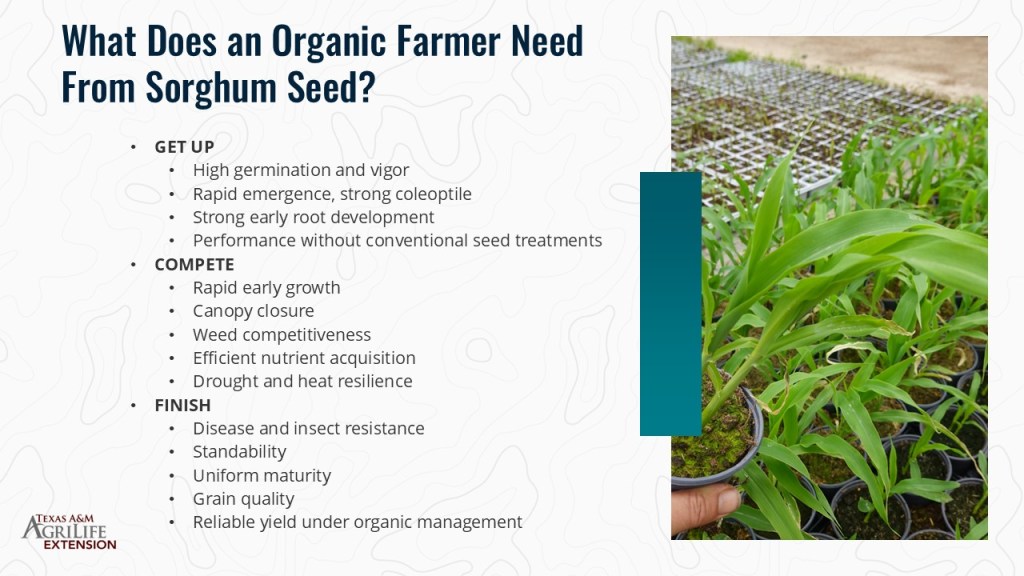
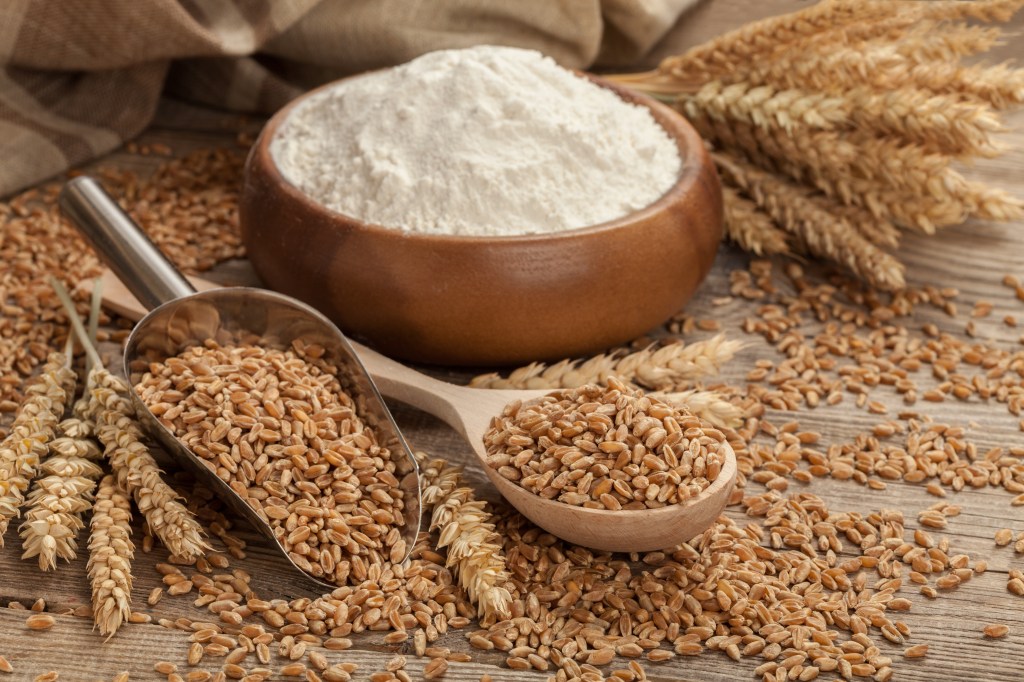
Figure 2. Organic sorghum varieties for organic production must establish rapidly, compete effectively, and finish with acceptable yield and grain quality.
What Does an Organic Farmer Need From Sorghum Seed?
I think about what an organic farmer needs from sorghum in three very simple stages.
First, it has to GET UP.
We need germination, vigor, rapid emergence, good coleoptile development, and strong early rooting. We do not have the same ability to compensate for weak establishment without seed treatments prohibited in organic production.
Second, it has to COMPETE.
Early growth, canopy development, rooting (fast and deep), nutrient acquisition, and weed competitiveness become part of our weed and fertility management system.
And then it has to FINISH.
It has to resist disease and insects, remain standing (no lodging), mature properly, produce quality grain, and ultimately yield.
The important distinction is this:
In an organic system, we often ask the plant to perform some of the functions that conventional agriculture asks inputs to perform.
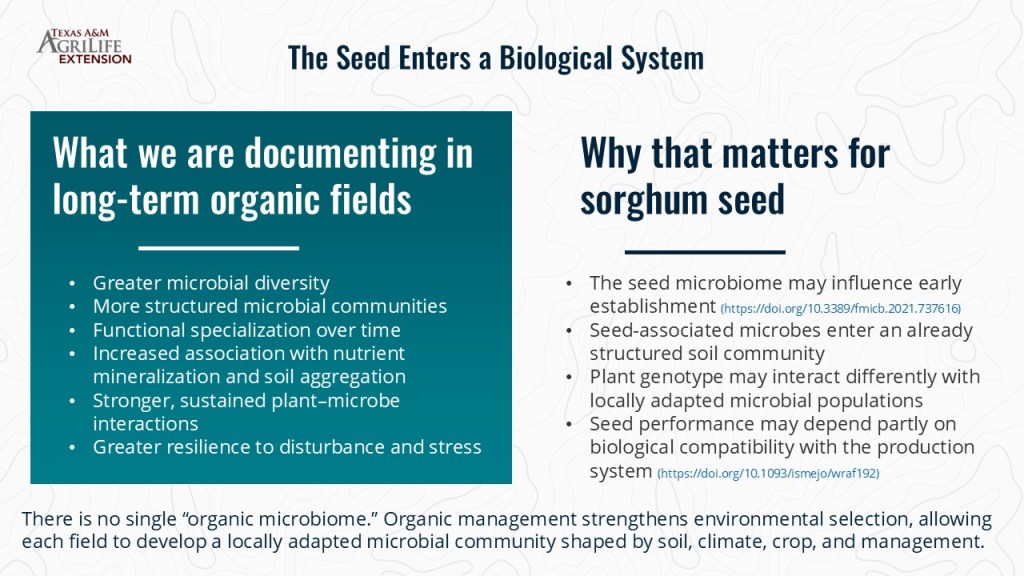
Figure 3. Seed enters an existing biological system shaped by soil, climate, cropping history, and management.
The Seed Enters a Biological System
There is another dimension that we are becoming increasingly interested in: biology.
In our long-term organic cotton and sorghum fields, we are documenting greater microbial diversity, increasingly structured microbial communities, and functional specialization over time.
We are also seeing microbial populations associated with nutrient mineralization, soil aggregation, plant–microbe interaction, and resilience to stress.
But I want to emphasize something important.
There does not appear to be one universal “organic microbiome.”
Instead, organic management seems to strengthen environmental selection. Each field develops a community influenced by its soil, climate, cropping history, and management.
Now introduce seed into that system.
The seed itself carries microorganisms.1 Those organisms enter a soil containing an already established microbial community, and different plant genotypes may interact differently with that biology.2
So one research question I think deserves much more attention is:
If the soil microbiome becomes locally adapted, should we also be considering the seed microbiome as part of crop adaptation? Testing, testing, testing!
Perhaps eventually we need to think beyond simply genotype by environment toward genotype × environment × microbiome × management.
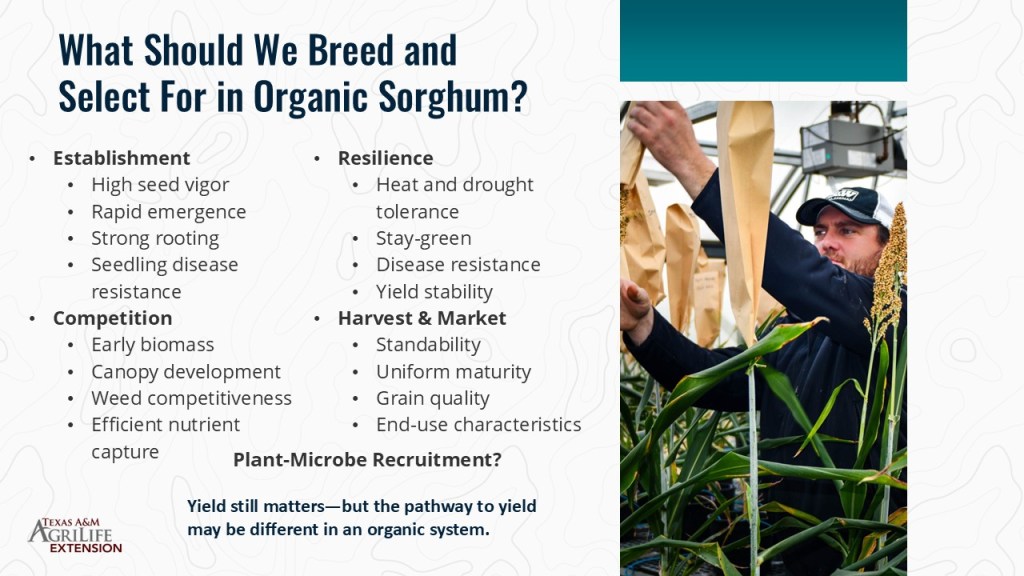
Figure 4. Organic sorghum breeding targets extend beyond yield to establishment, competition, resilience, harvestability, and market quality.
What Should We Breed and Select For in Organic Sorghum?
Earlier I showed you what the farmer needs from the plant. Now I want to turn those production needs into breeding targets.
I am not suggesting that yield becomes less important. Farmers are still paid for yield.
But the pathway to that yield may be different in an organic system.
For establishment, vigor, emergence, rooting, and seedling disease resistance may become especially valuable.
For competition, early biomass, canopy development, weed competitiveness, and nutrient capture matter.
For resilience, sorghum already gives us tremendous strengths in heat and drought tolerance, stay-green, disease resistance, and yield stability.
And ultimately we still need standability, uniform maturity, grain quality, and the end-use characteristics the market wants.
One additional question is plant–microbe recruitment. “Can we eventually identify or select sorghum that interacts particularly well with beneficial soil organisms?”
We cannot select effectively for an organic production system unless we actually observe phenotype under that production system. The genotype may look excellent on paper or in another environment, but we have to see how it expresses itself where nitrogen release is biological, weed competition is real, and seedling protection is limited.
We may need to put more selection pressure on traits that allow the plant to solve problems for itself.
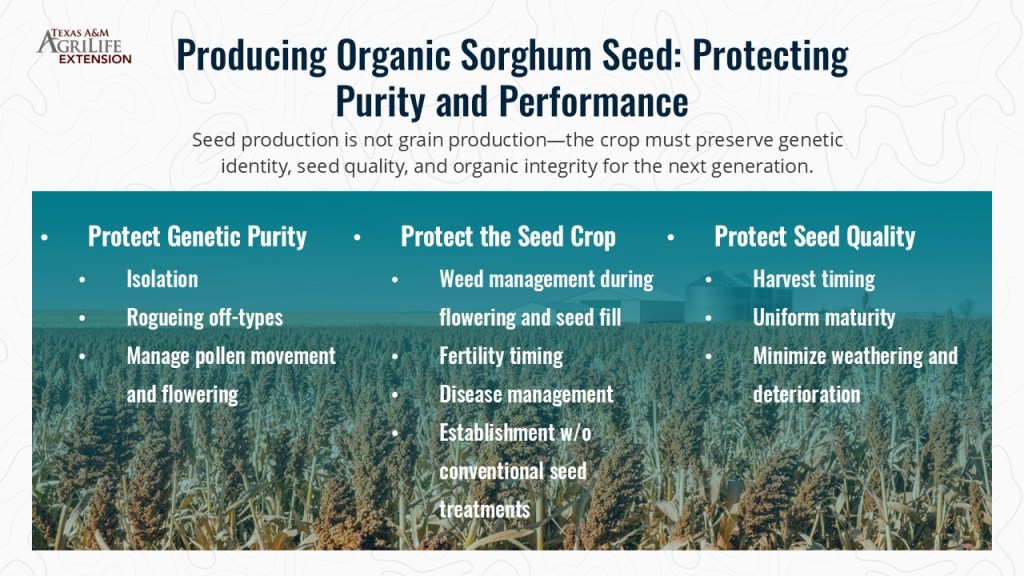
Figure 5. Organic seed production must protect genetic purity, crop performance, seed quality, and organic integrity.
Producing Organic Sorghum Seed: Protecting Purity and Performance
Once we identify the genetics we want, somebody still has to produce the seed.
And seed production is not grain production.
With grain, I am primarily concerned about what I harvest this year. With seed, I am responsible for what happens in somebody else’s field next year.
First, we protect genetic purity through field isolation, regularly rogueing any off-types, and managing pollen movement and flowering.
Second, we protect the seed crop.
Weed control during flowering and seed fill matters.
Fertility has to be synchronized with crop demand using organic sources.
Disease management becomes especially important, and establishment has to occur without the conventional synthetic seed treatments that may normally provide some protection.
Finally, we protect the seed at harvest. Timing, uniform maturity, weathering, and deterioration all affect the quality of what eventually goes into the seed bag.
So we are trying to preserve genetic identity, biological quality, and organic integrity simultaneously.
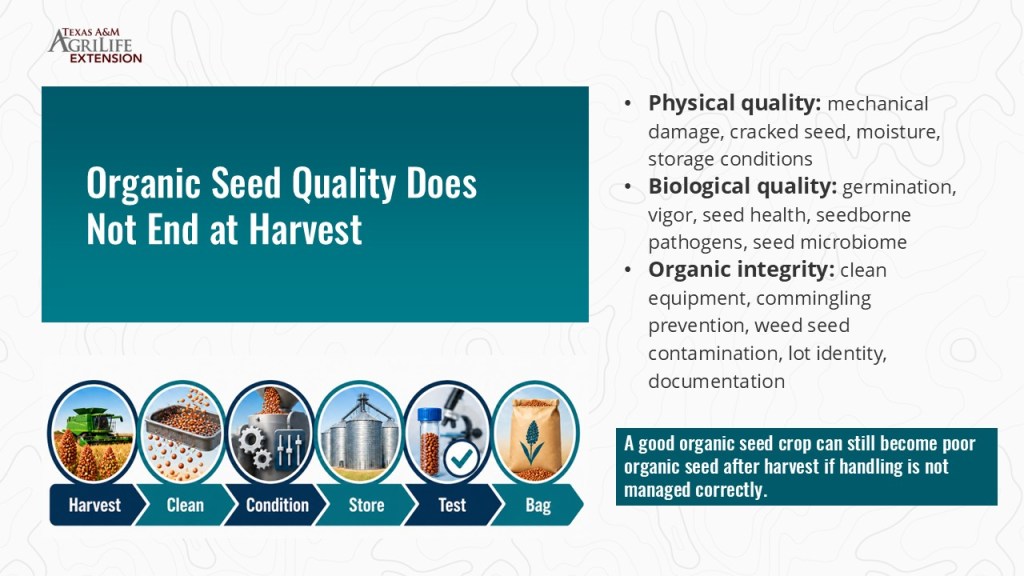
Figure 6. Seed quality can be preserved or degraded at every step from harvest through cleaning, conditioning, storage, testing, and bagging.
Organic Seed Quality Does Not End at Harvest
Harvest does not finish seed production.
In fact, every step shown here can either preserve seed quality or degrade it.
Harvest can mechanically damage seed through improper combine settings, augers, handling, and repeated drops.
Cleaning removes contaminants, but poorly adjusted equipment can also damage seed.
Conditioning or seed sizing influences uniformity and physical quality.
Storage conditions affect germination, vigor, and longevity, while insect management must remain compatible with organic requirements.
Testing tells us whether the seed still performs as expected.
Bagging must preserve lot identity, traceability, and certified organic integrity.
For organic seed there is an additional layer: equipment cleanliness, commingling prevention, lot identity, weed seed contamination, and documentation all matter.
And biologically, we increasingly need to think about seed health, seedborne pathogens, and perhaps what these processes are doing to the seed microbiome.
The field produces the seed, but post-harvest handling determines whether that seed reaches the farmer with its quality and integrity intact.
And this is where market integrity enters the seed system. Organic operates as an identity-preserved, documented production and handling system. The seed not only has to germinate; we must be able to document what it is, where it came from, and that its organic integrity was maintained.
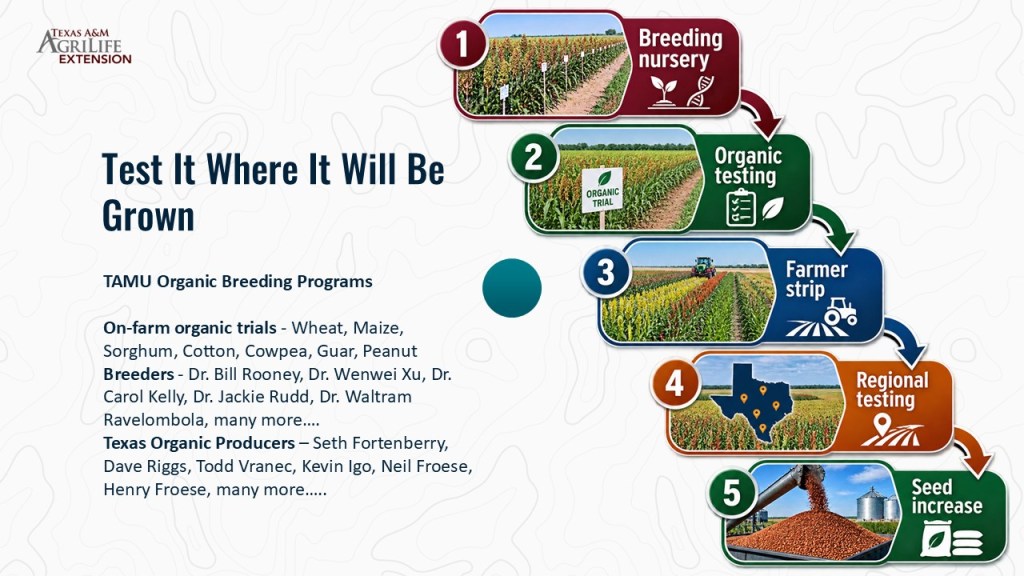
Figure 7. Promising genetics should move progressively from breeding nurseries to organic testing, farmer strips, regional evaluation, and ultimately seed increase.
Test It Where It Will Be Grown
This may be the most practical recommendation I can give the breeding community.
Test promising material in the environment where you expect farmers to grow it.
At Texas A&M we are increasingly moving material from breeding programs into certified organic fields—not only sorghum, but wheat, corn, cotton, cowpea, guar, peanuts, and other crops.
The progression I would like to see become more routine is simple:
breeding nursery → organic testing → farmer strip → regional testing → seed increase.
We do not need every breeding program to become an organic breeding program.
But organic production should become one of the environments in which promising germplasm is evaluated.
Farmers also need to participate earlier. They see things in larger fields that we may never see in a small research plot—emergence problems, weed competitiveness, maturity differences, harvestability, and management interactions.
That farmer feedback should then move back into the breeding program.
Building Better Organic Sorghum Seed Systems
Better organic sorghum does not end with better genetics. The genetics must be evaluated under organic management, multiplied without losing purity or quality, handled carefully after harvest, and ultimately placed in the hands of farmers who can test them under real production conditions.
If we want organic sorghum production to grow, we cannot simply breed better sorghum. We must build better seed systems. That means breeders, agronomists, seed producers, organic farmers, researchers, certifiers, and markets working together to move useful genetics all the way from the breeding program to the farm.
References
- Johnston-Monje, D., J. P. Gutiérrez, and L. A. Becerra Lopez-Lavalle. 2021. “Seed-Transmitted Bacteria and Fungi Dominate Juvenile Plant Microbiomes.” Frontiers in Microbiology 12:737616. ↩︎
- Sanz-Puente, I., S. Redondo-Salvo, G. Torres-Cortés, M. de Toro, S. Fernandes, A. Börner, Ó. Lorenzo, F. de la Cruz, and M. Robledo. 2025. “Seed-mediated vertical transmission of Pantoea core endophytes.” The ISME Journal 19(1): wraf192. ↩︎