If you are interested in growing organic peanuts, they are a great crop and an excellent rotation to other non-legume crops. Fortunately, peanut varieties have never been developed with genetic engineering and so there is no worry about that issue. The potential is there for breeders, but the industry has stayed away from that type of breeding because of consumer preferences. Be sure that any seed treatments applied are OMRI approved and okayed by your certifier.
Here are few things you might find interesting or helpful as you think about organic cotton planting in a few months (weeks). I will update this as I get new information, but it will be “here” to help anytime you need it.
If there is anything I need to add or change, please let me know. I want to keep this as up to date as possible. Click link in this Table of Contents below to scroll down.
Commercial Varieties Developed without Genetic Engineering Methods. Be sure that any seed treatments applied are OMRI approved and okayed by your certifier.
Upland Varieties
Americot – UA48 (talked to Dr. Robert Lemon with NexGen and they hope to have some commercial varieties good for organic in a few growing seasons.)
Brownfield Seed & Delinting – Varieties: BSD 224, BSD 4X, BSD 598, BSD 9X, Ton Buster Magnum. Currently, one new Tamcot variety is being reviewed for future commercialization and BSD has 2 new varieties being reviewed for future commercialization.
ExCeed Genetics – 6447 or 4344 (May Seed from Turkey where they do not grow GE cotton.)
International Seed Technology (IST) – BRS 286, BRS 293, BRS 335, BRS 2353. Varieties from Brazil and certified in Texas.
Pima or Pima hybrids
Gowan – 1432
Cottonseed Quality – It Matters!
Cottonseed is sold in 50lb. bags as you all know but the number of seed in a bag can be drastically different depending on the variety. Typically, we see 220,000 – 230,000 seed or about 4,500 seed per pound but over the years we have seen cottonseed size go down such that we can have varieties approaching 6,000 seed per pound.
Seed germination for cotton is determined using two methods. A warm seed germination test would be to put the seed through 16 hours of 68 degrees then 8 hours of 86 degrees and do this for 4 days. Calculate the % germination which is the germinated seed number divided by the number of seed tested. 80 germinated seed/100 beginning seed tested * 100 = 80%
A cool seed germination test is simply keeping the seed at a constant 64.5 degrees for 24 hours for 7 days. Calculate the % germination.
If you want to read more about cotton seed testing this is a very recent article that is very helpful. Cotton Seed Quality Program Update
No organic producer should ever begin planning for a crop without first organizing with a buyer to buy the crop. Cotton is not a crop to grow without a buyer since even storage can be difficult unless arranged in advance.
In my career as an Extension professional (extension agent, researcher, specialist) I have had a lot of agriculture training, but I have also had a lot of training for training agriculturists which includes just about every group in agriculture today. One of the early lessons we learned was a simple theory about learning called the Rogers’ Adoption Curve.
I couldn’t begin to tell you much about Rogers or his overall work as an educator, but I do know about this curve and in my career this “curve” has proven to be true over and over again. What you see in this picture is the classic “bell curve” representing the concept of knowledge or technology. People who adopt new knowledge or technologies are represented along the bottom axis and the progression is from left to right, i.e. the first to adopt are on the left and over time the others adopt the technology. So, looking at this we see that the first group to adopt the technology are innovators followed by early adopters and so on. This picture shows a break called “The Chasm” between early adopters and early majority. This chasm is difficult to cross and can represent a lot of time or even failure for the technology.
Organic farmers are mostly in the innovator/early adopter category. Organic agriculture is not easy and in general requires a good knowledge of agriculture systems before getting into the details of growing organic. As an extension educator I tend to try and find innovators and early adopters to work on demonstration or research projects because I know they are just as anxious to explore new technologies as I am.
That said, let me ask you where you are today? Occasionally we need to take a break and get away from it all because we are falling into the late majority or laggard category doing the same thing we always did. Don’t lag too far behind because as you can tell from the “curve” there are a lot of people already on the downhill slide!
Using the Curve!
Rogers’ Adoption Curve is a model that outlines the adoption process of new technologies or ideas through different segments of a population. Developed by Everett Rogers in 1962, it’s widely used in the fields of social science, marketing, and innovation management but is very useful in organic agriculture too.
Rogers’ Adoption Curve is an effective tool for understanding how new practices, like organic agriculture, are adopted within a community. Extension professionals can use this model to tailor their educational and promotional strategies for organic agriculture to different segments of the agricultural community.
Innovators (2.5% of the Population)
Characteristics: These are the first individuals to adopt an innovation. They are risk-takers, have financial liquidity, are social networkers, have closer contact with scientific sources and interaction with other innovators.
Role in Adoption: Their acceptance of an innovation is a key step in the process. Being a small segment, they serve as a testing ground and are crucial in initial debugging or refinement of the product or idea.
Targeting Innovators
Approach: Provide detailed, technical information on organic agriculture, focusing on innovation and environmental benefits.
Why: Innovators are keen to experiment with new techniques and can provide valuable feedback.
Example: Conducting pilot projects with innovators to demonstrate the efficacy of organic practices.
2. Early Adopters (13.5% of the Population)
Characteristics: This group has the highest degree of opinion leadership among the other adopter categories. They are typically younger, more socially forward, and have a higher social status and more financial lucidity.
Role in Adoption: Early adopters are crucial for the validation and initial dissemination of the innovation. Their acceptance acts as an endorsement, influencing the next wave of adopters.
Engaging Early Adopters
Approach: Emphasize the social and economic benefits of organic agriculture. Use early adopters as role models.
Why: Early adopters have strong influence over their peers. Their success stories can inspire others.
Example: Showcasing successful organic farms managed by early adopters in workshops and field days.
3. Early Majority (34% of the Population)
Characteristics: They adopt an innovation after a varying degree of time. This period is significantly longer than the innovators and early adopters. They are typically more deliberate before adopting a new idea, often influenced by interactions with peers.
Role in Adoption: Their adoption is a pivotal point in the lifecycle of an innovation, marking the moment when an innovation reaches a critical mass of users.
Convincing the Early Majority
Approach: Focus on practicality and the mainstream benefits of organic farming. Provide evidence of success from early adopters.
Why: The early majority are cautious and need proof of effectiveness.
Example: Organizing farm tours to successful organic farms and creating user-friendly guides.
4. Late Majority (34% of the Population)
Characteristics: This group is skeptical about change and will only adopt an innovation after the majority of society has embraced it. They typically have below-average social status and financial liquidity.
Role in Adoption: Their adoption signifies the innovation has become mainstream. They usually require external pressures from peers or societal changes for adoption.
Addressing the Late Majority
Approach: Use peer pressure and economic incentives. Highlight the risks of not adopting organic practices.
Why: Late Majority are skeptical and influenced by the norms established by the majority.
Example: Offering financial assistance or subsidies for transitioning to organic farming.
5. Laggards (16% of the Population)
Characteristics: They are the last to adopt an innovation. Unlike some of the previous categories, they aren’t looking for information on new ideas and are focused on traditions. They tend to be of an older age, lower in social status, and less financially fluid.
Role in Adoption: Their adoption is usually not vital for the overall success of an innovation but signifies complete market saturation.
Reaching Laggards
Approach: Use personal relationships and focus on tradition and security aspects of organic farming.
Why: Laggards are resistant to change and trust familiar faces and traditional methods.
Example: One-on-one meetings, focusing on how organic farming aligns with traditional farming values.
Importance in Agriculture Extensionand Teaching Organic
In the context of agriculture extension, understanding Rogers’ Adoption Curve is vital. It helps in identifying the right strategies to promote new agricultural practices or technologies. By recognizing the characteristics and motivations of each group, extension professionals can tailor their approach, ensuring that innovations are adopted effectively across different segments of the farming community.
For example, introducing organic farming techniques or new sustainable practices can follow this curve. Innovators might experiment with these techniques first, followed by early adopters who validate and popularize them. As these practices gain credibility, they gradually become adopted by the majority.
Tailored Communication: Develop different communication strategies for each group. Innovators and early adopters might prefer digital communication, whereas late majority and laggards may respond better to traditional methods like community meetings.
Feedback Loops: Establish feedback mechanisms with each group. Innovators can provide technical feedback, whereas the majority can give insights into mainstream acceptance.
Continual Education: Offer ongoing support and education, adapting to the changing needs and responses of each group.
Conclusion
Rogers’ Adoption Curve provides a framework to understand how innovations like organic agriculture spread within a community. This understanding is crucial for professionals in fields like agriculture extension, where the goal is to implement new, often more sustainable, practices and technologies. By catering to the unique characteristics and needs of each adopter category, the adoption process can be more efficient and widespread.
By understanding and applying Rogers’ Adoption Curve, we can more effectively promote organic agriculture. Tailoring strategies to each segment of the adoption curve ensures that communication and education are relevant and engaging, increasing the likelihood of widespread adoption of organic practices. This approach not only aids in the dissemination of organic farming methods but also ensures a supportive community (the organic family) is built around these practices.
I am sure as an Outstanding Organic Farmer you have never gotten one of these letters. If you have, then you know that the first thought running through your mind is that you about to lose your certificate! Even though I know better it was still a thought that was at the front of my mind and the second thought was, “what will all my organic farmers think about me?”
Well, it is not the end of the world, and it certainly didn’t kick our Organic Research Acres out of the “world of organics.” We just messed up and Yisel with NICS had to take us to the “woodshed” for a little organic discipline. I hope you never have to go there but I did survive!
What did we do? Well, we let some time slip by and forgot to provide some documentation on seeds and seed sources, have labels for organic materials we used and notify them of a change to our Organic System Plan! Just a minor infraction of NOP rules – at least that was my opinion……. NICS didn’t quite see it that way and I had to quickly get my act together and provide some documents.
Fortunately, I did have all the documents (except my non-GMO seed letter from Branden Watson at Brownfield Seed and Delinting which he graciously sent me!) and sent them by email with a letter to Yisel. She was very forgiving and after review sent me this letter.
We still have to make a few changes to our storage but overall, we are in good shape and looking forward to a successful year in organic research. Yisel did say that she hopes I can avoid another notice, but she doesn’t know me very well!
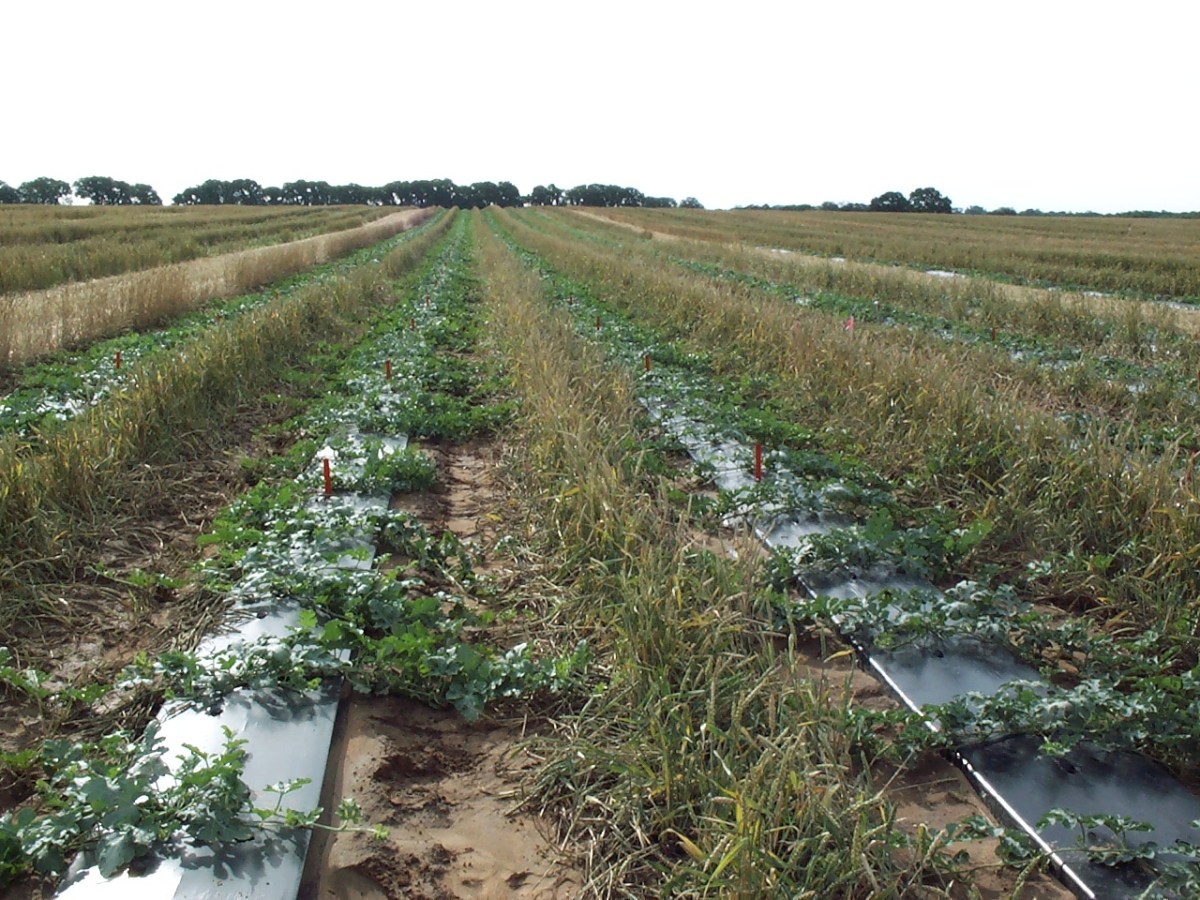
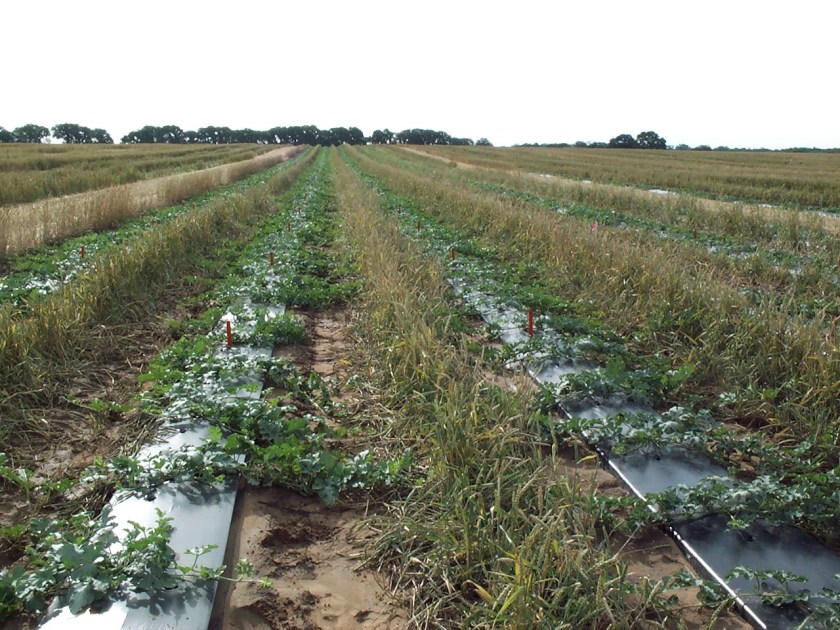
One of my first Seedless Watermelon Trials, Comanche County Texas
I have been asked on numerous occasions “Where Do Seedless Watermelons Come From?” or “How do you get seed from a seedless watermelon?” Well, the process is simple but lengthy, taking two generations but the end result is fantastic.
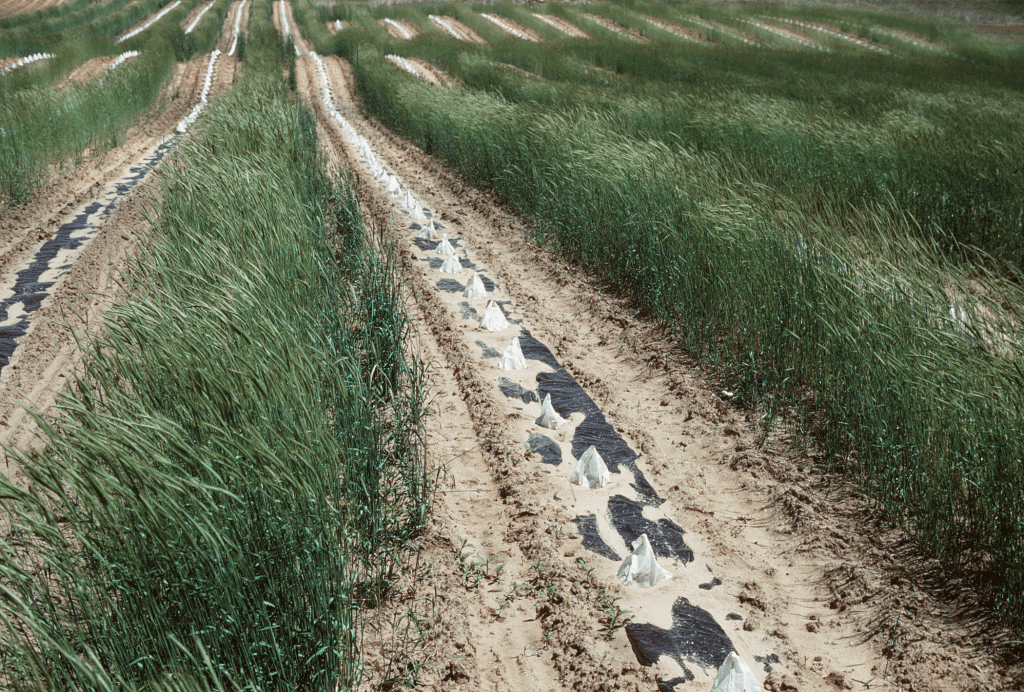
First, you need to understand a little about chromosomes, the threadlike bodies that contain genes for development. A regular watermelon has two sets of chromosomes and is called a diploid (di for two). A plant breeder will take a diploid watermelon seed and treat it with a chemical called colchicine. Colchicine will cause the seed to develop a melon with four sets of chromosomes called a tetraploid (tetra for four). This melon is grown out and the seed harvested for the next growing season. This tetraploid seed is planted and begins to grow but the plant is covered with a spun row cover to prevent any pollination so that the plant breeder can pollinate at the right time with a diploid melon variety. These melons will grow and the seed from them will be harvested. The cross of tetraploid plant with a diploid plant result in triploid seed. This plant has three sets of chromosomes and is the “mule” of the watermelon family. This seed when planted will produce a seedless melon meaning it is sterile. You may see some sort of seed like “carcass” but that is soft and not developed shown in the picture below. They don’t affect the taste or the quality.
Seedless melons are really a favorite of the urban clientele. They don’t buy grapes with seeds, and they don’t like melons with seeds (what do you do with the seeds in a nice restaurant). They are excellent for salad bars and are sold in grocery stores sliced and ready to eat. Seedless watermelons are typically smaller and so fit easily in the refrigerator, another plus for the urban American. One of the first and most popular seedless varieties was Tri-X 313. I was told that the Tri-X meant triploid, the first 3 was 3 months maturity and the 13 was the typical weight of 13 pounds per melon. Sounds good anyway!
Organic Seedless Melons – Florida Fields to Forks
Growing seedless melons are a little different than the typical watermelon. First this seed is very fragile and must be germinated under higher-than-normal germination temperatures. We will germinate seeds in chambers with 90+ degree temperatures. This forces the seed to quickly germinate and begin to grow versus a cold soil in the field which will slow seed germination enough that most seedless plants won’t make it. Because of its temperamental nature a seedless watermelon is grown as a transplant first and then moved into the field later after getting a good root system established. These seeds cost from 17¢ to 50¢ a piece and growing the actual plant in a pot to be transplanted costs another 15¢ for a total of approximately 50¢ per plant. The germination percentage is low for seedless, around 80%, so that cost can go up even more. It takes about 1500 to 1700 plants per acre or about $600.00 per acre of planted seedless melons, a lot of money and still 80 days till harvest.
Seedless has other good traits besides being seedless. They are very productive, generally producing more melons than any other hybrid if grown properly. They are also disease tolerant plants resisting many of the diseases that other melons quickly die from and seedless are good shippers, holding flavor for a long time.
I mentioned that the seedless is the “mule” of melons, well a watermelon produces both male and female flowers so that we can plant one variety in a field and bees can pollinate with no trouble. A seedless melon produces a male flower that cannot pollinate another melon so to get by this we have to plant seeded variety melons in rows next to the seedless rows to insure good pollination. I have seen mix-ups in the field where seedless plants covered 10 solid rows so that the outside two rows were the only ones with melons. Having a pollinator row for seedless is mandatory if you want seedless melons, a fact you should know if you want to try growing seedless melons.
Is a seedless melon organic? Absolutely. Colchicine is a naturally occurring alkaloid compound found in certain plant species, primarily the Colchicum autumnale plant, also known as autumn crocus or meadow saffron. Colchicum autumnale is native to Europe and Asia. The alkaloid colchicine is extracted from the seeds, corms (underground storage organs), and other parts of this plant. It can be applied to the seeds or plants, and this causes the doubling of the chromosomes. This process seems unnatural but in nature it is not that rare to find naturally occurring tetraploid melons!
Colchicine has been used for centuries in traditional medicine, particularly in the treatment of gout and certain inflammatory conditions. However, it is important to note that colchicine can be toxic in high doses, so it should only be used under medical supervision. In organic production the melons should be treated with the naturally derived colchicine not the synthetic. As always, check with your CERTIFIER first!
There are all kinds of ways and amounts to fertilize melons and each of you has their own “special mix” that works just right for you. Even though each producer does it differently there is some interesting information about amounts based on growth that might be useful. Dr. Don Maynard, University of Florida edited the Watermelon Production Guide for Florida for years and in it he listed a fertigation schedule for a seeded and plastic mulched watermelon crop. I am asked occasionally how much nitrogen I should be applying, and the answer is “it depends.” I use the number 120#’s as the total N that you will probably apply in the season minus what you’ve already put out, say 40#’s which leaves 80#’s to apply in 8 weeks or 10#’s per week. This is simple, but it doesn’t consider that sometimes the plants need more nitrogen than at other times. Dr. Maynard includes this schedule which considers the plant’s needs.
This chart assumes that you will apply 120#’s of total N and that 20% or 24 lbs. of N was already put down as a starter N before planting. Assuming it takes 15 weeks from planting a seed to final harvest then you just follow along with each week applying the amount of N recommended per day for seven days then go to the next week. They recommend applying N through the drip each day but not many producers do that so just use the chart to calculate how much N you need and when you need it. He also adds that if you are using transplants then start on week 3 just shortly after you set out the plants.
So, what this means is that by week 8 you should have applied 28% of the fertilizer plus the 20% you put down as starter or 48% of the 120#’s. In week 8 you would apply 1.4 lbs. of N per acre per day or 14#’s of liquid 10% (1 gallon is 10.5 lbs.) per acre per day or 98#’s per week which is about 9.33 gallons per week per acre of liquid 10%. Just remember that we are talking pounds of actual nitrogen, but no nitrogen source is pure but is a percentage. Divide the pounds of N needed by the percentage to get amount of fertilizer to apply. 1.4/0.10 = 14#’s. Now an acre is a physical planted acre with plants having about 24 square feet per plant. Reminder: in organic you may want to adjust the schedule earlier, but the principal is that melons need lots of N right before and just after they start sizing melons.
You can see that in weeks 9 and 10 the plants are really using nitrogen and after that the plants begin to concentrate on making fruit instead of plant growth, so nitrogen is used less. Those big plants also have stored nitrogen in the leaves which they can use for maintenance and fruit giving you a safety net. We see the same kind of response in most field crops like corn where we would put most of the nitrogen out before tasseling to insure it is available when the ears are made.
How do you do a fertilizing schedule like this in Organic Production? There are several companies that make fertilizers approved for organic production that can supply lots of somewhat readily available nitrogen. As an example, Nature Safe has a pelleted 11-1-0 for organic production and Ferticell has Active 13-2-2, Ferticell has an Explorer Liquid 10-0-0 and an Explorer 16-0-0. I am sure there are many other companies that sell products like these that will add to your fertilizer needs beyond what you get from using high quality compost.
Always check your soil and your compost for nutrient content before you buy and apply these high nitrogen organic fertilizers. As always, I do recommend you check with your certifier before adding any amendments or soil fertilizers.