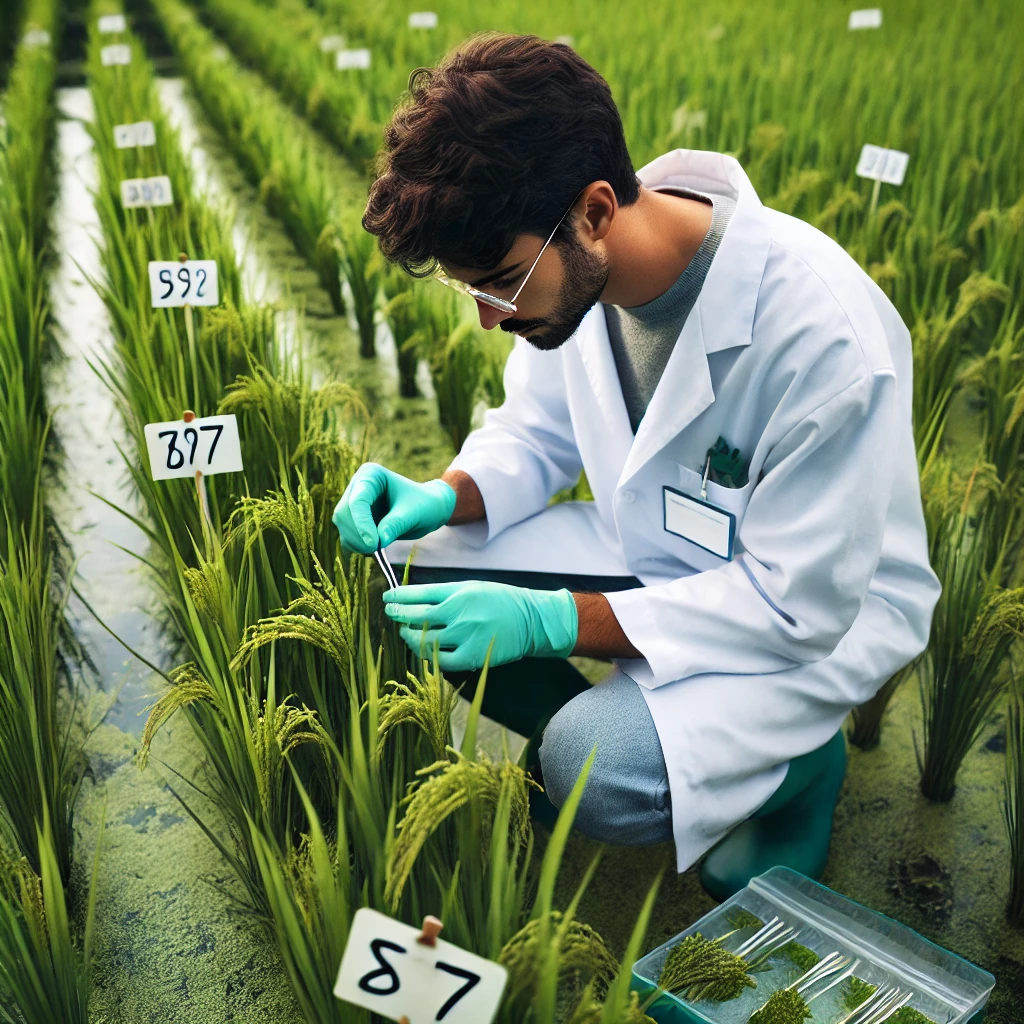
Great picture by USA Rice at the recent Western Rice Conference, January 15th in El Campo.
Organic rice production in Texas continues to evolve, with advancements in weed control, fertility management, and ratoon cropping showing promising results. This update covers the latest developments, challenges, and resources available to organic rice growers, with implications for both organic and conventional production systems.
Advancements in Organic Rice Production
1. Enhancing Yields with Ratoon Crop Production Texas researchers are leading efforts to improve ratoon crop yields in organic rice. This practice of harvesting a second crop from the stubble of the first offers a sustainable way to maximize productivity without replanting, making it an attractive option for organic farmers. Paragraph from study below:
“To enhance nitrogen availability, the researchers utilized organic-approved inputs such as compost and cover crops, finding that an equivalent of 90 pounds of nitrogen per acre was optimal for achieving the greatest yields, with greater rates offering no additional advantage. This insight helps farmers optimize nitrogen inputs using sustainable sources, saving costs while promoting organic practices.”
2. Organic Variety Trials – 2023 Organic variety trials conducted in Garwood, Texas, showed promising results. These trials not only help identify suitable varieties for organic systems but also aid in improving overall seed supply for future seasons.
Variety Average
Dry (lbs./ac.)
Dry (Bu./ac.)
Dry (barrels/ac.)
XP753
7233
160.7
44.6
RT7401
7091
157.6
43.8
RT7301
6716
149.2
41.5
RT7302
7263
161.4
44.8
XL723
6760
150.2
41.7
Overcoming Challenges in Organic Rice Production
1. Weed Control Innovations Weeds remain a major challenge for organic rice farmers. Here are some key tools and practices being used:
Northern Jointvetch Control: The bioherbicide LockDown (Colletotrichum gloeosporioides f. sp. Aeschynomene) has shown great effectiveness. This live organism must be applied with a surfactant, offering a cost-effective solution.
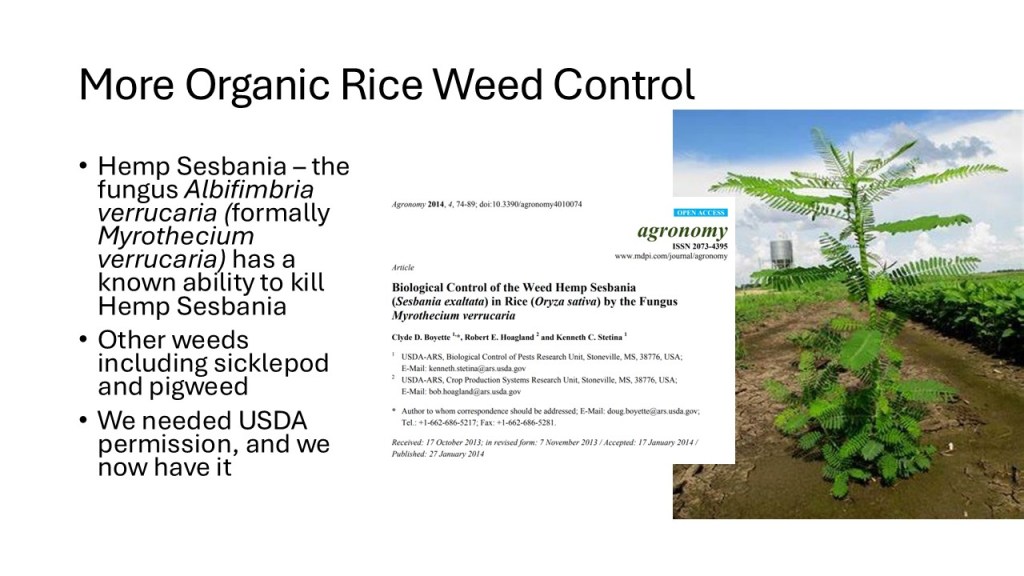
Hemp Sesbania Management: USDA-approved use of Albifimbria verrucaria (formerly Myrothecium verrucaria) has demonstrated success against hemp sesbania and other weeds like sicklepod and pigweed.
Water-Seeding Method: The pinpoint flood system effectively suppresses weedy rice by creating anaerobic conditions that inhibit germination.
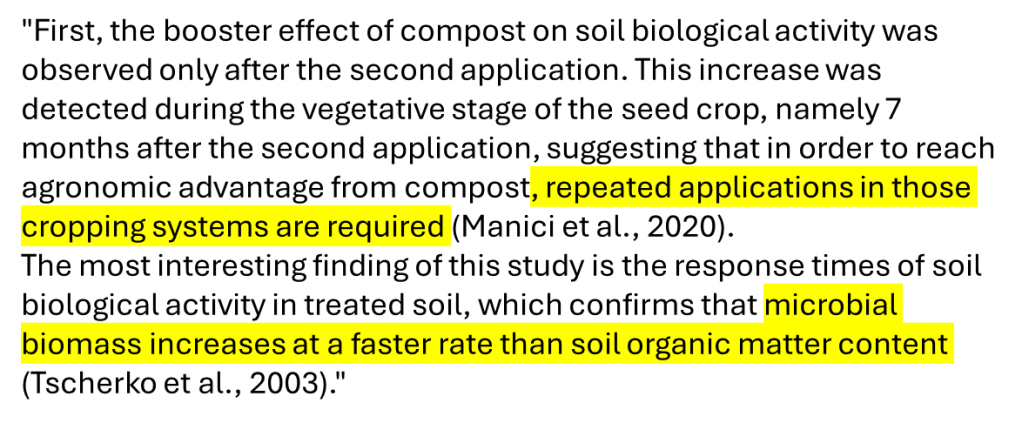
2. Organic Fertility Programs Organic rice growers are adopting long-term fertility strategies, including the use of compost and biostimulants. Research highlights the importance of repeated compost applications to boost soil biological activity and improve yields.
Biostimulants in Focus: Biostimulants such as humic acids, seaweed extracts, and microbial inoculants can enhance plant growth. However, product quality remains inconsistent, necessitating thorough testing and careful application.
Market Trends and Opportunities
The organic rice market faces challenges related to supply chains, international competition, and fraud. Key issues include:
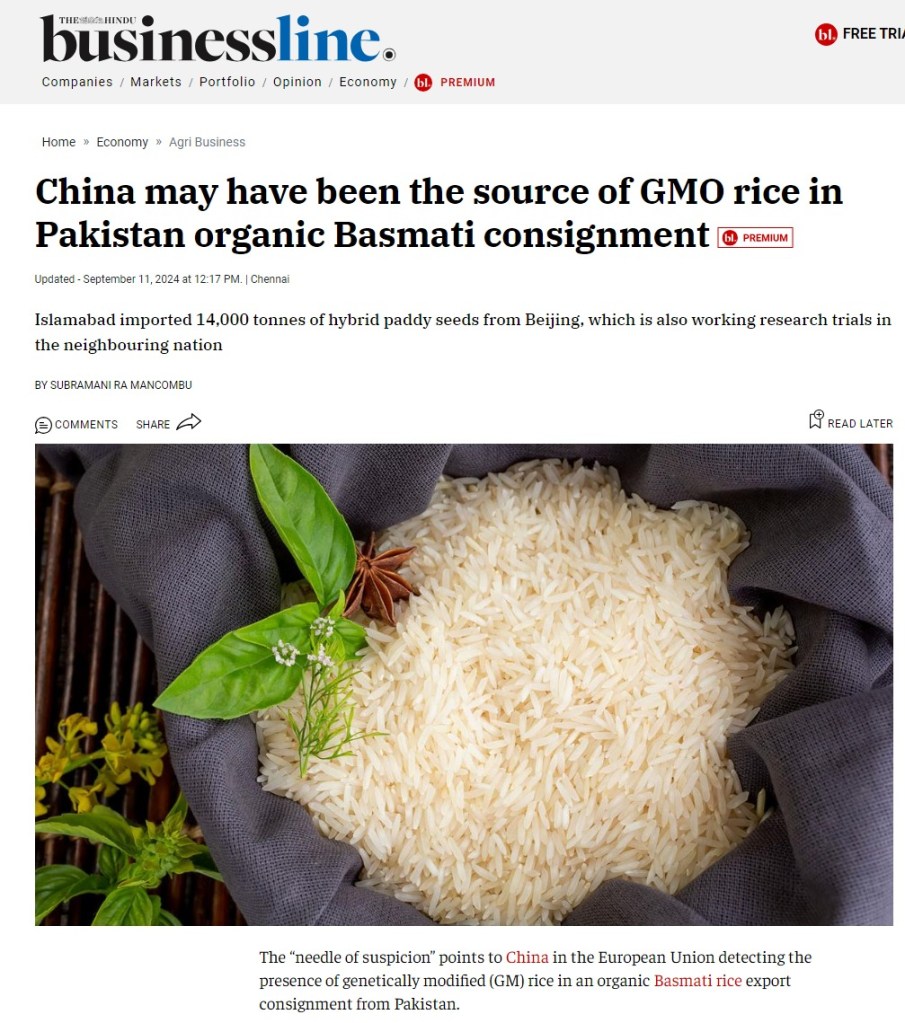
GMO concerns, especially in Mexico and China.
Limited seed supply due to adverse weather conditions in 2024, which impacted production in Texas.
Picture of an article in an Indian News Post showing “GMO” rice sent to Europe!
Despite these hurdles, Texas continues to work to expand organic rice production. Programs like the Transition to Organic Partnership Program (TOPP) are equipping farmers with mentorship, community-building opportunities, and technical training to support successful transitions to organic farming.
Resources for Organic Farmers
Texas A&M AgriLife Extension Organic Program provides a range of resources to support organic rice growers:
Podcasts:On TOPP of Organic offers insights into organic production practices.
Newsletters: Subscribe to bimonthly and monthly newsletters for the latest updates.
Workshops and Field Days: Covering topics such as certification, conservation planning, and marketing.
The Future of Organic Rice in Texas
Organic rice production has been a rapidly growing industry with vast potential but there are plenty of struggles right now. By addressing challenges like weed control and fertility management, and leveraging mentorship and research programs, Texas farmers can lead the way in sustainable and organic agriculture.
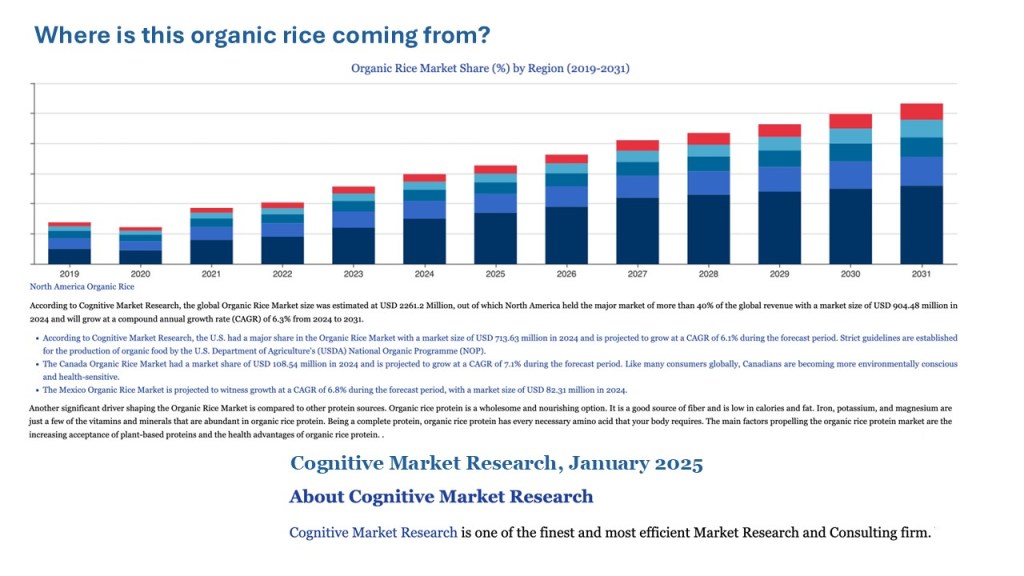
Lastly, this information is from Cognitive Market Research off their website. I took a picture of this graph showing that Organic Rice sales are growing tremendously and will continue to grow. I have rice growers say to me that people have quit buying organic rice and they believe this because our organic rice farmers can’t get contracts to grow organic rice. The problem is not that our US consumers don’t buy organic rice it is that organic rice imports are filling that demand – NOT Texas organic rice producers! So, I ask the question, “Where is this organic rice coming from?”
Dr. Tanumoy Bera is a Postdoctoral Research Associate at the Texas A&M AgriLife Research Center in Beaumont. In 2022 he was awarded a grant by Southern SARE with a project called, “Development of Sustainable Organic Rice Ratoon Production Systems in the Southern US,” and he has some excellent results so far with more to come. Here is a progress report from Dr. Bera and I think organic rice growers can benefit from his observations.
by Dr. Tanumoy Bera, Rice Researcher
While organic rice consumption in the U.S. has grown substantially in recent years, demand for domestically grown organic rice hasn’t kept pace. Instead, cheaper imports have dominated the market, creating challenges for U.S. producers trying to meet the increasing appetite for organic rice while maintaining profitability. To address these challenges, researchers at Texas A&M AgriLife in Beaumont are focusing on improving organic ratoon rice production—a method that allows rice to be harvested from the regrowth of previously harvested stubble. This technique is especially valuable because it enables a second harvest without the need to replant, which helps farmers reduce costs, increase productivity, and compete with lower-priced imports while still maintaining a viable net income per acre.
This ongoing study, initiated in 2022, aims to evaluate how rice cultivars, crop rotation practices, and nitrogen application rates affect the yield and quality of organic ratoon rice. The team tested two cultivars—Presidio and RiceTec XP753—alongside two management approaches: winter fallow and cover cropping. Their goal is to determine how these factors influence yield, milling quality, nitrogen content, and nitrogen removal in an organic ratoon system.
Early findings have been promising. The hybrid XP753 showed a remarkable performance, increasing the main crop yield by 75% and ratoon yield by 97% compared to Presidio. This is partly due to hybrid varieties like XP753 being bred to combine the best traits from parent plants, resulting in higher yields and greater resilience—key attributes for organic farming.
However, establishing cover crops in southeast Texas has been challenging, mainly due to wet winters and poor drainage in heavy clay soils. Despite these difficulties, cover crops, when successfully established, have provided significant benefits. To enhance nitrogen availability, the researchers utilized organic-approved inputs such as compost and cover crops, finding that an equivalent of 90 pounds of nitrogen per acre was optimal for achieving the greatest yields, with greater rates offering no additional advantage. This insight helps farmers optimize nitrogen inputs using sustainable sources, saving costs while promoting organic practices.
Looking ahead, the research will continue into the 2025 season, aiming to refine these findings and explore their long-term impacts. This work is crucial as demand for organic products continues to rise, providing farmers with improved productivity while supporting sustainable agricultural practices. With initiatives like this, Texas A&M AgriLife is helping pave the way for a more resilient and environmentally friendly future in agriculture.
As rice breeding continues to advance, hybrid rice varieties have emerged as a powerful tool for increasing yields, improving disease resistance, and enhancing grain quality. A key innovation behind hybrid rice production is the Cytoplasmic Male Sterility (CMS) system, which enables breeders to produce hybrid seeds efficiently. This blog post explains how the three-line CMS system works and why it’s so valuable for breeders and farmers alike.
What is Cytoplasmic Male Sterility (CMS)?
Cytoplasmic Male Sterility (CMS) is a genetic trait that prevents a plant from producing functional pollen. This characteristic is particularly useful in hybrid seed production because it ensures the plant cannot self-pollinate. Instead, the male-sterile plant must be pollinated by another plant, allowing breeders to control the parentage of hybrid seeds.
The Three-Line System in Hybrid Rice Production
The three-line system involves three types of rice lines:
A-Line (CMS Female): A male-sterile line that cannot produce viable pollen, used as the female parent in hybrid seed production.
B-Line (Maintainer Line): Genetically identical to the A-line but fertile. It is used to maintain the CMS trait in the A-line.
R-Line (Restorer Line): A fertile line that carries restorer genes to restore pollen fertility in the F1 hybrid generation.
Each of these lines plays a critical role in ensuring the successful production of hybrid rice seeds, and together they contribute to the final hybrid variety’s vigor and performance.
How the Crosses Work in the Three-Line System
1. Maintaining the CMS Line
The A-line (CMS female) is male-sterile, meaning it cannot produce seeds on its own because it lacks viable pollen. To maintain this line, breeders must cross the A-line with the B-line (maintainer), which has the same genetics but does not have the male-sterile trait.
Result: More A-line seeds, all of which remain male-sterile. The B-line helps propagate the A-line without restoring fertility, ensuring that male sterility is preserved.
2. Producing Hybrid Seeds
Once enough CMS A-line plants are produced, they are crossed with the R-line (restorer) to create hybrid seeds. The R-line carries genes that restore pollen fertility in the hybrid offspring, allowing the hybrid plants to reproduce normally.
Result: F1 hybrid seeds that combine the best traits from both the A-line and the R-line. These seeds exhibit hybrid vigor (heterosis), meaning the plants will grow faster, yield more, and be more resilient to stresses like pests and diseases.
Visual Representation of the Three-Line System
Below is a flowchart that visually represents the three-line CMS system:
This flowchart provides a simplified view of how the A-line, B-line, and R-line interact to produce hybrid seeds. It helps to visualize the sequential process of maintaining the CMS line and producing vigorous hybrid seeds.
Distribution of Beneficial Traits in the Three Lines
In the three-line system, both the A-line and R-line contribute valuable traits to the hybrid, while the B-line helps maintain the CMS line. Here’s a breakdown of what each line brings to the table:
Genetically identical to A-line; used for maintenance
R-Line (Restorer)
Male parent; restores fertility
Provides restorer genes and complementary traits to enhance hybrid vigor
Why Use the Three-Line System?
The three-line CMS system has been a game-changer in hybrid rice breeding for several reasons:
Efficient Hybrid Seed Production: CMS ensures the A-line plants cannot self-pollinate, making it easier for breeders to control the crossing and ensure that hybrid seeds are produced with the desired genetic combinations.
Hybrid Vigor: The cross between the A-line and R-line produces F1 hybrid plants that often outperform both parent lines due to heterosis (hybrid vigor). These plants grow faster, produce higher yields, and are more adaptable to varying environmental conditions.
Consistent Performance: By carefully selecting A-line and R-line parents, breeders can develop hybrids that consistently deliver high yields and other desirable traits, such as disease resistance or drought tolerance.
Real-World Example in Rice
For example, let’s say a breeder selects an A-line that has high grain quality and yield potential but lacks disease resistance. They could pair this A-line with an R-line that has strong disease resistance and good stress tolerance. The resulting hybrid will combine these traits, offering farmers a variety that not only yields well but also stands up to diseases and environmental stressors.
Saving Hybrid Rice Seeds and Trait Loss
It’s important to note that saving seeds from hybrid rice plants is generally not recommended. The F1 hybrid seeds produced through the three-line system exhibit hybrid vigor due to the combination of traits from the A-line and R-line. However, if these hybrid seeds are saved and replanted, the resulting plants (F2 generation) will not retain the same level of performance. This is because the desirable traits that make the F1 hybrids so productive can segregate and diminish in subsequent generations, leading to reduced yields, inconsistency, and loss of hybrid vigor. To read more about organic rice varieties and resources click this link: Organic Rice Resources
Key Takeaways
A-line (CMS) contributes key agronomic traits but cannot produce pollen, ensuring controlled cross-pollination.
B-line is a maintainer, used to propagate the A-line but not involved in the hybrid seed production.
R-line restores fertility and adds complementary traits, leading to a vigorous and productive F1 hybrid generation.
The three-line CMS system enables efficient hybrid seed production, combining the best traits from different lines to create high-performing hybrids that meet farmers’ needs for yield, resilience, and grain quality. The three-line CMS system remains one of the most effective methods for producing hybrid rice seeds, ensuring that breeders can develop varieties that push the limits of productivity and sustainability.
Conclusion
As global demand for rice, especially organic rice, continues to grow, the ability to produce high-yielding, resilient hybrid varieties through the CMS system is more important than ever. This method ensures that breeders can consistently produce hybrids that help farmers achieve better harvests, even in the face of environmental and biological challenges. Hybrid rice breeding holds a promise for amplifying traits important for organic producers.
By understanding the nuances of the A-line, B-line, and R-line, breeders can make informed choices about which traits to focus on in their breeding programs. Ultimately, the three-line system not only enhances hybrid seed production but also contributes to the long-term sustainability of rice farming.
In organic production systems, the challenges to producing an economically successful crop are quite different than in conventional systems. Research has shown that the choice of cultivar is one of the most important decisions in determining performance under organic management.
There are many different target markets for rice, including:
Standard Milled Long or Medium Grain Rice: Commonly used in everyday cooking.
Brown Rice: Retains the bran layer and is considered healthier due to higher fiber content.
Aromatic Rice: Varieties such as jasmine and basmati that are valued for their distinctive fragrances. These are being developed by TAMU Rice Researchers and should be available soon.
Special Purpose Rice: Includes rice for flour production or colored bran rice, which can be marketed for its unique nutritional or aesthetic qualities.
Understanding the preferences of these markets and identifying outlets for specific types of rice may offer added economic opportunities for growers. For example, there is a growing market for aromatic and colored bran rice due to increasing consumer interest in unique and healthful food options.
Importance of Seedling Vigor
In organic production, the use of many conventional seed treatments is prohibited. Therefore, selecting varieties with excellent seedling vigor and seedling quality is crucial. Seedling vigor refers to the ability of seeds to germinate and grow rapidly under field conditions, leading to strong early stand establishment. This is particularly important in organic systems for several reasons:
Early Flooding: Strong early growth allows for an early flood, which is a key practice for weed control in rice fields.
Weed Competition: Vigorous seedlings can outcompete weeds, reducing the need for mechanical or manual weeding.
Disease Resistance: Early and healthy growth can help seedlings better withstand diseases and pest attacks.
Updated Considerations
Recent advancements and trends in organic rice production emphasize several additional factors:
Adaptability to Organic Inputs: Varieties should perform well with organic fertilizers and soil amendments, which release nutrients more slowly than synthetic fertilizers. Varieties developed in organic systems develop beneficial relationships with the microbiome.
Disease and Pest Resistance: With fewer pest control options available, selecting varieties that are resistant to common diseases and insects in the 2 rice growing regions is more critical.
Environmental Resilience: Varieties that can tolerate local environmental stresses such as drought, salinity, or extreme temperatures are preferred.
By focusing on these updated considerations, organic rice growers can better navigate the unique challenges of organic production and tap into diverse market opportunities, ultimately leading to more successful and sustainable farming operations.
Rice Variety Research
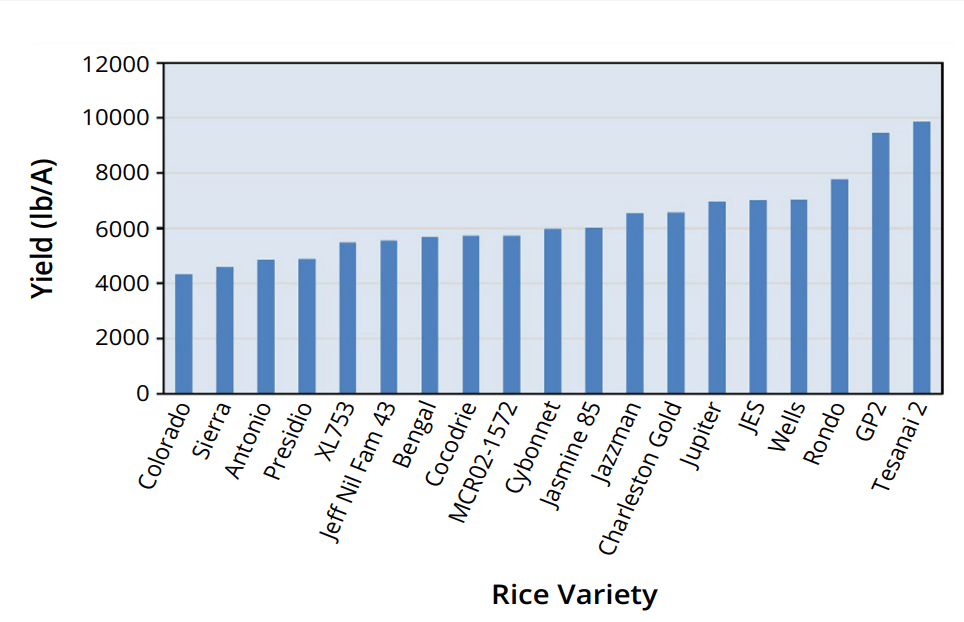
Rice varieties have different yield potentials under organic versus commercial production systems. Cultivars such as Tesanai 2, Rondo, and hybrids have high yield potential, as demonstrated in a research plot trial conducted in Texas (see picture below). Based on a 5-year (2015 through 2019) organic commercial production survey, the average yield of XL723 (a popular hybrid variety in Texas, used in organic production) was 4,094 pounds per acre, while Presidio’s yield (a popular inbred variety) was only 2,452 pounds per acre. The selection of high yielding rice varieties with tolerance to weeds and diseases is the key to successful organic rice production.
This is the yield performance of 19 rice varieties and germplasm lines grown organically in Beaumont, Texas in 2015 and 2016 at the Rice Research Center.
More Rice Variety Information
This rice variety test below was conducted by RiceTec in 2023 on the Chriss Schiurring Farm near Garwood.
The measurements provided (bushels and barrels) are generally for rough rice, which includes the hulls and is the form in which rice is typically harvested and initially processed.
Bushel of Rice: A bushel of rough rice typically weighs 45 pounds.
Barrel of Rice: A barrel of rough rice is typically defined as weighing 162 pounds.
Ratoon Rice?
Ratoon rice production involves harvesting a primary rice crop and then allowing the stubble left in the field to regrow and produce a second crop, known as the ratoon crop. This method leverages the remaining growth potential of the plant to produce an additional harvest without replanting, thereby saving time, labor, and resources. Ratoon cropping can increase overall yield and efficiency, although it typically produces a lower yield than the primary crop.
The average yield of a ratoon rice crop is typically about 50-70% of the main crop’s yield. This reduced yield is due to the limited growth potential and shorter growing period of the ratoon crop compared to the main crop. However, ratoon cropping can still be economically beneficial due to the reduced input costs and labor requirements. In many organic rice production fields, the ratoon crop is the profit crop and makes or breaks the farms success!
Seed Rice Varieties
Hybrid Rice Varieties
Hybrid rice is produced by crossbreeding two distinct rice plants with the goal of: higher yields, better disease resistance, and greater environmental stress tolerance compared to conventional varieties. Unlike conventional rice, hybrid rice seeds need to be purchased each planting season, as the hybrid traits do not persist in subsequent generations. Additionally, hybrid rice typically requires a lower planting rate (13-22 lbs. per acre or sometimes more in organic systems) due to its vigorous growth and higher productivity. To read more about how hybrid rice is produced click this link: Hybrid Rice Breeding
RiceTec XL723
For a decade now, XL723 has delivered unsurpassed value through its combination of high yield and outstanding milling yields. Long grain rice. XL723 should be harvested at 18%-20% moisture at first drydown to help maximize grain quality and grain retention.
Superior milling yield
Ideal for straighthead-prone soils
Excellent ratoon potential
Great fit for organic cultivation
RiceTec XP753
Up until 2023, XP753 was the highest-yielding long-grain rice available, providing the greatest net income potential of any competitive rice product. XP753 should be harvested at 18%-20% moisture at first drydown to help maximize grain quality and grain retention.
Protected by RiceTec’s superior disease package
Improved grain retention
Excellent ratoon potential
RiceTec RT7301
Introduced in 2020, RT7301 represents an evolution of RiceTec traditional rice products, capturing the best attributes of XP753 a long grain rice. RT7301 should be harvested at 18%-20% moisture at first drydown to help maximize grain quality and grain retention.
Very high yield potential
Protected by RiceTec’s superior disease package
Improved grain retention
RiceTec RT7302
New in 2023, RT7302 represents the next breeding evolution of RiceTec traditional rice products, capturing the best in yield and grain quality. RT7302 will raise the bar for yield among the RiceTec portfolio of long grain rice. RT7302 be harvested at 18%-20% moisture at first drydown to help maximize grain quality and grain retention.
high yield potential
Protected by RiceTec’s superior disease package
high grain quality
25% amylose content* for a more separate cooked product
*Amylose content in rice refers to the amount of amylose, a type of starch, present in the grains. Rice with intermediate amylose content (typically 20-25%) tends to have a balanced texture—neither too sticky nor too dry. This makes it versatile for a variety of culinary uses, providing a satisfactory chewiness without being overly firm or sticky.
Conventional rice varieties are traditional types of rice that are open-pollinated and can be replanted each season from harvested seeds (there are laws regulating saving some seed varieties, click to read more). They are important for maintaining genetic diversity, which helps ensure crop resilience against diseases and pests. Additionally, they often have unique flavors and qualities prized in local cuisines and cultural practices. Planting rates are in the range of 60-80 or even to 120 lbs. per acre. Check with your sales representative or agronomist. Organic seeding rates can be up to 1.5 times more.
You may see the term “inbred.” Inbred rice varieties are those developed through self-pollination over multiple generations to achieve a stable, uniform genetic makeup. Unlike hybrid varieties, which are produced by crossbreeding different parent lines, inbred varieties maintain consistent traits across generations when their seeds are replanted. They are often valued for their stability, specific traits, and adaptability to local growing conditions.
Dyna-Gro DG245L
Semi-dwarf, early maturing, long-grain variety with exceptional milling yields and grain quality. Medium plant height of 36 inches and great stalk strength for lodging resistance and storm tolerance. Very stable yields in five years of research with excellent ratoon crop potential. Intermediate gel temperature* and intermediate amylose content.
*Gel temperature refers to the temperature at which the rice starch granules gelatinize or become sticky during cooking. Rice varieties with intermediate gel temperature generally produce grains that are soft but not mushy when cooked, offering a desirable texture that balances between firmness and tenderness.
Dyna-Gro DG263L
High yielding long grain variety with excellent quality with excellent disease package including blast and smuts. Plant height and stalk strength for lodging resistance and storm tolerance with a proven field performance. Uniform grain size and very good miller (58/69). Lower seeding rates than most varieties (45-65 lbs. per acre).
Dyna-Gro DG353M
High yielding medium grain variety with excellent quality with uniform grain size and a very good miller (60/70). Great standability and favorable plant height (36 inches). Very stable yields in four years of research. Lower seeding rate (50-75 lbs. per acre) than other conventional medium grain inbreds.
Horizon Ag CL153
CL153 is an early, semi-dwarf, long-grain Clearfield rice variety developed by the LSU AgCenter H. Rouse Caffey Rice Research Station. Known for its excellent yield potential and high head rice yields with minimal chalkiness, CL153 offers several agronomic advantages. It has a yield potential comparable to or slightly below that of CL151 but with better lodging resistance. The variety also features excellent grain length, translucency, and whole milled rice output, meeting industry standards.
In terms of disease resistance, CL153 is moderately susceptible to blast, Cercospora, bacterial panicle blight, and straighthead, but it is susceptible to sheath blight. It carries the Pita gene, providing broad-spectrum resistance to common blast races in the southern USA. This makes it a robust choice for growers seeking a variety with good disease management traits.
Horizon Ag CLL16
CLL16 is a long-grain, conventional height, Clearfield rice variety developed by the University of Arkansas System Division of Agriculture. It boasts excellent yield potential and stability, maintaining strong yields even with later planting dates. The variety has excellent seedling vigor and is a few inches taller than typical Louisiana Clearfield varieties, but it is moderately resistant to lodging.
CLL16 features the Pita gene (not a GMO), providing strong resistance to blast, and the CRSP2.1 gene (not a GMO), offering resistance to narrow brown leaf spot. It is moderately susceptible to Cercospora infection on the stem, sheath blight, and bacterial panicle blight. However, milling yields and ratoon potential are observed to be lower than other some other varieties.
Organic rice farmers looking for a reliable variety will find CLL16 to be a strong contender due to its consistent performance, high milling quality, and industry-leading blast resistance. In university tests, CLL16 has shown good rough rice yields, averaging higher than the Diamond variety, making it a comprehensive choice for rice farmers.
Horizon Ag CLL18
CLL18 is a long-grain, conventional height Clearfield rice variety developed by the University of Arkansas System Division of Agriculture. It boasts excellent yield potential and stability, maintaining strong yields even with later planting dates. With excellent seedling vigor, CLL18 is slightly taller than typical Louisiana Clearfield varieties but is moderately resistant to lodging. However, its milling yields are observed to be lower than other Clearfield varieties.
CLL18 does not contain the Pita blast resistance gene and is moderately susceptible to blast, making it less suitable for areas prone to this disease. It does contain the CRSP2.1 gene, providing resistance to narrow brown leaf spot, but is moderately susceptible to Cercospora infection on the stem, sheath blight, and bacterial panicle blight. Despite these susceptibilities, CLL18 has consistently outyielded CLL16 by about 5% in Arkansas trials. Its earlier maturity makes it a good planting partner with CLL16, allowing farmers to stagger their harvests effectively.
Stratton Jupiter
A short-season, semi-dwarf, medium grain with excellent yield potential and milling quality. It is a small grain size but has moderate resistance to bacterial panicle blight.
Stratton Titan
Titan is a very early, short-stature, medium-grain rice variety known for its excellent yield potential, often comparable to or better than Jupiter. It matures about a week earlier than Jupiter and is similar in height. Titan has a preferred large grain size but is moderately susceptible to blast and bacterial panicle blight. It is important to harvest Titan at the correct moisture level, as milling yields drop off significantly when harvested at lower moisture. This short-season variety is valued for its robust performance and high yield potential.
Stratton Cheniere
A short-season, semi-dwarf long grain with excellent yield potential and milling quality comparable to Cypress. An early, high-yielding, high-quality, rice variety with, good lodging resistance and moderate resistance to straighthead. It is moderately susceptible to blast and bacterial panicle blight and susceptible to sheath blight and Cercospora. The variety displays excellent grain quality characteristics, has a higher amylose content and cooks less sticky than typical U.S. long grains.
Stratton Jewel
A mid-season long grain variety with good yield potential and milling yield. Susceptible to straighthead. Moderately susceptible to sheath blight, blast, Cercospora, false smut and lodging. Moderately resistant to bacterial panicle blight.
Stratton Diamond
A mid-season, long-grain variety with excellent yield potential and good milling quality. Very good straw strength. Susceptible to blast and sheath blight, moderately susceptible to bacterial panicle blight. Very susceptible to false smut
Dr. Ronnie Levy, Extension Rice Specialist at LSU wrote this article for the April 2022 issue of Rice Farming Magazine. I clipped it out and thought, “this will come in handy someday!” I am putting this out there again because our organic rice producers are facing some real problems with weeds in rice including weedy rice, hemp sesbania, jointvetch and certainly weedy grasses.
Last year I was at Joe Broussard’s farm near Nome, looking at a rice field that was headed out and looking great. On the other side of the levy was a field choked with weeds – what was the difference? One was water-seeded rice, and the other was not. Joe had used water seeding and his flood to control weeds “the old-fashioned way!” So, read this article by Dr. Levy and think about it……
Rice Farming, April 2022. Dr. Ron Levy. “Most rice is drill-seeded in Louisiana — about 80% — but there is a renewed interest in water-seeding rice for weedy rice suppression (or many other weeds in organic systems).
The most common water-seeding method in Louisiana is the pinpoint flood system. After seeding, the field is drained briefly. The initial drain period is only long enough to allow the radicle to penetrate the soil (peg down) and anchor the seedling. A three- to five-day drain period is sufficient under normal conditions.
The field then is permanently flooded until rice nears maturity (an exception is midseason drainage to alleviate straighthead (physiological problem of rice) under certain conditions).
In this system, rice seedlings emerge through the floodwater. Seedlings must be above the water surface by at least the 3 to 4-leaf rice stage. Before this stage, seedlings normally have sufficient stored food and available oxygen to survive. Atmospheric oxygen and other gases are then necessary for the plant to grow and develop.
The pinpoint flood system is an excellent means of suppressing weedy rice emerging from seeds in the soil because oxygen necessary for weedy rice germination is not available as long as the field is maintained in a flooded (or saturated) condition. A continuous flood system, another water-seed system, is limited in Louisiana. Although similar to the pinpoint flood system, the field is never drained after seeding.
Regarding the water-seeded systems, a continuous flood system is normally best for red rice suppression, but rice stand establishment is most difficult. Even the most vigorous variety may have problems becoming established under this system. Inadequate stand establishment is a common problem in both systems.
Fertilization timing is the same for both the pinpoint and continuous flood systems. Phosphorus (P), potassium (K), sulfur (S) and zinc (Zn) fertilizers are applied preplant incorporated as in the dry-seeded system. Once the field is flooded, the soil should not be allowed to dry.
If the nitrogen requirement of a particular field is known, all nitrogen fertilizer can be incorporated prior to flooding and seeding or applied during the brief drain period in a pinpoint flood system. Additional N fertilizer can be applied at the beginning of reproductive growth between panicle initiation and panicle differentiation (2-millimeter panicle).
Water-seeding has been used in the past for weed control. Will water-seeding make a comeback to help with weedy rice suppression (or possibly for organic rice producers)?”
Another issue water-seeded rice may experience.
Rice Seed Midges – The larvae of these insects (Order Diptera, Family Chironomidae, Genera Tanytarsus and Chironomus) are aquatic and can be very abundant in rice fields. The adults are small, gnat-like flies that typically form inverted pyramidal mating swarms in the spring over stagnant or slow-moving water. Female flies lay eggs in ribbons on the water surface. The larvae hatch and move downward to the flooded substrate where they build protective “tubes” of silk, detritus, and mud. These brown, wavy “tubes” are easily observed on the mud surface of rice paddies. Occasionally, the larvae will exit the tubes and swim to the surface in a whiplike fashion, similar to that of mosquito larvae. Midge larvae can damage water-seeded (pinpoint or continuous flood) rice by feeding on the sprouts of submerged germinating rice seeds. Damage can retard seedling growth or kill seedlings; however, the window of vulnerability to midge attack is rather narrow (from seeding to when seedlings are about 3 inches long).
Control rice seed midge problems by dry seeding, then employing a delayed flood, or by draining water-seeded paddies soon after planting. Thus, a pinpoint flood should reduce the potential for rice seed midge damage relative to a continuous flood. For water-seeded rice, reduce rice seed midge problems by increasing the seeding rate and planting sprouted seed immediately after flooding.
Click on the above link to read a great article from California rice researchers about an experiment they did on Rice Seed Midge control and some of the most effective treatments are organic and soon to be OMRI approved.
It doesn’t take you long to figure out the hemp sesbania (Sesbania exaltata) is one of the toughest weed problems we have in organic rice. It is an annual plant, but it acts like a tree as you can see in the picture. It has a few other names, but the most common other name I have ever heard is “coffee weed.”
In a recent meeting with organic rice producers this particular weed became a huge topic of discussion (mostly cussing). This conversation got me to thinking about the possibility of some “bioherbicide” or even some beneficial insect or nematode that might be able to control this noxious weed.
The authors are at the USDA Stoneville, MS research station and do crops research but some of that research is on biological control of pests in crops. In this research they were looking at applying different rates of the fungus and at different weed plant heights. They looked at 3 concentrations of the fungus sprayed on weed plant heights of 4-8 inches, 8-16 inches, and 16-24 inches.
They did find that the best results were achieved when they used Silwet L-77, an OMRI approved surfactant, with the fungus mix. Overall, the fungus did best at the higher rate and on the youngest plants and control at that timing was 100%! That is phenomenal, but even the bigger plants had control levels around 90%.
Why don’t we have this fungus available to use? That is an excellent question and one I hope to find out soon. I am sure this research was put on the shelf because of changing rice herbicide strategies like Clearfield and the relatively small organic rice industry without much voice. But I think there is a growing interest in organic rice and as a result a growing interest in organic weed control in rice. More details are to follow!












 Texas A&M AgriLife Organic