Texas Organic Rice Update: Insights for Producers and Researchers

Great picture by USA Rice at the recent Western Rice Conference, January 15th in El Campo.

Organic rice production in Texas continues to evolve, with advancements in weed control, fertility management, and ratoon cropping showing promising results. This update covers the latest developments, challenges, and resources available to organic rice growers, with implications for both organic and conventional production systems.

Advancements in Organic Rice Production

1. Enhancing Yields with Ratoon Crop Production
Texas researchers are leading efforts to improve ratoon crop yields in organic rice. This practice of harvesting a second crop from the stubble of the first offers a sustainable way to maximize productivity without replanting, making it an attractive option for organic farmers. Paragraph from study below:

“To enhance nitrogen availability, the researchers utilized organic-approved inputs such as compost and cover crops, finding that an equivalent of 90 pounds of nitrogen per acre was optimal for achieving the greatest yields, with greater rates offering no additional advantage. This insight helps farmers optimize nitrogen inputs using sustainable sources, saving costs while promoting organic practices.”

2. Organic Variety Trials – 2023
Organic variety trials conducted in Garwood, Texas, showed promising results. These trials not only help identify suitable varieties for organic systems but also aid in improving overall seed supply for future seasons.

Variety AverageDry (lbs./ac.)Dry (Bu./ac.)Dry (barrels/ac.)
XP7537233160.744.6
RT74017091157.643.8
RT73016716149.241.5
RT73027263161.444.8
XL7236760150.241.7

Overcoming Challenges in Organic Rice Production

1. Weed Control Innovations
Weeds remain a major challenge for organic rice farmers. Here are some key tools and practices being used:

  • Northern Jointvetch Control: The bioherbicide LockDown (Colletotrichum gloeosporioides f. sp. Aeschynomene) has shown great effectiveness. This live organism must be applied with a surfactant, offering a cost-effective solution.
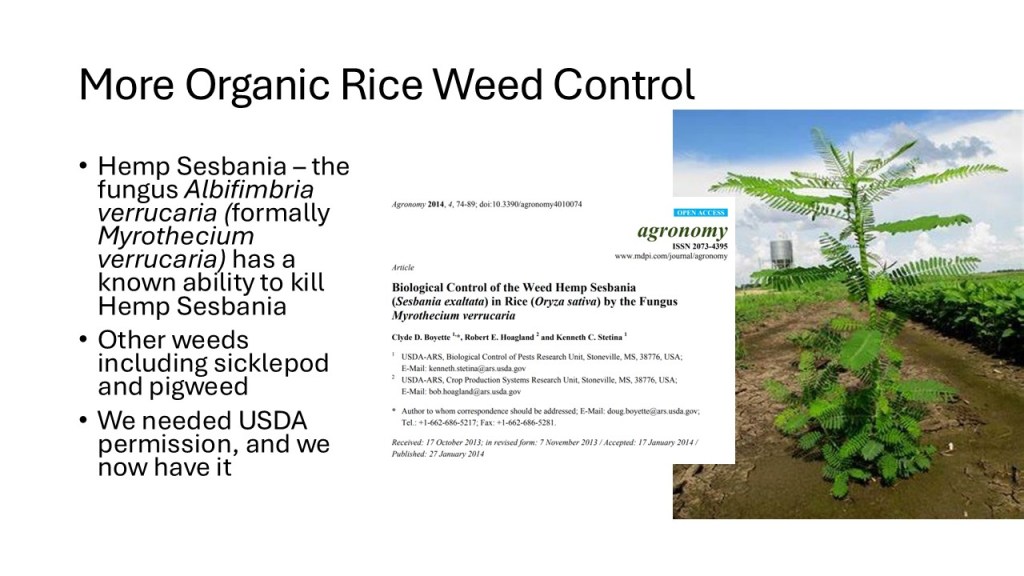
  • Hemp Sesbania Management: USDA-approved use of Albifimbria verrucaria (formerly Myrothecium verrucaria) has demonstrated success against hemp sesbania and other weeds like sicklepod and pigweed.
  • Water-Seeding Method: The pinpoint flood system effectively suppresses weedy rice by creating anaerobic conditions that inhibit germination.
2. Organic Fertility Programs
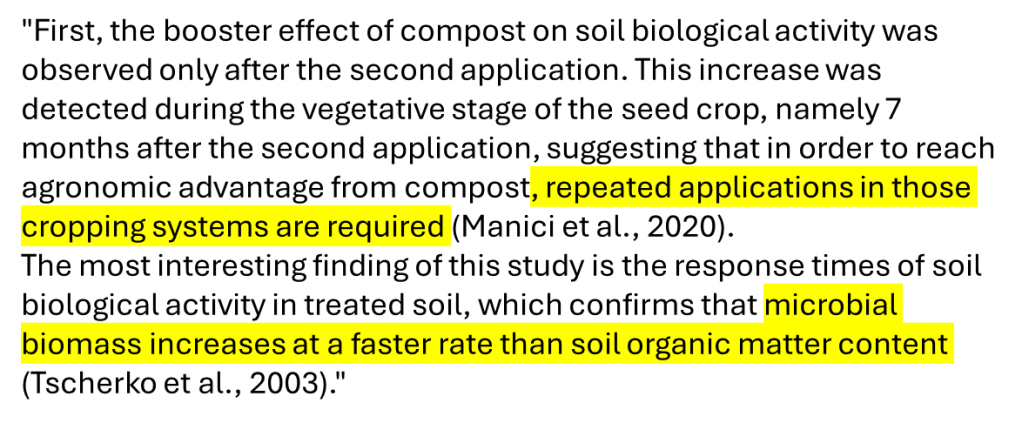
Organic rice growers are adopting long-term fertility strategies, including the use of compost and biostimulants. Research highlights the importance of repeated compost applications to boost soil biological activity and improve yields.

  • Biostimulants in Focus: Biostimulants such as humic acids, seaweed extracts, and microbial inoculants can enhance plant growth. However, product quality remains inconsistent, necessitating thorough testing and careful application.

Market Trends and Opportunities

The organic rice market faces challenges related to supply chains, international competition, and fraud. Key issues include:

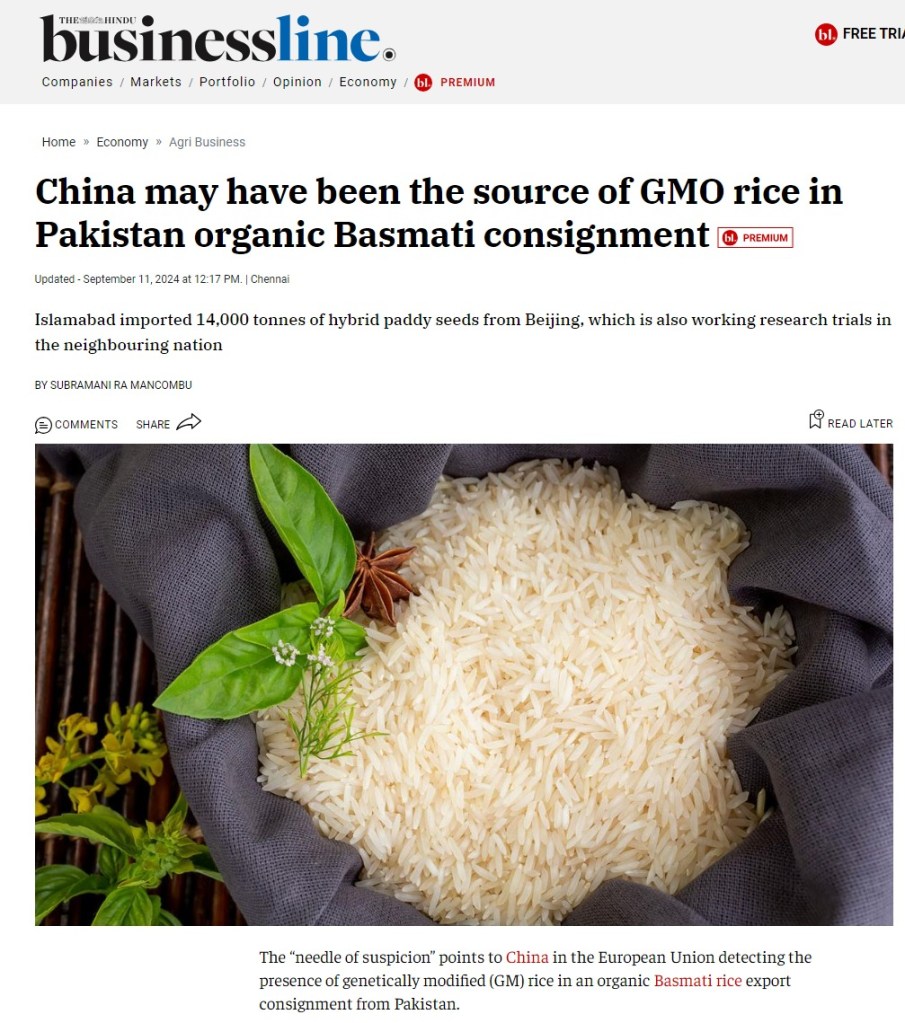
  • GMO concerns, especially in Mexico and China.
  • Limited seed supply due to adverse weather conditions in 2024, which impacted production in Texas.

Picture of an article in an Indian News Post showing “GMO” rice sent to Europe!
Despite these hurdles, Texas continues to work to expand organic rice production. Programs like the Transition to Organic Partnership Program (TOPP) are equipping farmers with mentorship, community-building opportunities, and technical training to support successful transitions to organic farming.

Resources for Organic Farmers

Texas A&M AgriLife Extension Organic Program provides a range of resources to support organic rice growers:

  • Podcasts: On TOPP of Organic offers insights into organic production practices.
  • Newsletters: Subscribe to bimonthly and monthly newsletters for the latest updates.
  • Workshops and Field Days: Covering topics such as certification, conservation planning, and marketing.

The Future of Organic Rice in Texas

Organic rice production has been a rapidly growing industry with vast potential but there are plenty of struggles right now. By addressing challenges like weed control and fertility management, and leveraging mentorship and research programs, Texas farmers can lead the way in sustainable and organic agriculture.
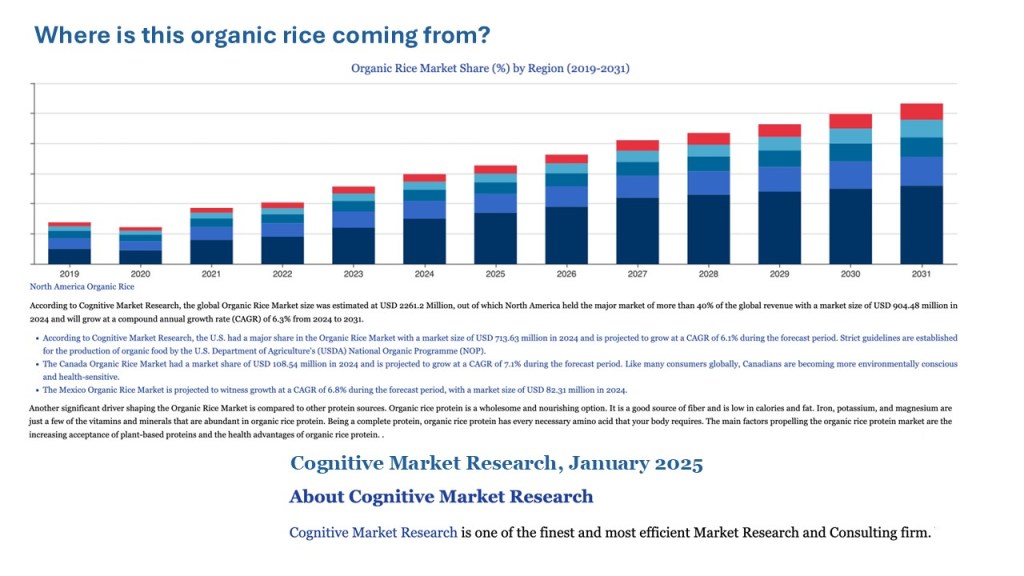
Lastly, this information is from Cognitive Market Research off their website. I took a picture of this graph showing that Organic Rice sales are growing tremendously and will continue to grow. I have rice growers say to me that people have quit buying organic rice and they believe this because our organic rice farmers can’t get contracts to grow organic rice. The problem is not that our US consumers don’t buy organic rice it is that organic rice imports are filling that demand – NOT Texas organic rice producers! So, I ask the question, “Where is this organic rice coming from?”

Other Rice Resources (just click a link!)

Award-Winning Growth: Texas Organic Entities Will Flourish with USDA Organic Grants

Last year USDA put out the call for grant applications for the Organic Market Development Grant program. This was a chance to apply for up to $3 Million in grant funds with a match or up to $100,000 for equipment with no match. The Organic Market Development Grant (OMDG) program supports the development of new and expanded organic markets to help increase the consumption of domestic organic agricultural commodities. The program focuses on building and expanding capacity for certified organic production, aggregation, processing, manufacturing, storing, transporting, wholesaling, distribution, and development of consumer markets. OMDG aims to increase the availability and demand for domestically produced organic agricultural products and address the critical need for additional market paths.

Texas organic producers have excelled in their efforts, submitting a multitude of grant applications, and the results are now in. Below, discover the exceptional organic projects that have been chosen to enhance organic agriculture in Texas for the foreseeable future.

Promotion of Organic Yaupon Tea as a Domestic Alternative to Imported Tea Distributed to The Foodservice Industry

Recipient: Yaupon Holly Tea, LLC, Cat Spring, TX

This project aims to increase the American consumer awareness of organic yaupon tea as a replacement for imported tea via the food service sector. An Organic Yaupon Marketing Plan will increase opportunities for consumer exposure to organic yaupon tea while also allowing for additional customers, buyers, and parties to participate in the domestic organic yaupon tea industry. Yaupon is a caffeinated plant native to North America and rich in polyphenols and antioxidants like imported tea. By using a hybrid of traditional tea preparation methods, organic yaupon tea has an almost indistinguishable flavor profile from imported green and black tea served in both hot and iced tea. Cat Spring Yaupon has created a cohesive marketing and outreach plan to increase the amount of organic yaupon tea served in restaurants, cafes, hotels, and spas. This plan incorporates the opportunity to promote and support additional organic yaupon producers through the American Yaupon Association while also supplying to tea companies who would otherwise be selling imported tea to their food service customers. This will also allow restaurants to substitute imported tea on their menus with organic yaupon tea thus giving their customers and guests an opportunity to sample and fall in love with the incredible domestic organic yaupon tea.

Diversifying Organic Supply Chains for Small Producers in the Rio Grande Valley

Recipient: Triple J Organics, LLC, Mission, TX

Triple J Organics is a minority-owned certified organic citrus orchard in Mission, Texas established in 1995. Triple J manages 25 acres of certified organic citrus groves, primarily of Ruby Red grapefruit and early season oranges, as well as Navel Oranges, Meyer Lemons, Tangerines, and Tangelos in smaller quantities. This project will increase consumption of locally produced organic orange juice in the Rio Grande Valley and increase the profitability and long-term viability of Triple J Organics through special purpose equipment purchases that allow Triple J to process 32,000 lbs. of “waste”, or seconds, oranges into fresh juice and deliver it safely to customers in the Valley. The project will target school districts as potential customers, as well as supermarkets, restaurants, health food stores, daycare facilities, and eldercare facilities as needed. Beneficiaries include Triple J Organics, local schools and businesses who purchase the new product, as well as other organic citrus growers in the Valley who may be able to cooperate and aggregate to produce a higher margin value-added product.

Steelbow Farm: Expanding Access to Local, Organic Produce in Central Texas

Recipient: Steelbow Farm LLC, Austin, TX

Steelbow Farm is seeking to broaden its delivery range and increase local food access and supply chain resilience by procuring a delivery vehicle. The overarching purpose of the proposed project is to expand access to local, organic produce by eliminating the current constraint of distance and delivery radius, while simultaneously addressing the growing demand for product in the current marketplace. Currently, Steelbow Farm has demand for their product that exceeds their capacity because they do not have a vehicle and therefore have a limited delivery range. This bottleneck is hampering Steelbow Farm’s ability to rise to the organic market demands. They believe access to this equipment would drastically improve access to organic produce, as they could radically increase their customer base and range. For context, currently, within Travis County, only .06% of food is produced locally. The Austin and Travis County areas are seeing a decline in the amount of vegetable farms and farmland, which are disappearing at an alarming 16.8 acres a day. Amidst these startling statistics, this business is thriving and demand for their produce is extremely high. Steelbow Farm wants to be able to meet the market demand and fill the gap within the local food system. As organic vegetable producers, they are striving to increase the percentage of local food consumed within their community.

Enhancing Organic Dairy Production and Market Access in Texas

Recipient: Armagh Fine Foods LLC dba Armagh Creamery, Dublin TX

The primary goal of this project is to enhance and expand the production capabilities of the Armagh Creamery organic farming and dairy operations. By acquiring essential equipment, the project aims to achieve increased efficiency, product diversification, and expanded distribution. This equipment will enable us to venture into new product lines, including heavy cream and butter, expand production of existing products, and streamline the production process, reducing the workload on current employees and enhancing overall efficiency for creating new butter product lines. The acquisition of a delivery vehicle will significantly improve distribution capabilities, allowing us to reach local retailers and drop locations in Central, North, and West Texas. This expansion will promote the availability of organic dairy products to a wider consumer base. The specific objectives of this project are two-fold: 1) to scale yogurt production to the full daily capacity of 10,000 units per day, two days a week. This increase will enable us to supply more retailers throughout Texas and cater to the growing demand in the direct-to-consumer market and 2) to expand raw milk and cream production to 600 gallons a day for 3-4 days a week, resulting in a weekly output of 1800 to 2400 gallons. This expansion will further support the direct-to-consumer market and provide ample resources for the planned heavy cream and butter product lines.

Expanding Capacity and Improved Quality of Organic Cotton

Recipient: RKH GIN LLC, dba Woolam Gin, Odonnell, TX

RKH Gin LLC, dba Woolam Gin is a primarily woman owned ginning facility that has processed organic cotton for 33 years, being the first United States to do so. It is located in a high poverty area in Lynn County, Texas and serves other high poverty areas including Dawson and Terry Counties. Woolam Gin is seeking a grant award to purchase and install equipment to expand the services and improve processing to increase production of organic cotton for farmers which will improve overall market production of the beneficial product. The overarching project purpose is to improve efficiency, therefore improving outcomes for farmers and the organic market. The equipment will increase production from 25 bales an hour to up to 40 bales an hour. The increase in processing will improve the housing time of cotton in the warehouse which will improve the grades and facilitate earlier entry into the marketplace, benefiting farm producers, processors, and consumers. Faster processing will improve turnaround for the farmer and further increase production possibilities. The primary partners and collaborators of the project will include participating organic farmers, the project manager, project supervisor, gin manager and other supporting human resources workers. This grant award will create improved markets and expand processing capacity which in turn will enrich market availability and further development of production resources and production.

Texas Organic Market Development & Promotion

Recipient: Texas Department of Agriculture, Austin, TX

The Texas Department of Agriculture (TDA) will use a multi-faceted approach to promote local organic producers in the produce, grains, dairy, and fiber markets. Though these industries are each unique in their production, the issues they experience are similar. These challenges include, but are not limited to, lack of knowledge among consumers of each industry’s availability/benefits, existing gaps between producers and buyers that result in barriers for growth, and an absence of public resources that assist organic farmers from promoting themselves more efficiently. Through this project, TDA will increase local consumer knowledge, support activities to develop new markets, increase demand for domestically produced organic agricultural products, and provide additional market paths for organic farmers in Texas. Goals of this project include: 1) increase public knowledge of Texas organic agriculture industry, 2) provide opportunities to improve market share and sales of local organic producers, and 3) build new connections between Texas producers and potential buyers to accomplish these goals. TDA Marketing will produce new marketing materials targeted for the organic industry, assist organic producers with attending trade shows relevant to their respective industries, facilitate business to business interactions, and run a social media campaign that highlights each industry. These activities will strengthen the relationships between Texas organic crop/product producers and buyers, as well as better inform the public on the availability and benefits of Texas organic products. These relationships would aid in ongoing efforts to strengthen the supply chain issues, build on current opportunities with Texas agriculture associations, assist historically underserved communities, and increase demand for locally produced organic products. To further assist the organic industries of Texas, TDA will assist in the production of the Field View Organics program. This program aims to identify organic operations across the state and mark them for aerial spraying companies to help prevent potential chemical drift or contamination of organic crops. By supporting this initiative, TDA will protect the current organic producers across the state and alleviate potential concerns for new members wanting to enter the industry.

Here is the entire list of projects funded by USDA for the entire country. This list should give you some ideas for submitting an application for the next grant program that come along! Organic Grant Winners