What the Haney Test Revealed: Biological Benefits of Cover Crops in Action

Over the past few weeks, I’ve written about what cover crops like Sunn Hemp, Tepary Bean, and Cowpea leave behind in the soil and how their nutrient contributions stack up in standard soil tests. But it wasn’t until we looked at the Haney Soil Test results from March 2025 that we could truly see the biological influence each of these summer cover crops had on the soil. In this post, I’m sharing new insights drawn from those results and why I believe every grower should consider this test when evaluating cover crop performance.

Why the Haney Test?

Unlike standard chemical soil tests that only measure nutrient availability, the Haney Test adds a biological lens. It measures microbial respiration (CO₂-C), available organic nitrogen (Haney N), and gives an overall Soil Health Score. These indicators help us understand how biologically active the soil is and how much of the nutrients are likely to cycle into plant-available forms.

For organic and sustainable systems, this is vital. We’re not just feeding the crop—we’re feeding the soil.

All Plots Started Equal

Just to set the stage: all test plots had a rye cover crop terminated in early spring 2024 and were kept bare and weed-free through summer. The only difference among plots came when Sunn Hemp, Tepary Bean, or Cowpea was planted in August 2024. The check plot remained bare.

The Biological Winners and Stragglers

Here’s what the Haney Test results (click here to see reports) show:

  • Sunn Hemp had the highest CO₂-C (43.21 ppm), strong Haney N (74.74 lbs/ac), and the highest Soil Health Score (9.41). It fed the microbes and left behind a soil system ready to cycle nutrients. If you’re planting a high-demand crop like corn or grain sorghum, Sunn Hemp sets the table biologically.
  • Cowpea followed closely with a CO₂-C of 32.08 ppm, Haney N of 71.50 lbs/ac, and a Soil Health Score of 7.80. Reliable, balanced, and consistent—it’s a solid choice for improving soil function while conserving moisture and nutrients.
  • Tepary Bean, despite good forage quality and tissue N content (3.02%), showed low microbial activity (CO₂-C of 13.75 ppm) and the lowest Soil Health Score (6.43). It may decompose slower or produce compounds less favored by microbes. That’s not necessarily bad—it might serve longer-term fertility, but it’s not the best option for short-term nutrient release.
  • Check Plot (bare fallow) showed high mineral N (83.73 lbs/ac) and decent CO₂-C (37.14 ppm), but that’s misleading. There was no cover crop to feed soil life or cycle nutrients—just unutilized residuals from last year. Long term, this approach does not build soil health.
  • Click here to read a summary report – Summary of Soil Samples

What This Means for Growers

The biological boost from a cover crop can be measured and managed. Without the Haney Test, we’d only be guessing how much nitrogen or biological activity remains from cover cropping. We tell growers: don’t plant blind—use this test to make more informed fertility and management decisions.

Sunn Hemp again proved why it’s a leading summer cover crop for southern systems. Cowpea is a great second choice when water is limited or biological stimulation is still desired. Tepary Bean may have a role in longer rotations but isn’t the best for quick turnover systems.

Final Thought

We use cover crops for more than just erosion control. They’re engines of soil biology, nutrient cycling, and resilience. The Haney Test gives us a dashboard to read those engines.

If you’re not already using it, this is your sign: test for biology, not just chemistry.

Read more:

FieldWatch is Here in Texas!

FIELDWATCH® WELCOMES TEXAS AS ITS 27TH STATE MEMBER

by Curt Hadley, Field Watch

FieldWatch, Inc., a non-profit company that promotes communication and stewardship among crop producers, beekeepers and pesticide applicators, announces that Texas has joined as the 27th member state.

Texas joins FieldWatch along with 26 other states, one Canadian province and the District of Columbia. The membership will enable Texas’ beekeepers (hobbyist and commercial) and crop producers (organic and conventional) to use a secure, easy-to-use online registry to identify and map the locations of apiaries and crop fields that pesticide applicators should avoid. The free and voluntary registries, DriftWatch™ and BeeCheck™, will be available to all Texas beekeepers and crop producers. FieldCheck® is the online and mobile portal that pesticide applicators can use to improve decision-making and avoid damage from spray drift to crops and beehives.

“The goal is to get beekeepers and crop producers registered through FieldWatch, so applicators can access accurate information before spraying,” said Bob Walters, President and CEO of FieldWatch. “This model has been proven to build stewardship and communication in agriculture.”

Texas’ membership decision was especially driven by the needs of crop producers and beekeepers who wanted to register the locations of their apiaries and crops. 

Want to Get Started? It is very easy…..

Above you read the press release but now we need to get you registered and your fields mapped. I am the Texas FieldWatch Data Steward, and my job is to help you with this process and to approve your fields or beehives.

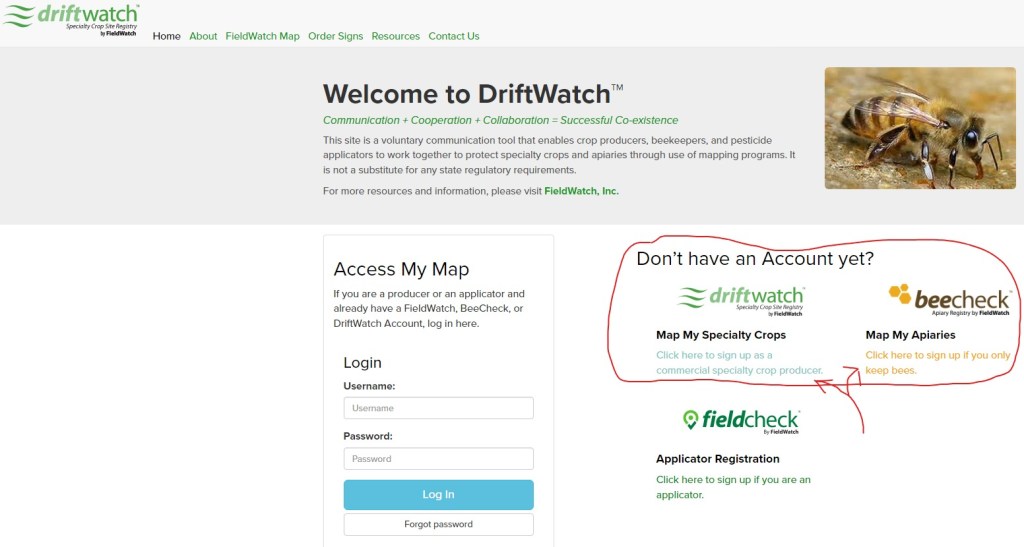
First, type in fieldwatch.com into your web browser. This will take you to a screen that looks like this.

You will want to click on the square called driftwatch (for producers). Once you click on that button you will be taken to the page below.

If you are a beekeeper and want to register your hives with beecheck then you will click below the “Map My Apiaries” and be taken to this page below.

If you are just registering your cropland then you will click below the “Map My Specialty Crops” and be taken to this page below.

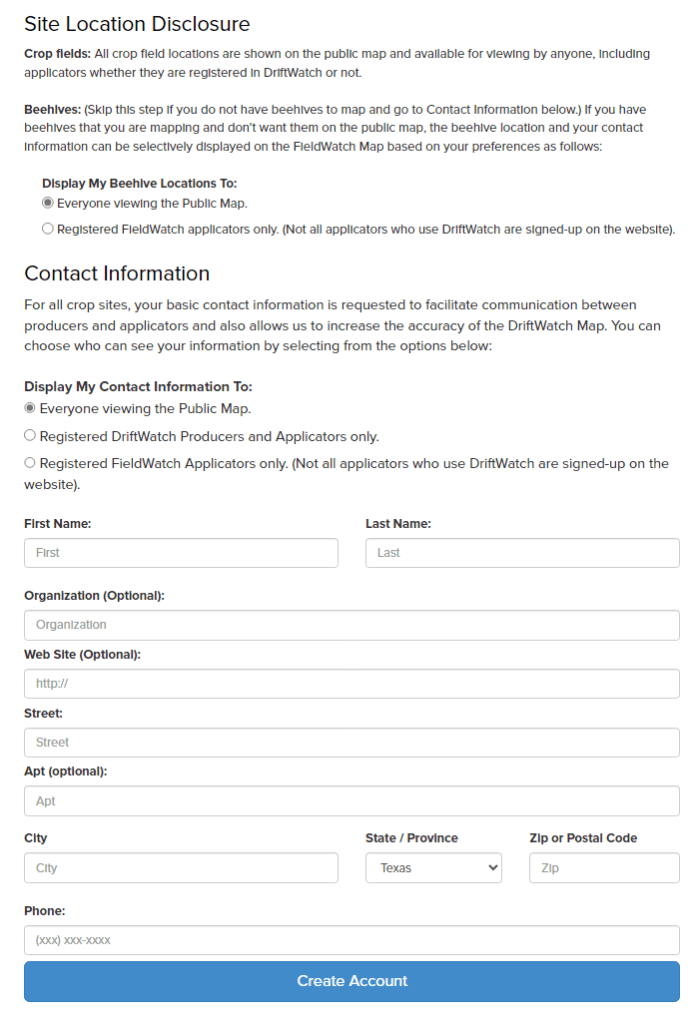
No matter which direction you go, crops or bees, you will need to tell us which state – Texas. Then use your email address as a username or any other name you can remember, add in your email address and then a password and hit Sign Up. Once you hit the button then this screen will appear. I went the crop route in my example, but both are similar.

Once you register all your information and click Create Account you will get this notification.

This email below came to my Gmail account telling me to click here to complete the account creation. Also notice that my Texas A&M AgriLife email address is listed down below as the data steward for the FieldWatch program. At this point I am the person getting FieldWatch up and going in Texas and working with Curt Hadley at FieldWatch we will solve any issues you have with FieldWatch!

Once you click to complete you will be taken to this screen

And finally to here. Take a minute or two to get familiar with the screen. This is pretty much what you see on Google Earth or Google Maps. Use your mouse to move around the map and you can scroll in or out for Zoom.

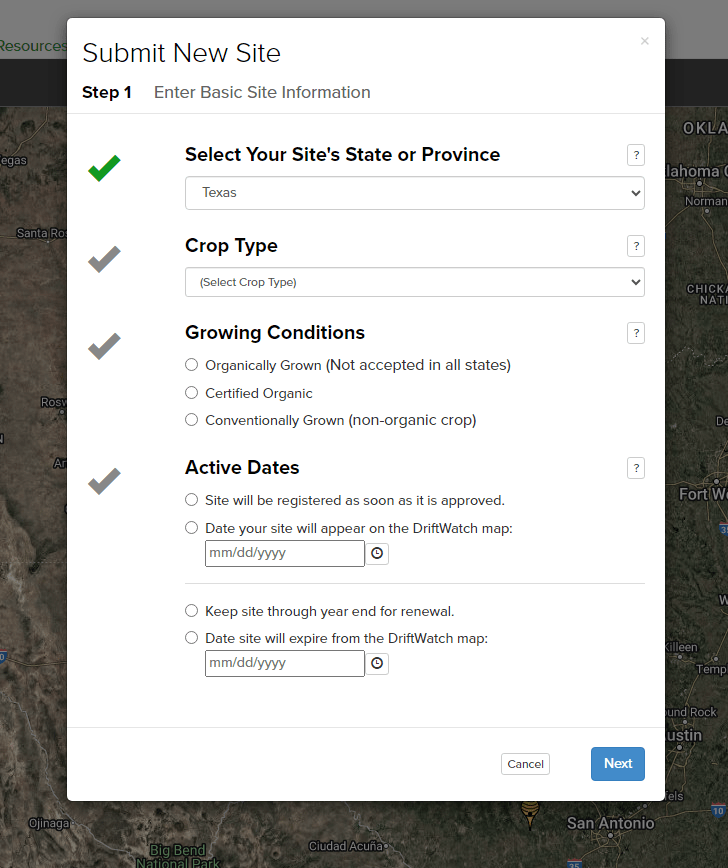
But this is what you are interested in clicking. “Submit New Site.”

When you click then this appears.

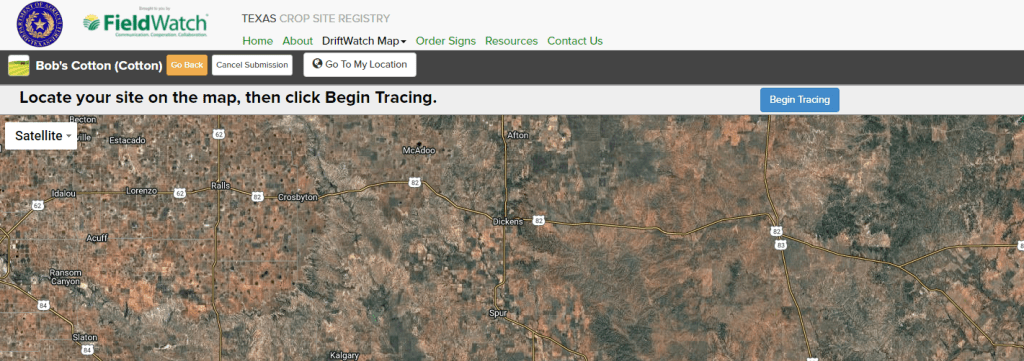
After you answer the questions on 3 different screens you will finally get to this screen below.

I zoomed in on the field that we have certified organic at the Stephenville Research and Extension Center on Hwy 281 in Stephenville and hit the blue button for Begin Tracing. I clicked on one corner then the next till I got back to the first corner and it completed the field. 3.88 acres! The C is for cotton.

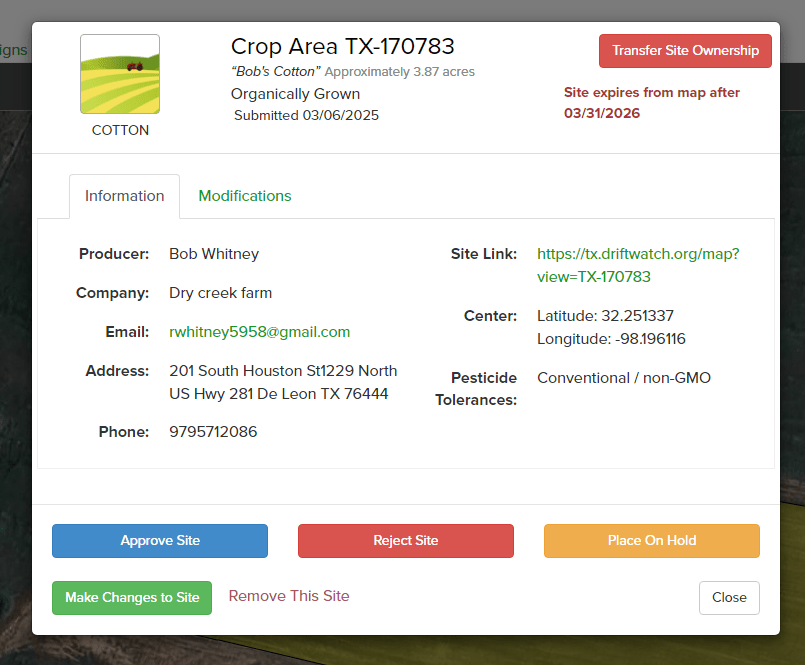
I am done with registering my certified organic field and waiting on the Data Steward with Field Watch to approve my field. Because I am the Data Steward I logged out of my “fake account” and logged back in with my official Texas A&M AgriLife email and got this screen for the field I just mapped.

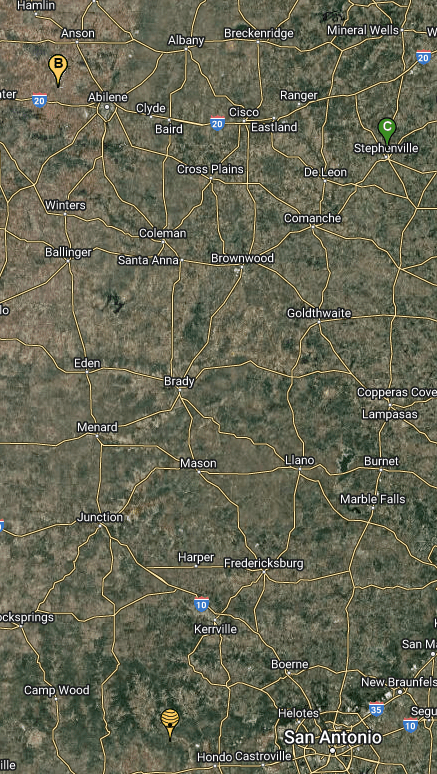
As Data Steward I approved the site and now here are the approved FieldWatch sites so far for all the world to see. This map shows that we have 2 bee sites approved and now one organic cotton site approved. Simple and easy! If you have any questions or concerns, just email me: bob.whitney@ag.tamu.edu

Biopesticides and Biostimulants: Innovation, Challenges, and Growth

Introduction

Biopesticides and biostimulants are at the forefront of organic agriculture, offering natural solutions for pest control and plant health. While these products have gained popularity, the industry faces both opportunities and challenges as it evolves. This post explores the similarities and differences between biopesticides and biostimulants, their regulatory landscape, and what the future holds for these technologies.

Defining Biopesticides and Biostimulants

First let’s look at Biopesticides

Biopesticides are derived from natural materials, including microorganisms, plants, and minerals, to control pests and diseases. They function through competition, antibiosis, or physiological disruption of target organisms. Biopesticides as a category are regulated by the Environmental Protection Agency (EPA) as is detailed below!

Types of Biopesticides:
  • Microbial Biopesticides: Contain beneficial bacteria, fungi, viruses, or protozoa that suppress pests (e.g., Bacillus thuringiensis Bt for caterpillar control).
  • Biochemical Biopesticides: Utilize plant extracts, pheromones, and essential oils to affect pest behavior or physiology. For example, Thyme oil or Neem oil would fit this category.
  • Plant-Incorporated Protectants (PIPs): Genetic material introduced into plants, such as Bt proteins in genetically modified (GMO) crops. These are not to be used in organic production but are considered a biopesticide.

This image above is from the EPA website for Biopesticides. Click on the image to go to the website and check on a biopesticides registration!

How a Company Determines the Need for EPA Approval for a Biopesticide

A company developing a new biopesticide must determine if its product falls under EPA regulation by assessing the active ingredient, intended use, and mode of action. The Federal Insecticide, Fungicide, and Rodenticide Act (FIFRA) mandates that any substance intended for preventing, destroying, repelling, or mitigating pests must be registered as a pesticide with the U.S. Environmental Protection Agency (EPA). A company should ask the following questions to assess if its product qualifies as a biopesticide requiring EPA registration:

  1. Does the product actively control pests, pathogens, or weeds?
    • If the product claims direct pest suppression, it is a pesticide and requires EPA approval.
    • If it only enhances plant health without targeting pests directly, it may qualify as a biostimulant and not require EPA registration.
  2. What is the mode of action?
    • If the product kills, inhibits, or repels pests, it is considered a pesticide.
    • If the product works by stimulating plant defenses or improving nutrient uptake, it may not require registration.
  3. Is the active ingredient a known biopesticide or plant extract?
    • If the active ingredient is a microorganism, plant extract, or biochemical compound known to suppress pests, it likely needs EPA registration.
    • The EPA maintains a list of registered biopesticide active ingredients, and companies should check if similar compounds are already registered.
  4. Are pesticidal claims being made on the label?
    • If the product claims pest control properties (e.g., “kills fungi,” “controls insects”), it falls under FIFRA jurisdiction and requires EPA registration.
    • If the product only states benefits like “enhances plant vigor” or “improves root growth,” it may avoid registration.

Biostimulants

Biostimulants enhance plant growth, stress tolerance, and nutrient efficiency without directly targeting pests or diseases. Unlike biopesticides, they do not require EPA registration, leading to a highly unregulated market.

That said as a disclaimer there are many biostimulants that do a good job at preventing, controlling or managing for pests in crops. They can have a dual function even though they don’t have an EPA registration – a definite grey area!

Key Categories of Biostimulants:
  • Microbial Biostimulants: Beneficial bacteria and fungi that improve nutrient uptake and plant stress resilience.
  • Seaweed and Plant Extracts: Natural compounds that stimulate plant metabolism and root development.
  • Amino Acids and Humic Substances: Organic molecules that enhance soil health and nutrient availability.
  • For a complete look at biostimulants check out this post and the many different types available. Biostimulants: The Next New Frontier

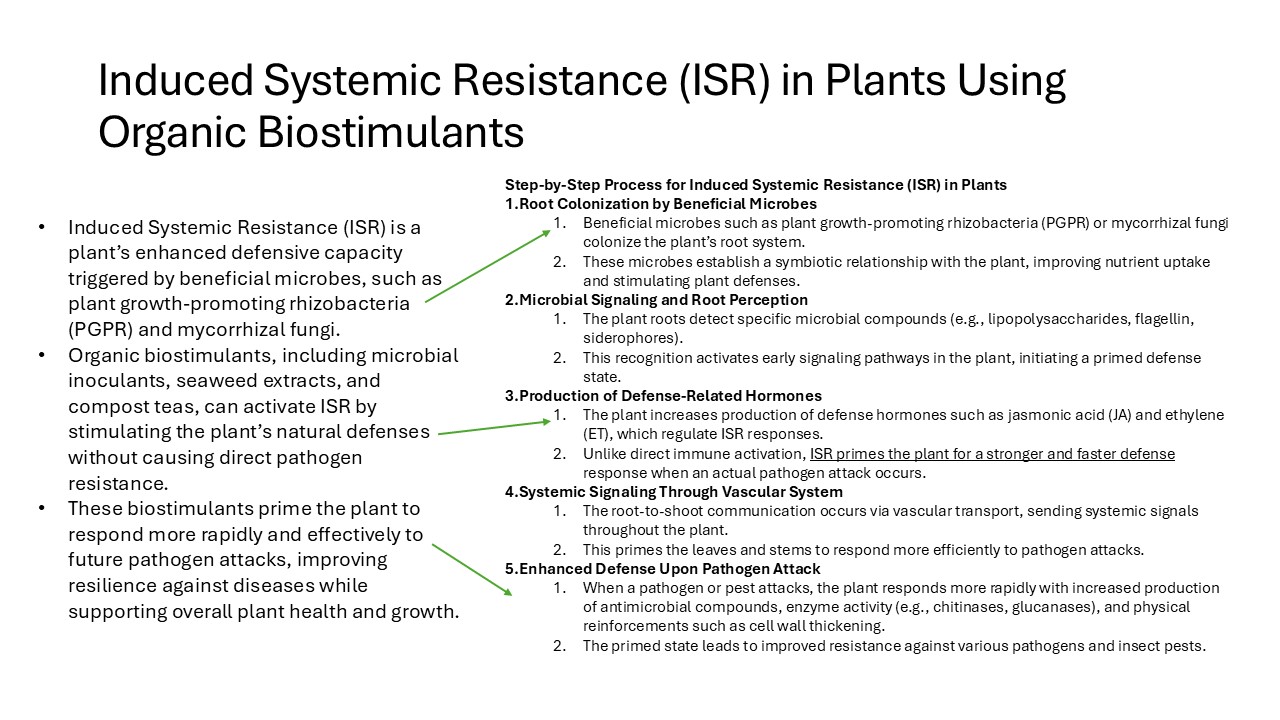
This chart above (just click on it for a larger image) shows how an SAR system works in the plant. In many cases an SAR developed biostimulant will also be labeled with EPA as a biopesticide simply because it does control specific pests in the plant while boosting the plants defense mechanisms.

Similarities Between Biopesticides and Biostimulants
  • Both are used in sustainable and organic agriculture to reduce reliance on synthetic chemicals.
  • Derived from natural sources, including microorganisms and plant extracts.
  • Improve overall plant health, either through disease suppression (biopesticides) or enhanced resilience (biostimulants).
  • Can be combined with conventional or organic inputs in integrated pest and crop management (IPM/ICM).
FeatureBiopesticidesBiostimulants
Primary PurposeControl pests and diseasesImprove plant growth and resilience
MechanismDirectly targets pests/pathogensEnhances plant physiological processes
RegulationSubject to pesticide regulations (EPA, OMRI)Less regulatory oversight, often considered soil amendments
Mode of ActionAntibiosis, competition, parasitismHormonal stimulation, nutrient uptake efficiency
ExamplesBacillus subtilis for fungal disease controlSeaweed extracts for drought tolerance

Industry Challenges and Regulatory Considerations

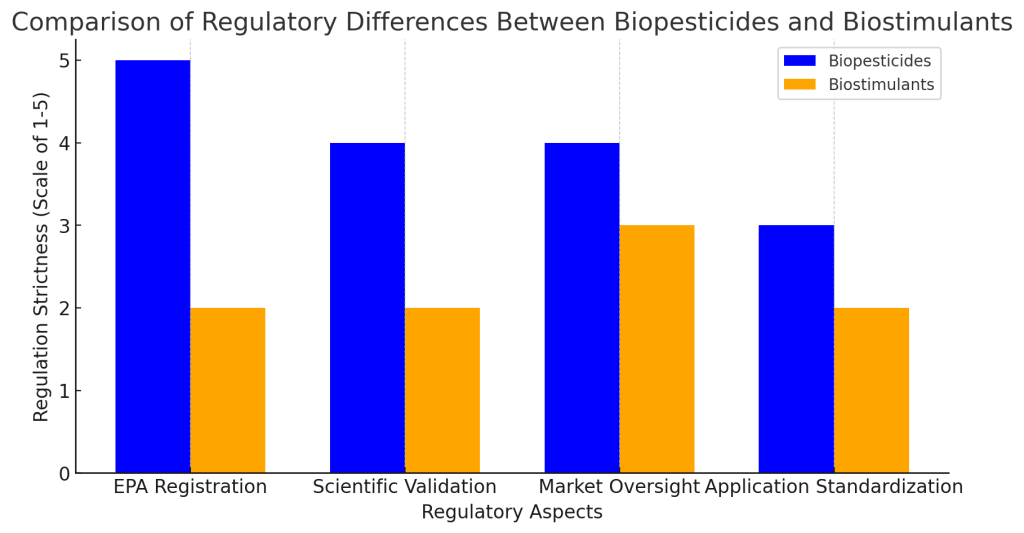
One of the biggest challenges in the biostimulant industry is the lack of clear regulations. While biopesticides undergo rigorous EPA evaluation, biostimulants can be marketed with minimal oversight. This has led to the proliferation of products with unverified claims, making it difficult for growers to differentiate effective solutions from ineffective ones.

Government agencies are actively considering regulatory frameworks for biostimulants to ensure quality control without stifling innovation. The Biostimulant Industry Alliance and other trade organizations are working to establish scientific standards and promote best practices.

Market Trends and Future Outlook

Despite challenges, the biopesticide and biostimulant markets are poised for significant growth. Market research predicts a continued rise in demand due to increasing consumer preference for organic and residue-free crops. Additionally, advancements in microbial formulations and AI-driven precision agriculture will enhance the effectiveness of these products.

Data and Charts from Industry Sources

1. Projected Market Growth of Biopesticides and Biostimulants (2020-2030)
  • Data Source: Market research reports from MarketsandMarkets, Mordor Intelligence, and Research and Markets.
  • Methodology: Extrapolation of market size based on reported CAGR (Compound Annual Growth Rate) values of 12-15% for biopesticides and 13-16% for biostimulants from recent industry reports.

References:

  • MarketsandMarkets (2023). Biopesticides Market – Global Forecast 2028.
  • Mordor Intelligence (2023). Biostimulants Market Analysis & Forecast 2028.
  • Research and Markets (2023). Trends in Agricultural Biologicals.
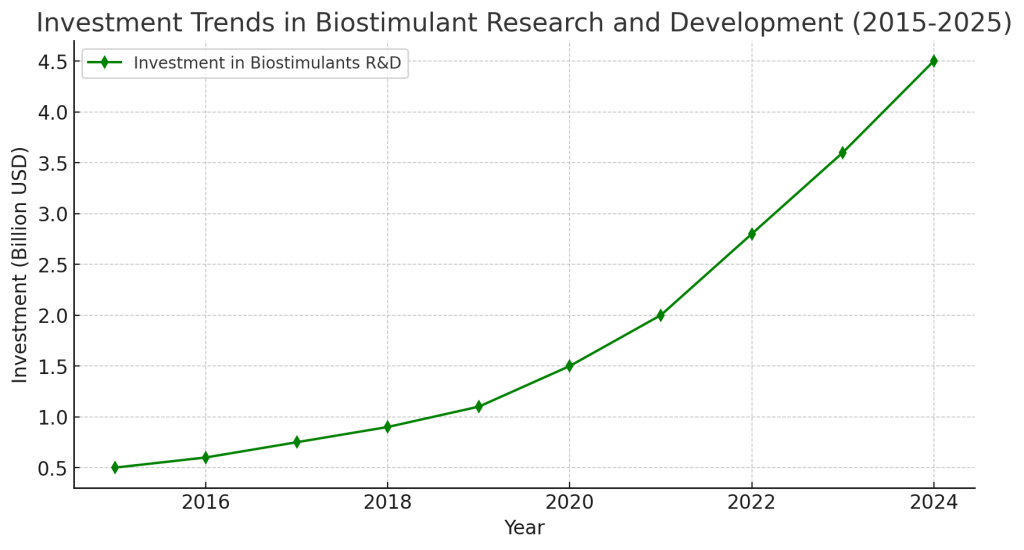
2. Investment Trends in Biostimulant Research and Development (2015-2025)
  • Data Source: Reports from AgFunder, FAO, and OECD on global agricultural input investments.
  • Methodology: Estimation based on reported investments in biologicals, venture capital funding for agri-tech startups, and projected R&D budgets from industry leaders.

References:

  • AgFunder (2023). Investment in AgTech and Biostimulants.
  • FAO (2023). Sustainable Agriculture and Innovation Trends.
  • OECD (2022). Trends in Agricultural R&D.
3. Adoption Rates of Biostimulants Across Different Crop Sectors
  • Data Source: Surveys and adoption studies from USDA, European Biostimulant Industry Council (EBIC), and International Biostimulants Forum.
  • Methodology: Aggregated adoption data from industry reports and regional case studies, indicating highest adoption in vegetable and fruit production, with lower adoption in ornamentals.

References:

  • USDA (2023). Adoption of Biostimulants in U.S. Crop Production.
  • EBIC (2023). European Biostimulants Market Report.
  • International Biostimulants Forum (2022). Global Trends in Biological Crop Inputs.
4. Regulatory Differences Between Biopesticides and Biostimulants
  • Data Source: Regulations from EPA, European Food Safety Authority (EFSA), and USDA Organic Program.
  • Methodology: Comparative analysis of regulatory frameworks governing product registration, scientific validation, and market oversight for biopesticides versus biostimulants.

References:

  • EPA (2023). Biopesticide Registration Guidelines.
  • EFSA (2023). Regulatory Framework for Biostimulants in the EU.
  • USDA (2023). Organic Input Standards and Market Oversight.

Texas Organic Rice Update: Insights for Producers and Researchers

Great picture by USA Rice at the recent Western Rice Conference, January 15th in El Campo.

Organic rice production in Texas continues to evolve, with advancements in weed control, fertility management, and ratoon cropping showing promising results. This update covers the latest developments, challenges, and resources available to organic rice growers, with implications for both organic and conventional production systems.

Advancements in Organic Rice Production

1. Enhancing Yields with Ratoon Crop Production
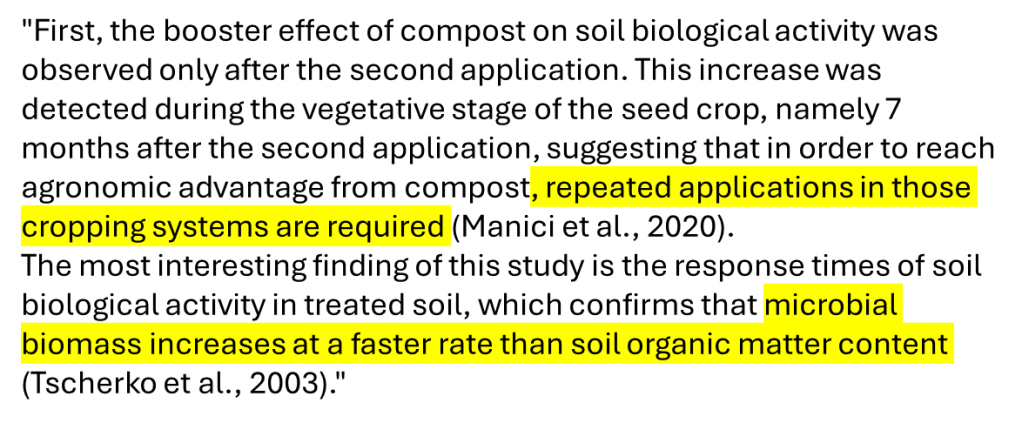
Texas researchers are leading efforts to improve ratoon crop yields in organic rice. This practice of harvesting a second crop from the stubble of the first offers a sustainable way to maximize productivity without replanting, making it an attractive option for organic farmers. Paragraph from study below:

“To enhance nitrogen availability, the researchers utilized organic-approved inputs such as compost and cover crops, finding that an equivalent of 90 pounds of nitrogen per acre was optimal for achieving the greatest yields, with greater rates offering no additional advantage. This insight helps farmers optimize nitrogen inputs using sustainable sources, saving costs while promoting organic practices.”

2. Organic Variety Trials – 2023
Organic variety trials conducted in Garwood, Texas, showed promising results. These trials not only help identify suitable varieties for organic systems but also aid in improving overall seed supply for future seasons.

Variety AverageDry (lbs./ac.)Dry (Bu./ac.)Dry (barrels/ac.)
XP7537233160.744.6
RT74017091157.643.8
RT73016716149.241.5
RT73027263161.444.8
XL7236760150.241.7

Overcoming Challenges in Organic Rice Production

1. Weed Control Innovations
Weeds remain a major challenge for organic rice farmers. Here are some key tools and practices being used:

  • Northern Jointvetch Control: The bioherbicide LockDown (Colletotrichum gloeosporioides f. sp. Aeschynomene) has shown great effectiveness. This live organism must be applied with a surfactant, offering a cost-effective solution.
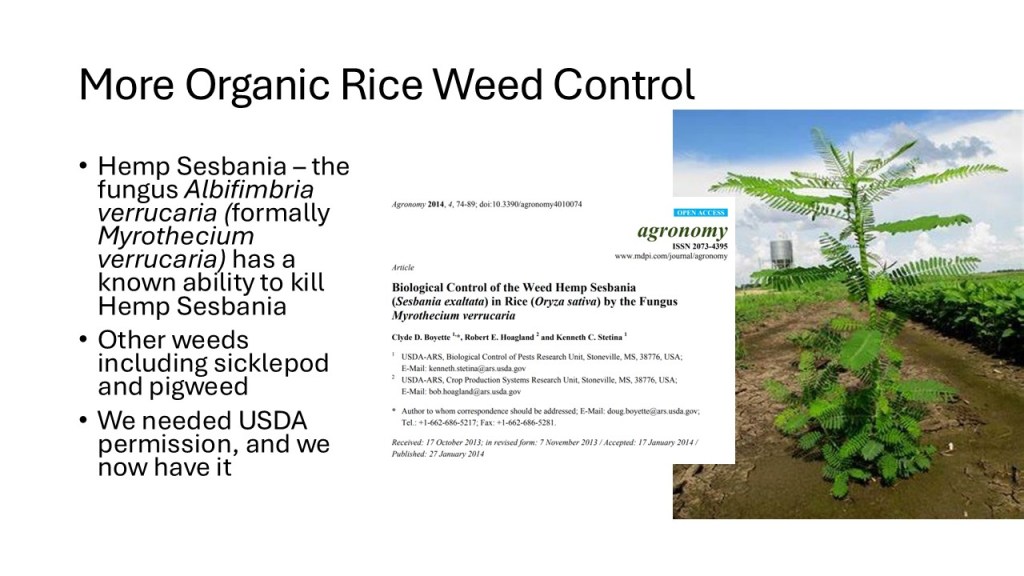
  • Hemp Sesbania Management: USDA-approved use of Albifimbria verrucaria (formerly Myrothecium verrucaria) has demonstrated success against hemp sesbania and other weeds like sicklepod and pigweed.
  • Water-Seeding Method: The pinpoint flood system effectively suppresses weedy rice by creating anaerobic conditions that inhibit germination.

2. Organic Fertility Programs
Organic rice growers are adopting long-term fertility strategies, including the use of compost and biostimulants. Research highlights the importance of repeated compost applications to boost soil biological activity and improve yields.

  • Biostimulants in Focus: Biostimulants such as humic acids, seaweed extracts, and microbial inoculants can enhance plant growth. However, product quality remains inconsistent, necessitating thorough testing and careful application.

Market Trends and Opportunities

The organic rice market faces challenges related to supply chains, international competition, and fraud. Key issues include:

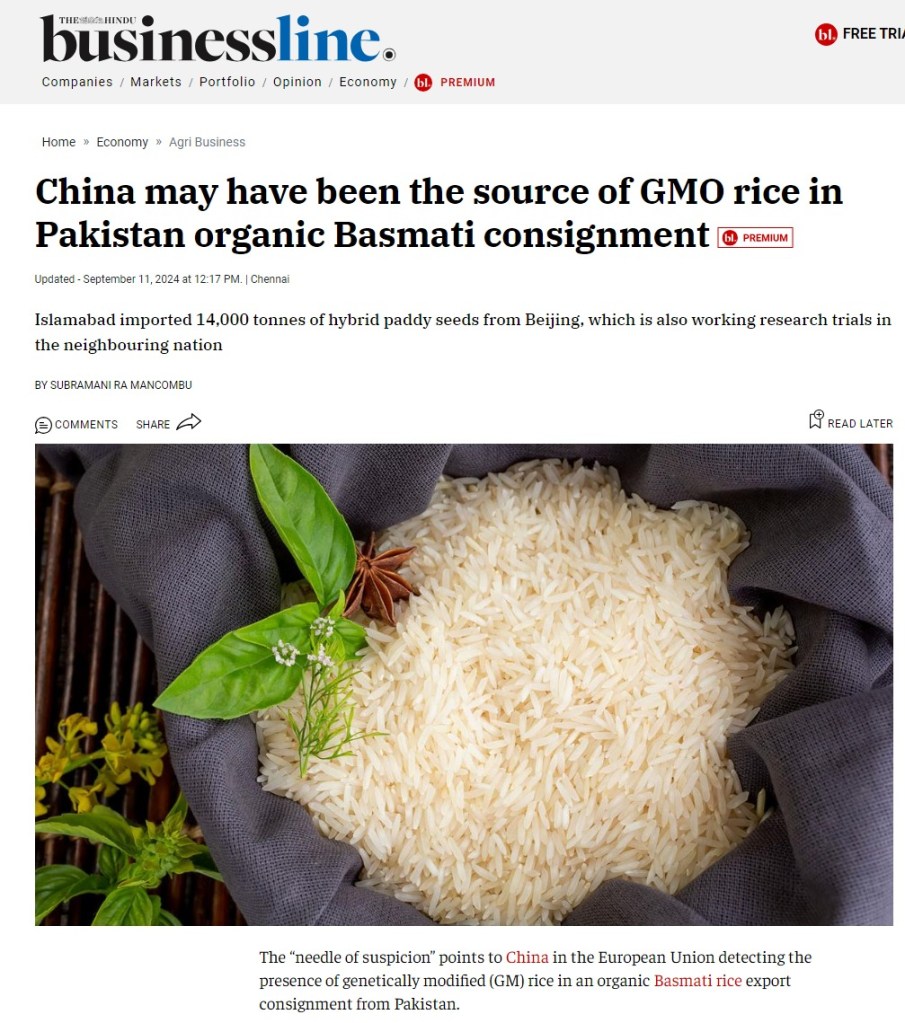
  • GMO concerns, especially in Mexico and China.
  • Limited seed supply due to adverse weather conditions in 2024, which impacted production in Texas.

Picture of an article in an Indian News Post showing “GMO” rice sent to Europe!

Despite these hurdles, Texas continues to work to expand organic rice production. Programs like the Transition to Organic Partnership Program (TOPP) are equipping farmers with mentorship, community-building opportunities, and technical training to support successful transitions to organic farming.

Resources for Organic Farmers

Texas A&M AgriLife Extension Organic Program provides a range of resources to support organic rice growers:

  • Podcasts: On TOPP of Organic offers insights into organic production practices.
  • Newsletters: Subscribe to bimonthly and monthly newsletters for the latest updates.
  • Workshops and Field Days: Covering topics such as certification, conservation planning, and marketing.

The Future of Organic Rice in Texas

Organic rice production has been a rapidly growing industry with vast potential but there are plenty of struggles right now. By addressing challenges like weed control and fertility management, and leveraging mentorship and research programs, Texas farmers can lead the way in sustainable and organic agriculture.

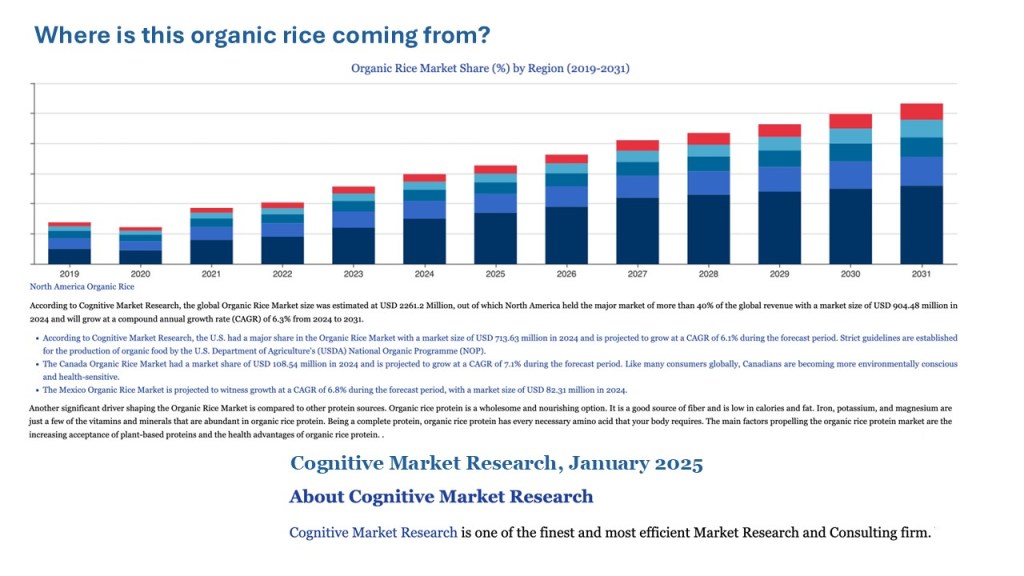
Lastly, this information is from Cognitive Market Research off their website. I took a picture of this graph showing that Organic Rice sales are growing tremendously and will continue to grow. I have rice growers say to me that people have quit buying organic rice and they believe this because our organic rice farmers can’t get contracts to grow organic rice. The problem is not that our US consumers don’t buy organic rice it is that organic rice imports are filling that demand – NOT Texas organic rice producers! So, I ask the question, “Where is this organic rice coming from?”

Other Rice Resources (just click a link!)

Addressing the Challenges of Organic Cotton Seed

As the Extension Organic Specialist with Texas A&M AgriLife Extension Service, I work closely with organic cotton farmers to navigate the complexities of maintaining organic certification. Recently, issues surrounding the sourcing and certification of organic cotton seed have come to the forefront, particularly with the influx of imported planting seed from other countries. This situation is compounded by the stringent requirements of the Global Organic Textile Standard (GOTS) and potential conflicts in international trade.

Key Issues with GOTS and Organic Cotton Seed

Contamination Risks

GOTS certifies cotton fiber from the gin facility to the mill but does not extend this certification back to planting cotton seed. This poses a significant risk for farmers, as even with rigorous adherence to organic practices, their crops can become contaminated through cross-pollination, especially in regions like the cotton belt where GMO crops are prevalent. Contamination, detected in seed cotton samples at the gin before ginning (raw cotton from the farm), can lead to farmers being excluded from organic certification for up to five years, creating severe economic and operational challenges.

Lack of Standardized GMO Thresholds

Currently, GOTS does not establish a GMO contamination threshold for cotton seed, which complicates the situation for organic cotton farmers. While many USA cotton seed companies work to maintain low levels of GMO contamination (usually below 5%), GOTS demands strict purity in the final product. This standard requires seed cotton (seed, leaves, stems) testing because it is the only part of the cotton plant containing DNA, where contamination can be detected. However, this rigid approach does not fully account for the post-planting natural cross-pollination risks that farmers face, such as GMO pollen carried by insects into organic fields. This discrepancy between the ideal purity GOTS seeks and the realities of farming highlights the need for a practical and fair standard that supports organic farmers without penalizing them for uncontrollable factors.

To address these challenges, a multi-faceted approach involving key industry stakeholders is essential. Here’s how we can move forward:

1. Establishing a Fair GMO Contamination Standard: 

Implementing a reasonable GMO contamination threshold for planting cotton seed would significantly alleviate the testing burden on farmers and prevent unjust penalties. This standard should be recognized and enforced by all organic certification bodies, including GOTS. If the plants grown from this approved cotton seed are tested and not the seed cotton at the gin the farmer would be protected from the natural potential of seed contamination.

2. Enhanced Collaboration Among Industry Stakeholders: 

Seek advice and input from the industry, including farmers, Extension specialists, researchers, ginners, and manufacturers, to determine acceptable thresholds and protocols based on constraints faced by each group. This collaborative approach ensures that the standards are practical and attainable.  We, here in Texas, represent the largest cotton production area in the world and want to be involved in this process.

3. Advocating for Policy Changes:

Engaging with policymakers and certifiers to establish upfront certification for cotton seed would ensure farmers have a clear understanding of the seed quality they are purchasing. Specific policies might include establishing minimum GMO thresholds and clear guidelines for contamination levels, mitigating risks, and supporting farmers in maintaining their organic certification. With upfront testing by seed companies and certifications from USDA, gins could operate more confidently, alleviating the burden not only on farmers but also on the ginning facilities themselves.

Addressing Import Issues

The reliance on non-GMO cottonseed imported from other countries, while possibly beneficial in the short run, introduces additional complications. Political and economic instability can disrupt supply chains, and without stringent testing, the risk of unintended contamination remains. Developing robust testing protocols, such as frequent sampling and standardized testing methods, for all imported seed is crucial to ensure they meet the same standards required domestically. It will also create a more transparent, open and balanced business environment for all.

Conclusion

The path to resolving these issues is through collaboration, standardization, and proactive policymaking. By working together, we can create a fair and sustainable environment for organic cotton farmers, ensuring their efforts are recognized and supported throughout the supply chain.

Exploring Organic Research: Advancing Texas Organic Production

Photo: The Organic Center: Organic Research Highlights

Organic agriculture continues to expand in Texas as both farmers and consumers recognize the benefits of sustainable and ecologically sound farming practices1. At the forefront of this growth are research initiatives that tackle challenges and create opportunities for organic producers. In Texas, we are working on several innovative organic research projects that are helping to pave the way for a more resilient, profitable, and sustainable organic agriculture industry. These projects not only foster organic agriculture growth but also contribute to improving farmer economics, boosting crop and livestock productivity, and enhancing the health of plants, animals, and people. I feel privileged to work on these projects with outstanding researchers and extension collaborators who share a passion for organic agriculture as I do, making this work both impactful and deeply rewarding.

Ongoing Research Projects in Texas Organic Agriculture

  1. Research, Development, and Evaluation of Diesel Nut Oil – Crop Feedstocks Developing alternative crop feedstocks for diesel nut oil production that align with organic farming systems, offering economic and energy solutions.
  2. Evaluating the Effectiveness of Humic Acid Substance (MFG 150) on Milk Production Investigating how humic acid can naturally enhance milk production, providing a sustainable approach to improving organic dairy productivity.
  3. Evaluating Mastitis Treatment Without Antibiotics Utilizing AHV Exploring alternative methods to treat mastitis in livestock, supporting animal health while maintaining organic standards.
  4. Producing Resilient Organic Transplants Under Controlled Environments Examining methods for producing stronger organic transplants to ensure better crop establishment and resilience in challenging conditions.
  5. Hi-A Corn and Management Practices for Nutritional Food and Feed Breeding high-anthocyanin corn varieties and developing practices to maximize their nutritional value for both human consumption and animal feed.
  6. Climate-Smart Organic Sorghum Partnership for Grain and Silage Production Partnering with producers to grow climate-resilient organic sorghum for grain and silage, contributing to sustainable feed and food systems.
  7. Fostering Sustainable Organic Cotton Production in the U.S. Through Research and Outreach Enhancing organic cotton production through research and extension efforts that address challenges like pest management, soil health, and market development.
  8. Boosting Organic Leafy Green Production Using Summer-Adapted Cover Crops in Texas Leveraging cover crops to improve soil health and create conditions for robust organic leafy green production in warmer climates.
  9. Field Protocol for “Huitlacoche Delicacy: Turning the Lost Corn Crop into a High-Value Delicacy Vegetable” Creating a framework for growing and marketing huitlacoche (corn smut), turning a common crop affliction into a gourmet organic product.
  10. Increasing Consumer Acceptance and Farmer Profitability by Breeding More Nutritious Cowpeas Breeding and promoting cowpeas with higher nutritional value, meeting consumer demands while improving profitability for organic farmers.
  11. Advancing Discovery to Market – Organic Pre-emerge Weed Control Technology Developing organic preemergence weed control solutions to reduce reliance on tillage and labor-intensive practices, improving efficiency in organic farming systems.

What’s Next for 2025

We already have some proposals in the pipeline for submission including a few Texas Department of Agriculture Specialty Crop Block Grants, at least 2 new USDA Organic Research and Extension Initiative grants and several Southern SARE grants we are waiting on approval and a few more to apply for in May. There are always new things we need to study, new concepts to explore and always lots of questions from farmers that need an answer. Add to this list issues with climate extremes, varieties that meet organic needs, biostimulant research – the list is endless!

Why Organic Research Matters

Organic research is vital for driving innovation and addressing the unique challenges faced by organic producers. The projects mentioned above exemplify how targeted research can:

  • Support Agricultural Growth: By developing resilient crop varieties2, enhancing pest control methods3, and improving soil health4, organic research ensures consistent production and increased yields.
  • Improve Farmer Economics: Projects focused on reducing input costs, increasing marketable yields, and creating value-added opportunities (like huitlacoche) directly impact farmer profitability5.

References

  1. Organic Trade Association. Consumer Perception of USDA Organic and Competing Label Claims. Euromonitor International, April 2024. ↩︎
  2. “Organic Farming and Soil Health: A Review.”
    The Organic Center. Available at: https://www.organic-center.org/sites/default/files/project/2020/03/soil-health-review_shadetully.pdf ↩︎
  3. “Integrated Pest Management Strategies in Organic Farming.”
    Bulletin of the National Research Centre, Springer Open. Available at: https://bnrc.springeropen.com/articles/10.1186/s42269-024-01226-x ↩︎
  4. “Organic Farming and Soil Health: A Review.”
    The Organic Center. Available at: https://www.organic-center.org/sites/default/files/project/2020/03/soil-health-review_shadetully.pdf ↩︎
  5. “The Economics of Integrated Organic Farming: Cost-Benefit Analysis.”
    Husfarm. Available at: https://husfarm.com/article/the-economics-of-integrated-organic-farming-cost-benefit-analysis ↩︎