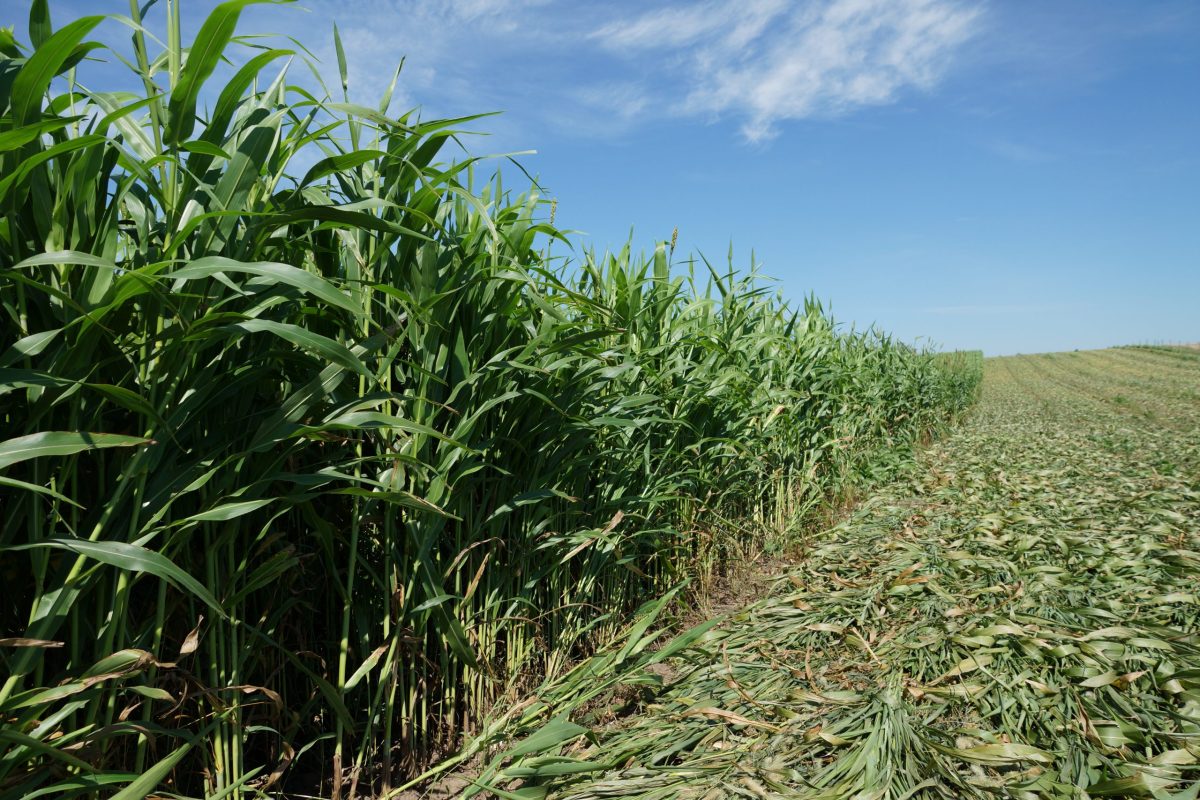
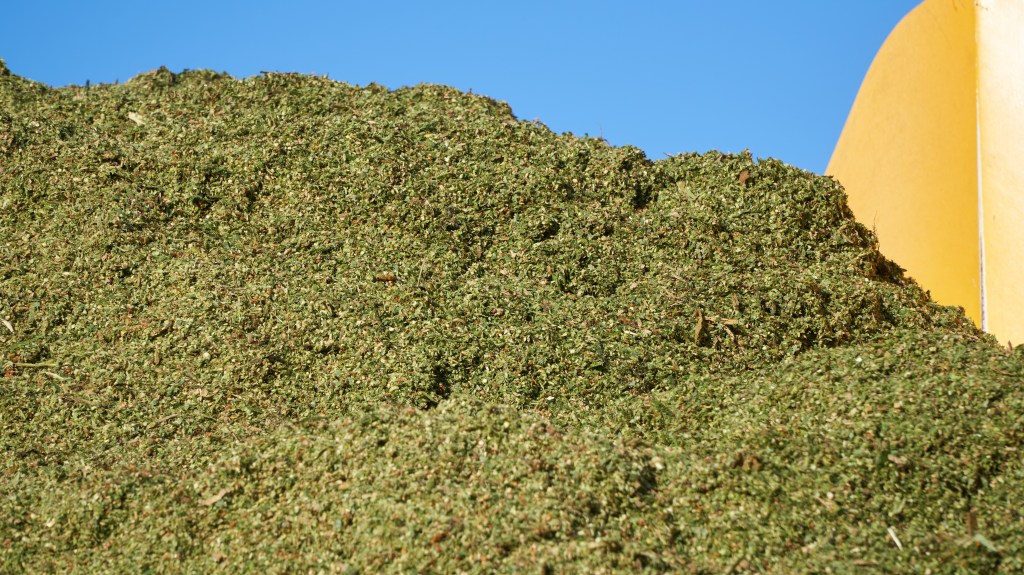
As the High Plains continues to face water scarcity, many dairies are exploring more drought-tolerant forages1. One promising option is brown midrib (BMR) male-sterile sorghum silage, which is now showing strong potential to partially replace corn silage in lactating cow diets. A recent feeding trial2 by Texas A&M specialists Dr. Juan Piñeiro and Douglas Duhatschek conducted at the Southwest Regional Dairy Center in Stephenville, Texas, reveals some key takeaways that dairy producers need to consider before spring planting.
Unlike conventional sorghum, male-sterile types don’t form grain. Instead, they pack sugars into the stalks and leaves. This results in silage with:
Less starch but more water-soluble carbohydrates (WSC)—these sugars ferment well and help stabilize the silage.
No need for kernel processing, which can reduce harvest costs and time.
Higher crude protein (CP) and ash, compared to corn silage.
In this study, replacing 25% or 50% of corn silage with BMR male-sterile sorghum silage (while adjusting the diet to maintain similar nutrient levels) led to:
11% more dry matter intake (DMI) on average,
Higher milk yield and energy-corrected milk (ECM), and
Improved total digestible intake of fiber and protein at the 25% replacement level.
What’s the Catch?
At 50% replacement, digestibility of starch, protein, and fiber was lower compared to a full corn silage diet. This was likely due to the switch from starch-rich corn silage to more dry ground corn, which digests differently in the rumen.
DMI dropped in the corn-only group, likely due to higher starch fermentation and heat from silage spoilage during feed-out. This highlights the practical importance of silage management.
Take-Home for Producers
If you’re in a region with limited irrigation or looking to diversify your silage crops, planting BMR male-sterile sorghum could be a great option, especially if you aim to replace around 25% of your corn silage. It offers water savings, improved intake, and sustained milk production—when paired with proper ration balancing.
Keep in mind:
Sorghum needs wilting and proper timing for harvest.
Balancing for rumen-available starch is key when increasing ground corn in the diet.
Avoid silage heating at feed-out—especially with higher starch silages.
As more data rolls in from real-world dairies using this silage, we’ll continue refining how to best use it. For now, this is a promising tool for those looking to stretch water, reduce costs, and maintain high-performing herds.
Duhatschek, D., Pilati, A.G., Mittelstadt, J.P., Isasi, J.C., Cabañas, J., Lee, A.M., et al. (2025). Effects of partially replacing corn silage with BMR male-sterile sorghum silage on dry matter intake, digestibility, and milk production in lactating dairy cows. Texas A&M University Dissertation, Department of Animal Science.↩︎
In August of 2024 (replanted September 12 but that is another issue!) we planted test plots for cover crops with the objective of determining which works best for the next crop we want to plant. This was really late in the summer to be planting a summer crop but to be honest we were waiting on a rain and finally gave up and irrigated. The individual cover crops were in the less than average range for growth but still all plots grew and ended up putting on a seed crop simply because we had a long fall. The plots were watered twice and then got some rain. We left the plots to grow as much as possible and after a killing frost plowed the cover crop back into the soil. We then took soil samples on March 6, 2025, and submitted them to the Texas A&M Soil Testing Lab.
Below is the plot layout
The soil test reports cover four treatments: Check, Sunn Hemp, Tepary Bean, and Cowpea. Click here if you want to read more about Texas Cover Crops. Below is a summarized comparison of key soil characteristics and nutrients across these treatments which shows how each crop affected the soil it was grown on.
Sunn Hemp had the highest Iron (18.9 ppm), suggesting enhanced Fe availability.
Cowpea had the lowest Copper (0.59 ppm), which may warrant monitoring in future crops.
All treatments were below the critical Boron level (1.3 ppm), but Sunn Hemp had the lowest (0.17 ppm). A boron application of 1 lb/acre was recommended for all treatments.
Final Takeaways & Recommendations
Cowpea improved pH stability and significantly increased calcium and magnesium levels.
Tepary Bean led to the highest nitrogen and potassium levels, making it beneficial for nutrient cycling.
Sunn Hemp had the lowest sulfur and boron levels, suggesting it may require supplementation.
The Check treatment retained the highest phosphorus level, while Cowpea depleted the most phosphorus.
All treatments except Check had slightly reduced Zinc, Copper, and Manganese levels, but still above critical levels.
Use these results to help you plan for your next crop and then monitor that crop! This is what we plan to do by planting a Sorghum Sudangrass crop that we will collect both soil samples and plant samples.
Best Option for Long-Term Soil Improvement?
Cowpea appears to be the best option for improving soil pH, calcium, and magnesium.
Tepary Bean is ideal for nitrogen retention and potassium accumulation.
Sunn Hemp had the least impact on conductivity and may be better suited for salinity-sensitive crops.
Organic cotton farmers work hard to maintain their certification, ensuring that their crops are grown without synthetic chemicals, genetically modified organisms (GMOs), or prohibited inputs. Even when farmers follow organic practices to the letter, GMO contamination can still occur!
Let’s take a closer look at how GMO testing works, what the results mean, and why the final decision on certification can sometimes feel arbitrary.
How is GMO Contamination Measured?
GMO testing in Seed Cotton (raw cotton including fibers and seeds) is performed using real-time PCR analysis, a widely used method to detect genetic modification markers in cotton DNA. The gin will take samples of your seed cotton and submit those samples to their Global Organic Textile Standard (GOTS) Certifier. The GOTS Certifier will submit those samples to a lab, usually OMIC which will then run them for GMO presence. The results are then submitted back to the GOTS Certifier. Here are some things that are being investigated.
Standard Limit of Quantification (LOQ): 0.1% GMO content – This is the most commonly used threshold for accurately measuring contamination.
More Sensitive Tests: Some advanced labs claim they can detect levels as low as 0.01%, but I have not seen this asan industry-standard threshold for Seed Cotton testing. But you could see this from European labs!
Anything above a 0.1% is detectable and reported as such as you can tell from this test sheet with all the names removed!
Here is another test with some different results.
What the Test Results Mean
This sample contains GMO markers including Bt toxin (Cry1Ab/Ac) and herbicide resistance (otp/mepsps).
p35S, pFMV, and tNOS confirm genetic modification.
Organic certifiers would likely reject this cotton since GMO elements were clearly detected.
If contamination was unintentional, an investigation might be needed to determine if the cotton can still qualify for certain supply chains.
Marker
Detected?
GMO Trait Significance
SAH7 (Cotton Gene)
✔ Yes
Confirms valid cotton DNA
Cry1Ab/Ac (Bt Toxin)
✔ 1.44%
Indicates Bt Cotton (Insect Resistance)
otp/mepsps (Glyphosate Resistance)
✔ 0.47%
Possible Roundup Ready Cotton (Herbicide Resistance)
p35S (CaMV Promoter)
✔ 1.93%
Common GMO activation switch
PAT (Glufosinate Resistance)
❌ Not Detected
No Liberty Link herbicide resistance
pFMV (FMV Promoter)
✔ 1.91%
Used for GMO gene activation
tNOS (Terminator)
✔ 3.27%
Common GMO terminator sequence
GM Elements (General GMO Presence)
✔ Yes
Confirms GMO modification detected
Now What Happens?
What happens when an organic cotton sample tests positive for GMOs? That really depends on a lot of different things, and this is where farmers can get frustrated. I have provided you with some sample test results but usually you won’t even see these results. At this point the GOTS Certifier for the Gin has your test results. This is a small list of what they do:
The Global Organic Textile Standard (GOTS) Says:
No intentional use of GMOs is allowed.
If contamination is detected, the GOTS certifier launches an investigation instead of outright rejection.
If the farmer can prove they used verified non-GMO seed and followed organic practices, then there is a strong possibility that they may still be approved.
GOTS Certifier Reaches Out
The next step is for the GOTS Certifier to reach out to your Organic Certifier at the farm level. Because a “red flag” is now waving, your certifier is going to be looking at your Organic System Plan (OSP) with a fine-toothed comb! They will be looking at your cottonseed information, at your field and field locations, at every record you submitted to determine if there is anything that might have caused a “voluntary” versus “involuntary” contamination. You will probably know that something is up either by just a notice of an investigation or possibly a full-blown visit. Either way, they (your certifier) are trying to find out why the raw seed cotton is showing up with detectable levels of GMO.
Most of the time there is absolutely nothing you did to cause a detectable limit of GMO in your seed cotton. We might call this an “Act of God” because no one knows why it happens. The planting seed tested good, the field was good and there is no drift. No one knows what happened or why and so you get a clean bill of health. The system is designed with some flexibility because there can be an “Act of God” and to be honest I am glad to recognize that God is Sovereign even over cotton fields and cotton farmers!
On the other hand, it can sometimes be identified as a wrong bag of planting seed picked up, a wrong module or bale marking, or some other contamination issue along the way. Elevated levels of GMO in your raw seed cotton will throw up all kinds of red flags and could lead to a non-compliance, rejected organic cotton and a microscopic look at all other aspects of your organic operation! Let’s hope we don’t go there……
What Can Farmers Do?
Test early and often. If you suspect contamination, conduct your own tests before sending cotton to market. Newsletter Article Page 2
Maintain strong records. Prove that you sourced verified non-GMO seed and followed organic protocols.
Work with a certifier who understands the realities of farming. Some certifiers are more flexible in their investigations than others or ask the right questions instead of just assuming you are wrong.
Improve segregation. Make sure that cotton stays separate at every stage, from harvesting to ginning.
Final Thoughts
Organic farmers face an uphill battle when it comes to avoiding GMO contamination. Even with perfect compliance, your cotton test results can find GMOs, and certification decisions often depend on factors beyond the farmer’s control. Don’t panic and be willing to go the extra mile to find out why. Your organic certifier has their neck on the line too as does your ginner and we all want you to succeed. As we are at the very start of a new crop year do all you can now to stay out of this “mess” later!
FIELDWATCH® WELCOMES TEXAS AS ITS 27TH STATE MEMBER
by Curt Hadley, Field Watch
FieldWatch, Inc., a non-profit company that promotes communication and stewardship among crop producers, beekeepers and pesticide applicators, announces that Texas has joined as the 27th member state.
Texas joins FieldWatch along with 26 other states, one Canadian province and the District of Columbia. The membership will enable Texas’ beekeepers (hobbyist and commercial) and crop producers (organic and conventional) to use a secure, easy-to-use online registry to identify and map the locations of apiaries and crop fields that pesticide applicators should avoid. The free and voluntary registries, DriftWatch™ and BeeCheck™, will be available to all Texas beekeepers and crop producers. FieldCheck® is the online and mobile portal that pesticide applicators can use to improve decision-making and avoid damage from spray drift to crops and beehives.
“The goal is to get beekeepers and crop producers registered through FieldWatch, so applicators can access accurate information before spraying,” said Bob Walters, President and CEO of FieldWatch. “This model has been proven to build stewardship and communication in agriculture.”
Texas’ membership decision was especially driven by the needs of crop producers and beekeepers who wanted to register the locations of their apiaries and crops.
Want to Get Started? It is very easy…..
Above you read the press release but now we need to get you registered and your fields mapped. I am the Texas FieldWatch Data Steward, and my job is to help you with this process and to approve your fields or beehives.
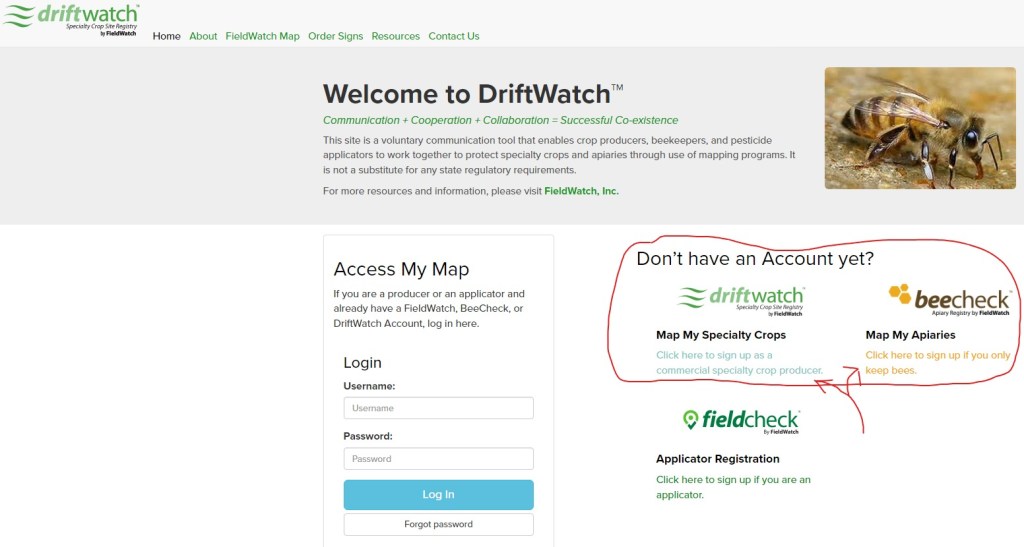
First, type in fieldwatch.com into your web browser. This will take you to a screen that looks like this.
You will want to click on the square called driftwatch (for producers). Once you click on that button you will be taken to the page below.
If you are a beekeeper and want to register your hives with beecheck then you will click below the “Map My Apiaries” and be taken to this page below.
If you are just registering your cropland then you will click below the “Map My Specialty Crops” and be taken to this page below.
No matter which direction you go, crops or bees, you will need to tell us which state – Texas. Then use your email address as a username or any other name you can remember, add in your email address and then a password and hit Sign Up. Once you hit the button then this screen will appear. I went the crop route in my example, but both are similar.
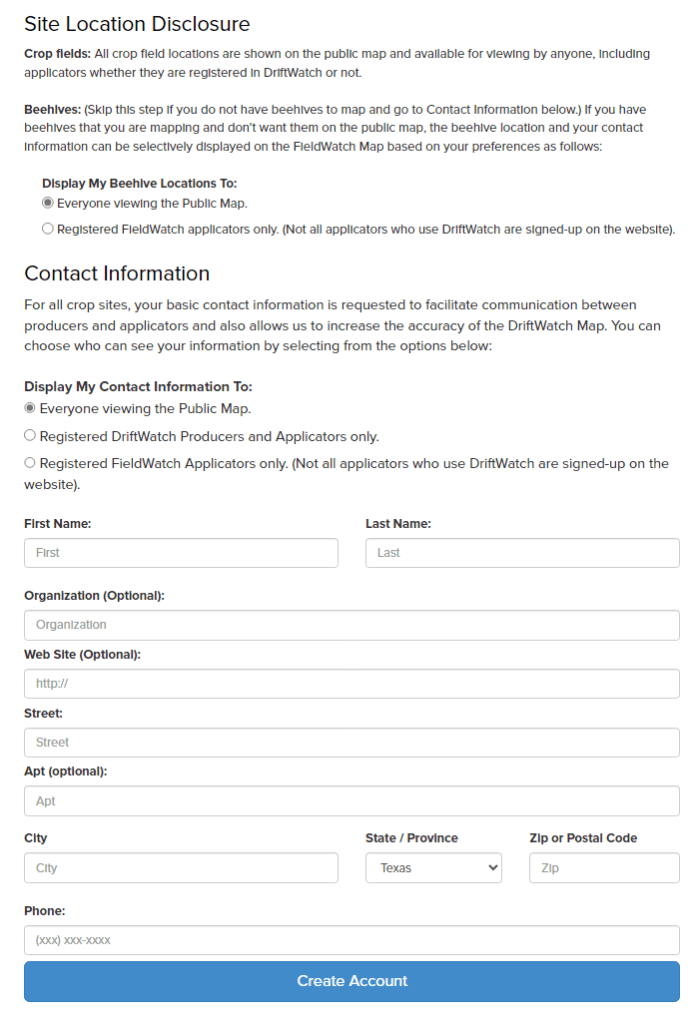
Once you register all your information and click Create Account you will get this notification.
This email below came to my Gmail account telling me to click here to complete the account creation. Also notice that my Texas A&M AgriLife email address is listed down below as the data steward for the FieldWatch program. At this point I am the person getting FieldWatch up and going in Texas and working with Curt Hadley at FieldWatch we will solve any issues you have with FieldWatch!
Once you click to complete you will be taken to this screen
Clicking on the “Go to the DriftWatch Map” takes you here. Click on Texas on the map to move to………
And finally to here. Take a minute or two to get familiar with the screen. This is pretty much what you see on Google Earth or Google Maps. Use your mouse to move around the map and you can scroll in or out for Zoom.
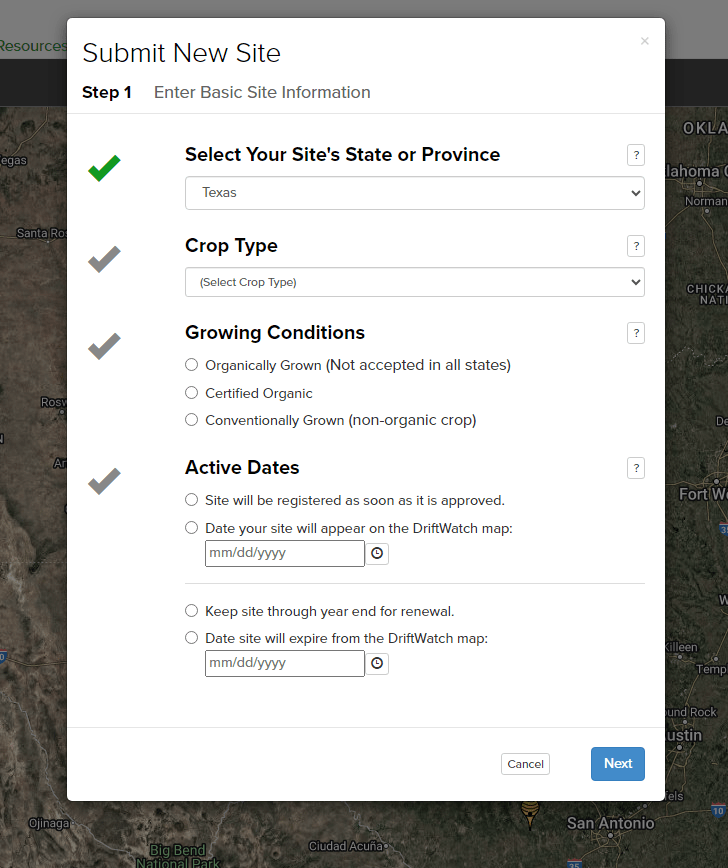
But this is what you are interested in clicking. “Submit New Site.”
When you click then this appears.
After you answer the questions on 3 different screens you will finally get to this screen below.
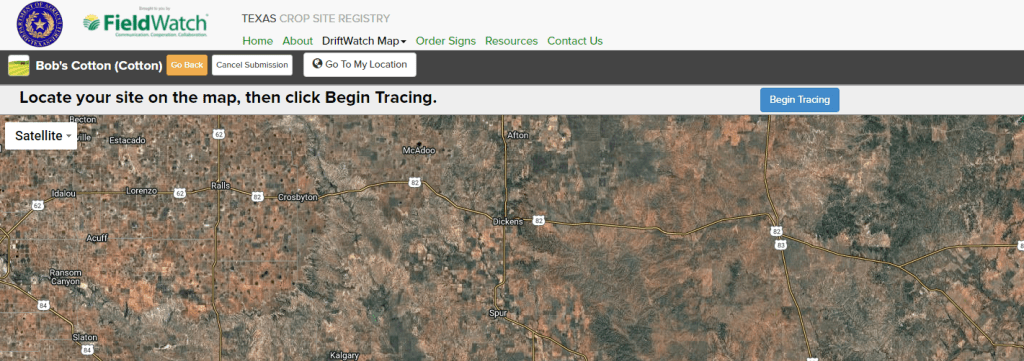
I zoomed in on the field that we have certified organic at the Stephenville Research and Extension Center on Hwy 281 in Stephenville and hit the blue button for Begin Tracing. I clicked on one corner then the next till I got back to the first corner and it completed the field. 3.88 acres! The C is for cotton.
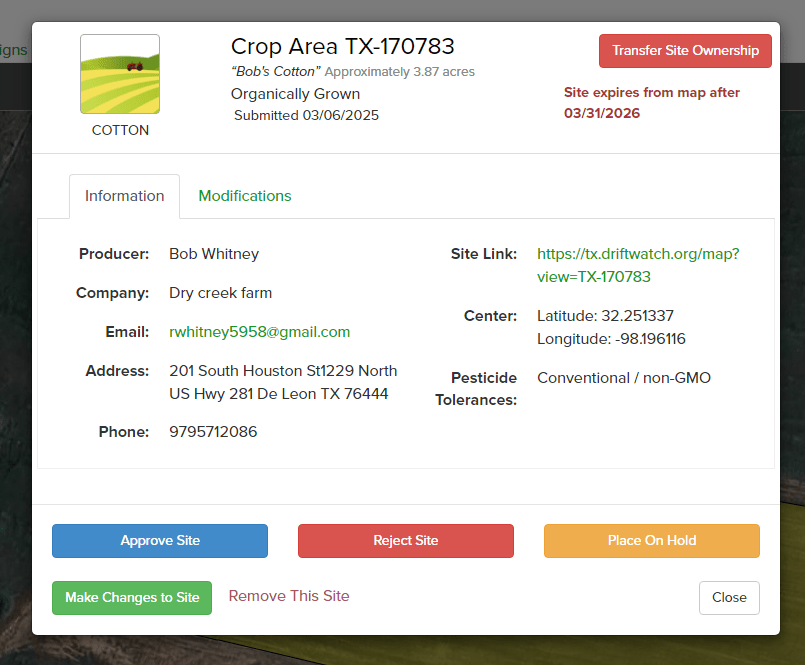
I am done with registering my certified organic field and waiting on the Data Steward with Field Watch to approve my field. Because I am the Data Steward I logged out of my “fake account” and logged back in with my official Texas A&M AgriLife email and got this screen for the field I just mapped.
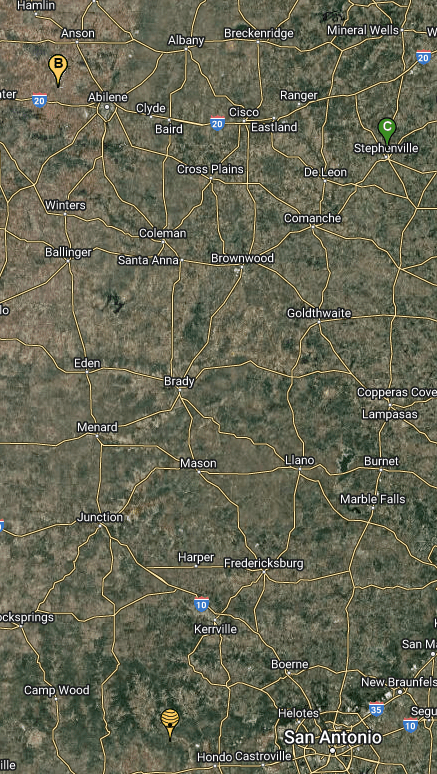
As Data Steward I approved the site and now here are the approved FieldWatch sites so far for all the world to see. This map shows that we have 2 bee sites approved and now one organic cotton site approved. Simple and easy! If you have any questions or concerns, just email me: bob.whitney@ag.tamu.edu
I get lots of general questions about what to use for fertilizer in organic agriculture. It is generally accepted that compost is good for organic, but does it have to be certified organic compost? What about manure? Can you buy some of these processed fertilizer products? What are the rules for fertilizers?
205.203 Soil fertility and crop nutrient management practice standard.
The first place to start is with the National Organic Program rules and regulations.
(a) The producer must select and implement tillage and cultivation practices that maintain or improve the physical, chemical, and biological condition of soil and minimize soil erosion. (b) The producer must manage crop nutrients and soil fertility through rotations, cover crops, and the application of plant and animal materials. (c) The producer must manage plant and animal materials to maintain or improve soil organic matter content in a manner that does not contribute to contamination of crops, soil, or water by plant nutrients, pathogenic organisms, heavy metals, or residues of prohibited substances. Animal and plant materials include:
First let’s talk about raw animal manure, which must be composted unless it is: (a) Applied to land used for a crop not intended for human consumption or, (b) Incorporated into the soil not less than 120 days prior to the harvest of a product whose edible portion has direct contact with the soil surface or soil particles or (c) Incorporated into the soil not less than 90 days prior to the harvest of a product whose edible portion does not have direct contact with the soil surface or soil particles.
Second on the list is composted plant and animal materials produced through a process. This process involves the mixing of manures generally with some carbon sources like leaves, bark, hay, hulls, etc. to create a product that is: (a) Establish an initial Carbon: Nitrogen ratio of between 25:1 and 40:1 and (b) Maintains a temperature of between 131 °F and 170 °F for 3 days using an in-vessel or static aerated pile system or (c) Maintains a temperature of between 131 °F and 170 °F for 15 days using a windrow composting system, during which period, the materials must be turned a minimum of five times.
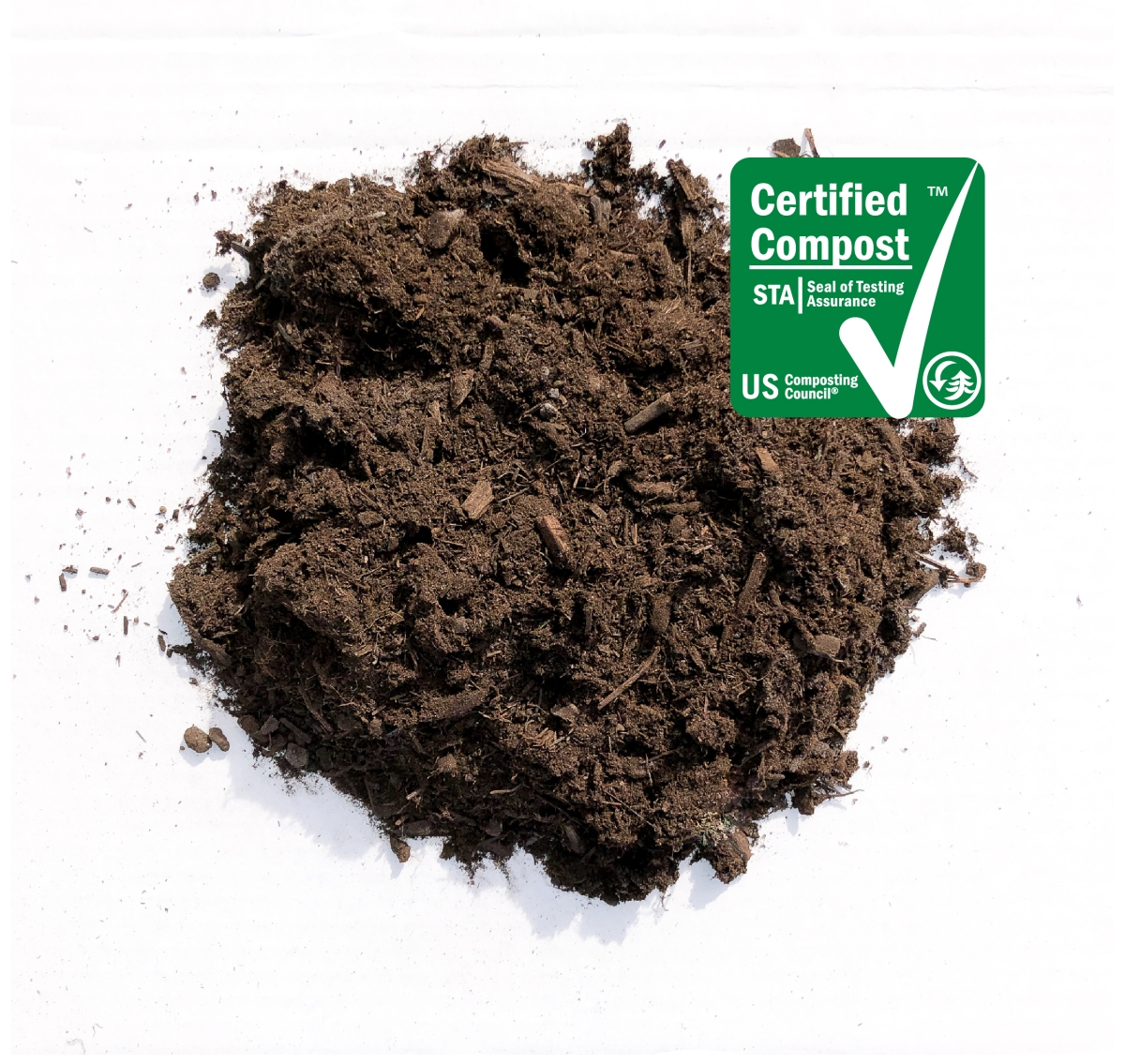
Last in this list of NOP materials are Uncomposted plant materials. This is typically what you might call mulches like bark chips, leaves, grass, etc. These are used a lot in perennial crop systems to control weeds and add fertility over time.
As you can see all of these products are from a natural source and that natural source does not have to be a certified organic source. Neither the animals or the plants that you use to make compost or just get raw manure or mulch has to be from an organic farm.
What about some of these organic fertilizers you can buy?
Let’s go back to the rules: A producer may manage crop nutrients and soil fertility to maintain or improve soil organic matter content in a manner that does not contribute to contamination of crops, soil, or water by plant nutrients, pathogenic organisms, heavy metals, or residues of prohibited substances by applying, if you follow these restrictions below.
(a) A crop nutrient or soil amendment included on the National List of synthetic substances allowed for use in organic crop production (click here for that list). (b) A mined substance of low solubility. (c) A mined substance of high solubility: Provided the substance is used in compliance with the conditions established on the National List of nonsynthetic materials prohibited for crop production. (d) Ash obtained from the burning of a plant or animal material, except as prohibited in the list below. (e) A plant or animal material that has been chemically altered by a manufacturing process: Provided, that the material is included on the National List of synthetic substances allowed for use in organic crop production.
The producer (that is you or any company that makes an organic fertilizer) must not use: (a) Any fertilizer or composted plant and animal material that contains a synthetic substance not included on the National List of synthetic substances allowed for use in organic crop production. (b) Sewage sludge (biosolids from a city sewage plant or from a septic tank or a mix of either source with plant material to make a compost). (c) Burning as a means of disposal for crop residues produced on the operation: Except, That, burning may be used to suppress the spread of disease or to stimulate seed germination. We sometimes do a heat process to “sterilize” a plant material before using. Doubt you will ever need this part!
Some newer organic fertilizers – protein hydrolysates
Protein hydrolysates are increasingly recognized for their role in organic fertilization strategies, offering a sustainable approach to enhance plant growth and soil health. Derived from proteins through hydrolysis, which breaks down proteins into smaller chains of amino acids or even individual amino acids, these products provide a readily available source of nitrogen and other nutrients to plants. This process can involve enzymatic, chemical, or thermal hydrolysis methods, each with its specific advantages and applications.
Nutrient Availability: Protein hydrolysates are particularly valued in organic agriculture for their rapid assimilation by plants. Unlike synthetic fertilizers, these organic nutrients are in forms that plants can easily absorb and utilize, leading to efficient nutrient use and potentially reducing the need for additional fertilization.
Soil Health: Beyond providing nutrients, protein hydrolysates contribute to soil health. They support the growth and activity of beneficial microorganisms, which play a crucial role in soil nutrient cycling, organic matter decomposition, and the suppression of soil-borne diseases. This can lead to improved soil structure, water retention, and fertility over time.
Real Life Example: Consider a scenario where an organic farmer is growing lettuce, a crop that demands a consistent supply of nitrogen for leaf development. By applying a protein hydrolysate-based fertilizer, the farmer can provide a quick-acting source of nitrogen that is readily available for uptake by the lettuce plants. This not only supports the rapid growth of the lettuce but also contributes to the overall soil health by feeding the microbial life within the soil.
Problems? Yes, there are problems with some of these products. Nutrient availability is an issue. We have done experiments, and the product(s) may be slow to work in the plant or the actual nutrients may be lower than stated. This can be caused by a number of factors such as binding to soil or volatilization, but it does mean you need to know your source and product.
Sources: There are just too many to list! This new source for organic fertilizer is great to see but there are a lot of companies getting into this market. Just know that they are not cheap, companies can be far away meaning shipping is a big cost, and you need to know the product well. Please, please be sure that the product you are considering is OMRI approved. Sometimes these blends are with synthetic sources…….
Where do you buy this stuff in bulk?
South Plains Compost
PO BOX 190, Slaton, Texas 79364
Toll-free: 888-282-2000
Office: 806-745-1833
FAX: 806-745-1170
Physical Address: 5407 East Highway 84Slaton, Texas 79364
Biopesticides and biostimulants are at the forefront of organic agriculture, offering natural solutions for pest control and plant health. While these products have gained popularity, the industry faces both opportunities and challenges as it evolves. This post explores the similarities and differences between biopesticides and biostimulants, their regulatory landscape, and what the future holds for these technologies.
Defining Biopesticides and Biostimulants
First let’s look at Biopesticides
Biopesticides are derived from natural materials, including microorganisms, plants, and minerals, to control pests and diseases. They function through competition, antibiosis, or physiological disruption of target organisms. Biopesticides as a category are regulated by the Environmental Protection Agency (EPA) as is detailed below!
Types of Biopesticides:
Microbial Biopesticides: Contain beneficial bacteria, fungi, viruses, or protozoa that suppress pests (e.g., Bacillus thuringiensis Bt for caterpillar control).
Biochemical Biopesticides: Utilize plant extracts, pheromones, and essential oils to affect pest behavior or physiology. For example, Thyme oil or Neem oil would fit this category.
Plant-Incorporated Protectants (PIPs): Genetic material introduced into plants, such as Bt proteins in genetically modified (GMO) crops. These are not to be used in organic production but are considered a biopesticide.
This image above is from the EPA website for Biopesticides. Click on the image to go to the website and check on a biopesticides registration!
How a Company Determines the Need for EPA Approval for a Biopesticide
A company developing a new biopesticide must determine if its product falls under EPA regulation by assessing the active ingredient, intended use, and mode of action. The Federal Insecticide, Fungicide, and Rodenticide Act (FIFRA) mandates that any substance intended for preventing, destroying, repelling, or mitigating pests must be registered as a pesticide with the U.S. Environmental Protection Agency (EPA). A company should ask the following questions to assess if its product qualifies as a biopesticide requiring EPA registration:
Does the product actively control pests, pathogens, or weeds?
If the product claims direct pest suppression, it is a pesticide and requires EPA approval.
If it only enhances plant health without targeting pests directly, it may qualify as a biostimulant and not require EPA registration.
What is the mode of action?
If the product kills, inhibits, or repels pests, it is considered a pesticide.
If the product works by stimulating plant defenses or improving nutrient uptake, it may not require registration.
Is the active ingredient a known biopesticide or plant extract?
If the active ingredient is a microorganism, plant extract, or biochemical compound known to suppress pests, it likely needs EPA registration.
The EPA maintains a list of registered biopesticide active ingredients, and companies should check if similar compounds are already registered.
Are pesticidal claims being made on the label?
If the product claims pest control properties (e.g., “kills fungi,” “controls insects”), it falls under FIFRA jurisdiction and requires EPA registration.
If the product only states benefits like “enhances plant vigor” or “improves root growth,” it may avoid registration.
Biostimulants
Biostimulants enhance plant growth, stress tolerance, and nutrient efficiency without directly targeting pests or diseases. Unlike biopesticides, they do not require EPA registration, leading to a highly unregulated market.
That said as a disclaimer there are many biostimulants that do a good job at preventing, controlling or managing for pests in crops. They can have a dual function even though they don’t have an EPA registration – a definite grey area!
Key Categories of Biostimulants:
Microbial Biostimulants: Beneficial bacteria and fungi that improve nutrient uptake and plant stress resilience.
Seaweed and Plant Extracts: Natural compounds that stimulate plant metabolism and root development.
Amino Acids and Humic Substances: Organic molecules that enhance soil health and nutrient availability.
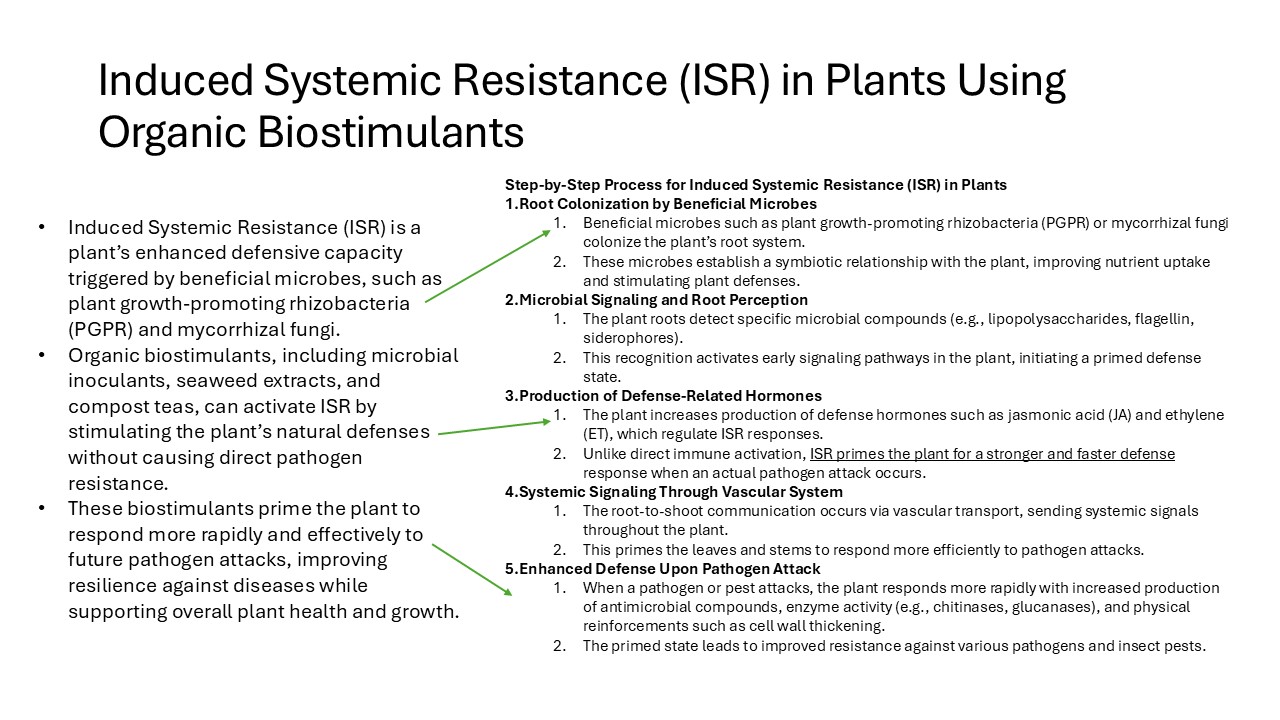
This chart above (just click on it for a larger image) shows how an ISR system works in the plant. Many biostimulants are classified as ISR’s because they are used to stimulate a plant’s defense mechanisms against many pest and environmental problems. This “primed” state may last the life of a plant or more than likely needs to be reinforced through multiple applications.
This chart above (just click on it for a larger image) shows how an SAR system works in the plant. In many cases an SAR developed biostimulant will also be labeled with EPA as a biopesticide simply because it does control specific pests in the plant while boosting the plants defense mechanisms.
Similarities Between Biopesticides and Biostimulants
Both are used in sustainable and organic agriculture to reduce reliance on synthetic chemicals.
Derived from natural sources, including microorganisms and plant extracts.
Improve overall plant health, either through disease suppression (biopesticides) or enhanced resilience (biostimulants).
Can be combined with conventional or organic inputs in integrated pest and crop management (IPM/ICM).
Feature
Biopesticides
Biostimulants
Primary Purpose
Control pests and diseases
Improve plant growth and resilience
Mechanism
Directly targets pests/pathogens
Enhances plant physiological processes
Regulation
Subject to pesticide regulations (EPA, OMRI)
Less regulatory oversight, often considered soil amendments
Mode of Action
Antibiosis, competition, parasitism
Hormonal stimulation, nutrient uptake efficiency
Examples
Bacillus subtilis for fungal disease control
Seaweed extracts for drought tolerance
Industry Challenges and Regulatory Considerations
One of the biggest challenges in the biostimulant industry is the lack of clear regulations. While biopesticides undergo rigorous EPA evaluation, biostimulants can be marketed with minimal oversight. This has led to the proliferation of products with unverified claims, making it difficult for growers to differentiate effective solutions from ineffective ones.
Government agencies are actively considering regulatory frameworks for biostimulants to ensure quality control without stifling innovation. The Biostimulant Industry Alliance and other trade organizations are working to establish scientific standards and promote best practices.
Market Trends and Future Outlook
Despite challenges, the biopesticide and biostimulant markets are poised for significant growth. Market research predicts a continued rise in demand due to increasing consumer preference for organic and residue-free crops. Additionally, advancements in microbial formulations and AI-driven precision agriculture will enhance the effectiveness of these products.
Data and Charts from Industry Sources
1. Projected Market Growth of Biopesticides and Biostimulants (2020-2030)
Data Source: Market research reports from MarketsandMarkets, Mordor Intelligence, and Research and Markets.
Methodology: Extrapolation of market size based on reported CAGR (Compound Annual Growth Rate) values of 12-15% for biopesticides and 13-16% for biostimulants from recent industry reports.
References:
MarketsandMarkets (2023). Biopesticides Market – Global Forecast 2028.
Research and Markets (2023). Trends in Agricultural Biologicals.
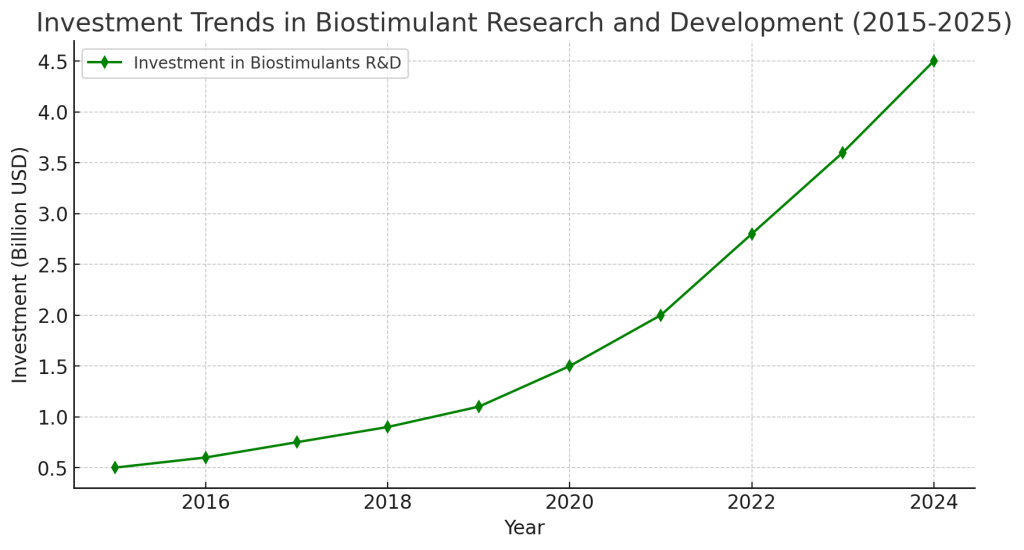
2. Investment Trends in Biostimulant Research and Development (2015-2025)
Data Source: Reports from AgFunder, FAO, and OECD on global agricultural input investments.
Methodology: Estimation based on reported investments in biologicals, venture capital funding for agri-tech startups, and projected R&D budgets from industry leaders.
References:
AgFunder (2023). Investment in AgTech and Biostimulants.
FAO (2023). Sustainable Agriculture and Innovation Trends.
OECD (2022). Trends in Agricultural R&D.
3. Adoption Rates of Biostimulants Across Different Crop Sectors
Data Source: Surveys and adoption studies from USDA, European Biostimulant Industry Council (EBIC), and International Biostimulants Forum.
Methodology: Aggregated adoption data from industry reports and regional case studies, indicating highest adoption in vegetable and fruit production, with lower adoption in ornamentals.
References:
USDA (2023). Adoption of Biostimulants in U.S. Crop Production.
EBIC (2023). European Biostimulants Market Report.
International Biostimulants Forum (2022). Global Trends in Biological Crop Inputs.
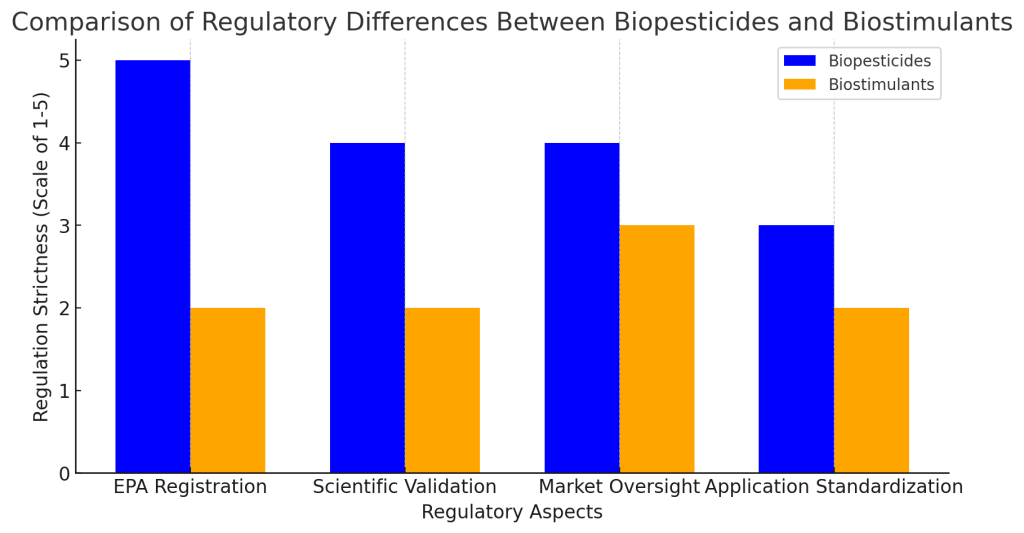
4. Regulatory Differences Between Biopesticides and Biostimulants
Data Source: Regulations from EPA, European Food Safety Authority (EFSA), and USDA Organic Program.
Methodology: Comparative analysis of regulatory frameworks governing product registration, scientific validation, and market oversight for biopesticides versus biostimulants.
References:
EPA (2023). Biopesticide Registration Guidelines.
EFSA (2023). Regulatory Framework for Biostimulants in the EU.
USDA (2023). Organic Input Standards and Market Oversight.

















 Texas A&M AgriLife Organic