Ever wondered where organic peanuts are produced? Examining the global map of certified organic peanut farms reveals some interesting patterns. Countries like China, India, Brazil, Argentina, and Togo are major players in organic peanut production, and the United States also makes significant contributions.
Here’s a breakdown of the acreage dedicated to organic production with an emphasis on peanuts in some important countries:
China: Approximately 152,860 acres, with companies like Jilin Jinya Nut Processing Co., Ltd. contributing significantly.
India: Various Organic Grower Groups collectively manage over 103,686 acres of organic peanut farms, demonstrating the effectiveness of cooperative farming.
Brazil: Around 60,592 acres, with Sambazon do Brasil Agroindustrial Ltda contributing a substantial 60,573 acres.
Argentina: About 36,636 acres, with companies like Campos Verdes Argentinos SA and Conosur Foods Argentina SA being key contributors.
Togo: 53,325 acres managed by SOYCAIN TRADING SARL U, making it a significant player in West Africa.
United States: Numerous family-owned farms collectively contribute over 100,000 acres to organic peanut production, with notable producers one in West Texas managing 9,355 acres.
China’s Contribution
China leads with over 152,000 acres dedicated to organic peanut farming. Companies such as Jilin Jinya Nut Processing Co., Ltd. and Wuqiang County Jiyuan Oil Crop Planting Professional Cooperative are significant contributors. Different regions within China add to this market, but China consumes most of what it produces.
India’s Cooperative Farming
In India, numerous Organic Grower Groups (which have group certification) collectively manage over 103,000 acres. These groups demonstrate how small farmers work together to make a significant impact, collaborating to drive success in organic agriculture while keeping costs down.
Brazil’s Organic Production
In Brazil, Sambazon do Brasil Agroindustrial Ltda has 60,573 acres dedicated to organic production, including a substantial amount of peanuts. This company is not only a leader in Brazil but also one of the largest certified organic producers in the world.
Argentina’s Key Players
Companies like Campos Verdes Argentinos SA and Conosur Foods Argentina SA are significant contributors in Argentina, with combined acreage reaching around 36,000 acres. These farms focus on cotton and peanuts, concentrating in regions suitable for these crops.
Togo’s Role in West Africa
In Togo, SOYCAIN TRADING SARL U manages 53,325 acres, contributing significantly to the global peanut supply from West Africa. It raises questions about how much they export!
Family Farms in the USA
Now, let’s consider the United States. While we may not have single operations as large as those in China or Brazil, the U.S. has a network of family-owned farms that collectively contribute over 100,000 acres to organic production. For example, one Texas farmer manages 9,355 acres, making him one of the prominent certified organic peanut producers in the country.
These farms often represent family legacies in organic agriculture, with names appearing across multiple farms in Texas and elsewhere. This reflects the enduring nature of family farming traditions contributing to the organic peanut industry.
Acknowledging Other Contributors
We might have missed highlighting some of the smaller but important players in the organic peanut industry:
Paraguay: Companies like Indugrapa SA and Alemán Paraguayo Canadiense S.A. contribute over 10,760 acres to global organic peanut production.
Bolivia: Finca San Carlos manages 3,118 acres, adding to South America’s contribution.
Vietnam: Companies like FG Products Company Limited and Hebes Company Limited collectively manage over 8,600 acres.
These contributions, while smaller, are vital to the diversity and resilience of the global organic peanut supply chain.
Bringing It All Together
These peanut producers are essential links in the chain that brings organic products from the farm to your table. Organic begins on the farm and remains so until it is packaged.
Most people don’t consider where their peanuts come from or the journey they take. The majority of these farms are committed to sustainable practices, ensuring that organic integrity is maintained every step of the way. With the recent implementation of Strengthening Organic Enforcement (SOE) rules, the entire value chain—including brokers and even transporters—is now certified to ensure accountability.
I was scrolling through my LinkedIn this morning (Monday, July 15, 2024) and saw a post by Dr. Joseph Burke that I just had to check out!
Just click on the picture to read the full research paper!
I am going to cut through all the information in the full-text and give you a look at the mini version. Let’s start with the abstract from the first page.
Abstract: By improving soil properties, cover crops can reduce wind erosion and sand damage to emerging cotton (Gossypium hirsutum L.) plants. However, on the Texas High Plains, questions regarding cover crop water use and management factors that affect cotton lint yield are common and limit conservation adoption by regional producers. Studies were conducted near Lamesa, Texas, USA, in 2017–2020 to evaluate cover crop species selection, seeding rate, and termination timing on cover crop biomass production and cotton yield in conventional and no-tillage systems. The no-till systems included two cover crop species, rye (Secale cereale L.) and wheat (Triticum aestivum L.) and were compared to a conventional tillage system. The cover crops were planted at two seeding rates, 34 (30.3 lbs./ac.) and 68 kg ha (60.7 lbs./ac.), and each plot was split into two termination timings: optimum, six to eight weeks prior to the planting of cotton, and late, which was two weeks after the optimum termination. Herbage mass was greater in the rye than the wheat cover crop in three of the four years tested, while the 68 kg ha (60.7 lbs./ac.) seeding rate was greater than the low seeding rate in only one of four years for both rye and wheat. The later termination timing produced more herbage mass than the optimum in all four years. Treatments did not affect cotton plant populations and had a variable effect on yield. In general, cover crop biomass production did not reduce lint production compared to the conventional system.
This last statement, “cover crops did not reduce lint production,” is hugely significant and yet it is exactly what many organic cotton producers have been saying for years!
Temperature and Rainfall data during the study
To continue the “mini version” of the research let’s turn to the Summary and Conclusions on page 9 of the research paper.
The semi-arid Texas High Plains presents challenging early-season conditions for cotton producers. Cover crops can help mitigate erosion and protect cotton seedlings from wind and sand damage without reducing yields compared to conventional practices if managed appropriately. Effective cover crop management is needed to optimize cotton lint yield compared to conventional tillage systems. We focused on three cover crop management practices: species selection, seeding rate, and termination timing. With regard to species selection, rye produced greater herbage mass in three of the four years. The seeding rate had less of an effect on herbage mass; doubling the seeding rate from 34 to 68 kg ha (30.3 – 60.7 lbs./ac.) did not contribute to increased herbage mass. This change in seeding rate only causes an increase in seed costs, and this trend held true for both species and termination timings. Termination timing had the most significant effect on herbage mass, with a two-week delay in termination timing, increasing herbage mass production from 44 to 63%. At the targeted termination time of six to eight weeks before planting, rye and wheat experienced increased growth as they transitioned from vegetative to reproductive growth. This critical period makes termination timing an essential aspect of herbage mass management. Termination timing can also impact the carbon-to-nitrogen ratio, where higher C:N at later growth stages can increase N immobilization. While water availability or allelopathy concerns are cited as risks for cotton germination and emergence when using cover crops, cotton plant populations were not affected in this study.
Cotton lint yields were not impacted by increasing cover crop herbage mass, except in 2018, when greater wheat biomass resulted in decreased lint yield compared to the conventional system. In each year, wheat or rye at a 34 kg ha (30.3 lbs./ac.) seeding rate and optimum termination timing resulted in cotton lint yields not different than the Conventional Treatment. While yield potentials can differ between years depending on precipitation and temperatures, effective cover crop management can help sustain cotton lint yields when compared to conventional treatments. Rye seed tends to cost more than wheat, but it grows more rapidly and could be terminated earlier to allow for increased moisture capture and storage between termination and cotton planting. (below is the final sentence in the paper and summarizes well the entire study)
“This research demonstrates that with effective cover crop management, the implementation of conservation practices can be successful in semi-arid cropping systems.“
In organic production systems, the challenges to producing an economically successful crop are quite different than in conventional systems. Research has shown that the choice of cultivar is one of the most important decisions in determining performance under organic management.
There are many different target markets for rice, including:
Standard Milled Long or Medium Grain Rice: Commonly used in everyday cooking.
Brown Rice: Retains the bran layer and is considered healthier due to higher fiber content.
Aromatic Rice: Varieties such as jasmine and basmati that are valued for their distinctive fragrances. These are being developed by TAMU Rice Researchers and should be available soon.
Special Purpose Rice: Includes rice for flour production or colored bran rice, which can be marketed for its unique nutritional or aesthetic qualities.
Understanding the preferences of these markets and identifying outlets for specific types of rice may offer added economic opportunities for growers. For example, there is a growing market for aromatic and colored bran rice due to increasing consumer interest in unique and healthful food options.
Importance of Seedling Vigor
In organic production, the use of many conventional seed treatments is prohibited. Therefore, selecting varieties with excellent seedling vigor and seedling quality is crucial. Seedling vigor refers to the ability of seeds to germinate and grow rapidly under field conditions, leading to strong early stand establishment. This is particularly important in organic systems for several reasons:
Early Flooding: Strong early growth allows for an early flood, which is a key practice for weed control in rice fields.
Weed Competition: Vigorous seedlings can outcompete weeds, reducing the need for mechanical or manual weeding.
Disease Resistance: Early and healthy growth can help seedlings better withstand diseases and pest attacks.
Updated Considerations
Recent advancements and trends in organic rice production emphasize several additional factors:
Adaptability to Organic Inputs: Varieties should perform well with organic fertilizers and soil amendments, which release nutrients more slowly than synthetic fertilizers. Varieties developed in organic systems develop beneficial relationships with the microbiome.
Disease and Pest Resistance: With fewer pest control options available, selecting varieties that are resistant to common diseases and insects in the 2 rice growing regions is more critical.
Environmental Resilience: Varieties that can tolerate local environmental stresses such as drought, salinity, or extreme temperatures are preferred.
By focusing on these updated considerations, organic rice growers can better navigate the unique challenges of organic production and tap into diverse market opportunities, ultimately leading to more successful and sustainable farming operations.
Rice Variety Research
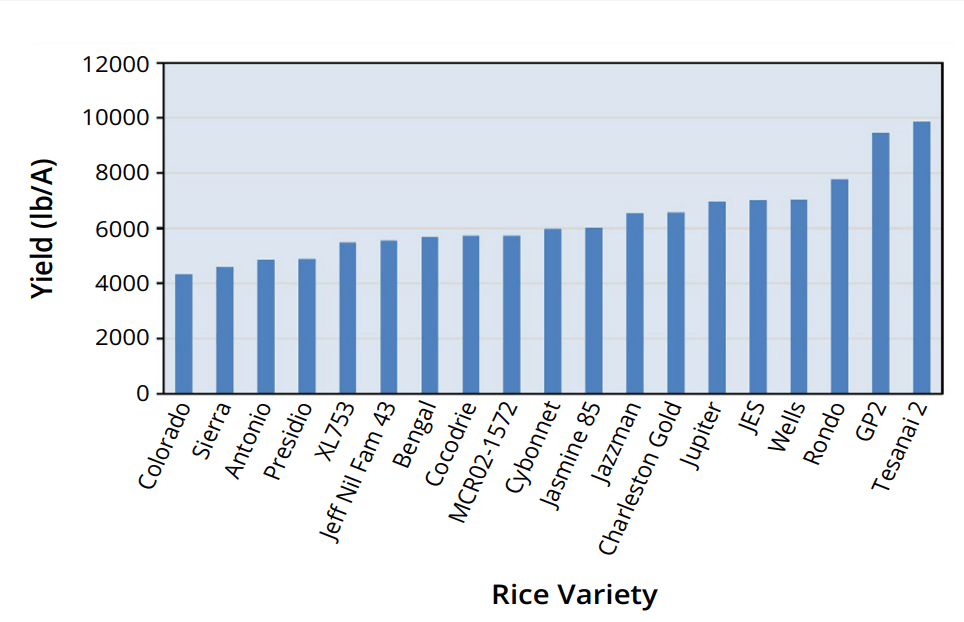
Rice varieties have different yield potentials under organic versus commercial production systems. Cultivars such as Tesanai 2, Rondo, and hybrids have high yield potential, as demonstrated in a research plot trial conducted in Texas (see picture below). Based on a 5-year (2015 through 2019) organic commercial production survey, the average yield of XL723 (a popular hybrid variety in Texas, used in organic production) was 4,094 pounds per acre, while Presidio’s yield (a popular inbred variety) was only 2,452 pounds per acre. The selection of high yielding rice varieties with tolerance to weeds and diseases is the key to successful organic rice production.
This is the yield performance of 19 rice varieties and germplasm lines grown organically in Beaumont, Texas in 2015 and 2016 at the Rice Research Center.
More Rice Variety Information
This rice variety test below was conducted by RiceTec in 2023 on the Chriss Schiurring Farm near Garwood.
The measurements provided (bushels and barrels) are generally for rough rice, which includes the hulls and is the form in which rice is typically harvested and initially processed.
Bushel of Rice: A bushel of rough rice typically weighs 45 pounds.
Barrel of Rice: A barrel of rough rice is typically defined as weighing 162 pounds.
Ratoon Rice?
Ratoon rice production involves harvesting a primary rice crop and then allowing the stubble left in the field to regrow and produce a second crop, known as the ratoon crop. This method leverages the remaining growth potential of the plant to produce an additional harvest without replanting, thereby saving time, labor, and resources. Ratoon cropping can increase overall yield and efficiency, although it typically produces a lower yield than the primary crop.
The average yield of a ratoon rice crop is typically about 50-70% of the main crop’s yield. This reduced yield is due to the limited growth potential and shorter growing period of the ratoon crop compared to the main crop. However, ratoon cropping can still be economically beneficial due to the reduced input costs and labor requirements. In many organic rice production fields, the ratoon crop is the profit crop and makes or breaks the farms success!
Seed Rice Varieties
Hybrid Rice Varieties
Hybrid rice is produced by crossbreeding two distinct rice plants with the goal of: higher yields, better disease resistance, and greater environmental stress tolerance compared to conventional varieties. Unlike conventional rice, hybrid rice seeds need to be purchased each planting season, as the hybrid traits do not persist in subsequent generations. Additionally, hybrid rice typically requires a lower planting rate (13-22 lbs. per acre or sometimes more in organic systems) due to its vigorous growth and higher productivity. To read more about how hybrid rice is produced click this link: Hybrid Rice Breeding
RiceTec XL723
For a decade now, XL723 has delivered unsurpassed value through its combination of high yield and outstanding milling yields. Long grain rice. XL723 should be harvested at 18%-20% moisture at first drydown to help maximize grain quality and grain retention.
Superior milling yield
Ideal for straighthead-prone soils
Excellent ratoon potential
Great fit for organic cultivation
RiceTec XP753
Up until 2023, XP753 was the highest-yielding long-grain rice available, providing the greatest net income potential of any competitive rice product. XP753 should be harvested at 18%-20% moisture at first drydown to help maximize grain quality and grain retention.
Protected by RiceTec’s superior disease package
Improved grain retention
Excellent ratoon potential
RiceTec RT7301
Introduced in 2020, RT7301 represents an evolution of RiceTec traditional rice products, capturing the best attributes of XP753 a long grain rice. RT7301 should be harvested at 18%-20% moisture at first drydown to help maximize grain quality and grain retention.
Very high yield potential
Protected by RiceTec’s superior disease package
Improved grain retention
RiceTec RT7302
New in 2023, RT7302 represents the next breeding evolution of RiceTec traditional rice products, capturing the best in yield and grain quality. RT7302 will raise the bar for yield among the RiceTec portfolio of long grain rice. RT7302 be harvested at 18%-20% moisture at first drydown to help maximize grain quality and grain retention.
high yield potential
Protected by RiceTec’s superior disease package
high grain quality
25% amylose content* for a more separate cooked product
*Amylose content in rice refers to the amount of amylose, a type of starch, present in the grains. Rice with intermediate amylose content (typically 20-25%) tends to have a balanced texture—neither too sticky nor too dry. This makes it versatile for a variety of culinary uses, providing a satisfactory chewiness without being overly firm or sticky.
Conventional rice varieties are traditional types of rice that are open-pollinated and can be replanted each season from harvested seeds (there are laws regulating saving some seed varieties, click to read more). They are important for maintaining genetic diversity, which helps ensure crop resilience against diseases and pests. Additionally, they often have unique flavors and qualities prized in local cuisines and cultural practices. Planting rates are in the range of 60-80 or even to 120 lbs. per acre. Check with your sales representative or agronomist. Organic seeding rates can be up to 1.5 times more.
You may see the term “inbred.” Inbred rice varieties are those developed through self-pollination over multiple generations to achieve a stable, uniform genetic makeup. Unlike hybrid varieties, which are produced by crossbreeding different parent lines, inbred varieties maintain consistent traits across generations when their seeds are replanted. They are often valued for their stability, specific traits, and adaptability to local growing conditions.
Dyna-Gro DG245L
Semi-dwarf, early maturing, long-grain variety with exceptional milling yields and grain quality. Medium plant height of 36 inches and great stalk strength for lodging resistance and storm tolerance. Very stable yields in five years of research with excellent ratoon crop potential. Intermediate gel temperature* and intermediate amylose content.
*Gel temperature refers to the temperature at which the rice starch granules gelatinize or become sticky during cooking. Rice varieties with intermediate gel temperature generally produce grains that are soft but not mushy when cooked, offering a desirable texture that balances between firmness and tenderness.
Dyna-Gro DG263L
High yielding long grain variety with excellent quality with excellent disease package including blast and smuts. Plant height and stalk strength for lodging resistance and storm tolerance with a proven field performance. Uniform grain size and very good miller (58/69). Lower seeding rates than most varieties (45-65 lbs. per acre).
Dyna-Gro DG353M
High yielding medium grain variety with excellent quality with uniform grain size and a very good miller (60/70). Great standability and favorable plant height (36 inches). Very stable yields in four years of research. Lower seeding rate (50-75 lbs. per acre) than other conventional medium grain inbreds.
Horizon Ag CL153
CL153 is an early, semi-dwarf, long-grain Clearfield rice variety developed by the LSU AgCenter H. Rouse Caffey Rice Research Station. Known for its excellent yield potential and high head rice yields with minimal chalkiness, CL153 offers several agronomic advantages. It has a yield potential comparable to or slightly below that of CL151 but with better lodging resistance. The variety also features excellent grain length, translucency, and whole milled rice output, meeting industry standards.
In terms of disease resistance, CL153 is moderately susceptible to blast, Cercospora, bacterial panicle blight, and straighthead, but it is susceptible to sheath blight. It carries the Pita gene, providing broad-spectrum resistance to common blast races in the southern USA. This makes it a robust choice for growers seeking a variety with good disease management traits.
Horizon Ag CLL16
CLL16 is a long-grain, conventional height, Clearfield rice variety developed by the University of Arkansas System Division of Agriculture. It boasts excellent yield potential and stability, maintaining strong yields even with later planting dates. The variety has excellent seedling vigor and is a few inches taller than typical Louisiana Clearfield varieties, but it is moderately resistant to lodging.
CLL16 features the Pita gene (not a GMO), providing strong resistance to blast, and the CRSP2.1 gene (not a GMO), offering resistance to narrow brown leaf spot. It is moderately susceptible to Cercospora infection on the stem, sheath blight, and bacterial panicle blight. However, milling yields and ratoon potential are observed to be lower than other some other varieties.
Organic rice farmers looking for a reliable variety will find CLL16 to be a strong contender due to its consistent performance, high milling quality, and industry-leading blast resistance. In university tests, CLL16 has shown good rough rice yields, averaging higher than the Diamond variety, making it a comprehensive choice for rice farmers.
Horizon Ag CLL18
CLL18 is a long-grain, conventional height Clearfield rice variety developed by the University of Arkansas System Division of Agriculture. It boasts excellent yield potential and stability, maintaining strong yields even with later planting dates. With excellent seedling vigor, CLL18 is slightly taller than typical Louisiana Clearfield varieties but is moderately resistant to lodging. However, its milling yields are observed to be lower than other Clearfield varieties.
CLL18 does not contain the Pita blast resistance gene and is moderately susceptible to blast, making it less suitable for areas prone to this disease. It does contain the CRSP2.1 gene, providing resistance to narrow brown leaf spot, but is moderately susceptible to Cercospora infection on the stem, sheath blight, and bacterial panicle blight. Despite these susceptibilities, CLL18 has consistently outyielded CLL16 by about 5% in Arkansas trials. Its earlier maturity makes it a good planting partner with CLL16, allowing farmers to stagger their harvests effectively.
Stratton Jupiter
A short-season, semi-dwarf, medium grain with excellent yield potential and milling quality. It is a small grain size but has moderate resistance to bacterial panicle blight.
Stratton Titan
Titan is a very early, short-stature, medium-grain rice variety known for its excellent yield potential, often comparable to or better than Jupiter. It matures about a week earlier than Jupiter and is similar in height. Titan has a preferred large grain size but is moderately susceptible to blast and bacterial panicle blight. It is important to harvest Titan at the correct moisture level, as milling yields drop off significantly when harvested at lower moisture. This short-season variety is valued for its robust performance and high yield potential.
Stratton Cheniere
A short-season, semi-dwarf long grain with excellent yield potential and milling quality comparable to Cypress. An early, high-yielding, high-quality, rice variety with, good lodging resistance and moderate resistance to straighthead. It is moderately susceptible to blast and bacterial panicle blight and susceptible to sheath blight and Cercospora. The variety displays excellent grain quality characteristics, has a higher amylose content and cooks less sticky than typical U.S. long grains.
Stratton Jewel
A mid-season long grain variety with good yield potential and milling yield. Susceptible to straighthead. Moderately susceptible to sheath blight, blast, Cercospora, false smut and lodging. Moderately resistant to bacterial panicle blight.
Stratton Diamond
A mid-season, long-grain variety with excellent yield potential and good milling quality. Very good straw strength. Susceptible to blast and sheath blight, moderately susceptible to bacterial panicle blight. Very susceptible to false smut
The organic label is more than just a marketing term; it is a rigorous standard of quality that reflects sustainable and environmentally friendly practices across the agricultural sector. The USDA’s National Organic Program (NOP) is at the heart of this movement, ensuring that products labeled as organic meet stringent, federally regulated guidelines. This unified regulatory framework is crucial not just for maintaining the integrity of the organic label but also for investing in and supporting a diverse array of stakeholders involved in the organic supply chain—from farmers and researchers to retailers and consumers. Tools such as the USDA Organic Consumer Outreach Toolkit play a vital role in promoting these standards, ensuring that the value of organic products is clearly communicated and understood by the consumer but also by those outside looking in and examining the organic program family!
The Unified Regulatory Framework of Organic Agriculture
Organic agriculture operates under a comprehensive framework established by the NOP, which enforces consistency across the entire supply chain. This uniformity ensures that whether one is dealing with an organic dairy farm in Texas or a producer of organic vegetables in California, or a feed manufacturer in Illinois, all parties are held to the same high standards. This regulation not only supports the integrity of organic products but also helps streamline processes for stakeholders at all levels, including brokers, wholesalers, manufacturers, and retailers. The ability to trust in the label “organic” comes from this rigorous oversight and the commitment to upholding these standards universally.
Collaborative Efforts Across Stakeholders
One of the most remarkable aspects of the NOP’s structure is its collaborative nature, which fosters engagement across a broad spectrum of stakeholders. This collaboration includes:
Educational institutions and specialists: As an organic specialist with a land grant university, my role involves educating and guiding future and current farmers on best organic practices. Even specialists without organic in their title like agronomists, entomologists or plant pathologists contribute to organic knowledge and expertise. More and more these folks are finding ways to work with our natural plant and animal systems advancing organic agriculture.
University researchers are doing tremendous work and through their efforts organic ag is advancing faster and faster. I know, because of the many current organic grant projects just in Texas. Other research bodies, both public and private research, also are a part of this huge collaboration to advance organic agriculture from the farm all the way to the table.
Organizations and associations like the Organic Trade Association (OTA), The Organic Center (TOC), Organic Farm Research Foundation (OFRF) and many other non-profits work tirelessly to promote organic production practices and products, help foster collaborations, and advocate within the halls of government.
Certification entities and even certification inspectors all work together with growers and handlers to ensure that the system is protected from simple mistakes to outright fraud protecting a consumer based and backed program. They are not doing this just for themselves but for the grower and handler who needs the consumer to buy their products because they are certified organic.
Education and Outreach: Tools for Sustaining Organic Integrity
The USDA Organic Consumer Outreach Toolkit exemplifies the educational tools that are crucial for sustaining the integrity of the organic label. This toolkit is designed to educate stakeholders along the supply chain and inform consumers about what the organic label represents. Clear, consistent messaging helps to ensure that the organic label retains its value and significance in the marketplace. For instance, retail employees can use the toolkit to better explain the benefits of organic products to customers, reinforcing trust and understanding.
I will admit this is a tough one! We do not have the support systems and advisory services we need within the organic community. Extension organic specialists and county extension agents and even private advisors and consultants to provide ongoing support and guidance, have been in short supply – but it is improving. This continual knowledge exchange is vital for keeping up with the fast-changing organic systems research, the new and innovative products for organic production, the regulatory environment we work within and of course, any and all emerging trends in organic agriculture.
Traceability and Transparency: Building Consumer Trust
A cornerstone of the NOP’s approach is the emphasis on traceability and transparency. From farm to retail store, every step of the organic product’s journey is documented (and includes a certified entity), ensuring that the products consumers buy are genuinely organic. This traceability not only helps in enforcing compliance with organic standards but also builds consumer confidence in the organic label. According to a recent consumer survey conducted by the Organic Trade Association 88% of all consumers know about the organic label and are willing to pay more because of their trust in the label.
Conclusion
The USDA National Organic Program’s structured approach to regulating and promoting organic agriculture underpins the integrity and trust in the organic label. By fostering a unified and collaborative framework, the NOP ensures that organic standards are not just ideals but practical realities that benefit the environment, producers, and consumers alike. As we look to the future, your continued support and participation in this program will be crucial for advancing sustainable agricultural practices and increasing organic farming, manufacturing, retailing and consumption. How? By realizing you are part of an “organic family” that promotes you and your business along with every other part of the value chain (traceability means you get promoted) all the way to the consumer who picks up your product and knows you are part of that product.
I know that all these rules and regulations and the piles of paperwork get overwhelming but know that this helps the consumer to feel a part of your production and ultimately your farm. Here are a few examples or Case Studies of what things may look like in the future as we try to invite the consumer to be part of this value chain known as Organic Farming.
Some real-world examples of building consumer trust
Case Study 1: Carrefour and Blockchain
Overview: Carrefour, (big in Europe and the Middle East) a global retail giant, launched a blockchain-based traceability system for several products, including organic fruits and vegetables. The system allows consumers to scan a QR code on the product packaging to access detailed information about the production process.
Key Features:
Farm to Fork Information: Consumers can see details about where and how the organic produce was grown, including the farm’s location, the farming practices used, and the harvest date.
Transparency and Trust: By providing a clear view of the supply chain, Carrefour enhances consumer trust in their organic label.
Case Study 2: IBM Food Trust and Walmart
Overview: Walmart joined the IBM Food Trust, a blockchain-based system, to improve the traceability of its food products. The initiative initially focused on conventional products but has extended to organic products to ensure their integrity.
Key Features:
Enhanced Traceability: The system tracks every transaction from the supplier to the store, ensuring that organic standards are maintained at every step.
Rapid Response to Issues: If an issue arises, such as a contamination risk, Walmart can quickly trace the product back to its source and manage the situation effectively.
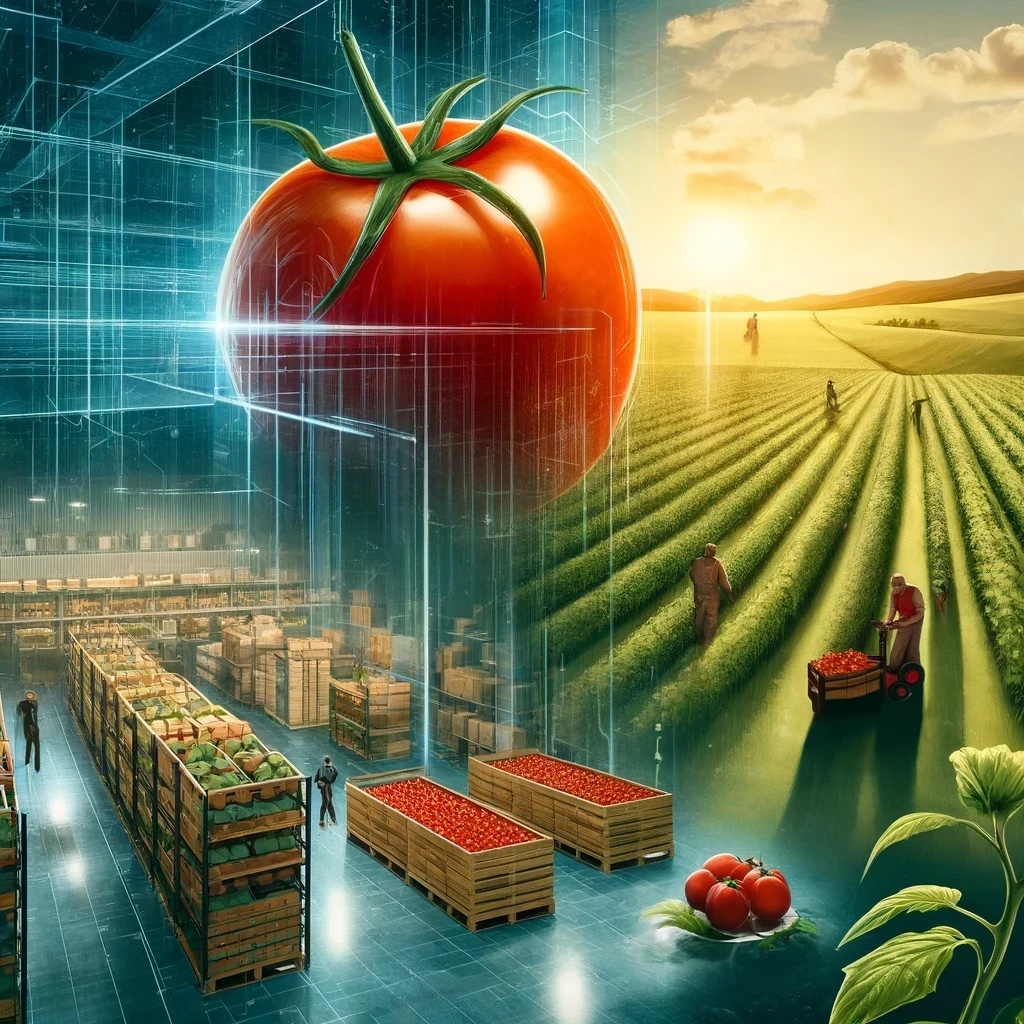
Case Study 3: Ripe.io and Tomato Traceability
Overview: Ripe.io uses blockchain technology to provide transparency in the tomato supply chain. Although not exclusively organic, the principles applied can directly benefit organic markets by detailing each step of a tomato’s journey from seed to supermarket.
Key Features:
Detailed Product Insights: Information on when and how tomatoes were planted, cared for, harvested, and transported are all recorded.
Consumer Feedback Integration: Consumers can provide feedback on the quality of the product, which can be used to improve farming practices.
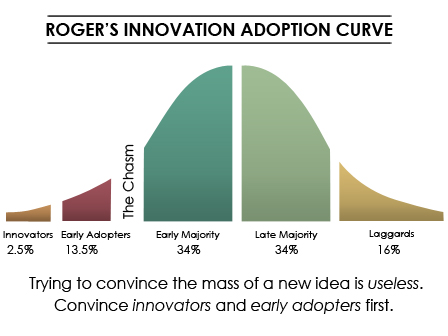
In my career as an Extension professional (extension agent, researcher, specialist) I have had a lot of agriculture training, but I have also had a lot of training for training agriculturists which includes just about every group in agriculture today. One of the early lessons we learned was a simple theory about learning called the Rogers’ Adoption Curve.
I couldn’t begin to tell you much about Rogers or his overall work as an educator, but I do know about this curve and in my career this “curve” has proven to be true over and over again. What you see in this picture is the classic “bell curve” representing the concept of knowledge or technology. People who adopt new knowledge or technologies are represented along the bottom axis and the progression is from left to right, i.e. the first to adopt are on the left and over time the others adopt the technology. So, looking at this we see that the first group to adopt the technology are innovators followed by early adopters and so on. This picture shows a break called “The Chasm” between early adopters and early majority. This chasm is difficult to cross and can represent a lot of time or even failure for the technology.
Organic farmers are mostly in the innovator/early adopter category. Organic agriculture is not easy and in general requires a good knowledge of agriculture systems before getting into the details of growing organic. As an extension educator I tend to try and find innovators and early adopters to work on demonstration or research projects because I know they are just as anxious to explore new technologies as I am.
That said, let me ask you where you are today? Occasionally we need to take a break and get away from it all because we are falling into the late majority or laggard category doing the same thing we always did. Don’t lag too far behind because as you can tell from the “curve” there are a lot of people already on the downhill slide!
Using the Curve!
Rogers’ Adoption Curve is a model that outlines the adoption process of new technologies or ideas through different segments of a population. Developed by Everett Rogers in 1962, it’s widely used in the fields of social science, marketing, and innovation management but is very useful in organic agriculture too.
Rogers’ Adoption Curve is an effective tool for understanding how new practices, like organic agriculture, are adopted within a community. Extension professionals can use this model to tailor their educational and promotional strategies for organic agriculture to different segments of the agricultural community.
Innovators (2.5% of the Population)
Characteristics: These are the first individuals to adopt an innovation. They are risk-takers, have financial liquidity, are social networkers, have closer contact with scientific sources and interaction with other innovators.
Role in Adoption: Their acceptance of an innovation is a key step in the process. Being a small segment, they serve as a testing ground and are crucial in initial debugging or refinement of the product or idea.
Targeting Innovators
Approach: Provide detailed, technical information on organic agriculture, focusing on innovation and environmental benefits.
Why: Innovators are keen to experiment with new techniques and can provide valuable feedback.
Example: Conducting pilot projects with innovators to demonstrate the efficacy of organic practices.
2. Early Adopters (13.5% of the Population)
Characteristics: This group has the highest degree of opinion leadership among the other adopter categories. They are typically younger, more socially forward, and have a higher social status and more financial lucidity.
Role in Adoption: Early adopters are crucial for the validation and initial dissemination of the innovation. Their acceptance acts as an endorsement, influencing the next wave of adopters.
Engaging Early Adopters
Approach: Emphasize the social and economic benefits of organic agriculture. Use early adopters as role models.
Why: Early adopters have strong influence over their peers. Their success stories can inspire others.
Example: Showcasing successful organic farms managed by early adopters in workshops and field days.
3. Early Majority (34% of the Population)
Characteristics: They adopt an innovation after a varying degree of time. This period is significantly longer than the innovators and early adopters. They are typically more deliberate before adopting a new idea, often influenced by interactions with peers.
Role in Adoption: Their adoption is a pivotal point in the lifecycle of an innovation, marking the moment when an innovation reaches a critical mass of users.
Convincing the Early Majority
Approach: Focus on practicality and the mainstream benefits of organic farming. Provide evidence of success from early adopters.
Why: The early majority are cautious and need proof of effectiveness.
Example: Organizing farm tours to successful organic farms and creating user-friendly guides.
4. Late Majority (34% of the Population)
Characteristics: This group is skeptical about change and will only adopt an innovation after the majority of society has embraced it. They typically have below-average social status and financial liquidity.
Role in Adoption: Their adoption signifies the innovation has become mainstream. They usually require external pressures from peers or societal changes for adoption.
Addressing the Late Majority
Approach: Use peer pressure and economic incentives. Highlight the risks of not adopting organic practices.
Why: Late Majority are skeptical and influenced by the norms established by the majority.
Example: Offering financial assistance or subsidies for transitioning to organic farming.
5. Laggards (16% of the Population)
Characteristics: They are the last to adopt an innovation. Unlike some of the previous categories, they aren’t looking for information on new ideas and are focused on traditions. They tend to be of an older age, lower in social status, and less financially fluid.
Role in Adoption: Their adoption is usually not vital for the overall success of an innovation but signifies complete market saturation.
Reaching Laggards
Approach: Use personal relationships and focus on tradition and security aspects of organic farming.
Why: Laggards are resistant to change and trust familiar faces and traditional methods.
Example: One-on-one meetings, focusing on how organic farming aligns with traditional farming values.
Importance in Agriculture Extensionand Teaching Organic
In the context of agriculture extension, understanding Rogers’ Adoption Curve is vital. It helps in identifying the right strategies to promote new agricultural practices or technologies. By recognizing the characteristics and motivations of each group, extension professionals can tailor their approach, ensuring that innovations are adopted effectively across different segments of the farming community.
For example, introducing organic farming techniques or new sustainable practices can follow this curve. Innovators might experiment with these techniques first, followed by early adopters who validate and popularize them. As these practices gain credibility, they gradually become adopted by the majority.
Tailored Communication: Develop different communication strategies for each group. Innovators and early adopters might prefer digital communication, whereas late majority and laggards may respond better to traditional methods like community meetings.
Feedback Loops: Establish feedback mechanisms with each group. Innovators can provide technical feedback, whereas the majority can give insights into mainstream acceptance.
Continual Education: Offer ongoing support and education, adapting to the changing needs and responses of each group.
Conclusion
Rogers’ Adoption Curve provides a framework to understand how innovations like organic agriculture spread within a community. This understanding is crucial for professionals in fields like agriculture extension, where the goal is to implement new, often more sustainable, practices and technologies. By catering to the unique characteristics and needs of each adopter category, the adoption process can be more efficient and widespread.
By understanding and applying Rogers’ Adoption Curve, we can more effectively promote organic agriculture. Tailoring strategies to each segment of the adoption curve ensures that communication and education are relevant and engaging, increasing the likelihood of widespread adoption of organic practices. This approach not only aids in the dissemination of organic farming methods but also ensures a supportive community (the organic family) is built around these practices.








 Texas A&M AgriLife Organic