Texas organic agriculture is dominated by field crops, yet the number of certified organic varieties available to our growers remains very small (probably easier to say none!). Even when varieties are not genetically engineered (GE) and could theoretically fit organic systems, many are simply not adapted to Texas conditions—our heat, drought cycles, variable rainfall, soils, and intense pest pressure. I see this every year: organic producers are forced to choose between varieties bred for very different regions or varieties developed with conventional systems in mind. That gap limits yield stability, increases risk, and ultimately slows the growth of organic acreage in Texas.
What We Are Actively Developing
To address this, we are intentionally investing (money, time, resources) in organic-first variety development within Texas A&M AgriLife Research and Extension. A runner peanut, TAMRun OL 11, is currently in development under organic management and will be available, with the possibility of releasing two additional hybrid Spanish peanut varieties by the end of next year. We are also working on an organic barley that is moving toward release through the Texas Foundation Seed Service. In corn, we have two organic-adapted lines on track for potential release by the end of 2026. We are testing right now conventional wheat varieties for their development in organic systems with the hopes of licensing at least two outstanding performers. In addition, we are beginning an organic sorghum breeding program, expanding into a crop that is critically important for Texas organic grain systems. Beyond grains and oilseeds, we now have two new organic guar varieties and one new cowpea variety developed through Dr. Waltram Ravelombola’s organic breeding program at Texas A&M AgriLife Research in Vernon. For cotton Dr. Dever and Dr. Kelly both worked to develop a very adaptable and high-quality fiber cotton variety, CA4019, that is under organic development with hopes to be available in a few years. At our Stephenville center we are working hard to develop and release some possible organic Sunn Hemp cover crop varieties and are working on organic faba bean variety development – a winter high protein legume that can be used for the developing protein market and as a winter cover crop. Organic faba bean is in high demand!
Preparing for the Future of Organic Seed
One reason this work matters is forward-looking. There is growing discussion within organic agriculture—and at USDA NOP—around whether organic varieties may eventually be required (no longer strongly encouraged) in Organic System Plans (OSPs). At the same time, many working in the organic program are increasingly concerned about GE technologies embedded upstream in conventional variety development, so that GE could be hard to detect except in the final product which can mean loss of value. Developing varieties entirely within organic systems helps address both issues. It gives producers confidence in the integrity of their seed and positions Texas organic agriculture to respond proactively rather than reactively to future regulatory or market changes.
Dr. Wenwei Xu, Texas A&M AgriLife Corn Breeder. Dr. Xu is a great friend and colleague working on variety development without gene editing. These are high yielding, very resilient, disease and insect tolerant, and developed in Texas!Wenwei and other Texas A&M AgriLife Breeders are committed to organic variety development.
Why This Is a Long-Term Investment
Breeding organic varieties can be slower, expensive (costs are going down fortunately), and demanding—but it is foundational. A good organic variety reduces the need for inputs, tolerates stress, competes better with weeds, and works with biological systems rather than against them. My goal is simple: when a Texas organic grower asks, “What variety should I plant?” I want the answer to be locally adapted, organically developed, and readily available. We are not there yet—but these efforts are a big step in that direction. And yes, this approach makes sense if we are serious about the long-term resilience, integrity, and growth of organic agriculture in Texas.
Organic Dairy and Internal Parasites: Challenges, Practices, and What’s Next
Parasite control remains one of the most persistent health challenges in organic dairy herds. Unlike conventional systems, treatment options are strictly limited under the National Organic Program (NOP). If unapproved treatments are used, the animal loses its organic status. Currently, fenbendazole, and moxidectin may be used on organic dairies, but only under emergency situations when preventive practices are not effective. Their use also comes with strict restrictions by USDA Guidance:
· Not allowed in slaughter stock.
· For dairy cows, milk or milk products cannot be sold as organic for 2 days after treatment.
· For breeder stock, treatment cannot occur in the last third of gestation if the calf is marketed as organic and cannot be used during lactation for breeding animals.
Mandatory outdoor access (at least 120 days of grazing annually) can increase exposure to parasites, especially in warm or wet climates.
Why Internal Parasites Matter
Internal parasites, such as gastrointestinal nematodes and coccidia, can reduce body condition, compromise milk production, and increase veterinary costs. Symptoms often include weight loss, poor thriftiness, or anemia. These problems can be amplified in years with high rainfall, when parasite populations thrive in pastures (even in dry climates like Texas). While conventional systems can rely on endectocides with varying formulations and withdrawal times, organic producers must navigate parasite control with far fewer pharmaceutical options.
Help Us Learn from You
We want to better understand how organic dairy producers are managing these challenges today. To do this, Texas A&M and UC Davis have teamed up to do a survey on internal parasite management and deworming practices on organic dairies. Sharing your experience will help us to identify practical and sustainable approaches that work for organic farms like yours
· The survey takes about 10–15 minutes to complete.
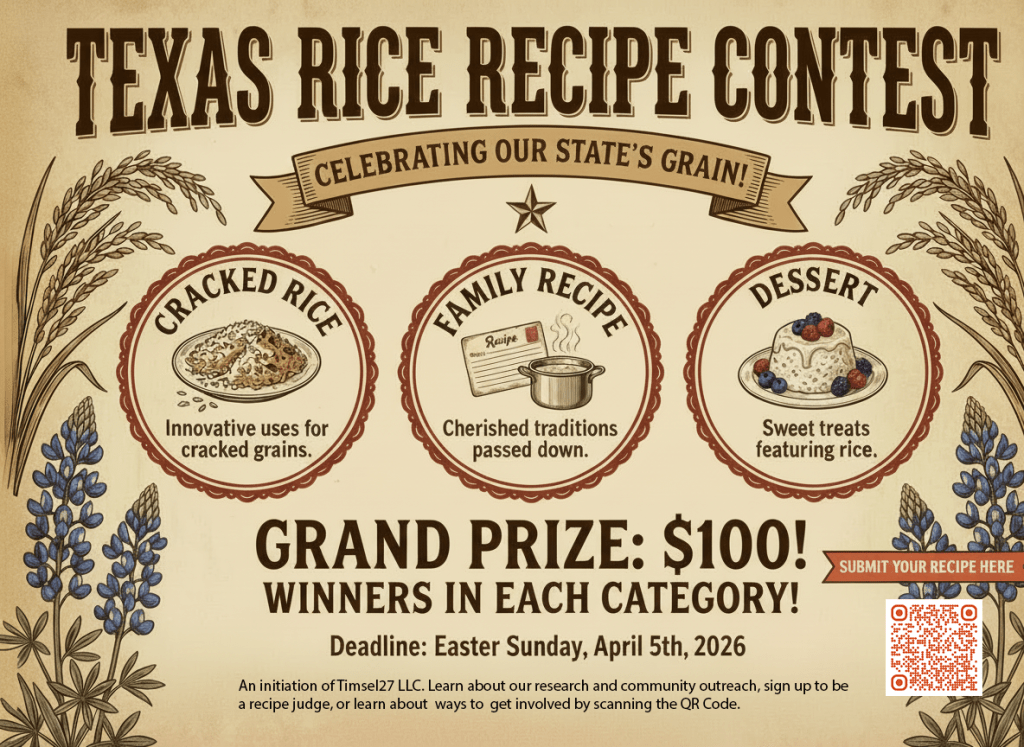
Rice recipe contests have history and tradition in Texas. In 1951, The Texas Rice Promotion Association and the Abilene Reporter-News have announced a rice recipe contest. The contest was well documented and communicated in The Abilene Reporter-News. Recipes were received from fourteen towns and in multiple categories. The judges were overwhelmed by the success and diversity of recipes featuring Chinese, Hungarian, Syrian, Indian, Uruguayan and other recipes.
To read more about the history of rice recipe contests or to enter this contest just click this link: Texas Rice Recipe Contest
ShaRE: The Shared Robotic Ecosystem for Smart and Collaborative Agriculture
Dr. Lee sent me this request. They need farmers who are interested in robotic technologies (this includes your tractor guidance) to do the survey and get a gift card. Surely, we can help!
We are faculty members from Texas A&M University conducting a study under the Institute for Advancing Health Through Agriculture. This research focuses on understanding Texas farmers’ perspectives on robotic technologies in agriculture, as well as their overall health and daily work activities.
Why we are contacting you: We are currently seeking 500 local farmers or retired farmers in Texas to complete survey questionnaire.
What we are asking: We are seeking your assistance in sharing this opportunity with your network or community. Participants will receive a $10 gift card. The survey itself will take 10-15 minutes and include questions about robotic technologies in agriculture, farmers’ overall health and well-being, and daily work activities.
To start the survey just click this link: ShaRE Robotics
Thank you for considering this request. Your assistance in sharing this opportunity is invaluable to research efforts.
Kiju Lee, Ph.D., Associate Professor, Department of Engineering Technology and Industrial Distribution (ETID), Texas A&M University
Investment Act to Expand Capacity and Compete Against Imports
This article is from the Organic Trade Association1 and went out to the membership (I am a member) to highlight the work being done. I am excited about the potential and hope we have a chance for Texas organic to apply and win some of this grant money!
The culmination of more than two years of advocacy work, the introduction of the Domestic Organic Investment Act (DOIA) will put into action what the organic sector needs to thrive by investing in infrastructure to expand production capacity for farmers and manufacturers.
The bipartisan, bicameral bill introduced in the Senate by Sen. Tammy Baldwin (D-WI) and Susan Collins (R-ME), with Andrea Salinas (D-OR) and Derrick Van Orden (R-WI) as sponsors in the House, builds on the strength of the Organic Market Development Grant (OMDG) program introduced in 2023. This program, administered by USDA, helps solve supply chain gaps and drive organic growth through grants to organic farmers and businesses.
The DOIA legislation directs USDA to set annual priorities that reduce dependence on imports and reflect input from organic farmers, businesses, and other stakeholders. Additionally, the Act supports U.S.-based farmers and businesses who apply, including producers, producer cooperatives, and commercial entities (including tribal governments) who handle certified organic products. All grants will require matching funds from the farm or business recipient.
Two businesses that have benefited from the OMDG program – PURIS and Meadowlark Organics – are examples of how these investments have paid off and serve as a bellwether for the future success of the Domestic Organic Investment Act.
PURIS is committed to four times their OMDG $539K grant award to expand processing capacity for milled organic field pea fiber at their facility in Harrold, South Dakota. This was done by adding a fiber milling line to an existing organically certified pea handling facility. The upgrade transforms pea hulls, currently a product with little value, into a marketable, high-value organic pea fiber.
Currently, imported organic pea protein has been selling at prices 28-75 percent below U.S. producers for multiple years. The investment supported PURIS to create additional value from the supply chain while also helping to strengthen the domestic supply chain overall.
In the words of PURIS CEO, Nicole Atchison, “This grant has enabled PURIS to move the project from a mere concept to a tangible reality, significantly benefiting rural American manufacturing. The grant has not only accelerated our project timeline it provided a pathway to expand the value generated from the organic peas grown by PURIS farmers.”
In the case of Meadowlark Organics of Ridgeway, WI, USDA grant funds provided in 2024 helped the organic grain farm purchase three pieces of equipment to help increase the availability of locally grown organic grain across the Upper Midwest. The new equipment includes a gravity table, optical sorter, and a connecting bucket elevator to the farm’s existing cleaning facility and flour mill.
This increased capacity will enable the farm to partner with even more organic grain farmers across the region and ultimately connect a diversity of culinary grains with more customers. The expected growth in organic grains and livestock feed capacity is over 900,000 pounds, with a projected 35 percent sales increase.
As shared by Halee and John Wepking of Meadowlark, “We are farmers first, and vertically integrating from the grassroots up is capital intensive and technically challenging. This funding has allowed us to improve our grain cleaning infrastructure at a critical time for our growth and development. Debt financing these acquisitions on top of already existing farm debts was untenable, and the support of the USDA through this grant is something we need to see more of, to help add value to make farms more profitable.”
Those businesses are great examples provided by OTA in their article, but I will call attention to our own Texas OMDG recipients:
Diversifying Organic Supply Chains for Small Producers in the Rio Grande Valley. Triple J Organics, LLC, Mission, TX
Steelbow Farm: Expanding Access to Local, Organic Produce in Central Texas. Steelbow Farm LLC, Austin, TX
Promotion of Organic Yaupon Tea as a Domestic Alternative to Imported Tea Distributed to The Foodservice Industry. Yaupon Holly Tea, LLC, Cat Spring, TX
Enhancing Organic Dairy Production and Market Access in Texas. Armagh Fine Foods LLC dba Armagh Creamery, Dublin TX
Expanding Capacity and Improved Quality of Organic Cotton. RKH GIN LLC, dba Woolam Gin, Odonnell, TX
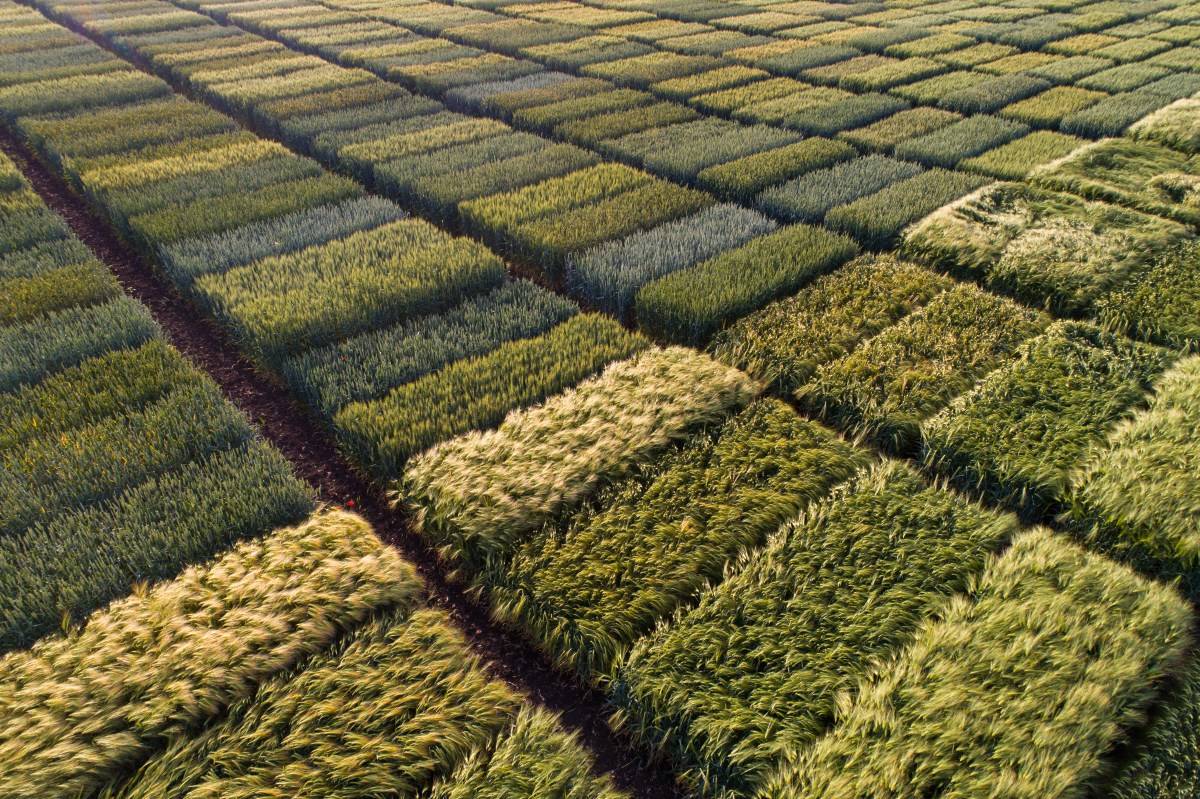
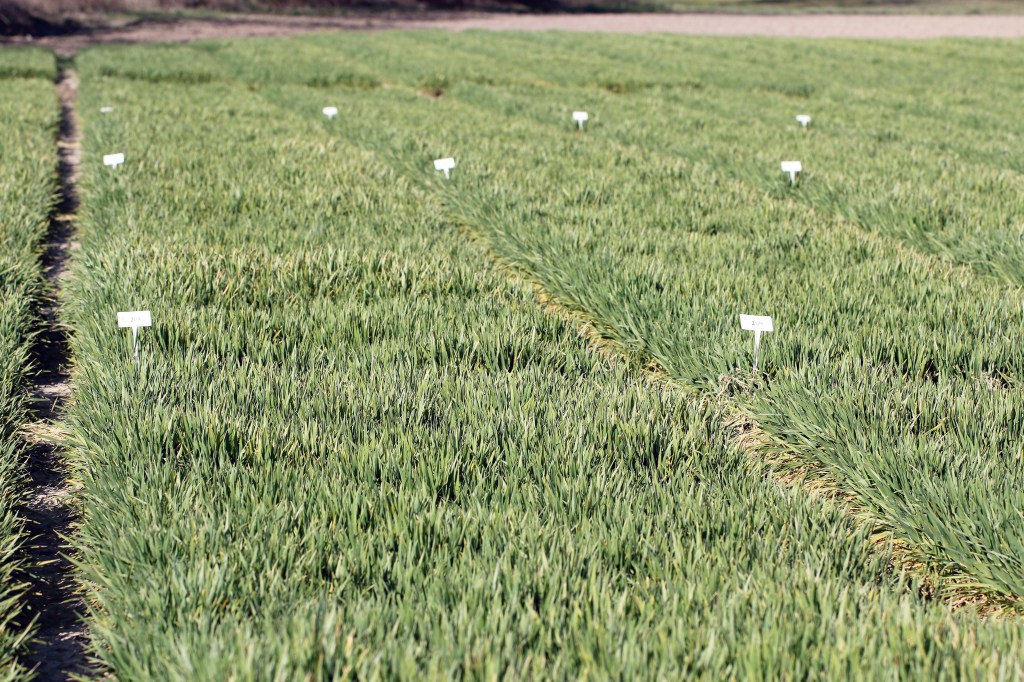
On Thursday, November 13th, Dr. Brandon Gerrish, State Extension Small Grain Specialist planted our first Texas Organic Wheat Variety Trial at Todd Vranac’s certified organic farm in Rule, Texas. This test is an opportunity to evaluate wheat lines under authentic organic production conditions. This irrigated farm, managed organically over many seasons, offers an environment that conventional research plots often cannot replicate.
Wheat trials help us look at agronomic traits of wheat as well as evaluate our production systems in organic!
Each variety in the trial allows us to observe how wheat responds when relying on soil biology for nutrient cycling, competing with weeds without herbicides, and performing under the constraints of organic fertility sources. As organic wheat acreage expands in Texas, field-based evaluations like this are essential for identifying varieties that align with the agronomic realities of organic systems and for improving the recommendations available to growers.
Why Organic Variety Testing Isn’t Optional
One of the most important conversations I’ve had this year was with Dr. Jackie Rudd, Dr. Gerrish and the TAMU wheat breeding team this past August at the Small Grain Breeding Group meeting. We talked about the gap that still exists between conventional breeding and organic production, and why organic growers need data generated in organic fields.
The traits that matter most in organic systems differ from what many conventional trials measure. Organic producers need wheat that can do things like:
1. Emerge from deeper planting depths
Organic growers often plant deeper to reach moisture and to make mechanical weed control possible. With deeper rooting we can use rotary hoes or tine weeders to take our early season weeds and start cleaner. But many modern semi-dwarfs simply don’t have the coleoptile length to handle that depth. Lines with longer coleoptiles or alternative dwarfing genes (like Rht8) stand a better chance of thriving in these conditions.
2. Fight disease with genetics, not chemistry
Stripe rust, leaf rust, stem rust, Fusarium head blight, BYDV—these aren’t just occasional threats in organic wheat. Without fungicides, genetic resistance to disease becomes the primary protection for diseases. Multi-gene and adult-plant resistance are particularly valuable.
3. Use nutrients efficiently through the soil microbiome
Organic wheat depends on soil biology to help acquire nutrients. Varieties with strong root systems, mycorrhizal associations, and efficient nutrient uptake consistently do better in slow-release, biological systems. Traits like enhanced nitrate transporter activity or strong remobilization of nutrients during grain fill make a visible difference in yield.
4. Outcompete weeds
Early vigor, aggressive tillering, and a fast-closing canopy are necessary to yield production. These are the traits that help organic wheat shade out early warm season weeds and other winter annuals long before the weeds become yield-limiting.
5. Deliver high-quality grain for a premium market
Organic buyers want protein, strong gluten, good milling quality, low DON (a mycotoxin), and consistency. They also increasingly look for functional food traits like higher mineral content (iron, zinc, even selenium). The right variety can put an organic grower into a higher-value market.
This Year’s Trial
The trial this year includes a mix of public and private genetics—everything from long-standing varieties like TAM 114 and Smith’s Gold to experimental Oklahoma and Texas lines, plus new materials such as Green Hammer, Paradox, High Cotton, and Guardian. Click the link below to see the trial information.
Organic tests like this will help answer important questions about how “conventional varieties” preform growing under organic conditions:
Which varieties take off fast enough to hold back early weeds?
Which can take advantage of irrigation while still operating under organic nutrient constraints?
Which lines show strong fall vigor and winter hardiness?
Which have the disease packages organic growers rely on?
Which varieties convert organic fertility into grain yield the most efficiently?
Organic Grower Research is Very Important!
Hosting a trial like this requires commitment, and I’m grateful for Todd Vranac’s willingness to put research into his organic acres. Organic agriculture depends on exactly this kind of farmer-researcher collaboration because:
It takes place under the conditions organic growers actually face.
Weather, weeds, fertility, and soil biology are real—not simulated.
It gives producers confidence that variety recommendations apply to their own operations.
It builds a shared knowledge base across the organic community.
As we go through the season I hope to share updates from the trial, including stand counts, disease observations, and eventually yield and quality results. Organic growers across Texas need these answers, and trials like this give us the data to make better variety recommendations year after year.
Testing varieties in organic fields doesn’t just improve one season’s crop. It strengthens the long-term resilience of organic grain production in the Southern Plains. And it helps breeders refine the traits that matter most for growers working in biologically driven systems.
From Farm to Consumer: Why Organic Markets Need Transparency and Storytelling to Grow
In our recent “Texas Organic News” newsletter, I conducted a single question survey and the question was: “What’s standing in the way of producing and/or selling more organic products?” Here are the results from the 1,360 newsletters sent out – only 32 responses! In this survey you could only pick one answer for the question and here are the results so far.
Lack of grower contracts or reliable customers for organic products — 13 responses (40.6%) This is a question about demand for organic production or products, which ever segment you are involved in. If we don’t get customers, we don’t get paid!
Paperwork and certification take too much time or effort — 8 responses (25%) Of course everyone in organic says this is a problem but it ranks second behind selling more organic products.
Competition from imported organic products that reduce grower contracts or retailer profitability — 5 responses (15.6%) I thought this might be more of an issue and it is for some commodities but right now it ranks third.
Not enough profit margin in organic production or sales — 2 responses (6.3%)
Growers: Not enough organic inputs or supplies to grow efficiently — 3 responses (9.4%)
Handlers: Not enough consistent organic product available to sell — 1 response (3.1%)
Although overall response numbers have been low, I think the pattern is clear: the two largest barriers identified by producers are market access (customers/contracts) and certification/time-burden. These aren’t simply agronomic issues—they point to deeper economic and institutional challenges in our organic systems. We need to do a better job attracting customers and we need to improve certification systems to make them easier and cheaper.
Transaction Costs and What the Survey is Telling Us
When I review your responses through the lens of transaction cost economics, I see how these barriers are really about the extra costs of doing business in organic—not just the cost of production. A cost is anything that takes up time or money both of which are scarce. Scarce means if you do this one thing you can’t be doing another thing. If you have to spend a lot (time and/or money) on certification or finding customers/contracts, you have to get it back from the products or you have to quit!
The largest barrier, lack of reliable customers, highlights search, matching, and information-costs. If you don’t know who will buy your product or what contract terms look like, you carry higher risk and uncertainty. Organic struggles with this every day of every month of every year!
The second barrier, certification and paperwork burden, is about compliance, monitoring and institutional costs. The farm work, the record-keeping, the audit visits—even before you sell—these costs eat into margins. USDA NOP has discussed some of this and even talked about some streamlining and simplifying proposals, but we are still a long way from it.
Lastly, weak contracts or imports or even hard to find markets point to market thinness and pricing transparency. When markets aren’t transparent, when contracts are hidden or inconsistent, the organic market players struggle to negotiate fairly or spend too much time struggling to be in the market.
In short: to expand organic production and meaningful sales in Texas, the US or the world, we must look beyond just “how do I grow it organically?” and ask: How do I connect reliably with a buyer, how do I keep my certification cost manageable, and how does the market signal value all the way through the chain?
Organic as a Credence Good
Here’s a key idea: organic products are credence goods (belief or acceptance that something is true or valid). That means consumers (a shopper in HEB) cannot easily verify for themselves many of the important attributes—crop rotation, chemical input avoidance, processing protocols, supply-chain segregation. Instead, they rely on trust signals: certifications, labels, audits, inspections.
Because
of this,
two things
matter:
Integrity of production and supply chain systems — the farm-to-shelf process must be robust and verifiable. Organic has built this into its system with legal force while most or all others do not come close. Non-GMO is a label that is highly trusted too, but they have experienced problems recently with this part of their label. Lost trust is almost impossible to get back.
Clear communication of value to the consumer — if consumers don’t understand the organic claim or don’t believe it has value, the premium disappears. Right now there are many, many stories about how “something” is better than organic. This tells me organic has set the standard all are trying to beat but this bombardment without a response also weakens organic’s message.
The newsletter survey results align exactly with this: producers are facing market access problems (demand side) and compliance burdens (supply side). Both sides are inherent to credence-good systems. You’re not just farming or manufacturing differently—you’re participating in a system of trust. Right now, organic agriculture has the highest rated system of trust according to survey after survey. Unfortunately, our customers are not valuing that “trust” as much as they used to do simply because they are being bombarded with so many choices that look similar but are not at all similar to Certified Organic!Step up and reinforce that message now, before we lose it!
Every Part of the Value Chain Must Be a Promoter
In a business built on trust (credence goods), production alone isn’t enough. The value behind the organic label depends on every actor in the chain actively understanding and communicating that value.
Farmers need to ask: What story am I giving my buyer about how I grew this crop and why it matters? Have you ever given your buyer a letter with your crop that tells your story? You send a certificate but why not more?
Handlers must ask: How am I representing the farms I source from, and how am I passing that value and the value I add to retailers or final buyers?
Retailers and brands should ask: Am I explaining to consumers why this product commands a premium, beyond just placing it on the shelf? FYI – Retailers usually make more off organic products than conventional!
Certifiers and institutions must ensure: I maintain the trust-signal, yes—but do I also support the chain in telling the story in a credible, consistent way? Is your certifier making sure “you,” their customer is promoted?
If any link fails to actively promote the value, the trust signal weakens. Here’s what it means in practice:
Transparency up and down the chain: Farms must provide clear information to handlers; handlers must pass that to retailers; retailers must convey the value to consumers—and that consumer feedback should circle back into production and market planning. You may be paid for a product in organic, but your “name” goes with that product all the way to the consumer!
Active marketing of integrity: The organic label is a trust-signal. If it isn’t actively promoted, consumers may forget what it stands for or assume it doesn’t matter. This is especially true in an age of so much label confusion.
Shared responsibility: It’s not enough for a farmer to get certified and think the rest of the chain will carry the message. Every actor must see themselves as part-of the collective promoter of the label’s meaning and the products value.
Feedback loops: The final customer’s expectations shape what comes back up the chain. Growers should listen to what consumers care about, and that should influence how they position their production and communicate with buyers.
Value-chain transparency equals value creation: The more visible the chain, the more confident the consumer, the stronger the premium, the more stable the market. Hidden trade, opaque pricing, and weak storytelling all erode trust and hinder growth.
Final Thought
The very simple and easy survey I sent in a newsletter has highlighted what many of us already sense: participating in organic isn’t simply about adopting different growing practices. It’s about being part of a system built on trust, communication, and shared value. Certification and production matter—but they are only half the story. The lack of participation (only 30 out of 1360) in this simple, one question survey is telling me that certified organic entities (farms, handlers, retailers, certifiers) have not figured out everyone has a part to play in this “credence good” or it becomes just another “good” to purchase.
If you choose to farm organic, you’re not just choosing a way to grow. You’re choosing to be part of a movement built on trust, and you’re signing up to help tell the story. You are paying a lot to be part of this movement.
When we, as farmers, handlers, retailers—and even consumers—understand this and act on it, we reduce hidden costs, build stronger markets, and make organic not just viable, but sustainable and profitable.
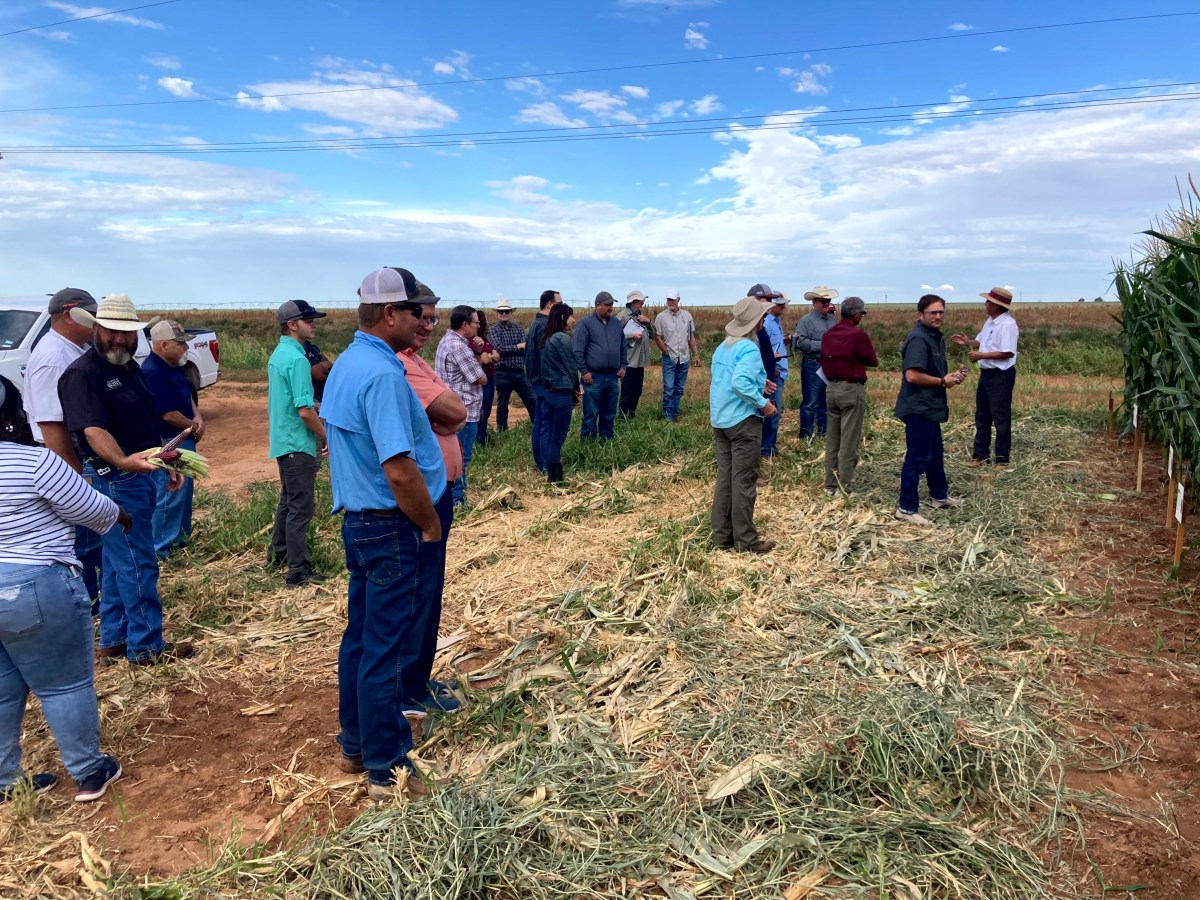
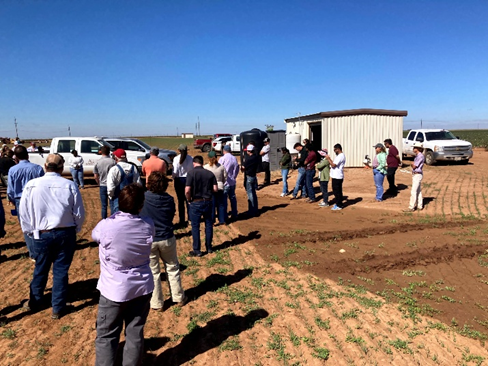
There have been a lot of opportunities this summer for Organic Farmers to attend tours held outside, in the field, that featured organic agriculture. I hope that you as an organic farmer took the time to attend, learn, and show your support. I hope that organic farmers realize that Extension education works much like a business! If farmers do not show up (make a purchase) then there will be an assumption that they do not need Extension organic education. If they do not need organic education, then the “educators” might be forced to do something else – just saying! Check out the pictures and information and then plan to be a part the next time you get the invitation!
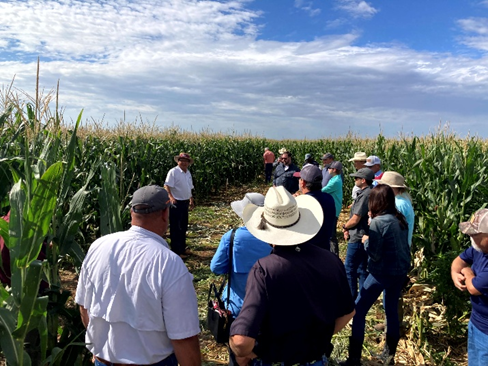
The picture above is at the Hi-A Corn Field Day held July 31 in and around Halfway just west of Plainview. There was a good crowd of farmers, seed producers and businesses interested in new corn hybrids.
The pictures below are of the Organic Cotton and Peanut Field Day held on August 19 just north of Seminole in Neil Froese’s fields. We toured peanuts, cotton and had a robot demonstration and a great talk by Aigen about their new robot weeders.
Dr. John Cason has his back to us in the picture as he talks to the crowd about the organic peanut variety trial. It was great weather that day with a little over 2 inches of rain the day before.
The picture above is some discussion about the organic cotton fields surrounding the crowd. The fields were clean of weeds, and we discussed the implements and timing to keep them clean.
Below the picture is showing a potential crop robot developed by Texas A&M researchers using common components found in most electronic stores. The technology is sophisticated but the design and parts are pretty simple. Imagine building robots in your shop that could run continuously weeding your fields!
The pictures below are from the Resilient Cropping Systems Tour held on September 24 that started at the Quarterway Cotton Growers but toured from there to the Helms Farm south of Halfway. This tour featured so many speakers and demonstrations that I can’t name them all but organic was discussed on many of the tour stops. I want to also mention that Megan Singletary is doing some great work in organic weed control and results should be something we can use to improve our fields.
Let me add one more tour that I wish I had more pictures to show you the crowd and facilities. I am a terrible photographer and wish I would do better! The Southwest Dairy Day had over 300 attending and Organic Dairy was front and center.
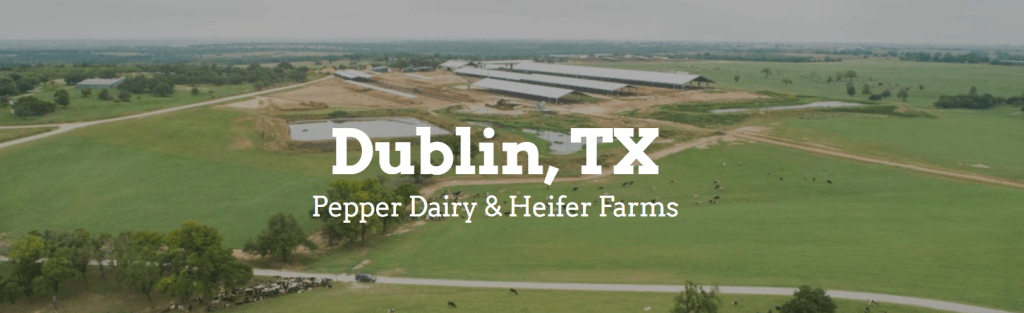
This is just one of many seminars given at the Southwest Dairy Day held on October 9. The day featured lots of exhibits in outdoor tents, lots of equipment demonstrations, and a tour of the Aurora Organic “Pepper” Dairy just outside of Dublin Texas. The Pepper Organic Dairy features the latest in robot milkers for batch milking. A completely automated system we were able to tour from above the entire operation from the balcony at the milking parlor – it was a site to see!
The Texas organic industry continues to grow on both ends of the supply chain—from the farms that grow organic crops and livestock to the companies that process, package, and distribute them. As of October 2025, the state lists 412 certified organic grower operations, including farms that produce crops, livestock, and wild crops on 512,000 Texas acres. At the same time, the number of certified organic handlers—processors, distributors, and packers—has climbed from 457 in 2023 to 694 in 2025, a 52% increase in just two years.
Who’s Growing Organically in Texas
Organic production in Texas is anchored by key field crops such as cotton (175 farms), peanuts (147), and wheat (132)—mainstays of the High Plains and Rolling Plains, where organic systems are well adapted to semi-arid soils and rotations. Corn (51) and sorghum or milo (49) are part of diversified feed and grain operations, while rice (25) remains strong along the Gulf Coast. Forage crops like alfalfa (25) and grass (40) support both organic livestock and soil health, while vegetable operations (21) range from small local farms near urban markets to large commercial producers serving regional buyers.
Among these 412 operations, 28 are certified for livestock, including 20 cattle and 8 poultry operations. The cattle operations include both grass-fed beef and organic dairy systems, emphasizing rotational grazing and homegrown forage to meet organic standards. The poultry farms focus mainly on pasture-based egg and broiler production, serving local and specialty markets. Together, these farms show how organic agriculture in Texas is evolving into an integrated system linking crops, forages, and livestock within the same ecological and market framework.
A Rapid Rise in Certified Handlers
The sharp increase in certified organic handlers—from 457 to 694—signals strong momentum beyond the farm gate. Much of this growth is tied to the USDA’s Strengthening Organic Enforcement (SOE) rule, implemented in 2023. This rule requires certification for more middle-market entities such as brokers, traders, and distributors who take ownership of organic products. The result is a more transparent and traceable supply chain, but also a measurable expansion in the number of certified businesses operating within it.
Texas’s 694 organic handlers now represent a wide range of activities. The largest sectors include fruits and vegetables (285), beverages (125), grains, flours, and cereals (105), nuts and seeds (111), seasonings and flavorings (102), and oils and oleoresins (71). These categories show that Texas’s organic sector is growing not only in raw production but in value-added processing, product manufacturing, and consumer-ready goods. Additional activity in livestock feed (23), dairy and dairy alternatives (27), meat, poultry, and eggs (35), processed foods (47), and fiber, textiles, and cotton (20) rounds out the picture of a maturing organic industry.
A Strengthening Organic Ecosystem
The combined growth in organic growers and handlers marks a new phase for Texas organic agriculture. Producers are supplying more raw organic commodities, and a growing network of handlers is processing, packaging, and marketing those products—creating a more complete and resilient organic system. The enforcement of SOE has helped formalize this network, ensuring that products remain traceable from farm to table. What was once a scattered mix of farms and processors is now forming into a connected supply chain—one capable of supporting long-term growth in the Texas organic market.















 Texas A&M AgriLife Organic