In case you didn’t know I want to emphasize that Texas A&M AgriLife Research and Extension have an extensive variety testing program for corn, cotton, sorghum, peanuts, wheat, sunflower, soybean, silage, forages, rice, oilseeds, and more than I can count!
The trials are conducted in farmer fields and on Texas A&M AgriLife Research Stations across the state with companies that want to see how their varieties perform in multiple locations. Here is a YouTube video showing the process.
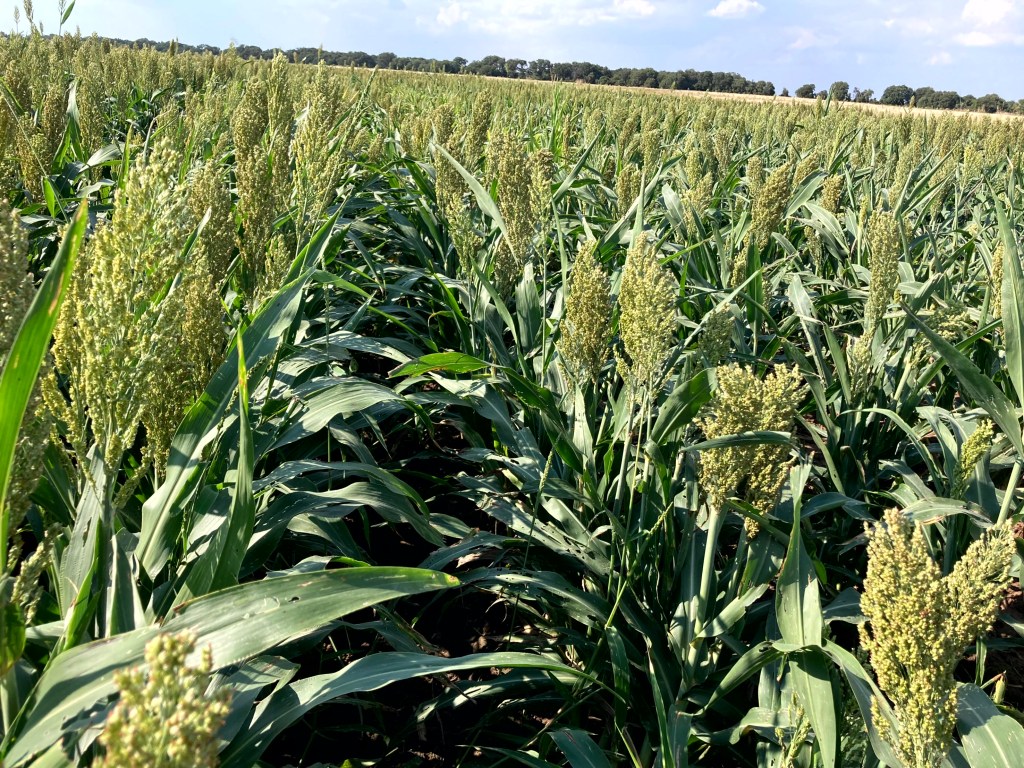
Recently Katrina Horn with Variety Testing sent out the pdf files for 8 tests conducted from the Rio Grande Valley up to Central Texas including San Angelo. There are still three test sites to be harvested located in the South Plains and Panhandle, but still, we are getting great information to be able to think about next year’s planting season. Why is this important now for organic sorghum growers?
Many, many sorghum seed companies will set aside sorghum seed for organic growers that is not seed treated. Unfortunately, they will treat the rest of their seed inventory making it unavailable to organic growers because it is treated seed. I wish it was easier but at least we can get seed, in most cases, if we are just a little bit pushy with a seed dealer!
Since we still have some more test sites to add I probably should wait a month or two, but I think it is better to be thinking about sorghum now. Here is all the 8 tests we have results for as of now. Just click the button below.
Okay, you have all the results which is a huge amount of information for each test site and for the varieties. Please take a look at all the information, you will be surprised. Now let me give you some summary information that might help you focus your thoughts.
Company
Variety
Test Ranking (in the significant top)
DeKalb
DKS 44-07
1,1,3,4
DeKalb
DKS 36-07
1,2,2
Dyna-Gro
M62GB36
1,4,5,6
DeKalb
DKS 43-76
4,6,9
Integra (Wilbur Ellis)
G3665
2,3,4,8 (only planted in 6 tests!)
Sorghum Partners
SP65M60
1,2
DeKalb
DKS 49-76
2,3,4
DeKalb
DKS 43-76
4,6,9
As a note of explanation! I looked at all the tests (8) and looked at only the top varieties in the test by significance. What I mean is that these top varieties were statistically better than all the others in the test. If a variety was statistically better in more than one test, I put it on this list and gave you its ranking from the test where it was statically significant. So, all, except one variety, were in all 8 tests. Some varieties you may see in the overall results may rank high, but to make this list they need to rank in at least two tests and rank significantly! Clear as mud?
What I am hoping does come through is that these varieties seem to do well across locations and would be worth looking at for organic growers – if you can get untreated seed. That is the question?
As rice breeding continues to advance, hybrid rice varieties have emerged as a powerful tool for increasing yields, improving disease resistance, and enhancing grain quality. A key innovation behind hybrid rice production is the Cytoplasmic Male Sterility (CMS) system, which enables breeders to produce hybrid seeds efficiently. This blog post explains how the three-line CMS system works and why it’s so valuable for breeders and farmers alike.
What is Cytoplasmic Male Sterility (CMS)?
Cytoplasmic Male Sterility (CMS) is a genetic trait that prevents a plant from producing functional pollen. This characteristic is particularly useful in hybrid seed production because it ensures the plant cannot self-pollinate. Instead, the male-sterile plant must be pollinated by another plant, allowing breeders to control the parentage of hybrid seeds.
The Three-Line System in Hybrid Rice Production
The three-line system involves three types of rice lines:
A-Line (CMS Female): A male-sterile line that cannot produce viable pollen, used as the female parent in hybrid seed production.
B-Line (Maintainer Line): Genetically identical to the A-line but fertile. It is used to maintain the CMS trait in the A-line.
R-Line (Restorer Line): A fertile line that carries restorer genes to restore pollen fertility in the F1 hybrid generation.
Each of these lines plays a critical role in ensuring the successful production of hybrid rice seeds, and together they contribute to the final hybrid variety’s vigor and performance.
How the Crosses Work in the Three-Line System
1. Maintaining the CMS Line
The A-line (CMS female) is male-sterile, meaning it cannot produce seeds on its own because it lacks viable pollen. To maintain this line, breeders must cross the A-line with the B-line (maintainer), which has the same genetics but does not have the male-sterile trait.
Result: More A-line seeds, all of which remain male-sterile. The B-line helps propagate the A-line without restoring fertility, ensuring that male sterility is preserved.
2. Producing Hybrid Seeds
Once enough CMS A-line plants are produced, they are crossed with the R-line (restorer) to create hybrid seeds. The R-line carries genes that restore pollen fertility in the hybrid offspring, allowing the hybrid plants to reproduce normally.
Result: F1 hybrid seeds that combine the best traits from both the A-line and the R-line. These seeds exhibit hybrid vigor (heterosis), meaning the plants will grow faster, yield more, and be more resilient to stresses like pests and diseases.
Visual Representation of the Three-Line System
Below is a flowchart that visually represents the three-line CMS system:
This flowchart provides a simplified view of how the A-line, B-line, and R-line interact to produce hybrid seeds. It helps to visualize the sequential process of maintaining the CMS line and producing vigorous hybrid seeds.
Distribution of Beneficial Traits in the Three Lines
In the three-line system, both the A-line and R-line contribute valuable traits to the hybrid, while the B-line helps maintain the CMS line. Here’s a breakdown of what each line brings to the table:
Genetically identical to A-line; used for maintenance
R-Line (Restorer)
Male parent; restores fertility
Provides restorer genes and complementary traits to enhance hybrid vigor
Why Use the Three-Line System?
The three-line CMS system has been a game-changer in hybrid rice breeding for several reasons:
Efficient Hybrid Seed Production: CMS ensures the A-line plants cannot self-pollinate, making it easier for breeders to control the crossing and ensure that hybrid seeds are produced with the desired genetic combinations.
Hybrid Vigor: The cross between the A-line and R-line produces F1 hybrid plants that often outperform both parent lines due to heterosis (hybrid vigor). These plants grow faster, produce higher yields, and are more adaptable to varying environmental conditions.
Consistent Performance: By carefully selecting A-line and R-line parents, breeders can develop hybrids that consistently deliver high yields and other desirable traits, such as disease resistance or drought tolerance.
Real-World Example in Rice
For example, let’s say a breeder selects an A-line that has high grain quality and yield potential but lacks disease resistance. They could pair this A-line with an R-line that has strong disease resistance and good stress tolerance. The resulting hybrid will combine these traits, offering farmers a variety that not only yields well but also stands up to diseases and environmental stressors.
Saving Hybrid Rice Seeds and Trait Loss
It’s important to note that saving seeds from hybrid rice plants is generally not recommended. The F1 hybrid seeds produced through the three-line system exhibit hybrid vigor due to the combination of traits from the A-line and R-line. However, if these hybrid seeds are saved and replanted, the resulting plants (F2 generation) will not retain the same level of performance. This is because the desirable traits that make the F1 hybrids so productive can segregate and diminish in subsequent generations, leading to reduced yields, inconsistency, and loss of hybrid vigor. To read more about organic rice varieties and resources click this link: Organic Rice Resources
Key Takeaways
A-line (CMS) contributes key agronomic traits but cannot produce pollen, ensuring controlled cross-pollination.
B-line is a maintainer, used to propagate the A-line but not involved in the hybrid seed production.
R-line restores fertility and adds complementary traits, leading to a vigorous and productive F1 hybrid generation.
The three-line CMS system enables efficient hybrid seed production, combining the best traits from different lines to create high-performing hybrids that meet farmers’ needs for yield, resilience, and grain quality. The three-line CMS system remains one of the most effective methods for producing hybrid rice seeds, ensuring that breeders can develop varieties that push the limits of productivity and sustainability.
Conclusion
As global demand for rice, especially organic rice, continues to grow, the ability to produce high-yielding, resilient hybrid varieties through the CMS system is more important than ever. This method ensures that breeders can consistently produce hybrids that help farmers achieve better harvests, even in the face of environmental and biological challenges. Hybrid rice breeding holds a promise for amplifying traits important for organic producers.
By understanding the nuances of the A-line, B-line, and R-line, breeders can make informed choices about which traits to focus on in their breeding programs. Ultimately, the three-line system not only enhances hybrid seed production but also contributes to the long-term sustainability of rice farming.
Creating an adapted and sustainable organic farming system requires a comprehensive approach that encompasses both the selection and maintenance of crop varieties and an understanding of their interaction with the local environment and soil microbiome. This post aims to guide organic growers in developing a resilient agricultural practice by focusing on crop variety adaptation, seed saving, and leveraging the soil microbiome. In the realm of organic agriculture, the selection of seeds is a critical decision that influences not only the immediate productivity and health of the farm but also its long-term sustainability and economic viability. But before we dive into selecting seeds let’s talk about the organic standard for plantings seeds.
205.204 Seeds and planting stock practice standard – Organic Rules
(a) The producer must use organically grown seeds, annual seedlings, and planting stock: Except, That,
(1) Nonorganically produced, untreated seeds and planting stock may be used to produce an organic crop when an equivalent organically produced variety is not commercially available: Except, That, organically produced seed must be used for the production of edible sprouts;
(2) Nonorganically produced seeds and planting stock that have been treated with a substance included on the National List of synthetic substances allowed for use in organic crop production may be used to produce an organic crop when an equivalent organically produced or untreated variety is not commercially available;
(3) Nonorganically produced annual seedlings may be used to produce an organic crop when a temporary variance has been granted in accordance with § 205.290(a)(2);
(4) Nonorganically produced planting stock to be used to produce a perennial crop may be sold, labeled, or represented as organically produced only after the planting stock has been maintained under a system of organic management for a period of no less than 1 year; and
(5) Seeds, annual seedlings, and planting stock treated with prohibited substances may be used to produce an organic crop when the application of the materials is a requirement of Federal or State phytosanitary regulations.
Boiled down these rules mean you need to use only organically sourced seeds if at all possible. If there are not organic seeds available for the crop you want to plant or the organic varieties available are not adapted to your area, then you can select nonorganically produced seed varieties provided they are not treated of if they are treated the seed treatment is on the list of approved organic substances.
If you meet all the rules, then organic farmers are faced with the choice between 1. hybrid seeds, which dominate much of conventional and organic farming due to their high yield and disease resistance, 2. open-source seeds, which are freely available for use without intellectual property restrictions, and 3. traditional on-farm seed saving practices.
Hybrid seeds
Hybrid seeds created through the crossbreeding of two different parent plants, offer consistency and performance but require farmers to purchase new seeds each season, leading to increased costs and dependency on seed producers. A farmer must purchase hybrid seeds each season because the unique characteristics of first-generation (F1) hybrids—such as improved yield, disease resistance, and uniformity—do not reliably pass on to the next generation. This means seeds saved from hybrid crops typically result in plants that vary widely in their traits, losing the specific advantages that hybrids are valued for. Thus, to maintain consistency and performance in their crops, farmers need to buy new hybrid seeds each year. There are tremendous benefits to buying hybrids each year not the least of which is the almost guaranteed consistency of germination, overall plant health and yield. But what about these other methods for buying planting seed?
Open-source seeds
Open-sourced seeds on the other hand, are part of a movement aimed at ensuring seeds remain a shared resource. These seeds can be saved, replanted, and shared by anyone, promoting agricultural diversity and resilience. This system stands in stark contrast to the patented seeds of the large GMO seed industry, providing an alternative that supports the principles of organic farming by enhancing biodiversity and reducing farmers’ reliance on purchased seeds. However, despite the potential benefits, the majority of organic farming still relies heavily on hybrid seeds due to their immediate productivity benefits.
Open-source seeds emerge from a collaborative, transparent process aimed at keeping seeds as a shared resource accessible to all, without the encumbrance of patents or restrictive intellectual property rights. This model allows for the free exchange, use, and modification of plant genetic materials, encouraging innovation and adaptation in agriculture. Here’s a closer look at how open-source seeds are developed and maintained:
Development Process
Breeding and Selection: The initial development of open-source seeds involves traditional breeding techniques where plants are selected based on desired traits such as resilience to pests or diseases, adaptability to local climate conditions, nutritional value, or yield. This process can be undertaken by individual farmers, researchers, or through collaborative efforts among a community of breeders and farmers.
Open-Source Pledge: Once a new variety is developed, it can be pledged as open-source. This means the breeder commits to making the genetic resources of that variety freely available under an agreement that prohibits patenting or applying any other form of intellectual property restriction that would limit its use or redistribution. The Open Source Seed Initiative (OSSI) https://osseeds.org/ is one of the organizations that facilitate this pledge, ensuring the seeds remain free for anyone to use, breed, and share.
Maintenance and Distribution
Seed Companies: While open-source seeds are free from intellectual property restrictions, they still require meticulous cultivation to maintain their genetic purity and desirable traits. Specialized seed companies and cooperatives play a crucial role in this, producing these seeds under controlled conditions to prevent cross-pollination with other varieties, ensuring the seeds remain “true to type” from one generation to the next.
Cleaning and Quality Control: These companies also undertake rigorous cleaning processes to remove weed seeds and other contaminants, ensuring that the seeds are of high quality and ready for planting. This includes both physical cleaning methods and sometimes treatments to enhance seed viability and health without altering their genetic makeup.
Community Engagement and Support: Beyond production, the distribution of open-source seeds often involves educational efforts to inform farmers about the benefits and practices of using and saving these seeds. This includes training on how to save seeds and select for desirable traits, thus empowering farmers to become active participants in the cultivation and improvement of open-source varieties.
Open-source seeds represent a collective effort to promote biodiversity, resilience, and sustainability in agriculture. Through the dedicated work of breeders, seed companies, and the broader farming community, these seeds are developed, maintained, and distributed with the goal of keeping plant genetic resources accessible and adaptable to the changing needs of farmers and ecosystems around the world. This approach not only supports ecological and economic sustainability but also fosters a sense of community and cooperation in the agricultural sector. For more information check out the Organic Seed Alliance.
The Practice of Seed Saving
The practice of seed saving, a cornerstone of traditional agriculture, allows farmers to select seeds from plants that have thrived in their specific growing conditions, leading to a gradual improvement of crop genetics tailored to local ecosystems. This practice supports biodiversity and ecological balance, key components of organic farming. If you have any interest at all in seed saving to have plants adapted to your own farm you will enjoy this little discussion about these benefits. Just click: Growing for Flavor and Health – April 2024, Acres U.S.A.
Saving seed on the farm indeed encapsulates a blend of potential benefits and challenges that require careful consideration. Let’s explore these aspects in detail:
Benefits
Cost Savings: One of the most immediate benefits of saving seeds is the reduction in costs associated with purchasing new seeds each season. This can be particularly advantageous for small-scale and resource-limited farmers.
Adaptation to Local Conditions: Over time, seeds saved from plants that thrive in the local environment can lead to the development of plant varieties that are better adapted to local conditions, including climate, soil, and pests.
Preservation of Genetic Diversity: Saving seeds from a variety of plants helps to maintain and even increase genetic diversity within crop populations. This diversity can be crucial for resilience to disease and changing environmental conditions.
Challenges
Germination Issues: One challenge with saved seeds is the potential for lower germination rates. Factors such as improper storage conditions, age of the seed, or damage during processing can affect viability. It requires meticulous management to maintain high germination rates from season to season.
Seed Cleaning Problems: Proper seed cleaning is crucial to remove debris, weed seeds, and diseased seeds, which can be labor-intensive and requires specific equipment. Without effective cleaning, the quality of saved seeds can be compromised, leading to reduced crop quality and yield.
Genetic Drift and Diversity: While genetic diversity is a benefit, managing it can also be a challenge. Without careful selection, genetic drift can occur over time, potentially leading to the loss of desired traits. Moreover, in the case of open-pollinated and especially cross-pollinated crops, there is the risk of unwanted crossbreeding, which can result in off-type plants that do not have the desired characteristics of the original variety.
Navigating the Challenges
To address these challenges, farmers engaged in seed saving can adopt several strategies:
Education and Training: Learning about best practices in seed selection, harvesting, cleaning, and storage can improve the quality and viability of saved seeds.
Investment in Equipment: While initial investments may be required for cleaning and storage equipment, these can pay off in the long term through improved seed quality and crop yields.
Community Networks: Participating in local or online farming communities can provide valuable support and knowledge sharing around seed-saving practices. Sharing seeds and experiences can help in managing genetic diversity and solving common problems.
Selective Breeding: Careful selection of plants for seed saving can help maintain or enhance desired traits, ensuring the continuity and improvement of crop varieties over time.
The interplay between these seed systems—hybrid, open-source, and saved seeds—presents organic farmers with a complex set of choices, each with its own set of benefits and challenges. Understanding these options is crucial for anyone looking to support sustainable, productive, and resilient organic farming operations.
The Importance of Crop Variety Selection in Organic Systems
Choosing crop varieties suited to organic systems is important and too little emphasis is placed on this today. These varieties need to be resilient—capable of withstanding pests and diseases without synthetic chemicals, adaptable to local environmental conditions, and efficient in their use of nutrients from organic inputs. Moreover, their ability to outcompete weeds and their synergy with organic crop rotations make them an important part of your organic program. Key traits for organic varieties include:
Disease and Pest Resistance: Natural resistance reduces the need for interventions.
Adaptability to Local Conditions: Varieties should thrive under local climate and soil conditions.
Competitiveness with Weeds: Rapid growth and canopy development can help suppress weeds.
Nutrient Use Efficiency: Varieties should efficiently utilize nutrients from organic matter.
Quality and Market Preference: High-quality crops meet consumer and market demands.
Synergy with Organic Crop Rotations: Varieties should complement organic rotations to enhance soil health and manage pests.
The only way to evaluate, know and understand these traits are acting in your area or on your farm is to talk to other organic growers and to experiment on your own farm.
Enhancing Soil Microbiome Interactions
A healthy soil microbiome is vital for nutrient supply, disease resistance, and stress tolerance. Strategies to enhance this interaction include:
Selecting Microbiome-Friendly Varieties: Some plants are better at recruiting beneficial microbes. Selecting and breeding these varieties can enhance nutrient uptake and stress resilience. Knowing this may involve utilizing the “Haney Test” for measuring CO2 in soil to determine microbial activity and the PLFA test for knowing microbe diversity.
Soil Health Practices: Incorporating organic matter, reducing tillage, and using cover crops to support a diverse and active soil microbiome. Some varieties, especially open-pollinated varieties grown for multiple seasons in the same area become adapted to these practices.
Emphasis on Plant Root Interactions with Soil Microbiome
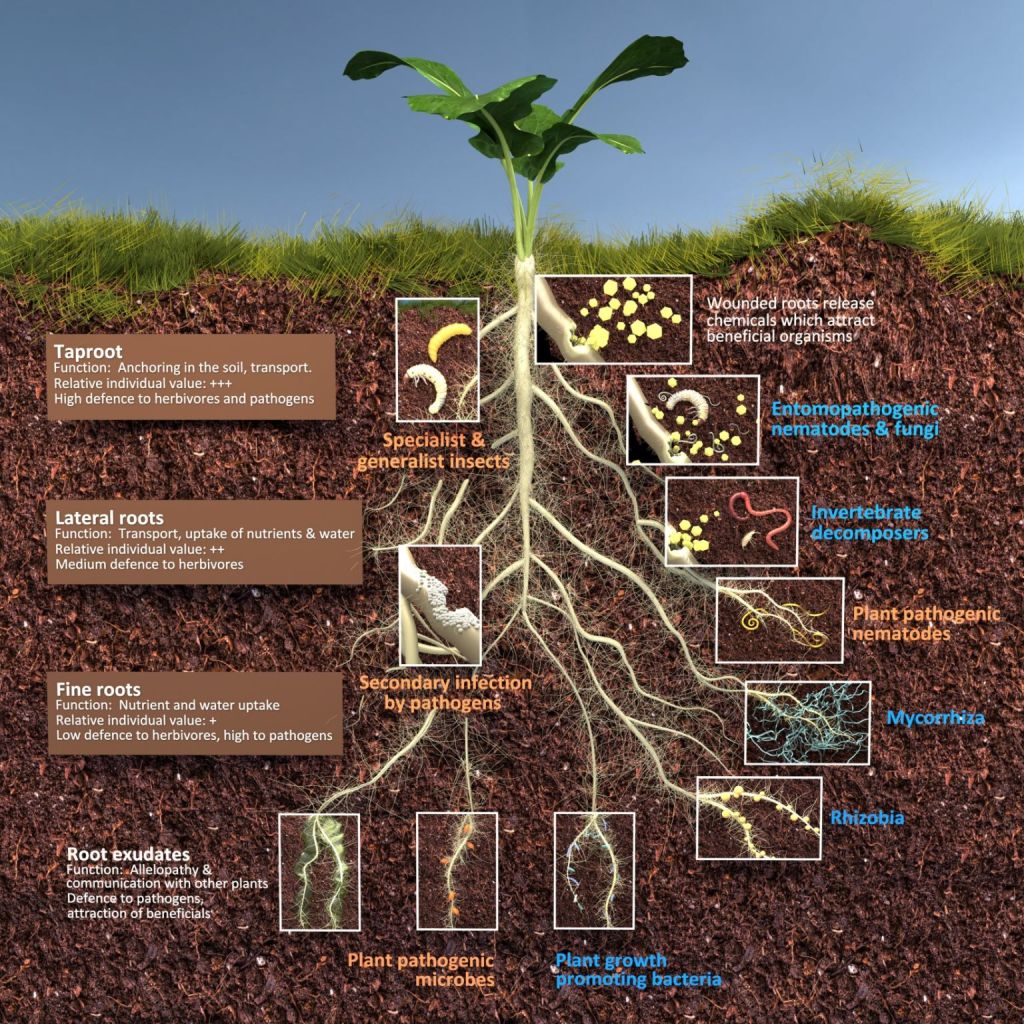
Understanding and Measurement: The ability of a plant to recruit and maintain a beneficial soil microbiome is pivotal for nutrient acquisition, disease suppression, and stress tolerance in organic systems. How do you know? These traits can be measured by some sophisticated tools:
Microbial Diversity and Abundance: Using DNA-based techniques (such as 16S and ITS rRNA gene sequencing) to identify and quantify the microbial communities associated with plant roots. This is how scientists are learning to characterize microbes specific to crops.
Plant Exudate Profile: Analyzing root exudates to understand the chemical compounds released by roots that attract beneficial microbes.
Microbial Activity: Measuring soil enzyme activities or microbial respiration rates as indicators of microbial activity and health around the root zone (Haney test and PLFA test).
Beneficial Associations: Quantifying specific beneficial associations, such as mycorrhizal colonization rates or the presence of nitrogen-fixing bacteria, through microscopy or molecular markers. (Some companies are now offering this service, but it is several $$ to use!)
Legal Considerations! Before you try being your own plant breeder be sure you know your seeds…..
Plant Variety Protection (PVP) Certificates
Plant Variety Protection (PVP) certificates are a form of intellectual property protection specifically designed for new varieties of seed- and tuber-propagated plants. Administered in the United States by the Plant Variety Protection Office (PVPO), part of the USDA, a PVP certificate grants breeders exclusive rights to their new plant varieties for a period of 20 years from the date of issuance (25 years for trees and vines). To qualify, a variety must be new, distinct, uniform, and stable.
One of the key features of the PVP system is the “farmer’s exemption,” which allows farmers to save seeds from PVP-protected plants for their own use in planting subsequent crops. However, they are not permitted to sell the saved seeds for planting purposes without the breeder’s permission. This exemption is crucial as it recognizes and preserves traditional farming practices while still providing incentives for breeders to develop new varieties.
Utility Patents
Utility patents, on the other hand, offer a broader scope of protection and can apply to any new and useful process, machine, manufacture, or composition of matter, or any new and useful improvement thereof. In the context of agriculture, utility patents can protect genetically modified organisms (GMOs), specific plant genes, methods of breeding, or methods of creating a plant with specific characteristics.
Utility patents on plants offer strong protection because they prevent others from making, using, selling, offering for sale, or importing the patented invention without authorization for up to 20 years from the filing date. Unlike PVP certificates, utility patents do not include a farmer’s exemption, meaning that even saving and replanting seeds from a patented plant can infringe on the patent holder’s rights.
Distinctions and Implications
The distinction between PVP and utility patents lies not only in the scope of what they protect but also in their implications for breeders, farmers, and the agricultural industry at large. PVP is specifically designed for plant varieties and includes provisions that balance the interests of breeders with traditional farming practices, such as seed saving. Utility patents provide a broader and stronger level of protection, including for biotechnological inventions, but also impose more stringent limitations on the use of patented materials.
Dr. Ronnie Levy, Extension Rice Specialist at LSU wrote this article for the April 2022 issue of Rice Farming Magazine. I clipped it out and thought, “this will come in handy someday!” I am putting this out there again because our organic rice producers are facing some real problems with weeds in rice including weedy rice, hemp sesbania, jointvetch and certainly weedy grasses.
Last year I was at Joe Broussard’s farm near Nome, looking at a rice field that was headed out and looking great. On the other side of the levy was a field choked with weeds – what was the difference? One was water-seeded rice, and the other was not. Joe had used water seeding and his flood to control weeds “the old-fashioned way!” So, read this article by Dr. Levy and think about it……
Rice Farming, April 2022. Dr. Ron Levy. “Most rice is drill-seeded in Louisiana — about 80% — but there is a renewed interest in water-seeding rice for weedy rice suppression (or many other weeds in organic systems).
The most common water-seeding method in Louisiana is the pinpoint flood system. After seeding, the field is drained briefly. The initial drain period is only long enough to allow the radicle to penetrate the soil (peg down) and anchor the seedling. A three- to five-day drain period is sufficient under normal conditions.
The field then is permanently flooded until rice nears maturity (an exception is midseason drainage to alleviate straighthead (physiological problem of rice) under certain conditions).
In this system, rice seedlings emerge through the floodwater. Seedlings must be above the water surface by at least the 3 to 4-leaf rice stage. Before this stage, seedlings normally have sufficient stored food and available oxygen to survive. Atmospheric oxygen and other gases are then necessary for the plant to grow and develop.
The pinpoint flood system is an excellent means of suppressing weedy rice emerging from seeds in the soil because oxygen necessary for weedy rice germination is not available as long as the field is maintained in a flooded (or saturated) condition. A continuous flood system, another water-seed system, is limited in Louisiana. Although similar to the pinpoint flood system, the field is never drained after seeding.
Regarding the water-seeded systems, a continuous flood system is normally best for red rice suppression, but rice stand establishment is most difficult. Even the most vigorous variety may have problems becoming established under this system. Inadequate stand establishment is a common problem in both systems.
Fertilization timing is the same for both the pinpoint and continuous flood systems. Phosphorus (P), potassium (K), sulfur (S) and zinc (Zn) fertilizers are applied preplant incorporated as in the dry-seeded system. Once the field is flooded, the soil should not be allowed to dry.
If the nitrogen requirement of a particular field is known, all nitrogen fertilizer can be incorporated prior to flooding and seeding or applied during the brief drain period in a pinpoint flood system. Additional N fertilizer can be applied at the beginning of reproductive growth between panicle initiation and panicle differentiation (2-millimeter panicle).
Water-seeding has been used in the past for weed control. Will water-seeding make a comeback to help with weedy rice suppression (or possibly for organic rice producers)?”
Another issue water-seeded rice may experience.
Rice Seed Midges – The larvae of these insects (Order Diptera, Family Chironomidae, Genera Tanytarsus and Chironomus) are aquatic and can be very abundant in rice fields. The adults are small, gnat-like flies that typically form inverted pyramidal mating swarms in the spring over stagnant or slow-moving water. Female flies lay eggs in ribbons on the water surface. The larvae hatch and move downward to the flooded substrate where they build protective “tubes” of silk, detritus, and mud. These brown, wavy “tubes” are easily observed on the mud surface of rice paddies. Occasionally, the larvae will exit the tubes and swim to the surface in a whiplike fashion, similar to that of mosquito larvae. Midge larvae can damage water-seeded (pinpoint or continuous flood) rice by feeding on the sprouts of submerged germinating rice seeds. Damage can retard seedling growth or kill seedlings; however, the window of vulnerability to midge attack is rather narrow (from seeding to when seedlings are about 3 inches long).
Control rice seed midge problems by dry seeding, then employing a delayed flood, or by draining water-seeded paddies soon after planting. Thus, a pinpoint flood should reduce the potential for rice seed midge damage relative to a continuous flood. For water-seeded rice, reduce rice seed midge problems by increasing the seeding rate and planting sprouted seed immediately after flooding.
Click on the above link to read a great article from California rice researchers about an experiment they did on Rice Seed Midge control and some of the most effective treatments are organic and soon to be OMRI approved.
Here are few things you might find interesting or helpful as you think about organic cotton planting in a few months (weeks). I will update this as I get new information, but it will be “here” to help anytime you need it.
If there is anything I need to add or change, please let me know. I want to keep this as up to date as possible. Click link in this Table of Contents below to scroll down.
Commercial Varieties Developed without Genetic Engineering Methods. Be sure that any seed treatments applied are OMRI approved and okayed by your certifier.
Upland Varieties
Americot – UA48 (talked to Dr. Robert Lemon with NexGen and they hope to have some commercial varieties good for organic in a few growing seasons.)
Brownfield Seed & Delinting – Varieties: BSD 224, BSD 4X, BSD 598, BSD 9X, Ton Buster Magnum. Currently, one new Tamcot variety is being reviewed for future commercialization and BSD has 2 new varieties being reviewed for future commercialization.
ExCeed Genetics – 6447 or 4344 (May Seed from Turkey where they do not grow GE cotton.)
International Seed Technology (IST) – BRS 286, BRS 293, BRS 335, BRS 2353. Varieties from Brazil and certified in Texas.
Pima or Pima hybrids
Gowan – 1432
Cottonseed Quality – It Matters!
Cottonseed is sold in 50lb. bags as you all know but the number of seed in a bag can be drastically different depending on the variety. Typically, we see 220,000 – 230,000 seed or about 4,500 seed per pound but over the years we have seen cottonseed size go down such that we can have varieties approaching 6,000 seed per pound.
Seed germination for cotton is determined using two methods. A warm seed germination test would be to put the seed through 16 hours of 68 degrees then 8 hours of 86 degrees and do this for 4 days. Calculate the % germination which is the germinated seed number divided by the number of seed tested. 80 germinated seed/100 beginning seed tested * 100 = 80%
A cool seed germination test is simply keeping the seed at a constant 64.5 degrees for 24 hours for 7 days. Calculate the % germination.
If you want to read more about cotton seed testing this is a very recent article that is very helpful. Cotton Seed Quality Program Update
No organic producer should ever begin planning for a crop without first organizing with a buyer to buy the crop. Cotton is not a crop to grow without a buyer since even storage can be difficult unless arranged in advance.









 Texas A&M AgriLife Organic