Wrapping parts of field bindweed plants from the nursery infected with Gall Mites around field bindweed plants in the South Plains. Introducing the beneficial Gall Mite to help control this noxious weed.
Some time back I wrote a blog post about using some biological methods for controlling field bindweed (click here to read). I liked the idea of introducing the Field Bindweed Gall Mite (Aceria malherbae) to areas of field bindweed and hoping they would help to keep this weed from taking over fields. Sounds easy till you try finding the mites!
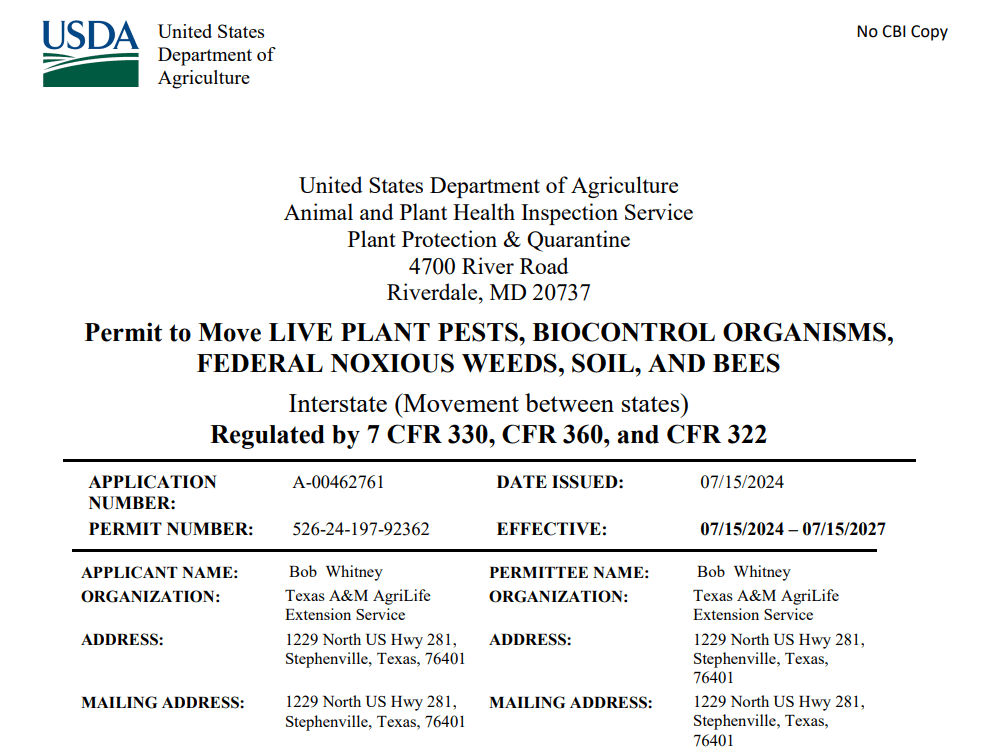
Most of the information pointed me to the State of Colorado and Nina Louden Biocontrol Specialist with the Colorado Department of Agriculture. The first thing Nina asked me, “Do you have a USDA permit to allow us to ship “biological control agents” across state lines?” At that time, I didn’t even know there was a need for a permit, but I soon found out you can apply for one online. There was much in the application process I didn’t understand but overall, it was simple and easy. I got my “permit” as you can see below
USDA Permit to ship and apply Field Bindweed Gall Mites
I sent Nina the USDA permit by email and her response back was we will ship you the Gall Mites on Monday of the next week to arrive by noon on Tuesday. The mites are harvested in Colorado from growing field bindweed by simply cutting off pieces of field bindweed that are infected with the mites and shipping them in a cooler with cold packs. My next call was to Carl Pepper, South Plains Organic Cotton Farmer to see if he was able to help me put out the mites on one of his fields.
Field bindweed with the Gall Mites on the plant are harvested and sent to us for distribution.
Carl and his family had a perfect location next to an organic cotton field. The area between the county road and the field was infested with field bindweed and the weed was growing out in the cotton rows where Carl could not plow it out. We put the gall mites into two 10′ X 10′ squares well marked and will monitor their “survivability” and ultimately measure their spread out from the 10′ X 10′ area to the field.
Carl Pepper is applying the field bindweed pieces to the existing field bindweed plants in his field. We did this by wrapping the pieces around the existing plants. The mites will move from the old plants to the new looking for fresh food sources.
Will it work? I don’t think any of us know for sure, but we have to try! The field bindweed gall mite is not going to eradicate field bindweed on the South Plains. But our hope is that as the field bindweed comes out each spring the gall mite is also out and feeding on the field bindweed. This will significantly slow the growth of the bindweed and hopefully keep it in check. Something we don’t have now!
Click on the picture above to read this publication about the Gall Mite and how Colorado State Department of Agriculture ships them out. This service was free of charge and very easy to do. I hope to get more to release in other places soon.
I was scrolling through my LinkedIn this morning (Monday, July 15, 2024) and saw a post by Dr. Joseph Burke that I just had to check out!
Just click on the picture to read the full research paper!
I am going to cut through all the information in the full-text and give you a look at the mini version. Let’s start with the abstract from the first page.
Abstract: By improving soil properties, cover crops can reduce wind erosion and sand damage to emerging cotton (Gossypium hirsutum L.) plants. However, on the Texas High Plains, questions regarding cover crop water use and management factors that affect cotton lint yield are common and limit conservation adoption by regional producers. Studies were conducted near Lamesa, Texas, USA, in 2017–2020 to evaluate cover crop species selection, seeding rate, and termination timing on cover crop biomass production and cotton yield in conventional and no-tillage systems. The no-till systems included two cover crop species, rye (Secale cereale L.) and wheat (Triticum aestivum L.) and were compared to a conventional tillage system. The cover crops were planted at two seeding rates, 34 (30.3 lbs./ac.) and 68 kg ha (60.7 lbs./ac.), and each plot was split into two termination timings: optimum, six to eight weeks prior to the planting of cotton, and late, which was two weeks after the optimum termination. Herbage mass was greater in the rye than the wheat cover crop in three of the four years tested, while the 68 kg ha (60.7 lbs./ac.) seeding rate was greater than the low seeding rate in only one of four years for both rye and wheat. The later termination timing produced more herbage mass than the optimum in all four years. Treatments did not affect cotton plant populations and had a variable effect on yield. In general, cover crop biomass production did not reduce lint production compared to the conventional system.
This last statement, “cover crops did not reduce lint production,” is hugely significant and yet it is exactly what many organic cotton producers have been saying for years!
Temperature and Rainfall data during the study
To continue the “mini version” of the research let’s turn to the Summary and Conclusions on page 9 of the research paper.
The semi-arid Texas High Plains presents challenging early-season conditions for cotton producers. Cover crops can help mitigate erosion and protect cotton seedlings from wind and sand damage without reducing yields compared to conventional practices if managed appropriately. Effective cover crop management is needed to optimize cotton lint yield compared to conventional tillage systems. We focused on three cover crop management practices: species selection, seeding rate, and termination timing. With regard to species selection, rye produced greater herbage mass in three of the four years. The seeding rate had less of an effect on herbage mass; doubling the seeding rate from 34 to 68 kg ha (30.3 – 60.7 lbs./ac.) did not contribute to increased herbage mass. This change in seeding rate only causes an increase in seed costs, and this trend held true for both species and termination timings. Termination timing had the most significant effect on herbage mass, with a two-week delay in termination timing, increasing herbage mass production from 44 to 63%. At the targeted termination time of six to eight weeks before planting, rye and wheat experienced increased growth as they transitioned from vegetative to reproductive growth. This critical period makes termination timing an essential aspect of herbage mass management. Termination timing can also impact the carbon-to-nitrogen ratio, where higher C:N at later growth stages can increase N immobilization. While water availability or allelopathy concerns are cited as risks for cotton germination and emergence when using cover crops, cotton plant populations were not affected in this study.
Cotton lint yields were not impacted by increasing cover crop herbage mass, except in 2018, when greater wheat biomass resulted in decreased lint yield compared to the conventional system. In each year, wheat or rye at a 34 kg ha (30.3 lbs./ac.) seeding rate and optimum termination timing resulted in cotton lint yields not different than the Conventional Treatment. While yield potentials can differ between years depending on precipitation and temperatures, effective cover crop management can help sustain cotton lint yields when compared to conventional treatments. Rye seed tends to cost more than wheat, but it grows more rapidly and could be terminated earlier to allow for increased moisture capture and storage between termination and cotton planting. (below is the final sentence in the paper and summarizes well the entire study)
“This research demonstrates that with effective cover crop management, the implementation of conservation practices can be successful in semi-arid cropping systems.“
Beneficial insects, also known as biological control agents, play a crucial role in managing pest populations in organic crops, especially organic row crops. These insects help reduce the need for chemical pesticides, promote biodiversity, and support sustainable farming practices. Here’s a guide on how to integrate beneficial insects into your organic farming system, specifically for crops like cotton, peanut, corn, sorghum, rice, and wheat.
Incorporating beneficial insects into your pest management strategy is a smart, sustainable choice. These natural predators offer a highly effective alternative to organic insecticides, providing ongoing pest control without the need for frequent reapplications. The beneficial insect industry is growing, offering a wider variety of predators and parasitoids than ever before, making it easier to find the right ones for your specific pest issues.
Using beneficial insects helps maintain a balanced ecosystem, as they target pests without harming other beneficial organisms. This promotes biodiversity and long-term soil health, crucial for sustainable farming. Additionally, while the initial investment might be higher, the reduction in pesticide use can lead to significant cost savings over time.
Furthermore, employing beneficial insects supports compliance with organic standards, as it reduces reliance on even approved organic insecticides. This approach aligns with the principles of organic farming, enhancing natural processes and contributing to a healthier environment.
Lastly, it is not unusual to see this type of “pest control” continue to be self-sustaining as the introduced predators continue to live in your established habitat. Living on your farm year-round means that they are ready to go to work when you do! Take a look at this list below and know that these are the insect predators that are commonly available and listed on most websites. But if you find a problem or have a suggestion don’t hesitate to reach out.
Cotesia glomerata(Cabbage White Wasp) Targets: Caterpillars of the cabbage white butterfly.
Gonatocerus triguttatus (known as Fairyflies sometimes) Targets: Glassy-winged Sharpshooter of grapes, spreader of Pierces Disease. May be hard to find!
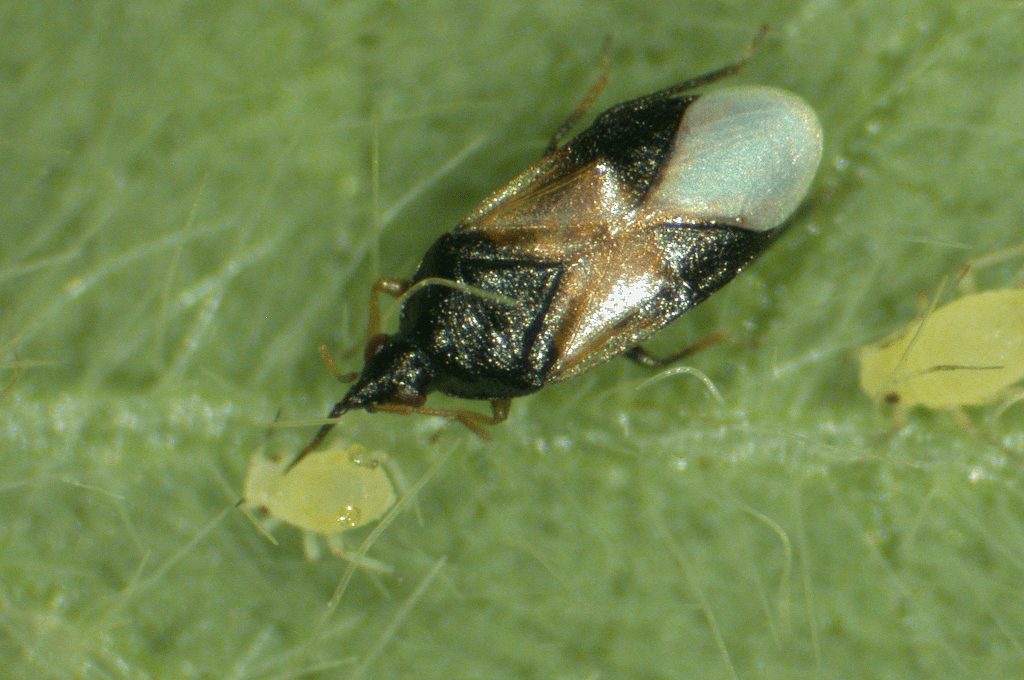
Pirate Bugs (Orius spp.)
Pirate bug. (Photo Credit: Ho Jung Yoo)
Orius insidiosus (Minute Pirate Bug) Targets: Thrips: Both adult and larval stages, Aphids, Mites, Whiteflies, Psyllids, Caterpillars
Orius majusculus Targets: Thrips: Both adult and larval stages, Aphids, Mites, Whiteflies, Psyllids, Caterpillars
Orius tristicolor Targets: Thrips: Both adult and larval stages, Aphids, Mites, Whiteflies, Psyllids, Caterpillars
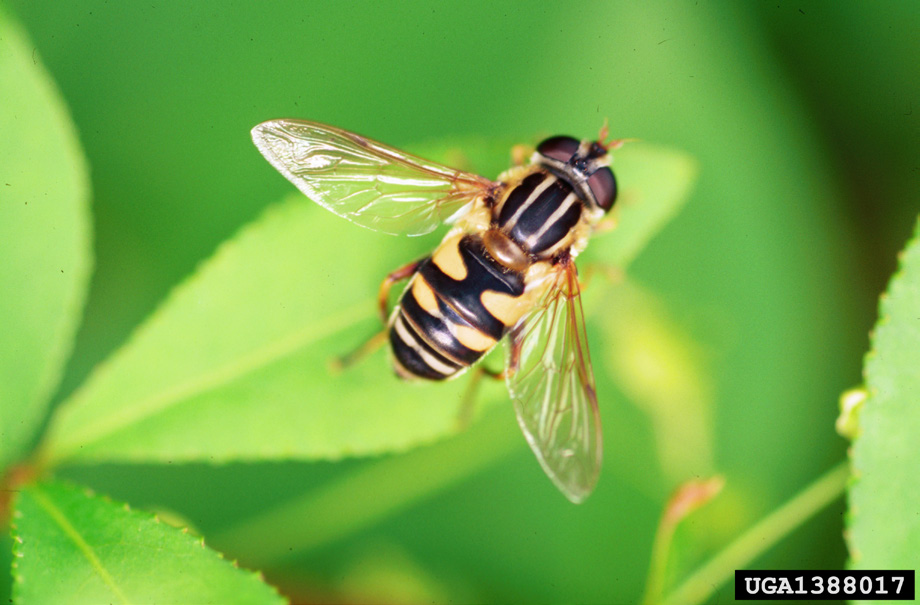
Hoverfliesor Syrphid Flies
Hover Fly (Stephen Katovich, Bugwood.org)
Episyrphus balteatus (Marmalade Hoverfly)Targets: Aphids, small caterpillars.
Syrphus ribesii(Common Hoverfly or Ribbed Hoverfly) Targets: Aphids.
Predatory Mites (Phytoseiidae)
Phytoseiulus persimilis mite eating a Two-spotted spider mite!
Phytoseiulus persimilis(no common name) Targets: Two-spotted spider mites, broad mites.
Amblyseius swirskii(no common name) Targets: Thrips, whiteflies, spider mites.
Neoseiulus cucumeris (no common name) Targets: Thrips, spider mites, broad mites.
Great video about mites and control of spider mites with Amblyseius swirskii
Predatory Nematodes
The Steinernema scapterisci insect-parasitic nematode in the juvenile phase can infect and kill insects in the Orthoptera order, such as grasshoppers and crickets. (Photo by David Cappaert, Bugwood.org.)
Habitat Enhancement: Plant diverse flowering plants around the field to provide nectar and pollen for beneficial insects. Include cover crops and hedgerows to offer shelter and alternate food sources. Have available before purchasing beneficial insects.
Minimize Pesticide Use: Avoid using broad spectrum organic pesticides that can harm beneficial insects. Many organic insect control products are specific to certain insects or insect systems (Pyganic will kill all beneficials although it is organic). Use targeted treatments if necessary and apply them at times when beneficial insects are less active.
Create a Favorable Environment: Ensure the field has adequate moisture and avoid practices that disrupt the habitat of beneficial insects.
Beneficial Insect Delivery and Distribution Methods
Insect Delivery
Bulk Containers: Insects are often shipped in bulk containers containing a mixture of insects and a carrier medium (like vermiculite, bran, or buckwheat hulls).
Blister Packs: Small plastic blister packs containing a specific number of beneficial insects are used for easy handling and release.
Paper or Mesh Bags: Insects are placed in breathable bags that allow for easy distribution in the field.
Distribution Methods
Hand Release: Beneficial insects are manually sprinkled or shaken out onto the crops. Simple tools like a “saltshaker” or small containers can be used for more precise application. Used on smaller areas or targeted release points.
Mechanical Dispersal: Using blowers or air-assisted equipment to disperse insects over a larger area. Usually this means a specialized blowers designed for insect release, similar to leaf blowers but calibrated for the insects’ safety. Typically used on large-scale row crops where uniform distribution is necessary.
Aerial Release: Drones or small aircraft can be used to release insects over extensive fields. Drones equipped with special release mechanisms for even distribution and this method works great with very large fields or difficult-to-access areas.
Release Stations: Strategic placement of small containers or stations throughout the field that allow insects to disperse naturally. These are typically small cardboard or plastic tubes, blister packs placed on stakes or plants. These allow for continuous release over time and for mobile insects like predatory beetles or parasitic wasps.
Instructions for Applying Beneficial Insects in Fields
Timing: Release beneficial insects early in the season before pest populations reach damaging levels.
Quantity: Determine the appropriate release rate based on the specific crop and pest pressure. This information is often provided by suppliers of beneficial insects.
Distribution: Distribute insects evenly across the field. Use dispersal devices like handheld blowers or distribute by hand in small release points throughout the crop area. Apply during cool, calm periods of the day, such as early morning or late afternoon, to minimize stress on the insects.
Specific Instructions for Different Beneficial Insects
Lady Beetles
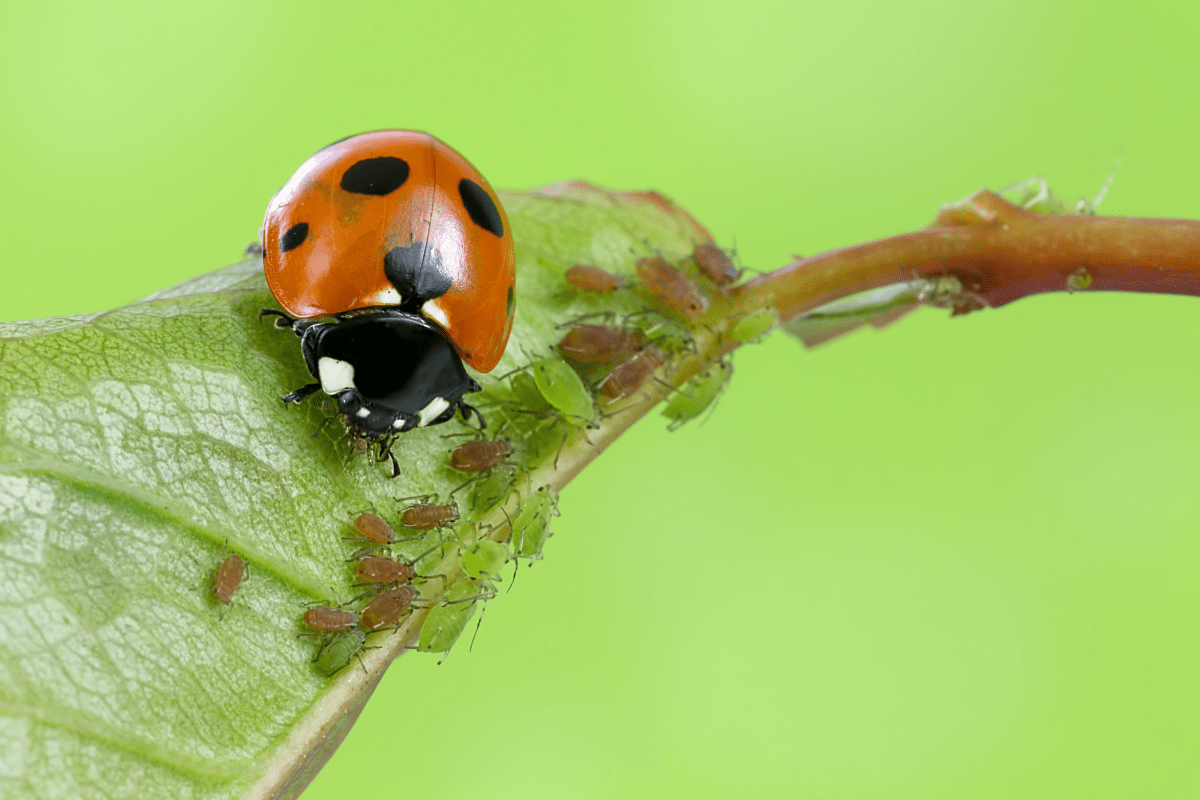
Application: Release near aphid-infested plants. Ensure there is enough food and habitat for them to stay.
Environment: Lady beetles prefer environments with flowering plants which provide nectar.
Lacewings
Application: Release lacewing eggs or larvae directly onto plants. Eggs can be scattered or placed on leaves.
Environment: Favorable habitats include areas with nectar-producing plants to support adult lacewings.
Parasitic Wasps (e.g., Trichogramma spp.)
Application: Release near the time of pest egg laying. Attach release cards with parasitized eggs to plants or scatter loose eggs.
Environment: Provide a mix of flowering plants to support adult wasps with nectar sources.
Predatory Mites (e.g., Phytoseiulus persimilis)
Application: Distribute mites onto plants where pest mites are present. Sachets or loose mites can be used.
Environment: Ensure a humid environment, as mites require high humidity for survival.
Predatory Nematodes (e.g., Steinernema spp.)
Application: Mix nematodes with water and apply using irrigation systems, backpack sprayers, or watering cans.
Environment: Keep soil moist for several days after application to ensure nematodes can move and infect pests.
Keeping Beneficial Insects in the Field
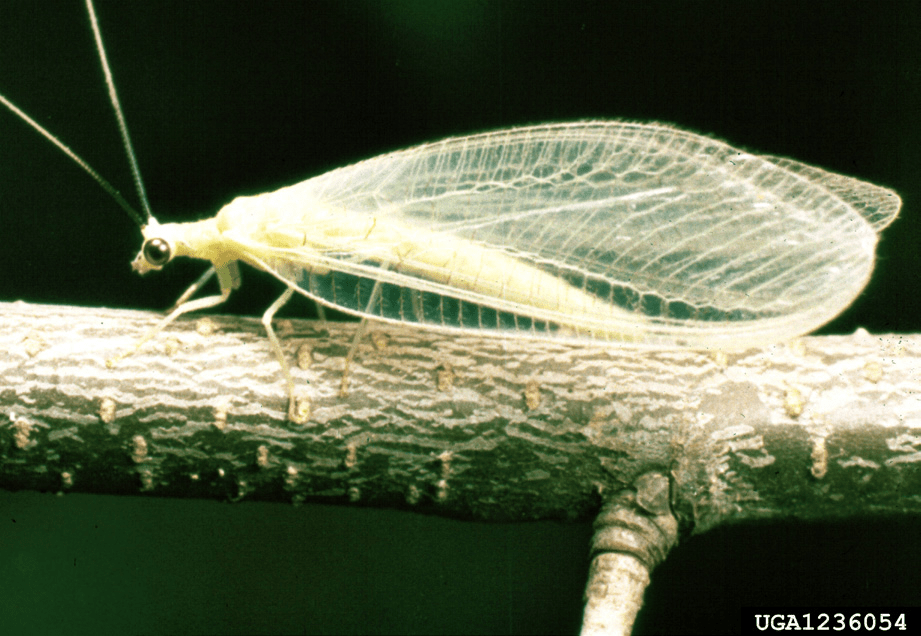
Learn about your predator and be able to identify life stages. A Lacewing adult looks a lot different than the dragon-like nymph. The same is true for the Lady Beetle that has a ferocious looking larva!
Avoid and pesticide applications after applying predators. Especially avoid using broad-spectrum pesticides that can harm beneficial insects. Even avoid irrigation applications, if possible, till predators can begin feeding.
Regularly check pest and beneficial insect populations to assess the effectiveness of the release. Use sticky traps, visual inspections, and sweep nets for monitoring. Learn how effective your predators are and what the drop in pest insects looks like once predators are released.
Maintain and promote a diverse habitat with cover crops and flowering plants to support beneficial insect populations. If is amazing how many pest insects stop in your predator habitat first and get eaten up!
Minimize tillage to preserve the habitat of ground dwelling beneficial insects.
Use trap crops to attract pests away from the main crop, allowing beneficial insects to control them more effectively.
Crop Varieties and Beneficial Insects
Selecting Varieties: Choose crop varieties that are known to attract and support beneficial insects. Some plant varieties may produce more nectar and pollen, which are crucial for the survival of beneficial insects.
Integrated Planting: Integrate flowering plants and companion plants that attract beneficial insects within the crop rows. This can be a way to better utilize waterways or sections of a pivot.
Real Life Example: In cotton fields, farmers can plant strips of alfalfa or clover, which attract lady beetles and lacewings. These beneficial insects will help control aphid populations, reducing the need for chemical interventions. Additionally, by maintaining a diverse plant environment, beneficial insects are more likely to stay and thrive in the field.
The other day, as I was giving a program on organic beef production, a member of the audience expressed concern over the organic community claims that organic is better for the environment, animals and human health. He said that this “implies” that conventional agriculture is just plain “bad” and inferring that conventional agriculture hurts the environment, animals and human health.
The reference had to do with my comments that certified organic production is both third-party inspected and with the new Strengthening Organic Enforcement (SOE) rules, is traceable all the way back to the farm where it was grown. This person assumed I was claiming that organic was “better” because of these two claims but in this instance, I was simply telling about organic certification and the organic program requirements. Rules are not what make organic better, but rules do distinguish those who say they are better and those who actually are better!
I think this person thought I was “virtue signaling,” by talking about our “organic rules” and implying that these rules make the food better. If you look up a definition for virtue signaling it refers to the “act of expressing opinions or sentiments intended to demonstrate one’s good character or the moral correctness of one’s position on a particular issue.”
Personally, I do not believe my good character or moral correctness comes from what I say but what I do. And I believe the organic farmers in Texas are not just producing a superior product because of the rules they follow but because their product is grown under the highest standards possible (rules) with a method of farming that ensures their crops have a superior level of nutrition and flavor. I believe in the organic program and the products grown organic to the point that organic is what you find in my cabinets and in my refrigerator! My wife Laurie and I believe we are healthier eating organic, and we know the flavor and taste is outstanding.
There are a lot of “food labels” nowadays and it is starting to look like many of these labels are just “virtue signaling” in hopes of attracting a following or customers. The latest consumer survey conducted by OTA* shows that 88% of all consumers recognize and understand the USDA Organic label, more than any other label! Just click on this link to read some of the ways organic is improving our lives. CLICK HERE
*According to the Organic Trade Association and Euromonitor International in their report, 2024 Consumer Perception of USDA Organic and Competing Label Claims (April 2024, p. 13), consumer trust in organic labels continues to grow.
This is virtue signaling at its finest!
Below is a funny story with a good and moral look at virtue signaling that I got off social media. As you read this, you may find yourself lamenting some of our currentconsumer conveniences and where they are leading us and our country. Talking to many organic farmers and business owners you immediately realize that they know we need to do “business” a different way and by being certified organic, they are! Enjoy the read…..
A young cashier told an older woman that she should bring her own grocery bags because plastic bags weren’t good for the environment. The woman apologized, “We didn’t have this green thing back in my day.” The young clerk said, “Your generation did not care enough to save our environment for future generations.”
“Back then, we returned milk bottles, soda bottles, and beer bottles. The store sent them back to the plant to be washed sterilized and refilled, so it could use the same bottles over. They really were recycled.
Grocery stores bagged our groceries in brown paper bags, which we reused for numerous things. We walked upstairs because we didn’t have an escalator in every store and office building. We walked to the grocery and didn’t climb into a 300-horsepower machine every time we had to go two blocks.
Back then, we washed the baby’s diapers because we didn’t have the throwaway kind. We dried clothes on a line, not in an energy-gobbling machine burning up 220 volts — wind and solar power really did dry our clothes back in our day. Kids got hand-me-down clothes from their brothers or sisters, not always brand-new clothing.
Back then, we had one TV, or radio, in the house — not a TV in every room. And the TV had a small screen the size of a handkerchief, not a screen the size of the state of Montana. In the kitchen, we blended and stirred by hand because we didn’t have electric machines to do everything for us.
When we packaged a fragile item to send in the mail, we used wadded-up old newspapers to cushion it, not Styrofoam or plastic bubble wrap.
Back then, we didn’t fire up an engine and burn gasoline just to cut the lawn. We used a push mower that ran on human power. We exercised by working so we didn’t need to go to a health club to run on treadmills that operate on electricity.
We drank from a fountain when we were thirsty instead of using a cup or a plastic bottle every time we had a drink of water. We refilled writing pens with ink instead of buying a new pen, and we replaced the razor blades in a razor instead of throwing away the whole razor just because the blade got dull.
Back then, people took a bus, and kids rode their bikes instead of turning their moms into a 24-hour taxi service. We had one electrical outlet in a room, not an entire bank of sockets to power a dozen appliances. And we didn’t need a computerized gadget to receive a signal beamed from satellites 23,000 miles in space to find the nearest burger joint.
But the current generation laments how wasteful we old folks were just because we didn’t have the green thing?”
In organic production systems, the challenges to producing an economically successful crop are quite different than in conventional systems. Research has shown that the choice of cultivar is one of the most important decisions in determining performance under organic management.
There are many different target markets for rice, including:
Standard Milled Long or Medium Grain Rice: Commonly used in everyday cooking.
Brown Rice: Retains the bran layer and is considered healthier due to higher fiber content.
Aromatic Rice: Varieties such as jasmine and basmati that are valued for their distinctive fragrances. These are being developed by TAMU Rice Researchers and should be available soon.
Special Purpose Rice: Includes rice for flour production or colored bran rice, which can be marketed for its unique nutritional or aesthetic qualities.
Understanding the preferences of these markets and identifying outlets for specific types of rice may offer added economic opportunities for growers. For example, there is a growing market for aromatic and colored bran rice due to increasing consumer interest in unique and healthful food options.
Importance of Seedling Vigor
In organic production, the use of many conventional seed treatments is prohibited. Therefore, selecting varieties with excellent seedling vigor and seedling quality is crucial. Seedling vigor refers to the ability of seeds to germinate and grow rapidly under field conditions, leading to strong early stand establishment. This is particularly important in organic systems for several reasons:
Early Flooding: Strong early growth allows for an early flood, which is a key practice for weed control in rice fields.
Weed Competition: Vigorous seedlings can outcompete weeds, reducing the need for mechanical or manual weeding.
Disease Resistance: Early and healthy growth can help seedlings better withstand diseases and pest attacks.
Updated Considerations
Recent advancements and trends in organic rice production emphasize several additional factors:
Adaptability to Organic Inputs: Varieties should perform well with organic fertilizers and soil amendments, which release nutrients more slowly than synthetic fertilizers. Varieties developed in organic systems develop beneficial relationships with the microbiome.
Disease and Pest Resistance: With fewer pest control options available, selecting varieties that are resistant to common diseases and insects in the 2 rice growing regions is more critical.
Environmental Resilience: Varieties that can tolerate local environmental stresses such as drought, salinity, or extreme temperatures are preferred.
By focusing on these updated considerations, organic rice growers can better navigate the unique challenges of organic production and tap into diverse market opportunities, ultimately leading to more successful and sustainable farming operations.
Rice Variety Research
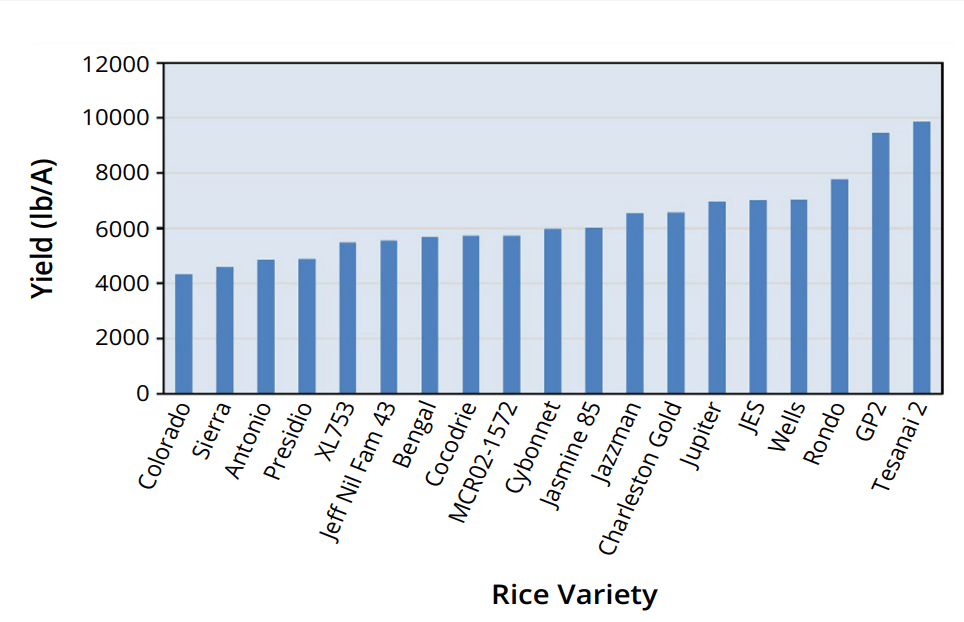
Rice varieties have different yield potentials under organic versus commercial production systems. Cultivars such as Tesanai 2, Rondo, and hybrids have high yield potential, as demonstrated in a research plot trial conducted in Texas (see picture below). Based on a 5-year (2015 through 2019) organic commercial production survey, the average yield of XL723 (a popular hybrid variety in Texas, used in organic production) was 4,094 pounds per acre, while Presidio’s yield (a popular inbred variety) was only 2,452 pounds per acre. The selection of high yielding rice varieties with tolerance to weeds and diseases is the key to successful organic rice production.
This is the yield performance of 19 rice varieties and germplasm lines grown organically in Beaumont, Texas in 2015 and 2016 at the Rice Research Center.
More Rice Variety Information
This rice variety test below was conducted by RiceTec in 2023 on the Chriss Schiurring Farm near Garwood.
The measurements provided (bushels and barrels) are generally for rough rice, which includes the hulls and is the form in which rice is typically harvested and initially processed.
Bushel of Rice: A bushel of rough rice typically weighs 45 pounds.
Barrel of Rice: A barrel of rough rice is typically defined as weighing 162 pounds.
Ratoon Rice?
Ratoon rice production involves harvesting a primary rice crop and then allowing the stubble left in the field to regrow and produce a second crop, known as the ratoon crop. This method leverages the remaining growth potential of the plant to produce an additional harvest without replanting, thereby saving time, labor, and resources. Ratoon cropping can increase overall yield and efficiency, although it typically produces a lower yield than the primary crop.
The average yield of a ratoon rice crop is typically about 50-70% of the main crop’s yield. This reduced yield is due to the limited growth potential and shorter growing period of the ratoon crop compared to the main crop. However, ratoon cropping can still be economically beneficial due to the reduced input costs and labor requirements. In many organic rice production fields, the ratoon crop is the profit crop and makes or breaks the farms success!
Seed Rice Varieties
Hybrid Rice Varieties
Hybrid rice is produced by crossbreeding two distinct rice plants with the goal of: higher yields, better disease resistance, and greater environmental stress tolerance compared to conventional varieties. Unlike conventional rice, hybrid rice seeds need to be purchased each planting season, as the hybrid traits do not persist in subsequent generations. Additionally, hybrid rice typically requires a lower planting rate (13-22 lbs. per acre or sometimes more in organic systems) due to its vigorous growth and higher productivity. To read more about how hybrid rice is produced click this link: Hybrid Rice Breeding
RiceTec XL723
For a decade now, XL723 has delivered unsurpassed value through its combination of high yield and outstanding milling yields. Long grain rice. XL723 should be harvested at 18%-20% moisture at first drydown to help maximize grain quality and grain retention.
Superior milling yield
Ideal for straighthead-prone soils
Excellent ratoon potential
Great fit for organic cultivation
RiceTec XP753
Up until 2023, XP753 was the highest-yielding long-grain rice available, providing the greatest net income potential of any competitive rice product. XP753 should be harvested at 18%-20% moisture at first drydown to help maximize grain quality and grain retention.
Protected by RiceTec’s superior disease package
Improved grain retention
Excellent ratoon potential
RiceTec RT7301
Introduced in 2020, RT7301 represents an evolution of RiceTec traditional rice products, capturing the best attributes of XP753 a long grain rice. RT7301 should be harvested at 18%-20% moisture at first drydown to help maximize grain quality and grain retention.
Very high yield potential
Protected by RiceTec’s superior disease package
Improved grain retention
RiceTec RT7302
New in 2023, RT7302 represents the next breeding evolution of RiceTec traditional rice products, capturing the best in yield and grain quality. RT7302 will raise the bar for yield among the RiceTec portfolio of long grain rice. RT7302 be harvested at 18%-20% moisture at first drydown to help maximize grain quality and grain retention.
high yield potential
Protected by RiceTec’s superior disease package
high grain quality
25% amylose content* for a more separate cooked product
*Amylose content in rice refers to the amount of amylose, a type of starch, present in the grains. Rice with intermediate amylose content (typically 20-25%) tends to have a balanced texture—neither too sticky nor too dry. This makes it versatile for a variety of culinary uses, providing a satisfactory chewiness without being overly firm or sticky.
Conventional rice varieties are traditional types of rice that are open-pollinated and can be replanted each season from harvested seeds (there are laws regulating saving some seed varieties, click to read more). They are important for maintaining genetic diversity, which helps ensure crop resilience against diseases and pests. Additionally, they often have unique flavors and qualities prized in local cuisines and cultural practices. Planting rates are in the range of 60-80 or even to 120 lbs. per acre. Check with your sales representative or agronomist. Organic seeding rates can be up to 1.5 times more.
You may see the term “inbred.” Inbred rice varieties are those developed through self-pollination over multiple generations to achieve a stable, uniform genetic makeup. Unlike hybrid varieties, which are produced by crossbreeding different parent lines, inbred varieties maintain consistent traits across generations when their seeds are replanted. They are often valued for their stability, specific traits, and adaptability to local growing conditions.
Dyna-Gro DG245L
Semi-dwarf, early maturing, long-grain variety with exceptional milling yields and grain quality. Medium plant height of 36 inches and great stalk strength for lodging resistance and storm tolerance. Very stable yields in five years of research with excellent ratoon crop potential. Intermediate gel temperature* and intermediate amylose content.
*Gel temperature refers to the temperature at which the rice starch granules gelatinize or become sticky during cooking. Rice varieties with intermediate gel temperature generally produce grains that are soft but not mushy when cooked, offering a desirable texture that balances between firmness and tenderness.
Dyna-Gro DG263L
High yielding long grain variety with excellent quality with excellent disease package including blast and smuts. Plant height and stalk strength for lodging resistance and storm tolerance with a proven field performance. Uniform grain size and very good miller (58/69). Lower seeding rates than most varieties (45-65 lbs. per acre).
Dyna-Gro DG353M
High yielding medium grain variety with excellent quality with uniform grain size and a very good miller (60/70). Great standability and favorable plant height (36 inches). Very stable yields in four years of research. Lower seeding rate (50-75 lbs. per acre) than other conventional medium grain inbreds.
Horizon Ag CL153
CL153 is an early, semi-dwarf, long-grain Clearfield rice variety developed by the LSU AgCenter H. Rouse Caffey Rice Research Station. Known for its excellent yield potential and high head rice yields with minimal chalkiness, CL153 offers several agronomic advantages. It has a yield potential comparable to or slightly below that of CL151 but with better lodging resistance. The variety also features excellent grain length, translucency, and whole milled rice output, meeting industry standards.
In terms of disease resistance, CL153 is moderately susceptible to blast, Cercospora, bacterial panicle blight, and straighthead, but it is susceptible to sheath blight. It carries the Pita gene, providing broad-spectrum resistance to common blast races in the southern USA. This makes it a robust choice for growers seeking a variety with good disease management traits.
Horizon Ag CLL16
CLL16 is a long-grain, conventional height, Clearfield rice variety developed by the University of Arkansas System Division of Agriculture. It boasts excellent yield potential and stability, maintaining strong yields even with later planting dates. The variety has excellent seedling vigor and is a few inches taller than typical Louisiana Clearfield varieties, but it is moderately resistant to lodging.
CLL16 features the Pita gene (not a GMO), providing strong resistance to blast, and the CRSP2.1 gene (not a GMO), offering resistance to narrow brown leaf spot. It is moderately susceptible to Cercospora infection on the stem, sheath blight, and bacterial panicle blight. However, milling yields and ratoon potential are observed to be lower than other some other varieties.
Organic rice farmers looking for a reliable variety will find CLL16 to be a strong contender due to its consistent performance, high milling quality, and industry-leading blast resistance. In university tests, CLL16 has shown good rough rice yields, averaging higher than the Diamond variety, making it a comprehensive choice for rice farmers.
Horizon Ag CLL18
CLL18 is a long-grain, conventional height Clearfield rice variety developed by the University of Arkansas System Division of Agriculture. It boasts excellent yield potential and stability, maintaining strong yields even with later planting dates. With excellent seedling vigor, CLL18 is slightly taller than typical Louisiana Clearfield varieties but is moderately resistant to lodging. However, its milling yields are observed to be lower than other Clearfield varieties.
CLL18 does not contain the Pita blast resistance gene and is moderately susceptible to blast, making it less suitable for areas prone to this disease. It does contain the CRSP2.1 gene, providing resistance to narrow brown leaf spot, but is moderately susceptible to Cercospora infection on the stem, sheath blight, and bacterial panicle blight. Despite these susceptibilities, CLL18 has consistently outyielded CLL16 by about 5% in Arkansas trials. Its earlier maturity makes it a good planting partner with CLL16, allowing farmers to stagger their harvests effectively.
Stratton Jupiter
A short-season, semi-dwarf, medium grain with excellent yield potential and milling quality. It is a small grain size but has moderate resistance to bacterial panicle blight.
Stratton Titan
Titan is a very early, short-stature, medium-grain rice variety known for its excellent yield potential, often comparable to or better than Jupiter. It matures about a week earlier than Jupiter and is similar in height. Titan has a preferred large grain size but is moderately susceptible to blast and bacterial panicle blight. It is important to harvest Titan at the correct moisture level, as milling yields drop off significantly when harvested at lower moisture. This short-season variety is valued for its robust performance and high yield potential.
Stratton Cheniere
A short-season, semi-dwarf long grain with excellent yield potential and milling quality comparable to Cypress. An early, high-yielding, high-quality, rice variety with, good lodging resistance and moderate resistance to straighthead. It is moderately susceptible to blast and bacterial panicle blight and susceptible to sheath blight and Cercospora. The variety displays excellent grain quality characteristics, has a higher amylose content and cooks less sticky than typical U.S. long grains.
Stratton Jewel
A mid-season long grain variety with good yield potential and milling yield. Susceptible to straighthead. Moderately susceptible to sheath blight, blast, Cercospora, false smut and lodging. Moderately resistant to bacterial panicle blight.
Stratton Diamond
A mid-season, long-grain variety with excellent yield potential and good milling quality. Very good straw strength. Susceptible to blast and sheath blight, moderately susceptible to bacterial panicle blight. Very susceptible to false smut
Light, sandy soils warm up faster than heavier, poorly drained soils. Of course, we don’t always have a choice, but if you are going to spend money on transplants and fertilizer, choose your best land for vegetables. The heat to warm up wet soil 1 degree will heat up dry soil 15 degrees.
Selection of Variety
Check the days to maturity. There is a big difference between many varieties, and this area needs careful consideration. The early variety may not be the best overall, but it can get you into the market earlier, which can be advantageous.
Use Windbreaks
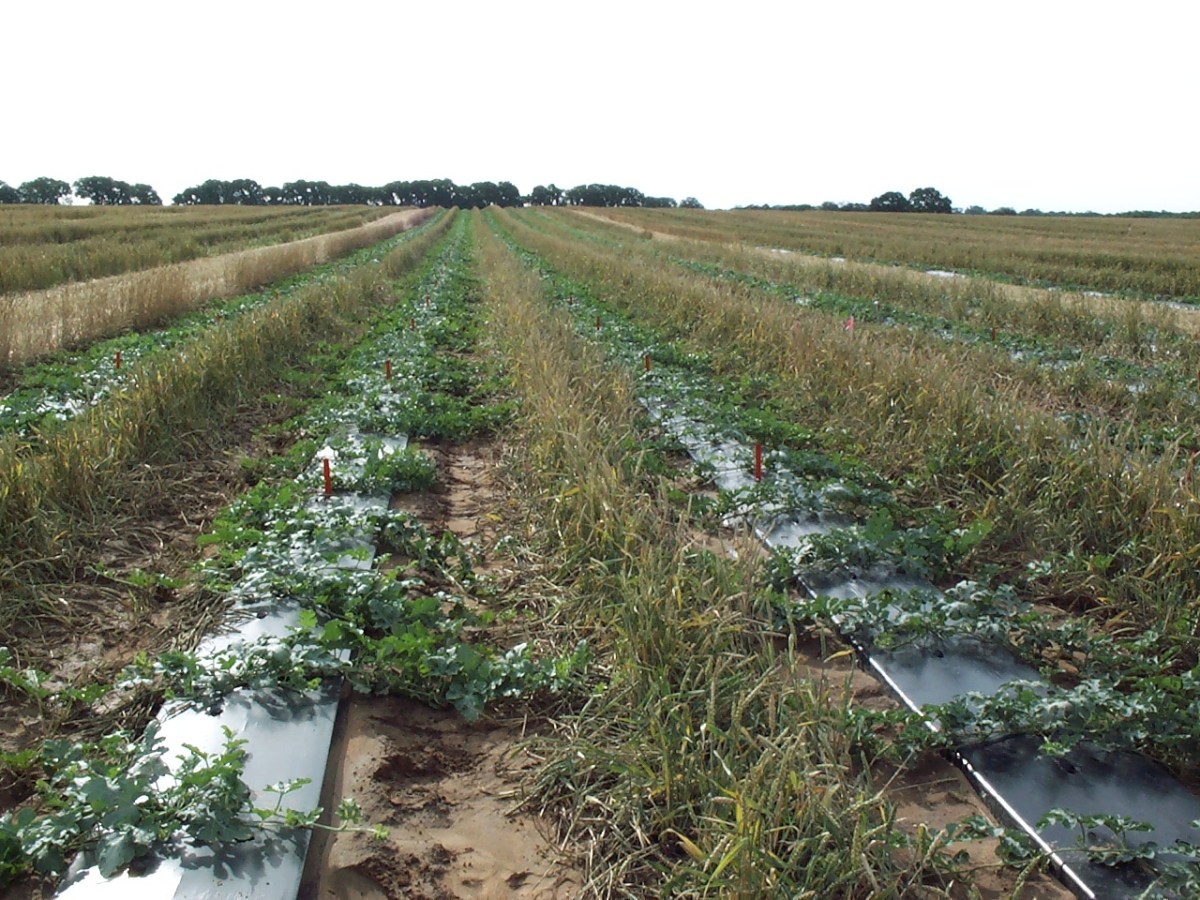
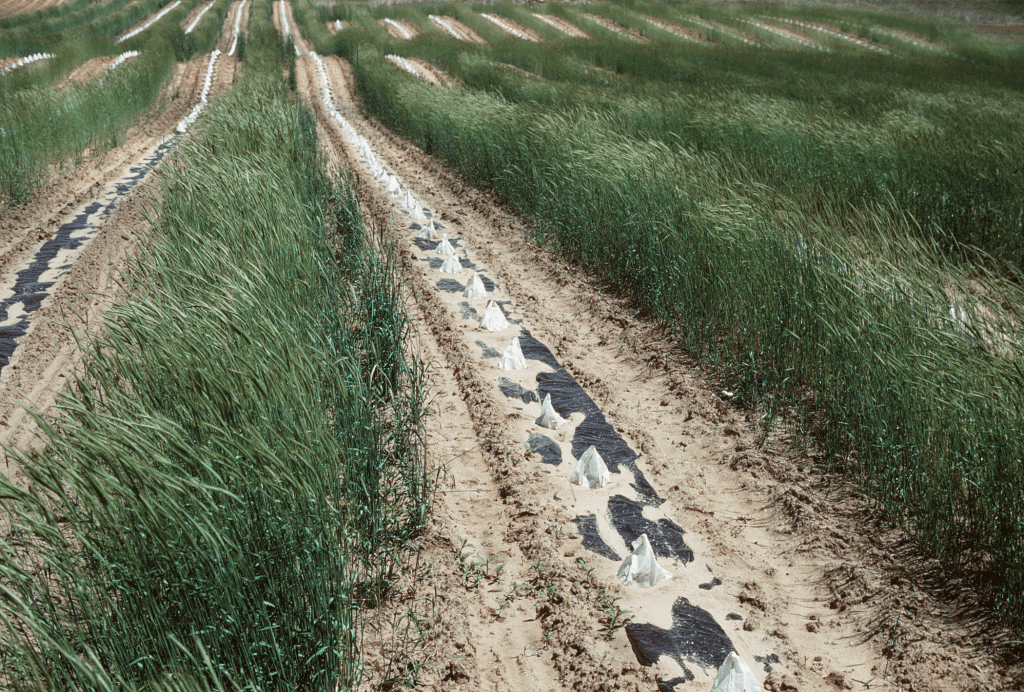
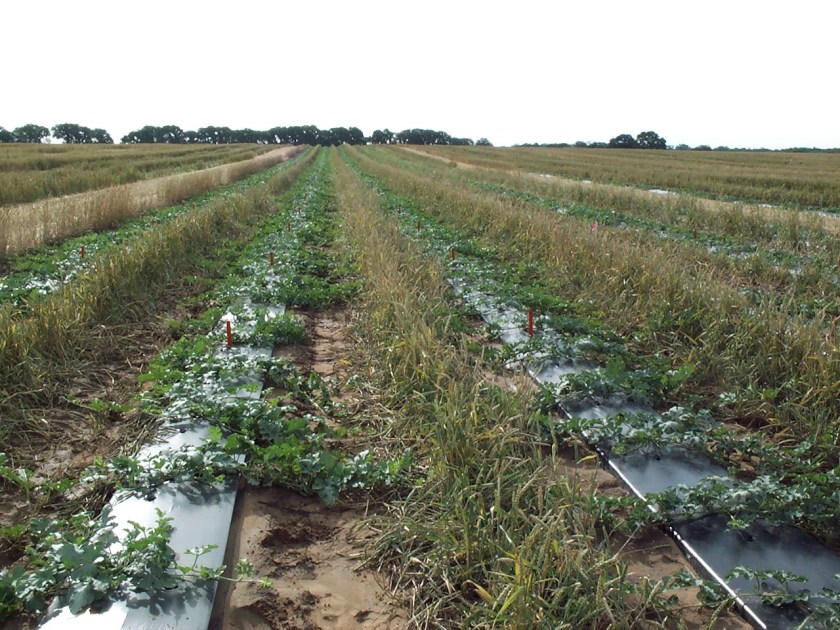
This is perhaps the most important based on work I have done with melons. Windbreaks can decrease time to maturity by a week. Windbreaks are simply plantings with taller plants done weeks or months before your vegetable crop is planted. For example, a rye crop planting in October will be heading out when you plant melons April 1st. The melon crop is stripped into the standing rye.
Providing Frost Protection
In the past, I have worked with growers who went to the trouble and expense to bring in helicopters when an early morning freeze was predicted. It is not unusual to see vineyards with ‘wind machines’ to circulate air when a frost is predicted. Water sprinklers will coat plants with ice which is a freeze protection – sounds crazy I know! Some orchard owners will have bales of hay they set on fire to generate a smoke layer that holds in heat. The basic message is to be prepared if you plant early.
Use of Row Covers
High-value crops like strawberries really benefit from the use of row covers. These can be expensive, so the crop must generate good income to justify the cost. Floating row covers can protect plants from early-season pests and cold temperatures, allowing for earlier planting and faster growth (4 above). These covers can be removed once the danger of frost has passed or may be left on to protect from insect pests.
Plastic Mulch
These increase earliness by warming the soil, conserving moisture, preventing weed problems, and increasing total plant yields. In our Texas soils, plastic mulch can also help keep the plant row from becoming too wet or too dry.
Transplants
Transplants will greatly increase earliness but only if the transplant is healthy and vigorous. You must use organic sourced transplants! Currently we are working to develop better organic transplants and methods for growing transplants in a TDA supported Specialty Crop Grant. Some transplants that have been grown too long in the greenhouse don’t do well in the field so check your source constantly for when they will be ready so you will be ready.
Drip Irrigation
Providing water in small amounts often is the job of drip irrigation. Used with plastic mulch, drip irrigation increases earliness and yield. Drip irrigation is fairly easy to install and relatively inexpensive. You generally need a pressure regulator, filter, hoses or pipes to carry the water and drip tape to deliver to the crop.
Fertility
High levels of nutrients ensure rapid growth and utilization of water and sunlight. Many growers struggle to provide stored nutrients in soil, provide pop-up nutrients at planting, and fertilize with organic nitrogen sources through harvest. Regular soil testing helps determine nutrient deficiencies and allows for proper soil amendment before planting. Balanced soil fertility is crucial for early and vigorous plant growth.
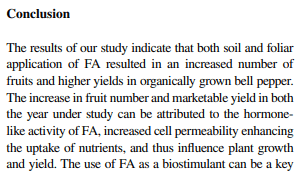
Effect of fulvic acid on yield performance of organic bell pepper (Capsicum annuum L.) under open‑field conditions in Tennessee. 2023
Certain growth-promoting substances, like seaweed extracts or microbial inoculants or even Fulvic Acid, can enhance earliness, plant growth and development, potentially leading to earlier harvests.
Staggered Planting
Planting in staggered intervals (planting tomatoes on a 2-week schedule) can help manage for frost losses and increase the harvest window and ensure a continuous supply of produce, allowing entry into the market over a longer period.
















 Texas A&M AgriLife Organic