
You are special and everybody knows it!

Yes, if you are certified organic you are special and yes, everybody knows it or can know it! I have many, many opportunities to speak to groups about organic every year. I do my best to tell people that really don’t know about organic, what is involved in being certified organic, and then to describe the people who grow, process and sell organic products. Most of the groups I speak to, have no clue that you as a certified organic entity have your business name, your address, your email, your phone and more in a database for all the world to see – did you as a certified organic farmer or processor know that?

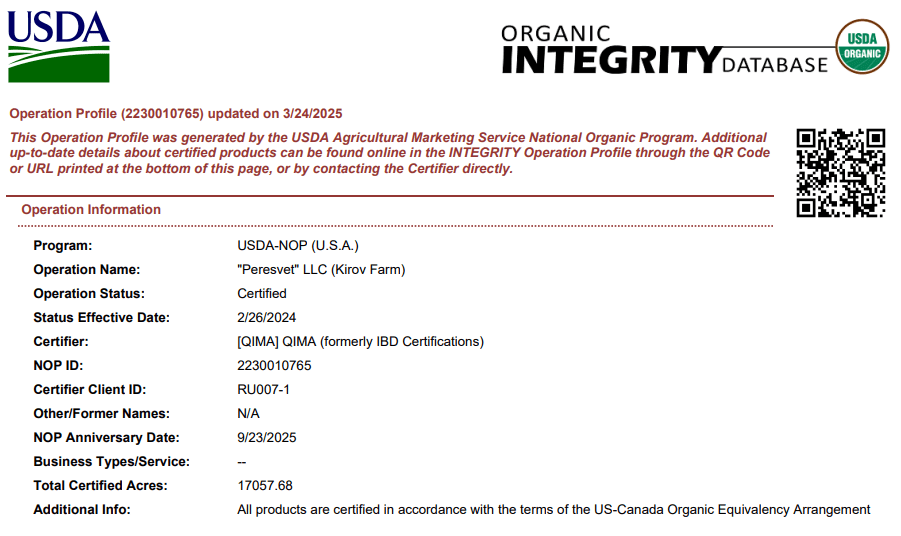
Well, it is true! For instance, do you know about this farm?

This is the Kirov Farm called Peresvet. You are looking at a portion of their organic certificate that I downloaded from the Organic Integrity Database (OID). But there is more:

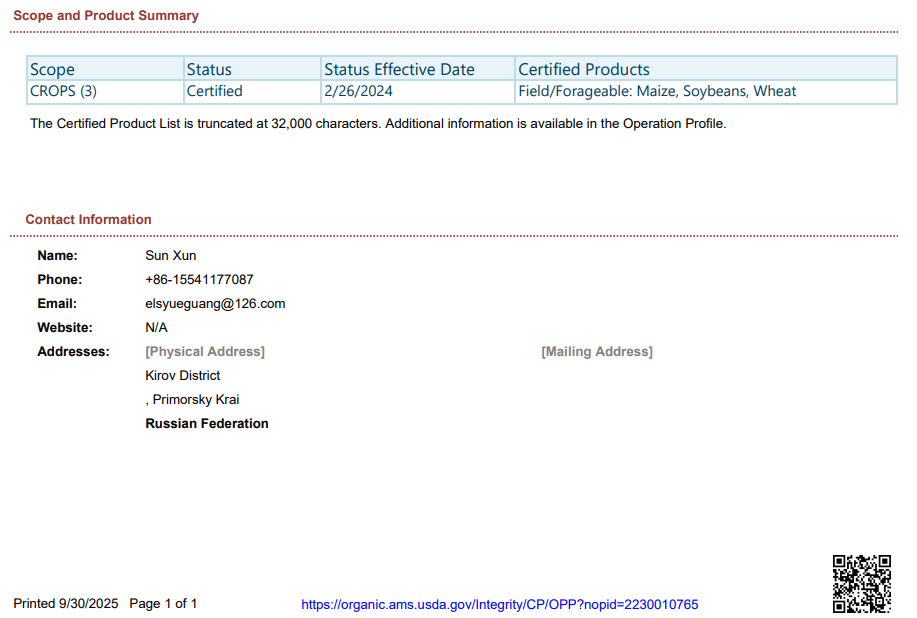
In this picture you can see that Sun Xun grows Maize (corn), Soybeans and Wheat. I can call Mr. Xun on the phone if I want to make an international call because he lives in the Kirov District of the Russian Federation. Or I can email him and ask a quick question about maybe buying his wheat crop.

Based on this certificate, I now know pretty much everything about this organic operation I need to know to make contact and begin a discussion about his crops and a possible purchase or even a collaboration to expand our markets. This is exactly how I am able to send you a newsletter by email or mail since I can get both off of the OID website!

I asked Chat GPT to give me more information about this place and here is what it said:

The listing you shared is for an organic operation certified in the Russian Federation, specifically in Primorsky Krai within the Kirov District.

  • Primorsky Krai is a region in the Russian Far East, bordering China and North Korea, and stretching to the Pacific Ocean.
  • The Kirov District is one of the administrative divisions inside Primorsky Krai.
  • The crops listed (maize, soybeans, wheat) are fairly typical for the region, which has a mix of fertile plains and a temperate climate suitable for grains and legumes.

So, the only thing I am missing is a physical address so I could look up the farm on Google Earth but we are getting pretty close! I asked Chat GPT to do more searching and here is the result:

  • In QIMA’s “Supplier Details / Food Certifications Database,” “Peresvet” LLC (Kirov Farm) is listed with registry RU007-1, address in Kirov District, Primorsky Krai, and products: soybean, wheat, maize. ibd.com.br
  • In IBD’s certified operator list, LLC “Peresvet” (Kirov Farm) is listed under organic certification (CA23319/24), with the same RU007-1 ID. ibd.com.br
  • In Russian corporate registry data (via “saby.ru”), there is a company ООО Пересвет (Peresvet LLC) registered in Primorsky Krai / Ussuriysk with INN 7720493313, with a general director named Трачук Дарья Сергеевна (Trachuk Darya Sergeevna). Saby
  • That same registry listing shows that “wholesale grain trade” is its main business (among many activity codes) and that the authorized capital is quite small (50,000 ₽) compared to the vast acreage declared in OID. Saby
  • The registry also indicates the business was registered on 16 January 2020. Saby
  • In “spark-interfax.ru” (an information aggregator), ООО Пересвет has 119 (or 106 in other listings) registered types of business activities (OKVED codes), and the head or sole owner is the same Darya Trachuk. spark-interfax.ru

Okay, Okay I know I have proved my point!!

There is a lot that the OID can tell us about organic throughout the world, and you are a part of that world. I like to think that you are part of a large “family” since you all share both the benefits and rules of being in that organic family. We know that Mr. Xun yearly gets inspected and so do you!

Now that you know that information is in the database is there more information out there? Yes, there is a lot of information out there and it can be used a multitude of ways! First, you already know one way and that is for a mailing list like the one I use to send out email or mailed newsletters every month. I just go to the webpage https:// organic.ams.usda.gov/integrity/Home and then I do an advanced search. This allows me to sort the database on several criteria but for me, I want to know all the organic entities in Texas. I simply list Texas as the state and then search. In seconds I see the screen filled with all the Certified Texas Organic Entities, which includes both growers and handlers. I can then download that list to an Excel Spreadsheet (it has a place to click to download) which allows me to look at the data very in-depth.

Above is just a small screenshot of the Excel Spreadsheet I downloaded of all certified organic entities in Texas. If you want a closer look at the information, just click here: OID Certification for Texas

I can also find out if we grow any organic cotton in Texas and who grows it. I can find out who buys organic cotton in Texas and even who is making products from organic cotton in Texas. I can look up organic acres, find phone numbers, locate certifiers, I can see if you have a website, in fact there are many other places for you to tell the world about your business or advertise your business!

So, that leads me to ask why aren’t you using this as a business tool? If you are in the organic world then you can only buy or sell in the organic world and here is a free opportunity to advertise to that world. Unfortunately, I find so many mistakes in the database that I wonder if you are even paying attention! Wrong addresses, no addresses, bad emails, wrong crops, wrong products, misspelled names, no zip code, no company name. One of my pet peeves is to have your consultants name or their phone number and email as the contact person in the database. That just signals to folks that you don’t want to be contacted by anyone!

Here is my Call to Action: Claim Your Space

I have some thoughts – the database already tells the world you’re certified organic. Why not make it work for you?

  • Look up your entry. It is easy and I hope you now know how!
  • Make sure your contact information is correct. Call your certifier.
  • Make sure your products are listed correctly. Call your certifier.
  • Share the link with buyers: “You can find us in the USDA Organic Integrity Database.” That link can be a link to your Organic information like this:
  • Click this link! or like this Click this link!

Because you are special—and yes, everybody really does know it.

GMO Testing in Organic Cotton: What Farmers Need to Know

Organic cotton farmers work hard to maintain their certification, ensuring that their crops are grown without synthetic chemicals, genetically modified organisms (GMOs), or prohibited inputs. Even when farmers follow organic practices to the letter, GMO contamination can still occur!

Let’s take a closer look at how GMO testing works, what the results mean, and why the final decision on certification can sometimes feel arbitrary.

GMO testing in Seed Cotton (raw cotton including fibers and seeds) is performed using real-time PCR analysis, a widely used method to detect genetic modification markers in cotton DNA. The gin will take samples of your seed cotton and submit those samples to their Global Organic Textile Standard (GOTS) Certifier. The GOTS Certifier will submit those samples to a lab, usually OMIC which will then run them for GMO presence. The results are then submitted back to the GOTS Certifier. Here are some things that are being investigated.

  • Standard Limit of Quantification (LOQ): 0.1% GMO content – This is the most commonly used threshold for accurately measuring contamination.
  • More Sensitive Tests: Some advanced labs claim they can detect levels as low as 0.01%, but I have not seen this as an industry-standard threshold for Seed Cotton testing. But you could see this from European labs!
  • Anything above a 0.1% is detectable and reported as such as you can tell from this test sheet with all the names removed!
  • This sample contains GMO markers including Bt toxin (Cry1Ab/Ac) and herbicide resistance (otp/mepsps).
  • p35S, pFMV, and tNOS confirm genetic modification.
  • Organic certifiers would likely reject this cotton since GMO elements were clearly detected.
  • If contamination was unintentional, an investigation might be needed to determine if the cotton can still qualify for certain supply chains.
MarkerDetected?GMO Trait Significance
SAH7 (Cotton Gene)✔ YesConfirms valid cotton DNA
Cry1Ab/Ac (Bt Toxin)1.44%Indicates Bt Cotton (Insect Resistance)
otp/mepsps (Glyphosate Resistance)0.47%Possible Roundup Ready Cotton (Herbicide Resistance)
p35S (CaMV Promoter)1.93%Common GMO activation switch
PAT (Glufosinate Resistance)Not DetectedNo Liberty Link herbicide resistance
pFMV (FMV Promoter)1.91%Used for GMO gene activation
tNOS (Terminator)3.27%Common GMO terminator sequence
GM Elements (General GMO Presence)✔ YesConfirms GMO modification detected

What happens when an organic cotton sample tests positive for GMOs? That really depends on a lot of different things, and this is where farmers can get frustrated. I have provided you with some sample test results but usually you won’t even see these results. At this point the GOTS Certifier for the Gin has your test results. This is a small list of what they do:

  • No intentional use of GMOs is allowed.
  • If contamination is detected, the GOTS certifier launches an investigation instead of outright rejection.
  • If the farmer can prove they used verified non-GMO seed and followed organic practices, then there is a strong possibility that they may still be approved.

The next step is for the GOTS Certifier to reach out to your Organic Certifier at the farm level. Because a “red flag” is now waving, your certifier is going to be looking at your Organic System Plan (OSP) with a fine-toothed comb! They will be looking at your cottonseed information, at your field and field locations, at every record you submitted to determine if there is anything that might have caused a “voluntary” versus “involuntary” contamination. You will probably know that something is up either by just a notice of an investigation or possibly a full-blown visit. Either way, they (your certifier) are trying to find out why the raw seed cotton is showing up with detectable levels of GMO.

Most of the time there is absolutely nothing you did to cause a detectable limit of GMO in your seed cotton. We might call this an “Act of God” because no one knows why it happens. The planting seed tested good, the field was good and there is no drift. No one knows what happened or why and so you get a clean bill of health. The system is designed with some flexibility because there can be an “Act of God” and to be honest I am glad to recognize that God is Sovereign even over cotton fields and cotton farmers!

On the other hand, it can sometimes be identified as a wrong bag of planting seed picked up, a wrong module or bale marking, or some other contamination issue along the way. Elevated levels of GMO in your raw seed cotton will throw up all kinds of red flags and could lead to a non-compliance, rejected organic cotton and a microscopic look at all other aspects of your organic operation! Let’s hope we don’t go there……

  • Test early and often. If you suspect contamination, conduct your own tests before sending cotton to market. Newsletter Article Page 2
  • Maintain strong records. Prove that you sourced verified non-GMO seed and followed organic protocols.
  • Work with a certifier who understands the realities of farming. Some certifiers are more flexible in their investigations than others or ask the right questions instead of just assuming you are wrong.
  • Improve segregation. Make sure that cotton stays separate at every stage, from harvesting to ginning.

Organic farmers face an uphill battle when it comes to avoiding GMO contamination. Even with perfect compliance, your cotton test results can find GMOs, and certification decisions often depend on factors beyond the farmer’s control. Don’t panic and be willing to go the extra mile to find out why. Your organic certifier has their neck on the line too as does your ginner and we all want you to succeed. As we are at the very start of a new crop year do all you can now to stay out of this “mess” later!

Organic Sorghum Resources (update)

Sorghum’s natural characteristics and compatibility with organic farming principles indeed make it an excellent crop for organic cultivation. While some traits like drought tolerance and non-GMO status are shared with conventional sorghum, these characteristics synergize particularly well with the goals and methods of organic agriculture, offering distinct advantages.

Click a link below to scroll down!

Post Updated 3/12/25

  1. Sorghum’s Advantages
  2. Buying seed?
  3. Sorghum Varieties
  4. Forage Sorghum Varieties
  5. Sorghum Sudan Grass Varieties
  6. Sorghum Seed Companies
  7. Other Resources (just click to see)
  • Drought Tolerance: Sorghum’s inherent drought tolerance makes it an ideal crop for organic systems, which prioritize water conservation and efficient use.
  • Low Fertilizer Needs: Sorghum’s ability to thrive in less fertile soils matches well with organic farming, which relies on natural fertility management rather than synthetic fertilizers.
  • Natural Resistance to Pests and Diseases: Sorghum’s inherent resistance to many pests and diseases minimizes the need for synthetic pesticides, making it easier for organic farmers to manage their crops.
  • Versatility in Use: Sorghum can be utilized in a variety of ways (grain, syrup, fodder) which allows organic producers to cater to diverse markets (food, feed, sweeteners) under organic labels.
  • Contribution to Soil Health: Sorghum’s deep rooting system can improve soil structure and increase water infiltration, beneficial effects that are particularly valued in organic systems focused on long-term soil health.
  • Crop Rotation and Diversity: Sorghum fits well into crop rotations, a cornerstone of organic farming, helping break pest and disease cycles and improving soil health without relying on chemical inputs.
  • Consumer Preference for Non-GMO: Even though there is no GMO sorghum on the market, the strong consumer preference for non-GMO products benefits organic sorghum producers, as their products are guaranteed to meet this demand.
  • Growing Demand for Organic Grains: The increasing consumer demand for organic products extends to grains, including sorghum, for both human consumption and organic animal feed.
  • Carbon Sequestration: Sorghum’s growth habit and biomass production can contribute to carbon sequestration, aligning with the environmental sustainability goals of organic farming.

While many of sorghum’s traits benefit both conventional and organic systems, its natural resilience, low input requirements, and versatility make it particularly well-suited for organic agriculture. These characteristics help organic sorghum producers minimize reliance on external inputs, align with organic principles, and tap into a growing market demand for organic products.

The number of seeds per pound in sorghum varieties can vary significantly depending on the specific variety and the size of the seeds. Generally, this range can be broad, reflecting differences in genetics, breeding objectives, and end use (grain, forage, or specialty types). Here’s a general overview:

  • Small-Seeded Varieties: Can have as many as 16,000 to 18,000 seeds per pound.
  • Large-Seeded Varieties: May have fewer seeds per pound, typically ranging from 12,000 to 15,000 seeds per pound.
  • Forage sorghums and sorghum-sudangrass hybrid types tend to have larger seeds compared to grain sorghum varieties. The seeds per pound can range from 10,000 to 14,000 for forage types, with sorghum-sudangrass hybrids often on the lower end of this scale due to their larger seed size.

The varieties listed below are some planted by current organic growers. We are in the process of getting a better list together and will post them here!

These varieties are listed along with their respective websites for more detailed information. Company listings are down below and your source for qualified salespeople. Check with your certifier before buying any sorghum seed especially if the variety is not sold as organically produced. Since we do not have many organic, locally adapted sorghum varieties producers typically buy conventionally produced varieties without seed treatments.

Richardson Seeds

DynaGro Seed (Nutrien Ag Solutions)

MOJO Seed

Sorghum Partners, S&W Seed Company

Scott Seed Co

  • 114 E New York St. or PO Box 1732, Hereford, TX  79045
  • Office: 806-364-3484
  • Coby Kreighauser
  • Mobile: 806-683-1868
  • coby@scottseed.net
  • Chuck Cielencki
  • Mobile: 806-683-1868
  • chuck@scottseed.net

Supra Ag International

  • 10808 S River Front Pkwy, Suite 3039, South Jordan, UT 84095
  • Office: 801-984-6723
  • Sales: 806-292-0031
  • info@supra.ag
  • Chris Hendrickson
  • chris@supra.ag

Warner Seeds

Integra, Wilbur-Ellis

LG Seeds

Golden Acres

Innvictis Seed Solutions

Alta Seeds by Advanta

DeKalb (Bayer)

BH Genetics

Biopesticides and Biostimulants: Innovation, Challenges, and Growth

Introduction

Biopesticides and biostimulants are at the forefront of organic agriculture, offering natural solutions for pest control and plant health. While these products have gained popularity, the industry faces both opportunities and challenges as it evolves. This post explores the similarities and differences between biopesticides and biostimulants, their regulatory landscape, and what the future holds for these technologies.

Defining Biopesticides and Biostimulants

First let’s look at Biopesticides

Biopesticides are derived from natural materials, including microorganisms, plants, and minerals, to control pests and diseases. They function through competition, antibiosis, or physiological disruption of target organisms. Biopesticides as a category are regulated by the Environmental Protection Agency (EPA) as is detailed below!

Types of Biopesticides:
  • Microbial Biopesticides: Contain beneficial bacteria, fungi, viruses, or protozoa that suppress pests (e.g., Bacillus thuringiensis Bt for caterpillar control).
  • Biochemical Biopesticides: Utilize plant extracts, pheromones, and essential oils to affect pest behavior or physiology. For example, Thyme oil or Neem oil would fit this category.
  • Plant-Incorporated Protectants (PIPs): Genetic material introduced into plants, such as Bt proteins in genetically modified (GMO) crops. These are not to be used in organic production but are considered a biopesticide.

This image above is from the EPA website for Biopesticides. Click on the image to go to the website and check on a biopesticides registration!

How a Company Determines the Need for EPA Approval for a Biopesticide

A company developing a new biopesticide must determine if its product falls under EPA regulation by assessing the active ingredient, intended use, and mode of action. The Federal Insecticide, Fungicide, and Rodenticide Act (FIFRA) mandates that any substance intended for preventing, destroying, repelling, or mitigating pests must be registered as a pesticide with the U.S. Environmental Protection Agency (EPA). A company should ask the following questions to assess if its product qualifies as a biopesticide requiring EPA registration:

  1. Does the product actively control pests, pathogens, or weeds?
    • If the product claims direct pest suppression, it is a pesticide and requires EPA approval.
    • If it only enhances plant health without targeting pests directly, it may qualify as a biostimulant and not require EPA registration.
  2. What is the mode of action?
    • If the product kills, inhibits, or repels pests, it is considered a pesticide.
    • If the product works by stimulating plant defenses or improving nutrient uptake, it may not require registration.
  3. Is the active ingredient a known biopesticide or plant extract?
    • If the active ingredient is a microorganism, plant extract, or biochemical compound known to suppress pests, it likely needs EPA registration.
    • The EPA maintains a list of registered biopesticide active ingredients, and companies should check if similar compounds are already registered.
  4. Are pesticidal claims being made on the label?
    • If the product claims pest control properties (e.g., “kills fungi,” “controls insects”), it falls under FIFRA jurisdiction and requires EPA registration.
    • If the product only states benefits like “enhances plant vigor” or “improves root growth,” it may avoid registration.

Biostimulants

Biostimulants enhance plant growth, stress tolerance, and nutrient efficiency without directly targeting pests or diseases. Unlike biopesticides, they do not require EPA registration, leading to a highly unregulated market.

That said as a disclaimer there are many biostimulants that do a good job at preventing, controlling or managing for pests in crops. They can have a dual function even though they don’t have an EPA registration – a definite grey area!

Key Categories of Biostimulants:
  • Microbial Biostimulants: Beneficial bacteria and fungi that improve nutrient uptake and plant stress resilience.
  • Seaweed and Plant Extracts: Natural compounds that stimulate plant metabolism and root development.
  • Amino Acids and Humic Substances: Organic molecules that enhance soil health and nutrient availability.
  • For a complete look at biostimulants check out this post and the many different types available. Biostimulants: The Next New Frontier

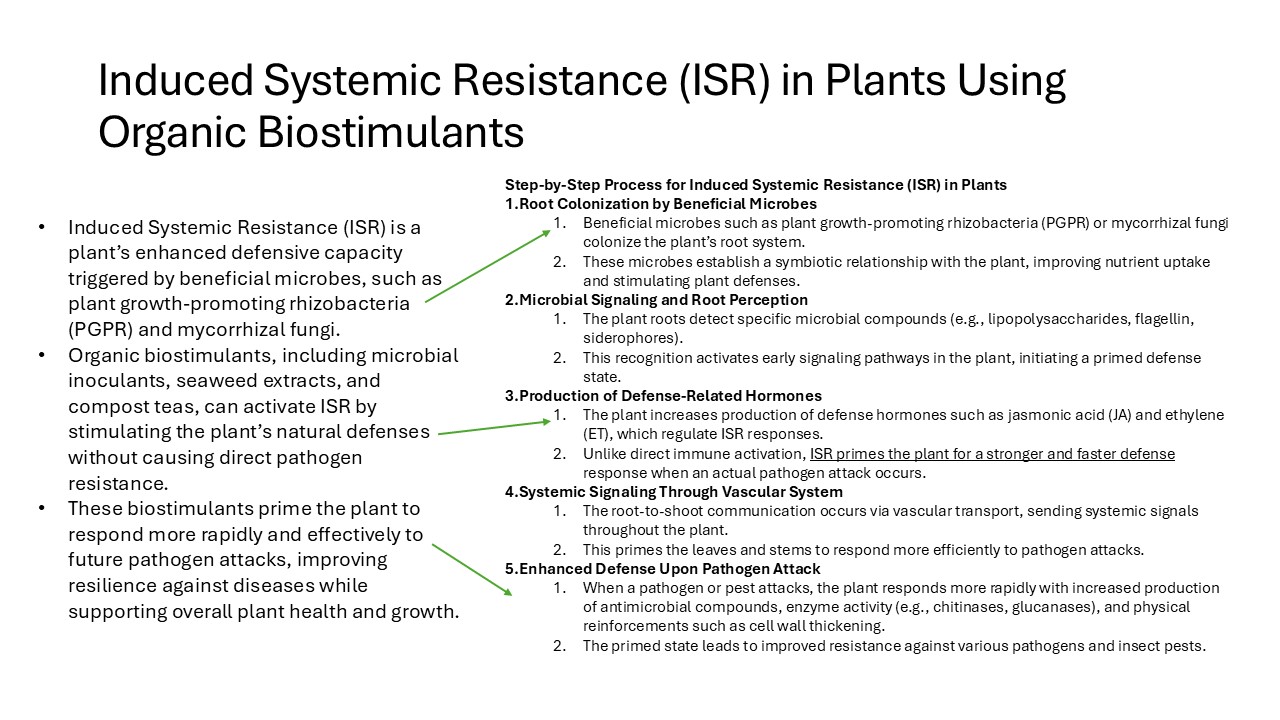
This chart above (just click on it for a larger image) shows how an SAR system works in the plant. In many cases an SAR developed biostimulant will also be labeled with EPA as a biopesticide simply because it does control specific pests in the plant while boosting the plants defense mechanisms.

Similarities Between Biopesticides and Biostimulants
  • Both are used in sustainable and organic agriculture to reduce reliance on synthetic chemicals.
  • Derived from natural sources, including microorganisms and plant extracts.
  • Improve overall plant health, either through disease suppression (biopesticides) or enhanced resilience (biostimulants).
  • Can be combined with conventional or organic inputs in integrated pest and crop management (IPM/ICM).
FeatureBiopesticidesBiostimulants
Primary PurposeControl pests and diseasesImprove plant growth and resilience
MechanismDirectly targets pests/pathogensEnhances plant physiological processes
RegulationSubject to pesticide regulations (EPA, OMRI)Less regulatory oversight, often considered soil amendments
Mode of ActionAntibiosis, competition, parasitismHormonal stimulation, nutrient uptake efficiency
ExamplesBacillus subtilis for fungal disease controlSeaweed extracts for drought tolerance

Industry Challenges and Regulatory Considerations

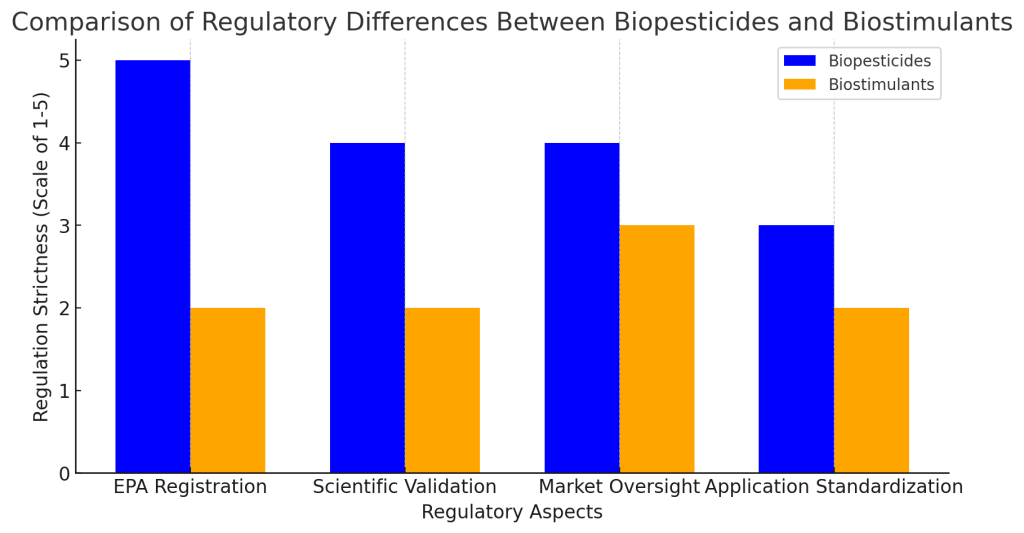
One of the biggest challenges in the biostimulant industry is the lack of clear regulations. While biopesticides undergo rigorous EPA evaluation, biostimulants can be marketed with minimal oversight. This has led to the proliferation of products with unverified claims, making it difficult for growers to differentiate effective solutions from ineffective ones.

Government agencies are actively considering regulatory frameworks for biostimulants to ensure quality control without stifling innovation. The Biostimulant Industry Alliance and other trade organizations are working to establish scientific standards and promote best practices.

Market Trends and Future Outlook

Despite challenges, the biopesticide and biostimulant markets are poised for significant growth. Market research predicts a continued rise in demand due to increasing consumer preference for organic and residue-free crops. Additionally, advancements in microbial formulations and AI-driven precision agriculture will enhance the effectiveness of these products.

Data and Charts from Industry Sources

1. Projected Market Growth of Biopesticides and Biostimulants (2020-2030)
  • Data Source: Market research reports from MarketsandMarkets, Mordor Intelligence, and Research and Markets.
  • Methodology: Extrapolation of market size based on reported CAGR (Compound Annual Growth Rate) values of 12-15% for biopesticides and 13-16% for biostimulants from recent industry reports.

References:

  • MarketsandMarkets (2023). Biopesticides Market – Global Forecast 2028.
  • Mordor Intelligence (2023). Biostimulants Market Analysis & Forecast 2028.
  • Research and Markets (2023). Trends in Agricultural Biologicals.
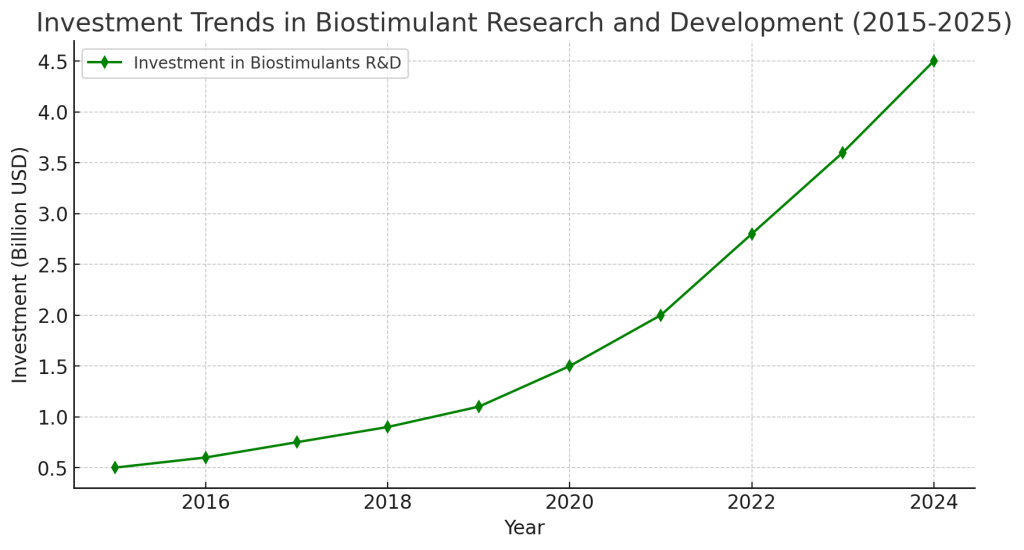
2. Investment Trends in Biostimulant Research and Development (2015-2025)
  • Data Source: Reports from AgFunder, FAO, and OECD on global agricultural input investments.
  • Methodology: Estimation based on reported investments in biologicals, venture capital funding for agri-tech startups, and projected R&D budgets from industry leaders.

References:

  • AgFunder (2023). Investment in AgTech and Biostimulants.
  • FAO (2023). Sustainable Agriculture and Innovation Trends.
  • OECD (2022). Trends in Agricultural R&D.
3. Adoption Rates of Biostimulants Across Different Crop Sectors
  • Data Source: Surveys and adoption studies from USDA, European Biostimulant Industry Council (EBIC), and International Biostimulants Forum.
  • Methodology: Aggregated adoption data from industry reports and regional case studies, indicating highest adoption in vegetable and fruit production, with lower adoption in ornamentals.

References:

  • USDA (2023). Adoption of Biostimulants in U.S. Crop Production.
  • EBIC (2023). European Biostimulants Market Report.
  • International Biostimulants Forum (2022). Global Trends in Biological Crop Inputs.
4. Regulatory Differences Between Biopesticides and Biostimulants
  • Data Source: Regulations from EPA, European Food Safety Authority (EFSA), and USDA Organic Program.
  • Methodology: Comparative analysis of regulatory frameworks governing product registration, scientific validation, and market oversight for biopesticides versus biostimulants.

References:

  • EPA (2023). Biopesticide Registration Guidelines.
  • EFSA (2023). Regulatory Framework for Biostimulants in the EU.
  • USDA (2023). Organic Input Standards and Market Oversight.

Understanding the Proper Use of Organic and Biological Products in Pest Control

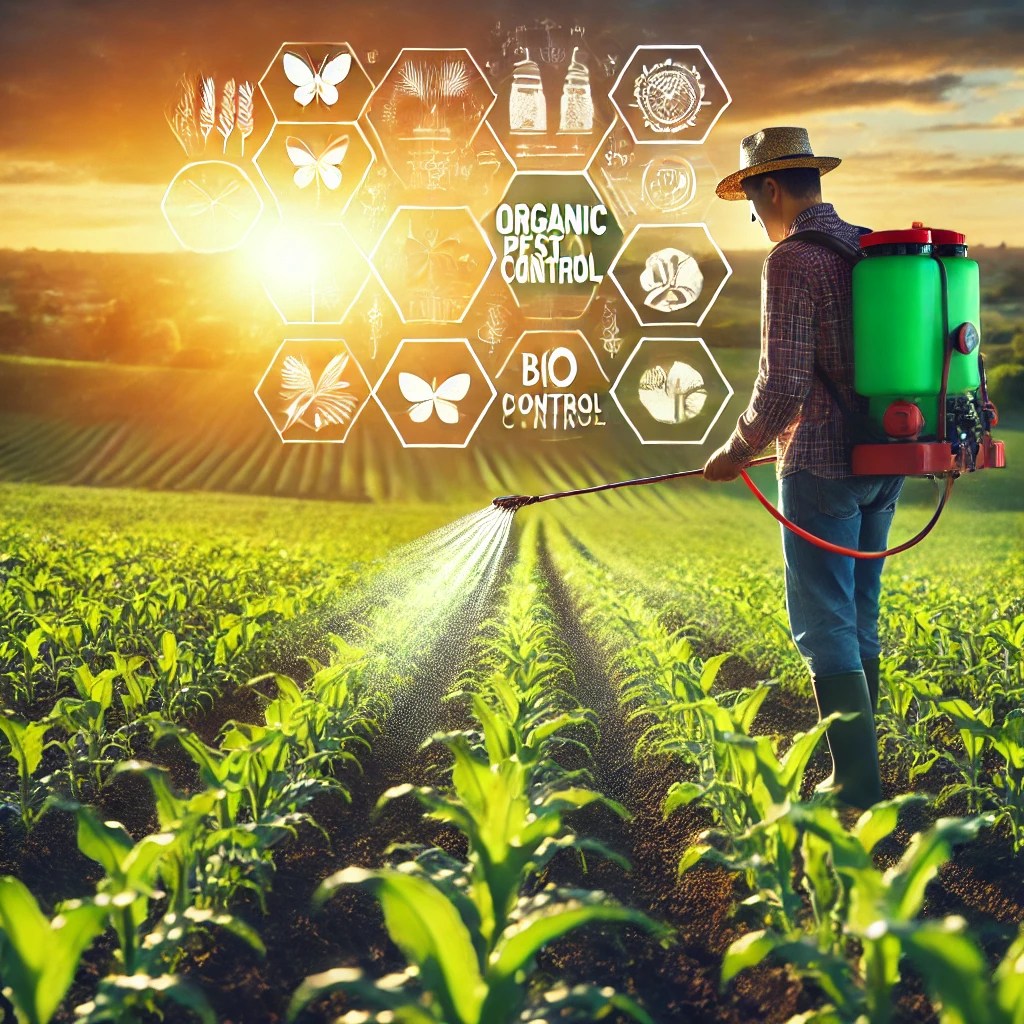
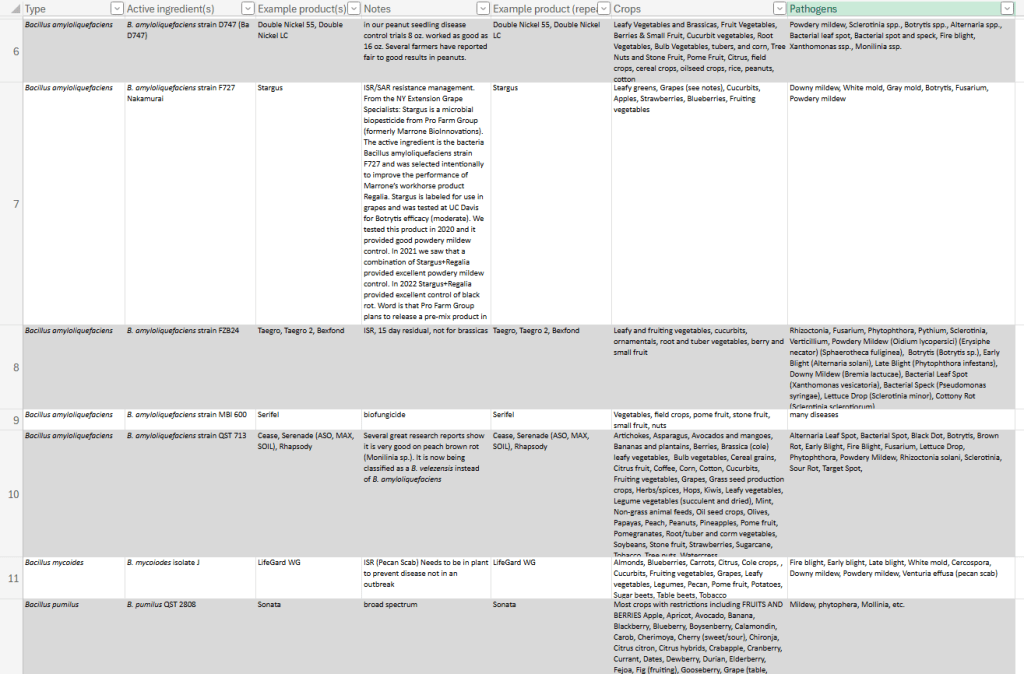
I am asked all the time about organic and biological products. I have over 130 OMRI approved products on a list for controlling pests (weeds, disease and insects) in organic crops. As more growers turn to organic and biological products for pest control, it’s important to understand the nuances of their application. Unlike synthetic chemicals, these products require careful consideration of environmental conditions, mixing procedures, and application timing to be effective. People assume that the Extension Organic Specialist will know every product on the list and how they work – Wrong! I do know about many, but I am also very dependent on growers who use the products telling me about their experiences. I include a lot of that information in the list below.

To view the 5 Excel Sheets or to Download just click on the picture above.

Why Choose Biological Control Products?

Biological control products, while sometimes slower to act than botanical oils or mineral oils, offer several advantages. These products, often derived from beneficial fungi or bacteria, work by stopping insect feeding almost immediately. Over several hours, they gradually degrade the exoskeleton of pests and can also target eggs and larvae, preventing their development.

While oils can provide a quick knockdown effect, they can be harsh on crops, especially in regions like Texas where intense heat and light can exacerbate their impact. This makes biological products generally a safer option for maintaining crop health.

The Importance of Water pH and Quality

One of the most overlooked aspects of using organic and biological sprays is the pH and quality of the water used for mixing. In Texas, our hard water is notorious for high mineral content, which can bind with the active ingredients in sprays, reducing their effectiveness.

For most biological products, it’s crucial to buffer your water to a pH of 5.5-6.5. This range helps to ensure that the organisms remain stable and active in the solution. An exception is Pyganic, a natural pyrethroid, which is highly sensitive to pH. For Pyganic, water buffered to a pH of 4.0-5.0 is ideal for maximizing its efficacy.

Additionally, always use warm water, not cold, when mixing your sprays. Warm water helps the biologicals to remain active and mix more evenly, preventing the clumping that can occur with cold water.

Timing Your Application

Timing is everything when it comes to applying organic and biological products. Unlike synthetic chemicals, these products are sensitive to environmental conditions, particularly UV radiation. Applying them in the evening or at dusk is ideal for several reasons:

  • Reduced UV Exposure: UV radiation can degrade biological products quickly. Applying in the evening allows the product to remain effective longer.1
  • Insect Activity: Many insects are more active when it’s cooler and there’s less light, making it easier to target them effectively.
  • Improved Residual Effect: Spraying in the evening allows the droplets to stay moist longer, thanks to slightly higher humidity. This moisture helps the product adhere better to the plant surfaces and provides residual protection overnight.2

Click on this picture above to read about adjuvants

The Role of Organic Adjuvants in Biological Spray Applications

Organic adjuvants play a critical role in enhancing the performance of biological and organic spray products. By reducing the surface tension of the spray solution, adjuvants help the product spread more evenly across plant surfaces, ensuring better coverage of leaves, stems, and other target areas.

In addition to improving coverage, adjuvants help prevent biological products from drying out too quickly. Many beneficial organisms, such as fungi and bacteria, require time to adhere to the plant surface and begin their activity. Rapid drying can reduce their effectiveness. By maintaining moisture on the surface longer, adjuvants enhance the opportunity for these organisms to establish and do their job effectively.

When selecting an organic adjuvant, ensure it is compatible with the biological product you are using. Always follow label recommendations for application rates and test compatibility in a small jar test if you’re mixing multiple products. Proper use of surfactants can make a significant difference in achieving the desired results from your pest control program.

Common Pitfalls and How to Avoid Them

Many growers who experience issues with organic products often trace the problem back to a few common mistakes:

  1. Improper Mixing: Failing to buffer water or using cold water can lead to reduced efficacy. Always mix according to the product’s instructions and monitor the pH closely.
  2. Environmental Conditions: Applying products during the heat of the day or in bright sunlight can degrade their effectiveness. Always aim for cooler, less bright times of the day.3
  3. Timing: Don’t rush your application. Ensure that you’re applying at the right time to maximize the product’s impact.

Conclusion

By understanding and addressing these factors, you can significantly improve the effectiveness of your organic and biological pest control efforts. Remember, the success of these products often hinges on the details—proper mixing, the right environmental conditions, and timely application.

I encourage you to share your experiences and any questions you might have in the comments below. Together, we can continue to refine our practices and improve the outcomes of organic farming.

  1. The timing of pesticide application can significantly affect the level and persistence of pesticide residues. Evening applications generally lead to higher pesticide residue levels over a longer period compared to morning applications.
    Key Findings
    Effect of Application Timing: Evening applications of pesticides tend to result in higher residue levels that persist longer. This is because the conditions in the evening, such as lower temperatures and reduced sunlight, slow down the degradation of pesticides, allowing residues to remain on plants for extended periods (Norida et al., 2023; Moraes et al., 2021; Makram. et al., 2020).
    Degradation Factors: Sunlight and UV exposure are critical in the degradation of pesticides. Pesticides degrade more effectively when exposed to direct sunlight in the morning compared to the evening, as seen in studies where morning sunlight led to more significant degradation of certain pesticides (Makram. et al., 2020).
    Impact on Efficacy: The effectiveness of pesticides can also vary with the time of application. For instance, some studies have shown that morning applications can be more effective in controlling certain pests due to better environmental conditions for pesticide action (Skuterud et al., 1998; Moraes et al., 2021).
    Environmental Considerations: Applying pesticides in the evening can reduce the immediate impact on non-target organisms, such as bees, as residues have more time to dissipate before these organisms become active again in the morning (Swanson et al., 2023).
    Conclusion
    Evening applications of pesticides generally result in higher and more persistent residue levels compared to morning applications. This is due to slower degradation rates in the absence of sunlight and cooler temperatures. While this can enhance the persistence of pesticide effects, it also raises concerns about prolonged exposure to residues. Therefore, the timing of pesticide application should be carefully considered to balance efficacy and environmental impact.

    References
    Skuterud, R., Bjugstad, N., Tyldum, A., & Tørresen, K. (1998). Effect of herbicides applied at different times of the day. Crop Protection, 17, 41-46. https://doi.org/10.1016/S0261-2194(98)80020-3
    Norida, M., Yahya, S., & Ghazali, F. (2023). Effectiveness of Homemade Repellents and Spray Timing in Controlling Insect Pest in Okra (Abelmoschus esculentus) and Chinese Mustard (Brassica rapa var. Parachinensis). IOP Conference Series: Earth and Environmental Science, 1208. https://doi.org/10.1088/1755-1315/1208/1/012021
    Swanson, L., Melathopoulos, A., & Bucy, M. (2023). Systematic review of residual toxicity studies of pesticides to bees and comparison to language on pesticide labels using data from studies and the Environmental Protection Agency. bioRxiv. https://doi.org/10.1101/2023.06.05.543089
    Moraes, H., Ferreira, L., De Souza, W., Faria, R., De Freitas, M., & Cecon, P. (2021). Spray volume, dose and time of day of glyphosate application in the control of Urochloa brizantha. Bioagro. https://doi.org/10.51372/bioagro333.1
    Makram., S., Ibrahim, H., & Mohammed., M. (2020). EFFECT OF DIRECT SUNLIGHT AND UV-RAYS ON DEGRADATION OF BUPIRIMATE, PENCONAZOLE AND PROFENOFOS. **. https://doi.org/10.21608/fjard.2020.189675 ↩︎
  2. Ibid ↩︎
  3. Ibid ↩︎

Exploring Organic Research: Advancing Texas Organic Production

Photo: The Organic Center: Organic Research Highlights

Organic agriculture continues to expand in Texas as both farmers and consumers recognize the benefits of sustainable and ecologically sound farming practices1. At the forefront of this growth are research initiatives that tackle challenges and create opportunities for organic producers. In Texas, we are working on several innovative organic research projects that are helping to pave the way for a more resilient, profitable, and sustainable organic agriculture industry. These projects not only foster organic agriculture growth but also contribute to improving farmer economics, boosting crop and livestock productivity, and enhancing the health of plants, animals, and people. I feel privileged to work on these projects with outstanding researchers and extension collaborators who share a passion for organic agriculture as I do, making this work both impactful and deeply rewarding.

Ongoing Research Projects in Texas Organic Agriculture

  1. Research, Development, and Evaluation of Diesel Nut Oil – Crop Feedstocks Developing alternative crop feedstocks for diesel nut oil production that align with organic farming systems, offering economic and energy solutions.
  2. Evaluating the Effectiveness of Humic Acid Substance (MFG 150) on Milk Production Investigating how humic acid can naturally enhance milk production, providing a sustainable approach to improving organic dairy productivity.
  3. Evaluating Mastitis Treatment Without Antibiotics Utilizing AHV Exploring alternative methods to treat mastitis in livestock, supporting animal health while maintaining organic standards.
  4. Producing Resilient Organic Transplants Under Controlled Environments Examining methods for producing stronger organic transplants to ensure better crop establishment and resilience in challenging conditions.
  5. Hi-A Corn and Management Practices for Nutritional Food and Feed Breeding high-anthocyanin corn varieties and developing practices to maximize their nutritional value for both human consumption and animal feed.
  6. Climate-Smart Organic Sorghum Partnership for Grain and Silage Production Partnering with producers to grow climate-resilient organic sorghum for grain and silage, contributing to sustainable feed and food systems.
  7. Fostering Sustainable Organic Cotton Production in the U.S. Through Research and Outreach Enhancing organic cotton production through research and extension efforts that address challenges like pest management, soil health, and market development.
  8. Boosting Organic Leafy Green Production Using Summer-Adapted Cover Crops in Texas Leveraging cover crops to improve soil health and create conditions for robust organic leafy green production in warmer climates.
  9. Field Protocol for “Huitlacoche Delicacy: Turning the Lost Corn Crop into a High-Value Delicacy Vegetable” Creating a framework for growing and marketing huitlacoche (corn smut), turning a common crop affliction into a gourmet organic product.
  10. Increasing Consumer Acceptance and Farmer Profitability by Breeding More Nutritious Cowpeas Breeding and promoting cowpeas with higher nutritional value, meeting consumer demands while improving profitability for organic farmers.
  11. Advancing Discovery to Market – Organic Pre-emerge Weed Control Technology Developing organic preemergence weed control solutions to reduce reliance on tillage and labor-intensive practices, improving efficiency in organic farming systems.

What’s Next for 2025

We already have some proposals in the pipeline for submission including a few Texas Department of Agriculture Specialty Crop Block Grants, at least 2 new USDA Organic Research and Extension Initiative grants and several Southern SARE grants we are waiting on approval and a few more to apply for in May. There are always new things we need to study, new concepts to explore and always lots of questions from farmers that need an answer. Add to this list issues with climate extremes, varieties that meet organic needs, biostimulant research – the list is endless!

Why Organic Research Matters

Organic research is vital for driving innovation and addressing the unique challenges faced by organic producers. The projects mentioned above exemplify how targeted research can:

  • Support Agricultural Growth: By developing resilient crop varieties2, enhancing pest control methods3, and improving soil health4, organic research ensures consistent production and increased yields.
  • Improve Farmer Economics: Projects focused on reducing input costs, increasing marketable yields, and creating value-added opportunities (like huitlacoche) directly impact farmer profitability5.

References

  1. Organic Trade Association. Consumer Perception of USDA Organic and Competing Label Claims. Euromonitor International, April 2024. ↩︎
  2. “Organic Farming and Soil Health: A Review.”
    The Organic Center. Available at: https://www.organic-center.org/sites/default/files/project/2020/03/soil-health-review_shadetully.pdf ↩︎
  3. “Integrated Pest Management Strategies in Organic Farming.”
    Bulletin of the National Research Centre, Springer Open. Available at: https://bnrc.springeropen.com/articles/10.1186/s42269-024-01226-x ↩︎
  4. “Organic Farming and Soil Health: A Review.”
    The Organic Center. Available at: https://www.organic-center.org/sites/default/files/project/2020/03/soil-health-review_shadetully.pdf ↩︎
  5. “The Economics of Integrated Organic Farming: Cost-Benefit Analysis.”
    Husfarm. Available at: https://husfarm.com/article/the-economics-of-integrated-organic-farming-cost-benefit-analysis ↩︎