Developing Organic Varieties for Texas: Why It Matters

Texas organic agriculture is dominated by field crops, yet the number of certified organic varieties available to our growers remains very small (probably easier to say none!). Even when varieties are not genetically engineered (GE) and could theoretically fit organic systems, many are simply not adapted to Texas conditions—our heat, drought cycles, variable rainfall, soils, and intense pest pressure. I see this every year: organic producers are forced to choose between varieties bred for very different regions or varieties developed with conventional systems in mind. That gap limits yield stability, increases risk, and ultimately slows the growth of organic acreage in Texas.

What We Are Actively Developing

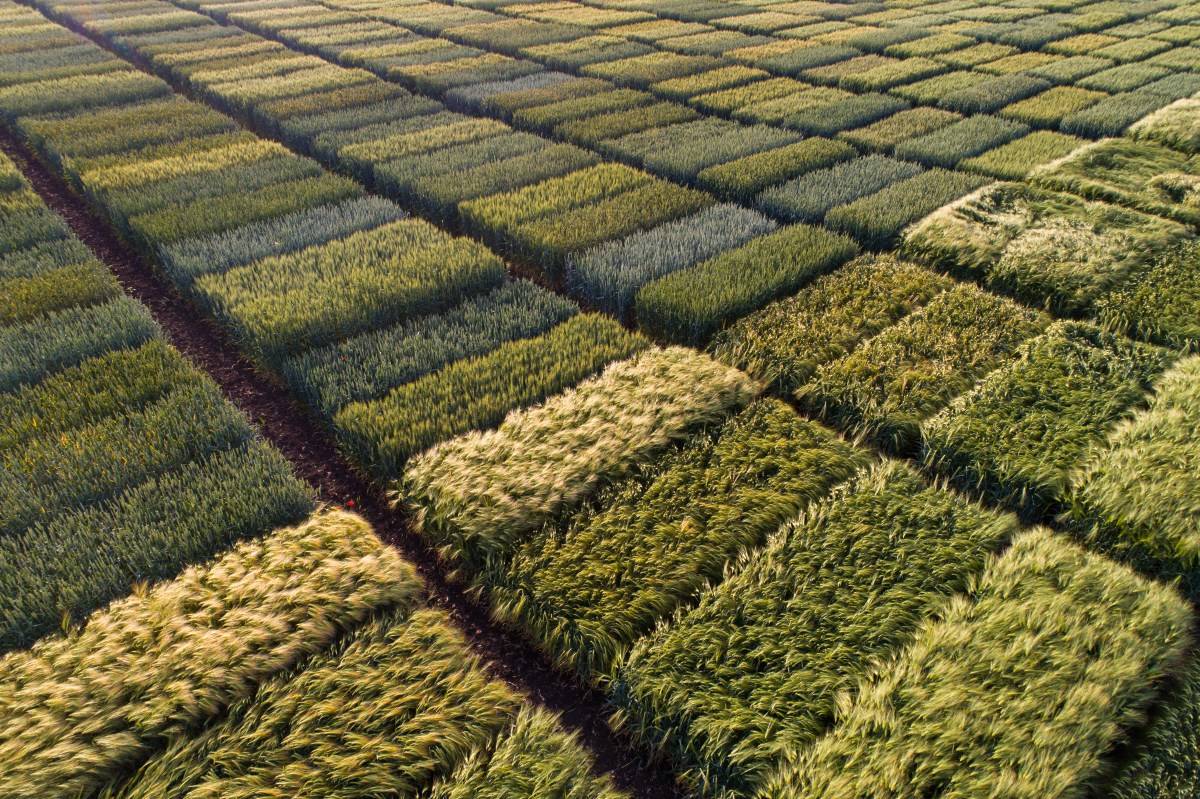
To address this, we are intentionally investing (money, time, resources) in organic-first variety development within Texas A&M AgriLife Research and Extension. A runner peanut, TAMRun OL 11, is currently in development under organic management and will be available, with the possibility of releasing two additional hybrid Spanish peanut varieties by the end of next year. We are also working on an organic barley that is moving toward release through the Texas Foundation Seed Service. In corn, we have two organic-adapted lines on track for potential release by the end of 2026. We are testing right now conventional wheat varieties for their development in organic systems with the hopes of licensing at least two outstanding performers. In addition, we are beginning an organic sorghum breeding program, expanding into a crop that is critically important for Texas organic grain systems. Beyond grains and oilseeds, we now have two new organic guar varieties and one new cowpea variety developed through Dr. Waltram Ravelombola’s organic breeding program at Texas A&M AgriLife Research in Vernon. At our Stephenville center we are working hard to develop and release some possible organic Sunn Hemp cover crop varieties and are working on faba bean – a winter high protein legume that can be used for the developing protein market and as a winter cover crop. Organic faba bean is in high demand!

Preparing for the Future of Organic Seed

One reason this work matters is forward-looking. There is growing discussion within organic agriculture—and at USDA NOP—around whether organic varieties may eventually be required (no longer strongly encouraged) in Organic System Plans (OSPs). At the same time, many working in the organic program are increasingly concerned about GE technologies embedded upstream in conventional variety development, so that GE could be hard to detect except in the final product which can mean loss of value. Developing varieties entirely within organic systems helps address both issues. It gives producers confidence in the integrity of their seed and positions Texas organic agriculture to respond proactively rather than reactively to future regulatory or market changes.

Dr. Wenwei Xu, Texas A&M AgriLife Corn Breeder. Dr. Xu is a great friend and colleague working on variety development without gene editing. These are high yielding, very resilient, disease and insect tolerant, and developed in Texas! Wenwei and other Texas A&M AgriLife Breeders are committed to organic variety development.

Why This Is a Long-Term Investment

Breeding organic varieties can be slower, expensive (costs are going down fortunately), and demanding—but it is foundational. A good organic variety reduces the need for inputs, tolerates stress, competes better with weeds, and works with biological systems rather than against them. My goal is simple: when a Texas organic grower asks, “What variety should I plant?” I want the answer to be locally adapted, organically developed, and readily available. We are not there yet—but these efforts are a big step in that direction. And yes, this approach makes sense if we are serious about the long-term resilience, integrity, and growth of organic agriculture in Texas.

Surveys, Recipes, More Surveys and Organic Investments!

Here are few things that are important but don’t need their own blog post. Take a quick look and see if they apply to you!

Table of Contents – Just click on one to read about it!

  1. Organic Dairy and Internal Parasites: Challenges, Practices, and What’s Next
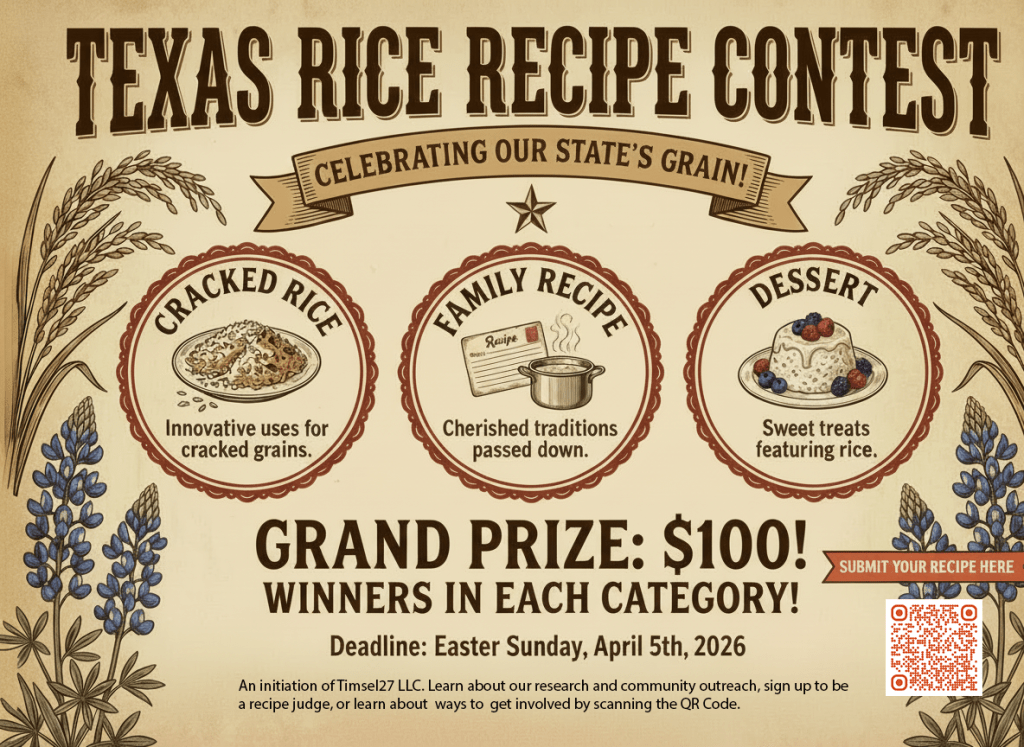
  2. Texas Rice Recipe Contest
  3. ShaRE: The Shared Robotic Ecosystem for Smart and Collaborative Agriculture
  4. Investment Act to Expand Capacity and Compete Against Imports

Parasite control remains one of the most persistent health challenges in organic dairy herds. Unlike conventional systems, treatment options are strictly limited under the National Organic Program (NOP). If unapproved treatments are used, the animal loses its organic status. Currently, fenbendazole, and moxidectin may be used on organic dairies, but only under emergency situations when preventive practices are not effective. Their use also comes with strict restrictions by USDA Guidance:

· Not allowed in slaughter stock.

· For dairy cows, milk or milk products cannot be sold as organic for 2 days after treatment.

· For breeder stock, treatment cannot occur in the last third of gestation if the calf is marketed as organic and cannot be used during lactation for breeding animals.

Mandatory outdoor access (at least 120 days of grazing annually) can increase exposure to parasites, especially in warm or wet climates.

Internal parasites, such as gastrointestinal nematodes and coccidia, can reduce body condition, compromise milk production, and increase veterinary costs. Symptoms often include weight loss, poor thriftiness, or anemia. These problems can be amplified in years with high rainfall, when parasite populations thrive in pastures (even in dry climates like Texas). While conventional systems can rely on endectocides with varying formulations and withdrawal times, organic producers must navigate parasite control with far fewer pharmaceutical options.

We want to better understand how organic dairy producers are managing these challenges today. To do this, Texas A&M and UC Davis have teamed up to do a survey on internal parasite management and deworming practices on organic dairies. Sharing your experience will help us to identify practical and sustainable approaches that work for organic farms like yours

· The survey takes about 10–15 minutes to complete.

· Your answers will remain confidential.

Rice recipe contests have history and tradition in Texas. In 1951, The Texas Rice Promotion Association and the Abilene Reporter-News have announced a rice recipe contest. The contest was well documented and communicated in The Abilene Reporter-News. Recipes were received from fourteen towns and in multiple categories. The judges were overwhelmed by the success and diversity of recipes featuring Chinese, Hungarian, Syrian, Indian, Uruguayan and other recipes.

To read more about the history of rice recipe contests or to enter this contest just click this link: Texas Rice Recipe Contest

Dr. Lee sent me this request. They need farmers who are interested in robotic technologies (this includes your tractor guidance) to do the survey and get a gift card. Surely, we can help!

This article is from the Organic Trade Association1 and went out to the membership (I am a member) to highlight the work being done. I am excited about the potential and hope we have a chance for Texas organic to apply and win some of this grant money!

The culmination of more than two years of advocacy work, the introduction of the Domestic Organic Investment Act (DOIA) will put into action what the organic sector needs to thrive by investing in infrastructure to expand production capacity for farmers and manufacturers.  

The bipartisan, bicameral bill introduced in the Senate by Sen. Tammy Baldwin (D-WI) and Susan Collins (R-ME), with Andrea Salinas (D-OR) and Derrick Van Orden (R-WI) as sponsors in the House, builds on the strength of the Organic Market Development Grant (OMDG) program introduced in 2023. This program, administered by USDA, helps solve supply chain gaps and drive organic growth through grants to organic farmers and businesses. 

The DOIA legislation directs USDA to set annual priorities that reduce dependence on imports and reflect input from organic farmers, businesses, and other stakeholders. Additionally, the Act supports U.S.-based farmers and businesses who apply, including producers, producer cooperatives, and commercial entities (including tribal governments) who handle certified organic products. All grants will require matching funds from the farm or business recipient.    

Two businesses that have benefited from the OMDG program – PURIS and Meadowlark Organics – are examples of how these investments have paid off and serve as a bellwether for the future success of the Domestic Organic Investment Act.  

PURIS is committed to four times their OMDG $539K grant award to expand processing capacity for milled organic field pea fiber at their facility in Harrold, South Dakota. This was done by adding a fiber milling line to an existing organically certified pea handling facility. The upgrade transforms pea hulls, currently a product with little value, into a marketable, high-value organic pea fiber.  

Currently, imported organic pea protein has been selling at prices 28-75 percent below U.S. producers for multiple years. The investment supported PURIS to create additional value from the supply chain while also helping to strengthen the domestic supply chain overall.  

In the case of Meadowlark Organics of Ridgeway, WI, USDA grant funds provided in 2024 helped the organic grain farm purchase three pieces of equipment to help increase the availability of locally grown organic grain across the Upper Midwest. The new equipment includes a gravity table, optical sorter, and a connecting bucket elevator to the farm’s existing cleaning facility and flour mill.

This increased capacity will enable the farm to partner with even more organic grain farmers across the region and ultimately connect a diversity of culinary grains with more customers. The expected growth in organic grains and livestock feed capacity is over 900,000 pounds, with a projected 35 percent sales increase.  

Those businesses are great examples provided by OTA in their article, but I will call attention to our own Texas OMDG recipients:

  1. https://ota.com/news-center/ota-champions-domestic-organic-investment-act-expand-capacity-and-compete-against?utm_source=news-flash&utm_medium=ota-email&utm_campaign=news-center-advocacy ↩︎

Residue Testing for a Global Supply Chain

The article below appears in the Fall 2025, “OMRI Materials Review” newsletter sent out by OMRI to subscribers. I thought this article was interesting since it concerns pesticide residues – a hot topic in Texas Organic Agriculture! It is reprinted with permission by OMRI.

By Doug Currier

The work to modernize residue testing in USDA organic production could impact input material review.

Residue Testing for a Global Supply Chain (RTGSC) is an ongoing discussion being led by National Organic Standards Board (NOSB) with input from public stakeholders and the National Organic Program (NOP). It is well established that organic production is based on organic system plans that, if followed, ensure adherence to the organic standards. Testing to detect residues of both prohibited substances and excluded methods is seen as an important measure of the success of those system plans, or whether those plans were followed at all. This type of testing is required within the USDA organic standard1, but for the testing to remain “relevant” and “impactful,” changes to the USDA standard and guidance documents are being considered. This is the aim of RTGSC.

Before we consider some of these changes, it is helpful to become clear on the sources of these residues and the possible reasons they may appear in organic systems. The 2013 “Pesticide Rule”2 3 established the current residue testing requirements to ensure that organic system plans prevent commingling and contamination with prohibited substances. Testing has long focused on detecting genetically modified crops to address the commingling issue.

Because of how the “Pesticide Rule” is written, there is a focus on detecting prohibited pesticides as a way to address the contamination issue. Both GMO and pesticide residues can come from neighboring non‑organic farms through “drift” or can occur when cleanout procedures used between processing non‑organic and organic commodities are ineffective. These two examples can be referred to as “organic control points” in a production system where the risk of contamination is high. There are many facets to the strategies used to detect contamination in organic production systems—far too many to examine in this article.

The NOSB Spring 2025 meeting materials call for an in-depth description of these issues. Before we move on to the changes being discussed to modernize the current approach to testing and detection, it can be helpful to acknowledge that the “Pesticide Rule” was not necessarily written with fraud detection in mind. Also, input materials themselves can be a source of contaminant residue that are actionable from the perspective of accredited certification bodies (“certifiers”).

Positive results from residue testing impact organic growers in several ways, with perhaps the most significant being the inability to sell produce as organic. In our work, we have seen growers lose their ability to sell produce as organic because of positive test results that were traced back not to their farm, but to the input materials, just like with other sources of residues—whether due to unintentional contamination or intentional adulteration. It is therefore promising to see that within the RTGSC conversation is a proposal to redefine the definition of Unavoidable Residual Environmental Contamination (UREC) to one that acknowledges that sometimes no matter how strong the system plan, contamination can occur. This is not to say that the contamination can go unaddressed. But relieving the grower of some responsibility seems to be a step in the right direction. How that contamination is ultimately addressed, and how often, is a separate matter.

A significant focus of RTGSC is to modernize the strategies for testing for contamination in a way that more meaningfully centers on pesticides and GMOs. A “Target List” or consumer‑focused list does good work to identify materials and input materials where extraordinary high levels of heavy metals and harmful organic contaminants may exist.

With that said, the advancements in test methodologies, test sensitivities, and the realization that detection strategies—especially those used to detect fraud—are more sensitive now than ever, suggest that the RTGSC ideas coming from the NOSB for the NOP to consider could change the nature of input material review work: (1) development and adoption of accredited methods for Organic Authenticity Testing as it relates to detecting whether inorganic nitrogen is manufactured from allowed or prohibited sources, and (2) broadening the list of substances for which there is regular testing.

Regarding the former, we are supportive of this long‑needed move towards methods and accreditation. As for the latter, we are mindful that widening the net, through expansion of the substances list and more sensitive testing, could mean for us and the manufacturers with which we work.

There is still much to consider and absorb before changes that move our industry beyond the 2013 “Pesticide Rule.” Achieving RTGSC’s goal of keeping testing relevant and impactful will affect nearly everyone. OMRI will continue to monitor these developments closely and share updates as the RTGSC process moves forward.

  1. https://www.ecfr.gov/current/title-7/subtitle-B/chapter-I/subchapter-M/part-205?utm_source=chatgpt.com ↩︎
  2. https://www.ams.usda.gov/sites/default/files/media/NOP-Notice-ResidueTesting.pdf?utm_source=chatgpt.com ↩︎
  3. https://www.federalregister.gov/documents/2012/11/09/2012-27378/national-organic-program-periodic-residue-testing?utm_source=chatgpt.com ↩︎

Organic Isn’t Just a Production System—It’s a Promise!

From Farm to Consumer: Why Organic Markets Need Transparency and Storytelling to Grow

In our recent “Texas Organic News” newsletter, I conducted a single question survey and the question was: “What’s standing in the way of producing and/or selling more organic products?”
Here are the results from the 1,360 newsletters sent out – only 32 responses! In this survey you could only pick one answer for the question and here are the results so far.

  • Lack of grower contracts or reliable customers for organic products — 13 responses (40.6%) This is a question about demand for organic production or products, which ever segment you are involved in. If we don’t get customers, we don’t get paid!
  • Paperwork and certification take too much time or effort — 8 responses (25%) Of course everyone in organic says this is a problem but it ranks second behind selling more organic products.
  • Competition from imported organic products that reduce grower contracts or retailer profitability — 5 responses (15.6%) I thought this might be more of an issue and it is for some commodities but right now it ranks third.
  • Not enough profit margin in organic production or sales — 2 responses (6.3%)
  • Growers: Not enough organic inputs or supplies to grow efficiently — 3 responses (9.4%)
  • Handlers: Not enough consistent organic product available to sell — 1 response (3.1%)

Although overall response numbers have been low, I think the pattern is clear: the two largest barriers identified by producers are market access (customers/contracts) and certification/time-burden. These aren’t simply agronomic issues—they point to deeper economic and institutional challenges in our organic systems. We need to do a better job attracting customers and we need to improve certification systems to make them easier and cheaper.

Transaction Costs and What the Survey is Telling Us

When I review your responses through the lens of transaction cost economics, I see how these barriers are really about the extra costs of doing business in organic—not just the cost of production. A cost is anything that takes up time or money both of which are scarce. Scarce means if you do this one thing you can’t be doing another thing. If you have to spend a lot (time and/or money) on certification or finding customers/contracts, you have to get it back from the products or you have to quit!

  • The largest barrier, lack of reliable customers, highlights search, matching, and information-costs. If you don’t know who will buy your product or what contract terms look like, you carry higher risk and uncertainty. Organic struggles with this every day of every month of every year!
  • The second barrier, certification and paperwork burden, is about compliance, monitoring and institutional costs. The farm work, the record-keeping, the audit visits—even before you sell—these costs eat into margins. USDA NOP has discussed some of this and even talked about some streamlining and simplifying proposals, but we are still a long way from it.
  • Lastly, weak contracts or imports or even hard to find markets point to market thinness and pricing transparency. When markets aren’t transparent, when contracts are hidden or inconsistent, the organic market players struggle to negotiate fairly or spend too much time struggling to be in the market.

In short: to expand organic production and meaningful sales in Texas, the US or the world, we must look beyond just “how do I grow it organically?” and ask:
How do I connect reliably with a buyer, how do I keep my certification cost manageable, and how does the market signal value all the way through the chain?

Organic as a Credence Good

Here’s a key idea: organic products are credence goods (belief or acceptance that something is true or valid). That means consumers (a shopper in HEB) cannot easily verify for themselves many of the important attributes—crop rotation, chemical input avoidance, processing protocols, supply-chain segregation. Instead, they rely on trust signals: certifications, labels, audits, inspections.

  1. Integrity of production and supply chain systems — the farm-to-shelf process must be robust and verifiable. Organic has built this into its system with legal force while most or all others do not come close. Non-GMO is a label that is highly trusted too, but they have experienced problems recently with this part of their label. Lost trust is almost impossible to get back.
  2. Clear communication of value to the consumer — if consumers don’t understand the organic claim or don’t believe it has value, the premium disappears. Right now there are many, many stories about how “something” is better than organic. This tells me organic has set the standard all are trying to beat but this bombardment without a response also weakens organic’s message.

The newsletter survey results align exactly with this: producers are facing market access problems (demand side) and compliance burdens (supply side). Both sides are inherent to credence-good systems. You’re not just farming or manufacturing differently—you’re participating in a system of trust. Right now, organic agriculture has the highest rated system of trust according to survey after survey. Unfortunately, our customers are not valuing that “trust” as much as they used to do simply because they are being bombarded with so many choices that look similar but are not at all similar to Certified Organic! Step up and reinforce that message now, before we lose it!

Every Part of the Value Chain Must Be a Promoter

In a business built on trust (credence goods), production alone isn’t enough. The value behind the organic label depends on every actor in the chain actively understanding and communicating that value.

  • Farmers need to ask: What story am I giving my buyer about how I grew this crop and why it matters? Have you ever given your buyer a letter with your crop that tells your story? You send a certificate but why not more?
  • Handlers must ask: How am I representing the farms I source from, and how am I passing that value and the value I add to retailers or final buyers?
  • Retailers and brands should ask: Am I explaining to consumers why this product commands a premium, beyond just placing it on the shelf? FYI – Retailers usually make more off organic products than conventional!
  • Certifiers and institutions must ensure: I maintain the trust-signal, yes—but do I also support the chain in telling the story in a credible, consistent way? Is your certifier making sure “you,” their customer is promoted?

If any link fails to actively promote the value, the trust signal weakens. Here’s what it means in practice:

  • Transparency up and down the chain: Farms must provide clear information to handlers; handlers must pass that to retailers; retailers must convey the value to consumers—and that consumer feedback should circle back into production and market planning. You may be paid for a product in organic, but your “name” goes with that product all the way to the consumer!
  • Active marketing of integrity: The organic label is a trust-signal. If it isn’t actively promoted, consumers may forget what it stands for or assume it doesn’t matter. This is especially true in an age of so much label confusion.
  • Shared responsibility: It’s not enough for a farmer to get certified and think the rest of the chain will carry the message. Every actor must see themselves as part-of the collective promoter of the label’s meaning and the products value.
  • Feedback loops: The final customer’s expectations shape what comes back up the chain. Growers should listen to what consumers care about, and that should influence how they position their production and communicate with buyers.
  • Value-chain transparency equals value creation: The more visible the chain, the more confident the consumer, the stronger the premium, the more stable the market. Hidden trade, opaque pricing, and weak storytelling all erode trust and hinder growth.

Final Thought

The very simple and easy survey I sent in a newsletter has highlighted what many of us already sense: participating in organic isn’t simply about adopting different growing practices. It’s about being part of a system built on trust, communication, and shared value. Certification and production matter—but they are only half the story. The lack of participation (only 30 out of 1360) in this simple, one question survey is telling me that certified organic entities (farms, handlers, retailers, certifiers) have not figured out everyone has a part to play in this “credence good” or it becomes just another “good” to purchase.

If you choose to farm organic, you’re not just choosing a way to grow.
You’re choosing to be part of a movement built on trust, and you’re signing up to help tell the story. You are paying a lot to be part of this movement.

When we, as farmers, handlers, retailers—and even consumers—understand this and act on it, we reduce hidden costs, build stronger markets, and make organic not just viable, but sustainable and profitable.

You are special and everybody knows it!

Yes, if you are certified organic you are special and yes, everybody knows it or can know it! I have many, many opportunities to speak to groups about organic every year. I do my best to tell people that really don’t know about organic, what is involved in being certified organic, and then to describe the people who grow, process and sell organic products. Most of the groups I speak to, have no clue that you as a certified organic entity have your business name, your address, your email, your phone and more in a database for all the world to see – did you as a certified organic farmer or processor know that?

Well, it is true! For instance, do you know about this farm?

This is the Kirov Farm called Peresvet. You are looking at a portion of their organic certificate that I downloaded from the Organic Integrity Database (OID). But there is more:

In this picture you can see that Sun Xun grows Maize (corn), Soybeans and Wheat. I can call Mr. Xun on the phone if I want to make an international call because he lives in the Kirov District of the Russian Federation. Or I can email him and ask a quick question about maybe buying his wheat crop.

Based on this certificate, I now know pretty much everything about this organic operation I need to know to make contact and begin a discussion about his crops and a possible purchase or even a collaboration to expand our markets. This is exactly how I am able to send you a newsletter by email or mail since I can get both off of the OID website!

I asked Chat GPT to give me more information about this place and here is what it said:

The listing you shared is for an organic operation certified in the Russian Federation, specifically in Primorsky Krai within the Kirov District.

  • Primorsky Krai is a region in the Russian Far East, bordering China and North Korea, and stretching to the Pacific Ocean.
  • The Kirov District is one of the administrative divisions inside Primorsky Krai.
  • The crops listed (maize, soybeans, wheat) are fairly typical for the region, which has a mix of fertile plains and a temperate climate suitable for grains and legumes.

So, the only thing I am missing is a physical address so I could look up the farm on Google Earth but we are getting pretty close! I asked Chat GPT to do more searching and here is the result:

  • In QIMA’s “Supplier Details / Food Certifications Database,” “Peresvet” LLC (Kirov Farm) is listed with registry RU007-1, address in Kirov District, Primorsky Krai, and products: soybean, wheat, maize. ibd.com.br
  • In IBD’s certified operator list, LLC “Peresvet” (Kirov Farm) is listed under organic certification (CA23319/24), with the same RU007-1 ID. ibd.com.br
  • In Russian corporate registry data (via “saby.ru”), there is a company ООО Пересвет (Peresvet LLC) registered in Primorsky Krai / Ussuriysk with INN 7720493313, with a general director named Трачук Дарья Сергеевна (Trachuk Darya Sergeevna). Saby
  • That same registry listing shows that “wholesale grain trade” is its main business (among many activity codes) and that the authorized capital is quite small (50,000 ₽) compared to the vast acreage declared in OID. Saby
  • The registry also indicates the business was registered on 16 January 2020. Saby
  • In “spark-interfax.ru” (an information aggregator), ООО Пересвет has 119 (or 106 in other listings) registered types of business activities (OKVED codes), and the head or sole owner is the same Darya Trachuk. spark-interfax.ru

Okay, Okay I know I have proved my point!!

There is a lot that the OID can tell us about organic throughout the world, and you are a part of that world. I like to think that you are part of a large “family” since you all share both the benefits and rules of being in that organic family. We know that Mr. Xun yearly gets inspected and so do you!

Now that you know that information is in the database is there more information out there? Yes, there is a lot of information out there and it can be used a multitude of ways! First, you already know one way and that is for a mailing list like the one I use to send out email or mailed newsletters every month. I just go to the webpage https:// organic.ams.usda.gov/integrity/Home and then I do an advanced search. This allows me to sort the database on several criteria but for me, I want to know all the organic entities in Texas. I simply list Texas as the state and then search. In seconds I see the screen filled with all the Certified Texas Organic Entities, which includes both growers and handlers. I can then download that list to an Excel Spreadsheet (it has a place to click to download) which allows me to look at the data very in-depth.

Above is just a small screenshot of the Excel Spreadsheet I downloaded of all certified organic entities in Texas. If you want a closer look at the information, just click here: OID Certification for Texas

I can also find out if we grow any organic cotton in Texas and who grows it. I can find out who buys organic cotton in Texas and even who is making products from organic cotton in Texas. I can look up organic acres, find phone numbers, locate certifiers, I can see if you have a website, in fact there are many other places for you to tell the world about your business or advertise your business!

So, that leads me to ask why aren’t you using this as a business tool? If you are in the organic world then you can only buy or sell in the organic world and here is a free opportunity to advertise to that world. Unfortunately, I find so many mistakes in the database that I wonder if you are even paying attention! Wrong addresses, no addresses, bad emails, wrong crops, wrong products, misspelled names, no zip code, no company name. One of my pet peeves is to have your consultants name or their phone number and email as the contact person in the database. That just signals to folks that you don’t want to be contacted by anyone!

Here is my Call to Action: Claim Your Space

I have some thoughts – the database already tells the world you’re certified organic. Why not make it work for you?

  • Look up your entry. It is easy and I hope you now know how!
  • Make sure your contact information is correct. Call your certifier.
  • Make sure your products are listed correctly. Call your certifier.
  • Share the link with buyers: “You can find us in the USDA Organic Integrity Database.” That link can be a link to your Organic information like this:
  • Click this link! or like this Click this link!

Because you are special—and yes, everybody really does know it.

Why Bread Tastes Better in Europe Than in the U.S. and Does it Matter?

If you’ve ever traveled to Europe and wondered why the bread, pasta, or croissants taste so much better, you’re not imagining things. Organic wheat products in Europe really do have a different flavor and texture compared to what we’re used to in the United States. The reasons come down to how wheat is grown, milled, and baked—and even what people expect when they buy bread.

I have had opportunities to work all over the world and most of those travels end up going through Europe. One of the truly delightful things to do when in Europe is just to walk the streets looking at shops and many of those are bakeries. The smell is unbelievable, and the taste is beyond compare. I was visiting with a friend of mine who lived in Paris for a number of years. He said they bought bread fresh daily versus maybe once a week here. There the dough would take hours to rise, and you could walk in a shop and watch it. Here, it is never anything to watch and certainly something that happens fast.

How Much Wheat Do We Eat?

The average American eats about 130 pounds (58–60 kg) of wheat each year, while Europeans eat closer to 200 pounds (90 kg). That’s about 50% more! For Europeans, bread and pasta are still part of almost every meal. In the U.S., diet trends like low-carb and gluten-free have pushed wheat down the list.

But, let me ask a question! Which group has more problems with weight – so it is not the consumption of wheat products – is it?

The Wheat Itself

In the U.S., most organic wheat is bred for high yields and disease resistance. That’s great for farmers but not always for flavor. The result can be wheat with really strong gluten—perfect for making bread chewy, but sometimes too tough. In Europe, many organic farms still grow older varieties like spelt, einkorn, and emmer, or modern wheats chosen for taste as much as for yield. That’s why European bread often feels lighter and more flavorful. I have bought organic breads when I can find them and unfortunately, they taste bland and tough!

Milling Matters

How the grain is ground also makes a difference. In the U.S., organic flour is often very “whole”—meaning it keeps lots of bran and germ. That’s healthy, but it can make bread heavier and a bit bitter. In Europe, countries set rules for flour types, like French Type 65 or Italian Type 00, which allow for partial sifting. The flour still has nutrition, but the bread turns out softer, lighter, and often tastier.

The Secret of Fermentation

In American organic bakeries, loaves are often made quickly—mixed, baked, and on the shelf the same day. In Europe, bakers take their time. Long fermentations, sometimes 16 to 24 hours, bring out natural sweetness, make bread easier to digest, and build that classic sourdough flavor.

What People Expect

In the U.S., shoppers often buy organic bread because it’s “healthy.” A dense, hearty loaf feels like you’re getting your money’s worth. In Europe, bread is part of everyday life, so even organic loaves have to win people over with taste and texture first.

A Side-by-Side Example

  • U.S. Organic Loaf: 100% whole wheat, baked in a few hours, dark, dense, and chewy.
  • French Organic Baguette: flour sifted just enough, fermented for over 16 hours, crisp crust, airy inside, and nutty flavor.

Both are organic—but they couldn’t be more different.

The Takeaway

So why does bread taste better in Europe? It’s not just nostalgia from your travels. It’s the wheat varieties, the flour standards, and the time bakers are willing to invest. If the U.S. wants organic bread that rivals Europe’s, we might need to rethink what we value most—nutrition on the label, or flavor on the table. I think we have a great product on the farm, and we need it to be a great product at the bakery!