Texas Organic Agriculture Surges Forward with National Recognition

TOPP Impact Report Underscores Texas Leadership in Organic Milk, Cotton, and Peanuts

As national organic food sales soar past $71 billion, Texas is emerging as a dominant force in organic agriculture, bolstered by strategic investment from the USDA’s Transition to Organic Partnership Program (TOPP). According to TOPP’s newly released 2024 Impact Report, over 3,800 new operations have been certified nationwide, and Texas producers are taking the lead in organic innovation, acreage growth, and market share.

Texas is now home to more than 448 certified organic farms and over 611 organic handlers, producing across 580,000 acres in at least 88 counties. The Lone Star State ranks No. 1 nationally in organic milk, cotton, and peanut production — a testament to the state’s diversified and growing organic economy.

In 2019, Texas organic agriculture generated $424 million in sales and nearly $939 million in total economic output. By 2025, projections indicate the sector will contribute more than $1.4 billion in statewide economic output and support nearly 12,500 jobs, with a compound annual growth rate of 7% that mirrors national trends.

“Texas isn’t just keeping up—we’re leading,” said Bob Whitney, Organic Program Specialist with Texas A&M AgriLife Extension. “From dairy and peanuts in the west to vegetables and rice in the south and east, organic producers across Texas are creating real jobs, feeding local communities, and demonstrating what’s possible when farmers get the support they need.”

TOPP, launched in 2022 as part of the USDA Organic Transition Initiative, has helped hundreds of producers nationwide navigate the complex path to organic certification through mentorship, technical assistance, and community networks. Texas producers have benefited through local TOPP training events, bilingual outreach, and one-on-one mentoring that is helping new farmers transition more successfully and more sustainably.

As part of the six-region national framework, TOPP’s Southwest region includes a coalition of regional organizations and universities—including Texas A&M AgriLife Extension—that provide tailored support to Texas producers. Nationally, more than 260,000 acres have been added to certified organic production through the program’s efforts.

Texas’s success stands out even as some regions of the U.S. experience flat or declining organic acreage. Experts credit the state’s focused approach—blending grassroots mentoring, university-led research, and Extension outreach—for enabling sustainable growth.

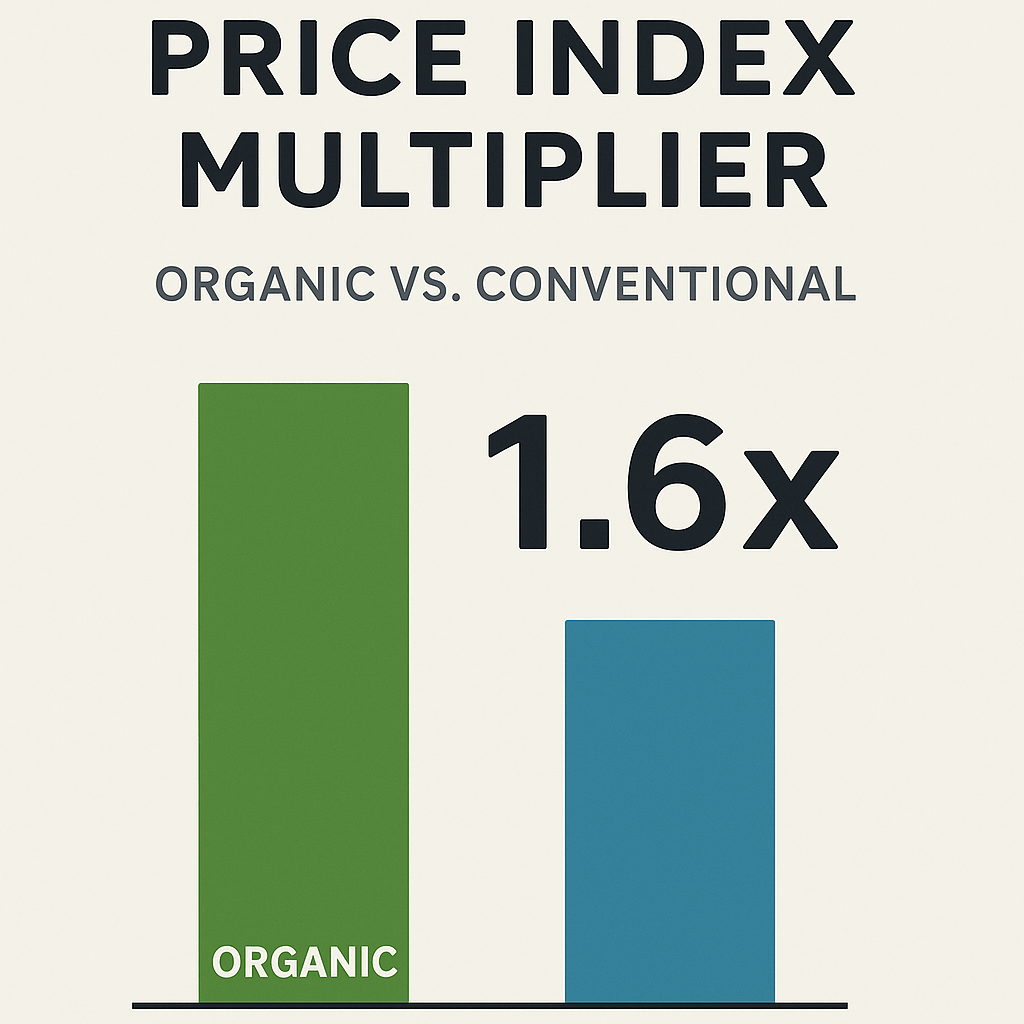
TOPP’s report also highlights growing consumer demand: 88% of Americans recognize the USDA Organic label, and nearly 60% believe it justifies higher prices, creating strong economic incentives for Texas farmers to meet that demand domestically.

“TOPP is about more than transitioning farms—it’s about building community, restoring soil, and securing food systems,” said Whitney. “And here in Texas, it’s working.”

To learn more:
Full report: https://organictransition.org/impact-report

Organic Beef Demand is on the rise!

Organic Beef is Booming: Why Texas Ranchers Should Take Notice

Organic beef is no longer a niche product—it’s a fast-growing category with powerful momentum. According to the Organic Trade Association’s 2024–2025 Organic Market Report, organic beef sales surged 36.7% last year. That’s the highest growth rate of any food category—and the most significant gain in the organic beef market in 20 years.

This demand is fueled by consumers looking for:

  • Clean, hormone- and antibiotic-free protein
  • Animal welfare
  • Environmental stewardship

However, much of this market is currently being supplied by imports—primarily from Australia and Uruguay. That’s where Texas ranchers come in.

Texas Has the Cattle—Now It Has more Processors

Texas leads the nation in cattle production, yet very few certified organic beef operations have emerged in the state. The reason? Lack of access to certified organic meat processing facilities.

That’s now changing.

Two Texas processors are leading the way:

  • All Hale Meats near Wolfforth, close to Lubbock
  • Huse’s Country Meats in Malone, TX (east of Hillsboro)

Huse’s, a long-standing family-owned processor known for quality smoked meats, has recently become certified organic, thanks in part to rancher Larry Widman of Leafy Creek Farm. Larry helped initiate and complete the certification process so he could market his own beef—and he continues to assist other ranchers with organic slaughter scheduling.

To schedule your organic cattle for processing:
📧 widman@leafycreekfarm.com
📱 325-330-2170

Modeling Success: Open Range Beef in Nebraska

Texas ranchers can look to Open Range Beef in Nebraska as a blueprint. Run by Tim Goodnight, this company processes and markets organic beef across multiple channels—from retail and foodservice to private label and club stores. Their success proves that domestic supply chains can work—when producers and processors are aligned.

Contact Tim Goodnight 🌐 openrangebeef.com

Why Texas Is Ideal for Organic Beef

Texas has a unique opportunity:

  • Abundant native rangeland well-suited to low-input, organic grazing
  • Proximity to two certified organic processors
  • A central location to serve local, regional, and statewide markets

With the infrastructure in place, ranchers can now tap into the fastest-growing sector in organic food.

One potential outlet is Pederson’s Natural Farms in Hamilton, TX, known for high-quality natural meats. As supply increases, retailers like Pederson’s—and others—can become key distribution points for Texas-grown organic beef.


Could Tariffs and Trade Changes Open the Door Further?

While Australia and Uruguay currently supply a large share of organic beef imports, this supply chain is vulnerable to:

  • Global trade shifts
  • Export restrictions
  • Increased transportation costs
  • Potential U.S. tariffs on imported meat

As U.S. policymakers and trade organizations review food security and prioritize resilient domestic supply chains, we may see fewer imports and greater opportunities for U.S.-based production. That’s good news for ranchers with the capacity to go organic—and for consumers looking for American-grown, organic, and ethically raised meat.


Next Steps for Ranchers

If you’re in Texas and run a cow-calf, grass-fed, or finished beef operation, now is the time to:

  1. Explore organic certification of your pastures and practices.
  2. Connect with a certified processor like Huse’s or All Hale Meats.
  3. Develop local markets—co-ops, farm stores, health food outlets, and online direct-to-consumer sales.

This isn’t just about beef—it’s about building a more local, more ethical, and more profitable Texas-based food system.

What the Haney Test Revealed: Biological Benefits of Cover Crops in Action

Over the past few weeks, I’ve written about what cover crops like Sunn Hemp, Tepary Bean, and Cowpea leave behind in the soil and how their nutrient contributions stack up in standard soil tests. But it wasn’t until we looked at the Haney Soil Test results from March 2025 that we could truly see the biological influence each of these summer cover crops had on the soil. In this post, I’m sharing new insights drawn from those results and why I believe every grower should consider this test when evaluating cover crop performance.

Why the Haney Test?

Unlike standard chemical soil tests that only measure nutrient availability, the Haney Test adds a biological lens. It measures microbial respiration (CO₂-C), available organic nitrogen (Haney N), and gives an overall Soil Health Score. These indicators help us understand how biologically active the soil is and how much of the nutrients are likely to cycle into plant-available forms.

For organic and sustainable systems, this is vital. We’re not just feeding the crop—we’re feeding the soil.

All Plots Started Equal

Just to set the stage: all test plots had a rye cover crop terminated in early spring 2024 and were kept bare and weed-free through summer. The only difference among plots came when Sunn Hemp, Tepary Bean, or Cowpea was planted in August 2024. The check plot remained bare.

The Biological Winners and Stragglers

Here’s what the Haney Test results (click here to see reports) show:

  • Sunn Hemp had the highest CO₂-C (43.21 ppm), strong Haney N (74.74 lbs/ac), and the highest Soil Health Score (9.41). It fed the microbes and left behind a soil system ready to cycle nutrients. If you’re planting a high-demand crop like corn or grain sorghum, Sunn Hemp sets the table biologically.
  • Cowpea followed closely with a CO₂-C of 32.08 ppm, Haney N of 71.50 lbs/ac, and a Soil Health Score of 7.80. Reliable, balanced, and consistent—it’s a solid choice for improving soil function while conserving moisture and nutrients.
  • Tepary Bean, despite good forage quality and tissue N content (3.02%), showed low microbial activity (CO₂-C of 13.75 ppm) and the lowest Soil Health Score (6.43). It may decompose slower or produce compounds less favored by microbes. That’s not necessarily bad—it might serve longer-term fertility, but it’s not the best option for short-term nutrient release.
  • Check Plot (bare fallow) showed high mineral N (83.73 lbs/ac) and decent CO₂-C (37.14 ppm), but that’s misleading. There was no cover crop to feed soil life or cycle nutrients—just unutilized residuals from last year. Long term, this approach does not build soil health.
  • Click here to read a summary report – Summary of Soil Samples

What This Means for Growers

The biological boost from a cover crop can be measured and managed. Without the Haney Test, we’d only be guessing how much nitrogen or biological activity remains from cover cropping. We tell growers: don’t plant blind—use this test to make more informed fertility and management decisions.

Sunn Hemp again proved why it’s a leading summer cover crop for southern systems. Cowpea is a great second choice when water is limited or biological stimulation is still desired. Tepary Bean may have a role in longer rotations but isn’t the best for quick turnover systems.

Final Thought

We use cover crops for more than just erosion control. They’re engines of soil biology, nutrient cycling, and resilience. The Haney Test gives us a dashboard to read those engines.

If you’re not already using it, this is your sign: test for biology, not just chemistry.

Read more:

Organic Sorghum Resources (update)

Sorghum’s natural characteristics and compatibility with organic farming principles indeed make it an excellent crop for organic cultivation. While some traits like drought tolerance and non-GMO status are shared with conventional sorghum, these characteristics synergize particularly well with the goals and methods of organic agriculture, offering distinct advantages.

Click a link below to scroll down!

Post Updated 3/12/25

  1. Sorghum’s Advantages
  2. Buying seed?
  3. Sorghum Varieties
  4. Forage Sorghum Varieties
  5. Sorghum Sudan Grass Varieties
  6. Sorghum Seed Companies
  7. Other Resources (just click to see)
  • Drought Tolerance: Sorghum’s inherent drought tolerance makes it an ideal crop for organic systems, which prioritize water conservation and efficient use.
  • Low Fertilizer Needs: Sorghum’s ability to thrive in less fertile soils matches well with organic farming, which relies on natural fertility management rather than synthetic fertilizers.
  • Natural Resistance to Pests and Diseases: Sorghum’s inherent resistance to many pests and diseases minimizes the need for synthetic pesticides, making it easier for organic farmers to manage their crops.
  • Versatility in Use: Sorghum can be utilized in a variety of ways (grain, syrup, fodder) which allows organic producers to cater to diverse markets (food, feed, sweeteners) under organic labels.
  • Contribution to Soil Health: Sorghum’s deep rooting system can improve soil structure and increase water infiltration, beneficial effects that are particularly valued in organic systems focused on long-term soil health.
  • Crop Rotation and Diversity: Sorghum fits well into crop rotations, a cornerstone of organic farming, helping break pest and disease cycles and improving soil health without relying on chemical inputs.
  • Consumer Preference for Non-GMO: Even though there is no GMO sorghum on the market, the strong consumer preference for non-GMO products benefits organic sorghum producers, as their products are guaranteed to meet this demand.
  • Growing Demand for Organic Grains: The increasing consumer demand for organic products extends to grains, including sorghum, for both human consumption and organic animal feed.
  • Carbon Sequestration: Sorghum’s growth habit and biomass production can contribute to carbon sequestration, aligning with the environmental sustainability goals of organic farming.

While many of sorghum’s traits benefit both conventional and organic systems, its natural resilience, low input requirements, and versatility make it particularly well-suited for organic agriculture. These characteristics help organic sorghum producers minimize reliance on external inputs, align with organic principles, and tap into a growing market demand for organic products.

The number of seeds per pound in sorghum varieties can vary significantly depending on the specific variety and the size of the seeds. Generally, this range can be broad, reflecting differences in genetics, breeding objectives, and end use (grain, forage, or specialty types). Here’s a general overview:

  • Small-Seeded Varieties: Can have as many as 16,000 to 18,000 seeds per pound.
  • Large-Seeded Varieties: May have fewer seeds per pound, typically ranging from 12,000 to 15,000 seeds per pound.
  • Forage sorghums and sorghum-sudangrass hybrid types tend to have larger seeds compared to grain sorghum varieties. The seeds per pound can range from 10,000 to 14,000 for forage types, with sorghum-sudangrass hybrids often on the lower end of this scale due to their larger seed size.

The varieties listed below are some planted by current organic growers. We are in the process of getting a better list together and will post them here!

These varieties are listed along with their respective websites for more detailed information. Company listings are down below and your source for qualified salespeople. Check with your certifier before buying any sorghum seed especially if the variety is not sold as organically produced. Since we do not have many organic, locally adapted sorghum varieties producers typically buy conventionally produced varieties without seed treatments.

Richardson Seeds

DynaGro Seed (Nutrien Ag Solutions)

MOJO Seed

Sorghum Partners, S&W Seed Company

Scott Seed Co

  • 114 E New York St. or PO Box 1732, Hereford, TX  79045
  • Office: 806-364-3484
  • Coby Kreighauser
  • Mobile: 806-683-1868
  • coby@scottseed.net
  • Chuck Cielencki
  • Mobile: 806-683-1868
  • chuck@scottseed.net

Supra Ag International

  • 10808 S River Front Pkwy, Suite 3039, South Jordan, UT 84095
  • Office: 801-984-6723
  • Sales: 806-292-0031
  • info@supra.ag
  • Chris Hendrickson
  • chris@supra.ag

Warner Seeds

Integra, Wilbur-Ellis

LG Seeds

Golden Acres

Innvictis Seed Solutions

Alta Seeds by Advanta

DeKalb (Bayer)

BH Genetics

FieldWatch is Here in Texas!

FIELDWATCH® WELCOMES TEXAS AS ITS 27TH STATE MEMBER

by Curt Hadley, Field Watch

FieldWatch, Inc., a non-profit company that promotes communication and stewardship among crop producers, beekeepers and pesticide applicators, announces that Texas has joined as the 27th member state.

Texas joins FieldWatch along with 26 other states, one Canadian province and the District of Columbia. The membership will enable Texas’ beekeepers (hobbyist and commercial) and crop producers (organic and conventional) to use a secure, easy-to-use online registry to identify and map the locations of apiaries and crop fields that pesticide applicators should avoid. The free and voluntary registries, DriftWatch™ and BeeCheck™, will be available to all Texas beekeepers and crop producers. FieldCheck® is the online and mobile portal that pesticide applicators can use to improve decision-making and avoid damage from spray drift to crops and beehives.

“The goal is to get beekeepers and crop producers registered through FieldWatch, so applicators can access accurate information before spraying,” said Bob Walters, President and CEO of FieldWatch. “This model has been proven to build stewardship and communication in agriculture.”

Texas’ membership decision was especially driven by the needs of crop producers and beekeepers who wanted to register the locations of their apiaries and crops. 

Want to Get Started? It is very easy…..

Above you read the press release but now we need to get you registered and your fields mapped. I am the Texas FieldWatch Data Steward, and my job is to help you with this process and to approve your fields or beehives.

First, type in fieldwatch.com into your web browser. This will take you to a screen that looks like this.

You will want to click on the square called driftwatch (for producers). Once you click on that button you will be taken to the page below.

If you are a beekeeper and want to register your hives with beecheck then you will click below the “Map My Apiaries” and be taken to this page below.

If you are just registering your cropland then you will click below the “Map My Specialty Crops” and be taken to this page below.

No matter which direction you go, crops or bees, you will need to tell us which state – Texas. Then use your email address as a username or any other name you can remember, add in your email address and then a password and hit Sign Up. Once you hit the button then this screen will appear. I went the crop route in my example, but both are similar.

Once you register all your information and click Create Account you will get this notification.

This email below came to my Gmail account telling me to click here to complete the account creation. Also notice that my Texas A&M AgriLife email address is listed down below as the data steward for the FieldWatch program. At this point I am the person getting FieldWatch up and going in Texas and working with Curt Hadley at FieldWatch we will solve any issues you have with FieldWatch!

Once you click to complete you will be taken to this screen

And finally to here. Take a minute or two to get familiar with the screen. This is pretty much what you see on Google Earth or Google Maps. Use your mouse to move around the map and you can scroll in or out for Zoom.

But this is what you are interested in clicking. “Submit New Site.”

When you click then this appears.

After you answer the questions on 3 different screens you will finally get to this screen below.

I zoomed in on the field that we have certified organic at the Stephenville Research and Extension Center on Hwy 281 in Stephenville and hit the blue button for Begin Tracing. I clicked on one corner then the next till I got back to the first corner and it completed the field. 3.88 acres! The C is for cotton.

I am done with registering my certified organic field and waiting on the Data Steward with Field Watch to approve my field. Because I am the Data Steward I logged out of my “fake account” and logged back in with my official Texas A&M AgriLife email and got this screen for the field I just mapped.

As Data Steward I approved the site and now here are the approved FieldWatch sites so far for all the world to see. This map shows that we have 2 bee sites approved and now one organic cotton site approved. Simple and easy! If you have any questions or concerns, just email me: bob.whitney@ag.tamu.edu

Biopesticides and Biostimulants: Innovation, Challenges, and Growth

Introduction

Biopesticides and biostimulants are at the forefront of organic agriculture, offering natural solutions for pest control and plant health. While these products have gained popularity, the industry faces both opportunities and challenges as it evolves. This post explores the similarities and differences between biopesticides and biostimulants, their regulatory landscape, and what the future holds for these technologies.

Defining Biopesticides and Biostimulants

First let’s look at Biopesticides

Biopesticides are derived from natural materials, including microorganisms, plants, and minerals, to control pests and diseases. They function through competition, antibiosis, or physiological disruption of target organisms. Biopesticides as a category are regulated by the Environmental Protection Agency (EPA) as is detailed below!

Types of Biopesticides:
  • Microbial Biopesticides: Contain beneficial bacteria, fungi, viruses, or protozoa that suppress pests (e.g., Bacillus thuringiensis Bt for caterpillar control).
  • Biochemical Biopesticides: Utilize plant extracts, pheromones, and essential oils to affect pest behavior or physiology. For example, Thyme oil or Neem oil would fit this category.
  • Plant-Incorporated Protectants (PIPs): Genetic material introduced into plants, such as Bt proteins in genetically modified (GMO) crops. These are not to be used in organic production but are considered a biopesticide.

This image above is from the EPA website for Biopesticides. Click on the image to go to the website and check on a biopesticides registration!

How a Company Determines the Need for EPA Approval for a Biopesticide

A company developing a new biopesticide must determine if its product falls under EPA regulation by assessing the active ingredient, intended use, and mode of action. The Federal Insecticide, Fungicide, and Rodenticide Act (FIFRA) mandates that any substance intended for preventing, destroying, repelling, or mitigating pests must be registered as a pesticide with the U.S. Environmental Protection Agency (EPA). A company should ask the following questions to assess if its product qualifies as a biopesticide requiring EPA registration:

  1. Does the product actively control pests, pathogens, or weeds?
    • If the product claims direct pest suppression, it is a pesticide and requires EPA approval.
    • If it only enhances plant health without targeting pests directly, it may qualify as a biostimulant and not require EPA registration.
  2. What is the mode of action?
    • If the product kills, inhibits, or repels pests, it is considered a pesticide.
    • If the product works by stimulating plant defenses or improving nutrient uptake, it may not require registration.
  3. Is the active ingredient a known biopesticide or plant extract?
    • If the active ingredient is a microorganism, plant extract, or biochemical compound known to suppress pests, it likely needs EPA registration.
    • The EPA maintains a list of registered biopesticide active ingredients, and companies should check if similar compounds are already registered.
  4. Are pesticidal claims being made on the label?
    • If the product claims pest control properties (e.g., “kills fungi,” “controls insects”), it falls under FIFRA jurisdiction and requires EPA registration.
    • If the product only states benefits like “enhances plant vigor” or “improves root growth,” it may avoid registration.

Biostimulants

Biostimulants enhance plant growth, stress tolerance, and nutrient efficiency without directly targeting pests or diseases. Unlike biopesticides, they do not require EPA registration, leading to a highly unregulated market.

That said as a disclaimer there are many biostimulants that do a good job at preventing, controlling or managing for pests in crops. They can have a dual function even though they don’t have an EPA registration – a definite grey area!

Key Categories of Biostimulants:
  • Microbial Biostimulants: Beneficial bacteria and fungi that improve nutrient uptake and plant stress resilience.
  • Seaweed and Plant Extracts: Natural compounds that stimulate plant metabolism and root development.
  • Amino Acids and Humic Substances: Organic molecules that enhance soil health and nutrient availability.
  • For a complete look at biostimulants check out this post and the many different types available. Biostimulants: The Next New Frontier

This chart above (just click on it for a larger image) shows how an SAR system works in the plant. In many cases an SAR developed biostimulant will also be labeled with EPA as a biopesticide simply because it does control specific pests in the plant while boosting the plants defense mechanisms.

Similarities Between Biopesticides and Biostimulants
  • Both are used in sustainable and organic agriculture to reduce reliance on synthetic chemicals.
  • Derived from natural sources, including microorganisms and plant extracts.
  • Improve overall plant health, either through disease suppression (biopesticides) or enhanced resilience (biostimulants).
  • Can be combined with conventional or organic inputs in integrated pest and crop management (IPM/ICM).
FeatureBiopesticidesBiostimulants
Primary PurposeControl pests and diseasesImprove plant growth and resilience
MechanismDirectly targets pests/pathogensEnhances plant physiological processes
RegulationSubject to pesticide regulations (EPA, OMRI)Less regulatory oversight, often considered soil amendments
Mode of ActionAntibiosis, competition, parasitismHormonal stimulation, nutrient uptake efficiency
ExamplesBacillus subtilis for fungal disease controlSeaweed extracts for drought tolerance

Industry Challenges and Regulatory Considerations

One of the biggest challenges in the biostimulant industry is the lack of clear regulations. While biopesticides undergo rigorous EPA evaluation, biostimulants can be marketed with minimal oversight. This has led to the proliferation of products with unverified claims, making it difficult for growers to differentiate effective solutions from ineffective ones.

Government agencies are actively considering regulatory frameworks for biostimulants to ensure quality control without stifling innovation. The Biostimulant Industry Alliance and other trade organizations are working to establish scientific standards and promote best practices.

Market Trends and Future Outlook

Despite challenges, the biopesticide and biostimulant markets are poised for significant growth. Market research predicts a continued rise in demand due to increasing consumer preference for organic and residue-free crops. Additionally, advancements in microbial formulations and AI-driven precision agriculture will enhance the effectiveness of these products.

Data and Charts from Industry Sources

1. Projected Market Growth of Biopesticides and Biostimulants (2020-2030)
  • Data Source: Market research reports from MarketsandMarkets, Mordor Intelligence, and Research and Markets.
  • Methodology: Extrapolation of market size based on reported CAGR (Compound Annual Growth Rate) values of 12-15% for biopesticides and 13-16% for biostimulants from recent industry reports.

References:

  • MarketsandMarkets (2023). Biopesticides Market – Global Forecast 2028.
  • Mordor Intelligence (2023). Biostimulants Market Analysis & Forecast 2028.
  • Research and Markets (2023). Trends in Agricultural Biologicals.
2. Investment Trends in Biostimulant Research and Development (2015-2025)
  • Data Source: Reports from AgFunder, FAO, and OECD on global agricultural input investments.
  • Methodology: Estimation based on reported investments in biologicals, venture capital funding for agri-tech startups, and projected R&D budgets from industry leaders.

References:

  • AgFunder (2023). Investment in AgTech and Biostimulants.
  • FAO (2023). Sustainable Agriculture and Innovation Trends.
  • OECD (2022). Trends in Agricultural R&D.
3. Adoption Rates of Biostimulants Across Different Crop Sectors
  • Data Source: Surveys and adoption studies from USDA, European Biostimulant Industry Council (EBIC), and International Biostimulants Forum.
  • Methodology: Aggregated adoption data from industry reports and regional case studies, indicating highest adoption in vegetable and fruit production, with lower adoption in ornamentals.

References:

  • USDA (2023). Adoption of Biostimulants in U.S. Crop Production.
  • EBIC (2023). European Biostimulants Market Report.
  • International Biostimulants Forum (2022). Global Trends in Biological Crop Inputs.
4. Regulatory Differences Between Biopesticides and Biostimulants
  • Data Source: Regulations from EPA, European Food Safety Authority (EFSA), and USDA Organic Program.
  • Methodology: Comparative analysis of regulatory frameworks governing product registration, scientific validation, and market oversight for biopesticides versus biostimulants.

References:

  • EPA (2023). Biopesticide Registration Guidelines.
  • EFSA (2023). Regulatory Framework for Biostimulants in the EU.
  • USDA (2023). Organic Input Standards and Market Oversight.