As a part of a large organic cotton grant, Texas A&M Researchers and Extension specialists will be studying many aspects of organic cotton production to both meet growing demand while making organic cotton more sustainable and resilient. We will be starting with the soil, your soil, if you will be willing to let us do some testing…….
You will…
Receive $600 for each organic cotton field sampled for soil analysis.
Receive soil health analysis and microbial diversity reports on your operations free of cost.
Collaborate with experts to gain valuable insights on your farming operations.
We will…
Collect soil to evaluate various soil health indicators and soil microbial diversity data over a 4-year period.
Study the suitability of agronomic practices for improving organic cotton production.
This project is funded by USDA’s Organic Research and Extension Initiative (OREI) grant.
Project Outreach Specialists: Bob Whitney – Extension Organic Program Specialist and Emi Kimura – Associate Professor and Extension Agronomist
Cover crops play a pivotal role in sustainable agriculture by enhancing soil health, managing pests and diseases, and improving overall crop yield resilience. Cover crops can be any non-harvested crop used primarily to protect soil from erosion during off-season periods, provide actively growing roots to extract and stabilize nutrients that might be otherwise vulnerable to leaching or volatile loss, and increase levels of SOM to promote soil physical properties and C sequestration. Cover crops have other values to farmers, as some crops can also be harvested for forage or seed or to diversify the cropping system to suppress diseases, obtain other crop rotation benefits, improve off-season access to fields, or extract water during wet periods.
As a source of additional C delivered to soil during non-cash-crop growing periods (e.g., in fall and winter in many temperate regions), cover crops are particularly effective in supplying soil microorganisms with readily available carbon sources from both root exudates during growth and C-rich crop residues upon termination. Several studies have found greater soil organic carbon sequestration with implementation of cover crops (Poeplau and Don, 2015). Often combined with no-tillage, management of cropland with cover cropping can enhance soil organic C sequestration due to addition of organic materials growing directly on land rather than imported from another location.
In the summer we plant sorghum sudangrass (top picture) for weed control because it has an allelopathic effect on weeds (click that link to read about it) and it shades any weeds coming on later. It is a vigorous and versatile cover crop that stands out for its exceptional contribution to soil health and weed suppression. Its rapid growth and dense canopy make it highly effective at outcompeting weeds, thus reducing the reliance on herbicides. This competitive growth habit is instrumental in shading out weeds, significantly lowering weed biomass and seed bank potential in the soil. Beyond weed control, sorghum sudangrass excels in improving soil structure and health. Its deep and extensive root system breaks up compacted soil layers, enhancing soil porosity and aeration. This root action not only facilitates better water infiltration and storage but also promotes the activity of beneficial soil organisms by increasing organic matter and available nutrients in the soil profile. Just remember the allelopathic effect (preventing weeds or the crop growing) last for 10-14 days after soil incorporation!
The benefits of sudangrass extend to its role in adding organic matter to the soil when it is mowed and incorporated as green manure. This process means making sure the plant is in a 30-40:1 Carbon to Nitrogen ratio. The decomposition of sudangrass residue releases significant amounts of nutrients, especially nitrogen, which are then available for subsequent crops, thereby improving soil fertility. Additionally, sudangrass has been noted for its biofumigant properties, particularly when specific varieties are used. The breakdown of its tissues can release compounds that suppress soil-borne pathogens and nematodes, further promoting a healthy soil environment conducive to high-yielding crops. However, it’s important to manage sudangrass properly, as allowing it to reach maturity (beyond the 40:1 carbon to nitrogen ratio) can result in a tough, woody residue that is slower to decompose and might interfere with planting subsequent crops.
Sunn Hemp
Sunn hemp (picture above) is increasingly recognized for its substantial benefits as a cover crop, particularly in warm climates where it thrives. One of the key advantages of incorporating sunn hemp into crop rotations is its ability to rapidly accumulate biomass, which, when turned into the soil, significantly enhances soil organic matter. This increase in organic matter improves soil structure, water retention, and nutrient availability, leading to a more fertile and resilient soil ecosystem. Moreover, sunn hemp is an excellent nitrogen fixer, capturing atmospheric nitrogen and converting it into a form that subsequent crops can easily absorb. This natural fertilization process reduces the need for synthetic nitrogen inputs, lowering production costs and minimizing environmental impact.
However, while sunn hemp offers numerous benefits, there are also challenges associated with its cultivation. One potential issue is its allelopathic properties, which can inhibit the germination and growth of subsequent crops if not managed properly. This is due to compounds released by sunn hemp into the soil that can affect sensitive plants, or it can work to keep weeds out! Additionally, sunn hemp may pose a risk of becoming invasive if not carefully controlled. This risk underscores the importance of implementing appropriate management practices, such as timely mowing or incorporation into the soil before seed set, to prevent unwanted spread. Despite these challenges, the benefits of sunn hemp, particularly in terms of soil health enhancement and its role in sustainable agriculture practices, often outweigh the potential drawbacks, making it a valuable tool in the arsenal of organic farmers aiming for weed control and soil health benefits.
Good video about Sunn Hemp from Missouri research!
Cowpea
Cowpea (Vigna unguiculata) (picture above) serves as an excellent cover crop in a variety of agricultural systems, providing multiple benefits for soil health and weed management. Its ability to thrive in poor soil conditions, coupled with a relatively low requirement for water, makes cowpea a robust choice for enhancing soil fertility and structure, especially in regions prone to drought. As a leguminous plant, cowpea enriches the soil with nitrogen through symbiotic nitrogen fixation, a process where bacteria in cowpea roots convert atmospheric nitrogen into a form that plants can use. This natural fertilization boosts the nutrient content of the soil, reducing the need for synthetic fertilizers and thereby lowering agricultural input costs.
In terms of weed control, cowpea’s rapid growth and dense foliage provide an effective cover that suppresses weed emergence by significantly reducing light penetration to the soil surface, thus minimizing the growth opportunities for unwanted plants. The shading effect also helps in retaining soil moisture, further supporting the growth of the cowpea while inhibiting weed development (this effect is not nearly as effective because it is a shorter plant). Additionally, when cowpea is incorporated into the soil as green manure after its growth cycle, the organic matter added to the soil improves soil structure, enhances water retention, and stimulates the activity of beneficial microorganisms. However, it’s important to manage cowpea cover crops effectively to prevent them from becoming a weed themselves, as their vigorous growth can sometimes lead to challenges in controlling their spread if not timely mowed or incorporated into the soil. Overall, cowpea stands out as a versatile and beneficial cover crop, contributing to sustainable agricultural practices by improving soil health, enhancing nutrient availability, and providing effective weed suppression.
Winter Cover Crops
Winter cover is more difficult because we typically start to get land ready about the time our cover crops start to grow in February/March. Winter cover is almost always a small grain and most of the time we use a “combine run” wheat or oat since they are cheaper with a planting of turnips or daikon radish or both.
Cereal Rye
Cereal rye (not ryegrass), scientifically known as Secale cereale (pictured above), serves as an exceptional cover crop for a multitude of reasons, pivotal for enhancing agricultural sustainability and soil health. One of its foremost benefits is its robust root system, which significantly improves soil structure and enhances water infiltration. This characteristic is particularly valuable in preventing soil erosion and runoff, thus protecting water quality in the surrounding environment. Additionally, cereal rye’s ability to uptake residual nitrogen from the soil makes it an excellent tool for nutrient management, reducing the risk of nitrogen leaching into water bodies and thereby mitigating the environmental impact of nitrogen fertilizers.
Moreover, cereal rye acts as a natural weed suppressant due to its quick germination and fast growth, outcompeting weeds for light, nutrients, and space. The crop’s residue also provides a mulch that further suppresses weed growth and retains soil moisture, which is particularly beneficial in dryland farming systems. Furthermore, by providing a habitat for beneficial insects and microorganisms, cereal rye enhances biodiversity and contributes to the overall health of the agroecosystem.
This picture is from Carl Pepper near O’Donnell on the South Plains. It was planted last September into cotton plants. Seeding rate is 4.5 lbs. of Rye and 4.5 lbs. of Barley with 1 lb. of purple top turnips burned in the freeze.Holds the soil, uses very little if any moisture and is cheap to establish.
Short video of Roller Crimping a rye cover crop at pollination
Mustards
Using mustards as a cover crop is a practice rich in benefits for sustainable and organic agriculture. Mustards contribute significantly to soil health and pest management strategies without reliance on chemical inputs. They are known for their rapid growth, which quickly covers bare soil, reducing erosion and suppressing weed growth through competition. The deep rooting of mustards helps break up compacted soil layers, enhancing water infiltration and aeration for future crops. Perhaps most notably, mustards possess biofumigant properties; when incorporated into the soil, they release natural compounds that suppress a variety of soil-borne pathogens and pests (click here for a great project with mustard seed meal). This dual action of physical soil improvement and chemical pest suppression makes mustards an invaluable tool in the organic farmer’s toolkit, promoting a healthier, more productive soil ecosystem and paving the way for successful crop rotations.
“Caliente Rojo” mustard is a variety specifically bred for its biofumigation properties, which can play a significant role in organic agriculture, particularly in disease management and soil health improvement.
Biofumigation Properties: “Caliente Rojo” mustard, when incorporated into the soil, releases isothiocyanates (ITCs), which are naturally occurring compounds found in Brassica plants. These compounds have been shown to suppress a wide range of soil-borne pathogens, including fungi, bacteria, nematodes, and some weed species.
Soil Health Improvement: Beyond disease suppression, “Caliente Rojo” mustard contributes to soil health by adding organic matter, improving soil structure, and enhancing microbial activity. This leads to better water infiltration, aeration, and nutrient cycling in the soil.
Growth Habit: It has a fast growth rate, which quickly provides ground cover, reducing soil erosion and weed growth. Its deep rooting system can also help in breaking up compacted layers of soil, improving root penetration for subsequent crops.
Sowing: It is typically sown in the fall or early spring when the soil can be worked. The planting rate and spacing should be adjusted based on the specific goals (biofumigation, erosion control, etc.). Typical planting rate is 8 lbs./ac. but can be lower.
Incorporation: For biofumigation, the mustard should be mowed or chopped and immediately incorporated into the soil while it is still fresh. This action releases the biofumigant compounds.
Irrigation: After incorporation, irrigating the area can help in releasing the biofumigant compounds more effectively as they hydrolyze in the presence of water.
Vetch
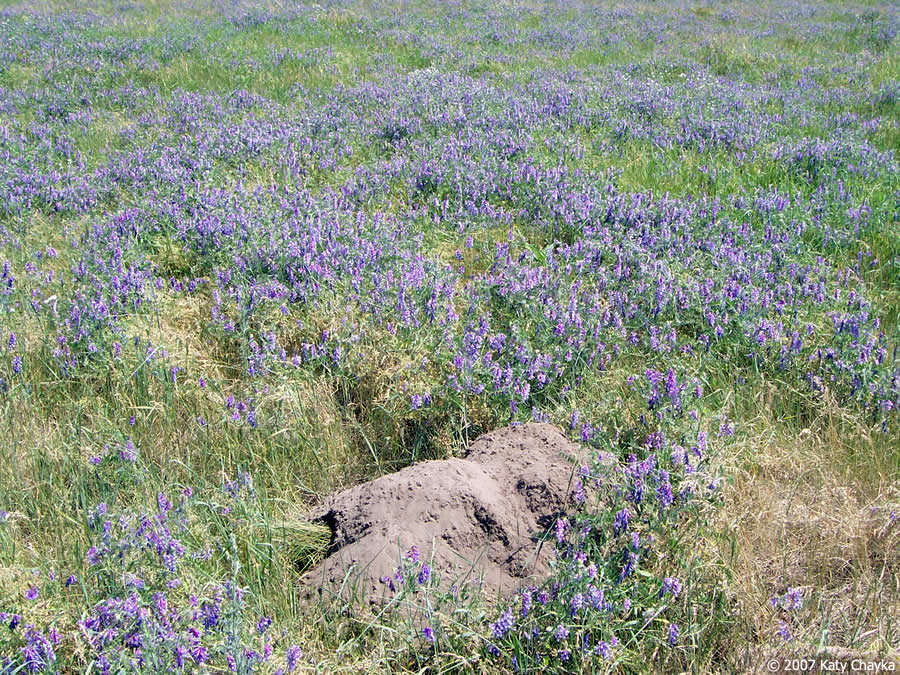
Common vetch (Vicia sativa) and hairy vetch (Vicia villosa) are leguminous cover crops celebrated for their multifaceted benefits in sustainable agriculture. These species excel in nitrogen fixation, a process where atmospheric nitrogen is converted into a form that plants can use, enriching the soil and reducing the need for synthetic fertilizers. This attribute makes them particularly valuable in crop rotations, especially preceding nutrient-demanding crops. Hairy vetch, with its robust growth and cold tolerance, is particularly noted for producing a significant amount of biomass, which can improve soil structure and organic matter content.
Both common and hairy vetch exhibit vigorous root systems that enhance soil health by increasing porosity and water infiltration, thereby reducing erosion and improving drought resilience. Their dense foliage serves as an excellent weed suppressant by outcompeting weed species for sunlight and nutrients, which can lead to reduced herbicide reliance. Upon termination, the biomass of these vetch species acts as a natural mulch, conserving soil moisture and further suppressing weed growth. Additionally, the flowers of vetch attract beneficial insects, including pollinators and predatory insects, which contribute to the biodiversity and resilience of agroecosystems.
Hairy vetch, in particular, stands out for its ability to thrive in a wide range of soil conditions and its notable winter hardiness, making it an excellent choice for cover cropping in cooler climates where other legumes might fail to establish or survive. Hairy vetch will produce more residue than common vetch 1/3 to 1/2 more. Common vetch does tend to reseed and establish easier in a pasture system compared to hairy vetch. When used in a no-till farming system, the decomposing vetch residue can release nitrogen slowly over time, closely matching the nutrient uptake patterns of subsequent crops. This synchrony minimizes nitrogen leaching and maximizes nutrient use efficiency, showcasing the role of vetch not only in enhancing soil fertility but also in promoting more sustainable and environmentally friendly farming practices.
Wheat (Triticum spp.)
Advantages: Wheat is widely adaptable, with a deep root system that improves soil structure and enhances water infiltration. It’s excellent for erosion control and can be a good scavenger of residual soil nitrogen, reducing nitrate leaching. Wheat also serves as a decent biomass producer in cooler climates.
Best For: Erosion control, nitrogen scavenging, and when a crop that can survive a wide range of conditions is needed.
Oats (Avena sativa)
Advantages: Oats are fast-growing and establish quickly, providing rapid ground cover to outcompete weeds and reduce erosion. They produce significant biomass, which can improve soil organic matter. Oats also die off in freezing temperatures, which makes them easy to manage in the spring.
Best For: Quick cover to outcompete weeds, adding organic matter to the soil, and as a winter-kill cover crop in regions with cold winters.
Barley (Hordeum vulgare)
Advantages: Barley establishes quickly and can provide a good ground cover and weed suppression. It’s more drought-tolerant than oats and can be used in areas with lower water availability. Barley also contributes to soil health by adding biomass and improving soil structure.
Best For: Fast establishment, drought-prone areas, and effective weed suppression.
Triticale (× Triticosecale)
Advantages: Triticale, a wheat and rye hybrid, combines the best traits of both parents. It offers a robust root system, excellent biomass production, and good tolerance to both poor soil conditions and colder temperatures. Triticale is also notable for its nutrient scavenging ability and can be used to improve soil fertility.
Best For: Biomass production, nutrient scavenging, and versatility in both cold and marginal soil conditions.
Daikon Radish or Tillage Radish
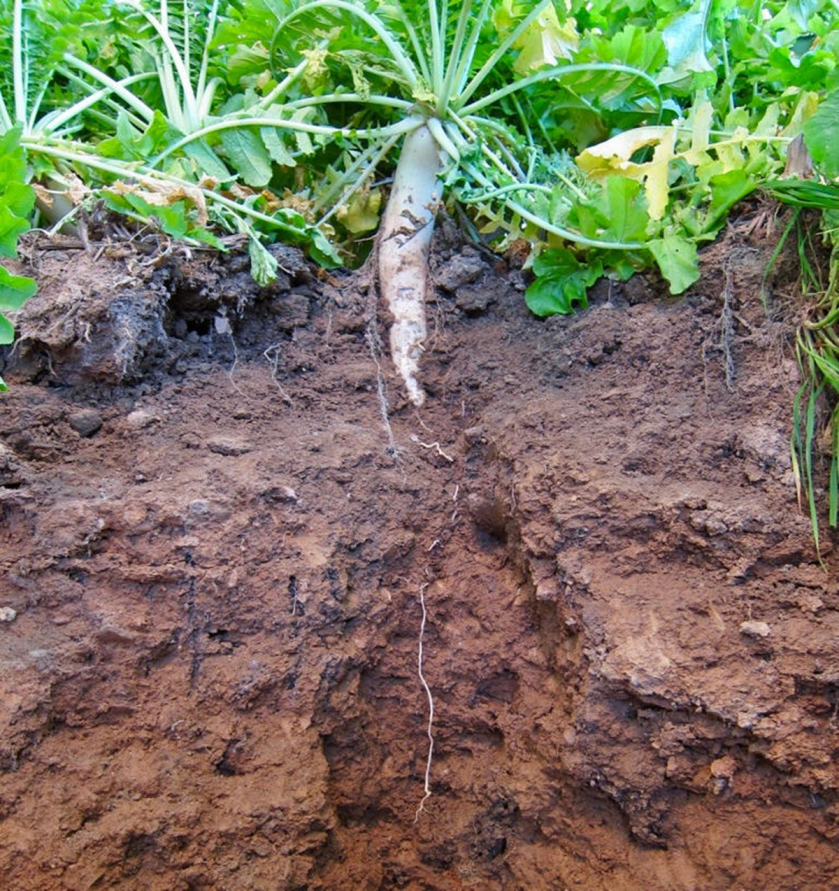
Daikon radish, often referred to as tillage radish, has gained popularity as a cover crop for its unique ability to improve soil structure and health through natural biotillage. Characterized by its rapid growth and large, penetrating taproot, tillage radish drills through compacted soil layers, creating channels that enhance air and water infiltration. This deep penetration also helps to break up hardpans, reducing the need for mechanical soil tillage, hence the name “tillage radish.”
One of the standout benefits of tillage radish is its capacity to capture excess nutrients from the soil profile. The deep roots absorb nitrogen and other nutrients, which are then stored in the plant’s tissue. When the radishes decompose in the spring, these nutrients are released back into the soil, becoming available for the next crop. This nutrient recycling can improve crop yields while reducing the risk of nutrient runoff into waterways, contributing to more sustainable farming practices.
Tillage radish also contributes to weed suppression. The rapid, dense canopy formation shades out weeds, reducing their ability to establish. This effect can carry over into the spring, providing a cleaner start for the next crop. Additionally, the decaying radish residue leaves behind significant organic matter, contributing to soil organic matter content and overall soil health. This organic matter feeds soil microorganisms, which play a critical role in maintaining soil fertility.
Moreover, the winter die-off of tillage radish eliminates the need for chemical or mechanical termination, simplifying spring field operations. This characteristic makes it an attractive option for farmers looking to reduce labor and input costs associated with cover crop management. The holes left by the decomposing radishes can also improve soil aeration and provide pathways for the roots of subsequent crops, potentially enhancing root development and access to deep soil nutrients.
Purple Top Turnip
Purple top turnip is a cover crop that has been used for years in Texas. The seed is relatively cheap, serves as winter grazing if needed, grows fast and adds lots of organic matter. It is known for its rapid growth and adaptability to a wide range of soil types, this cover crop is an excellent choice for farmers looking to enhance soil structure, suppress weeds, and improve nutrient cycling within their farming systems. The large, leafy greens of the purple top turnip create a dense canopy that can quickly cover the ground, effectively suppressing weed growth by outcompeting weeds for sunlight and nutrients.
Scales are sucking insects that insert their tiny, straw-like mouthparts into bark, fruit, or leaves, mostly on trees and shrubs and other perennial plants. Some scales can seriously damage their host, while other species do no apparent damage to plants even when scales are very abundant. The presence of scales can be easily overlooked, in part because they do not resemble most other insects.
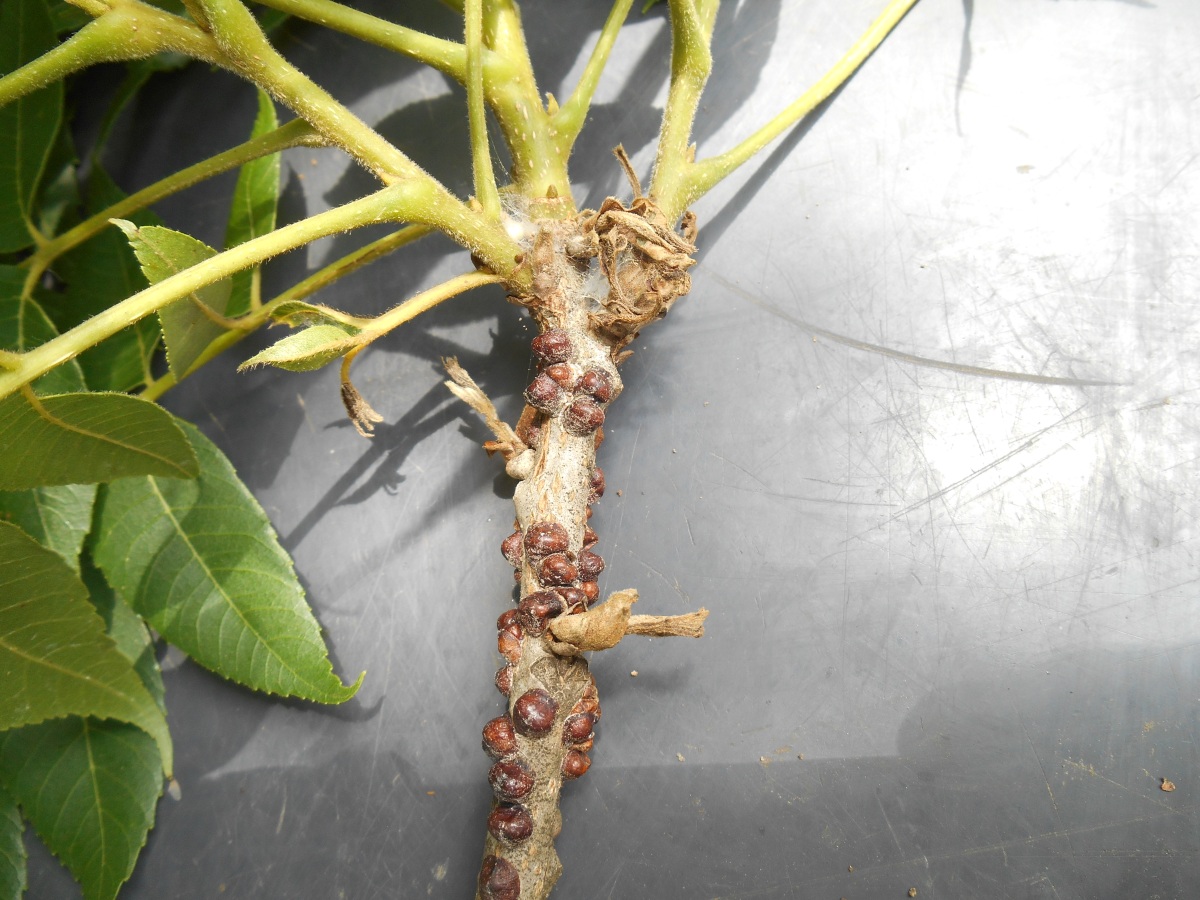
Lecanium scales in the picture above (there are about 12 species) are known as “soft” scales and are common pests on many ornamental plants all over North America. Holly, elm, redbud, walnut, citrus, apricot, pear, persimmon, beech, box elder, grape, pecan, rose, and willow are a sample of the diverse range of hosts that Lecanium scales can parasitize.
As these scales feed, they excrete large quantities of honeydew which serves as a substrate for sooty mold fungi.
Here is a link to a previous post I wrote about this scale on pecan. Scale on Pecan?
San Jose Bark Scale
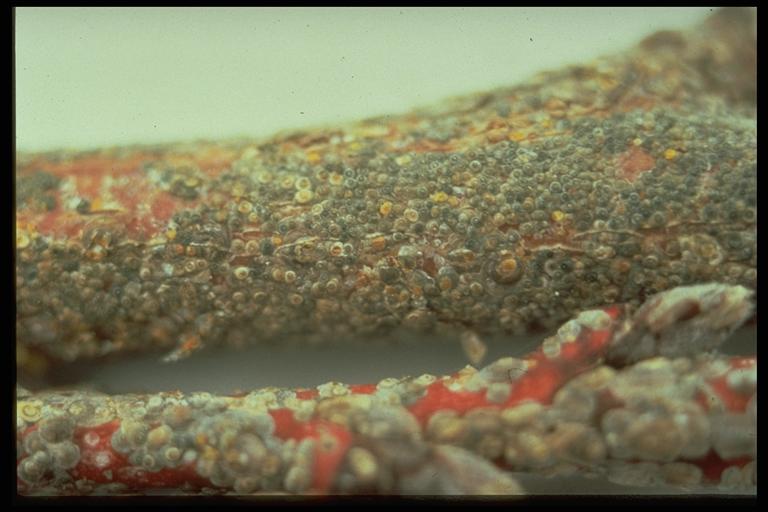
San Jose scale, Quadraspidiotus perniciosus (Comstock) (Homoptera: Diaspididae). Photo by C. L. Cole.
San Jose Bark Scale is one of the major insect pests of peaches and maybe one that causes the most damage. The first signs of infestation include a decline of tree vigor, leaf drop and appearance of sparse yellow foliage, particularly on the terminal growth. Reddish spots on the underside of bark and around scales on leaves or fruit result from feeding of immature stages. In severe cases, the entire surface of bark can become covered with layers of overlapping grayish scales. Cracking and bleeding of limbs occur, and heavily injured trees may die.
Life Cycle: Intermediate. Mature females and immature (second nymphal instar) stages survive the winter. Rather than eggs, female scale insects produce tiny six-legged, mobile, yellow-colored young, called “crawlers.” This stage spreads the infestation to new areas on the host plant, including bark, leaves and fruit, and to new hosts. After inserting their thread-like mouthparts into the plant and feeding for 2 to 3 days, female crawlers secrete their initial scale coverings and never move from that spot. Males develop into 2-winged adults in 2 or 3 weeks and emerge from their scales to seek females to mate. Up to six generations may be produced annually. All stages of development can occur throughout the year except during the winter.
Crape Myrtle Bark Scale
The crape myrtle bark scale, Acanthococcus (Eriococcus) lagerstromiae (Kuwana) was first confirmed in the USA in 2004 in the landscape near Dallas (TX), although it was likely introduced earlier. The scale is a sucking insect that feeds on the phloem (sap) of plants. As it feeds, it excretes a sugary solution known as “honeydew” (similar to aphids, whiteflies, and other sucking insects). Heavy infestations of crape myrtle bark scale produce sufficient honeydew to coat leaves, stems and bark of the tree. This honeydew, in turn, will eventually turn black as it is colonized by a concoction of fungi, called sooty mold. Although crape myrtles rarely die as a result of crape myrtle bark scale infestation, the sticky leaves and black trunks greatly reduce the attractive appearance of the tree.
Photo by Erfan K. Vafaie, Texas A&M AgriLife Extension.
Immature crape myrtle bark scale is hard to see with the naked eye, but adult scale covers, and egg sacs are frequently visible on the upper branches and trunk of the tree. These scales include larger, white, oval (female) and smaller, elongate (male) scales. Both male and female scales of the crape myrtle bark scale are immobile and will “bleed” pink blood when crushed.
On a personal note, this is a problem I have in my landscape and use Certis Biologicals – Des-X Insecticidal Soap as a treatment. Seems to work well but it does require repeat applications.
Mealybugs are prominent now in Greenhouses and Houseplants
Mealybugs are soft-bodied, wingless insects belonging to the family Pseudococcidae. These pests are known for their damaging effects on a wide range of plants, including crops, ornamentals, and houseplants. Their appearance is distinctive: adults are covered with a white, waxy, cotton-like secretion, making them resemble small tufts of cotton. This protective coating helps conserve moisture and offers some defense against predators and pesticides. Understanding the biology of mealybugs is crucial for developing effective management strategies in agricultural and horticultural systems.
Mealybugs have a complex life cycle that includes egg, nymph (crawler), and adult stages:
Egg: Female mealybugs lay hundreds of eggs within an ovisac, a protective sac made from waxy secretions. The color and size of the ovisac can vary among species.
Nymph (Crawler): After hatching, the nymphs, or crawlers, emerge to find feeding sites. This is the most mobile stage of the mealybug life cycle, and it’s when they are most vulnerable to control measures. Crawlers are tiny, yellowish, and lack the waxy coating seen in adults.
Adult: As they mature, nymphs undergo several molts before reaching adulthood. Adult females are larger than males and retain the waxy coating. Males may develop wings, depending on the species, and do not feed on plant sap as adults.
Mealybugs feed by inserting their long, slender mouthparts into plant tissues and sucking out sap. This feeding behavior can weaken plants, reduce growth, and cause leaf yellowing, wilting, and even death in severe infestations. As they feed, mealybugs excrete honeydew, a sticky substance that can lead to the growth of sooty mold, further impairing photosynthesis and plant health.
Mealybug reproduction can be sexual or asexual, varying by species. Some species are capable of parthenogenesis, where females produce offspring without mating. This ability allows for rapid population increases under favorable conditions.
Mealybugs spread primarily through human activity, such as the movement of infested plant material, and natural means, like crawling to adjacent plants or being carried by wind, animals, or ants. Ants, in particular, are known to farm mealybugs for their honeydew, protecting them from natural enemies and inadvertently aiding in their dispersal.
Introduction of Natural Predators or Disease
Controlling scale or mealybug insects in an organic farming system emphasizes the integration of biological and ecological methods to maintain pest populations below damaging levels. Biological control, one of the cornerstone practices in organic agriculture, involves the use of living organisms—predators, parasitoids, and pathogens—to regulate pest populations. Here are some effective methods to manage these insects through biological or predator-based strategies:
Lady Beetles (Coccinellidae): Many lady beetle species are voracious predators of scale insects in their larval and adult stages. For instance, the vedalia beetle (Rodolia cardinalis) has been successfully used to control cottony cushion scale in citrus groves.
Cryptolaemus montrouzieri: Often referred to as the mealybug ladybird, this beetle is a voracious predator of mealybugs in both its larval and adult stages. It has been used successfully in various agricultural systems to control mealybug populations.
Lacewings (Chrysopidae): Green and brown lacewings consume scale insects during their larval stages. Green lacewing larvae are effective predators of mealybugs, consuming them at various stages of their development. Their larvae are known as “aphid lions” for their predatory efficiency.
Parasitic Wasps: Tiny wasps, such as Aphytis melinus and Encarsia spp., specialize in parasitizing scale insects. They lay their eggs in or on the scale insect, and the developing larvae consume the scale from the inside. Several species of parasitic wasps, such as Leptomastix dactylopii, target mealybugs specifically. These wasps lay their eggs in or on mealybug larvae, and the hatching wasps consume the mealybugs from the inside.
Beauveria bassiana and Metarhizium anisopliae are fungi that infect and kill a wide range of insect pests, including scale and mealybug insects. These fungi are particularly useful in humid environments where they can naturally proliferate and infect scale populations.
Isaria fumosorosea (formerly known as Paecilomyces fumosoroseus) is a naturally occurring entomopathogenic fungus that acts as a biological control agent against a wide range of insect pests, including mealybugs, aphids, whiteflies, thrips, and other soft-bodied insects. It infects its hosts through the cuticle, leading to the pest’s death, and is particularly useful in integrated pest management (IPM) systems in organic agriculture and greenhouse settings.
Below you will see a list of organic products that have scale and/or mealybugs on their labels. These include some of the beneficial fungi listed above as well as botanical oils and the still very popular Azadirachtin extracted from the neem tree. You can just look through this short list or click on the link below to either see it on your computer or download and use as an Excel file.
A big thanks to Dr. Holly Davis for writing and sharing the article below. This issue has been mentioned many times and this research helps us use these two biological products in organic peanut farming without worry!Bob Whitney
There have been some concerns about an at-plant, tank mix application of certain biofungicides and Rhizobia inoculants in peanuts. To determine if the biofungicide Bacillus amyloliquefaciens strain D747 (trade name Double Nickel or Convergence™) had any negative impacts on the liquid peanut inoculum Bradyrhizobium sp. (vigna)(trade name Exceed Traditional Liquid for Peanut), Certis Biologicals’ Research and Development team conducted an in-depth study on how these two products interacted in a simulated tank mix.
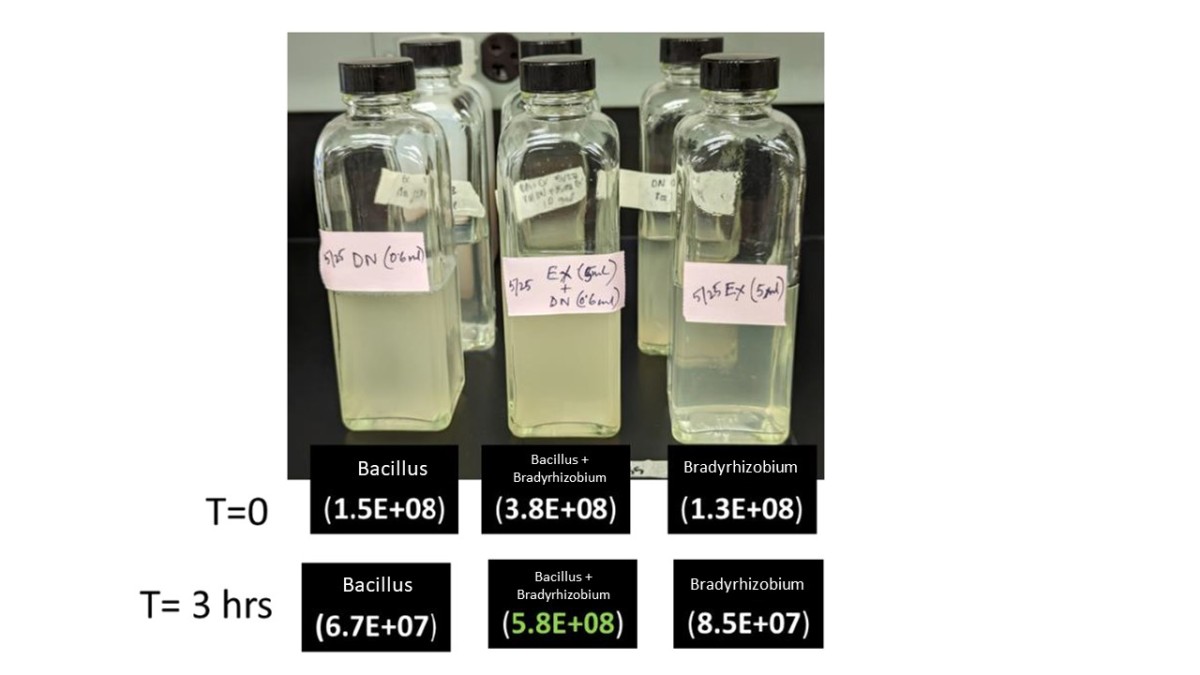
Compatibility was tested by combining the Bacillus at the commercial rate of 8 fl oz per 10 gallons of water with the Bradyrhizobium inoculum at 5X the commercial rate of 15 fl oz per 10 gallons of water. The higher rate of Bradyrhizobium was used because, at the commercial rate, the colony forming unit counts (CFU’s) were very low compared to Bacillus, making the Bradyrhizobium difficult to detect in testing. Mixtures of the two products alone and in combination were incubated at room temperature for 3 hours (Fig. 1). Then, the viability of Bacillus and Bradyrhizobium were measured by counting the number of cells per ml using BactoBox™. If the product samples in combination contained the same log of CFU’s as the controls (unmixed individual samples) over time, then the products were deemed compatible (Figure 1).
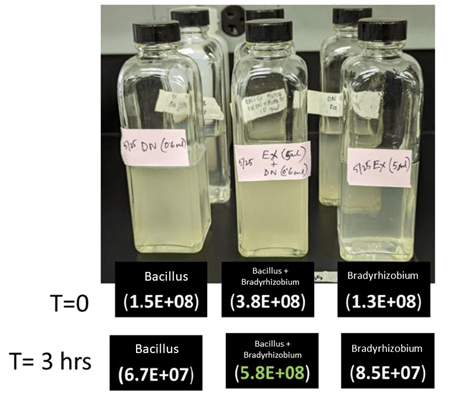
Figure 1. Three different sample preparations and their associated counts (cells/ml) at Time = 0 and Time = 3 hours. After which, 1 mL was taken from each treatment and total cells per ml was calculated by BactoBoxTM (https://sbtinstruments.com/bactobox).
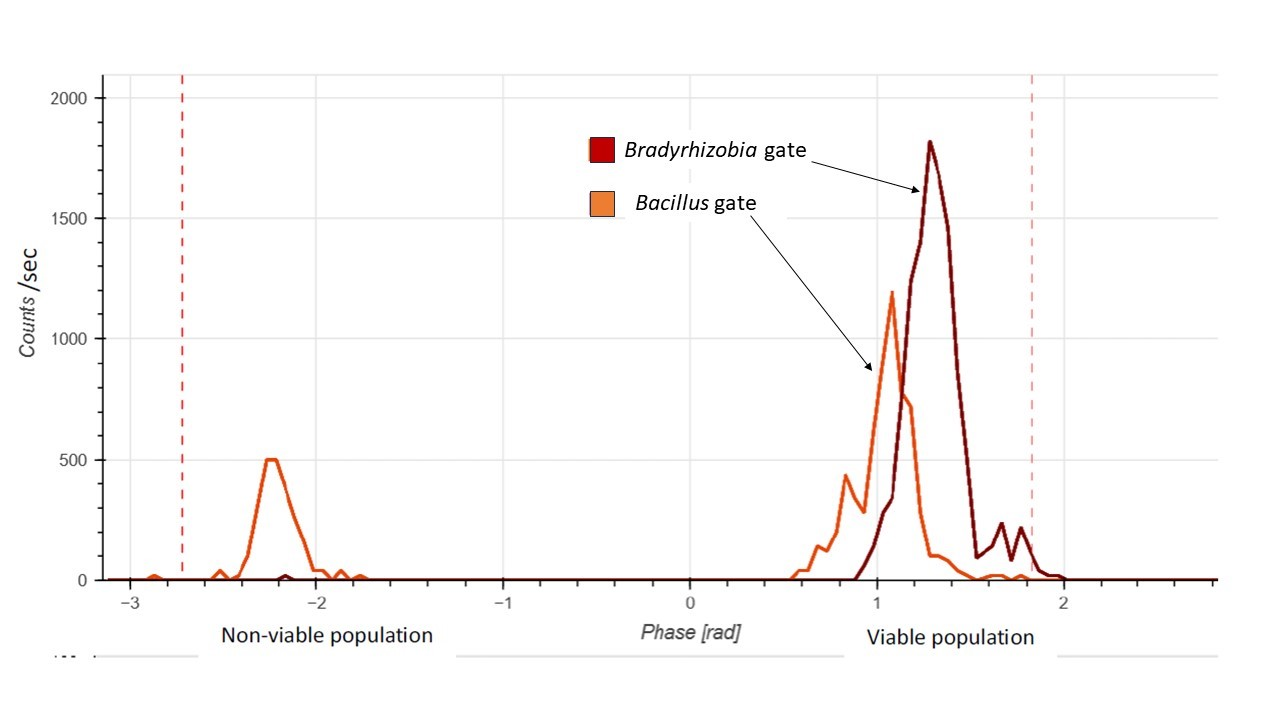
Results showed that after 3 hrs., the cell count in Bacillus alone was 6.7×10⁷ cells/ml, and Bradyrhizobium alone was 8.5×10⁷ cells/ml. In a compatible tank mix it would be expected that final counts would be equivalent to adding the cell counts of the individual mixtures together, which would give ~1.5×10⁸ cells/ml. However, the actual mixture showed ~3x that amount giving 5.8×10⁸ cells/ml. This suggests that not only are these two products compatible, but they also grew better together than alone. However, these results did not provide the cell count of Bacillus vs Bradyrhizobium in the tank-mix. Therefore, after 24 hours in a tank mix the flow cytometry power of BactoBox TM was used to distinguish between Bacillus and Bradyrhizobium cells. In Figure 2 you can see two peaks, orange for Bacillus and red for Bradyrhizobium indicating that it was possible to distinguish between the two species.
Figure 2. Flow cytometry discerns Bacillus and Bradyrhizobium individually and in mixtures with two peaks of different amplitudes on the y-axis and in different phases on the x-axis.
Using this feature, cell counts were made for the Bacillus (blue) and Bradyrhizobium (orange) at 0 hours and again at 24 hours after being in a mixture (Figure 3). You can see that cell counts were not reduced substantially from 0 to 24 hours for either product.
Figure 3: Cell counts of Bacillus and Bradyrhizobium in a tank mix at 0 and 24 hours.
Results of these two experiments confirm that the biofungicide Bacillus amyloliquefaciens strain D747, Double Nickel or Convergence™, and the liquid peanut inoculum Bradyrhizobium sp. (vigna), Exceed Traditional Liquid for Peanut, are compatible to tank mix and apply at the together as peanut planting gets underway this season!
For more information on Double Nickel, Convergence™ and other Certis Biologicals products, please visit: https://www.certisbio.com/
Study conducted and reported by: Dr. Dhritiman Gosh, Manager of R&D, Certis Biologicals and Dr. Shaun Berry, VP of Research and Field Development, Certis Biologicals
Article written by: Dr. Holly Davis, Field Development Manager Certis Biologicals, South Central US
The USDA is now accepting applications for grants to help agricultural producers maximize the value of their products and venture into new and better markets.
The USDA is making the grants available under the Value-Added Producer Grants program. (Click that link to go to the USDA webpage about the grant) The grants help farmers and ranchers generate new products, create marketing opportunities, and increase their incomes through value-added activities.
Eligible applicants include independent producers, agricultural producer groups, farmer or rancher cooperatives, and majority-controlled producer-based business ventures.
The USDA may award up to $75,000 for planning activities or up to $250,000 for working capital expenses related to producing and marketing a value-added agricultural product.
Planning activities may include conducting feasibility studies and developing business plans. Working capital expenses may include costs associated with processing, marketing, advertising, inventory and salaries.
The USDA is particularly interested in applications that will advance Biden-Harris Administration priorities to:
• Reduce climate pollution and increase resilience to the impacts of climate change through economic support to rural communities.
• Ensure all rural residents have equitable access to Rural Development (RD) programs and benefits from RD-funded projects;
• Help rural communities recover economically through more and better market opportunities and through improved infrastructure.
Here is great information on the grant program sent out after the webinar. It explains a lot about the program and helps know better how to apply. Just click this link. (Value Added Producer Grant Info).
Paper applications must be postmarked and delivered by mail, email or in person to the state office where the project is proposed by close of business on April 16, 2024. Electronic applications will be accepted via Grants.gov until 11:59 p.m. Eastern Time on April 11, 2024.
This is a picture of the “Purple Tomato” developed and sold by Norfolk Healthy Produce. According to the press release from the John Innes Centre it is a high-anthocyanin purple tomato developed nearly 2 decades ago. Here are a couple of paragraphs from the article below.
Nathan Pumplin, CEO of Norfolk Healthy Produce, said: “We are thrilled to offer these first-of-a-kind seeds to home gardeners. Our tomato is just a tomato – you can grow it in your garden next to your Sun Golds and Purple Cherokees, and other favorite varieties. We share our gratitude to the thousands of fans who have expressed their interest and encouragement through our website.”
The company says that surveys with American consumers showed that 80% are interested to eat, purchase and grow the purple tomato, knowing that it is bioengineered (as a genetically modified organism, or GMO). Only 5% of consumers were not interested. I seriously doubt this last sentence and wonder how accurately they surveyed customers!
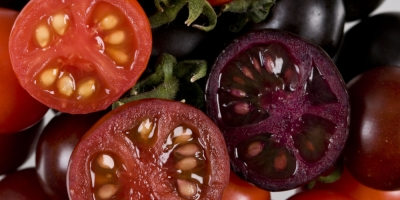
These pictures are of the YOOM tomato. This purple tomato was introduced last year and as you can see also has the purple color and because of that color it has high anthocyanins like other purple vegetables and fruit.
The Yoom tomato is not developed using GMO technology like the “Purple Tomato.” Instead, Yoom tomatoes are the result of conventional breeding techniques. These techniques involve selecting parent plants with desirable traits and crossbreeding them over multiple generations to produce offspring that express those traits. The Yoom tomato, known for its distinctive purple color and high levels of antioxidants, particularly anthocyanins, was developed through this traditional method of plant breeding.(Article in Vegetable Grower News)
The purple color is a natural trait that some tomato varieties exhibit, enhanced through the selection process to appeal to consumers looking for novel and potentially healthier options in their diets. The development of such varieties focuses on enhancing flavor, nutritional content, and visual appeal without the need for genetic modification techniques like CRISPR-Cas9 or GMO.
Conventional breeding remains a powerful tool in developing new plant varieties, allowing for the gradual improvement of crops with respect to taste, yield, disease resistance, and nutritional content. While CRISPR technology offers precise gene editing capabilities, it’s important to distinguish between crops developed through genetic modification and those, like the Yoom tomato, that are the result of selective breeding practices.
Organic growers need to be aware of this powerful difference and don’t be fooled by others who want you to grow the Purple Tomato without realizing the difference. Recently I was asked about organic farmers growing the Purple Tomato. I was caught completely unaware because I knew about YOOM and so thought this was the tomato they were referring to. It was not the YOOM, and you need to know it is not legal or ethical for you to grow the “Purple Tomato” unless you grow the YOOM Purple Tomato.
Lastly, YOOM is not a certified organic seedvariety (YET), at least that I can find. There may be some organic seed offered soon but you will need to talk to your certifier about using conventional YOOM seed based on the fact that it is from conventional breeding and is the only tomato variety with these traits.
News Updates below: Click links for a new twist to this story!
Plant breeders and seed retailers are increasingly living in fear of legal threats from GMO developer companies. Report: Claire Robinson
The company that is commercializing the GM purple so-called “anti-cancer” tomato has targeted a non-GMO heirloom seed company over alleged patent infringement.
(Click the heading above for a link to this article)
















 Texas A&M AgriLife Organic