Organic agriculture needs research that is conducted in organic systems, with organic farmers, and for problems that organic farmers actually face. One of the most important federal programs supporting that work is the USDA Organic Agriculture Research and Extension Initiative, commonly called OREI.
Over the next several years, Texas organic producers will benefit from three major OREI projects involving Texas A&M AgriLife researchers, Extension specialists, producers, and collaborators across several states. The projects address three very different crops—wheat, cowpea, and specialty rice—but they share an important idea: research should begin with a producer problem and ultimately return to the producer as something useful.
That connection between research and the farm is exactly what OREI was created to encourage.
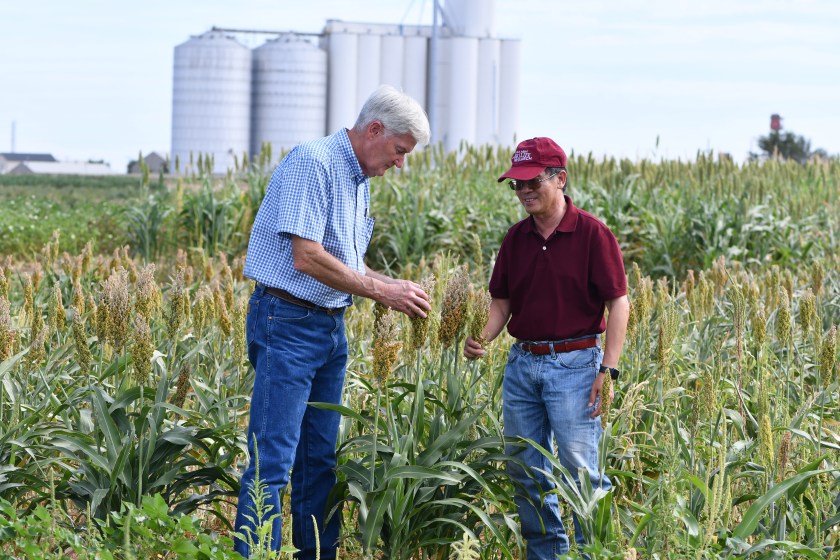
The next phase of OREI research builds on work already underway. Here, Dr. Qingwu Xue and I are evaluating sorghum in our current USDA NIFA Organic Sorghum project, Climate-Smart Organic Sorghum Partnership for Grain and Silage Production, which continues through 2028. Projects like this show how OREI can bring researchers, Extension, and producers together around real organic production challenges, and that same approach will continue with the new wheat, cowpea, and specialty rice projects.
What is OREI?
OREI is a competitive grant program administered by USDA’s National Institute of Food and Agriculture, or NIFA. USDA describes its purpose as funding high-priority integrated projects that improve the ability of organic producers and processors to grow and market high-quality organic agricultural products while increasing the resilience of American farming systems.
The word integrated is important.
OREI is not simply a research grant program. Projects typically bring together researchers, Extension specialists, economists, educators, farmers, seed companies, processors, buyers, and other agricultural stakeholders. USDA specifically emphasizes research, education, and outreach that provide farmers and ranchers with practical, research-based information. Organic field research conducted under OREI must be conducted on USDA-certified organic land.
NIFA describes the advantage of integrated programs very well: connecting research, education, and Extension helps speed the movement of new knowledge and technology into practical applications that producers can actually adopt.
That is the part of OREI that I especially appreciate.
A researcher may discover something important, but until that knowledge reaches a farmer and works under farm conditions, the job is not finished.
How does an OREI project get started?
The process usually begins long before a proposal is submitted.
Someone recognizes a problem. It may come from a farmer, a researcher, an Extension specialist, a processor, a seed company, or an entire industry. Researchers and Extension personnel begin talking with people who are dealing with that problem and determining whether research could provide a solution.
That stakeholder involvement is not an afterthought. It is increasingly built into good organic research from the beginning.
The three projects we are beginning illustrate that particularly well.
For the cowpea project, annual surveys of Texas organic farmers identified a lack of summer rotational crops adapted to our climate and soils. Farmers expressed strong interest in cowpea both as a nitrogen-fixing cover crop and as a cash crop. Seed companies also identified needs for dual-purpose cowpeas and short-season, high-protein varieties.
For the wheat project, organic farmers, dairy producers, millers, seed businesses, and food companies were consulted. Producers repeatedly identified two problems: maintaining yield and grain protein when organic nitrogen sources are limited and finding wheat varieties actually evaluated and adapted for organic production.
The specialty rice project likewise incorporates producer and industry engagement, with research priorities being refined through growers, millers, buyers, on-farm trials, field days, and participatory evaluations.
This is an important principle of good organic research:
We should not first conduct research and then go looking for somebody who needs it. We should first identify the need and then design the research to help solve it.
From an idea to a USDA grant
Once a problem has been identified, a project team has to be assembled.
For a major OREI proposal, that team can become quite large. A plant breeder may need a soil scientist. The soil scientist may need an agronomist. The agronomist may need an economist. Everyone needs organic producers willing to host research or evaluate treatments. And eventually someone has to translate all of that scientific information into recommendations farmers can understand and use.
NIFA then publishes a Notice of Funding Opportunity, or NOFO, describing the program requirements, priorities, eligibility, deadlines, and application instructions. Eligible OREI applicants include universities, agricultural experiment stations, research institutions, federal agencies, private organizations, corporations, individuals, and collaborations among eligible entities.
A competitive proposal must explain the problem, stakeholder need, scientific rationale, objectives, experimental methods, expected outcomes, Extension and education activities, project management, evaluation, budget, and the qualifications and responsibilities of the collaborators. Organic fieldwork must also meet USDA organic certification requirements. Applications then go through USDA’s competitive review process before projects are selected for funding.
It is a substantial undertaking. Successful proposals often represent months—and sometimes years—of conversations, preliminary research, producer relationships, data collection, and collaboration.
Three major organic projects coming to Texas
We now have three major OREI projects that will provide new research and Extension opportunities for Texas organic agriculture.
1. Nitrogen-Smart Organic Wheat
The wheat project is titled “Nitrogen-Smart Organic Wheat Using Biological Nitrification Inhibition for Grain, Silage, Dual-Purpose, and Cover Crop Production Systems.”
This is a particularly interesting project because it is trying to improve nitrogen efficiency through the plant itself.
Biological Nitrification Inhibition, or BNI, is a genetically inherited root trait in which plants release natural compounds that suppress nitrification in the soil.1 The goal is to develop wheat that uses nitrogen more efficiently and retains more nitrogen within the plant-soil system.
The project brings together Texas A&M, the University of Minnesota, Montana State University, organic farmers, wheat breeders, agronomists, microbiologists, economists, livestock specialists, and Extension personnel.
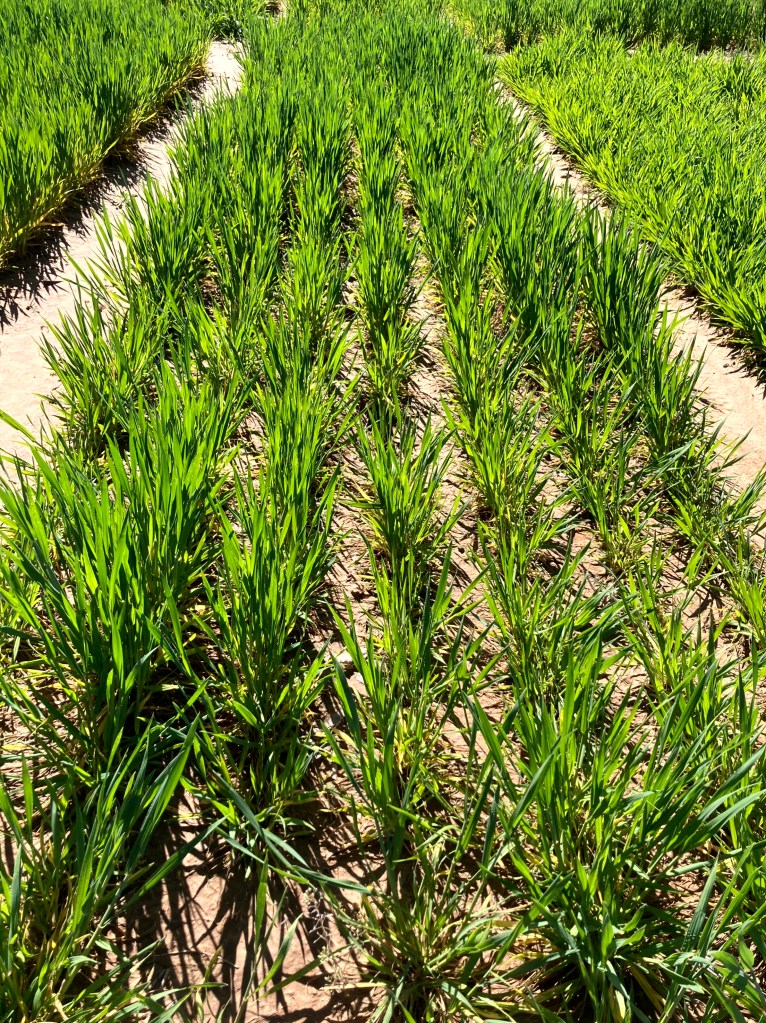
For Texas, the project will look at wheat not simply as a grain crop but as a crop that may be used for grain, grazing, silage, dual-purpose production, and cover cropping. The overall project is 50% research, 40% Extension, and 10% education.
My role is to help lead Extension activities and communicate the findings to organic producers and other stakeholders.
For me, this project addresses one of the recurring problems I hear from organic farmers: How do we supply enough nitrogen to a high-demand crop without becoming increasingly dependent on expensive purchased organic nitrogen fertilizers?
Plant genetics may become part of that solution.
2. Breeding Better Organic Cowpeas
The second project is “ORGANIC: Operationalizing Research and Extension on the Genetics of Atmospheric Nitrogen Fixation through Innovative Organic Cowpea Breeding.”
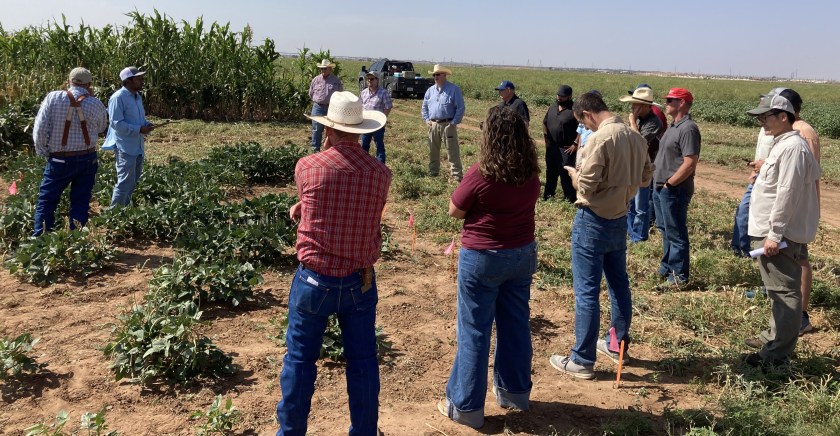
This four-year project places even greater emphasis on plant breeding.
Its goals include developing dual-purpose cowpeas capable of producing both seed and biomass and developing short-season, high-yielding, high-protein cowpeas. In both cases, researchers want to improve biological nitrogen fixation.
Cowpea is especially attractive in Texas organic rotations because it is a warm-season legume adapted to heat and drought. It can provide a cash crop, cover crop biomass, and biologically fixed nitrogen.2
Researchers have already identified genetic differences in biological nitrogen fixation and are developing molecular markers that may allow breeders to select plants with greater nitrogen-fixing ability much more efficiently.
The project is approximately 70% research and 30% Extension, including on-farm evaluation, farmer training, field days, publications, videos, online outreach, and work with organic seed companies.
I will lead the Extension and outreach component, working with producers, seed companies, processors, Extension personnel, and our AgriLifeOrganic.org audience.
This is the kind of project where breeding and Extension should work hand in hand. A breeder can tell us which line has the strongest nitrogen-fixation genetics. A farmer may tell us that another line establishes faster, suppresses weeds better, matures at the right time, or produces seed more reliably.
Both observations matter.
3. Organic-Adapted Specialty Rice
The third project is “Accelerated Development of Organic-Adapted Specialty Rice through Integrated Breeding and AI-Enabled Phenotyping for Stronger US Food Systems.”
The project focuses on organic-adapted jasmine, basmati, and high-amylose rice and combines plant breeding, agronomy, weed science, entomology, economics, artificial-intelligence-assisted field phenotyping, and Extension.
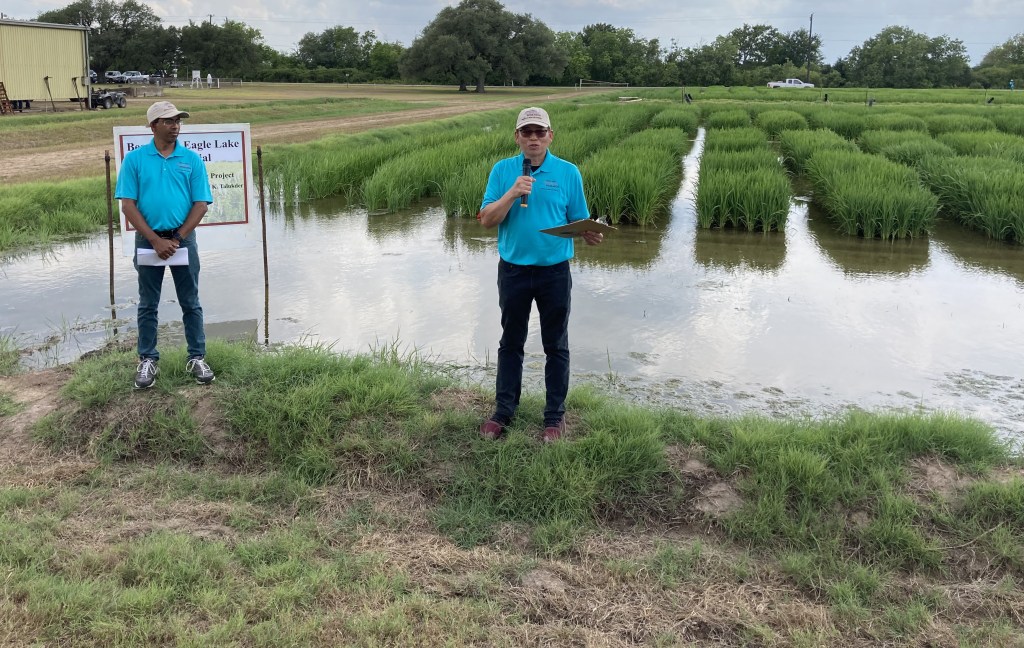
Researchers will look for traits particularly useful in organic rice systems, including early vigor, weed competitiveness, nutrient-use efficiency, pest resistance, root characteristics, and grain quality.
Again, the important distinction is that these plants will be evaluated for the conditions organic farmers actually face rather than simply assuming that the best conventional rice variety will automatically be the best organic variety.3
Extension represents approximately 30% of the proposed project effort, with field demonstrations, producer meetings, stakeholder training, publications, and digital communication built into the project.
The Texas organic rice industry has faced serious contraction in recent years, and lack of dependable markets and contracts remains a major limitation. That makes the economics and market side of this project every bit as important to me as improved genetics or production practices. Better rice production alone does not help a farmer very much if there is no profitable market for the crop.
What do organic farmers gain from these grants?
The immediate benefit is research capacity.
Plant breeding, molecular genetics, replicated field trials, laboratory analyses, economic studies, graduate students, equipment, multi-state trials, and several years of data collection are expensive. Individual organic farms generally could not reasonably conduct this level of research on their own.
OREI allows us to bring substantial scientific resources to questions specifically important to organic agriculture.
But there is another benefit that may be even more important.
Organic producers become part of the research process.
The wheat project includes certified organic producer fields in Texas, Minnesota, and Montana. The cowpea project includes organic farmers and seed companies in on-farm evaluation and even calls for their input to become part of the variety-release process. The rice project similarly incorporates producers and industry stakeholders into demonstrations, evaluations, and continuing feedback.
That creates a two-way flow of information:
Research → Extension → Producer
but also
Producer → Extension → Research.
That second arrow is extremely important.
Organic research strengthens the entire organic program
One of the benefits I see from these projects goes beyond wheat, cowpea, or rice. Every good research project expands what we know about organic production as a system.
A cowpea nitrogen-fixation project teaches us about rotations and soil fertility. A wheat nitrogen-efficiency project may change how we think about plant breeding and nitrogen management. Organic rice research teaches us about weed competition, variety selection, nutrient management, biological pest management, markets, and the economics of organic production.
Those lessons begin connecting.
And because Extension is involved, the results do not have to remain in scientific journals. We can turn them into field days, demonstrations, production guides, newsletter articles, videos, blog posts, producer meetings, and conversations across the tailgate of a pickup.
That is one of the roles I see for AgriLifeOrganic.org over the next several years. I want this website to become one place where Texas organic producers can follow these projects as they develop—not just when the final report is published.
There will be failures. Some varieties will not work. Some ideas that look good in a laboratory may disappoint us in a field. Other results may surprise us completely.
That is research.
The important thing is that organic farmers are now helping ask the questions.
This is an important time for Texas organic research
Having three major OREI projects—wheat, cowpea, and rice—underway at the same time represents a substantial investment in organic agricultural research connected to Texas producers.
These projects cover plant breeding, genetics, nitrogen management, crop rotations, weeds, insects, economics, markets, artificial intelligence, on-farm testing, and Extension education.
I think that diversity is valuable because there isn’t a single problem called “organic agriculture.”
Organic agriculture is a production system. Farmers have to make genetics, fertility, weeds, insects, diseases, rotations, economics, certification, and markets work together on the same farm.
Our research needs to work the same way.
And ultimately, I think that is where OREI is most valuable: bringing farmers, researchers, Extension personnel, and agricultural businesses together to solve real organic production problems—and then putting what we learn back into the hands of farmers.
Learn more about USDA OREI
USDA Organic Agriculture Research and Extension Initiative
Information about OREI priorities, eligibility, funding opportunities, and previously funded projects. USDA Organic Agriculture Research and Extension Initiative.
How to Apply for a NIFA Grant
USDA NIFA’s overview of the competitive grant application process. How to Apply for a NIFA Grant.
References
- Whitney, B. 2026. BNI Wheat: Can the Crop Help Manage Its Own Nitrogen? Texas A&M AgriLife Organic. May 19, 2026. ↩︎
- Whitney, B. 2026. Organic Cowpea Production in Texas. Texas A&M AgriLife Organic. September 8, 2026. ↩︎
- Whitney, B. 2024. Enhancing Organic Rice Yields: Texas Researchers Lead the Way in Ratoon Crop Production. Texas A&M AgriLife Organic. October 18, 2024. ↩︎

Discover more from Texas A&M AgriLife Organic
Subscribe to get the latest posts sent to your email.


