One of the interesting things about organic agriculture is that it constantly forces us to balance competing biological, ecological, and practical realities. Recently, I posted a short video showing a farmer using a propane flame weeder to suppress field bindweed, and it generated a spirited discussion about soil biology, climate impacts, and whether flame weeding even belongs in organic systems.1
Suppression of field bindweed in advance of crop planting. Video courtesy of a Texas organic farmer.
Rather than turning that discussion into “who won the argument,” I think it raises some important questions that many farmers, gardeners, and consumers are already asking.
Field bindweed itself is a good example of why these conversations matter. Field bindweed is one of the most difficult perennial weeds in organic farming. It spreads aggressively through deep underground roots and rhizomes, and tillage can actually make infestations worse by cutting and moving living root fragments throughout the field.
Table of Contents
Does Flame Weeding Sterilize the Soil?
This is probably the biggest concern people have when they first see flame weeding. The answer is no — not in the way many imagine.
Flame weeding is a very shallow, fast exposure of heat. The objective is usually not to incinerate the plant but to rupture plant cells in the foliage. Most flame weeding systems move rapidly across the soil surface, and soil itself is actually a very effective insulator.
Research has shown that the heat impact declines dramatically within just a few millimeters of soil depth. Surface microorganisms may certainly be affected, especially some bacteria very near the soil surface, but the overwhelming majority of the soil microbial ecosystem remains protected below that thin layer.2
That distinction matters because soil microbial communities are not static. Bacterial populations can rebound extremely quickly under favorable conditions. Fungi, spores, protected aggregates, organic matter, and deeper microbial habitats often remain largely intact.
A useful comparison is prescribed burning in rangelands and forests. Fire can temporarily suppress some organisms near the surface while simultaneously stimulating nutrient cycling, changing plant competition, reducing excess residue, and shifting ecological balance. The outcome depends heavily on intensity, duration, frequency, and what happens afterward.
Why would an organic farmer use flame weeding at all?
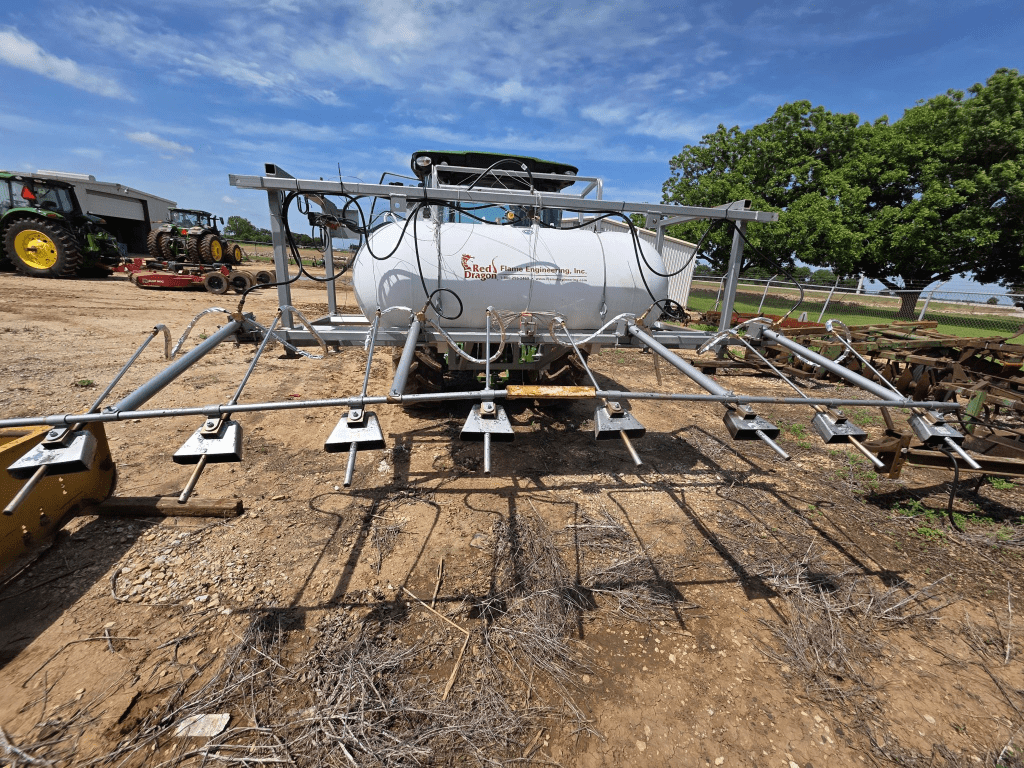
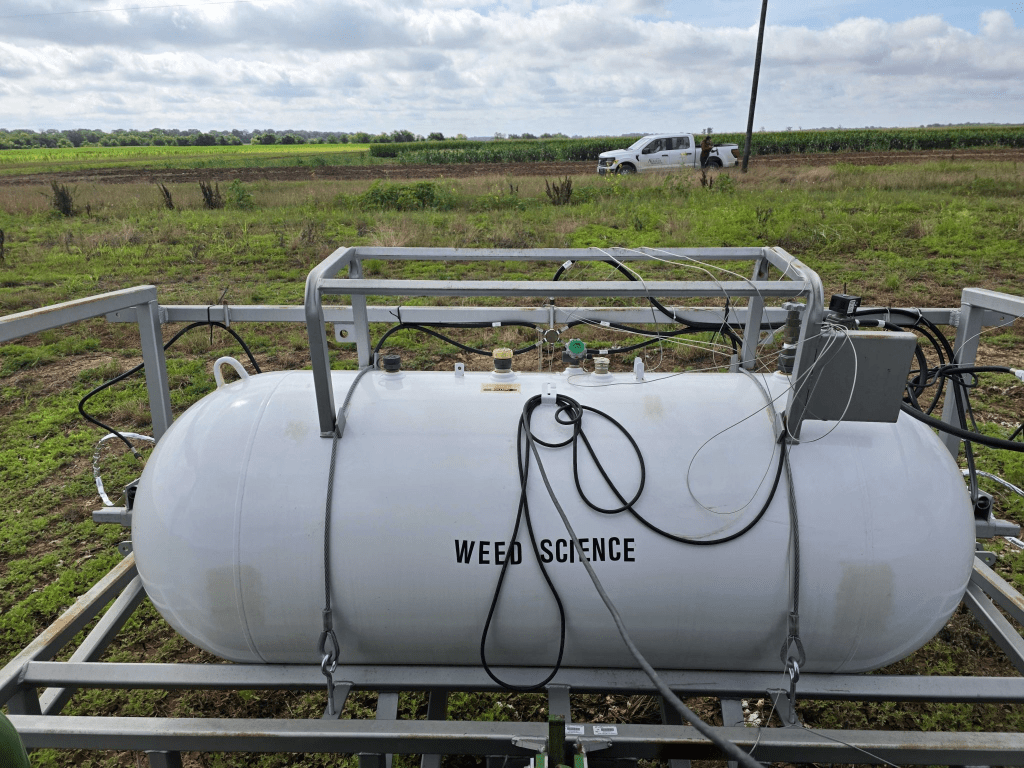
Texas A&M AgriLife weed research just got the new Red Dragon Engineering flaming attachment setup to allow for burndown as well as in-row applications. Hopefully, this will be another useful tool in the toolbox. The “weed team” will be testing it in organic cotton and sorghum this summer.
Organic farming is not simply “avoiding chemicals.” It is a management system focused on biological function, long-term productivity, and ecological balance. But organic farmers still have to manage weeds. Perennial weeds create especially difficult problems because many standard control methods can worsen the issue. With bindweed, repeated tillage often spreads the infestation. Herbicides are not available in certified organic systems. Hand labor is expensive and often impractical at field scale. In the case from the video, the farmer was not trying to permanently kill bindweed with a single flame pass. That would be unrealistic but instead, the goal was suppression.
The farmer was temporarily weakening the bindweed canopy until soil temperatures became warm enough to plant a highly competitive sorghum forage crop. Sorghum can become an extremely aggressive shading crop that competes strongly against bindweed while simultaneously contributing large amounts of root biomass and crop residue back into the soil.
Why do grasses like sorghum often stimulate bacterial activity?
Grass crops such as sorghum, corn, wheat, and other cereals typically produce extensive fibrous root systems. Those roots release large amounts of carbon compounds — called root exudates — into the rhizosphere, which is the narrow zone of soil surrounding roots. These exudates feed bacteria and other microorganisms.
Many soil biology tests, including PLFA (phospholipid fatty acid analysis) and Haney soil testing approaches, often show strong bacterial responses following vigorous grass growth. That does not mean fungi are unimportant. In fact, healthy soils need both fungal and bacterial communities. But grasses frequently shift the system toward greater bacterial dominance compared to some perennial or woody systems. The important point is that soil biology is dynamic. A single management event does not define the entire biological trajectory of a field.
What about climate concerns from propane?
That is also a fair question. Propane is a fossil fuel. There is no reason to pretend otherwise. But agricultural systems are rarely evaluated honestly if we isolate one input without comparing alternatives.
The comparison is not “flame weeding versus doing nothing.” The comparison is usually:
- repeated tillage passes,
- additional tractor operations,
- cultivation,
- soil disturbance,
- diesel fuel use,
- erosion risk,
- moisture loss,
- or long-term perennial weed spread.
In some situations, a targeted flame treatment may actually reduce total disturbance compared to aggressive tillage programs. Organic agriculture often involves choosing between imperfect tools while trying to move the system toward better long-term outcomes.
Can flame weeding be overused?
Absolutely! If someone used intense flame applications repeatedly with no larger biological or agronomic strategy, there could certainly be negative consequences. Like tillage, grazing, cover crops, fertilizers, or irrigation, the effect depends on how the tool is used. Flame weeding should generally be viewed as a targeted management tool, not the foundation of the farming system.
A biologically focused farmer should still prioritize:
- living roots,
- residue cover,
- diverse rotations,
- microbial habitat,
- reduced disturbance,
- carbon cycling,
- and competitive crop canopies.
Organic farming is often about tradeoffs, not perfection
One challenge in discussing organic agriculture publicly is that people sometimes assume every organic practice must have zero environmental cost. Real farming does not work that way. Organic farming is a systems approach. Farmers constantly balance weed pressure, economics, soil biology, labor, fuel use, crop competition, erosion risk, and long-term field productivity.
The more useful question is usually not:
“Is this tool perfect?”
But rather:
“Does this tool move the overall system in a healthier direction over time?”
For difficult perennial weeds like bindweed, many organic farmers would argue that temporary suppression combined with competitive crops, biological improvement, and reduced tillage may be preferable to aggressive cultivation that spreads the weed even further. That does not end the discussion, but it does make the conversation more nuanced than simply saying “fire is bad for soil biology.”
References
- https://www.ecfr.gov/current/title-7/part-205#p-205.206(c)(5) ↩︎
- Rahkonen, J., Pietikäinen, J., & Jokela, H. (1999). The Effects of Flame Weeding on Soil Microbial Biomass. Biological Agriculture & Horticulture, 16, 363-368. https://doi.org/10.1080/01448765.1999.9755239. ↩︎
Additional Resources
- Organic Control of Field Bindweed
- Applying Field Bindweed Gall Mites
- Update to Applying Field Bindweed Gall Mites

Discover more from Texas A&M AgriLife Organic
Subscribe to get the latest posts sent to your email.


