Also, you might want to check out this blog post on Organic Control of Field Bindweed that got this interest in Bindweed Gall Mites started. Just click the button….
Observations on Bindweed Gall Mites: Field Updates and Future Plans
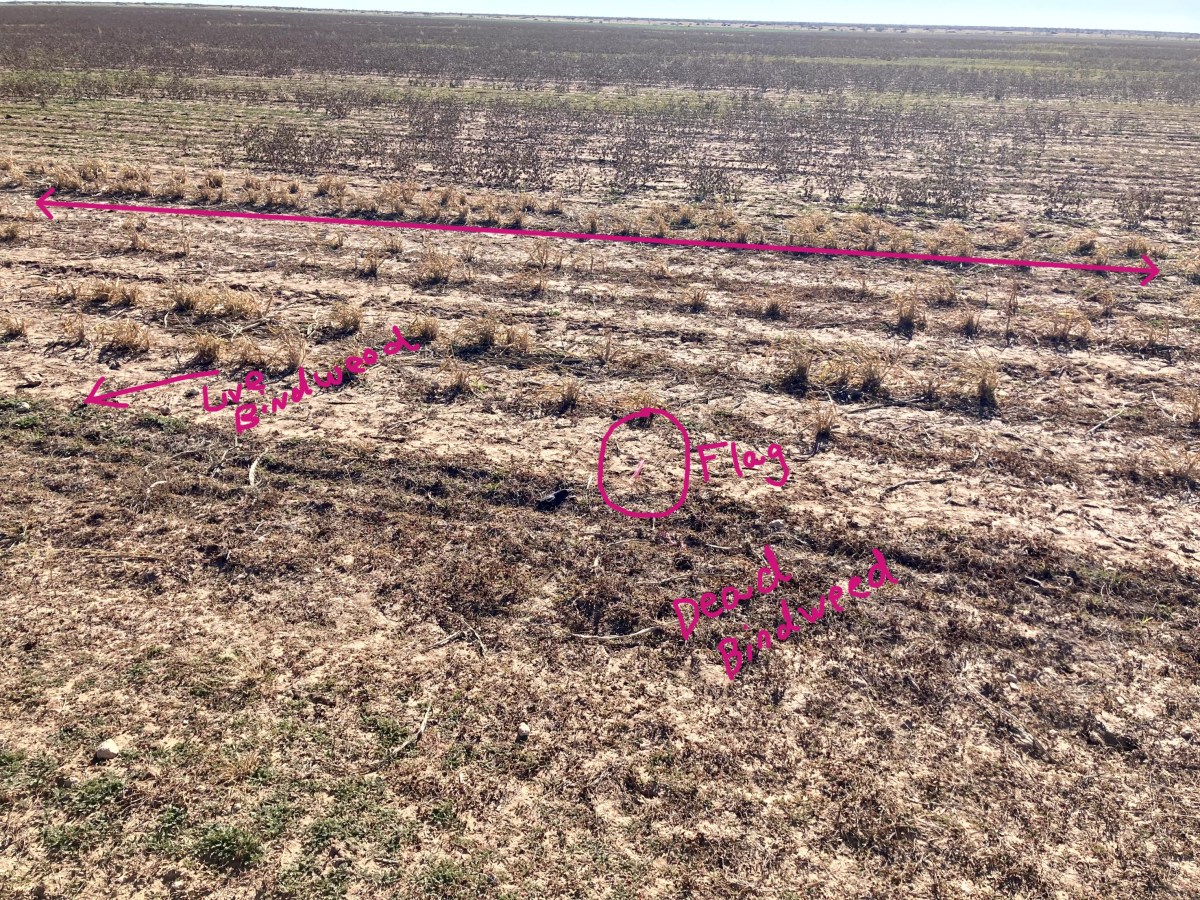
If you had a chance to read my previous post about applying Bindweed Gall Mites in July, the picture above will make more sense! This marked area, indicated by the flag, is where we scattered pieces of field bindweed infested with Bindweed Gall Mites sourced from the insectary in Colorado. Following the application in July, we endured one of the hottest and driest August months on record, leading us to assume that the mites had perished. While the bindweed in this area appeared dead due to the drought, we knew from experience that field bindweed rarely succumbs to such conditions.
In September, the weather shifted with some much-needed rain. The field bindweed plants sprang back to life, looking healthy once again. Unfortunately, our initial assumption was that while the bindweed survived, the Bindweed Gall Mites did not.
Fast forward to Monday, December 9th. After receiving a call from Carl Pepper the previous Friday urging me to visit the field, I was met with a surprising sight. The flag in the photo marks where the mites were introduced back in July. Surrounding the flag is a somewhat circular pattern of dead or dying bindweed, while outside this area the bindweed appears alive and healthy. To the left edge of the photo, some bindweed remains slightly green, but below and beyond the flag the plants look unmistakably dead. This circular pattern extends outward, as highlighted by the line drawn across the photo.
One might argue that this is merely a drought-affected patch. However, we placed a second batch of Bindweed Gall Mites in another area of the field, and a similar circular pattern has emerged there as well. These mites are so tiny that they are invisible to the naked eye, but in the lab, Dr. Kyle Slusher, an Extension Entomologist in our office, identified galls on collected bindweed plants under magnification.
Future Plans for Bindweed Gall Mites
Our immediate hope is to see the affected areas of bindweed continue to decline. While we don’t expect the mites to eradicate the bindweed entirely, a balance is desirable to ensure the mites’ survival. Looking ahead:
Field Monitoring: We’ll continue observing the affected areas to assess long-term impacts.
Laboratory Work: Dr. Slusher plans to conduct further studies on the mites in a controlled lab environment.
Farmers’ Interest: Several local farmers have expressed interest in this biological control method and plan to collect infested bindweed from this field to introduce on their farms.
Suitability for Dry Climates: The mites’ preference for hot and dry conditions aligns well with the West Texas climate, making this an intriguing and potentially effective solution for bindweed management in the region.
This project represents a promising step in biological pest control for field bindweed, and we’re excited to see how this progresses both in the field and through collaboration with area farmers. A big thanks to Carl Pepper for allowing us to experiment with this novel insect and to continue monitoring progress!
Beneficial insects, also known as biological control agents, play a crucial role in managing pest populations in organic crops, especially organic row crops. These insects help reduce the need for chemical pesticides, promote biodiversity, and support sustainable farming practices. Here’s a guide on how to integrate beneficial insects into your organic farming system, specifically for crops like cotton, peanut, corn, sorghum, rice, and wheat.
Incorporating beneficial insects into your pest management strategy is a smart, sustainable choice. These natural predators offer a highly effective alternative to organic insecticides, providing ongoing pest control without the need for frequent reapplications. The beneficial insect industry is growing, offering a wider variety of predators and parasitoids than ever before, making it easier to find the right ones for your specific pest issues.
Using beneficial insects helps maintain a balanced ecosystem, as they target pests without harming other beneficial organisms. This promotes biodiversity and long-term soil health, crucial for sustainable farming. Additionally, while the initial investment might be higher, the reduction in pesticide use can lead to significant cost savings over time.
Furthermore, employing beneficial insects supports compliance with organic standards, as it reduces reliance on even approved organic insecticides. This approach aligns with the principles of organic farming, enhancing natural processes and contributing to a healthier environment.
Lastly, it is not unusual to see this type of “pest control” continue to be self-sustaining as the introduced predators continue to live in your established habitat. Living on your farm year-round means that they are ready to go to work when you do! Take a look at this list below and know that these are the insect predators that are commonly available and listed on most websites. But if you find a problem or have a suggestion don’t hesitate to reach out.
Cotesia glomerata(Cabbage White Wasp) Targets: Caterpillars of the cabbage white butterfly.
Gonatocerus triguttatus (known as Fairyflies sometimes) Targets: Glassy-winged Sharpshooter of grapes, spreader of Pierces Disease. May be hard to find!
Pirate Bugs (Orius spp.)
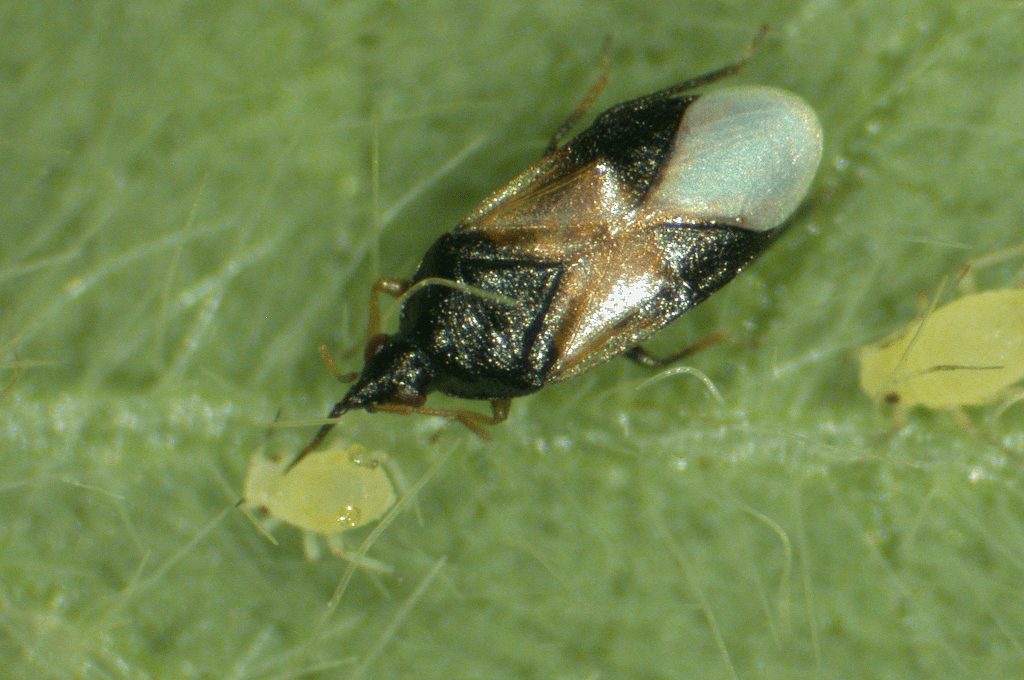
Pirate bug. (Photo Credit: Ho Jung Yoo)
Orius insidiosus (Minute Pirate Bug) Targets: Thrips: Both adult and larval stages, Aphids, Mites, Whiteflies, Psyllids, Caterpillars
Orius majusculus Targets: Thrips: Both adult and larval stages, Aphids, Mites, Whiteflies, Psyllids, Caterpillars
Orius tristicolor Targets: Thrips: Both adult and larval stages, Aphids, Mites, Whiteflies, Psyllids, Caterpillars
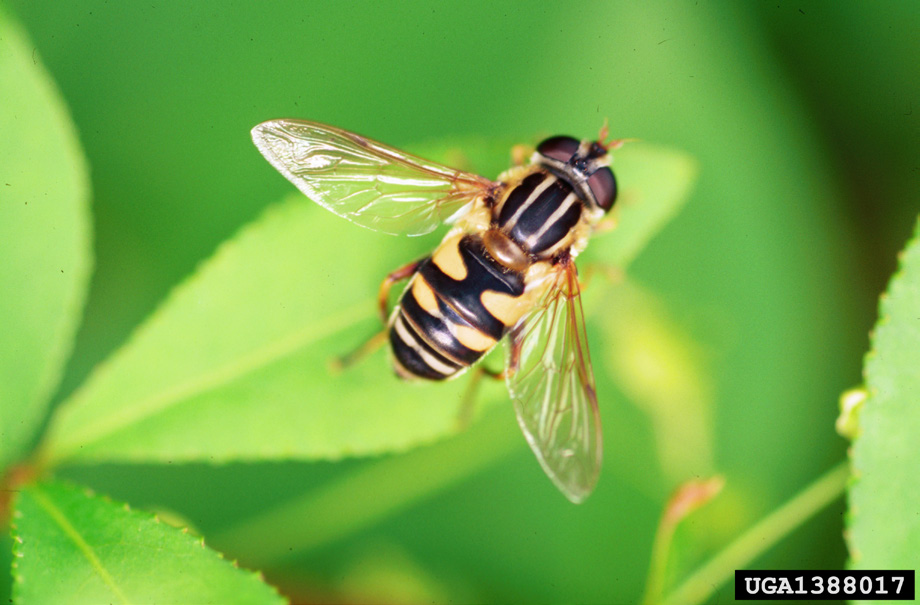
Hoverfliesor Syrphid Flies
Hover Fly (Stephen Katovich, Bugwood.org)
Episyrphus balteatus (Marmalade Hoverfly)Targets: Aphids, small caterpillars.
Syrphus ribesii(Common Hoverfly or Ribbed Hoverfly) Targets: Aphids.
Predatory Mites (Phytoseiidae)
Phytoseiulus persimilis mite eating a Two-spotted spider mite!
Phytoseiulus persimilis(no common name) Targets: Two-spotted spider mites, broad mites.
Amblyseius swirskii(no common name) Targets: Thrips, whiteflies, spider mites.
Neoseiulus cucumeris (no common name) Targets: Thrips, spider mites, broad mites.
Great video about mites and control of spider mites with Amblyseius swirskii
Predatory Nematodes
The Steinernema scapterisci insect-parasitic nematode in the juvenile phase can infect and kill insects in the Orthoptera order, such as grasshoppers and crickets. (Photo by David Cappaert, Bugwood.org.)
Habitat Enhancement: Plant diverse flowering plants around the field to provide nectar and pollen for beneficial insects. Include cover crops and hedgerows to offer shelter and alternate food sources. Have available before purchasing beneficial insects.
Minimize Pesticide Use: Avoid using broad spectrum organic pesticides that can harm beneficial insects. Many organic insect control products are specific to certain insects or insect systems (Pyganic will kill all beneficials although it is organic). Use targeted treatments if necessary and apply them at times when beneficial insects are less active.
Create a Favorable Environment: Ensure the field has adequate moisture and avoid practices that disrupt the habitat of beneficial insects.
Beneficial Insect Delivery and Distribution Methods
Insect Delivery
Bulk Containers: Insects are often shipped in bulk containers containing a mixture of insects and a carrier medium (like vermiculite, bran, or buckwheat hulls).
Blister Packs: Small plastic blister packs containing a specific number of beneficial insects are used for easy handling and release.
Paper or Mesh Bags: Insects are placed in breathable bags that allow for easy distribution in the field.
Distribution Methods
Hand Release: Beneficial insects are manually sprinkled or shaken out onto the crops. Simple tools like a “saltshaker” or small containers can be used for more precise application. Used on smaller areas or targeted release points.
Mechanical Dispersal: Using blowers or air-assisted equipment to disperse insects over a larger area. Usually this means a specialized blowers designed for insect release, similar to leaf blowers but calibrated for the insects’ safety. Typically used on large-scale row crops where uniform distribution is necessary.
Aerial Release: Drones or small aircraft can be used to release insects over extensive fields. Drones equipped with special release mechanisms for even distribution and this method works great with very large fields or difficult-to-access areas.
Release Stations: Strategic placement of small containers or stations throughout the field that allow insects to disperse naturally. These are typically small cardboard or plastic tubes, blister packs placed on stakes or plants. These allow for continuous release over time and for mobile insects like predatory beetles or parasitic wasps.
Instructions for Applying Beneficial Insects in Fields
Timing: Release beneficial insects early in the season before pest populations reach damaging levels.
Quantity: Determine the appropriate release rate based on the specific crop and pest pressure. This information is often provided by suppliers of beneficial insects.
Distribution: Distribute insects evenly across the field. Use dispersal devices like handheld blowers or distribute by hand in small release points throughout the crop area. Apply during cool, calm periods of the day, such as early morning or late afternoon, to minimize stress on the insects.
Specific Instructions for Different Beneficial Insects
Lady Beetles
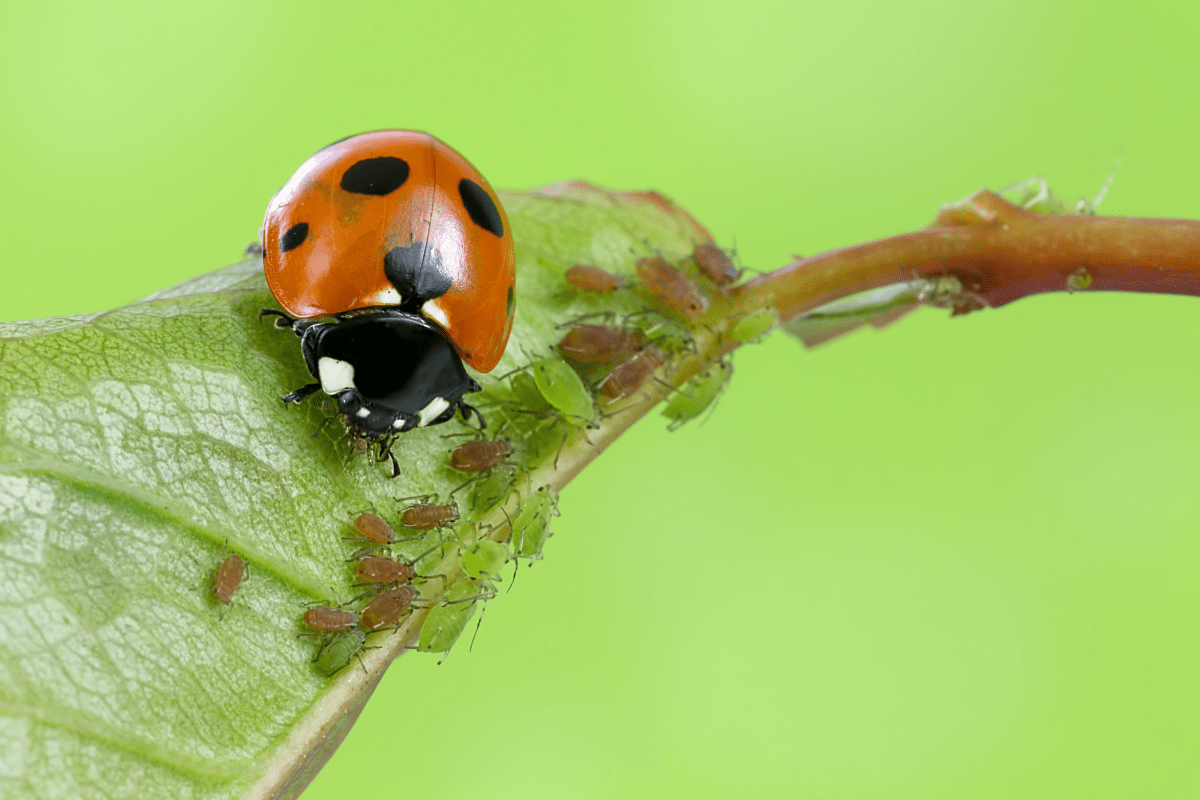
Application: Release near aphid-infested plants. Ensure there is enough food and habitat for them to stay.
Environment: Lady beetles prefer environments with flowering plants which provide nectar.
Lacewings
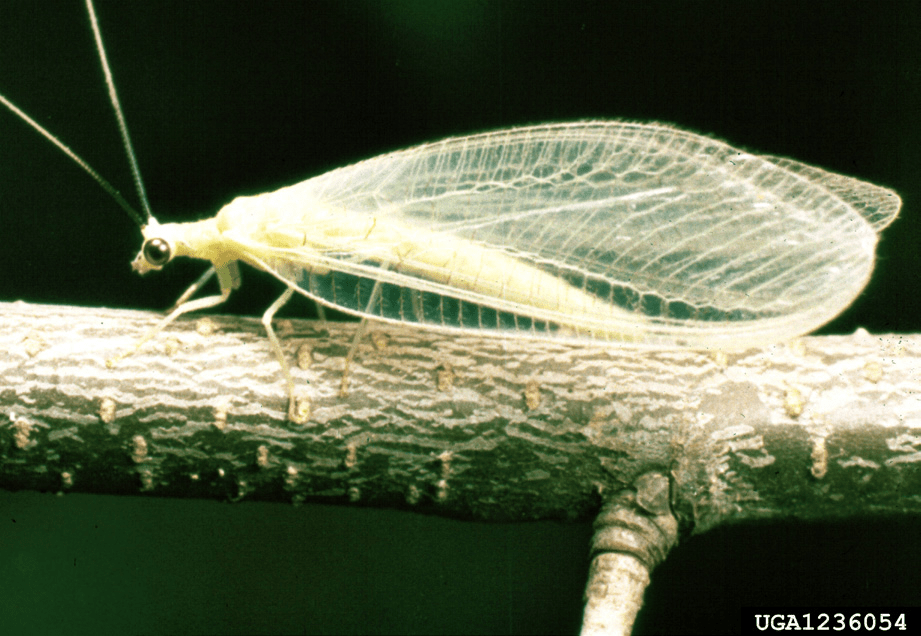
Application: Release lacewing eggs or larvae directly onto plants. Eggs can be scattered or placed on leaves.
Environment: Favorable habitats include areas with nectar-producing plants to support adult lacewings.
Parasitic Wasps (e.g., Trichogramma spp.)
Application: Release near the time of pest egg laying. Attach release cards with parasitized eggs to plants or scatter loose eggs.
Environment: Provide a mix of flowering plants to support adult wasps with nectar sources.
Predatory Mites (e.g., Phytoseiulus persimilis)
Application: Distribute mites onto plants where pest mites are present. Sachets or loose mites can be used.
Environment: Ensure a humid environment, as mites require high humidity for survival.
Predatory Nematodes (e.g., Steinernema spp.)
Application: Mix nematodes with water and apply using irrigation systems, backpack sprayers, or watering cans.
Environment: Keep soil moist for several days after application to ensure nematodes can move and infect pests.
Keeping Beneficial Insects in the Field
Learn about your predator and be able to identify life stages. A Lacewing adult looks a lot different than the dragon-like nymph. The same is true for the Lady Beetle that has a ferocious looking larva!
Avoid and pesticide applications after applying predators. Especially avoid using broad-spectrum pesticides that can harm beneficial insects. Even avoid irrigation applications, if possible, till predators can begin feeding.
Regularly check pest and beneficial insect populations to assess the effectiveness of the release. Use sticky traps, visual inspections, and sweep nets for monitoring. Learn how effective your predators are and what the drop in pest insects looks like once predators are released.
Maintain and promote a diverse habitat with cover crops and flowering plants to support beneficial insect populations. If is amazing how many pest insects stop in your predator habitat first and get eaten up!
Minimize tillage to preserve the habitat of ground dwelling beneficial insects.
Use trap crops to attract pests away from the main crop, allowing beneficial insects to control them more effectively.
Crop Varieties and Beneficial Insects
Selecting Varieties: Choose crop varieties that are known to attract and support beneficial insects. Some plant varieties may produce more nectar and pollen, which are crucial for the survival of beneficial insects.
Integrated Planting: Integrate flowering plants and companion plants that attract beneficial insects within the crop rows. This can be a way to better utilize waterways or sections of a pivot.
Real Life Example: In cotton fields, farmers can plant strips of alfalfa or clover, which attract lady beetles and lacewings. These beneficial insects will help control aphid populations, reducing the need for chemical interventions. Additionally, by maintaining a diverse plant environment, beneficial insects are more likely to stay and thrive in the field.
Properly managing stored grain is essential to maintaining its quality and preventing insect infestations. Below are some strategies for controlling insects in organic grain storage, focusing on beneficial insects, biological sprays, and preventive measures. Just a reminder always, always check with your certifier about using these practices in your OSP and before making grain applications!
Clean Storage Areas: Thoroughly clean and disinfect storage areas before storing new grain. Remove any residual grain, debris, and dust, as these can harbor pests.
Proper Drying: Ensure that grain is properly dried to a moisture content below 14%. High moisture levels can promote mold growth and attract insects.
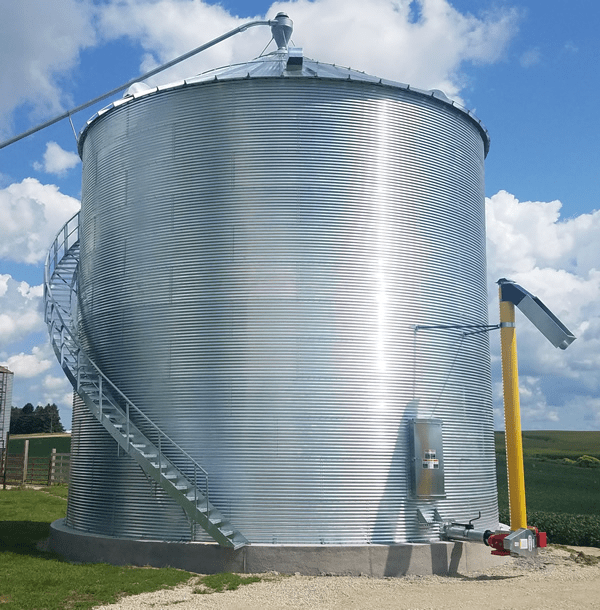
Sealed Containers: Store grain in airtight containers or silos to prevent insect entry. Use insect-proof storage bags or bins for smaller quantities.
Regular Monitoring: Inspect stored grain regularly for signs of infestation. Use pheromone traps to monitor pest activity and take action if necessary.
Temperature Control: Keep storage areas cool, as high temperatures can encourage insect activity. Aerate grain periodically to maintain uniform temperature and moisture levels.
Predator Insects for Grain Storage
Predatory insects are an innovative and sustainable solution for managing pests in stored grain. These beneficial insects naturally prey on grain pests, helping to keep their populations in check without the need for chemical treatments. To implement the use of predatory insects, it’s crucial to monitor pest populations and introduce the predators at the right time. Maintaining optimal storage conditions, such as proper temperature and humidity, will also enhance the effectiveness of these biological controls.
Predatory Mites (Acarina: Phytoseiidae): These mites’ prey on grain mites and small insect pests, effectively reducing pest populations in stored grain.
Parasitoid Wasps (e.g., Trichogramma spp.): These wasps lay their eggs inside the eggs of pest insects like moths and beetles. The developing wasp larvae consume the pest eggs, preventing the pests from emerging.
Lesser Grain Borer Parasitoids (e.g., Anisopteromalus calandrae): These wasps target larvae of grain borers and weevils, helping to reduce their numbers.
Diatomaceous Earth (DE): DE is a natural powder made from fossilized remains of diatoms. It works by damaging the exoskeletons of insects, causing them to dehydrate and die. It’s a safe and effective method for organic grain storage. Apply DE to the grain before storage to create a protective layer.
General Application: Use DE at a rate of approximately 1-2 pounds per ton of grain. Surface Treatment: For treating the surface of stored grain, apply a layer of DE at about 0.5 to 1 pound per 1,000 square feet.
How to Apply DE: Ensure the grain is clean and dry before applying DE. The moisture content should be below 14%, as DE is more effective in dry conditions.
Mixing with Grain: Add DE to the grain as it is being transferred into the storage bin. This can be done using a grain auger or conveyor belt. The movement will help mix DE uniformly throughout the grain.
Top Dressing: After filling the storage bin, apply DE on the top surface of the grain. This creates a barrier to prevent insects from entering the grain mass. For best results, ensure even distribution. DE should be mixed thoroughly with the grain to cover all kernels. Use personal protective equipment (PPE) such as a dust mask and gloves to avoid inhaling DE dust during application. A hand spreader or scoop can be used for smaller quantities, while larger operations may require mechanized equipment for even distribution.
Benefits of Using DE: DE is a natural, non-toxic substance safe for humans and animals. It leaves no harmful residues, making it suitable for organic storage systems. DE is effective against a wide range of insects, including weevils, beetles, and moths.
Additional Tips for DE: Maintain optimal storage conditions. DE is most effective in dry environments, so keeping grain dry and well-ventilated will enhance its efficacy. In long-term storage situations, periodically check the grain and reapply DE if needed, especially if there is significant handling or movement of grain. Always handle DE with care to avoid inhalation and ensure it does not contact eyes. Use in a well-ventilated area or wear appropriate protective gear.
Neem Oil (Azadirachtin): Extracted from the neem tree, neem oil has insecticidal properties that disrupt the life cycle of insects by interfering with their growth and reproduction. It can be used as a spray in storage areas or directly on grain. Here are some products:
Azadirachtin 1.2%
Aza-Direct, AzaPro
Azadirachtin 3%
AzaGuard, Molt-X
Azadirachtin 4.5%
Neemix 4.5
Azadirachtin: 6.0%
Azasol
Bacillus thuringiensis (Bt): Bt is a soil-dwelling bacterium that produces proteins toxic to certain insects. When ingested by insects, Bt causes them to stop feeding and eventually die. Bt formulations can be sprayed on grain to control pests like moths and beetles. Here are some products:
Bacillus thuringiensis aizawai
Agree, Xentari
Certis, Valent
bacteria
Bacillus thuringiensis israelensis
Gnatrol, AquaBac
Valent, Becker Microbial
bacteria
Bacillus thuringiensis kurstaki
DiPel, Deliver, Javelin, BT Now, Leprotec
NuFarm, Valent, Certis, BioSafe, Vestaron
bacteria
Using Pheromone Traps for Organic Grain Storage Pest Control
Pheromone traps are an effective tool for monitoring and controlling insect pests in organic grain storage. They work by emitting synthetic versions of insect pheromones, which attract pests to the trap, thereby reducing their populations and minimizing damage to stored grain.
Benefits of Pheromone Traps
1. Target Specific Pests: Pheromone traps are designed to attract specific insect species, making them effective in targeting particular pests without affecting non-target organisms.
2. Monitoring Pest Activity: These traps help farmers monitor pest populations and detect early infestations, allowing for timely intervention.
3. Reducing Chemical Use: By using pheromone traps, farmers can reduce or eliminate the need for chemical insecticides, aligning with organic farming principles.
Types of Pheromone Traps
1. Sticky Traps: These traps are coated with a sticky substance that captures insects when they land on them. They are commonly used for moths and beetles.
2. Delta Traps: Reusable plastic traps that are suitable for a variety of pests. They are durable and weather-resistant, making them ideal for outdoor use.
3. Wing Traps: These traps are weather-resistant and feature a grid pattern on the bottom for easy counting of trapped insects. They are effective in orchards and greenhouses.
How to Use Pheromone Traps
1. Placement: Position traps at the top and in the center of the grain mass. Pheromone traps can also be placed around the storage area to monitor incoming pests.
2. Monitoring: Check the traps regularly to monitor pest activity. Replace the pheromone lures as needed, typically every 4-6 weeks.
3. Maintenance: Keep traps clean and ensure they are in good condition to maintain their effectiveness.
Scales are sucking insects that insert their tiny, straw-like mouthparts into bark, fruit, or leaves, mostly on trees and shrubs and other perennial plants. Some scales can seriously damage their host, while other species do no apparent damage to plants even when scales are very abundant. The presence of scales can be easily overlooked, in part because they do not resemble most other insects.
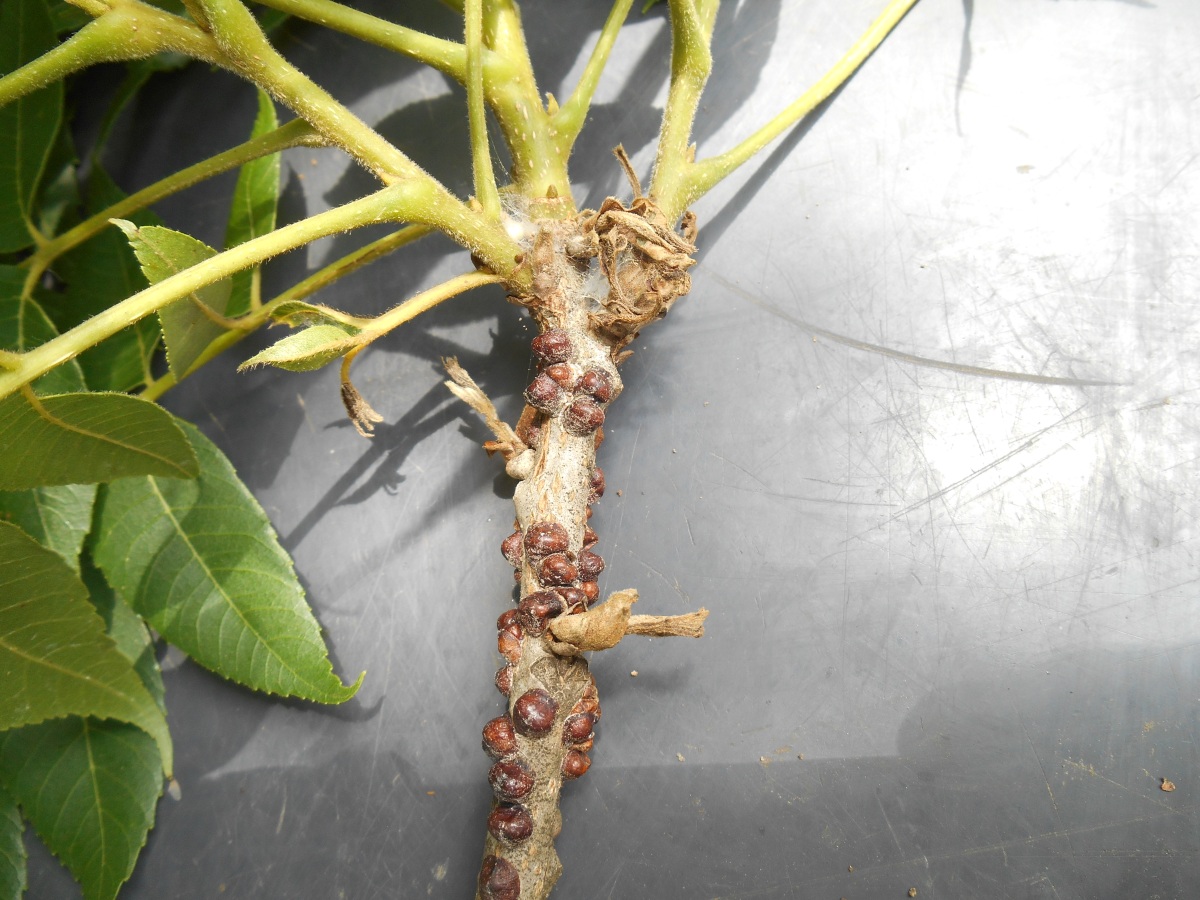
Lecanium scales in the picture above (there are about 12 species) are known as “soft” scales and are common pests on many ornamental plants all over North America. Holly, elm, redbud, walnut, citrus, apricot, pear, persimmon, beech, box elder, grape, pecan, rose, and willow are a sample of the diverse range of hosts that Lecanium scales can parasitize.
As these scales feed, they excrete large quantities of honeydew which serves as a substrate for sooty mold fungi.
Here is a link to a previous post I wrote about this scale on pecan. Scale on Pecan?
San Jose Bark Scale
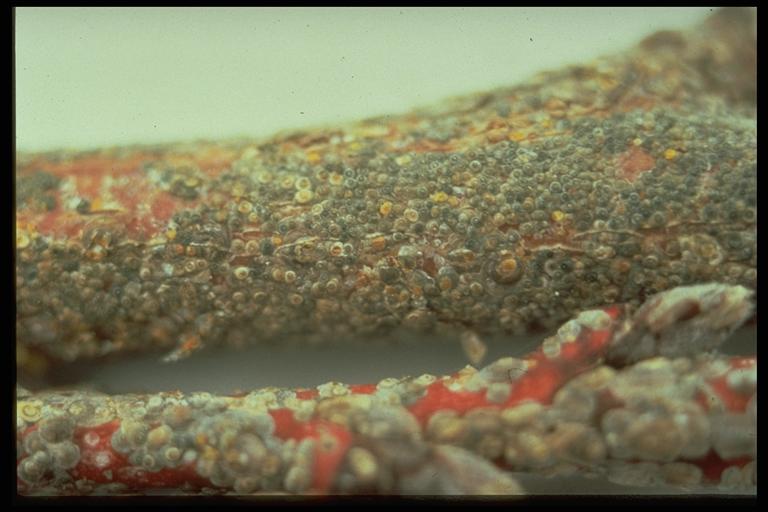
San Jose scale, Quadraspidiotus perniciosus (Comstock) (Homoptera: Diaspididae). Photo by C. L. Cole.
San Jose Bark Scale is one of the major insect pests of peaches and maybe one that causes the most damage. The first signs of infestation include a decline of tree vigor, leaf drop and appearance of sparse yellow foliage, particularly on the terminal growth. Reddish spots on the underside of bark and around scales on leaves or fruit result from feeding of immature stages. In severe cases, the entire surface of bark can become covered with layers of overlapping grayish scales. Cracking and bleeding of limbs occur, and heavily injured trees may die.
Life Cycle: Intermediate. Mature females and immature (second nymphal instar) stages survive the winter. Rather than eggs, female scale insects produce tiny six-legged, mobile, yellow-colored young, called “crawlers.” This stage spreads the infestation to new areas on the host plant, including bark, leaves and fruit, and to new hosts. After inserting their thread-like mouthparts into the plant and feeding for 2 to 3 days, female crawlers secrete their initial scale coverings and never move from that spot. Males develop into 2-winged adults in 2 or 3 weeks and emerge from their scales to seek females to mate. Up to six generations may be produced annually. All stages of development can occur throughout the year except during the winter.
Crape Myrtle Bark Scale
The crape myrtle bark scale, Acanthococcus (Eriococcus) lagerstromiae (Kuwana) was first confirmed in the USA in 2004 in the landscape near Dallas (TX), although it was likely introduced earlier. The scale is a sucking insect that feeds on the phloem (sap) of plants. As it feeds, it excretes a sugary solution known as “honeydew” (similar to aphids, whiteflies, and other sucking insects). Heavy infestations of crape myrtle bark scale produce sufficient honeydew to coat leaves, stems and bark of the tree. This honeydew, in turn, will eventually turn black as it is colonized by a concoction of fungi, called sooty mold. Although crape myrtles rarely die as a result of crape myrtle bark scale infestation, the sticky leaves and black trunks greatly reduce the attractive appearance of the tree.
Photo by Erfan K. Vafaie, Texas A&M AgriLife Extension.
Immature crape myrtle bark scale is hard to see with the naked eye, but adult scale covers, and egg sacs are frequently visible on the upper branches and trunk of the tree. These scales include larger, white, oval (female) and smaller, elongate (male) scales. Both male and female scales of the crape myrtle bark scale are immobile and will “bleed” pink blood when crushed.
On a personal note, this is a problem I have in my landscape and use Certis Biologicals – Des-X Insecticidal Soap as a treatment. Seems to work well but it does require repeat applications.
Mealybugs are prominent now in Greenhouses and Houseplants
Mealybugs are soft-bodied, wingless insects belonging to the family Pseudococcidae. These pests are known for their damaging effects on a wide range of plants, including crops, ornamentals, and houseplants. Their appearance is distinctive: adults are covered with a white, waxy, cotton-like secretion, making them resemble small tufts of cotton. This protective coating helps conserve moisture and offers some defense against predators and pesticides. Understanding the biology of mealybugs is crucial for developing effective management strategies in agricultural and horticultural systems.
Mealybugs have a complex life cycle that includes egg, nymph (crawler), and adult stages:
Egg: Female mealybugs lay hundreds of eggs within an ovisac, a protective sac made from waxy secretions. The color and size of the ovisac can vary among species.
Nymph (Crawler): After hatching, the nymphs, or crawlers, emerge to find feeding sites. This is the most mobile stage of the mealybug life cycle, and it’s when they are most vulnerable to control measures. Crawlers are tiny, yellowish, and lack the waxy coating seen in adults.
Adult: As they mature, nymphs undergo several molts before reaching adulthood. Adult females are larger than males and retain the waxy coating. Males may develop wings, depending on the species, and do not feed on plant sap as adults.
Mealybugs feed by inserting their long, slender mouthparts into plant tissues and sucking out sap. This feeding behavior can weaken plants, reduce growth, and cause leaf yellowing, wilting, and even death in severe infestations. As they feed, mealybugs excrete honeydew, a sticky substance that can lead to the growth of sooty mold, further impairing photosynthesis and plant health.
Mealybug reproduction can be sexual or asexual, varying by species. Some species are capable of parthenogenesis, where females produce offspring without mating. This ability allows for rapid population increases under favorable conditions.
Mealybugs spread primarily through human activity, such as the movement of infested plant material, and natural means, like crawling to adjacent plants or being carried by wind, animals, or ants. Ants, in particular, are known to farm mealybugs for their honeydew, protecting them from natural enemies and inadvertently aiding in their dispersal.
Introduction of Natural Predators or Disease
Controlling scale or mealybug insects in an organic farming system emphasizes the integration of biological and ecological methods to maintain pest populations below damaging levels. Biological control, one of the cornerstone practices in organic agriculture, involves the use of living organisms—predators, parasitoids, and pathogens—to regulate pest populations. Here are some effective methods to manage these insects through biological or predator-based strategies:
Lady Beetles (Coccinellidae): Many lady beetle species are voracious predators of scale insects in their larval and adult stages. For instance, the vedalia beetle (Rodolia cardinalis) has been successfully used to control cottony cushion scale in citrus groves.
Cryptolaemus montrouzieri: Often referred to as the mealybug ladybird, this beetle is a voracious predator of mealybugs in both its larval and adult stages. It has been used successfully in various agricultural systems to control mealybug populations.
Lacewings (Chrysopidae): Green and brown lacewings consume scale insects during their larval stages. Green lacewing larvae are effective predators of mealybugs, consuming them at various stages of their development. Their larvae are known as “aphid lions” for their predatory efficiency.
Parasitic Wasps: Tiny wasps, such as Aphytis melinus and Encarsia spp., specialize in parasitizing scale insects. They lay their eggs in or on the scale insect, and the developing larvae consume the scale from the inside. Several species of parasitic wasps, such as Leptomastix dactylopii, target mealybugs specifically. These wasps lay their eggs in or on mealybug larvae, and the hatching wasps consume the mealybugs from the inside.
Beauveria bassiana and Metarhizium anisopliae are fungi that infect and kill a wide range of insect pests, including scale and mealybug insects. These fungi are particularly useful in humid environments where they can naturally proliferate and infect scale populations.
Isaria fumosorosea (formerly known as Paecilomyces fumosoroseus) is a naturally occurring entomopathogenic fungus that acts as a biological control agent against a wide range of insect pests, including mealybugs, aphids, whiteflies, thrips, and other soft-bodied insects. It infects its hosts through the cuticle, leading to the pest’s death, and is particularly useful in integrated pest management (IPM) systems in organic agriculture and greenhouse settings.
Below you will see a list of organic products that have scale and/or mealybugs on their labels. These include some of the beneficial fungi listed above as well as botanical oils and the still very popular Azadirachtin extracted from the neem tree. You can just look through this short list or click on the link below to either see it on your computer or download and use as an Excel file.













 Texas A&M AgriLife Organic