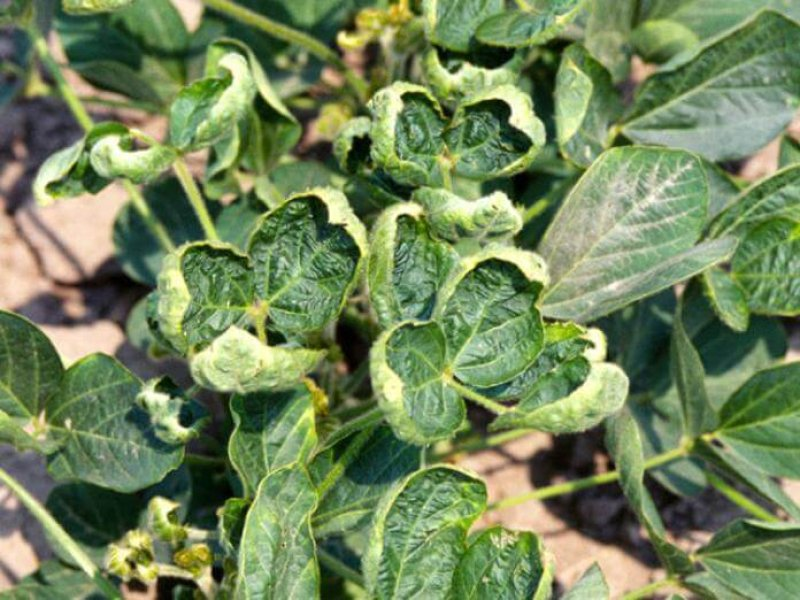
Soybeans damaged by dicamba drift. Genetic Literacy Project
Overview of Dicamba Drift Issue in 2024
Dicamba, a commonly used herbicide in conventional farming, has long been a point of contention, particularly in regions where organic crops are grown alongside conventional fields. In 2024, the persistence of dicamba drift has become increasingly problematic for organic farmers in West Texas, affecting a range of sensitive crops, particularly cotton and peanuts.
To understand the scale of this issue, I recently conducted a poll targeting 204 organic farmers from Seminole to areas just north of Lubbock. The poll, sent out by email, specifically asked if they had observed dicamba drift on their sensitive crops this year. With a response rate of 27.5% (56 responses), the results are indicative of a widespread concern.

Poll Results: Dicamba Drift on Sensitive Crops
In this poll, farmers were asked a straightforward question: “Have you seen dicamba drift on sensitive crops in 2024?” The results revealed the following breakdown:

- 50% reported observing dicamba drift on their crops.
- 44% stated they had not observed drift.
- 5% mentioned “maybe” they had observed some drift damage.
The responses reflect a troubling level of dicamba exposure, with half of the respondents directly witnessing the impact of drift. While dicamba is designed to target specific weeds, the herbicide’s tendency to volatilize and drift into neighboring fields has made it difficult for organic farmers to avoid its effects, especially in the South Plains.
Impact on Crop Yields
Several farmers shared the tangible impacts dicamba drift has had on their yields. One farmer, who has been practicing organic farming for over three decades, described this year as the “worst dicamba drift in years.” He noted that his soybean yield was cut in half, with probable yield reductions in cotton as well. This problem was bad enough that his comments to me questioned whether it was worth it to keep farming!
The Broader Implications for Organic Farming
The prevalence of dicamba drift has significant ramifications for organic producers in Texas. Yield reductions not only threaten the economic viability of these farmers but also jeopardize their certification status, as organic crops must remain free of prohibited substances. Dicamba drift challenges their ability to meet these requirements, complicating the already demanding task of managing organic systems in a predominantly conventional farming region.
This is just for Awareness
The findings from this poll underscore the need for better management practices to prevent dicamba drift. Organic farmers have invested years into building sustainable systems that meet organic standards, yet their efforts can be undermined by the unintended consequences of a herbicide application on a nearby conventional farm.
Moving forward, it is essential to foster a dialogue between organic and conventional farmers, to find solutions that protect organic crops from unintended herbicide exposure. Additionally, increased awareness and education about the volatility of dicamba and its potential effects on neighboring fields could be critical steps in mitigating drift.
With dicamba products currently off the market, there is growing concern about whether they will be approved for use again in future years. The uncertainty surrounding future approvals adds an additional layer of stress for organic farmers, who are already grappling with the fallout of dicamba drift. Better and more effective safeguards are crucial if dicamba is to return, to ensure that organic farming can continue to thrive without fear of “chemical trespass” on neighboring farms.
What’s Next – FieldWatch offers help
In response to these ongoing challenges posed by any pesticide drift or accidental pesticide application, the Texas Department of Agriculture (TDA) is collaborating with FieldWatch to implement a mapping registry in 2025. This program aims to enhance communication between specialty crop producers, beekeepers, and pesticide applicators, thereby mitigating the risks associated with pesticide drift.
FieldWatch is a non-profit organization that offers free, voluntary mapping tools designed to promote awareness of sensitive sites. By registering their fields, vineyards, orchards and apiaries, producers and beekeepers can inform applicators of locations that require caution during pesticide application. This proactive approach fosters cooperation and helps protect vulnerable crops from unintended exposure.
Texas A&M AgriLife Extension Service will oversee the data management for FieldWatch in Texas, with your Extension Organic Specialist (myself!), serving as the data manager. This collaboration ensures that the registry is maintained with accurate and up-to-date information, facilitating effective communication among all stakeholders.
The introduction of FieldWatch in Texas is a significant step toward protecting organic and specialty crops from pesticide drift. By participating in this registry, farmers can contribute to better use and application of pesticides, ultimately supporting the sustainability of all agriculture in the region.

 Texas A&M AgriLife Organic