Lots of Summer Tours with Organic Topics!

There have been a lot of opportunities this summer for Organic Farmers to attend tours held outside, in the field, that featured organic agriculture.  I hope that you as an organic farmer took the time to attend, learn, and show your support.  I hope that organic farmers realize that Extension education works much like a business! If farmers do not show up (make a purchase) then there will be an assumption that they do not need Extension organic education. If they do not need organic education, then the “educators” might be forced to do something else – just saying! Check out the pictures and information and then plan to be a part the next time you get the invitation!
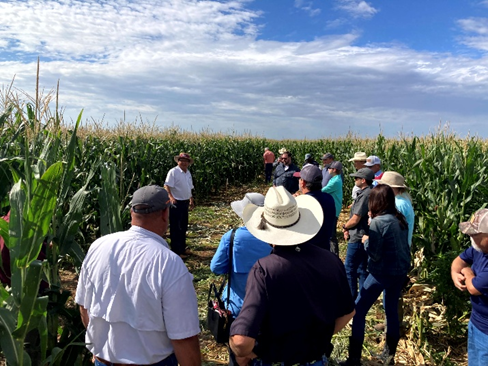
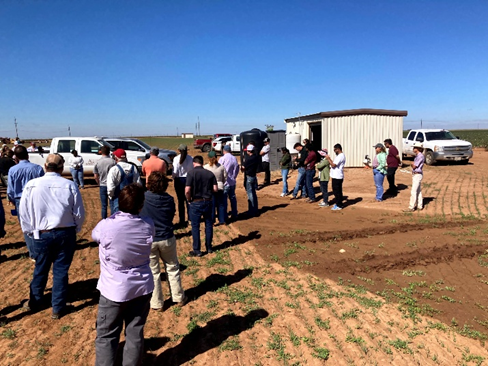
The picture above is at the Hi-A Corn Field Day held July 31 in and around Halfway just west of Plainview.  There was a good crowd of farmers, seed producers and businesses interested in new corn hybrids.

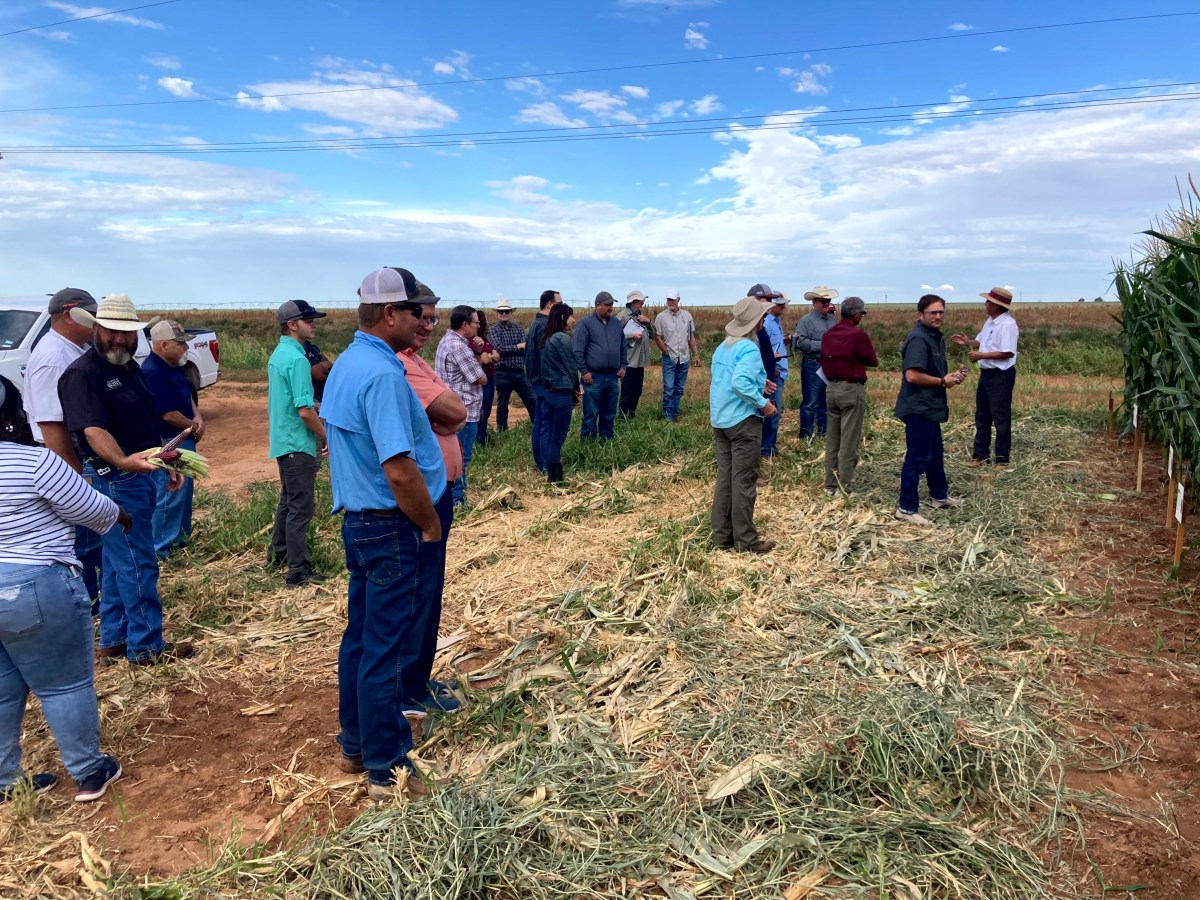
The pictures below are of the Organic Cotton and Peanut Field Day held on August 19 just north of Seminole in Neil Froese’s fields.  We toured peanuts, cotton and had a robot demonstration and a great talk by Aigen about their new robot weeders.

Dr. John Cason has his back to us in the picture as he talks to the crowd about the organic peanut variety trial. It was great weather that day with a little over 2 inches of rain the day before.

The picture above is some discussion about the organic cotton fields surrounding the crowd. The fields were clean of weeds, and we discussed the implements and timing to keep them clean.

Below the picture is showing a potential crop robot developed by Texas A&M researchers using common components found in most electronic stores. The technology is sophisticated but the design and parts are pretty simple. Imagine building robots in your shop that could run continuously weeding your fields!

The pictures below are from the Resilient Cropping Systems Tour held on September 24 that started at the Quarterway Cotton Growers but toured from there to the Helms Farm south of Halfway.  This tour featured so many speakers and demonstrations that I can’t name them all but organic was discussed on many of the tour stops. I want to also mention that Megan Singletary is doing some great work in organic weed control and results should be something we can use to improve our fields.
Let me add one more tour that I wish I had more pictures to show you the crowd and facilities. I am a terrible photographer and wish I would do better! The Southwest Dairy Day had over 300 attending and Organic Dairy was front and center.

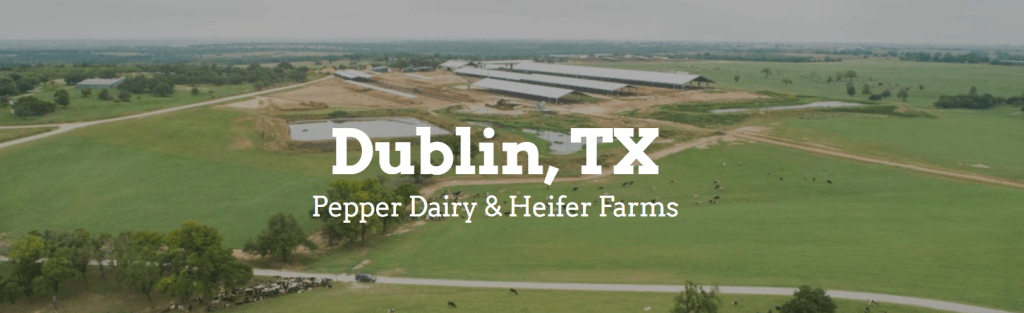
This is just one of many seminars given at the Southwest Dairy Day held on October 9. The day featured lots of exhibits in outdoor tents, lots of equipment demonstrations, and a tour of the Aurora Organic “Pepper” Dairy just outside of Dublin Texas. The Pepper Organic Dairy features the latest in robot milkers for batch milking. A completely automated system we were able to tour from above the entire operation from the balcony at the milking parlor – it was a site to see!
Applying Field Bindweed Gall Mites

Wrapping parts of field bindweed plants from the nursery infected with Gall Mites around field bindweed plants in the South Plains. Introducing the beneficial Gall Mite to help control this noxious weed.

Some time back I wrote a blog post about using some biological methods for controlling field bindweed (click here to read). I liked the idea of introducing the Field Bindweed Gall Mite (Aceria malherbae) to areas of field bindweed and hoping they would help to keep this weed from taking over fields. Sounds easy till you try finding the mites!

Most of the information pointed me to the State of Colorado and Nina Louden Biocontrol Specialist with the Colorado Department of Agriculture. The first thing Nina asked me, “Do you have a USDA permit to allow us to ship “biological control agents” across state lines?” At that time, I didn’t even know there was a need for a permit, but I soon found out you can apply for one online. There was much in the application process I didn’t understand but overall, it was simple and easy. I got my “permit” as you can see below

USDA Permit to ship and apply Field Bindweed Gall Mites

I sent Nina the USDA permit by email and her response back was we will ship you the Gall Mites on Monday of the next week to arrive by noon on Tuesday. The mites are harvested in Colorado from growing field bindweed by simply cutting off pieces of field bindweed that are infected with the mites and shipping them in a cooler with cold packs. My next call was to Carl Pepper, South Plains Organic Cotton Farmer to see if he was able to help me put out the mites on one of his fields.

Field bindweed with the Gall Mites on the plant are harvested and sent to us for distribution.

Carl and his family had a perfect location next to an organic cotton field. The area between the county road and the field was infested with field bindweed and the weed was growing out in the cotton rows where Carl could not plow it out. We put the gall mites into two 10′ X 10′ squares well marked and will monitor their “survivability” and ultimately measure their spread out from the 10′ X 10′ area to the field.

Carl Pepper is applying the field bindweed pieces to the existing field bindweed plants in his field. We did this by wrapping the pieces around the existing plants. The mites will move from the old plants to the new looking for fresh food sources.

Will it work? I don’t think any of us know for sure, but we have to try! The field bindweed gall mite is not going to eradicate field bindweed on the South Plains. But our hope is that as the field bindweed comes out each spring the gall mite is also out and feeding on the field bindweed. This will significantly slow the growth of the bindweed and hopefully keep it in check. Something we don’t have now!

Click on the picture above to read this publication about the Gall Mite and how Colorado State Department of Agriculture ships them out. This service was free of charge and very easy to do. I hope to get more to release in other places soon.

Organic Cotton Resources

Here are few things you might find interesting or helpful as you think about organic cotton planting in a few months (weeks). I will update this as I get new information, but it will be “here” to help anytime you need it. 

If there is anything I need to add or change, please let me know. I want to keep this as up to date as possible. Click link in this Table of Contents below to scroll down.

  1. Cotton Varieties for Organic
    1. Upland Varieties
    2. Pima or Pima hybrids
  2. Cottonseed Quality – It Matters!
  3. Cotton Contacts:
  4. Cotton Buyers for Organic
  5. ORGANIC RESOURCES: Just click the link to see!

Commercial Varieties Developed without Genetic Engineering Methods. Be sure that any seed treatments applied are OMRI approved and okayed by your certifier.

Upland Varieties

  • Americot – UA48 (talked to Dr. Robert Lemon with NexGen and they hope to have some commercial varieties good for organic in a few growing seasons.)
  • Brownfield Seed & Delinting – Varieties: BSD 224, BSD 4X, BSD 598, BSD 9X, Ton Buster Magnum. Currently, one new Tamcot variety is being reviewed for future commercialization and BSD has 2 new varieties being reviewed for future commercialization. 
  • Seed Source Genetics – CT 210, UA222, UA103, UA 107, UA114
  • ExCeed Genetics – 6447 or 4344 (May Seed from Turkey where they do not grow GE cotton.)
  • International Seed Technology (IST) – BRS 286, BRS 293, BRS 335, BRS 2353. Varieties from Brazil and certified in Texas.

Pima or Pima hybrids

  • Gowan – 1432

Cottonseed is sold in 50lb. bags as you all know but the number of seed in a bag can be drastically different depending on the variety. Typically, we see 220,000 – 230,000 seed or about 4,500 seed per pound but over the years we have seen cottonseed size go down such that we can have varieties approaching 6,000 seed per pound.

Seed germination for cotton is determined using two methods. A warm seed germination test would be to put the seed through 16 hours of 68 degrees then 8 hours of 86 degrees and do this for 4 days. Calculate the % germination which is the germinated seed number divided by the number of seed tested. 80 germinated seed/100 beginning seed tested * 100 = 80%

A cool seed germination test is simply keeping the seed at a constant 64.5 degrees for 24 hours for 7 days. Calculate the % germination.

If you want to read more about cotton seed testing this is a very recent article that is very helpful. Cotton Seed Quality Program Update

ExCeed Genetics (May Seed)

Brownfield Seed and Delinting

  • Forbes, Klint
  • Bus: (806) 637-6282
  • Mobile: (806) 548-1048
  • Email: bsd.seed@aol.com

Gowan

Seed Source Genetics

International Seed Technology (IST)

No organic producer should ever begin planning for a crop without first organizing with a buyer to buy the crop.  Cotton is not a crop to grow without a buyer since even storage can be difficult unless arranged in advance.

Texas Organic Cotton Marketing Cooperative

King Mesa Cotton Gin

Woolam Gin

Jess Smith & Sons Cotton

5 LOC

Allenberg Cotton Company

  • Louis Dreyfus Company Subsidiary
  • (901) 383-5000

TruCott Commodities

  • Jarral Neeper, President
  • (901) 383-5000