
What Do Cover Crops Leave Behind? Comparing Sunn Hemp, Tepary Bean, and Cowpea

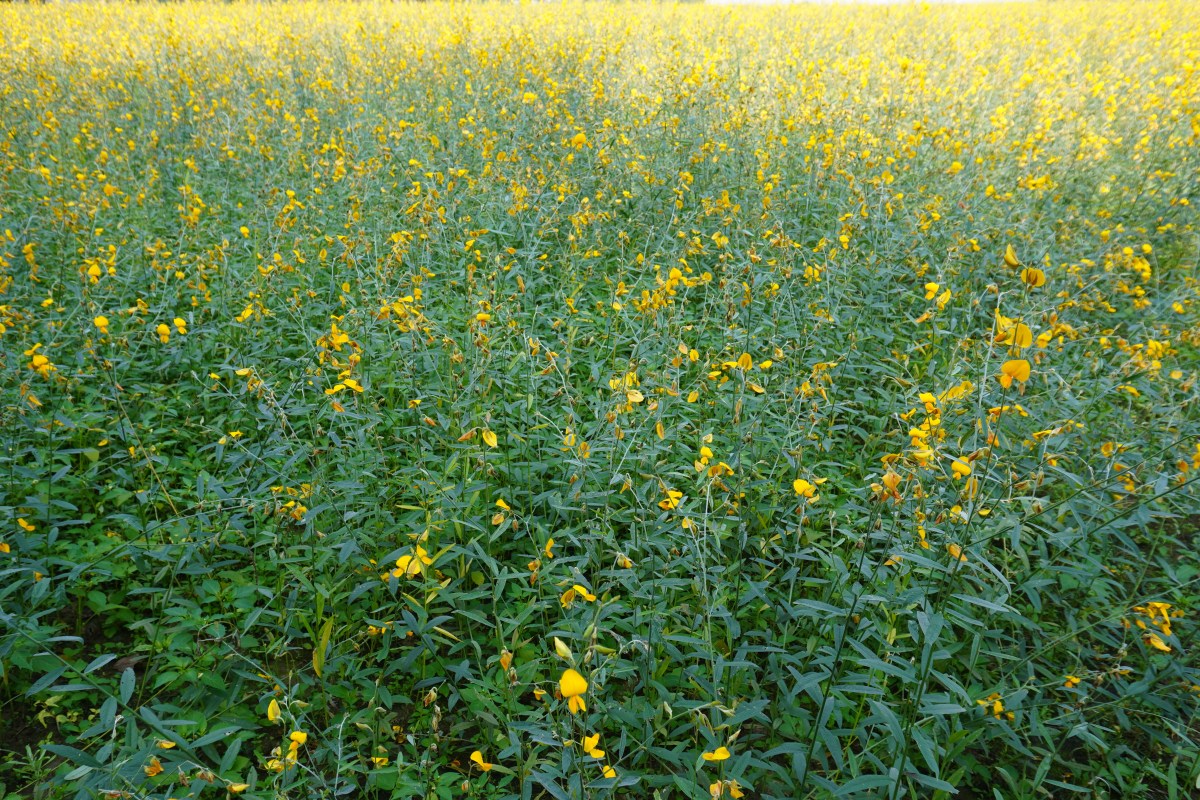
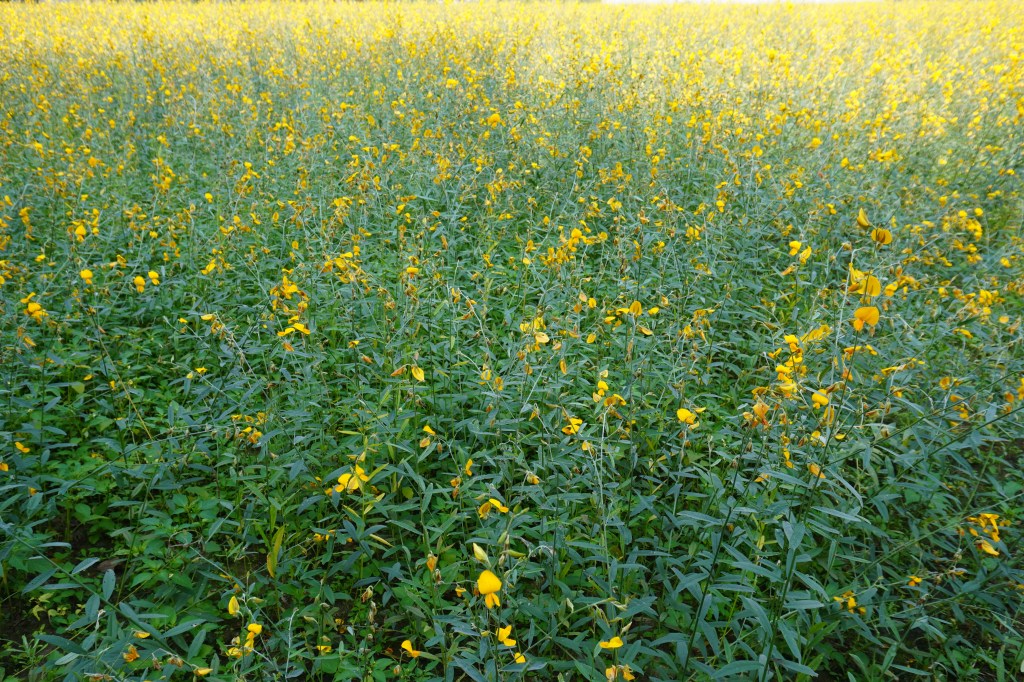
This past fall, we let our warm-season legumes—Sunn Hemp, Tepary Bean, and Cowpea—grow as long as the season allowed. Since we planted late, we hoped for a long fall, and thankfully we got one. Each crop reached full maturity, including seed set, about two weeks before a freeze finally stopped all aboveground growth. That’s when we collected the forage samples—at peak biomass and nutrient accumulation, just before decomposition began.

These samples, along with earlier soil tests from the same plots, gave us a snapshot of how each forage performed in terms of nutrient cycling and potential soil improvement.

Crude Protein: A Quick Look at Forage Quality

One of the easiest ways to relate cover crop nitrogen content to livestock feed value is by converting it to Crude Protein (CP) using the standard multiplier:

Crude Protein (%) = Nitrogen (%) × 6.25

CropNitrogen (%)Crude Protein (%)
Sunn Hemp3.0419.0
Tepary Bean3.0218.9
Cowpea2.6216.4

All three crops delivered respectable CP levels. Sunn Hemp and Tepary Bean were just under 19%, making them excellent options for grazing, hay, or green manure. Cowpea was slightly lower but still solid at 16.4%.

Nutrient Accumulation: What the Plants Took Up

These legumes not only fixed nitrogen—they also scavenged and stored other critical nutrients. Here’s a quick summary of key nutrients in the biomass at the time of harvest:

NutrientSunn HempTepary BeanCowpea
Phosphorus %0.210.170.15
Potassium %1.621.371.16
Calcium %1.251.410.94
Magnesium %0.470.350.27
Sulfur (ppm)2,4831,7661,603
Zinc (ppm)342116
Iron (ppm)5924368
Manganese302227
Copper1098
Boron241619

What Stood Out

  • Sunn Hemp was the most balanced nutrient accumulator, with strong numbers in phosphorus, potassium, magnesium, and trace minerals like zinc and boron. It had the highest sulfur and copper as well.
  • Tepary Bean stood out for iron, with 243 ppm in the tissue—much higher than the others.
  • Cowpea showed lower uptake in most nutrients but still delivered usable protein and respectable mineral content.

These Cover Crops Don’t Just Grow—They Mine the Subsoil and Feed the Topsoil

Our recent soil tests confirm this. For example:

  • Magnesium and calcium levels rose significantly under Cowpea, even though the forage tissue levels were lower than in Tepary Bean or Sunn Hemp. This suggests slow, steady mineralization of residues.
  • Sunn Hemp left higher sulfur, zinc, and boron levels in the plant tissue, and five months later, those nutrients are becoming more available in the soil, contributing to fertility for the next season.
  • Phosphorus availability dropped slightly, especially in Cowpea plots, indicating that some P may still be tied up in decomposing roots or surface residues—but will likely continue releasing over time.

This delayed but strategic nutrient release is one of the reasons we emphasize cover crops not only as temporary fixes, but as seasonal tools for long-term soil fertility.

Takeaways for Organic Producers

These results highlight how cover crops can build both soil and have forage value. Even after seed production, these legumes held onto good nutrient density. If you’re grazing, cutting for hay, or planning a green manure termination, these crops offer real value beyond just nitrogen fixation.

  • Sunn Hemp may be the best all-around soil builder.
  • Tepary Bean could be ideal where iron uptake is a priority.
  • Cowpea, while slightly behind in nutrient concentration, is still a useful, fast-growing legume that fits well in diverse rotations.

One of the lesser-appreciated benefits of warm-season legumes like Sunn Hemp, Tepary Bean, and Cowpea is their ability to act as biological nutrient pumps. With their deep and aggressive root systems, they draw up nutrients from deeper layers of the soil profile—nutrients that would otherwise remain unavailable to shallow-rooted crops.

What makes this process even more valuable is the timing of nutrient return. These plants don’t immediately release what they’ve gathered. Instead, after several months, the decaying plant material released those deep-stored nutrients onto the soil surface, right where the next crop can use them.

Robotics for Field Crops?

I have had many opportunities lately to present programs that focused on many aspects of organic and regenerative agriculture and one of my favorite slides is one of Greenfield Robotics and their “yellow” robots working through a row crop field. In fact, I have had a few folks asking about a demonstration of these robots or even a tour to the company in Kansas (Texans don’t mind driving if it is to look at farm equipment!).

Greenfield Robotics was the first company I have seen that has a self-propelled piece of equipment that works in row crops which is by far the majority of the crop acres we need this technology to work on. This equipment also works down the row and keeps working night or day. Just check out the company video below they did just 6 months ago.

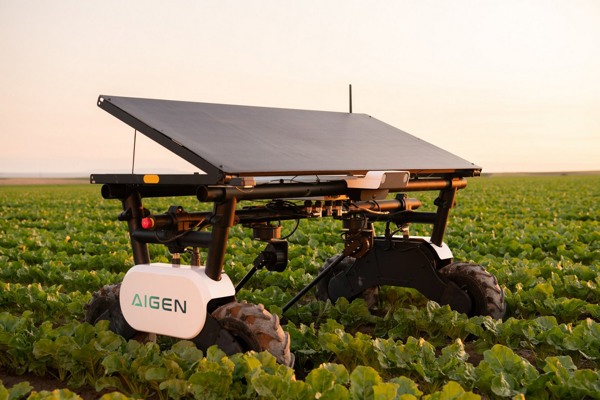
I am excited that companies are moving in this direction and that we are starting to see more of them develop technology that will change agriculture for row crop farmers. I was asked to visit about another company getting into this area, Aigen AI Generated Robotics has been doing some development work in sugar beets the Dakotas’ and cotton in California. They have reached out about some possibilities for some research/demonstration work in Texas cotton, in particular organic cotton.

Aigen will deliver, run and maintain the robots throughout the season taking the technical hassle out of the growers’ hands. As I explained to a farmer the other day, until these companies get all the ‘kinks’ out of the system and the technology get better and better developed, leasing the service is probably the best option.

Check out the Aigen YouTube channel for what is coming down the road!

Enjoy some of the other pictures of robots working!! Kinda fun to watch and to think about for Texas farmers – organic and regenerative.

Here is another Robotics Company

The picture above is of the Carbon Robotics LaserWeeder G2 1200 designed for row crops. This is a 16-row model if I counted correctly!

Recently Carbon Robotics was the third company to contact me about their new units for row crops.  They are a big player in the vegetable industry in California, but they reached out lately to tell me about their newest addition for row crops.  Carbon Robotics utilizes both lasers and computers to zap the weeds and not the crop. Laser weeders are a great idea but they have typically been slow and very expensive. As with most technology it is getting better and cheaper.  According to the company they believe they can be as competitive as conventional weed control chemicals per acre.

Check out their latest G2 LaserWeeders here: Carbon Robotics

BMR Male-Sterile Sorghum Silage: A Smart Alternative for Dairy Producers

As the High Plains continues to face water scarcity, many dairies are exploring more drought-tolerant forages1. One promising option is brown midrib (BMR) male-sterile sorghum silage, which is now showing strong potential to partially replace corn silage in lactating cow diets. A recent feeding trial2 by Texas A&M specialists Dr. Juan Piñeiro and Douglas Duhatschek conducted at the Southwest Regional Dairy Center in Stephenville, Texas, reveals some key takeaways that dairy producers need to consider before spring planting.

Why Consider BMR Male-Sterile Sorghum?

Photo: SUG R BALE BMR – Hybrid Sweet Sorghum (Male Sterile) Arrow Seed Co., Nebraska

Unlike conventional sorghum, male-sterile types don’t form grain. Instead, they pack sugars into the stalks and leaves. This results in silage with:

  • Less starch but more water-soluble carbohydrates (WSC)—these sugars ferment well and help stabilize the silage.
  • No need for kernel processing, which can reduce harvest costs and time.
  • Higher crude protein (CP) and ash, compared to corn silage.

In this study, replacing 25% or 50% of corn silage with BMR male-sterile sorghum silage (while adjusting the diet to maintain similar nutrient levels) led to:

  • 11% more dry matter intake (DMI) on average,
  • Higher milk yield and energy-corrected milk (ECM), and
  • Improved total digestible intake of fiber and protein at the 25% replacement level.

What’s the Catch?

  • At 50% replacement, digestibility of starch, protein, and fiber was lower compared to a full corn silage diet. This was likely due to the switch from starch-rich corn silage to more dry ground corn, which digests differently in the rumen.
  • DMI dropped in the corn-only group, likely due to higher starch fermentation and heat from silage spoilage during feed-out. This highlights the practical importance of silage management.

Take-Home for Producers

If you’re in a region with limited irrigation or looking to diversify your silage crops, planting BMR male-sterile sorghum could be a great option, especially if you aim to replace around 25% of your corn silage. It offers water savings, improved intake, and sustained milk production—when paired with proper ration balancing.

Keep in mind:

  • Sorghum needs wilting and proper timing for harvest.
  • Balancing for rumen-available starch is key when increasing ground corn in the diet.
  • Avoid silage heating at feed-out—especially with higher starch silages.

As more data rolls in from real-world dairies using this silage, we’ll continue refining how to best use it. For now, this is a promising tool for those looking to stretch water, reduce costs, and maintain high-performing herds.

Footnotes

  1. Bean, B. (2025, March 25). Sorghum Silage: The Rising Star of Dairy Feed. Sorghum Checkoff. Retrieved from https://www.sorghumcheckoff.com/agronomy-insights/sorghum-silage-the-rising-star-of-dairy-feed/ ↩︎
  2. Duhatschek, D., Pilati, A.G., Mittelstadt, J.P., Isasi, J.C., Cabañas, J., Lee, A.M., et al. (2025). Effects of partially replacing corn silage with BMR male-sterile sorghum silage on dry matter intake, digestibility, and milk production in lactating dairy cows. Texas A&M University Dissertation, Department of Animal Science. ↩︎

Summary of Soil Test Reports from Different Cover Crops

In August of 2024 (replanted September 12 but that is another issue!) we planted test plots for cover crops with the objective of determining which works best for the next crop we want to plant. This was really late in the summer to be planting a summer crop but to be honest we were waiting on a rain and finally gave up and irrigated. The individual cover crops were in the less than average range for growth but still all plots grew and ended up putting on a seed crop simply because we had a long fall. The plots were watered twice and then got some rain. We left the plots to grow as much as possible and after a killing frost plowed the cover crop back into the soil. We then took soil samples on March 6, 2025, and submitted them to the Texas A&M Soil Testing Lab.

Below is the plot layout

The soil test reports cover four treatments: Check, Sunn Hemp, Tepary Bean, and Cowpea. Click here if you want to read more about Texas Cover Crops. Below is a summarized comparison of key soil characteristics and nutrients across these treatments which shows how each crop affected the soil it was grown on.

1. Soil pH and Conductivity

  • Check: pH 6.6 (Slightly Acid), Conductivity 91 umho/cm
  • Sunn Hemp: pH 6.5 (Slightly Acid), Conductivity 80 umho/cm
  • Tepary Bean: pH 6.6 (Slightly Acid), Conductivity 138 umho/cm
  • Cowpea: pH 7.1 (Neutral), Conductivity 117 umho/cm

🔹 Observation:

  • Cowpea resulted in the highest pH (7.1), making the soil more neutral.
  • Tepary Bean had the highest conductivity (138 umho/cm), indicating more soluble salts.
  • Sunn Hemp had the lowest conductivity (80 umho/cm), potentially reducing salt buildup.

2. Nitrate-N (Soil Available Nitrogen)

  • Check: 14 ppm
  • Sunn Hemp: 13 ppm
  • Tepary Bean: 17 ppm
  • Cowpea: 12 ppm

🔹 Observation:

  • Tepary Bean had the highest nitrate-N (17 ppm), likely contributing more nitrogen to the soil.
  • Cowpea had the lowest nitrogen levels (12 ppm), possibly due to uptake by the crop.

3. Phosphorus (P)

  • Check: 40 ppm
  • Sunn Hemp: 34 ppm
  • Tepary Bean: 35 ppm
  • Cowpea: 32 ppm

🔹 Observation:

  • Check treatment maintained the highest phosphorus level (40 ppm) likely due to residual P from previous crops or fertilizer applications.
  • Cowpea depleted the most phosphorus (32 ppm), requiring the highest P₂O₅ recommendation (35 lbs/acre).

4. Potassium (K)

  • Check: 300 ppm
  • Sunn Hemp: 301 ppm
  • Tepary Bean: 319 ppm
  • Cowpea: 316 ppm

🔹 Observation:

  • Tepary Bean (319 ppm) accumulated the most potassium suggesting a strong potassium cycling effect.
  • Check had the lowest potassium (300 ppm), indicating less uptake or retention compared to the legumes.

5. Calcium (Ca)

  • Check: 817 ppm
  • Sunn Hemp: 815 ppm
  • Tepary Bean: 818 ppm
  • Cowpea: 1,122 ppm

🔹 Observation:

  • Cowpea significantly increased soil calcium (1,122 ppm), likely due to deeper-rooted nutrient mining.
  • Other treatments had similar calcium levels (~815-818 ppm).

6. Magnesium (Mg)

  • Check: 149 ppm
  • Sunn Hemp: 157 ppm
  • Tepary Bean: 163 ppm
  • Cowpea: 174 ppm

🔹 Observation:

  • Cowpea led to the highest magnesium levels (174 ppm).
  • Magnesium followed a trend similar to calcium, with legumes slightly increasing Mg levels.

7. Sulfur (S)

  • Check: 15 ppm
  • Sunn Hemp: 12 ppm (Needs 5 lbs S/acre)
  • Tepary Bean: 14 ppm
  • Cowpea: 17 ppm

🔹 Observation:

  • Cowpea maintained the highest sulfur level (17 ppm), possibly through decomposition.
  • Sunn Hemp had the lowest sulfur (12 ppm) and was recommended for an additional 5 lbs of sulfur per acre.

8. Micronutrients (Iron, Zinc, Manganese, Copper, Boron)

NutrientCheckSunn HempTepary BeanCowpeaCritical Level
Iron (Fe)17.518.915.915.24.25 ppm
Zinc (Zn)0.760.650.730.670.27 ppm
Manganese (Mn)10.39.78.910.31.00 ppm
Copper (Cu)0.710.680.660.590.16 ppm
Boron (B)0.260.170.230.301.30 ppm
  • Sunn Hemp had the highest Iron (18.9 ppm), suggesting enhanced Fe availability.
  • Cowpea had the lowest Copper (0.59 ppm), which may warrant monitoring in future crops.
  • All treatments were below the critical Boron level (1.3 ppm), but Sunn Hemp had the lowest (0.17 ppm). A boron application of 1 lb/acre was recommended for all treatments.

Final Takeaways & Recommendations

  1. Cowpea improved pH stability and significantly increased calcium and magnesium levels.
  2. Tepary Bean led to the highest nitrogen and potassium levels, making it beneficial for nutrient cycling.
  3. Sunn Hemp had the lowest sulfur and boron levels, suggesting it may require supplementation.
  4. The Check treatment retained the highest phosphorus level, while Cowpea depleted the most phosphorus.
  5. All treatments except Check had slightly reduced Zinc, Copper, and Manganese levels, but still above critical levels.
  6. Use these results to help you plan for your next crop and then monitor that crop! This is what we plan to do by planting a Sorghum Sudangrass crop that we will collect both soil samples and plant samples.

Best Option for Long-Term Soil Improvement?

  • Cowpea appears to be the best option for improving soil pH, calcium, and magnesium.
  • Tepary Bean is ideal for nitrogen retention and potassium accumulation.
  • Sunn Hemp had the least impact on conductivity and may be better suited for salinity-sensitive crops.

Other Organic Resources

GMO Testing in Organic Cotton: What Farmers Need to Know

Organic cotton farmers work hard to maintain their certification, ensuring that their crops are grown without synthetic chemicals, genetically modified organisms (GMOs), or prohibited inputs. Even when farmers follow organic practices to the letter, GMO contamination can still occur!

Let’s take a closer look at how GMO testing works, what the results mean, and why the final decision on certification can sometimes feel arbitrary.

GMO testing in Seed Cotton (raw cotton including fibers and seeds) is performed using real-time PCR analysis, a widely used method to detect genetic modification markers in cotton DNA. The gin will take samples of your seed cotton and submit those samples to their Global Organic Textile Standard (GOTS) Certifier. The GOTS Certifier will submit those samples to a lab, usually OMIC which will then run them for GMO presence. The results are then submitted back to the GOTS Certifier. Here are some things that are being investigated.

  • Standard Limit of Quantification (LOQ): 0.1% GMO content – This is the most commonly used threshold for accurately measuring contamination.
  • More Sensitive Tests: Some advanced labs claim they can detect levels as low as 0.01%, but I have not seen this as an industry-standard threshold for Seed Cotton testing. But you could see this from European labs!
  • Anything above a 0.1% is detectable and reported as such as you can tell from this test sheet with all the names removed!
  • This sample contains GMO markers including Bt toxin (Cry1Ab/Ac) and herbicide resistance (otp/mepsps).
  • p35S, pFMV, and tNOS confirm genetic modification.
  • Organic certifiers would likely reject this cotton since GMO elements were clearly detected.
  • If contamination was unintentional, an investigation might be needed to determine if the cotton can still qualify for certain supply chains.
MarkerDetected?GMO Trait Significance
SAH7 (Cotton Gene)✔ YesConfirms valid cotton DNA
Cry1Ab/Ac (Bt Toxin)1.44%Indicates Bt Cotton (Insect Resistance)
otp/mepsps (Glyphosate Resistance)0.47%Possible Roundup Ready Cotton (Herbicide Resistance)
p35S (CaMV Promoter)1.93%Common GMO activation switch
PAT (Glufosinate Resistance)Not DetectedNo Liberty Link herbicide resistance
pFMV (FMV Promoter)1.91%Used for GMO gene activation
tNOS (Terminator)3.27%Common GMO terminator sequence
GM Elements (General GMO Presence)✔ YesConfirms GMO modification detected

What happens when an organic cotton sample tests positive for GMOs? That really depends on a lot of different things, and this is where farmers can get frustrated. I have provided you with some sample test results but usually you won’t even see these results. At this point the GOTS Certifier for the Gin has your test results. This is a small list of what they do:

  • No intentional use of GMOs is allowed.
  • If contamination is detected, the GOTS certifier launches an investigation instead of outright rejection.
  • If the farmer can prove they used verified non-GMO seed and followed organic practices, then there is a strong possibility that they may still be approved.

The next step is for the GOTS Certifier to reach out to your Organic Certifier at the farm level. Because a “red flag” is now waving, your certifier is going to be looking at your Organic System Plan (OSP) with a fine-toothed comb! They will be looking at your cottonseed information, at your field and field locations, at every record you submitted to determine if there is anything that might have caused a “voluntary” versus “involuntary” contamination. You will probably know that something is up either by just a notice of an investigation or possibly a full-blown visit. Either way, they (your certifier) are trying to find out why the raw seed cotton is showing up with detectable levels of GMO.

Most of the time there is absolutely nothing you did to cause a detectable limit of GMO in your seed cotton. We might call this an “Act of God” because no one knows why it happens. The planting seed tested good, the field was good and there is no drift. No one knows what happened or why and so you get a clean bill of health. The system is designed with some flexibility because there can be an “Act of God” and to be honest I am glad to recognize that God is Sovereign even over cotton fields and cotton farmers!

On the other hand, it can sometimes be identified as a wrong bag of planting seed picked up, a wrong module or bale marking, or some other contamination issue along the way. Elevated levels of GMO in your raw seed cotton will throw up all kinds of red flags and could lead to a non-compliance, rejected organic cotton and a microscopic look at all other aspects of your organic operation! Let’s hope we don’t go there……

  • Test early and often. If you suspect contamination, conduct your own tests before sending cotton to market. Newsletter Article Page 2
  • Maintain strong records. Prove that you sourced verified non-GMO seed and followed organic protocols.
  • Work with a certifier who understands the realities of farming. Some certifiers are more flexible in their investigations than others or ask the right questions instead of just assuming you are wrong.
  • Improve segregation. Make sure that cotton stays separate at every stage, from harvesting to ginning.

Organic farmers face an uphill battle when it comes to avoiding GMO contamination. Even with perfect compliance, your cotton test results can find GMOs, and certification decisions often depend on factors beyond the farmer’s control. Don’t panic and be willing to go the extra mile to find out why. Your organic certifier has their neck on the line too as does your ginner and we all want you to succeed. As we are at the very start of a new crop year do all you can now to stay out of this “mess” later!

Organic Sorghum Resources (update)

Sorghum’s natural characteristics and compatibility with organic farming principles indeed make it an excellent crop for organic cultivation. While some traits like drought tolerance and non-GMO status are shared with conventional sorghum, these characteristics synergize particularly well with the goals and methods of organic agriculture, offering distinct advantages.

Click a link below to scroll down!

Post Updated 3/12/25

  1. Sorghum’s Advantages
  2. Buying seed?
  3. Sorghum Varieties
  4. Forage Sorghum Varieties
  5. Sorghum Sudan Grass Varieties
  6. Sorghum Seed Companies
  7. Other Resources (just click to see)
  • Drought Tolerance: Sorghum’s inherent drought tolerance makes it an ideal crop for organic systems, which prioritize water conservation and efficient use.
  • Low Fertilizer Needs: Sorghum’s ability to thrive in less fertile soils matches well with organic farming, which relies on natural fertility management rather than synthetic fertilizers.
  • Natural Resistance to Pests and Diseases: Sorghum’s inherent resistance to many pests and diseases minimizes the need for synthetic pesticides, making it easier for organic farmers to manage their crops.
  • Versatility in Use: Sorghum can be utilized in a variety of ways (grain, syrup, fodder) which allows organic producers to cater to diverse markets (food, feed, sweeteners) under organic labels.
  • Contribution to Soil Health: Sorghum’s deep rooting system can improve soil structure and increase water infiltration, beneficial effects that are particularly valued in organic systems focused on long-term soil health.
  • Crop Rotation and Diversity: Sorghum fits well into crop rotations, a cornerstone of organic farming, helping break pest and disease cycles and improving soil health without relying on chemical inputs.
  • Consumer Preference for Non-GMO: Even though there is no GMO sorghum on the market, the strong consumer preference for non-GMO products benefits organic sorghum producers, as their products are guaranteed to meet this demand.
  • Growing Demand for Organic Grains: The increasing consumer demand for organic products extends to grains, including sorghum, for both human consumption and organic animal feed.
  • Carbon Sequestration: Sorghum’s growth habit and biomass production can contribute to carbon sequestration, aligning with the environmental sustainability goals of organic farming.

While many of sorghum’s traits benefit both conventional and organic systems, its natural resilience, low input requirements, and versatility make it particularly well-suited for organic agriculture. These characteristics help organic sorghum producers minimize reliance on external inputs, align with organic principles, and tap into a growing market demand for organic products.

The number of seeds per pound in sorghum varieties can vary significantly depending on the specific variety and the size of the seeds. Generally, this range can be broad, reflecting differences in genetics, breeding objectives, and end use (grain, forage, or specialty types). Here’s a general overview:

  • Small-Seeded Varieties: Can have as many as 16,000 to 18,000 seeds per pound.
  • Large-Seeded Varieties: May have fewer seeds per pound, typically ranging from 12,000 to 15,000 seeds per pound.
  • Forage sorghums and sorghum-sudangrass hybrid types tend to have larger seeds compared to grain sorghum varieties. The seeds per pound can range from 10,000 to 14,000 for forage types, with sorghum-sudangrass hybrids often on the lower end of this scale due to their larger seed size.

The varieties listed below are some planted by current organic growers. We are in the process of getting a better list together and will post them here!

These varieties are listed along with their respective websites for more detailed information. Company listings are down below and your source for qualified salespeople. Check with your certifier before buying any sorghum seed especially if the variety is not sold as organically produced. Since we do not have many organic, locally adapted sorghum varieties producers typically buy conventionally produced varieties without seed treatments.

Richardson Seeds

DynaGro Seed (Nutrien Ag Solutions)

MOJO Seed

Sorghum Partners, S&W Seed Company

Scott Seed Co

  • 114 E New York St. or PO Box 1732, Hereford, TX  79045
  • Office: 806-364-3484
  • Coby Kreighauser
  • Mobile: 806-683-1868
  • coby@scottseed.net
  • Chuck Cielencki
  • Mobile: 806-683-1868
  • chuck@scottseed.net

Supra Ag International

  • 10808 S River Front Pkwy, Suite 3039, South Jordan, UT 84095
  • Office: 801-984-6723
  • Sales: 806-292-0031
  • info@supra.ag
  • Chris Hendrickson
  • chris@supra.ag

Warner Seeds

Integra, Wilbur-Ellis

LG Seeds

Golden Acres

Innvictis Seed Solutions

Alta Seeds by Advanta

DeKalb (Bayer)

BH Genetics