

Introduction
Biopesticides and biostimulants are at the forefront of organic agriculture, offering natural solutions for pest control and plant health. While these products have gained popularity, the industry faces both opportunities and challenges as it evolves. This post explores the similarities and differences between biopesticides and biostimulants, their regulatory landscape, and what the future holds for these technologies.
Defining Biopesticides and Biostimulants
First let’s look at Biopesticides
Biopesticides are derived from natural materials, including microorganisms, plants, and minerals, to control pests and diseases. They function through competition, antibiosis, or physiological disruption of target organisms. Biopesticides as a category are regulated by the Environmental Protection Agency (EPA) as is detailed below!
Types of Biopesticides:
- Microbial Biopesticides: Contain beneficial bacteria, fungi, viruses, or protozoa that suppress pests (e.g., Bacillus thuringiensis Bt for caterpillar control).
- Biochemical Biopesticides: Utilize plant extracts, pheromones, and essential oils to affect pest behavior or physiology. For example, Thyme oil or Neem oil would fit this category.
- Plant-Incorporated Protectants (PIPs): Genetic material introduced into plants, such as Bt proteins in genetically modified (GMO) crops. These are not to be used in organic production but are considered a biopesticide.

This image above is from the EPA website for Biopesticides. Click on the image to go to the website and check on a biopesticides registration!
How a Company Determines the Need for EPA Approval for a Biopesticide
A company developing a new biopesticide must determine if its product falls under EPA regulation by assessing the active ingredient, intended use, and mode of action. The Federal Insecticide, Fungicide, and Rodenticide Act (FIFRA) mandates that any substance intended for preventing, destroying, repelling, or mitigating pests must be registered as a pesticide with the U.S. Environmental Protection Agency (EPA). A company should ask the following questions to assess if its product qualifies as a biopesticide requiring EPA registration:
- Does the product actively control pests, pathogens, or weeds?
- If the product claims direct pest suppression, it is a pesticide and requires EPA approval.
- If it only enhances plant health without targeting pests directly, it may qualify as a biostimulant and not require EPA registration.
- What is the mode of action?
- If the product kills, inhibits, or repels pests, it is considered a pesticide.
- If the product works by stimulating plant defenses or improving nutrient uptake, it may not require registration.
- Is the active ingredient a known biopesticide or plant extract?
- If the active ingredient is a microorganism, plant extract, or biochemical compound known to suppress pests, it likely needs EPA registration.
- The EPA maintains a list of registered biopesticide active ingredients, and companies should check if similar compounds are already registered.
- Are pesticidal claims being made on the label?
- If the product claims pest control properties (e.g., “kills fungi,” “controls insects”), it falls under FIFRA jurisdiction and requires EPA registration.
- If the product only states benefits like “enhances plant vigor” or “improves root growth,” it may avoid registration.
Biostimulants
Biostimulants enhance plant growth, stress tolerance, and nutrient efficiency without directly targeting pests or diseases. Unlike biopesticides, they do not require EPA registration, leading to a highly unregulated market.
That said as a disclaimer there are many biostimulants that do a good job at preventing, controlling or managing for pests in crops. They can have a dual function even though they don’t have an EPA registration – a definite grey area!
Key Categories of Biostimulants:
- Microbial Biostimulants: Beneficial bacteria and fungi that improve nutrient uptake and plant stress resilience.
- Seaweed and Plant Extracts: Natural compounds that stimulate plant metabolism and root development.
- Amino Acids and Humic Substances: Organic molecules that enhance soil health and nutrient availability.
- For a complete look at biostimulants check out this post and the many different types available. Biostimulants: The Next New Frontier
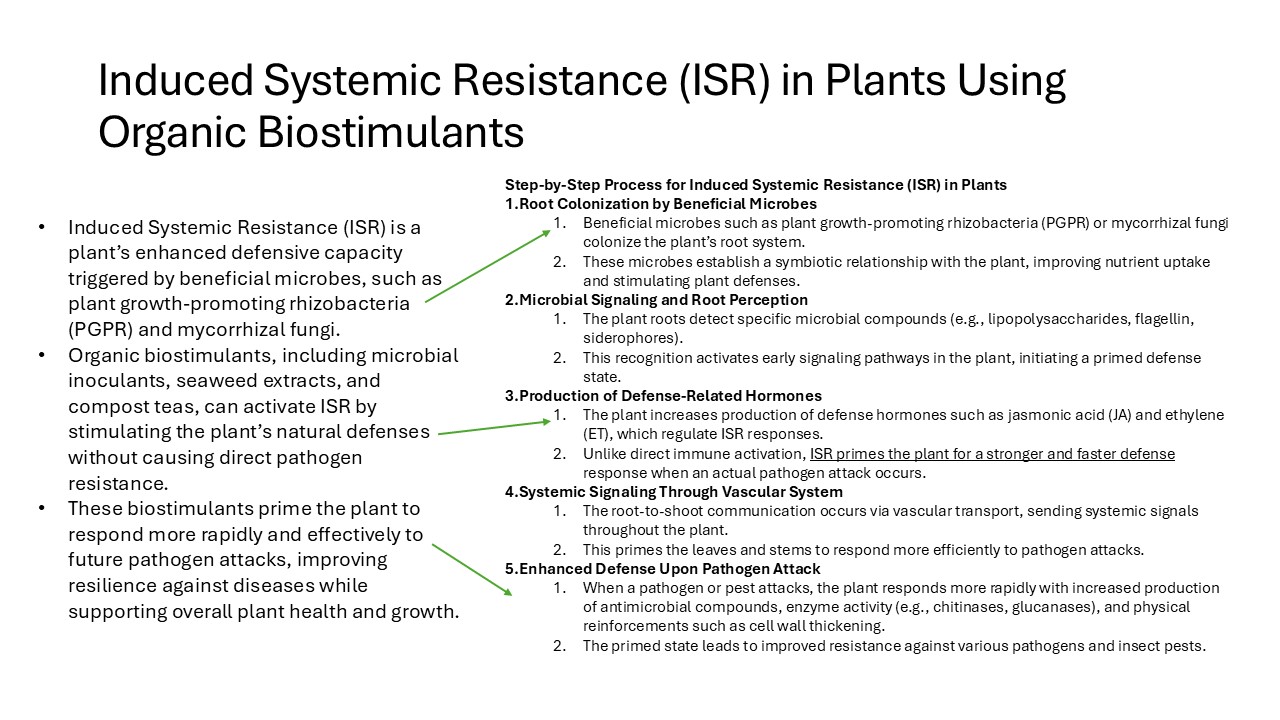
This chart above (just click on it for a larger image) shows how an ISR system works in the plant. Many biostimulants are classified as ISR’s because they are used to stimulate a plant’s defense mechanisms against many pest and environmental problems. This “primed” state may last the life of a plant or more than likely needs to be reinforced through multiple applications.

This chart above (just click on it for a larger image) shows how an SAR system works in the plant. In many cases an SAR developed biostimulant will also be labeled with EPA as a biopesticide simply because it does control specific pests in the plant while boosting the plants defense mechanisms.
Similarities Between Biopesticides and Biostimulants
- Both are used in sustainable and organic agriculture to reduce reliance on synthetic chemicals.
- Derived from natural sources, including microorganisms and plant extracts.
- Improve overall plant health, either through disease suppression (biopesticides) or enhanced resilience (biostimulants).
- Can be combined with conventional or organic inputs in integrated pest and crop management (IPM/ICM).
| Feature | Biopesticides | Biostimulants |
| Primary Purpose | Control pests and diseases | Improve plant growth and resilience |
| Mechanism | Directly targets pests/pathogens | Enhances plant physiological processes |
| Regulation | Subject to pesticide regulations (EPA, OMRI) | Less regulatory oversight, often considered soil amendments |
| Mode of Action | Antibiosis, competition, parasitism | Hormonal stimulation, nutrient uptake efficiency |
| Examples | Bacillus subtilis for fungal disease control | Seaweed extracts for drought tolerance |
Industry Challenges and Regulatory Considerations
One of the biggest challenges in the biostimulant industry is the lack of clear regulations. While biopesticides undergo rigorous EPA evaluation, biostimulants can be marketed with minimal oversight. This has led to the proliferation of products with unverified claims, making it difficult for growers to differentiate effective solutions from ineffective ones.
Government agencies are actively considering regulatory frameworks for biostimulants to ensure quality control without stifling innovation. The Biostimulant Industry Alliance and other trade organizations are working to establish scientific standards and promote best practices.
Market Trends and Future Outlook
Despite challenges, the biopesticide and biostimulant markets are poised for significant growth. Market research predicts a continued rise in demand due to increasing consumer preference for organic and residue-free crops. Additionally, advancements in microbial formulations and AI-driven precision agriculture will enhance the effectiveness of these products.
Data and Charts from Industry Sources
1. Projected Market Growth of Biopesticides and Biostimulants (2020-2030)

- Data Source: Market research reports from MarketsandMarkets, Mordor Intelligence, and Research and Markets.
- Methodology: Extrapolation of market size based on reported CAGR (Compound Annual Growth Rate) values of 12-15% for biopesticides and 13-16% for biostimulants from recent industry reports.
References:
- MarketsandMarkets (2023). Biopesticides Market – Global Forecast 2028.
- Mordor Intelligence (2023). Biostimulants Market Analysis & Forecast 2028.
- Research and Markets (2023). Trends in Agricultural Biologicals.
2. Investment Trends in Biostimulant Research and Development (2015-2025)
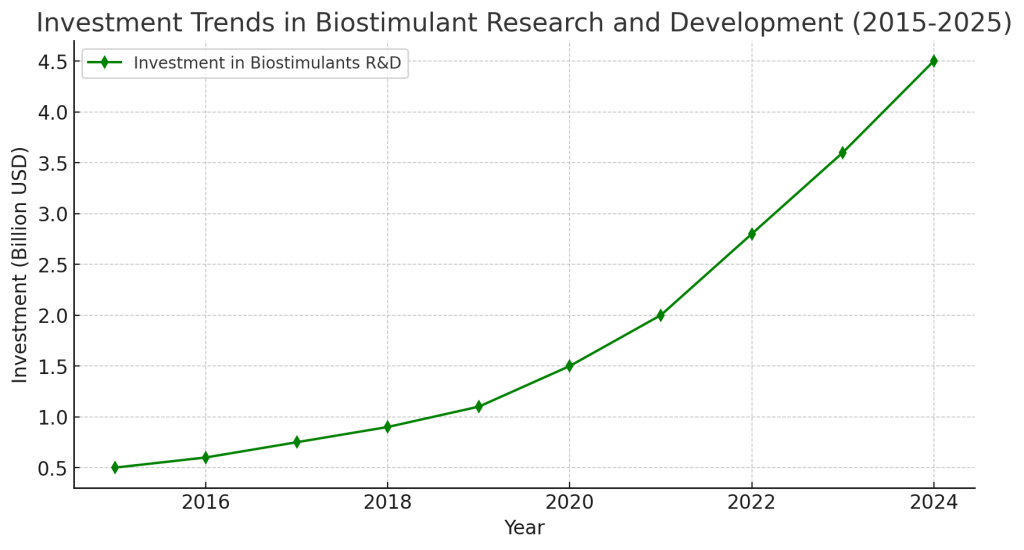
- Data Source: Reports from AgFunder, FAO, and OECD on global agricultural input investments.
- Methodology: Estimation based on reported investments in biologicals, venture capital funding for agri-tech startups, and projected R&D budgets from industry leaders.
References:
- AgFunder (2023). Investment in AgTech and Biostimulants.
- FAO (2023). Sustainable Agriculture and Innovation Trends.
- OECD (2022). Trends in Agricultural R&D.
3. Adoption Rates of Biostimulants Across Different Crop Sectors

- Data Source: Surveys and adoption studies from USDA, European Biostimulant Industry Council (EBIC), and International Biostimulants Forum.
- Methodology: Aggregated adoption data from industry reports and regional case studies, indicating highest adoption in vegetable and fruit production, with lower adoption in ornamentals.
References:
- USDA (2023). Adoption of Biostimulants in U.S. Crop Production.
- EBIC (2023). European Biostimulants Market Report.
- International Biostimulants Forum (2022). Global Trends in Biological Crop Inputs.
4. Regulatory Differences Between Biopesticides and Biostimulants
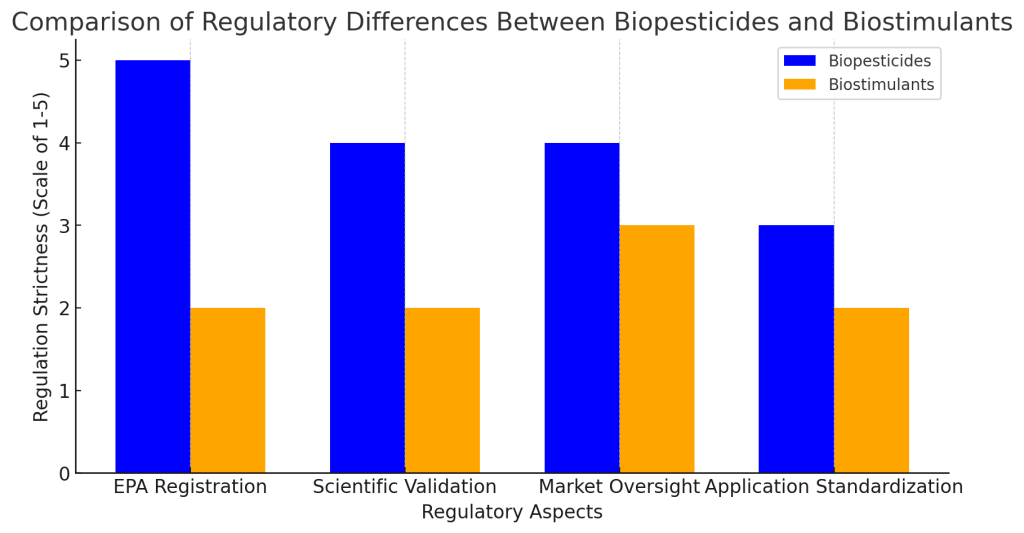
- Data Source: Regulations from EPA, European Food Safety Authority (EFSA), and USDA Organic Program.
- Methodology: Comparative analysis of regulatory frameworks governing product registration, scientific validation, and market oversight for biopesticides versus biostimulants.
References:
- EPA (2023). Biopesticide Registration Guidelines.
- EFSA (2023). Regulatory Framework for Biostimulants in the EU.
- USDA (2023). Organic Input Standards and Market Oversight.

Discover more from Texas A&M AgriLife Organic
Subscribe to get the latest posts sent to your email.


