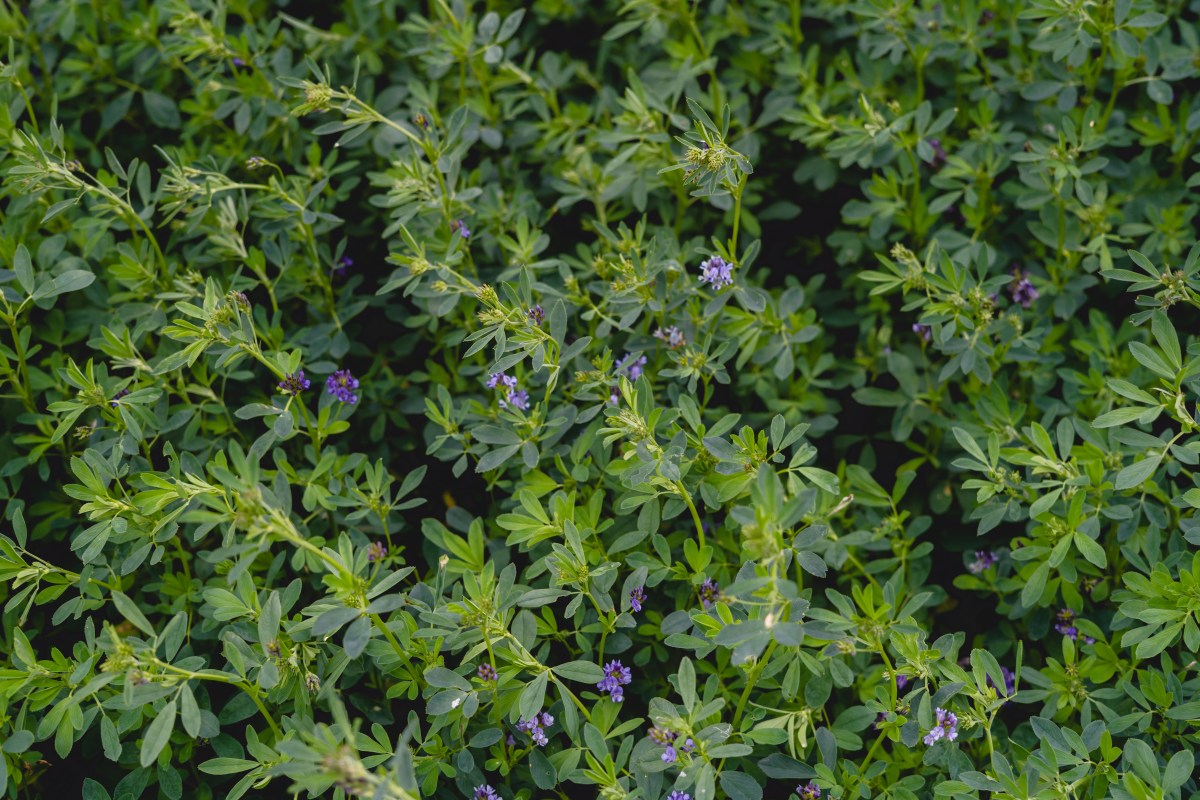

Yme Bosma 55-acre alfalfa field near Rising Star, Texas
In the heart of Central Texas, just outside May, we’ve begun an exciting research collaboration with Yme Bosma Dairy—a family-run dairy that relies on homegrown forage to feed their high-producing herd. This project centers on a 55-acre alfalfa field managed under a center pivot irrigation system, and our goal is straightforward but critical: improve the way we grow and water alfalfa in drought-prone environments like ours.
Why Focus on Alfalfa and Water?
Alfalfa is a high-value, nutrient-rich forage crop widely used in dairy systems, especially organic dairies. But it’s also water-intensive, and in regions like Central Texas or even Texas in general, where every drop counts, managing water wisely isn’t optional—it’s essential.

We’re not just asking “How much water is used?”—we’re digging deeper:
- Can we grow more forage with less water?
- Can we use in-field sensors and aerial data to guide irrigation decisions?
- Can we improve the crop coefficient (Kc) used in scheduling tools, making them more accurate for this region?
Field Setup: A Unique Design for Real-World Impact

Pierce Center Pivot with app-based control
The project field is irrigated by a Pierce center pivot, managed by Dyson Irrigation using app-based controls. What makes this setup unique is how we’ve divided the field. Rather than square or rectangular plots, we’ve created 10-degree radial swaths that fan out from the center of the pivot pad—like slices of a pie. Each wedge can be irrigated differently by adjusting the pivot’s speed, allowing us to simulate a range of water conditions all within one field.
These swaths have been geolocated precisely, so we know exactly where each biosample or soil moisture sensor reading comes from. Though the field layout map is a great visual aid, our true experimental plots are mapped in GIS with accurate GPS coordinates for each treatment zone.
This project includes a lot of folks but is coordinated by the Digital Agriculture Group out of the Texas A&M AgriLife Research and Extension Center in Corpus Christi – Digital Agriculture. The group is led by Dr. Mahendra Bhandari and his team of researchers and students, all very hard workers!
Tools and Technology: Ground to Sky
What makes this project especially powerful is the technology behind it. We’ve installed three-foot-long soil moisture sensors (Goanna Ag) in each plot to monitor how deeply water penetrates and how long it stays available to the plant. These in-situ sensors give us real-time feedback at the root zone—a critical layer for alfalfa, especially in hot summer months.
In addition to ground sensors, we’re collecting UAS (drone) imagery every 15–20 days, paired with high-resolution satellite imagery. These tools will help us develop:

A GPS receiver to geolocate the different areas for monitoring.
- Evapotranspiration maps showing water use across the field
- Biomass prediction models based on imagery
- Real-time irrigation scheduling tools using soil moisture and crop stage
All of this data funnels into decision-support models like SEBAL (Surface Energy Balance Algorithm for Land) and artificial neural networks, which help us simulate and optimize irrigation in silage alfalfa production.
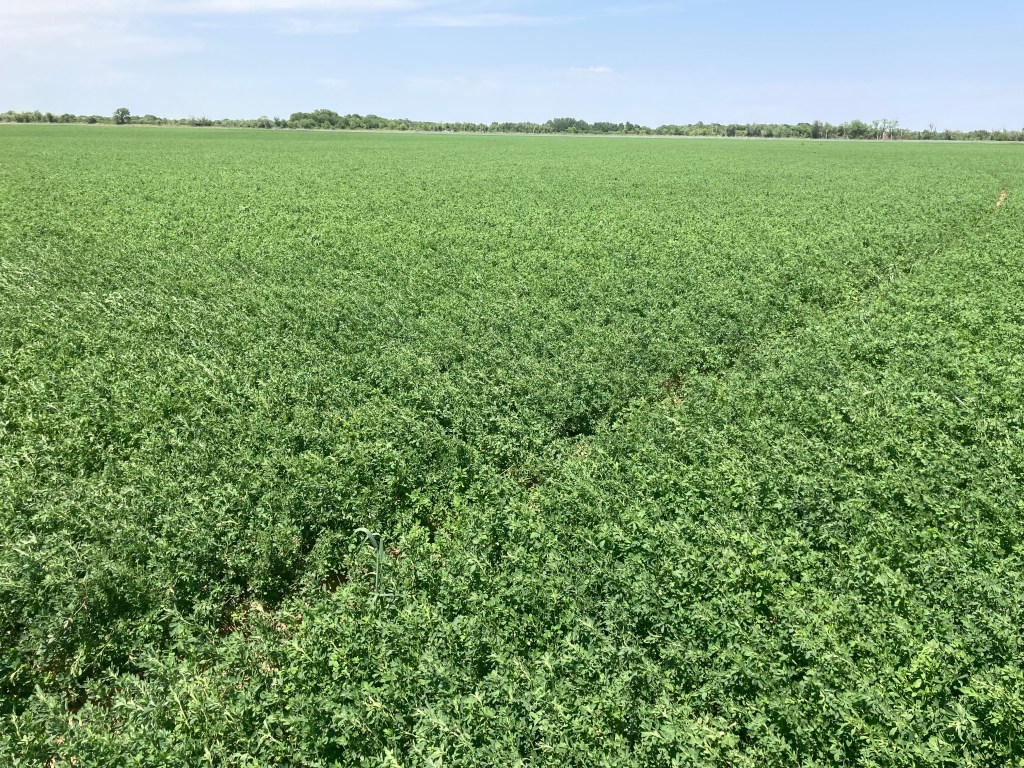
Yme Bosma alfalfa ready to cut. The field is cut, wilted for a few hours and then chopped for silage.
What We Hope to Deliver
This is just the beginning. Over the next growing seasons, we aim to provide:
- A better understanding of alfalfa water use and crop coefficients in Central Texas
- New irrigation scheduling recommendations tailored for silage production
- Biomass yield maps and stress indicators derived from aerial data
- Practical insights for dairies and forage growers seeking to optimize yield while conserving water
This project is part of a broader effort to make alfalfa a more drought-resilient crop, and we’re excited to share what we learn with farmers, agronomists, and researchers across Texas and beyond.
This research is supported by the National Institute of Food and Agriculture, U.S. Department of Agriculture award number 2023-70005-41080 (Drought Resilient Alfalfa Production (D-RAP) Using Digital Agriculture and Machine Learning) with a joint collaboration between Kansas State University and Texas A&M AgriLife Research and Extension.
Stay tuned—we’ll be posting updates after each harvest, including images, early data trends, and insights from the field.
 Texas A&M AgriLife Organic