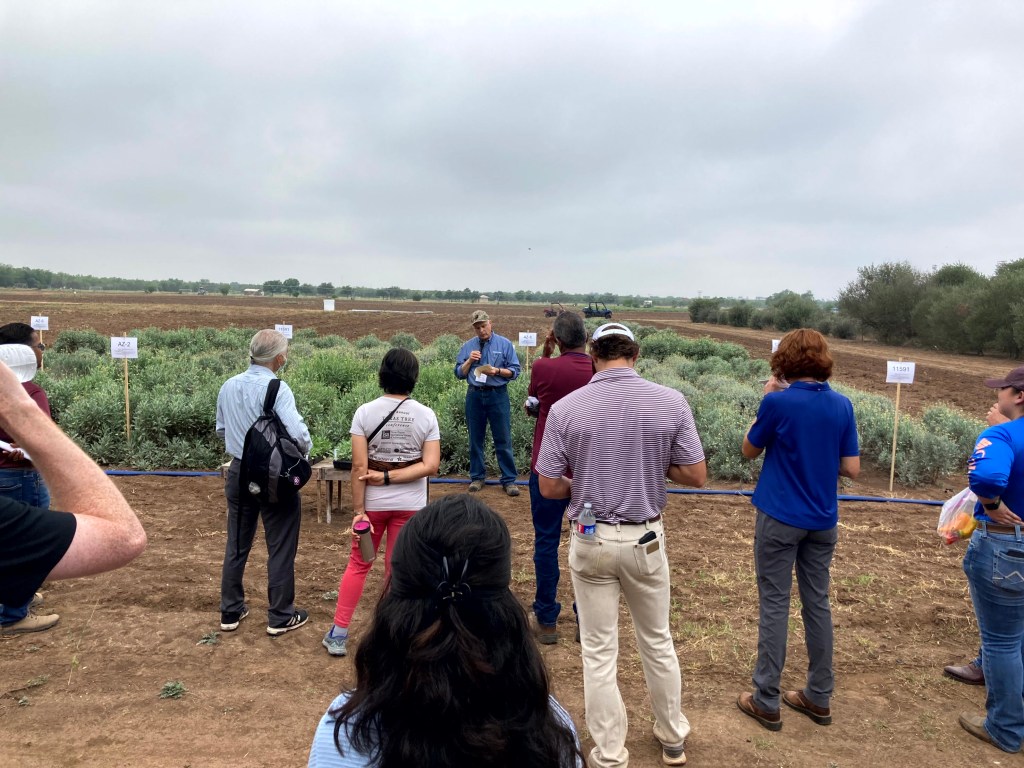

I am asked all the time about organic and biological products. I have over 130 OMRI approved products on a list for controlling pests (weeds, disease and insects) in organic crops. As more growers turn to organic and biological products for pest control, it’s important to understand the nuances of their application. Unlike synthetic chemicals, these products require careful consideration of environmental conditions, mixing procedures, and application timing to be effective. People assume that the Extension Organic Specialist will know every product on the list and how they work – Wrong! I do know about many, but I am also very dependent on growers who use the products telling me about their experiences. I include a lot of that information in the list below.
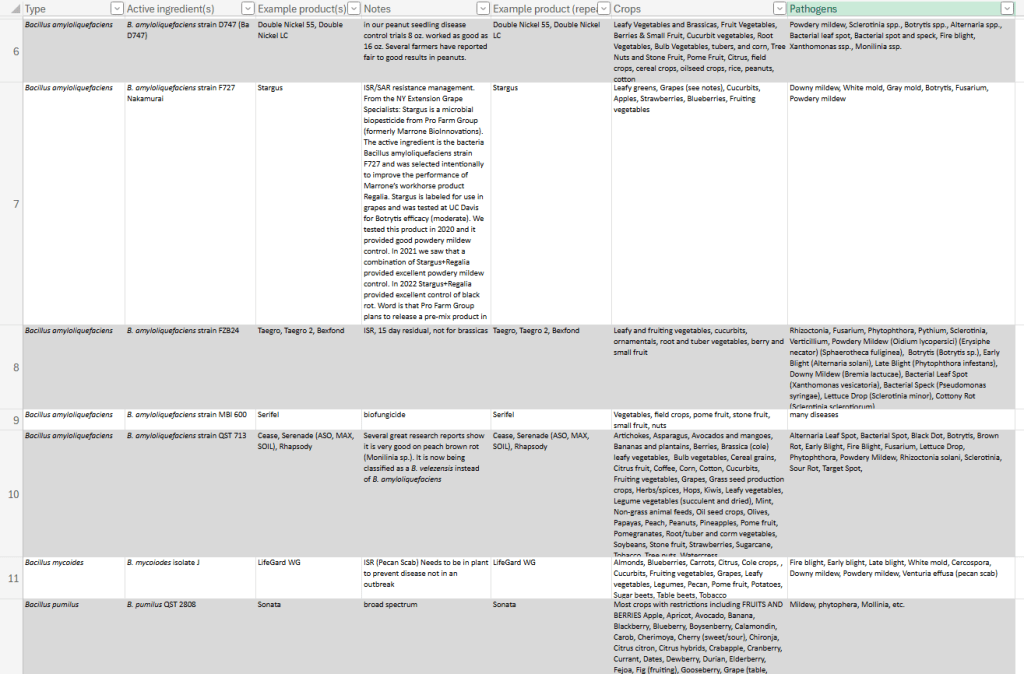
To view the 5 Excel Sheets or to Download just click on the picture above.
Why Choose Biological Control Products?
Biological control products, while sometimes slower to act than botanical oils or mineral oils, offer several advantages. These products, often derived from beneficial fungi or bacteria, work by stopping insect feeding almost immediately. Over several hours, they gradually degrade the exoskeleton of pests and can also target eggs and larvae, preventing their development.
While oils can provide a quick knockdown effect, they can be harsh on crops, especially in regions like Texas where intense heat and light can exacerbate their impact. This makes biological products generally a safer option for maintaining crop health.
The Importance of Water pH and Quality
One of the most overlooked aspects of using organic and biological sprays is the pH and quality of the water used for mixing. In Texas, our hard water is notorious for high mineral content, which can bind with the active ingredients in sprays, reducing their effectiveness.
For most biological products, it’s crucial to buffer your water to a pH of 5.5-6.5. This range helps to ensure that the organisms remain stable and active in the solution. An exception is Pyganic, a natural pyrethroid, which is highly sensitive to pH. For Pyganic, water buffered to a pH of 4.0-5.0 is ideal for maximizing its efficacy.
Additionally, always use warm water, not cold, when mixing your sprays. Warm water helps the biologicals to remain active and mix more evenly, preventing the clumping that can occur with cold water.
Timing Your Application
Timing is everything when it comes to applying organic and biological products. Unlike synthetic chemicals, these products are sensitive to environmental conditions, particularly UV radiation. Applying them in the evening or at dusk is ideal for several reasons:
- Reduced UV Exposure: UV radiation can degrade biological products quickly. Applying in the evening allows the product to remain effective longer.1
- Insect Activity: Many insects are more active when it’s cooler and there’s less light, making it easier to target them effectively.
- Improved Residual Effect: Spraying in the evening allows the droplets to stay moist longer, thanks to slightly higher humidity. This moisture helps the product adhere better to the plant surfaces and provides residual protection overnight.2

Click on this picture above to read about adjuvants
The Role of Organic Adjuvants in Biological Spray Applications
Organic adjuvants play a critical role in enhancing the performance of biological and organic spray products. By reducing the surface tension of the spray solution, adjuvants help the product spread more evenly across plant surfaces, ensuring better coverage of leaves, stems, and other target areas.
In addition to improving coverage, adjuvants help prevent biological products from drying out too quickly. Many beneficial organisms, such as fungi and bacteria, require time to adhere to the plant surface and begin their activity. Rapid drying can reduce their effectiveness. By maintaining moisture on the surface longer, adjuvants enhance the opportunity for these organisms to establish and do their job effectively.
When selecting an organic adjuvant, ensure it is compatible with the biological product you are using. Always follow label recommendations for application rates and test compatibility in a small jar test if you’re mixing multiple products. Proper use of surfactants can make a significant difference in achieving the desired results from your pest control program.
Common Pitfalls and How to Avoid Them
Many growers who experience issues with organic products often trace the problem back to a few common mistakes:
- Improper Mixing: Failing to buffer water or using cold water can lead to reduced efficacy. Always mix according to the product’s instructions and monitor the pH closely.
- Environmental Conditions: Applying products during the heat of the day or in bright sunlight can degrade their effectiveness. Always aim for cooler, less bright times of the day.3
- Timing: Don’t rush your application. Ensure that you’re applying at the right time to maximize the product’s impact.
Conclusion
By understanding and addressing these factors, you can significantly improve the effectiveness of your organic and biological pest control efforts. Remember, the success of these products often hinges on the details—proper mixing, the right environmental conditions, and timely application.
I encourage you to share your experiences and any questions you might have in the comments below. Together, we can continue to refine our practices and improve the outcomes of organic farming.

- The timing of pesticide application can significantly affect the level and persistence of pesticide residues. Evening applications generally lead to higher pesticide residue levels over a longer period compared to morning applications.
Key Findings
Effect of Application Timing: Evening applications of pesticides tend to result in higher residue levels that persist longer. This is because the conditions in the evening, such as lower temperatures and reduced sunlight, slow down the degradation of pesticides, allowing residues to remain on plants for extended periods (Norida et al., 2023; Moraes et al., 2021; Makram. et al., 2020).
Degradation Factors: Sunlight and UV exposure are critical in the degradation of pesticides. Pesticides degrade more effectively when exposed to direct sunlight in the morning compared to the evening, as seen in studies where morning sunlight led to more significant degradation of certain pesticides (Makram. et al., 2020).
Impact on Efficacy: The effectiveness of pesticides can also vary with the time of application. For instance, some studies have shown that morning applications can be more effective in controlling certain pests due to better environmental conditions for pesticide action (Skuterud et al., 1998; Moraes et al., 2021).
Environmental Considerations: Applying pesticides in the evening can reduce the immediate impact on non-target organisms, such as bees, as residues have more time to dissipate before these organisms become active again in the morning (Swanson et al., 2023).
Conclusion
Evening applications of pesticides generally result in higher and more persistent residue levels compared to morning applications. This is due to slower degradation rates in the absence of sunlight and cooler temperatures. While this can enhance the persistence of pesticide effects, it also raises concerns about prolonged exposure to residues. Therefore, the timing of pesticide application should be carefully considered to balance efficacy and environmental impact.
References
Skuterud, R., Bjugstad, N., Tyldum, A., & Tørresen, K. (1998). Effect of herbicides applied at different times of the day. Crop Protection, 17, 41-46. https://doi.org/10.1016/S0261-2194(98)80020-3
Norida, M., Yahya, S., & Ghazali, F. (2023). Effectiveness of Homemade Repellents and Spray Timing in Controlling Insect Pest in Okra (Abelmoschus esculentus) and Chinese Mustard (Brassica rapa var. Parachinensis). IOP Conference Series: Earth and Environmental Science, 1208. https://doi.org/10.1088/1755-1315/1208/1/012021
Swanson, L., Melathopoulos, A., & Bucy, M. (2023). Systematic review of residual toxicity studies of pesticides to bees and comparison to language on pesticide labels using data from studies and the Environmental Protection Agency. bioRxiv. https://doi.org/10.1101/2023.06.05.543089
Moraes, H., Ferreira, L., De Souza, W., Faria, R., De Freitas, M., & Cecon, P. (2021). Spray volume, dose and time of day of glyphosate application in the control of Urochloa brizantha. Bioagro. https://doi.org/10.51372/bioagro333.1
Makram., S., Ibrahim, H., & Mohammed., M. (2020). EFFECT OF DIRECT SUNLIGHT AND UV-RAYS ON DEGRADATION OF BUPIRIMATE, PENCONAZOLE AND PROFENOFOS. **. https://doi.org/10.21608/fjard.2020.189675 ↩︎ - Ibid ↩︎
- Ibid ↩︎