
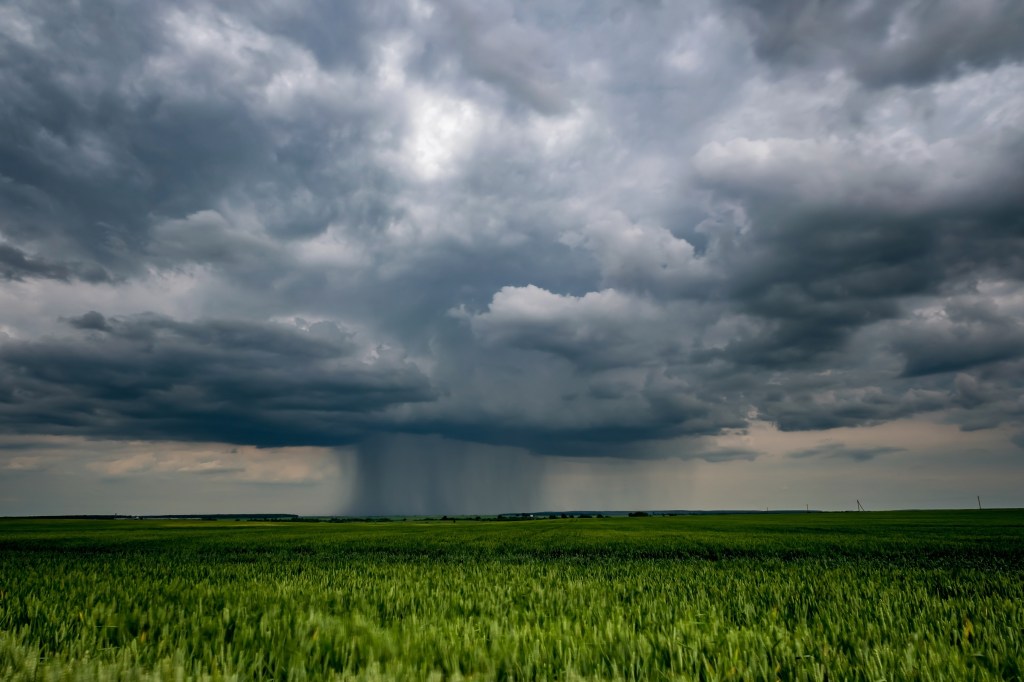
It is fall in Texas, although the weather certainly doesn’t feel very fall-like. Some organic farmers have finished harvest, others are just starting, and some still have a few weeks to go. But we are heading into an El Niño winter weather pattern, with increased chances for wetter conditions across much of Texas. And in some parts of the state, that fall moisture is already arriving. One of my organic cooperators near in the Texas Panhandle just reported 4 (now it is 10) inches of rain on a field where we planted our organic small-grain variety trial on September 17.1
So I have a question for you: Are you planning on a cover crop?
Organic commodity prices are up and supplies are tight. A good winter cover crop can help get you on the right path for spring planting, but we need to get it planted and growing to capture those benefits. When organic growers ask me about winter cover crops for Texas, cereal rye and hairy vetch are usually at the top of my list. They are among our most broadly adapted winter-hardy cover crops, and I like this combination because the two crops do different jobs—and they do those jobs well. Rye provides ground cover, a large fibrous root system, and substantial biomass, while hairy vetch adds a legume capable of supplying biologically fixed nitrogen to the cropping system.
Rye: Put Something in the Field Before the Weeds Get There
Cereal rye is one of our best tools for winter weed suppression. It establishes well under cool conditions, competes strongly for light, water, and nutrients, and can produce enough biomass to physically suppress winter and early spring weeds. Rye also produces natural compounds that can inhibit germination and early growth of some weed species—a process called allelopathy.2
For an organic farmer who cannot simply reach for a postemergence herbicide, that combination of competition, residue, and allelopathy can be extremely valuable. I like to think of it this way: the goal is not simply to grow a cover crop; it is to occupy the space that weeds would otherwise use. Every square foot occupied by vigorous rye is a square foot where a winter weed has a harder time getting established.
Hairy Vetch: Grow Some of Your Own Nitrogen
Hairy vetch brings nitrogen into the system. Working with nitrogen-fixing bacteria in root nodules, vetch captures nitrogen from the atmosphere and converts it into organic forms. As the vetch residue decomposes following termination, a portion of that nitrogen can become available to the following crop.
How much nitrogen we actually gain depends on stand establishment, biomass production, planting date, soil conditions, effective nodulation, and when the vetch is terminated. I do not treat vetch nitrogen as a guaranteed fertilizer rate. However, a good stand producing substantial spring biomass can make a meaningful contribution to the nitrogen budget of the following crop.
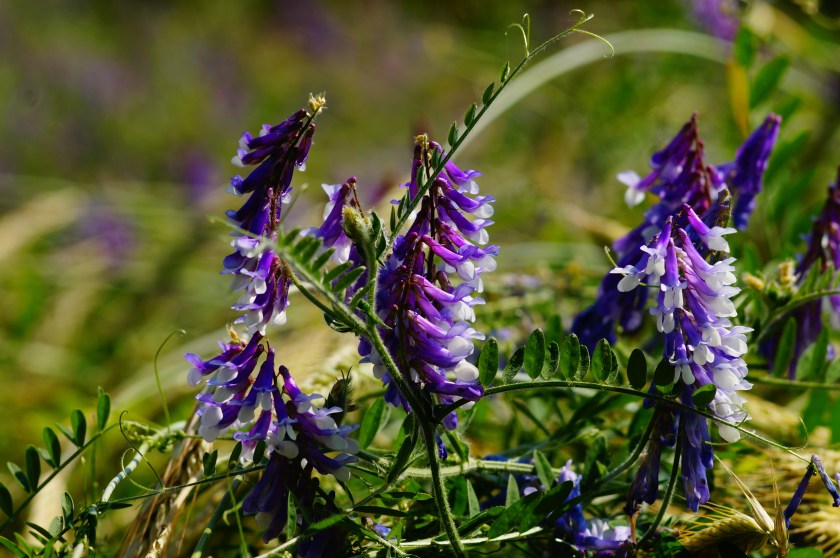
Vetches and rye as a mixed crop is a classic cultivation method that is popular again, especially in organic farming.
Why I Like Rye and Vetch Together
What I especially like is the way rye and vetch complement each other. Rye gives us biomass, weed competition, soil protection, and an extensive fibrous root system. Vetch gives us nitrogen fixation and residue with a lower carbon-to-nitrogen ratio that generally decomposes more readily.
Put them together and we have a more balanced cover crop than either species alone. For Texas organic production, where we are trying to manage weeds, protect the soil, encourage biological activity, and supply nutrients without synthetic fertilizers, cereal rye and hairy vetch are difficult to beat as a winter combination.
Remember the Crop That Comes Next
The key is remembering that the cover crop is part of the crop rotation, not simply something we plant between cash crops. Planting date, seeding rate, termination timing, available soil moisture, and the needs of the following crop all matter.
That last point is especially important in Texas. I want enough spring growth to capture the benefits of the rye and vetch, but I do not want my cover crop using water that I will desperately need to establish cotton, corn, sorghum, peanuts, or another summer crop. In our drier production regions, termination timing can be just as important as how much biomass we produce.
So as harvest moves along this fall, take a look at those fields and ask yourself:
What do I want growing there this winter—rye and vetch, or weeds?
For many Texas organic farms, I know which one I would choose.
References
- Whitney, B., and B. Gerrish. 2026. 2027 Organic Grain Variety Trial, Dave Riggs Farm, Claude, Texas. Unpublished field trial plan, Texas A&M AgriLife Extension Service. Planted September 17, 2026. ↩︎
- Whitney, B. 2024. “Allelopathy – What Is It, What Has It, and How Do We Use It?” Texas A&M AgriLife Organic, January 9, 2024. ↩︎
Other Resources
- Cover Crops: Improving Soil Health, Stewardship and Profitability on the Farm
- National Cover Crop Survey – What’s Interesting for Texas in this Report?
- Best Cover Crops for Weed Control and Fertility
- Can cover crops control weeds and save water too?
- What Do Cover Crops Leave Behind? Comparing Sunn Hemp, Tepary Bean, and Cowpea
- Sunn Hemp is One of My Favorite Cover Crops!

Discover more from Texas A&M AgriLife Organic
Subscribe to get the latest posts sent to your email.


Rye and vetch make a great combo on paper, but getting that termination timing right in a dry spring always feels like playing chicken with the weather down here. Still, beats staring at a field of winter weeds!
LikeLike