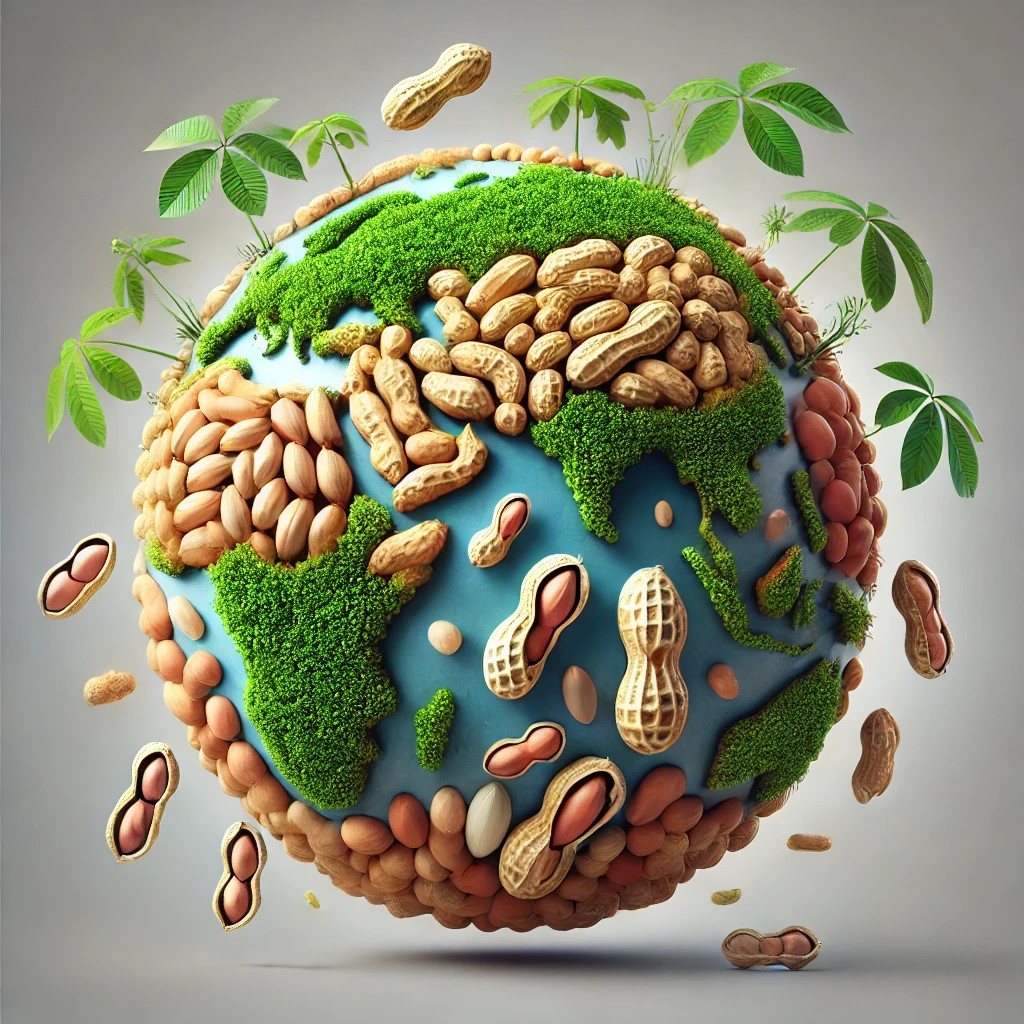
Ever wondered where organic peanuts are produced? Examining the global map of certified organic peanut farms reveals some interesting patterns. Countries like China, India, Brazil, Argentina, and Togo are major players in organic peanut production, and the United States also makes significant contributions.
Here’s a breakdown of the acreage dedicated to organic production with an emphasis on peanuts in some important countries:
- China: Approximately 152,860 acres, with companies like Jilin Jinya Nut Processing Co., Ltd. contributing significantly.
- India: Various Organic Grower Groups collectively manage over 103,686 acres of organic peanut farms, demonstrating the effectiveness of cooperative farming.
- Brazil: Around 60,592 acres, with Sambazon do Brasil Agroindustrial Ltda contributing a substantial 60,573 acres.
- Argentina: About 36,636 acres, with companies like Campos Verdes Argentinos SA and Conosur Foods Argentina SA being key contributors.
- Togo: 53,325 acres managed by SOYCAIN TRADING SARL U, making it a significant player in West Africa.
- United States: Numerous family-owned farms collectively contribute over 100,000 acres to organic peanut production, with notable producers one in West Texas managing 9,355 acres.
China’s Contribution
China leads with over 152,000 acres dedicated to organic peanut farming. Companies such as Jilin Jinya Nut Processing Co., Ltd. and Wuqiang County Jiyuan Oil Crop Planting Professional Cooperative are significant contributors. Different regions within China add to this market, but China consumes most of what it produces.
India’s Cooperative Farming
In India, numerous Organic Grower Groups (which have group certification) collectively manage over 103,000 acres. These groups demonstrate how small farmers work together to make a significant impact, collaborating to drive success in organic agriculture while keeping costs down.
Brazil’s Organic Production
In Brazil, Sambazon do Brasil Agroindustrial Ltda has 60,573 acres dedicated to organic production, including a substantial amount of peanuts. This company is not only a leader in Brazil but also one of the largest certified organic producers in the world.
Argentina’s Key Players
Companies like Campos Verdes Argentinos SA and Conosur Foods Argentina SA are significant contributors in Argentina, with combined acreage reaching around 36,000 acres. These farms focus on cotton and peanuts, concentrating in regions suitable for these crops.
Togo’s Role in West Africa
In Togo, SOYCAIN TRADING SARL U manages 53,325 acres, contributing significantly to the global peanut supply from West Africa. It raises questions about how much they export!

Family Farms in the USA
Now, let’s consider the United States. While we may not have single operations as large as those in China or Brazil, the U.S. has a network of family-owned farms that collectively contribute over 100,000 acres to organic production. For example, one Texas farmer manages 9,355 acres, making him one of the prominent certified organic peanut producers in the country.
These farms often represent family legacies in organic agriculture, with names appearing across multiple farms in Texas and elsewhere. This reflects the enduring nature of family farming traditions contributing to the organic peanut industry.
Acknowledging Other Contributors
We might have missed highlighting some of the smaller but important players in the organic peanut industry:
- Paraguay: Companies like Indugrapa SA and Alemán Paraguayo Canadiense S.A. contribute over 10,760 acres to global organic peanut production.
- Bolivia: Finca San Carlos manages 3,118 acres, adding to South America’s contribution.
- Vietnam: Companies like FG Products Company Limited and Hebes Company Limited collectively manage over 8,600 acres.
These contributions, while smaller, are vital to the diversity and resilience of the global organic peanut supply chain.
Bringing It All Together
These peanut producers are essential links in the chain that brings organic products from the farm to your table. Organic begins on the farm and remains so until it is packaged.
Most people don’t consider where their peanuts come from or the journey they take. The majority of these farms are committed to sustainable practices, ensuring that organic integrity is maintained every step of the way. With the recent implementation of Strengthening Organic Enforcement (SOE) rules, the entire value chain—including brokers and even transporters—is now certified to ensure accountability.
Discover more from Texas A&M AgriLife Organic
Subscribe to get the latest posts sent to your email.

 Texas A&M AgriLife Organic