Organic Weed Control Does Not Start with Herbicides!

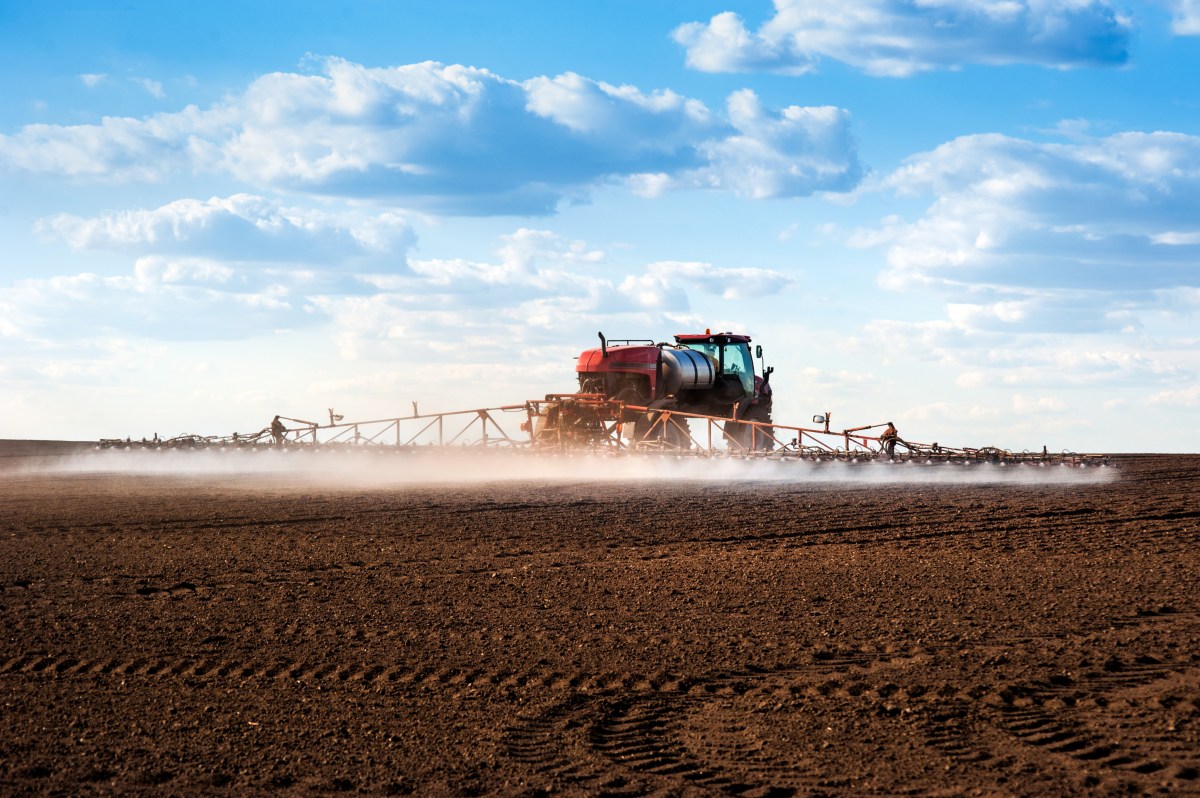
I am constantly asked about organic herbicides. I am tempted to shout back, “there are no organic herbicides!” Unfortunately, I would be wrong since the rules do allow for some “organic herbicide” use but overall, I AM RIGHT! The restrictions on using organic herbicides in a certified organic operation should and pretty much do eliminate their use. Here are some guidelines to consider.

Regulatory Framework (7 CFR §205)

The National Organic Program (NOP) requires that organic producers rely primarily on cultural, mechanical, and biological practices for weed control—not routine chemical herbicides. Synthetic substances are prohibited unless explicitly listed on the National List (7 CFR §205.600–607), and nonsynthetic (natural) materials are permitted only if they are not specifically prohibited in §205.602 and are included in guidance like NOP 5034‑1.

What Constitutes Allowed “Herbicides”

  • Soap-based herbicides, which are naturally derived, are allowed—but only for limited situations such as farmstead maintenance, roadways, ditches, building perimeters, and ornamental plantings—not for use in food crop production Legal Information.
  • Other natural herbicidal ingredients—acetic acid (vinegar), essential oils such as garlic or clove, corn gluten meal—may be formulated into commercial products (often OMRI-listed), but their use is still optional and must comply with producer’s approved Organic System Plan (OSP).

Why Use of Organic Herbicides Is Limited by the OSP

  • The Organic System Plan (OSP) is mandatory and must list all substances used in operation. Certifiers evaluate this list, and only substances compliant with 7 CFR §205—including NOP guidance and National List—may be approved National List .
  • Even when a natural herbicide is listed (e.g., an OMRI‑listed product), it must be justified as necessary. The NOP mandates that cultural, mechanical, and biological methods be used first. Only if these methods prove insufficient should pest, disease, or weed control materials—even those allowed—be considered.

Operational Examples
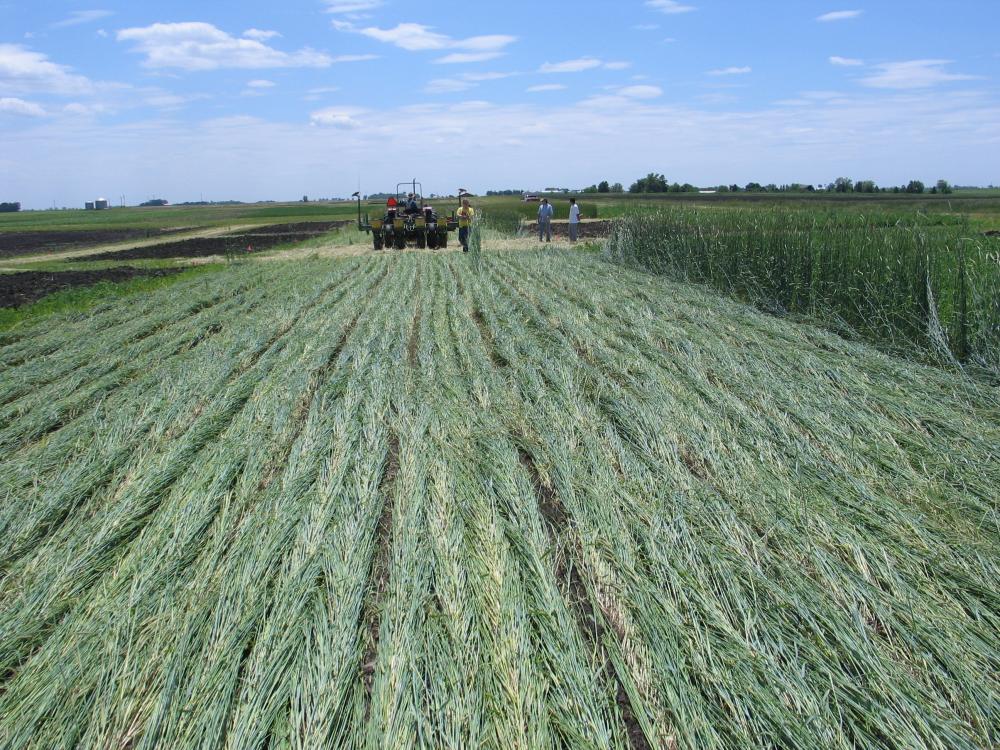
  • A certified organic field might prioritize crop rotation, mulching, flame cultivation, inter-row mechanical cultivation, and cover cropping, with organic herbicide used only for spot treatment of particularly stubborn weeds—such as a few patches too difficult to manage manually. Typical examples are spraying organic herbicides around wellheads, pivot pads, fencerows, etc.
  • Broad, wholesale use of even natural herbicides in food crop production would usually exceed what is allowable under the OSP. It could lead to certification issues or require pre-approval by the certifier.  The general rule is to always check with your certifier but in this case your certifier is not going to allow you to use organic herbicides across your fields!

The Why — Benefits of This Restriction

  1. Preserves ecological balance: Overreliance on even natural herbicides can inadvertently harm non-target organisms like beneficial insects or soil microbes. Just imagine what a soap based, or acid based, or oil based organic herbicide would do to beneficial insects? Also, these organic herbicides do not discriminate – they will kill your crop along with the weeds.
  2. Resonates with organic principles: Organic agriculture emphasizes building soil health, biodiversity, and resilience—principles supported through non-chemical or even organic chemical approaches.
  3. Regulatory integrity: Standardizing allowable inputs assures consumers that “organic” means minimal allowable impact and reliance on natural systems rather than chemical solutions.
Summary Table

ConceptExplanation
Organic HerbicidesOnly certain types (e.g., soap-based) allowed and limited to non-food areas like roadways or ornamentals.
OSP ConstraintsMaterials must be listed and justified; broad use requires regulatory approval.
Order of Control MethodsCultural → mechanical → biological → chemical (only if necessary).
Why RestrictedEnsures ecological integrity, respects organic philosophy, and upholds certification standards.

Insights on inter-row electrical weeding as a non-chemical weed management tool in organic cotton.

by Ryan Hamberg – Graduate Research Assistant and PhD Candidate at Texas A&M University working in weed control research.

Inter-row cultivation is a “go-to” tool in organic production systems. However, repeated soil disturbance is bad for soil health, leading to erosion, organic matter loss, and more. Practices that maintain or enhance soil health are at the forefront of organic production systems. The problem is that few non-chemical tools exist to manage inter-row weeds organically without soil disturbance.

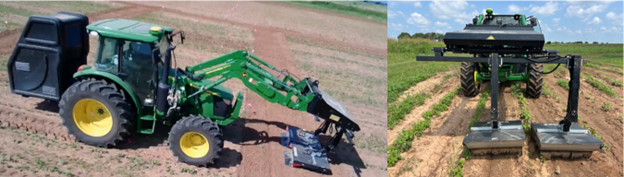
Figure 1. The Zasso inter-row electrical weeding prototype. (Left) The generator is located at the back of the tractor and the front applicator attachment. (Right) This unit is designed for small plot research and covers just two rows

Research is underway at the Texas A&M University Research Farm, where a “first-of-its-kind” prototype inter-row electrical weeder (EW) in cotton is being tested (Figure 1). This prototype unit was designed through collaboration with Zasso (Indaiatuba, Brazil) and purchased through the support of AgriLife Research and Cotton Incorporated. The prototype includes a large generator and transformer that is powered by the tractor PTO, with the applicator attached to the front loader (Figure 1). Many growers may already be familiar with the Weed Zapper or similar tools that can manage weeds present above the canopy (Figure 2). Though both technologies use electricity, this EW prototype uses a distinctly different delivery method and can kill weeds present between the rows, allowing for control of weeds present below the crop canopy.

Figure 2. A more common electrical weeder design that only targets weeds taller than the crop canopy.

Numerous experiments are currently being conducted to test this prototype unit to determine the feasibility of using this technology in organic row crops, including cotton. The study highlighted in this article aims to determine how EW compares to traditional cultivation methods. Treatments were applied at the early post-emergence timing, when cotton was at the 4-leaf stage. The treatment structure was as follows:

  • One pass EW @ 0.8 mph
  • Two-pass (double-knock) EW @ 0.8 mph – 2nd pass immediately after
  • Two-pass (double-knock) EW @ 0.8 mph – 2nd pass 3 days after
  • One pass EW @ 2 mph
  • Two-pass (double-knock) EW @ 2 mph – 2nd pass immediately after
  • Two-pass (double-knock) EW @ 2 mph – 2nd pass 3 days after
  • One pass inter-row cultivation
  • One pass EWC @ 3.5 mph
  • Two-pass (double-knock) EW @ 3.5 mph – 2nd pass immediately after
  • Two-pass (double-knock) EW @ 3.5 mph – 2nd pass 3 days after
  • Nontreated control

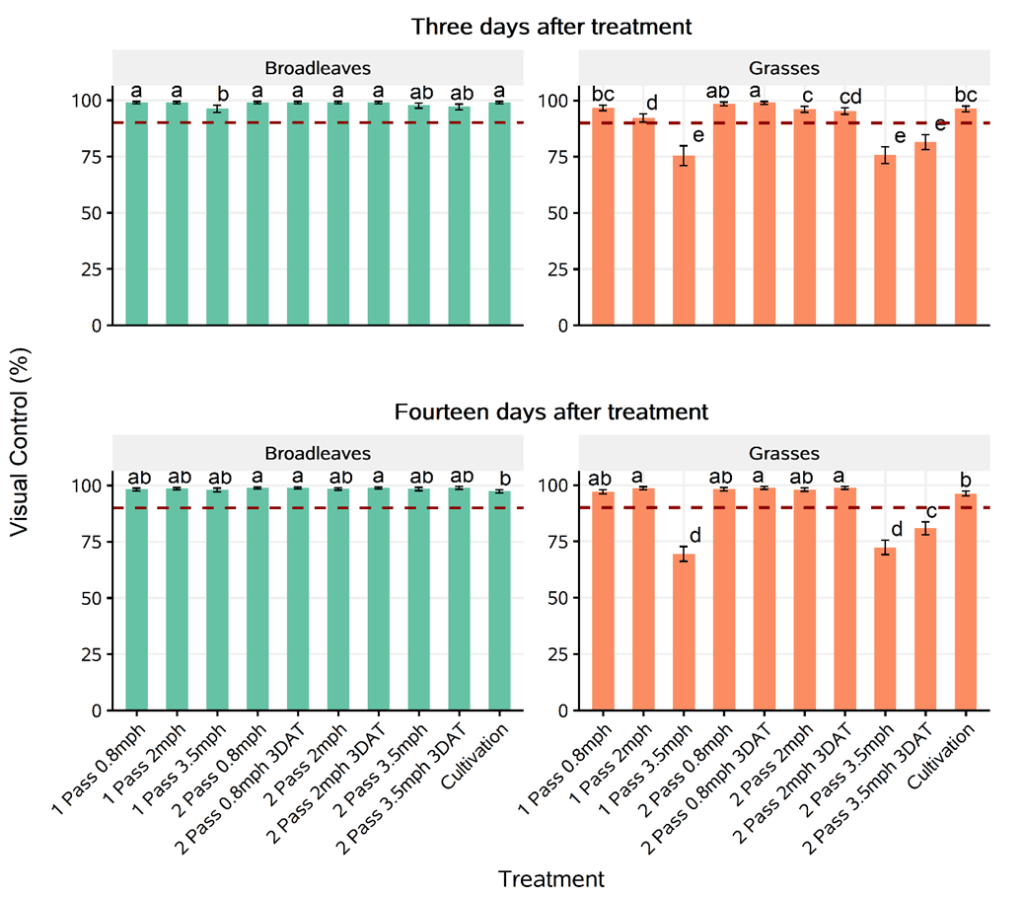
The field tested in this experiment was infested with hophornbeam copperleaf, ivyleaf morningglory, Palmer amaranth, Johnsongrass, and Texas panicum. Weeds ranged in height from 5 to 10 cm at the time of application. Between-row weed control was evaluated at 3 and 14 days after treatment (DAT). Broadleaf weed control exceeded 95% across all treatments at both evaluation timings (Figures 3 & 4). In general, electrical weeding performed comparably to cultivation for broadleaf control, except for a single pass at 3.5 mph. Control of grasses varied across treatments at both timings. Grass control at 0.8 and 2 mph was slightly higher (~ 3%) with two passes of EW compared to a single pass of cultivation. Electrical weeding at 3.5 mph reduced grass control to 70% with one pass. Even with two passes at 3.5 mph, control ranged from 74% to 81% (Figure 3). Some concerns over potential current transfer into crop roots were raised, and therefore, cotton injury was also assessed at 3 and 14 DAT. Cotton injury never exceeded 1% of the plot and was generally <1% overall (Data not shown). The cotton injury observed was always due to contact with the electrode of the EW and there was no indication that root transfer was occurring.

The present study indicates that inter-row EW holds promise as a non-chemical weed control option in row crop systems. The EW performed as well as inter-row cultivation on broadleaf weeds while minimizing soil disturbance. Reduced grass control at faster travel speeds suggests that slower applications are necessary when grass weeds are present. Previous research has found grasses as more tolerant to other thermal weed control tools such as flaming (Ulloa et al., 2010). Overall, the feasibility of the EW has been demonstrated. Ongoing and future research will assess the potential role of this tool within integrated weed management programs specifically designed for organic cropping systems.

Figure 3. Visual control ratings of broadleaf and grass weeds following electrical weeding at varying travel speeds compared to cultivation. The red dashed line represents the 90% control threshold.

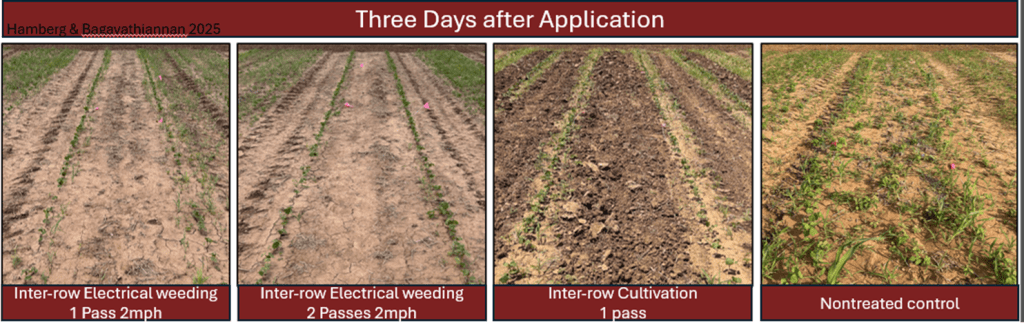
Figure 4. Plots showing weed control treatments three days after application.

Update to “Applying Field Bindweed Gall Mites”

In case you haven’t read about Applying Bindweed Gall Mites then first read this blog post to understand why we are excited! Just click the button…

Also, you might want to check out this blog post on Organic Control of Field Bindweed that got this interest in Bindweed Gall Mites started. Just click the button….

Observations on Bindweed Gall Mites: Field Updates and Future Plans

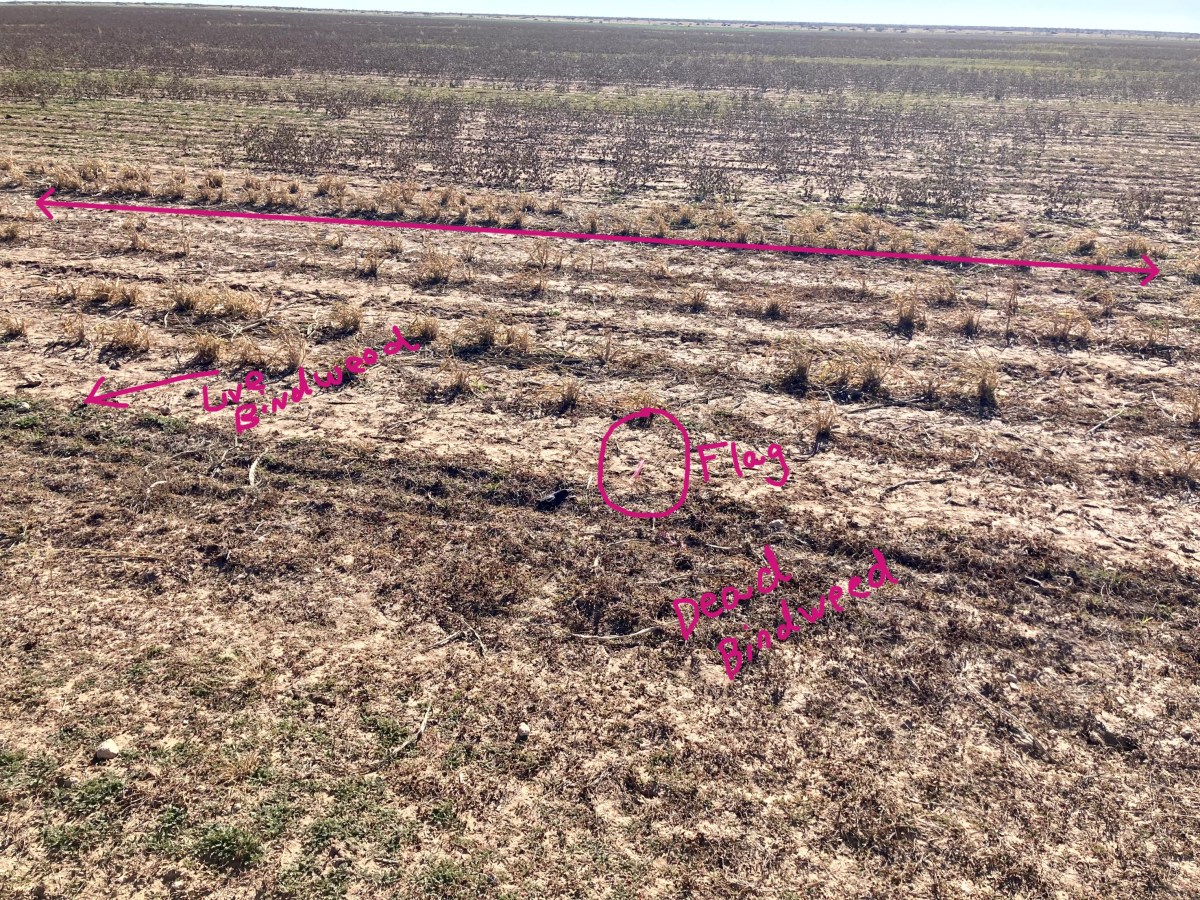
If you had a chance to read my previous post about applying Bindweed Gall Mites in July, the picture above will make more sense! This marked area, indicated by the flag, is where we scattered pieces of field bindweed infested with Bindweed Gall Mites sourced from the insectary in Colorado. Following the application in July, we endured one of the hottest and driest August months on record, leading us to assume that the mites had perished. While the bindweed in this area appeared dead due to the drought, we knew from experience that field bindweed rarely succumbs to such conditions.

In September, the weather shifted with some much-needed rain. The field bindweed plants sprang back to life, looking healthy once again. Unfortunately, our initial assumption was that while the bindweed survived, the Bindweed Gall Mites did not.

Fast forward to Monday, December 9th. After receiving a call from Carl Pepper the previous Friday urging me to visit the field, I was met with a surprising sight. The flag in the photo marks where the mites were introduced back in July. Surrounding the flag is a somewhat circular pattern of dead or dying bindweed, while outside this area the bindweed appears alive and healthy. To the left edge of the photo, some bindweed remains slightly green, but below and beyond the flag the plants look unmistakably dead. This circular pattern extends outward, as highlighted by the line drawn across the photo.

One might argue that this is merely a drought-affected patch. However, we placed a second batch of Bindweed Gall Mites in another area of the field, and a similar circular pattern has emerged there as well. These mites are so tiny that they are invisible to the naked eye, but in the lab, Dr. Kyle Slusher, an Extension Entomologist in our office, identified galls on collected bindweed plants under magnification.

Future Plans for Bindweed Gall Mites

Our immediate hope is to see the affected areas of bindweed continue to decline. While we don’t expect the mites to eradicate the bindweed entirely, a balance is desirable to ensure the mites’ survival. Looking ahead:

  • Field Monitoring: We’ll continue observing the affected areas to assess long-term impacts.
  • Laboratory Work: Dr. Slusher plans to conduct further studies on the mites in a controlled lab environment.
  • Farmers’ Interest: Several local farmers have expressed interest in this biological control method and plan to collect infested bindweed from this field to introduce on their farms.
  • Suitability for Dry Climates: The mites’ preference for hot and dry conditions aligns well with the West Texas climate, making this an intriguing and potentially effective solution for bindweed management in the region.

This project represents a promising step in biological pest control for field bindweed, and we’re excited to see how this progresses both in the field and through collaboration with area farmers. A big thanks to Carl Pepper for allowing us to experiment with this novel insect and to continue monitoring progress!

Applying Field Bindweed Gall Mites

Wrapping parts of field bindweed plants from the nursery infected with Gall Mites around field bindweed plants in the South Plains. Introducing the beneficial Gall Mite to help control this noxious weed.

Some time back I wrote a blog post about using some biological methods for controlling field bindweed (click here to read). I liked the idea of introducing the Field Bindweed Gall Mite (Aceria malherbae) to areas of field bindweed and hoping they would help to keep this weed from taking over fields. Sounds easy till you try finding the mites!

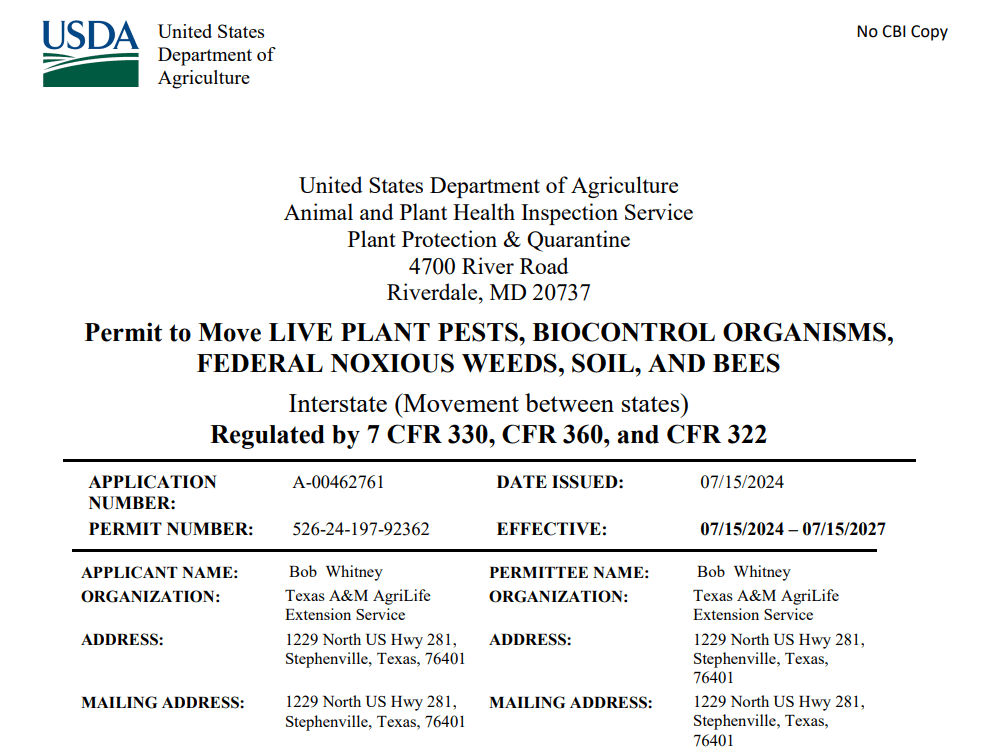
Most of the information pointed me to the State of Colorado and Nina Louden Biocontrol Specialist with the Colorado Department of Agriculture. The first thing Nina asked me, “Do you have a USDA permit to allow us to ship “biological control agents” across state lines?” At that time, I didn’t even know there was a need for a permit, but I soon found out you can apply for one online. There was much in the application process I didn’t understand but overall, it was simple and easy. I got my “permit” as you can see below

USDA Permit to ship and apply Field Bindweed Gall Mites

I sent Nina the USDA permit by email and her response back was we will ship you the Gall Mites on Monday of the next week to arrive by noon on Tuesday. The mites are harvested in Colorado from growing field bindweed by simply cutting off pieces of field bindweed that are infected with the mites and shipping them in a cooler with cold packs. My next call was to Carl Pepper, South Plains Organic Cotton Farmer to see if he was able to help me put out the mites on one of his fields.

Field bindweed with the Gall Mites on the plant are harvested and sent to us for distribution.

Carl and his family had a perfect location next to an organic cotton field. The area between the county road and the field was infested with field bindweed and the weed was growing out in the cotton rows where Carl could not plow it out. We put the gall mites into two 10′ X 10′ squares well marked and will monitor their “survivability” and ultimately measure their spread out from the 10′ X 10′ area to the field.

Carl Pepper is applying the field bindweed pieces to the existing field bindweed plants in his field. We did this by wrapping the pieces around the existing plants. The mites will move from the old plants to the new looking for fresh food sources.

Will it work? I don’t think any of us know for sure, but we have to try! The field bindweed gall mite is not going to eradicate field bindweed on the South Plains. But our hope is that as the field bindweed comes out each spring the gall mite is also out and feeding on the field bindweed. This will significantly slow the growth of the bindweed and hopefully keep it in check. Something we don’t have now!

Click on the picture above to read this publication about the Gall Mite and how Colorado State Department of Agriculture ships them out. This service was free of charge and very easy to do. I hope to get more to release in other places soon.

Biological Control of Hemp Sesbania in Rice

Hemp sesbania growing in organic rice in Texas

It doesn’t take you long to figure out the hemp sesbania (Sesbania exaltata) is one of the toughest weed problems we have in organic rice. It is an annual plant, but it acts like a tree as you can see in the picture. It has a few other names, but the most common other name I have ever heard is “coffee weed.”

In a recent meeting with organic rice producers this particular weed became a huge topic of discussion (mostly cussing). This conversation got me to thinking about the possibility of some “bioherbicide” or even some beneficial insect or nematode that might be able to control this noxious weed.

In the process of doing many searches, trying all kinds of names or phrases, I did find this article written in 2014, “Biological Control of the Weed Hemp Sesbania in Rice by the Fungus Myrothecium verrucaria.” (Just click to read)

The authors are at the USDA Stoneville, MS research station and do crops research but some of that research is on biological control of pests in crops. In this research they were looking at applying different rates of the fungus and at different weed plant heights. They looked at 3 concentrations of the fungus sprayed on weed plant heights of 4-8 inches, 8-16 inches, and 16-24 inches.

They did find that the best results were achieved when they used Silwet L-77, an OMRI approved surfactant, with the fungus mix. Overall, the fungus did best at the higher rate and on the youngest plants and control at that timing was 100%! That is phenomenal, but even the bigger plants had control levels around 90%.

Why don’t we have this fungus available to use? That is an excellent question and one I hope to find out soon. I am sure this research was put on the shelf because of changing rice herbicide strategies like Clearfield and the relatively small organic rice industry without much voice. But I think there is a growing interest in organic rice and as a result a growing interest in organic weed control in rice. More details are to follow!