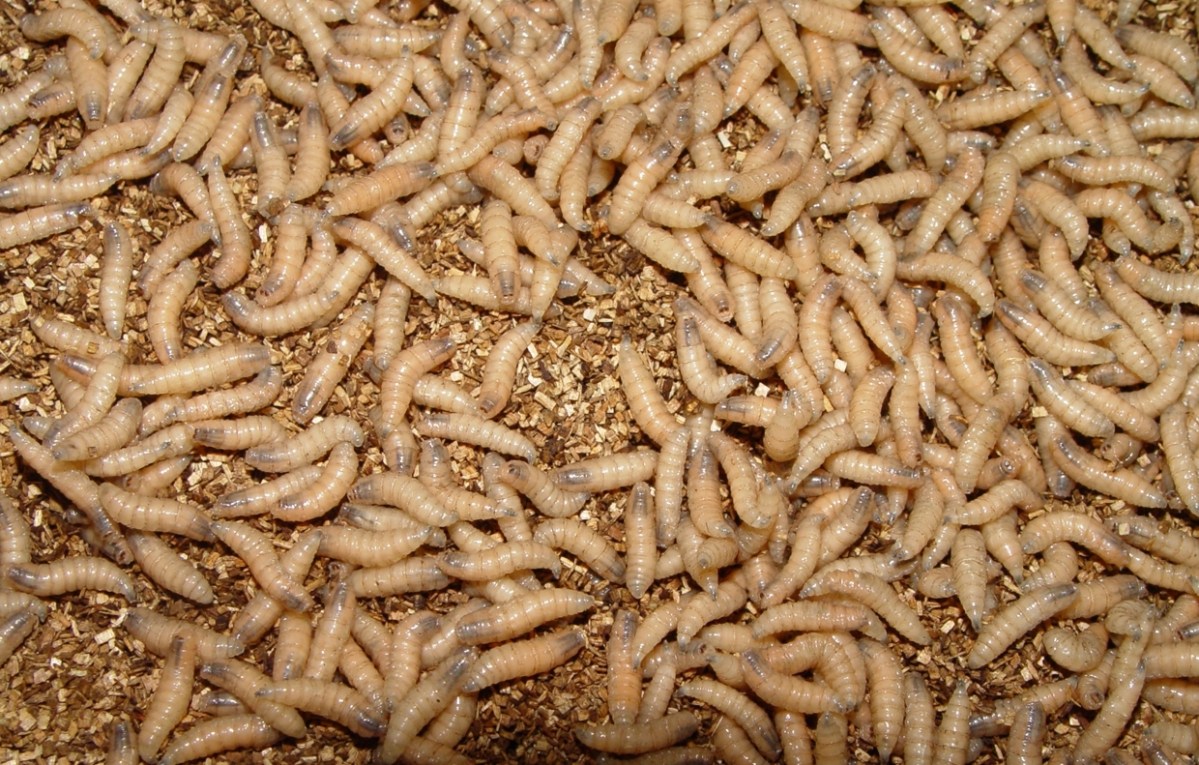
I am writing this post to try and keep you updated on the procedures, policies and movement of New World Screwworm in Texas. I have had several internal meetings with Extension Entomologists, Livestock and Veterinarian Specialists recently to better understand the situation, get status reports and possible treatments. I am also on a “Task Force” of organic livestock producers and industry organized by the Organic Trade Association to discuss organic options, treatments and processes in the wake of this rapidly moving infestation. This task force also includes Lia Sieler with the Western Organic Dairy Producers Alliance, and she has been extremely helpful for raising organic dairy and livestock issues and in developing resources that help organic producers.
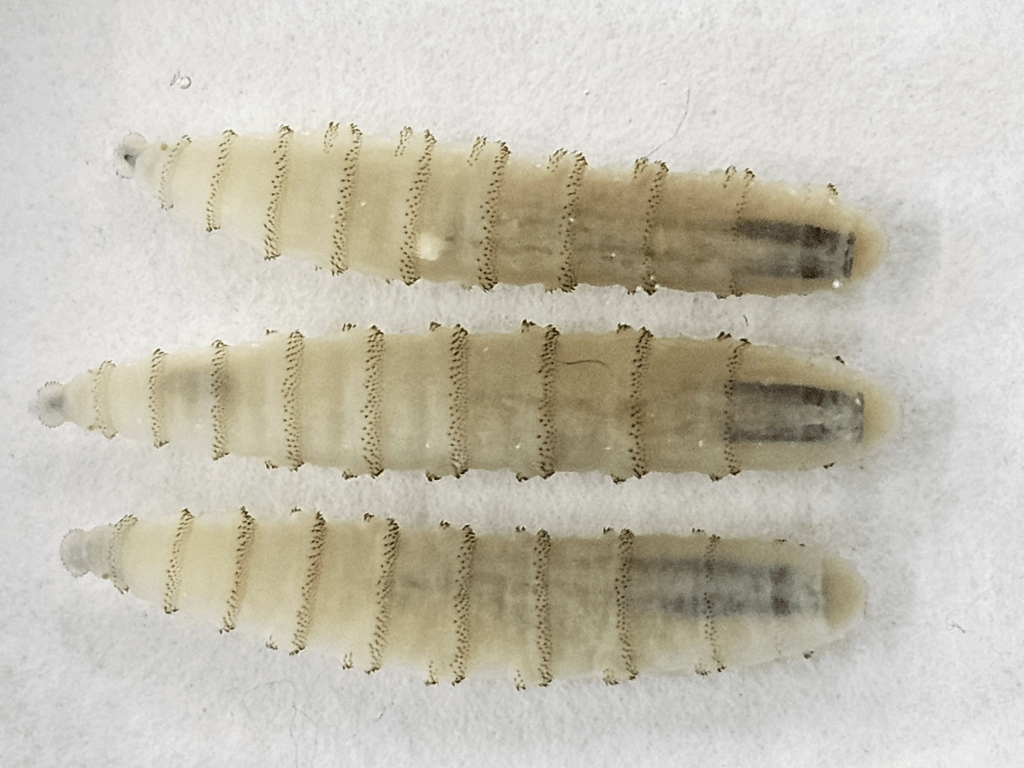
Let me first address the issue of NWS detections and infested-zone movement restrictions. The map below is from this web page and is updated frequently by the Texas Animal Health Commission. Texas Animal Health Commission
You can click on the website address or the pictures below to see these pages in your browser.
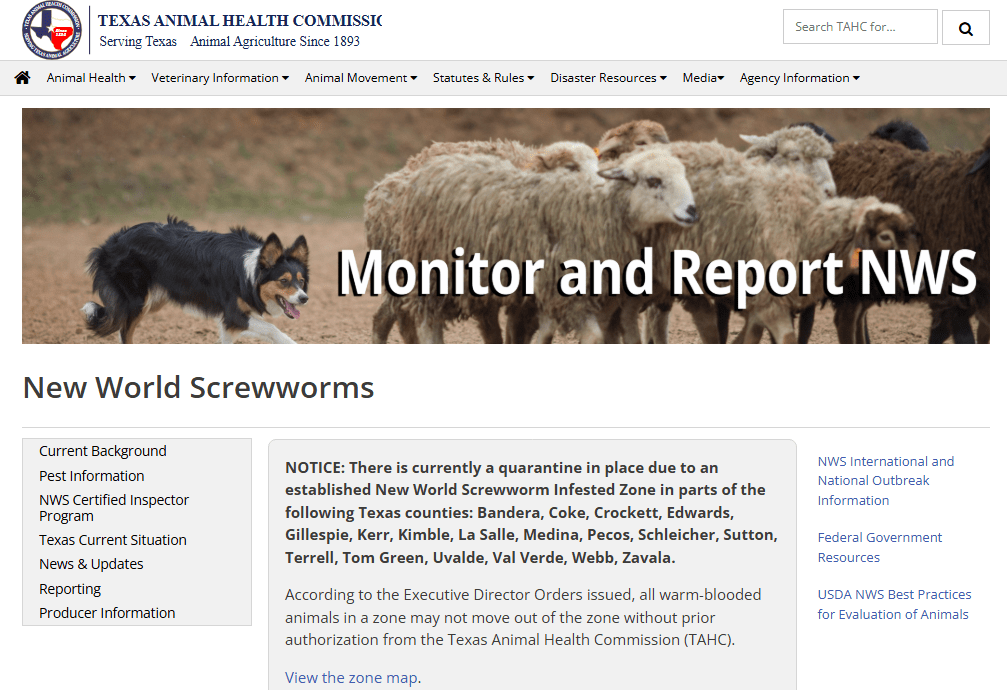
As you look at this picture or the map below, you can see that the NWS is making fast progress through Southwest Texas and moving north and east as new cases are found. Click on a picture to go to the webpage.
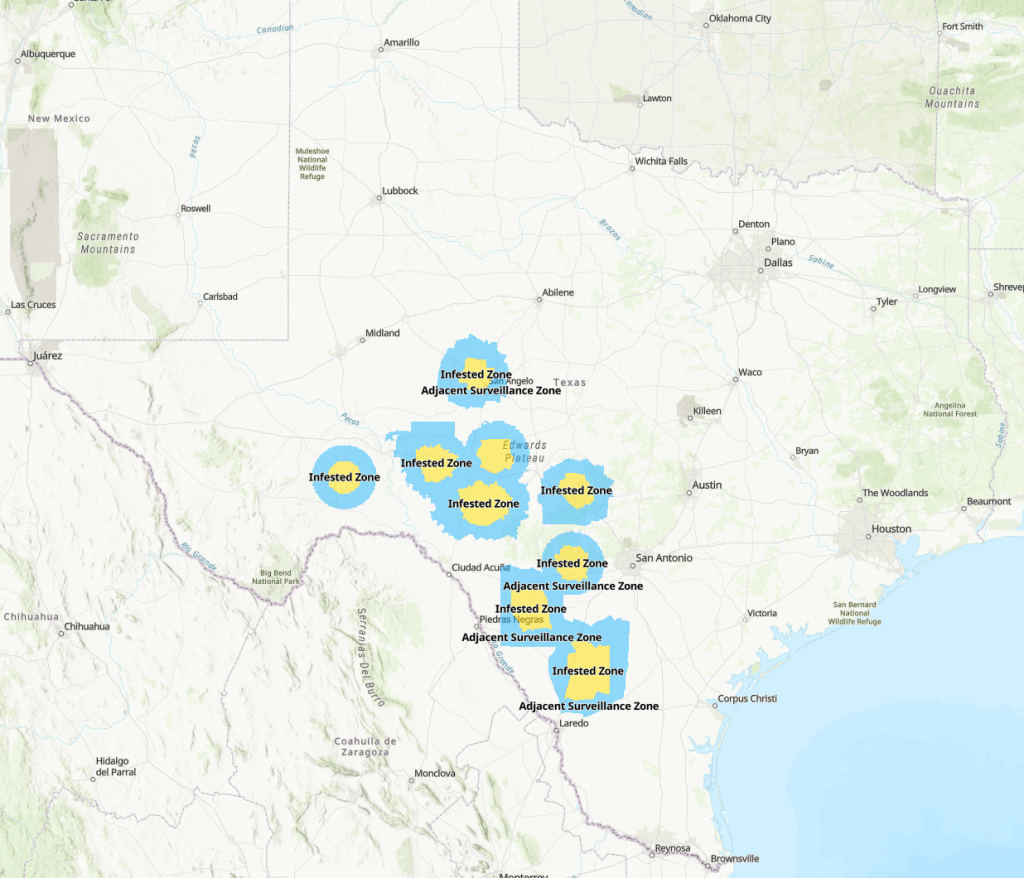
This is the statement on livestock movement: Warm-blooded animals moving outside of an infested zone must contact the TAHC to set up an inspection. During this inspection, an animal health official will fill out an animal movement certificate listing the product used for prevention or treatment and the animals’ official ID. This certificate will need to accompany the animal movement. Additional guidance can be provided during an initial inspection request call to TAHC and general guidance can be referenced in the Livestock Movement from a NWS-Infested Zone handout.
If you do end up in an infested zone and need to move livestock, then you will need to get an NWS Animal Movement Certificate. As an Extension Specialist, I went through the training and am now an Authorized NWS-Certified Inspector as are many veterinarians, county extension agents, etc. This screwworm is the same one we had in Texas when they had so much trouble getting eradicated till 1966 when it was finally done (I am old enough to remember that program). They determined that part of the problem with eradication was that unrestricted livestock movement caused reinfestation issues. Now with available prevention and treatment products, the already operating Sterile Fly program, and the restriction on animal movement from infested areas, they hope to get to eradication again much quicker.
Lastly, there are organic issues with any of the approved treatment options for NWS. At this time, the approved/authorized NWS treatment and prevention products I am aware of are not allowed for use in certified organic livestock production. At this time, organic producers should assume that use of currently authorized synthetic NWS treatment products may affect that animal’s organic eligibility, so treatment decisions should be carefully documented and coordinated with TAHC, your veterinarian, and your certifier. What we are hoping to see happen is the possibility of using Ivermectin (was on the NOP approved but has since been removed from the approved list) in infested zones only to treat calves as a preventative to NWS because of open wounds (umbilicus, castration, etc.). This is being discussed even as I write this, but – Ivermectin may be part of conventional NWS prevention or treatment protocols, but it is not currently allowed under USDA organic rules for NWS.
As we learn more, you will receive the information ASAP so that you can make adjustments. For now, you should:
- Inspect your animals on a regular and consistent basis. Even tick wounds can be a place for flies to lay eggs.
- Report any suspected cases. You can report to the Texas Animal Health Commission, to an Extension Agent or Specialist, to your veterinarian. Just report it so animal health officials can confirm the case and trigger the appropriate response, including sterile fly release where warranted.
- Protect by having a working relationship with your veterinarian who knows you are certified organic.
WODPA Developed Posters
As I mentioned, Lia Sieler and the Western Organic Dairy Producers Alliance have been staying on top of this issue for organic dairy farmers. They have produced a couple of posters on New World Screwworm that are available to post in your milking parlor and hand out to your workers. One in English and one in Spanish. If you want to print them out it is best printed on 8.5 X 14 paper! Just click on a link below and it will open up in a new webpage.
English Version of New World Screwworm
Spanish Version of New World Screwworm
Please let me know if you have any questions or concerns.
More Resources
- New World Screwworm – Best Practices for Evaluation of Animals for NWS
- STEPS IF YOU SUSPECT – New World Screwworms in Livestock
- New World Screwworm – What you need to know
- FDA-Authorized & Conditionally Approved Animal Drugs for New World Screwworm
- Texas A&M AgriLife Extension NWS Page
- USDA New World Screwworm Response Playbook


