I take the Bovine Veterinarian Magazine and appearing in the March/April 2025 edition (picture below) was this interesting article on dairy calf personality by Maureen Hanson. The article rang all kinds of “bells” for me because organic dairy production requires more than just certified feed and pasture. It demands a different kind of cow—one that can thrive with lower intervention, recover from stress without antibiotics, and mature into a productive milking animal under the constraints and values of organic systems. Maureen Hanson wrote her article based on a 2024 peer-reviewed study from the University of Kentucky (Journal of Dairy Science, https://doi.org/10.3168/jds.2023-24257)1 and this study offers a compelling new tool for organic dairy production: personality-based calf selection.

Bovine Veterinarian – March/April 2025
Calf Personality Predicts Future Performance
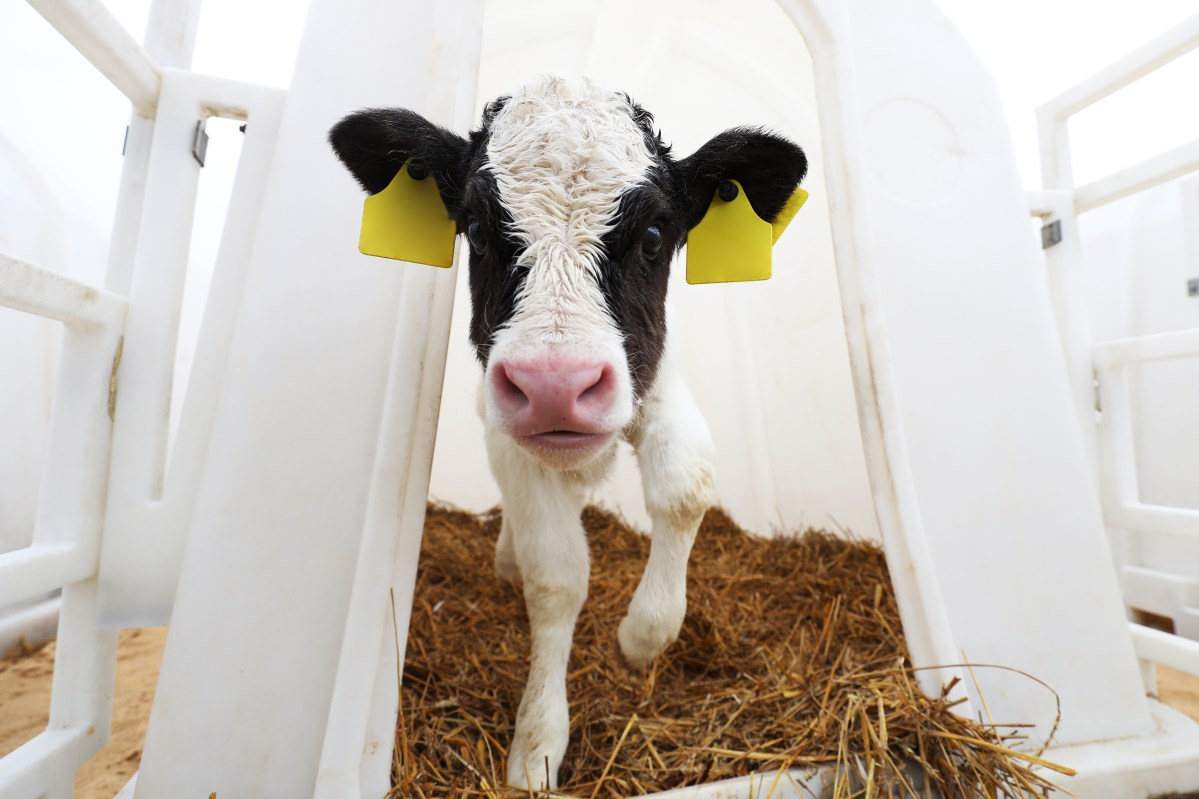
In the study, 49 Holstein calves were assessed using a series of behavioral tests designed to evaluate their responses to novelty and stress. Through principal component analysis of their behavior, researchers identified three personality traits:
- Fearful: slower to approach novelty, more time spent being alert but not engaging
- Active: higher movement across all tests, more physical exploration
- Explorative: more interaction with objects and environment, less time inactive

These traits were then statistically correlated with detailed data from automatic calf feeders and wearable accelerometers tracking feeding behavior and activity. The results were striking:
- Active calves consumed more starter grain, reached intake benchmarks earlier, and had significantly higher average daily gain (ADG) across all periods.
- Explorative calves, surprisingly, had lower starter intake and lower ADG specifically during the weaning period.
- Fearful calves showed no consistent associations with feed intake or growth but were clearly slower to engage with novel environments—a potential early marker for stress sensitivity.
Implications for Organic Dairy: Observation is Prevention
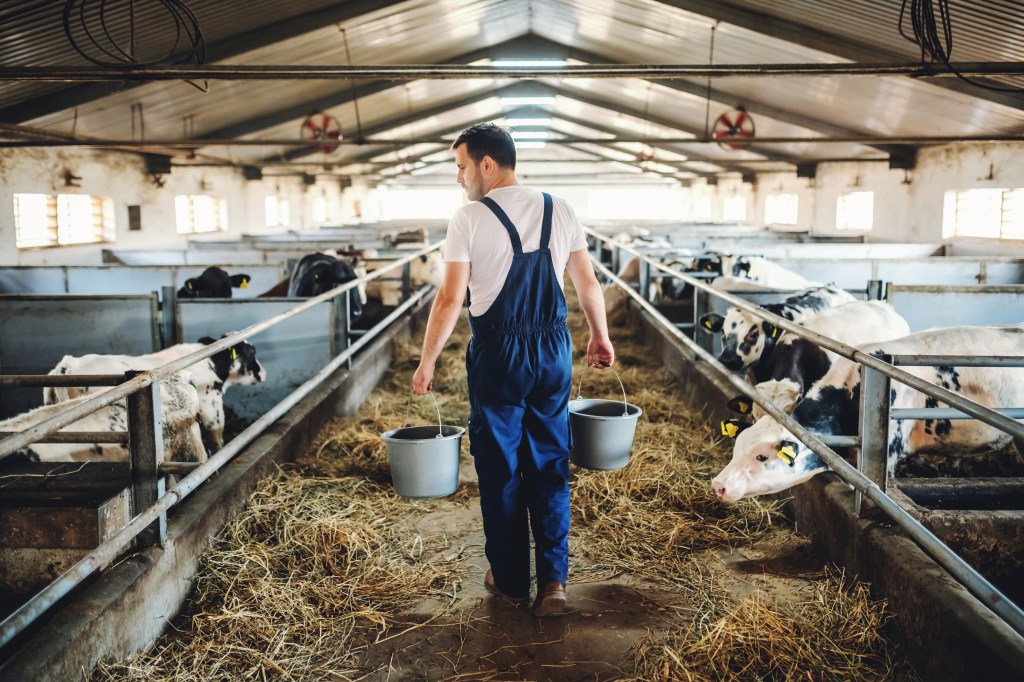
Organic systems are built on the foundation of preventive health, yet many dairy owners and managers are disconnected from the earliest stages of calf development. Calf rearing is often delegated to extremely capable managers but often few of the decision-makers (probably you since you are reading this) spend the time to observe how calves respond to their first illness, their first separation, or their first group housing experience.
This study confirms that those early responses matter. Calves that are more active adapt better to weaning and start feeding more quickly, leading to stronger growth and rumen development—two key goals in organic dairy management. Explorative behavior, meanwhile, may suggest curiosity but could signal greater sensitivity to changes, especially during stressful transitions.
You Can’t Manage What You Don’t Observe
The beauty of this research is that it doesn’t require high-tech tools to be useful. Yes, wearable accelerometers and automated feeders give precise measurements, but a skilled observer can spot:
- Calves that hesitate or vocalize excessively when encountering new objects or people
- Calves that walk their pens often versus those that stand still
- Calves that seek out grain early versus those that delay
Even 20 minutes per pen per day, using a simple observation sheet for behavior categories like “explores new object,” “approaches person,” or “walks pen,” could help identify high-potential calves for organic dairy production systems.
A Call to Action for Organic Dairy
Early-life behavior should become part of calf selection and culling decisions in organic systems. Just as we select against structural flaws or poor production genetics, we should begin identifying calves whose temperament makes them a poor fit for organic environments. Resilience (something of extreme importance in organic dairying) is not just physical; it is behavioral.
These steps can help producers:
- Reduce calfhood mortality and illness
- Improve long-term health and lifetime milk production
- Target breeding decisions for greater resilience
- Stay within the boundaries of organic treatment rules
The goal isn’t just healthier calves. It’s to create a herd that is biologically compatible with organic practices. Personality is not just a curiosity. It’s a management tool. And for organic dairy, it might be one of the most important ones we haven’t been using.

Appendix: Early-Life Calf Behavior Observation Checklist
Use this tool I developed during the first 10–14 days of life (or whatever fits your operation) to assess each calf’s temperament and adaptability. Score each behavior during structured (regular) observation sessions or low-stress test scenarios (not when moving to a new pen!). Click: Calf Behavior Tool
| Observation Category | Behavior Description | Scoring Notes |
|---|---|---|
| Novelty Approach | Time to approach a new object (e.g., colored bucket, ball) placed in pen | 1 = avoids; 2 = cautious/slow; 3 = approaches/touches; 4 = immediate interest |
| Response to Human | Reaction when person enters pen or stands nearby | 1 = flees or hides; 2 = freezes; 3 = moves away calmly; 4 = approaches or investigates |
| Pen Movement | General movement over 10 minutes | 1 = mostly stationary; 2 = some walking; 3 = walks frequently; 4 = constant movement |
| Play Behavior | Jumps, kicks, head butts, or frolics | 1 = none; 2 = rare; 3 = moderate; 4 = frequent |
| Vocalizations | Calf vocalizes when alone or during change (e.g., feeding or handling) | 1 = silent; 2 = occasional; 3 = frequent; 4 = constant/loud |
| Feeder Interest | Time to discover starter grain or milk feeder | 1 = delayed; 2 = average; 3 = quick; 4 = immediate curiosity |
Score each calf twice during the observation window to account for variability. Calves with consistently high scores in movement, feeding curiosity, and play behavior may be more biologically suited to organic dairy systems. Those with consistently low or fearful responses may require extra care—or may be poor candidates for organic retention.
- Woodrum Setser, D., Proudfoot, K., Costa, J.H.C., Marchant-Forde, R.M., Bewley, J.M., & Cantor, M.C. (2024). Individuality of calves: Linking personality traits to feeding and activity daily patterns measured by precision livestock technology. Journal of Dairy Science, 107(5), 4512–4527. https://doi.org/10.3168/jds.2023-24257 ↩︎