This is a great article about organic produce sales from the Organic Produce Network and Category Partners. Click here to read the entire article Organic Produce Network News I only want to make you curious with a few points I thought were interesting!!
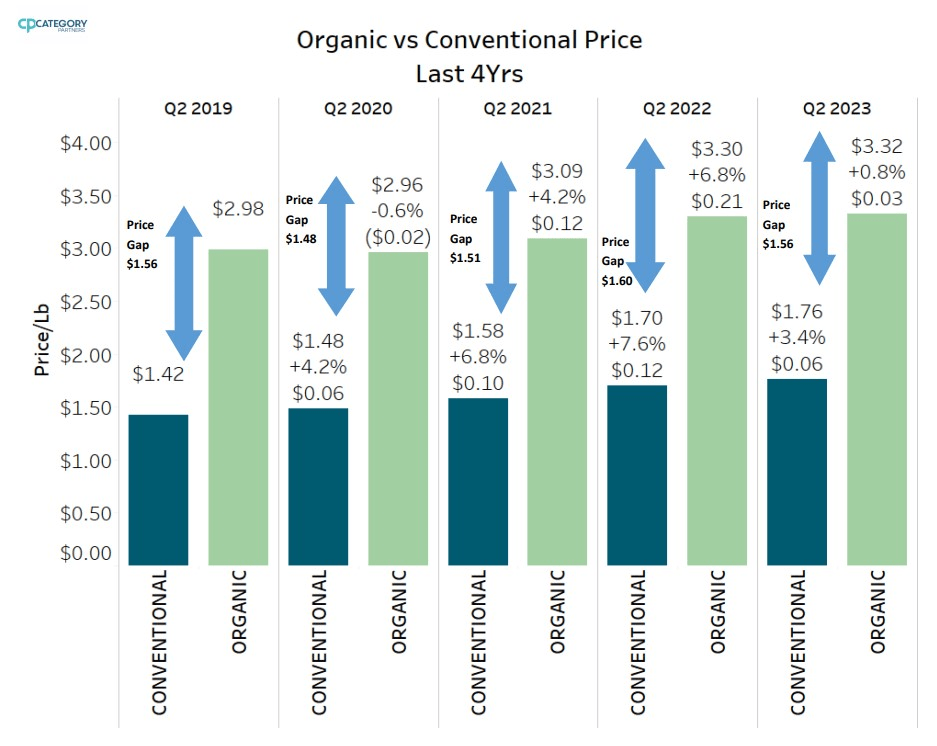
In the second quarter of 2023, sales of organic fresh produce increased by 1.5%. The total sales amount reached $2.4 billion. On the other hand, conventional produce sales grew by 2%, totaling $18.8 billion.
The latest report indicates a steady rise in produce prices due to inflation, but rest assured, the demand remains robust. It is noteworthy that organic prices have experienced a moderate increase compared to conventional prices, yet they have managed to outpace conventional prices by an impressive 88%, thereby ensuring sustained profitability within the organic produce sector.
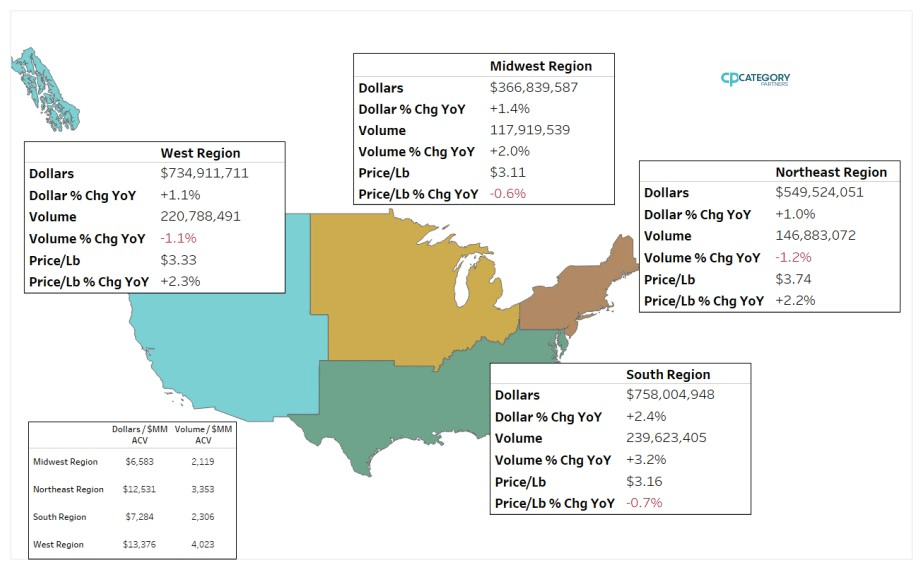
This chart showcased in the report unveils insights that demand a deeper analysis. One cannot overlook the remarkable 3.2% surge in sales volume, solidifying the South Region’s dominance in this area. These exceptional results strongly indicate a great future for Texas organic produce. Again, check out the full report, it is worth it – because Organic is Worth It!
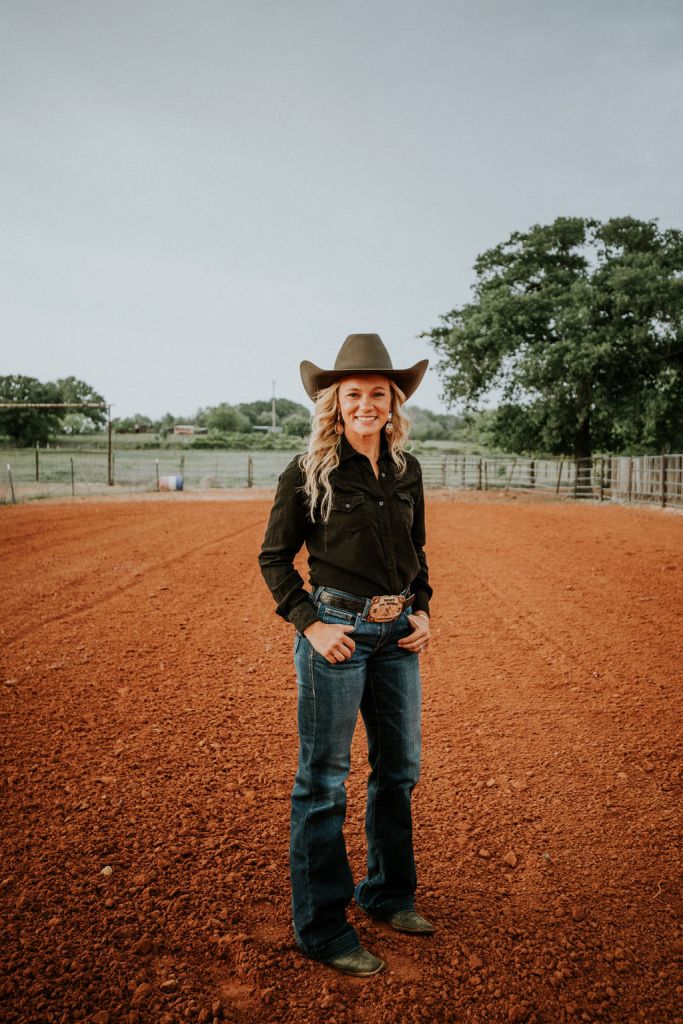
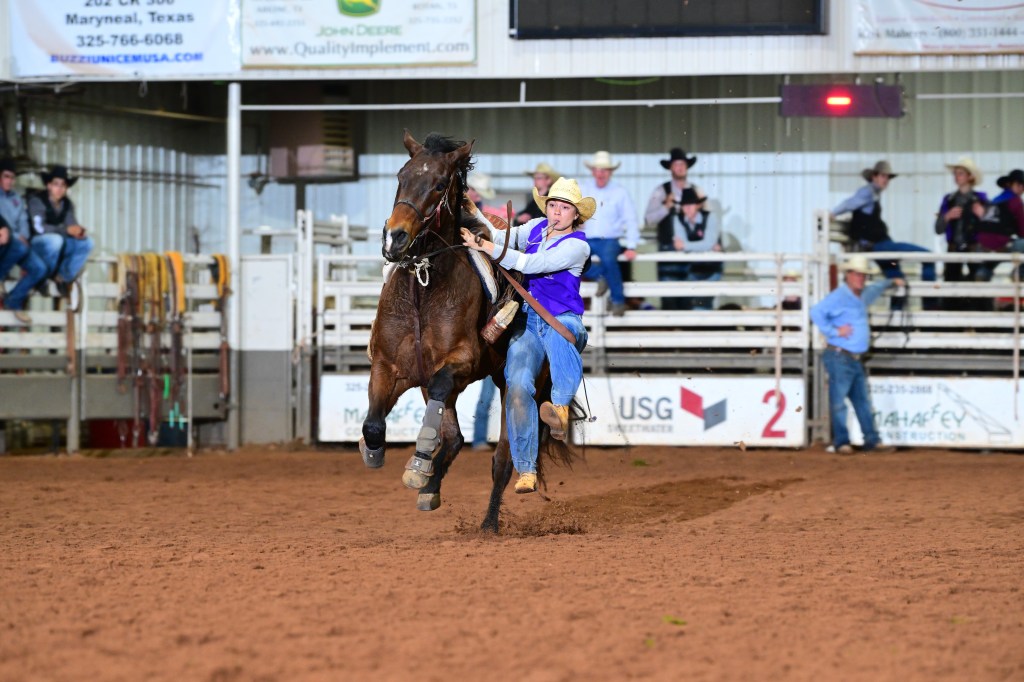
The Extension Organic Program is extremely fortunate to be able to announce that Timber Darnell will be starting her new role as Organic Program Coordinator. Timber will take charge of planning and coordination the Texas Transition to Organic Partnership Program (TOPP). She will be the primary contact for new transitioning to organic growers and handlers. Timber is at our office in Stephenville and officially started Monday, August 14.
Timber is originally from Wyoming and is no stranger to the agriculture industry. Timber transplanted herself to Texas right after High School on a Rodeo Scholarship to Tarleton State University. There she competed in the events of Breakaway and Goat Tying all throughout her college career.
She is well known in the arena especially in the event of Goat Tying. Timber has traveled all over the Western United States teaching children how to goat tie. Rodeo has brought many skills to add to her toolbox from an athlete, to coaching, traveling to Africa, and a lifelong love for the agriculture industry. Timber has loved it all. Her legacy remains in the arena, but as for now Timber is excited to focus on her new career.
Timber has two degrees from Tarleton, recently graduating with her Master of Agriculture Consumer Resources with a concentration of leadership. Timber is excited to be joining our team.
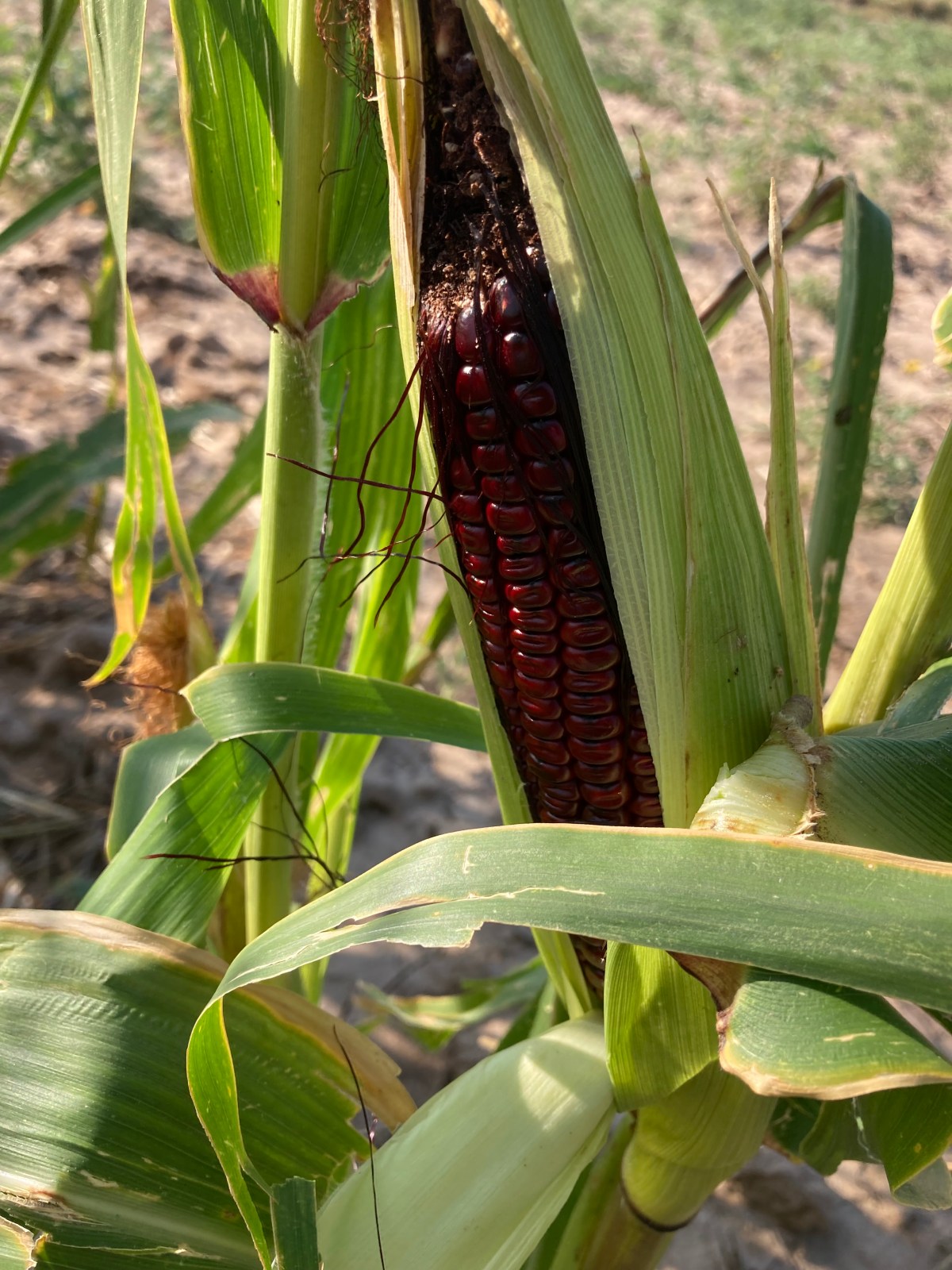
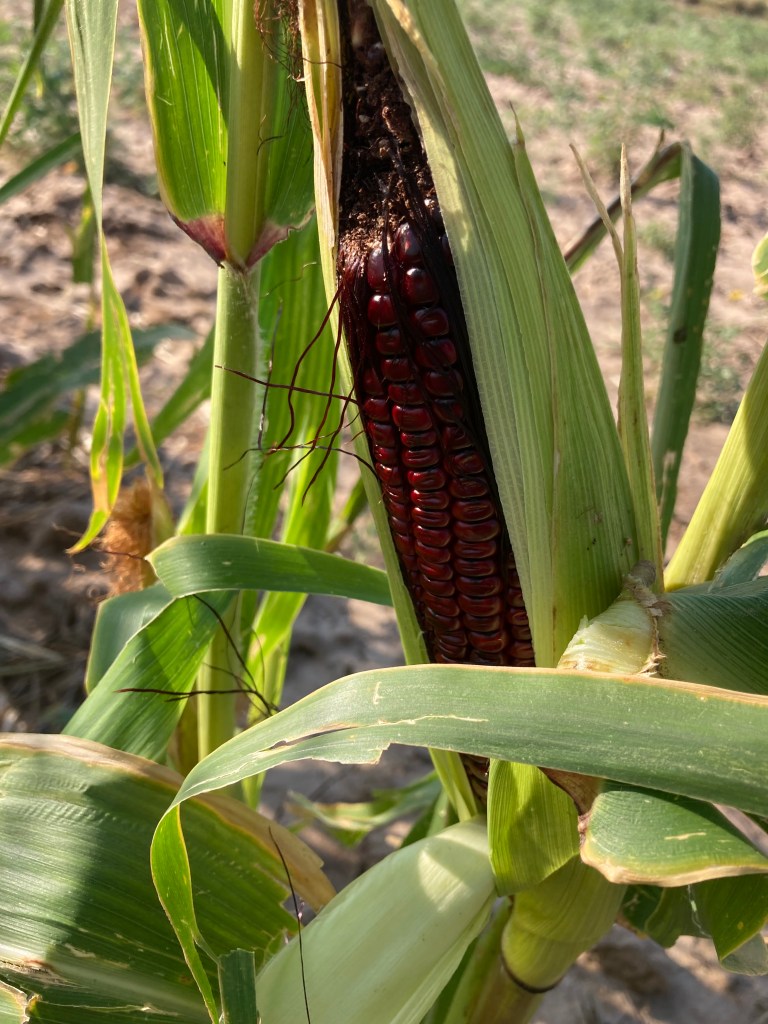
What is Hi-A Corn? These Hi-A corn hybrids are non-GMO and are a new type of corn that contains high-anthocyanin and high-antioxidant content (Hi-A corn) in their kernels, stalks, and other plant tissues. Hi-A corn kernels are tender and sweeter than field corn but contain less sugar than sweet corn. The Hi-A corn hybrids TAMZ102 and TAMZ104 were developed and selected for adaptation to the environments in southern United States by Texas A&M AgriLife Research Corn Breeder Dr. Wenwei Xu in Lubbock and even newer varieties are being developed this year. Being non-GMO, they can be used in both conventional and organic crop systems, and they are earworm and disease tolerant and/or resistant.
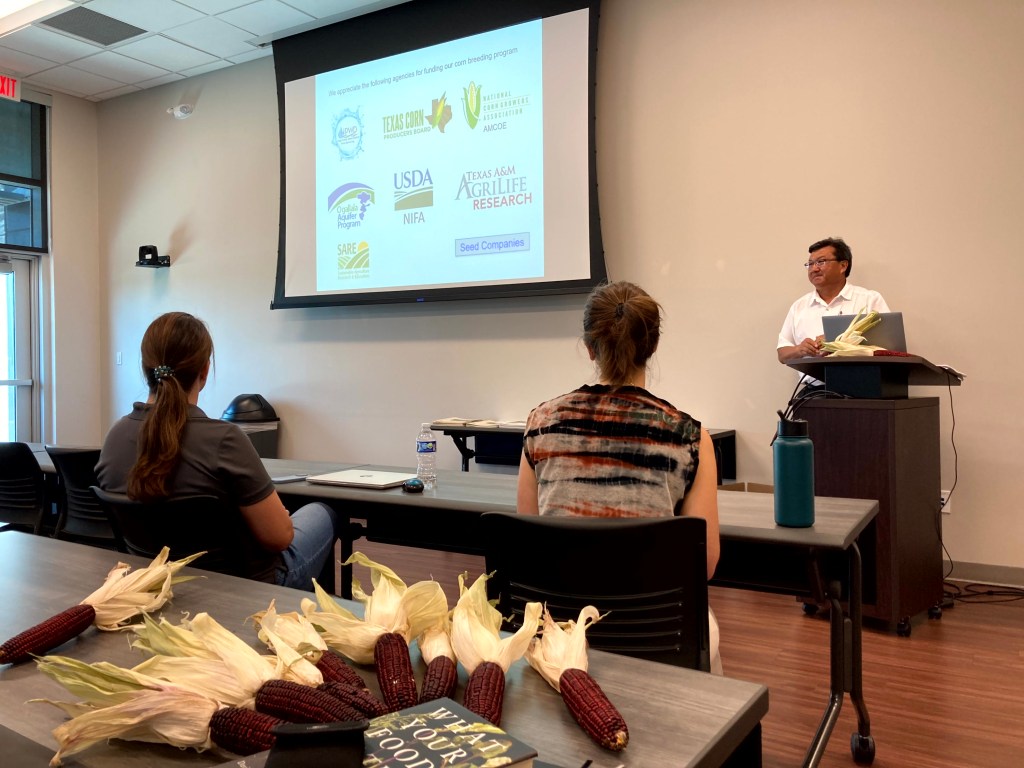
A big thanks to the Texas Corn Producers for their long-standing support of Texas A&M AgriLife Research corn breeding programs and helping to initiate the Hi-A corn project. Also, thanks to Southern SARE for funding this 2023-24 Hi-A Corn Producer Education Program. A huge shoutout to our cooperators Juan & Shakera Raygoza in the RGV at Edinburg and to Brant and Kate Hajda in Granger for being super cooperators and growing out these test varieties.
Why Hi-A? Breeders are looking for ways to introduce animal and human health benefits into the foods we eat without sacrificing grain quality. In an organic animal feeding system, Hi-A corn could be beneficial both as a grain and as a silage, preventing inflammation from low levels of disease. We are experimenting with these varieties in several locations and have had Extension meetings where folks even got to eat some fresh ears. Fresh ears of the Hi-A corn still in the husks are ready to eat after being cooked in a microwave oven for 5-minutes. I love it and it’s healthy too!
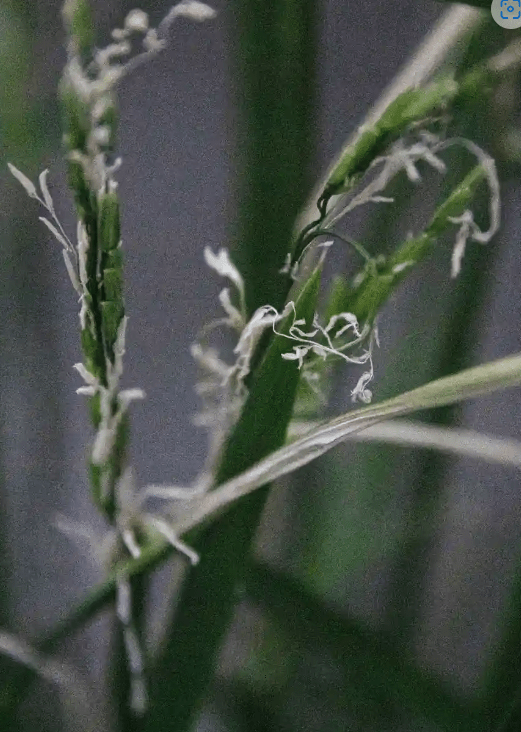
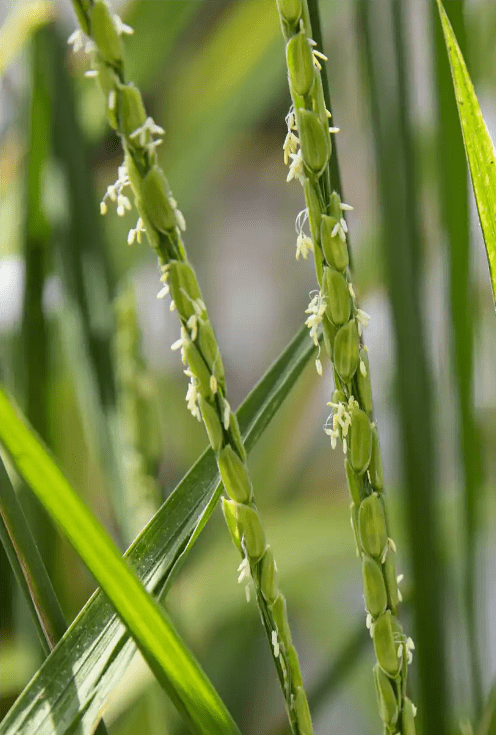
Normal Rice Pollination Credit: The GuardianHeat Damaged Pollination Credit: The Guardian
An article in The Guardian entitled, “Night-time heat is killing crops. Scientists are rushing to find resilient plants” That should scare most of us but not all is lost! Yes, we are seeing “climate change” but we are adapting and doing it very well.
Temperature is considered a primary factor affecting the rate of plant development, and I think every farmer knows that. Every year we are seeing extremes in daytime temperatures but more importantly we are seeing a tightening of the difference between daytime and nighttime temperatures. It does not cool off as quickly or as much at night so that the spread between day and night is smaller such that the average temperature is higher.
What does this mean? First it can mean that varieties are not as productive as they once were. In rice, breeders are working on new rice varieties that can handle higher temperatures both day and night. We are working on the same thing in corn varieties. If you notice that grain fill is different, blanks are more prominent or yields are down it could be temperature, even nighttime temperatures!
This summer has seen 105-degree daytime temperatures but instead of cooling off to 75 degrees at night there have been many nights where the low was only 84 degrees and that only before dawn. Want to know if this is causing problems, just look at the trees. They are fast turning brown or just dropping leaves and there is still a lot of summer to go!
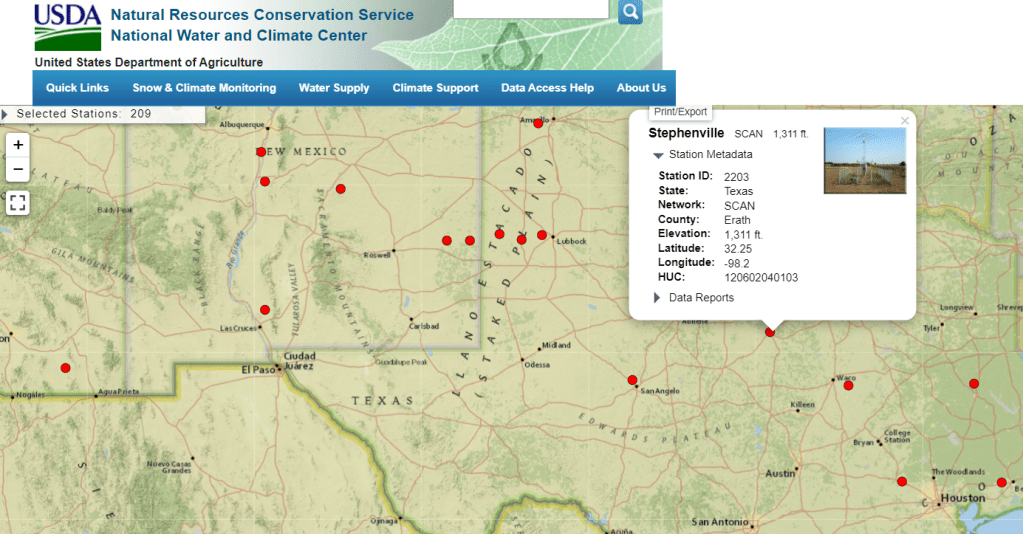
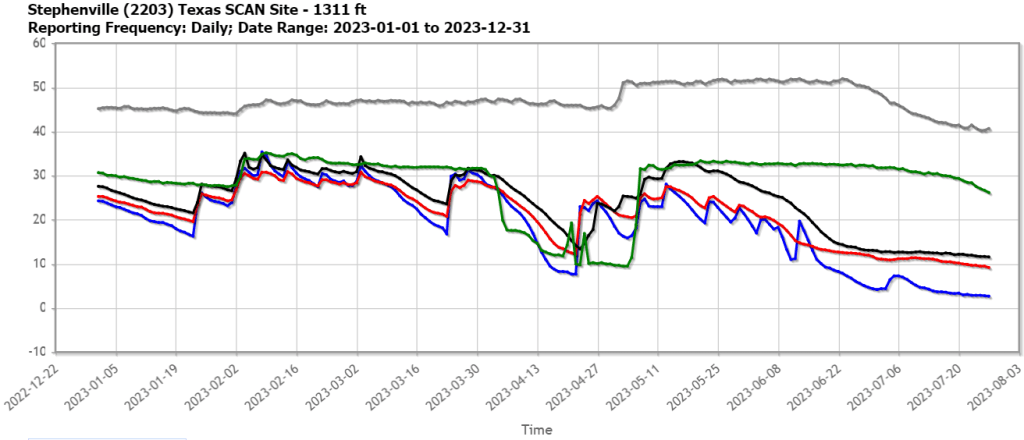
You might not realize it, but there is a lot of information available to you through the NRCS weather stations located in many parts of the state. There is information on these sites which can be useful for planning, planting, or scheduling field operations.
The above chart is just one example of many available on these sites. This is for Stephenville and shows the soil moisture from January to August 2023.
The lines show the different soil moistures at different depths and for some reason the 20” (grey) is not working. But notice the rains in late winter bring up all moisture levels but especially the 40” depth and it stayed at 30% moisture until recently. Just drive around Central Texas and you can see we are burning up. It is amazing what 60+ days of hot temperatures and no rain can do!
How do you get to a station close by? Just go here: https://tinyurl.com/34c7a8hv You will be at the NRCS Texas Dashboard and click on the SCAN tab. Once in the SCAN tab you will see the map like the one above and then click on a red dot for the weather station and pick Data Reports. Simple and yet lots of good information.
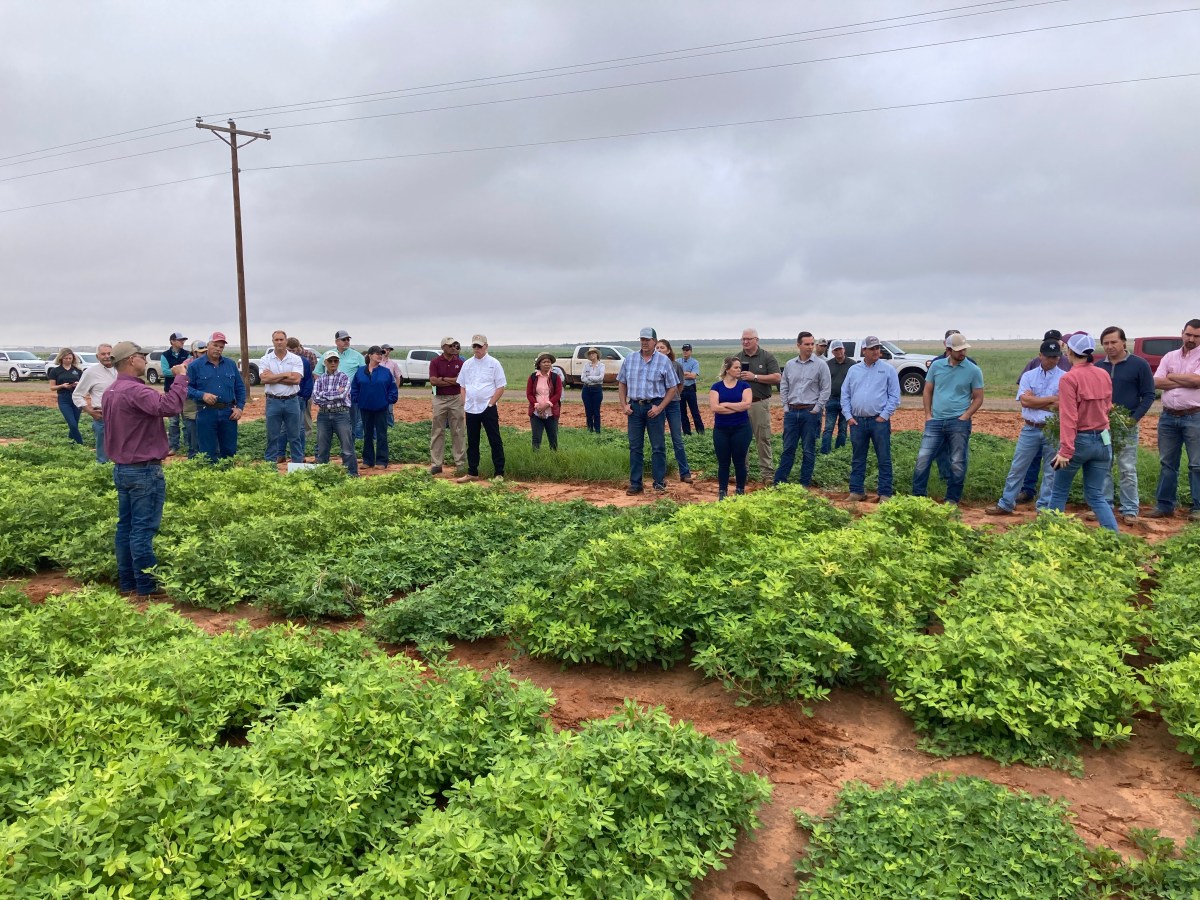
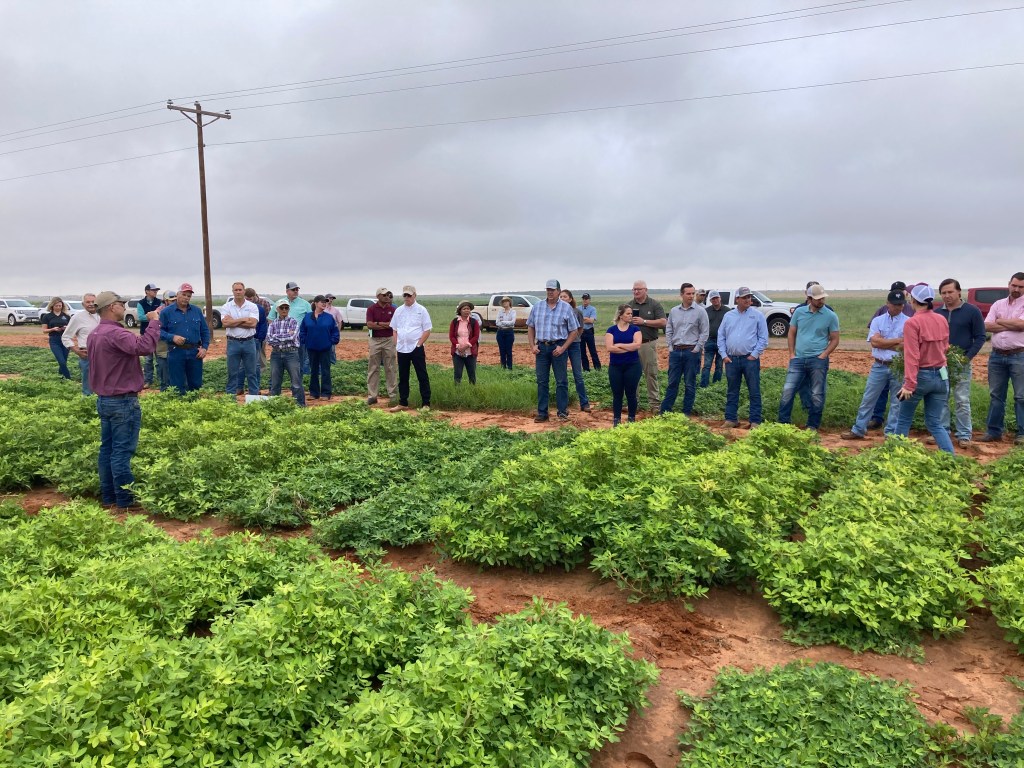
Working with organic producers, specialists, and researchers, a great organic tour of both peanut and cotton production has been planned for Thursday,August 31st in the Seminole area. The tour will start with registration at 8:00 am at the Gaines Co. Civic Building in Seminole at 402 NW 5th Street (Corner of NW 5th and NW Ave. D). The tour will leave at 8:45 am from the Civic Building and return at 12:20 pm for a sponsored lunch. Two continuing education credits for TDA Pesticide Licenses will be offered on the tour.
The first stop on the tour will be at the Neil Froese Peanut Farm just north of Seminole on CR 108 and CR 109 east of Hwy 62 North. At this organic peanut field tour participants will discuss growing organic peanuts and production in 2023. Dr. John Cason, Texas A&M AgriLife Research Peanut Breeder will talk about a research variety trial in this field for organic peanuts. Dr. Joseph Burke is the new Extension Specialist and Researcher for Weed Science and Cropping Systems at Lubbock. Dr. Burke will talk about his program and plans for the South Plains. Bob Whitney, Extension Organic Specialist will discuss peanut seedling disease issues and research results along with organic peanut production issues.
The next stop will be at the Theodore Wiebe Farm 2 miles south of Seminole on Hwy 385 to County Road 418 and down to the intersection with County Road 403. Tour participants will have a chance to talk about organic cotton and peanuts at the Wiebe Farm. Dr. Jane Dever and Dr. Carol Kelly, Texas A&M AgriLife Research Cotton Breeders will be on hand to discuss cotton production and breeding in 2023 with an emphasis on organic. Dr. Holly Davis, Field Development Manager for Certis Biologicals will discuss using biologicals in crops with an emphasis on potential pitfalls to organic systems.
Sponsors for the Organic Cotton and Peanut Tour include South Plains Compost, American Plant Food, Algrano Peanuts, Certis Biologicals, Kunafin “The Insectary”, IPG, Dragon Line Irrigation, Nature Safe, ViaTrac Fertilizer, Helm Agro, Pro Farm Group, and Agrellus.
To participate in the Tour and to get an accurate head count for the meal please call Amanda (Gaines Co. Extension Office) at (432) 758-4006.
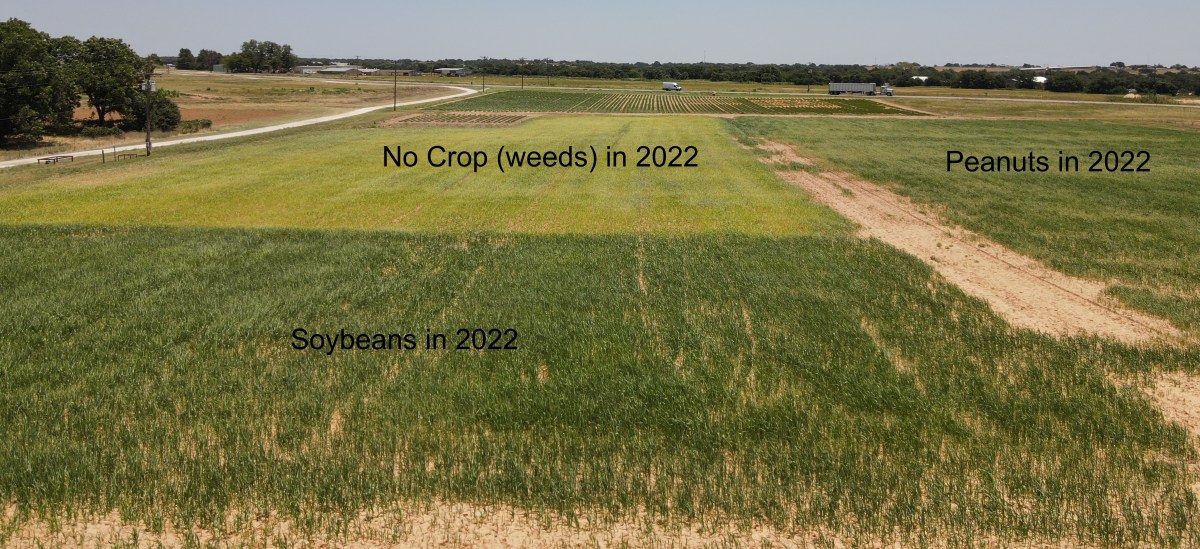
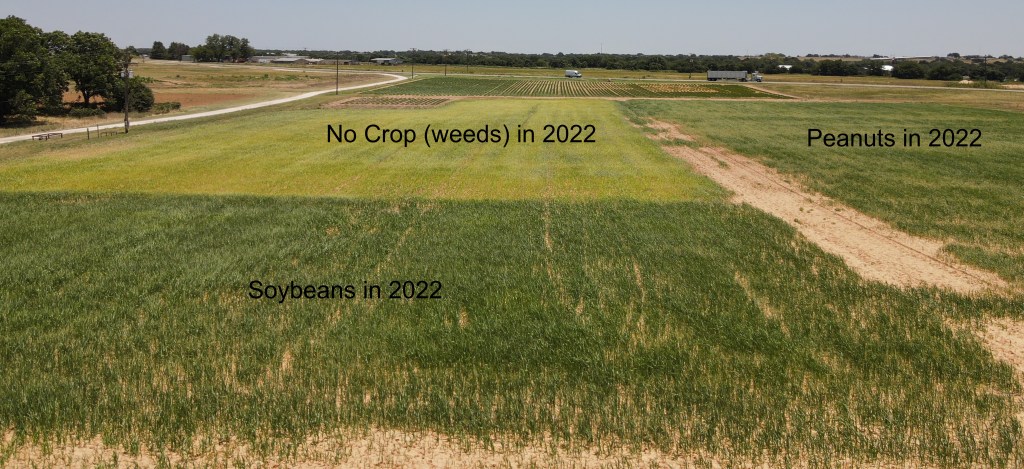
Field of haygrazer planted in 2023 showing the effect of legumes planted in 2022.
My office is at the Texas A&M AgriLife Research and Extension Center in Stephenville which provides me lots of opportunities for research and demonstrations in crop and horticulture production. We also have a super staff of AgriLife Researchers that are constantly working on new projects. A big thanks to them for allowing me to participate in their projects and helping me conduct my own organic research.
That said 2022 was a very difficult year in the state of Texas and certainly in Central Texas at the Center. There were all kinds of experiments installed and unfortunately the drought and high temperatures prevented much of an evaluation or harvest. We use hand move pipe for irrigation and keeping up with irrigated plots was almost just enough to keep plants growing and yields did suffer.
In the picture above you see a field that was not irrigated in 2022. The section of soybeans was planted very early in the spring in hopes of testing a few different treatments on the same variety. The section of peanuts was planted dryland to evaluate the variety as a dryland peanut. No crop was planted on a large section in the middle but it did grow up in weeds – sort of!
Dr. Johnny Cason is one of our Research Scientists with a specialty in peanut breeding. He and his staff put in these two test areas of legumes in 2022 and to say the least they were a disaster. The soybeans came up and did try to grow but the deer kept them eaten down till the drought took over. The peanuts were also eaten by deer, but the drought basically kept them from ever growing more than teacup size. We considered both areas a disaster and just plowed them under later in 2022.
Now, in 2023, this whole field was planted to Haygrazer as a cover crop as you can see in the picture. Now that I have explained what was done in 2022 maybe you can see (thanks to Johnny for the drone picture) and understand what is going on in 2023. The field has had no fertilizer of any kind this year or last year. What you see is strictly the residual soil fertility left by the attempt at growing two kinds of legume crops in 2022. What’s the takeaway here? Pretty obvious that even when you don’t think your legume crop is making a difference it is probably making a huge difference. If you want to know how much, just leave a planter width of legumes out when you plant the field. I bet you see that strip all of next year!

 Texas A&M AgriLife Organic