Blog Posts

Organic Food: A Study of Consumer Perception and Preferences in Greece

Okay, I know you are asking why I am talking about Greek organic food what Greek people think about it? Well, there are several reasons but in particular there are not many U.S. studies on this issue right now and it is an interesting study about what people think about organic food.

First off, this survey was given to people in all 13 regions of Greece, and they got 1,945 responses – not a bad number! 60% were women, which is fairly standard since they buy most household food items and over 60% were under 40 which is good for estimating our future with organic foods. Most were employed in very good jobs and over 53% had a college degree. Nearly 99% said they were aware of organic foods and 86% thought that organic foods were healthier than conventionally produced foods.

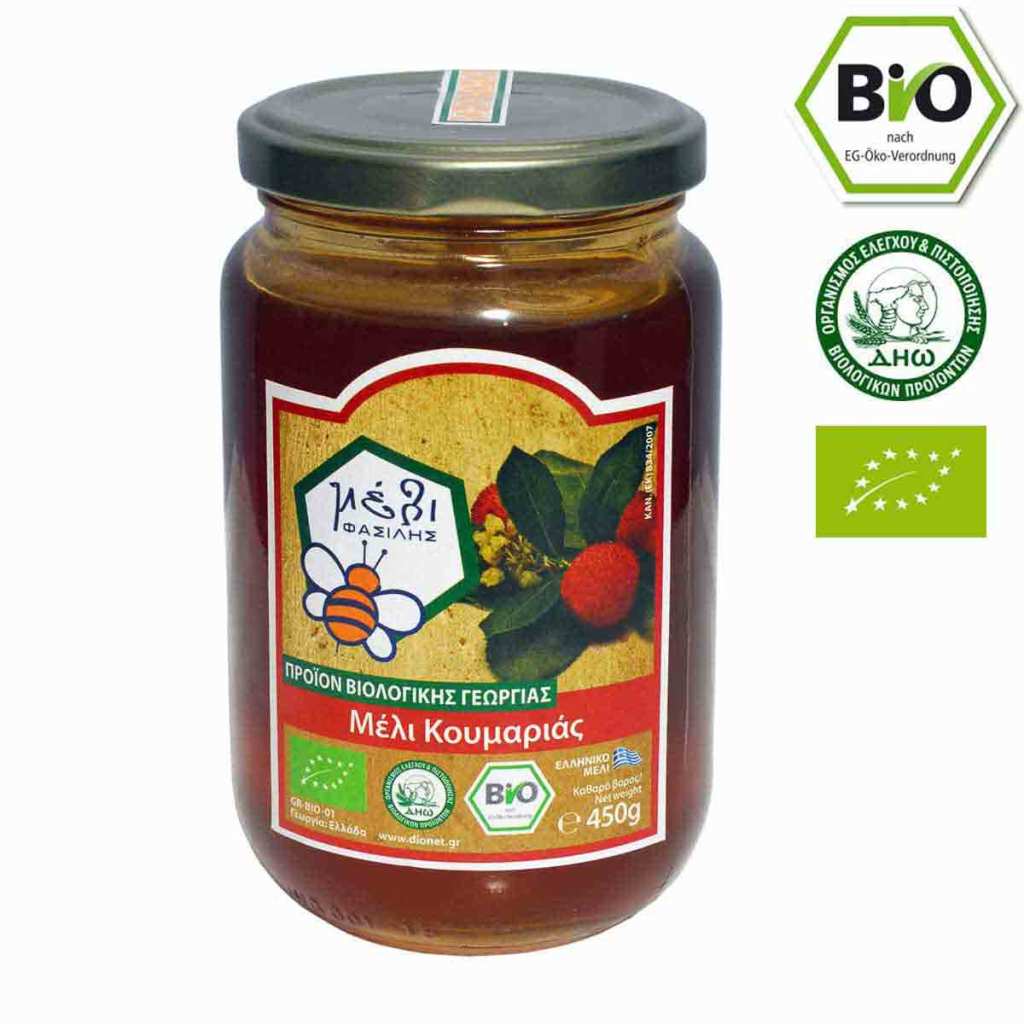
Here are a few things that bothered me and should bother all of us whether we grow organic or process organic food. First, only 60% of the survey participants knew about the organic certification program and that certification is required to use an organic label which is not unlike US consumers. Second, only 28% knew about the actual European organic logo you see in the picture above. This is sad and may not be too far from the U.S. knowledge about organic labels. The USDA Organic Seal is important and useful and must be protected. Third, and maybe most important, 61% believed that there is no adequate control in organic food production. Most of you in organic production may think that there is too much control now, but the average consumer is skeptical that there is anyone really inspecting to make sure what is labeled organic is organic!

Where do they buy organic foods in Greece? Nearly 80% buy in either supermarkets or in specialty stores (48.3% and 31.1% respectively) and not much in Farmers Markets or Online. How often do they buy organic? 55% say they buy either daily, 2-3 times per week or weekly. What do they buy organic? Mostly fruits and vegetables, milk, and other dairy products. Surprisingly, over 30% of organic purchases are meat and poultry which is better than in the US.

Two things to end with. 65% believe that organic food is more nutritious and 43% believe it is higher quality! Those are great numbers and are encouraging for this age group. Second, and most important to me, nearly 80% say they will continue to buy organic despite organic food’s higher prices.

To read the full study with all the numbers go here: Organic food: A Study of consumer perception and preferences in Greece.

Can Plant Roots Change Your Soil?

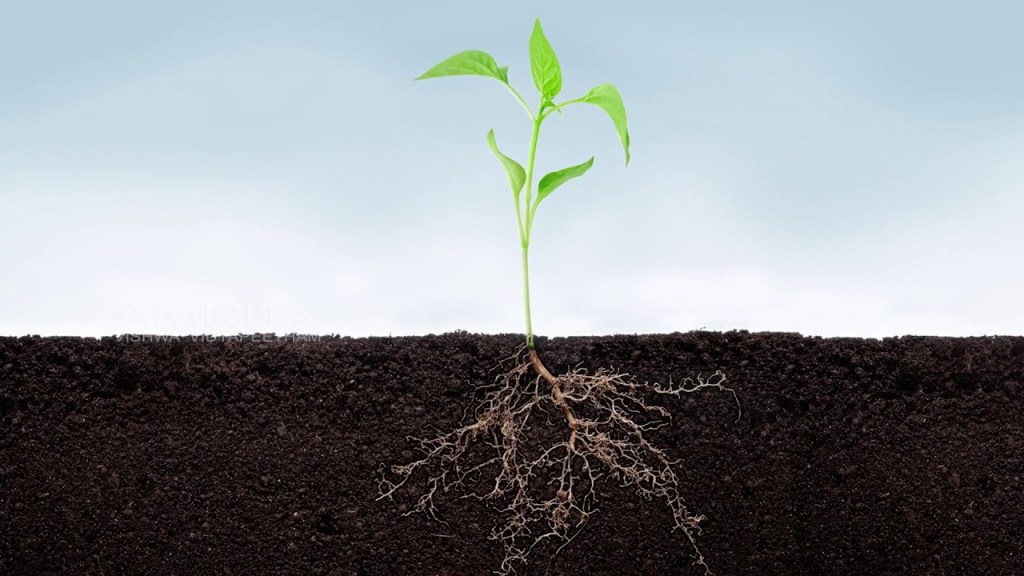
A recent review article in the publication “Trends in Plant Science” caught my attention and to be honest I have read it several times. The title is, “Building soil sustainability from root-soil interface traits,” and is written by several authors all from wonderful universities or institutes throughout the world. The title tends to overwhelm you until you read the first couple of sentences, “By reversing our thinking of how root-soil interface traits affect the function of the rhizosphere (the area around a root where microbes survive) there is considerable opportunity to restore degraded soils, mitigate greenhouse gases, and enhance biodiversity. Breeding crop varieties with the target of improving soil health and reducing soil degradation will produce better condition for crop growth through more efficient resource use and stress tolerance.”

The authors propose that plants are known to have a huge impact on soil properties, but these plant properties are generally ignored in plant breeding in favor of yield. They say, “with the shift towards reduced tillage and smaller input of both fertilizer and chemicals that a plant’s capacity to alter soil structure and the rhizosphere microbiome will become increasingly important.”

In this article they estimate that under the soil under a small grain crop is 2% roots but 50% rhizosphere and this could be even more with better breeding. The properties of the rhizosphere influence both plant growth and the soil environment and form the place where the plant gets nutrients from the soil. Also, a huge amount of microorganisms’ cycle nutrients and compete against plant pathogens in this rhizosphere.

Wheat Rhizosphere

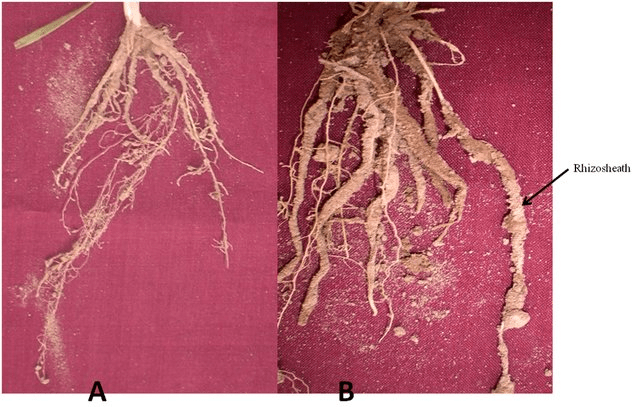
Breeders’ may now have new tools because Quantitative Trait Loci (QTLs) related to this entire concept of improved rhizosphere and rhizosheath (area around the root and the soil that adheres to the root) have been found, and because they are known, breeders can select for plant varieties with these traits. For example, they have found that different varieties of barley can vary by over 500% in rhizosheath size. A larger rhizosheath means great resistance to stress including drought with a direct benefit to the improvement of soils around the root rhizosheath.

I really appreciate this last paragraph! “A genotype’s capacity to engineer favorable soil properties at the root surface could enhance its fitness under variable field conditions. We have shown evidence that selecting genotypes for favorable root–soil interface traits can also improve yield with minimal metabolic cost. The impact of plant roots on soils has been appreciated for centuries, but it is only now that new emerging technologies are unravelling the mechanistic processes of how plant root traits form the rhizosphere and impact both plants and soils. We are only at the beginning of understanding whether rhizodeposition and root hairs could be selected for more sustainable soils, but the emerging evidence is positive and compelling.”

If this is interesting to you the full article can be accessed here: https://agrilifeorganic.org/wp-content/uploads/2022/06/great-building-soil-sustainability-from-root-soil-interface-traits.pdf

Upcoming Rice Field Days

There are two upcoming Rice Field Days titled “Designing Texas Rice for the Future,” and they feature a lot of information for Texas producers.  As always there will be lots of general information on rice production but specifically there will be a look at the future of rice breeding.  Whether conventional or organic, rice breeding work holds the keys to our future and these researchers are working hard to overcome nutrient deficiencies, disease and insect pressure, yield, and more.

Eagle Lake Field Day, Tuesday, June 28 starting at 4 pm.

Beaumont Field Day, Thursday, July 14 starting at 8 am.

To register, help sponsor, or just more details, please call Brandi Morace, Administrative Coordinator at the Rice Research Center in Beaumont, 409.245.8630.

Peanut Seedling Test Plot

Today (May 20) we finished planting a peanut seedling disease test plot at the Texas A&M AgriLife Research Center in Stephenville. In this test we are looking at 10 different treatments for seedling disease control on untreated peanut seed.

Conventionally (not organic) peanut seed is treated with a fungicide that protects the seed and the young seedling from any of the common fungus diseases found in soil. Seed treatments are really beneficial in situations where the conditions are not very good for germination like cold, wet weather. In an organic system with untreated organic seed, you basically need to wait till the weather is better or maybe you discover some organic treatments you can use when you plant, like in this test. What we are doing is testing some organic seed treatments (applied to the seed before planting), some liquid in-furrow treatments, and some soil incorporated treatments and comparing them with an untreated check (just peanut seed) and a check with a regular conventional fungicide treated seed.

Over the course of the next several weeks we will be evaluating the germination percentage for each of the 400 seed planted in each treatment, how quickly they grow, and the stage of plant at each week. Below are the products used and the treatment method: IF = in-furrow, seed is a seed treatment sprayed on to wet and then dried, incorporate into beds before planting.

CompanyProductMethod
1Ecological LaboratoriesQuantum-EXP 1IF
2Summit AgroAviv 20 oz/100 gallon wet and drySeed
3Summit AgroAviv 20 oz/acIF
4Certis BiologicalsDouble Nickel 8 oz/acIF
5Certis BiologicalsDouble Nickel 16 oz/acIF
6American Plant FoodSigma 5-3-2 1000 lb/acincorporate
7Untreated Check
8Corteva AgriscienceBexfond 14 oz/acIF
9ValentEndoprime 2 oz/acIF
10Treated Check

Scale on Pecan?

It is not fun to write about a problem that has not been a problem! This picture was taken by David Schwegman in his orchard north of Georgetown. He showed me pictures of scale on some limbs he took earlier in the year when I spoke at the San Saba Pecan Field Day. Since then, he has more pictures and according to his email he is now seeing the immature “crawlers” as the young scale insects hatch and begin moving to a new location on the limb. I thought this was obscure scale, but others think it may be lecanium scale.

This might not be such a worry except that David is finding it more and more. Also, I am getting reports from other orchard owners finding scale on pecan limbs in their orchards. So, is this becoming a problem for pecan growers? Maybe, or maybe this is just one of those isolated issues that we occasionally see. Either way it is important to be scouting, especially when trees are bare (winter), and the scale is easy to see.

Organic treatments are dormant oils in winter, when there are no leaves, or now with Certis Biologicals Des-X or Sil-Matrix, Marrone Bio’s Venerate or Grandevo, and/or possibly some of the botanical organic oils (cinnamon, garlic, thyme, etc.). Be sure to spray a limb or two in the afternoon heat first before treating the whole orchard with anything that has an oil or soap base. Shouldn’t take more than 30 minutes to see if it affects the green leaves in the heat!

Budding and Grafting Pecans, What Is It?

Figure 1. A “graft” where a new variety is “grafted” or added to the established tree in an orchard.

Most people don’t have a clue what budding, or grafting is or if they do, don’t know why we do it! I can sure understand this since most of the reproduction in the world on the human side is not asexual it is sexual.

Wow! How did we go from budding and grafting to SEX? Well in budding and grafting we bypass the typical crossing of a male and a female to produce offspring by using either “budding or grafting” a portion of the plant we want (a new pecan variety) onto the same type of plant (an old pecan variety).

For instance, in pecan trees the nut that is produced can be planted by a squirrel and grow up into a big, beautiful pecan tree but the nuts on that tree may not resemble the planted nut at all. This is because the nut planted was produced by sexual means. The male pollen (figure 2) was produced on another tree, and it floated on the wind and fell on the pecan tree nutlet (figure 3) of another tree. Once on the flower parts of the nutlet, the male pollen and female nutlet mate and the resulting fruit (pecan nut) now has the genetics of the male crossed with the female to produce a new “child.” As any parent knows our children are not exactly like us! In nature this natural crossing produces what we know as native pecans in the wild or possibly an improved pecan variety if the cross was intended or made by someone to produce a named variety. This crossing process to produce new varieties is not easy!

Figure 2. male catkins that produce pollen

Figure 3. Small nutlets that receive pollen on tip ends with the flower

Now in budding and grafting we bypass this uncertainty by taking a bud or a piece of graftwood with buds from a tree we like and then transfer these buds onto a pecan tree that possibly produces poor quality nuts. This is an asexual method which will eventually produce exactly the pecan nuts we want. This is also used on all our fruit trees as well as our nut trees. Basically, we can use either buds or grafts depending on the tree type, personal preference or tree size. Most nurseries growing small trees use single buds in a method we call “budding” and in established orchards we typically use “grafting” which is placing a small limb with several buds onto a tree limb or even the main trunk as in figure 1.

Having said all this there are still many people who grow pecans, but very few that have ever grafted one! This is the time of year when we do both budding and grafting of pecan trees.  In fact, you may have a local field day in the orchard where a demonstration of both will be given.

Why now?  This is the time of year when we say that the “bark is slipping.”  What we mean is that it is the time of year when water is moving up as the tree is rapidly growing.  This water movement and consequent growth of the tree, leaves and bark, means that the bark can be easily pulled away or slipped.  Because of this slipping we can slide in a pecan bud or “inlay” in a piece of pecan graftwood into a branch or trunk. So, give it a try and see if you grow a new pecan!