Blog Posts

Recent emails about organic problems!

Here are a couple of recent emails from growers just getting into organic production. The first is directed to a brand new transition grower that has land ready to go organic and asked about growing a corn grain crop in the Spring of 2024.

Answer: First, congratulations on going organic.  We enjoy good prices on organic, have fun growing organic, and it does get easier year after year.  

Varieties

We do not have “organic” corn seed growers in Texas and so we typically plant conventional corn with no traits or seed treatments.  Our certifiers understand this and work with us.  Here are some that organic varieties that grower’s plant.

Pioneer – P0075, P0157, P1197, 6381, 5353, P1197, P1639, P33Y74, P1197, P1870, P1751, P1422, P1639W, P32B10W, (63T1GH, 6589ZZ Not sure if these are Pioneer or another company? They were reported by growers with no more information) 

Partners Brand – PB 11802, CL 860, PB 8580

DeKalb – DKC62-06, DKC63-58, DKC64-32, DKC65-92

Albert Lea – Some growers have reported success with this company, but I don’t know varieties planted.

Weeds

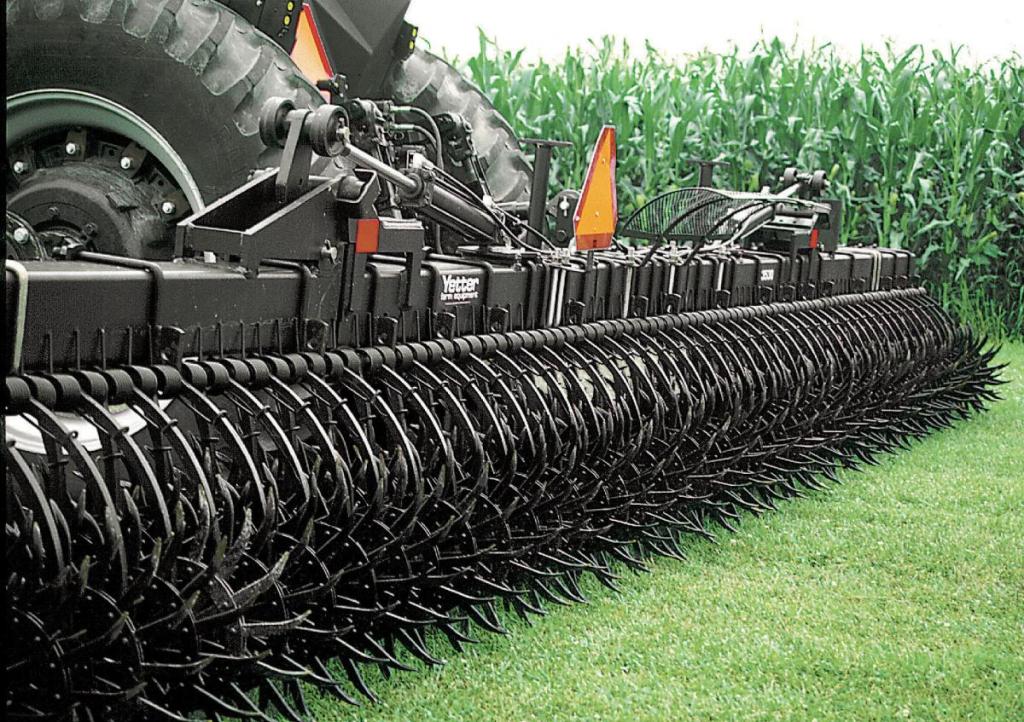
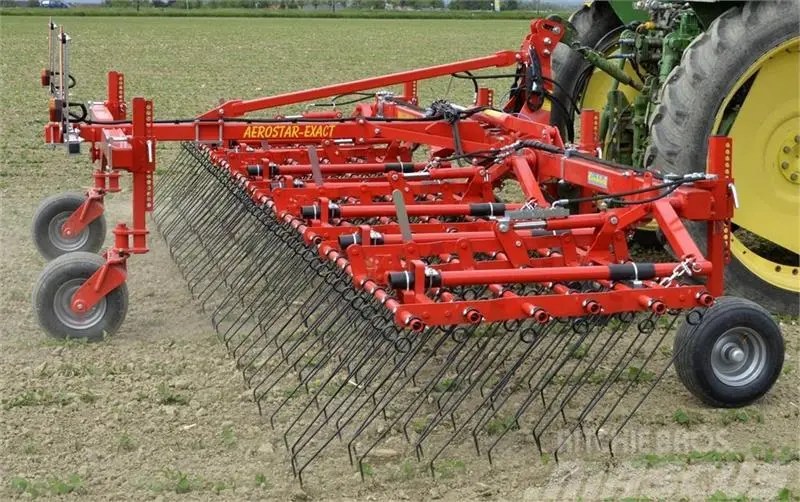
Weeds will be a pain but if you have a good rotary hoe (also called a sand fighter in the west) or a tine weeder you can keep out the white thread weeds that come early just after planting.  Once your corn is up and too big for rotary hoe or tine weeder then a good setup with sweeps will get you to layby and help you stay relatively clean.  

Cover crops for weed control

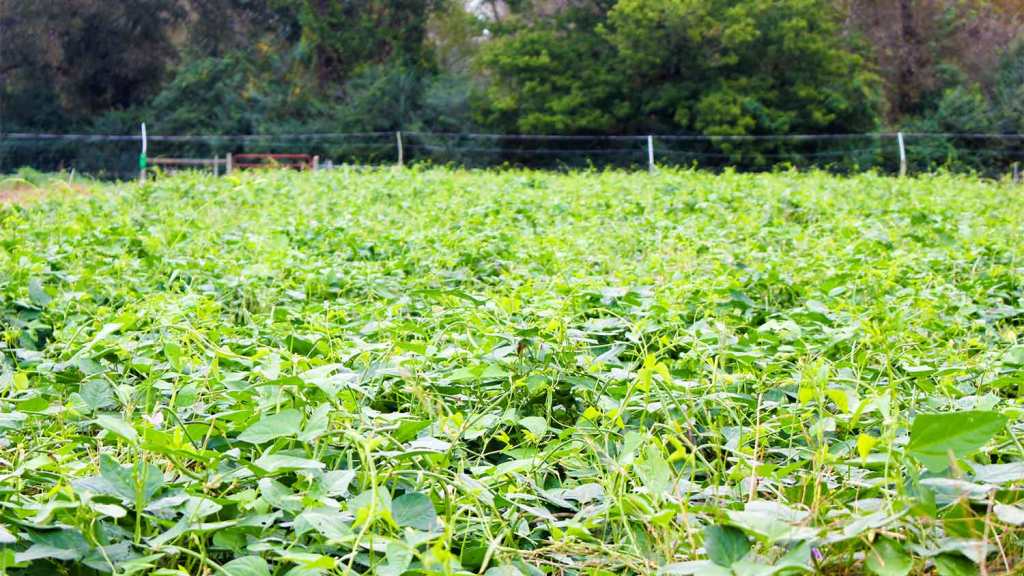
In the summer we plant Sudan’s for weed control and maybe a mix of Sunn Hemp thrown in.  Cowpea is not too competitive with other crops but makes a great crop by itself and can give you up to 100 lbs. of Nitrogen per acre if you get a good stand.

Winter cover is more difficult because we typically start to get land ready about the time our cover crops start to grow in February/March.  Winter cover is almost always a small grain and most of the time we use a “combine run” wheat or oat since they are cheaper with a planting of turnips or daikon radish or both.  

Fertility

For extra fertility besides our cover crops we use cow manures, compost, or chicken/turkey manure.  Lots of growers use companies that are making pelleted organic fertilizers which is a chicken manure pellet and very good at about $200 a delivered ton.  

Next email: Organic control for spider mites in organic peanuts?

Answer: There are several ways to go about this.  One, there are lots of botanicals and I include a spreadsheet with them listed.

Two, growers do use beneficial insects on a limited basis.  Farmers generally know where the problem spots are and then buy and distribute a beneficial in that area first.  I have a page attached for beneficial or predator mites that are used successfully.  Pricey but fun to use…..

Third, we do have some organic products that have success.  Sil Matrix from Certis Biologicals is a potassium silicate that provides a protective coating on the plant and has been successful.  Cost is $32/gallon and use rate is 1-4 quarts.  Des X or M-Pede is a soap and there are other companies selling them too. Soaps can work well but watch use in heat.  They are strictly a knockdown.  PFR-97 at 1-2 lbs. per acre at $50/lb. is a fungus that has had success on mites.  It is slow so it needs to go out close to infestation, but it stays around to infect some later problems. There are other products for spider mites but some get pricey in a hurry and for field crops can be out of the price range. Hope this helps!

There are certainly many more answers that can be given to these email questions but these help start the dialogue and usually get us well on the way to a final solution. If you have more suggestions give me a comment back.

I know I have mentioned product names here in this blog post and I am not endorsing these companies necessarily but simply saying they have products for organic producers. I welcome companies to share their information with me so that I have more information at my fingertips for helping new growers…. Please, don’t shoot the messenger or in this case, the organic specialist!

What varieties are organic farmers planting?

I get questioned sometimes about varieties to plant in organic agriculture. Farmers are some of the best experimenters of all time and they find things nobody else can! If you look at the USDA Integrity Database there is lots of great information available and depending on the organic certifier there will be a good list of what organic growers are planting.

Now the hard part is getting all that information out of the database and into a format that you can see what they are planting. Now it will not include every variety our many Texas organic growers plant but it will give you a pretty good idea. Check out the list below by clicking either on the button for a Download or on the Organic Varieties for 2025 for it to open in an online spreadsheet.

Fresh Trends 2023 explores reasons behind organic demand.

This article and information were written by Tom Karst with The Packer, and it appears on The Packer website here: The Packer Hopefully this will keep me out of trouble for copying their information for you to read!!!

The Packer surveyed over 1000 consumers last fall about a host of things but in particular they asked about buying organic produce. They asked, “Why do you buy certified organic produce?”

  • Food safety/avoiding chemicals: 57%.
  • Nutrient content/Personal health: 51%.
  • Environmental/social responsibility: 41%.
  • Other: 3%.

I hear from a lot of consumers and even though I won’t say that my results are scientific, I will have to agree that people talking to me say they want organic because they don’t want chemicals on their food.

Here is the second question they asked, “When consumers were asked where they were most likely to buy organic fresh produce, respondents said:”

  • Chain superstore (i.e., Walmart, Target): 32%.
  • Warehouse store (i.e., Sam’s Club, Costco): 17%.
  • Regional supermarket (i.e., Safeway, Ralphs, Publix, H-E-B): 21%.
  • Chain discounter (i.e., Aldi, Save-A-Lot, Food 4 Less, Lidl): 7%.
  • Specialty market (i.e., Whole Foods, Trader Joe’s, Sprouts): 14%.
  • Farmers market: 9%.

Almost everyone assumes that people buy organic at specialty stores that sell organic but notice that the typical Texas grocery store sells 70% of all organic produce bought.

They also asked about the percentage of organic produce bought and all the consumers surveyed bought some organic produce. When asked if they would pay a premium for organic only 11 percent of consumers were not willing to pay more for organic.

Rice Producer Survey – It will help with future rice policy issues!

Nobody likes to do surveys – period!  We are about to see the political survey season and the calls, emails and texts will be coming almost every day.  I never really see the point to those surveys and like everyone else I just “hang up!”

But occasionally there are surveys that are designed to help tell your message and this rice survey is just that. Producers almost always complain that “no one is listening!”  But sometimes they are listening, and we want to know your opinions about rice farming and the rice industry.  We would love to have your answers and we will use your answers along with every other rice producer to implement change and tell your message.

To fill it out online just go to this website: https://uark.qualtrics.com/jfe/form/SV_822WfDn0s1FHA2y

Or just take a picture with your phone of this scan code to go to the website.

This survey was developed by the University of Arkansas, University of California, and Texas A&M University.  A big thanks to the University of Arkansas for doing the survey formatting. This project is ongoing, and we will continue to collect information for the next several months.

Interested in Organic Guar?

Recently I spoke with Josh Brooks the new Chairman and CEO of Guar Resources in Brownfield.  Josh is pretty excited to announce the reopening of the facility after a long 15 months of work.  They are now looking for growers to contract guar production in 2023. 

Guar is an indeterminate legume that is perfect for rotation programs around cotton, sorghum, corn, etc.  It is predominantly a dryland crop and is very drought tolerant.  I have had the opportunity to be a part of growing guar in the 2012-2014 years and found it to be easy to grow.  Seeding rates are generally around 8 lbs./ac. but can range from 6-12 lbs./ac. 

I asked Josh about the need for organic guar, and he said YES!  He is offering contracts for organic that are about 50% more than conventional price.  For more information on guar go to https://guarresources.com

Utrisha N Use on Small Grain Silage

Utrisha N from Corteva Biologicals is an OMRI certified dry powder of Methylobacterium symbioticum, a bacterium that enters the plant and takes nitrogen from the atmosphere for the plant to use. It comes in 50 ounces packages that will treat 10 acres (5 oz. per acre). It is mixed with water and sprayed with a minimum of 10 gallons of water per acre.

Utrisha N Product Information on Corteva Biologicals website

On April 4th I applied the Utrisha N on triticale being grown for silage (picture below).  I wanted to see if Utrisha N would increase silage protein when applied late in the season (preboot to boot stage).  The Utrisha N was being applied by a commercial rig as a liquid and I marked off a sizeable area that was not treated to be able to harvest as an untreated check.

I took two harvests from the plots (2 plots with 2 replications), one early harvest on April 18 and one late harvest on May 3rd. I did not take a yield from each plot since the Utrisha N was applied after vegetative growth had ceased and we were into grain production. The cost of organic protein sources can mean a lot of extra money spent on organic grain when there could be a cheaper source! Forages are always a cheaper option for both energy and protein and they help stimulate milk production. But they must be high quality to fit in a milking cow ration.

The longer the plants were in the field and continued to mature to grain, the overall crude protein % went down (typical, with maturity). It is amazing how quickly overall crude protein drops with maturity as seen by the untreated area. But the Utrisha protein reduction was less with time than the untreated area and more than paid for the Utrisha N treatment and application at $20 per acre!!