Biopesticides for the Control of Whiteflies

by Holly Davis, Ph.D. – Certis Biologicals Field Development Manager, Southwestern U.S.

Whiteflies have been a persistent problem this year for Texas growers.  These insects can be especially difficult to control in organic production. There are numerous OMRI certified biologicals, or biopesticides, available to growers but, to get the best efficacy, it is important to understand a few things about them. 

First, biopesticides need to be applied at the first sign of whitefly activity.  Trying to clean up a situation where plants are heavily infested with all life-stages of whiteflies (or any insect or disease) is extremely difficult and there may be no escaping loss of quality and/or yield.  The use of yellow sticky cards in greenhouses or around field margins can help detect whitefly activity early so that applications can begin in a timely manner.

Most biopesticides labelled for whitefly control are contact pesticides, meaning they must either be sprayed directly on the pest, or the pest must move across a treated surface while the biopesticide is still active. This can be tricky for insects like whiteflies which spend the majority of their time on the underside of leaves, sometimes deep within plant canopies.  For that reason, it is important to use the correct amount of carrier, the right spray equipment, and nozzles, and to include a spreader sticker when appropriate to ensure product is distributed as evenly as possible and adheres to plant tissue.  

Once applied, biopesticides may not persist in the environment for a long period of time.  Many are degraded by sunlight and/or other environmental factors.  Remember, most do not move through the plant (are not systemic) so any new plant growth after application will not be protected.  For this reason, biopesticides need to be applied on a regular interval, often every 7-14 days, to ensure that whitefly populations do not build up between applications.

Finally, it is important to understand what to expect from different types of biopesticides.  For example, while some products like Des-X®, an insecticidal soap concentrate, have the advantage of providing a quick knock-down of whitefly populations by breaking down the insect cuticle, there is no residual efficacy.  Any insect that lands on a leaf after the treatment has dried will not be impacted.  Other products such as the entomopathogenic fungi, Beauveria bassiana, found in BoteGHA®/BotaniGard®, may take several days to kill whiteflies by overwhelming them with fungal spores, but can persist in the environment and continue to infect immigrating or emerging insects.  This typically happens when there is high relative humidity and/or a dense plant canopy. 

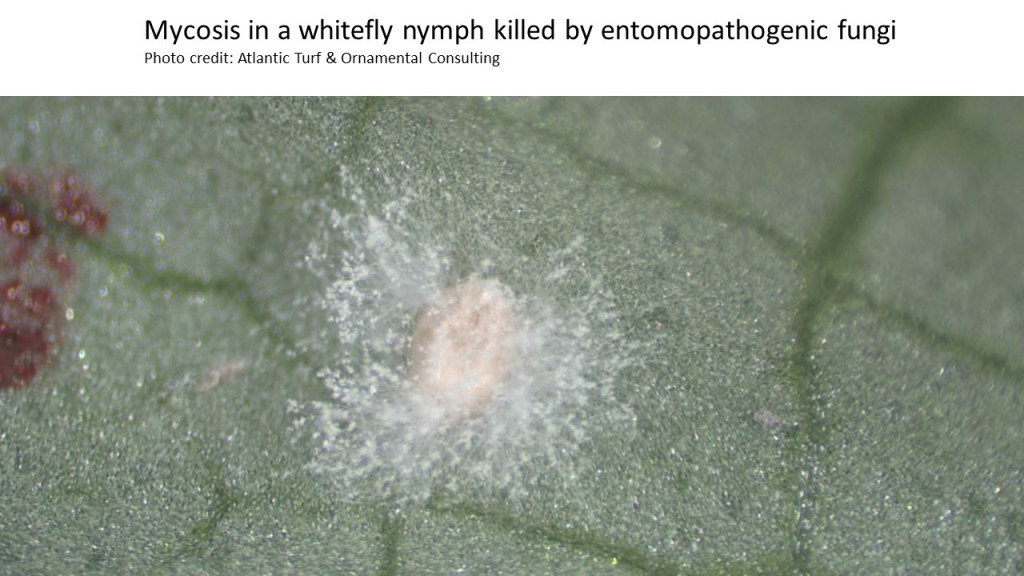
This persistence can be recognized by mycosis, or the presence of emerging spores from a fungus-killed insect. However, lack of visible mycosis does not mean an entomopathogenic fungi is not working. In many cases, whiteflies may simply darken and desiccate.

No matter what biopesticide you chose, it is incredibly important to read the label and understand the product to get the best efficacy possible!

A big thanks to Dr. Davis for supplying such helpful information. For more information on Certis Biologicals, please visit https://www.certisbio.com/

Biological Control of Hemp Sesbania in Rice

Hemp sesbania growing in organic rice in Texas

It doesn’t take you long to figure out the hemp sesbania (Sesbania exaltata) is one of the toughest weed problems we have in organic rice. It is an annual plant, but it acts like a tree as you can see in the picture. It has a few other names, but the most common other name I have ever heard is “coffee weed.”

In a recent meeting with organic rice producers this particular weed became a huge topic of discussion (mostly cussing). This conversation got me to thinking about the possibility of some “bioherbicide” or even some beneficial insect or nematode that might be able to control this noxious weed.

In the process of doing many searches, trying all kinds of names or phrases, I did find this article written in 2014, “Biological Control of the Weed Hemp Sesbania in Rice by the Fungus Myrothecium verrucaria.” (Just click to read)

The authors are at the USDA Stoneville, MS research station and do crops research but some of that research is on biological control of pests in crops. In this research they were looking at applying different rates of the fungus and at different weed plant heights. They looked at 3 concentrations of the fungus sprayed on weed plant heights of 4-8 inches, 8-16 inches, and 16-24 inches.

They did find that the best results were achieved when they used Silwet L-77, an OMRI approved surfactant, with the fungus mix. Overall, the fungus did best at the higher rate and on the youngest plants and control at that timing was 100%! That is phenomenal, but even the bigger plants had control levels around 90%.

Why don’t we have this fungus available to use? That is an excellent question and one I hope to find out soon. I am sure this research was put on the shelf because of changing rice herbicide strategies like Clearfield and the relatively small organic rice industry without much voice. But I think there is a growing interest in organic rice and as a result a growing interest in organic weed control in rice. More details are to follow!

Cotton Varieties for Organic Production

by Dr. Jane Dever, TAMU Cotton Breeder – Lubbock

Cotton harvest is wrapping up at the Texas A&M AgriLife Research and Extension Center breeding tests and plots. It was a tough year for cotton. Dr. Carol Kelly, Research Scientist and Assistant Cotton Breeder, pictured above with a plant from the nursery that has bolls, summed 2022 up with a Haiku poem:

Pretty and green field. Hot and dry summer we had. Leaves fall, no bolls, sad!

Ginning and data analysis is ongoing, but results from second year testing of candidate organic cultivars at the furrow-irrigated location in Lubbock indicate more bolls than we thought. Twenty experimental lines were tested with four commercial cultivar checks in a randomized complete block design with four replications. Test average for yield was 1,350 pounds/acre and quality, except for higher than desired micronaire (5.1), was excellent. Average fiber length, 1.22 inches; uniformity ratio, 84.1; strength, 36.1 grams/tex. Line 19-4-517 produced 1,622 pounds/acre compared to ‘FM 958’ at 1,586. Candidate for 2023 release with the first real improvement in Verticillium wilt resistance since the late ‘90s – early 2000’s, 19-4-446, produced 1,503 pounds/acre with 1.23-inch fiber length, 85.5 uniformity ratio, and 37.1 g/tex fiber strength.

Data from other locations will be available soon, so feel free to reach out to us for the results. We did not anticipate harvesting the dryland location at Lubbock but caught some late moisture and ended up with a nice test. Favorite organic candidate okra-leaf cultivar, in the third year of testing, produced almost 300 pounds on dryland compared to ‘FM 958’ at 260 pounds. We look forward to analyzing all the test and nursery data and getting fiber quality results early next year.

Happy and prosperous New Year to the organic cotton producers and community from the Texas A&M AgriLife cotton breeding team at Lubbock.

Jane Dever

Breeding Peanuts for Organic Production

by Dr. John Cason, TAMU Peanut Breeder–Stephenville

It was a tough year for all producers around the state and the Texas A&M peanut breeding program were no exception. I heard one producer say, “we had to fight for every pound of yield we got this year,” and I totally agree with him when referring to the 2022 season. Despite the challenges we continue to make headway in developing new germplasm specifically for organic production.

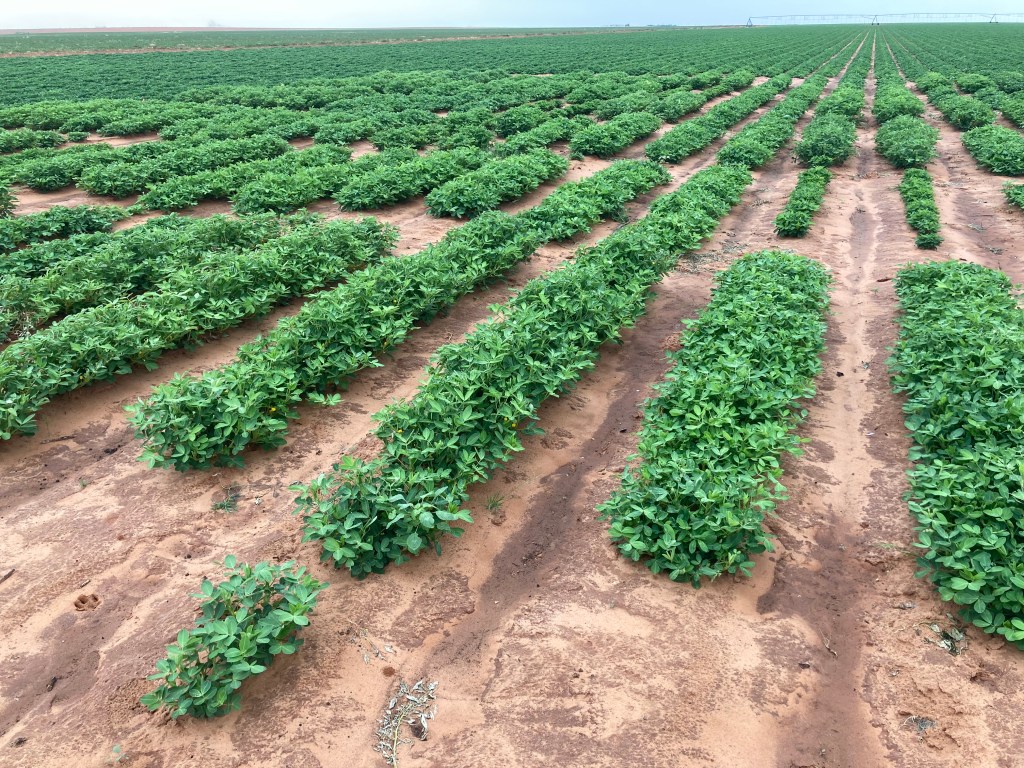
During the 2022 season we had organic trials in Gaines and Wilbarger Co. on certified organic farms. Being able to test our breeding lines in grower fields is crucial for identifying potential lines that will produce good yields in different areas of the state and varying management practices. One hybrid Spanish line in particular, TP210656-2-1, performed well for the second year of testing.  It yielded 4,650 lbs./acre in a really tough year compared to a test average of 3,745 lbs./acre. Additionally, It also graded 5.2% points higher that’s the test average with an average grade of 78.3 for the test. We are very excited about this line performing near the top of our tests for the second year in a row and are hopeful as more results become available for 2022, it performs as well at other locations.

HLB research in organic citrus

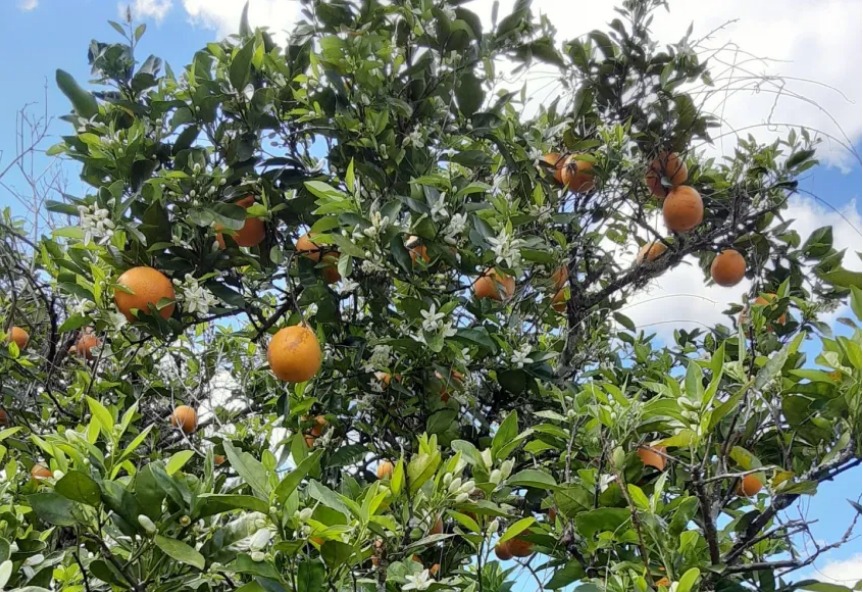
A grant from the U.S. Department of Agriculture’s Organic Agriculture Research and Extension Initiative (OREI) is intended to advance research to help organic citrus producers fight HLB disease. The grant awards $2.03 million to a team of scientists from the University of Florida, Texas A&M University and The Organic Center. The Organic Center is a non-profit organization convening evidence-based science on the health and environmental impacts of organic food and farming. The grant funds a four-year project.

Huanglongbing (HLB), also known as citrus greening, is the most serious disease of citrus. The disease is spread by the Asian citrus psyllid (Diaphorina citri) (ACP), which has been present in Florida since 1998. ACP transmits the bacteria to the tree when feeding on new shoots. There is no current cure for this disease and all commercial varieties of citrus are susceptible to HLB. 

“Citrus greening continues to devastate the citrus industry, and organic growers need to have organic solutions to fight this deadly disease without resorting to dangerous chemicals or genetic engineering,” said Amber Sciligo, director of science programs for The Organic Center. 

HLB is in Texas but its reach has been limited by very proactive grower programs and support. This research will be specific to organic growers who don’t use conventional chemicals for Asian citrus psyllid control but depend on preventative steps and biological controls. This research will protect two valuable resources, the Texas citrus industry and the organic citrus growers who supply consumers with a safe, organic fruit crop every year.

Peach Leaf Curl – It’s time!

Peach leaf curl, also known as leaf curl, is a disease caused by the fungus Taphrina deformans. Peach leaf curl affects the blossoms, fruit, leaves, and shoots of peaches, ornamental flowering peaches, and nectarines, and is one of the most common disease problems for Texas Peaches. The distorted, reddened foliage that it causes is easily seen in spring. When severe, the disease can even reduce fruit production substantially. If you saw leaves that looked anything like the ones above, you may want to consider treatment.

Leaf symptoms appear about 2 weeks after leaves emerge from buds. The fungus grows between leaf cells and stimulates them to divide and grow larger than normal, causing swelling and distortion of the leaf. Red plant pigments accumulate in the distorted cells as you can see in the picture above.

Why am I writing about this disease now since we won’t see it till spring? Well, this disease has gone through the summer and is on the tree now as ascospores (sexual spores) and bud-conidia (asexual spores) on the tree’s surfaces, such as leaves, buds, bark, etc. As we get into the fall and much cooler temperatures or even a frost the leaves will begin to fall off. This leaf abscission (separation of the leaf from the tree) is actually a wound. When you have a wound, you have a place for these disease spores to enter the tree. Any dew, light rain or even wind can move spores to the wound.

Treatment

So, as the leaves begin falling off or after they have all fallen off, it is time to consider a treatment. Generally, a single early treatment when the tree is dormant is effective, although in areas of high rainfall or during a particularly wet winter, it might be advisable to apply a second spray late in the dormant season, preferably as flower buds begin to swell but before green leaf tips are first visible.

Historically, the most commonly and basically only fungicide for organic growers to use are the fixed copper products (see below for a list). For all copper-containing products, the active ingredient, copper, is listed as “metallic copper equivalent,” or MCE, on the label. Various product formulations differ widely in their metallic copper content. The higher the MCE, the greater the amount of copper and the more effective the product will be. However, other factors such as coverage, use of additives as such stickers and spreaders, and frequency and duration of rain, which can wash off the copper, also will impact product effectiveness. In all cases, the copper is active only when it is wet, when the copper ions are in solution. Thorough coverage is very important but without leaves not that hard. It is really good to get a calm day, lower pressure down, try to get a mist out of your spray tips and make sure the limbs are wet.

Active IngredientTrade NameCompany
copper hydroxideKocide-2000/3000
Champ ION or WG
Certis
NuFarm
copper octanoateCuevaCertis
Copper oxychloride 23.82%  
Copper Hydroxide 21.49%
Badge X2Gowan
copper sulphate (pentahydrate)Cuproxat
Instill O
Troya
NuFarm
Sym Agro
Oro Agri

As I first said, It’s time! It’s time for all you peach growers to get that sprayer back out, purchase your spray product, and SPRAY!