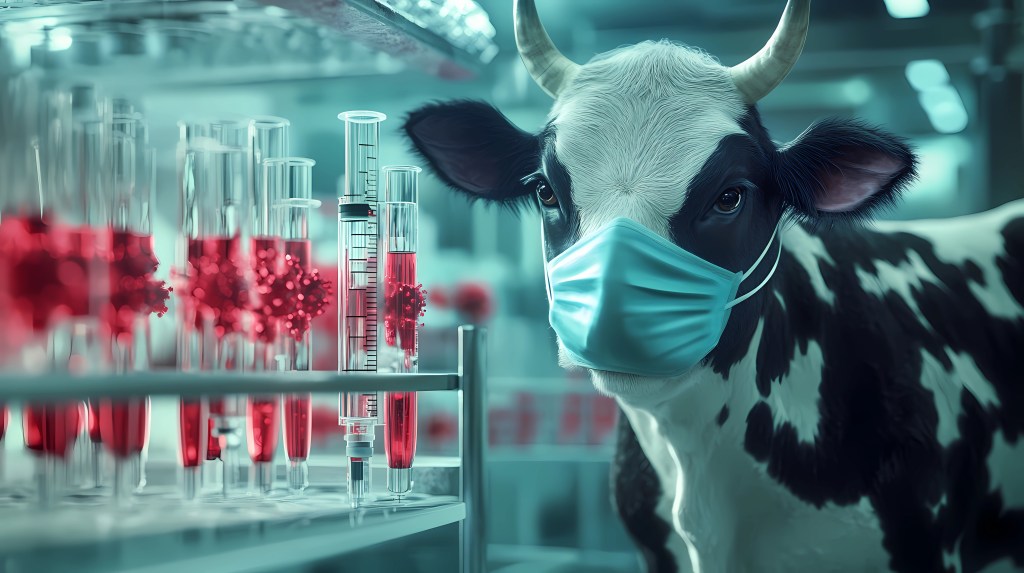
A recent study in Nature Communications1 investigates the impact of highly pathogenic avian influenza (HPAI) H5N1 on dairy cattle—highlighting concerning health and economic consequences that warrant attention in organic and conventional dairy farming alike.
What Happened on the Farm
- Researchers examined a 3,876‑cow dairy herd in Ohio affected by H5N1 in Spring 2024.
- About 20% of cows showed clinical signs—such as fever, reduced feeding, and mastitis, leading to a dramatic milk loss lasting around 7 days, with many cows quarantined.
Substantial Milk Production Declines
- Clinically infected cows experienced a steep drop: from ~77 lbs./day to ~24 lbs./day, persisting at reduced levels for up to 60 days after diagnosis.
- Over 60 days, milk output per cow fell by nearly ~2,000 lbs., a huge hit to productivity.
Hidden Infections: Subclinical Cases Are Common
- Serum tests on 637 cows found 89% had been exposed to H5N1.
- Among these, around 76% never showed clinical signs, maintaining normal milk yields despite infection.
- This suggests widespread but often unnoticed infection—highlighting the need for proactive monitoring.

Economic Impact: Nearly $1,000 Loss per Cow
- Clinical infection led to an estimated $950 loss per cow, accounting for lost milk, culling, and replacement costs.
- The total for this one herd was a staggering ~$737,500.
Why This Matters
- Extended milk loss even after cows recover points to lasting damage—likely from virus replication in mammary tissue causing severe mastitis.
- Subclinical infection prevalence underscores the importance of surveillance and early detection tools (e.g., monitoring rumination and milk yield trends).
- Risk factors: cows in mid-to-late lactation and higher-parity animals were most affected.
- Transmission during milking is suspected—pointing to milking hygiene and protocols as possible control points.
From the Field: Cornell’s Perspective
Cornell University highlighted in Phys.org2 that pasteurization kills the virus, so consumer milk remains safe. However, at the farm level, the outbreak is an economic crisis—on par with the large losses seen in poultry, though less government support exists for dairy.
Take‑Home Messages for Farmers
- Vigilant monitoring: Falling rumination or milk yield—especially during HPAI outbreaks—may signal infection before symptoms appear.
- Review milking biosecurity: Strengthen cleaning protocols between cows to reduce spread.
- Prepare economically: Understand that even a few cases can cascade into massive financial losses.
- Surveillance matters: Regular serology can detect infections early in both lactating and dry cows.

Start Early Protecting Organic Dairy Replacements
To help protect calves from H5N1 infection through contaminated waste milk, organic producers have a practical tool: citric acid acidification. I wrote about this simple, NOP-compliant method can inactivate the virus and reduce bacterial pathogens without the need for pasteurization. To learn how to implement this low-cost strategy on your farm, read my full article here: A New Organic Tool Against H5N1 in Calves: Citric Acid in Waste Milk.
Resources & References
- The impact of highly pathogenic avian influenza H5N1 virus infection on dairy cows, Peña‑Mosca et al., Nature Communications, 2025 ↩︎
- Avian flu has major economic costs for dairy industry. (2025, July 15). Phys.org. Retrieved July 17, 2025, from Phys.org agriculture news section ↩︎
Discover more from Texas A&M AgriLife Organic
Subscribe to get the latest posts sent to your email.

 Texas A&M AgriLife Organic