
Topics Covered in This Article!
- Selection of the Land
- Selection of Variety
- Use Windbreaks
- Providing Frost Protection
- Use of Row Covers
- Plastic Mulch
- Transplants
- Drip Irrigation
- Fertility
- Use of Growth-Promoting Substances
- Staggered Planting
- Resources
Selection of the Land
Light, sandy soils warm up faster than heavier, poorly drained soils. Of course, we don’t always have a choice, but if you are going to spend money on transplants and fertilizer, choose your best land for vegetables. The heat to warm up wet soil 1 degree will heat up dry soil 15 degrees.
Selection of Variety
Check the days to maturity. There is a big difference between many varieties, and this area needs careful consideration. The early variety may not be the best overall, but it can get you into the market earlier, which can be advantageous.
Use Windbreaks
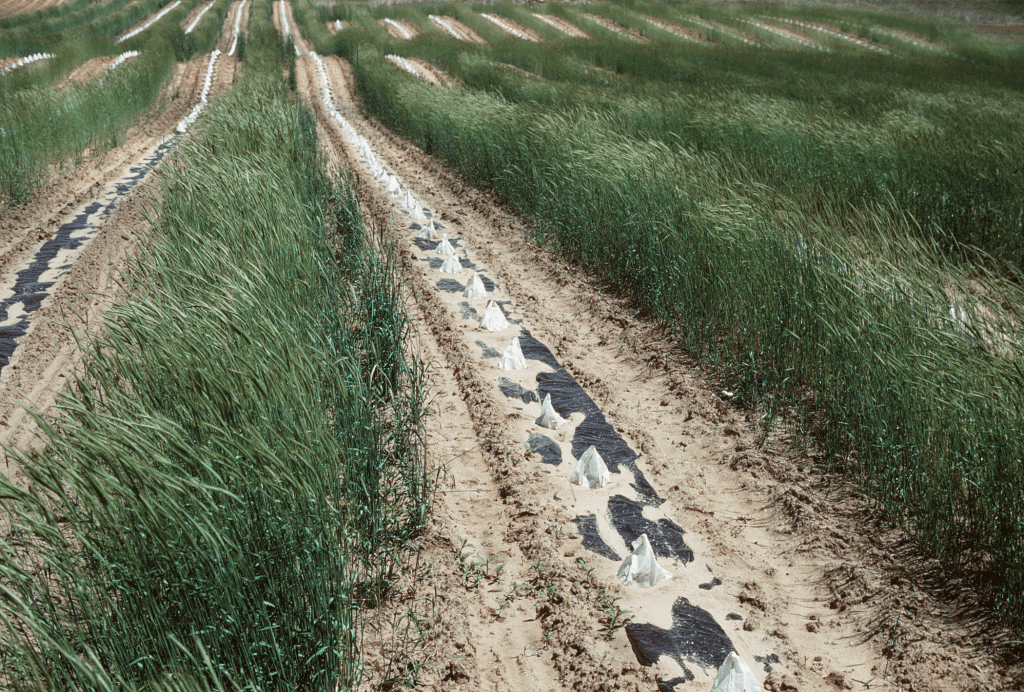
This is perhaps the most important based on work I have done with melons. Windbreaks can decrease time to maturity by a week. Windbreaks are simply plantings with taller plants done weeks or months before your vegetable crop is planted. For example, a rye crop planting in October will be heading out when you plant melons April 1st. The melon crop is stripped into the standing rye.
Providing Frost Protection
In the past, I have worked with growers who went to the trouble and expense to bring in helicopters when an early morning freeze was predicted. It is not unusual to see vineyards with ‘wind machines’ to circulate air when a frost is predicted. Water sprinklers will coat plants with ice which is a freeze protection – sounds crazy I know! Some orchard owners will have bales of hay they set on fire to generate a smoke layer that holds in heat. The basic message is to be prepared if you plant early.

Use of Row Covers

High-value crops like strawberries really benefit from the use of row covers. These can be expensive, so the crop must generate good income to justify the cost. Floating row covers can protect plants from early-season pests and cold temperatures, allowing for earlier planting and faster growth (4 above). These covers can be removed once the danger of frost has passed or may be left on to protect from insect pests.
Plastic Mulch
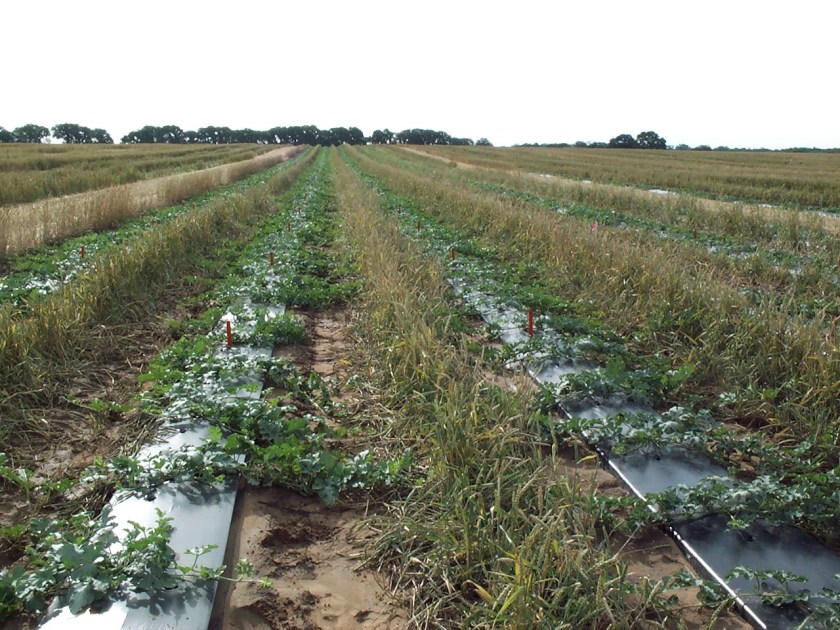
These increase earliness by warming the soil, conserving moisture, preventing weed problems, and increasing total plant yields. In our Texas soils, plastic mulch can also help keep the plant row from becoming too wet or too dry.
Transplants
Transplants will greatly increase earliness but only if the transplant is healthy and vigorous. You must use organic sourced transplants! Currently we are working to develop better organic transplants and methods for growing transplants in a TDA supported Specialty Crop Grant. Some transplants that have been grown too long in the greenhouse don’t do well in the field so check your source constantly for when they will be ready so you will be ready.
Drip Irrigation
Providing water in small amounts often is the job of drip irrigation. Used with plastic mulch, drip irrigation increases earliness and yield. Drip irrigation is fairly easy to install and relatively inexpensive. You generally need a pressure regulator, filter, hoses or pipes to carry the water and drip tape to deliver to the crop.
Fertility
High levels of nutrients ensure rapid growth and utilization of water and sunlight. Many growers struggle to provide stored nutrients in soil, provide pop-up nutrients at planting, and fertilize with organic nitrogen sources through harvest. Regular soil testing helps determine nutrient deficiencies and allows for proper soil amendment before planting. Balanced soil fertility is crucial for early and vigorous plant growth.
- What is the True Cost of Compost (or manure) in 2024?
- Soil Testing, soil results, soil test labs
- Organic Fertilizer – what is it, what are the rules, and where do you buy it?
Use of Growth-Promoting Substances
Effect of fulvic acid on yield performance of organic bell
pepper (Capsicum annuum L.) under open‑field conditions
in Tennessee. 2023
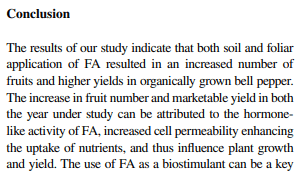
Certain growth-promoting substances, like seaweed extracts or microbial inoculants or even Fulvic Acid, can enhance earliness, plant growth and development, potentially leading to earlier harvests.
Staggered Planting
Planting in staggered intervals (planting tomatoes on a 2-week schedule) can help manage for frost losses and increase the harvest window and ensure a continuous supply of produce, allowing entry into the market over a longer period.
Resources
- Building Soils for Better Crops
- Soil Balancing Basics for Organic Farming
- Biostimulants – The Next New Frontier for Ag
- Best Cover Crops for Weed Control and Fertility
- What is the True Cost of Compost (or Manure) in 2024
- Composts and Herbicides Don’t Mix
- Managing Soil Biology for Organic Farming
- The Economics of Transitioning to Certified Organic Farming
- Farming with Soil Life
- Managing Soil Biology for Organic Farming
- Soil Balancing Basics for Organic Farming
- The Economics of Transitioning to Certified Organic Farming

Discover more from Texas A&M AgriLife Organic
Subscribe to get the latest posts sent to your email.

 Texas A&M AgriLife Organic