

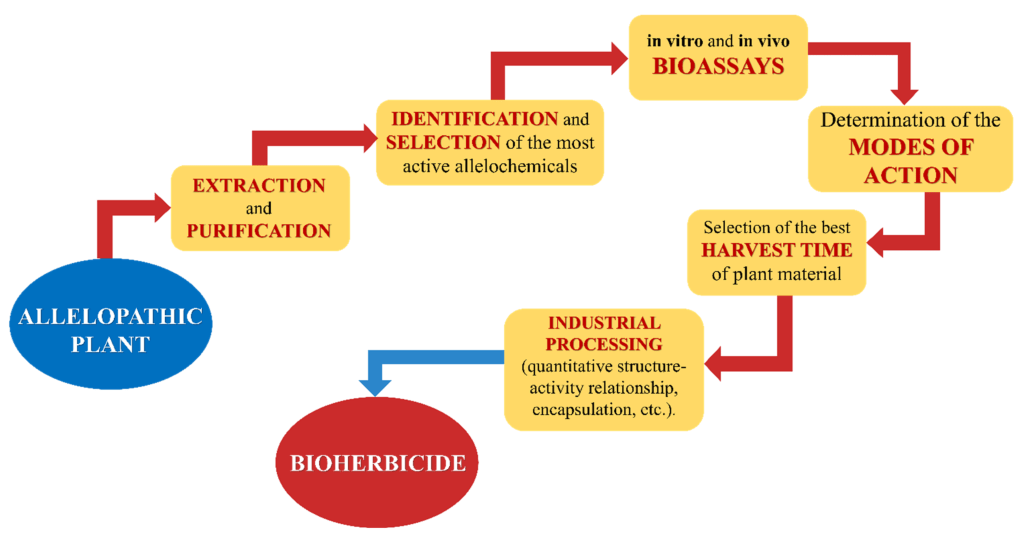
Have you ever wondered how some plants manage to thrive while others struggle to survive nearby? The answer lies in a fascinating biological phenomenon called allelopathy. It’s all about how certain plants release chemicals, known as allelochemicals, into their environment, impacting the growth and survival of neighboring organisms, especially other plants. This effect can be both a growth inhibitor and stimulator, but it’s more commonly associated with inhibition. For those in organic agriculture, understanding these interactions is crucial for managing weeds, optimizing crop rotation, and fostering sustainable practices.
Click a link below to Scroll Down!
- Key Allelopathic Plants and Their Astonishing Effects
- The Science Behind Allelopathy: Mechanisms and Implications
- In Summary
- The Reasons Rye Makes a Great Cover Crop
- Rye’s Allelopathic Effects on Established Weed Root Growth
Key Allelopathic Plants and Their Astonishing Effects
1. Black Walnut (Juglans nigra): A well-researched allelopathic plant, it secretes juglone, a compound toxic to many plant species, hindering their seed germination and growth. It’s particularly tough on plants like tomatoes, potatoes, and alfalfa.
2. Sunflower (Helianthus annuus): This bright beauty contains chemicals that can suppress the growth of nearby weeds, giving it an edge in reducing weed competition in crops.
3. Rye (Secale cereale): A champion in the allelopathic world, especially when used as a cover crop. Rye releases chemicals that effectively suppress weed germination and growth.
4. Sorghum (Sorghum bicolor): Known for producing sorgoleone, this substance hampers the growth of neighboring plants, making it a natural weed inhibitor in some agricultural systems.
5. Eucalyptus species: Not just known for their koala-attracting leaves, these trees contain compounds that can inhibit the growth of understory plants, affecting their seed germination and growth.
The Science Behind Allelopathy: Mechanisms and Implications
– Chemical Release: Plants can release allelochemicals through various means like leaching, root exudation, volatilization, or decomposition of plant residues.
– Effect on Soil Microbiome: These chemicals can alter the soil microbiome, impacting nutrient cycling and availability.
– Agricultural Implications: Grasping the concept of allelopathy aids in developing strategies for crop rotation, intercropping systems, and organic weed management, especially crucial in organic agriculture where chemical herbicides are avoided.
In Summary
The study of allelopathy opens doors to developing sustainable organic agricultural practices. By leveraging the natural inhibitory effects of certain plants, we can manage weeds and enhance crop production in an eco-friendly way. However, it’s crucial to balance these benefits against potential negative impacts on desired plants (our normal field crops) and in your typical rotation plan and broader organic system plan.

The Reasons Rye Makes a Great Cover Crop
Significant research has delved into the specific compounds in rye (Secale cereale) that contribute to its allelopathic properties. The focus has been on identifying and understanding these compounds, their release into the environment, and their action mechanisms.
Key Allelochemicals in Rye: Nature’s Weed Suppressants
1. Benzoxazinoids (BXDs): The primary allelochemicals in rye, like DIBOA, are known for their potent allelopathic effects. They inhibit the germination and growth of competing plants.
2. Phenolic Acids: Rye also produces various phenolic acids, such as ferulic, p-coumaric, and vanillic acids, contributing to its allelopathic effects, particularly in inhibiting weed growth.
Research and Mechanisms: Unraveling the Mystery
Laboratory and Field Studies: Both controlled laboratory experiments and field trials are crucial in understanding the practical implications of these compounds on weed suppression and crop productivity.
Mechanisms of Action: BXDs and phenolic acids in rye can affect cell division, root elongation, and nutrient uptake in target plants, disrupting their hormonal balance and interfering with key metabolic pathways.
Future Research Directions: Maximizing Benefits, Minimizing Drawbacks
Ongoing research focuses on understanding the environmental factors affecting the release and activity of these allelochemicals and developing cropping systems that maximize the benefits of rye’s allelopathy. The allelopathic properties of rye, primarily due to benzoxazinoids and phenolic acids, offer valuable opportunities for natural weed suppression in agriculture.
Rye’s Allelopathic Effects on Established Weed Root Growth
The allelopathic effects of rye extend beyond inhibiting weed seed germination to also affecting the root growth of established weed plants. This characteristic enhances its value in weed management strategies but requires careful consideration of various agronomic and environmental factors for optimal effectiveness.
Impact on Established Weed Root Growth
1. Inhibition of Root Elongation: Allelochemicals in rye can inhibit root elongation in weed plants, reducing their ability to absorb nutrients and water effectively.
2. Disruption of Root Development: These compounds can interfere with the normal development of roots in weed plants, leading to reduced root mass and altered architecture.
3. Impact on Root Hair Formation: Allelochemicals can also affect the formation of root hairs, critical for nutrient and water uptake.
Mechanisms of Allelopathic Interference
– Chemical Interference: Allelochemicals from rye can directly affect cellular processes in weed roots.
– Altered Soil Microbiology: Rye’s allelochemicals can change the soil microbial community, impacting nutrient availability or increasing the susceptibility of weeds to soil pathogens.
In Summary
Rye’s allelopathic properties offer a fascinating and valuable tool for natural weed management in agriculture. However, its application requires a nuanced understanding of its interactions with the soil, plants, and environmental conditions. As we continue to explore and understand the secret powers of plants like rye, we open up new possibilities for sustainable and effective agricultural practices, especially for Texas Organic Farmers.
References:
Kohmann, M. and Kucek, L.K. (2026). Uncovering the unknowns of cereal rye allelopathy. Hay & Forage Grower, February 18, 2026, pp. 16–17. Available at: https://hayandforage.com/article-5611-Uncovering-the-unknowns-of-cereal-rye-allelopathy.html
Discover more from Texas A&M AgriLife Organic
Subscribe to get the latest posts sent to your email.

 Texas A&M AgriLife Organic
18 thoughts on “Allelopathy – What is it, what has it, and how do we use it?”