

Here are a couple of recent emails from growers just getting into organic production. The first is directed to a brand new transition grower that has land ready to go organic and asked about growing a corn grain crop in the Spring of 2024.
Answer: First, congratulations on going organic. We enjoy good prices on organic, have fun growing organic, and it does get easier year after year.
Varieties


We do not have “organic” corn seed growers in Texas and so we typically plant conventional corn with no traits or seed treatments. Our certifiers understand this and work with us. Here are some that organic varieties that grower’s plant.
Pioneer – P0075, P0157, P1197, 6381, 5353, P1197, P1639, P33Y74, P1197, P1870, P1751, P1422, P1639W, P32B10W, (63T1GH, 6589ZZ Not sure if these are Pioneer or another company? They were reported by growers with no more information)
Partners Brand – PB 11802, CL 860, PB 8580
DeKalb – DKC62-06, DKC63-58, DKC64-32, DKC65-92
Albert Lea – Some growers have reported success with this company, but I don’t know varieties planted.
Weeds


Weeds will be a pain but if you have a good rotary hoe (also called a sand fighter in the west) or a tine weeder you can keep out the white thread weeds that come early just after planting. Once your corn is up and too big for rotary hoe or tine weeder then a good setup with sweeps will get you to layby and help you stay relatively clean.
Cover crops for weed control
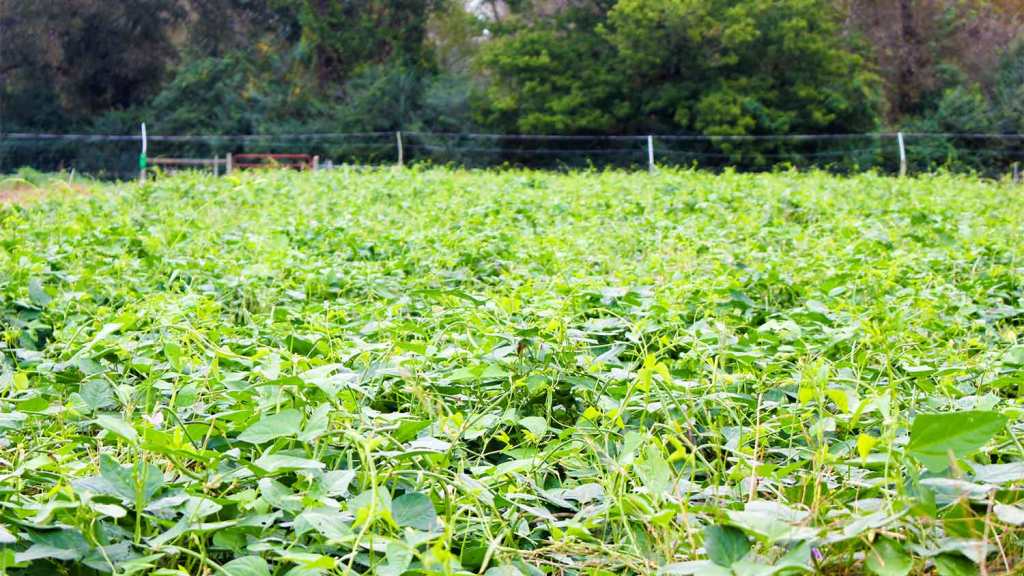


In the summer we plant Sudan’s for weed control and maybe a mix of Sunn Hemp thrown in. Cowpea is not too competitive with other crops but makes a great crop by itself and can give you up to 100 lbs. of Nitrogen per acre if you get a good stand.
Winter cover is more difficult because we typically start to get land ready about the time our cover crops start to grow in February/March. Winter cover is almost always a small grain and most of the time we use a “combine run” wheat or oat since they are cheaper with a planting of turnips or daikon radish or both.
Fertility
For extra fertility besides our cover crops we use cow manures, compost, or chicken/turkey manure. Lots of growers use companies that are making pelleted organic fertilizers which is a chicken manure pellet and very good at about $200 a delivered ton.
Next email: Organic control for spider mites in organic peanuts?
Answer: There are several ways to go about this. One, there are lots of botanicals and I include a spreadsheet with them listed.
Two, growers do use beneficial insects on a limited basis. Farmers generally know where the problem spots are and then buy and distribute a beneficial in that area first. I have a page attached for beneficial or predator mites that are used successfully. Pricey but fun to use…..
Third, we do have some organic products that have success. Sil Matrix from Certis Biologicals is a potassium silicate that provides a protective coating on the plant and has been successful. Cost is $32/gallon and use rate is 1-4 quarts. Des X or M-Pede is a soap and there are other companies selling them too. Soaps can work well but watch use in heat. They are strictly a knockdown. PFR-97 at 1-2 lbs. per acre at $50/lb. is a fungus that has had success on mites. It is slow so it needs to go out close to infestation, but it stays around to infect some later problems. There are other products for spider mites but some get pricey in a hurry and for field crops can be out of the price range. Hope this helps!
There are certainly many more answers that can be given to these email questions but these help start the dialogue and usually get us well on the way to a final solution. If you have more suggestions give me a comment back.
I know I have mentioned product names here in this blog post and I am not endorsing these companies necessarily but simply saying they have products for organic producers. I welcome companies to share their information with me so that I have more information at my fingertips for helping new growers…. Please, don’t shoot the messenger or in this case, the organic specialist!
Discover more from Texas A&M AgriLife Organic
Subscribe to get the latest posts sent to your email.

 Texas A&M AgriLife Organic