
This is a picture of the “Purple Tomato” developed and sold by Norfolk Healthy Produce. According to the press release from the John Innes Centre it is a high-anthocyanin purple tomato developed nearly 2 decades ago. Here are a couple of paragraphs from the article below.
Nathan Pumplin, CEO of Norfolk Healthy Produce, said: “We are thrilled to offer these first-of-a-kind seeds to home gardeners. Our tomato is just a tomato – you can grow it in your garden next to your Sun Golds and Purple Cherokees, and other favorite varieties. We share our gratitude to the thousands of fans who have expressed their interest and encouragement through our website.”
The company says that surveys with American consumers showed that 80% are interested to eat, purchase and grow the purple tomato, knowing that it is bioengineered (as a genetically modified organism, or GMO). Only 5% of consumers were not interested. I seriously doubt this last sentence and wonder how accurately they surveyed customers!


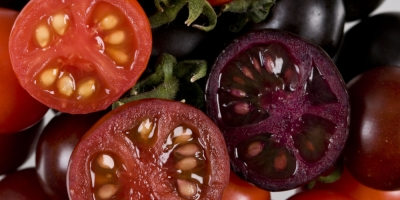
These pictures are of the YOOM tomato. This purple tomato was introduced last year and as you can see also has the purple color and because of that color it has high anthocyanins like other purple vegetables and fruit.
The Yoom tomato is not developed using GMO technology like the “Purple Tomato.” Instead, Yoom tomatoes are the result of conventional breeding techniques. These techniques involve selecting parent plants with desirable traits and crossbreeding them over multiple generations to produce offspring that express those traits. The Yoom tomato, known for its distinctive purple color and high levels of antioxidants, particularly anthocyanins, was developed through this traditional method of plant breeding. (Article in Vegetable Grower News)
The purple color is a natural trait that some tomato varieties exhibit, enhanced through the selection process to appeal to consumers looking for novel and potentially healthier options in their diets. The development of such varieties focuses on enhancing flavor, nutritional content, and visual appeal without the need for genetic modification techniques like CRISPR-Cas9 or GMO.
Conventional breeding remains a powerful tool in developing new plant varieties, allowing for the gradual improvement of crops with respect to taste, yield, disease resistance, and nutritional content. While CRISPR technology offers precise gene editing capabilities, it’s important to distinguish between crops developed through genetic modification and those, like the Yoom tomato, that are the result of selective breeding practices.
Organic growers need to be aware of this powerful difference and don’t be fooled by others who want you to grow the Purple Tomato without realizing the difference. Recently I was asked about organic farmers growing the Purple Tomato. I was caught completely unaware because I knew about YOOM and so thought this was the tomato they were referring to. It was not the YOOM, and you need to know it is not legal or ethical for you to grow the “Purple Tomato” unless you grow the YOOM Purple Tomato.
Lastly, YOOM is not a certified organic seed variety (YET), at least that I can find. There may be some organic seed offered soon but you will need to talk to your certifier about using conventional YOOM seed based on the fact that it is from conventional breeding and is the only tomato variety with these traits.
News Updates below: Click links for a new twist to this story!
GM purple tomato company targets non-GMO seed company over alleged patent infringement.

Plant breeders and seed retailers are increasingly living in fear of legal threats from GMO developer companies. Report: Claire Robinson
The company that is commercializing the GM purple so-called “anti-cancer” tomato has targeted a non-GMO heirloom seed company over alleged patent infringement.
(Click the heading above for a link to this article)
 Texas A&M AgriLife Organic