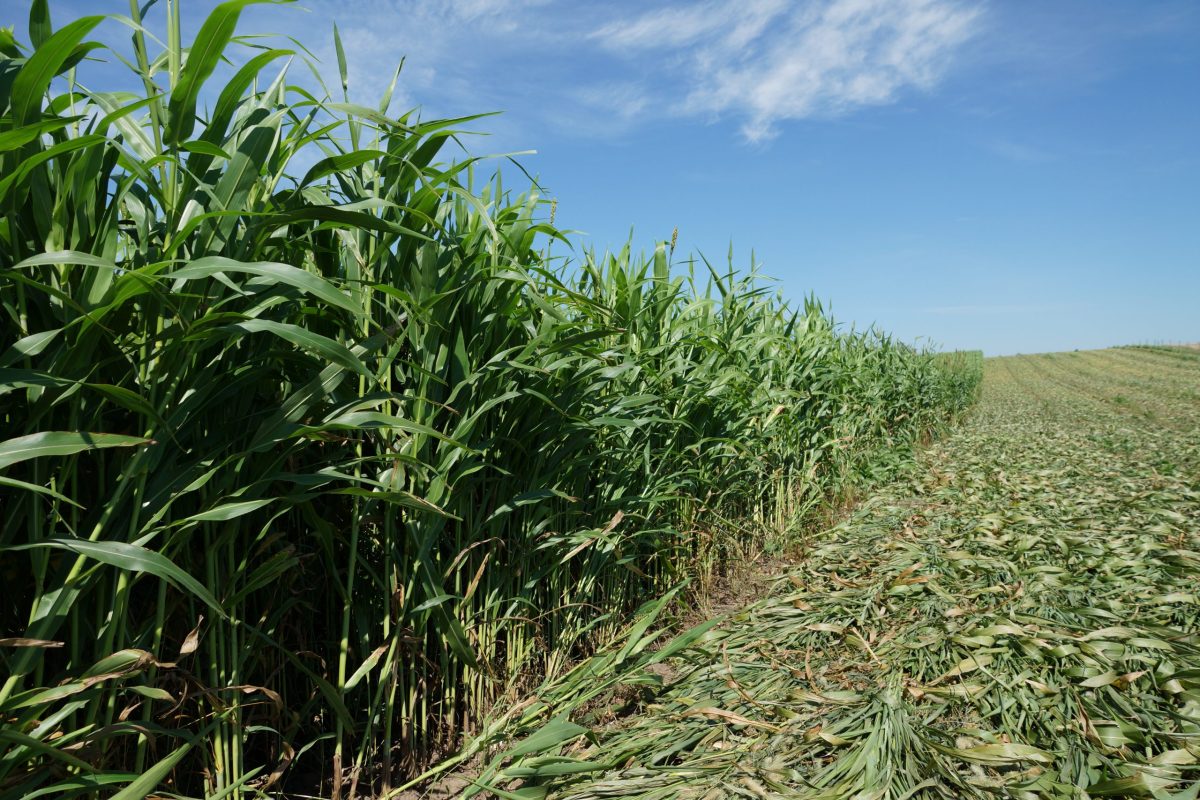
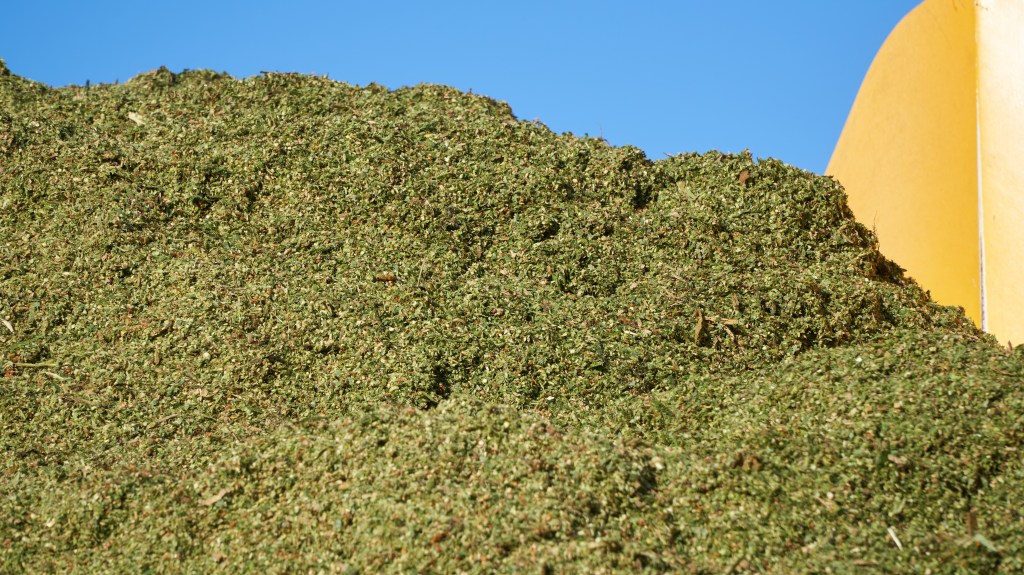
As the High Plains continues to face water scarcity, many dairies are exploring more drought-tolerant forages1. One promising option is brown midrib (BMR) male-sterile sorghum silage, which is now showing strong potential to partially replace corn silage in lactating cow diets. A recent feeding trial2 by Texas A&M specialists Dr. Juan Piñeiro and Douglas Duhatschek conducted at the Southwest Regional Dairy Center in Stephenville, Texas, reveals some key takeaways that dairy producers need to consider before spring planting.
Why Consider BMR Male-Sterile Sorghum?
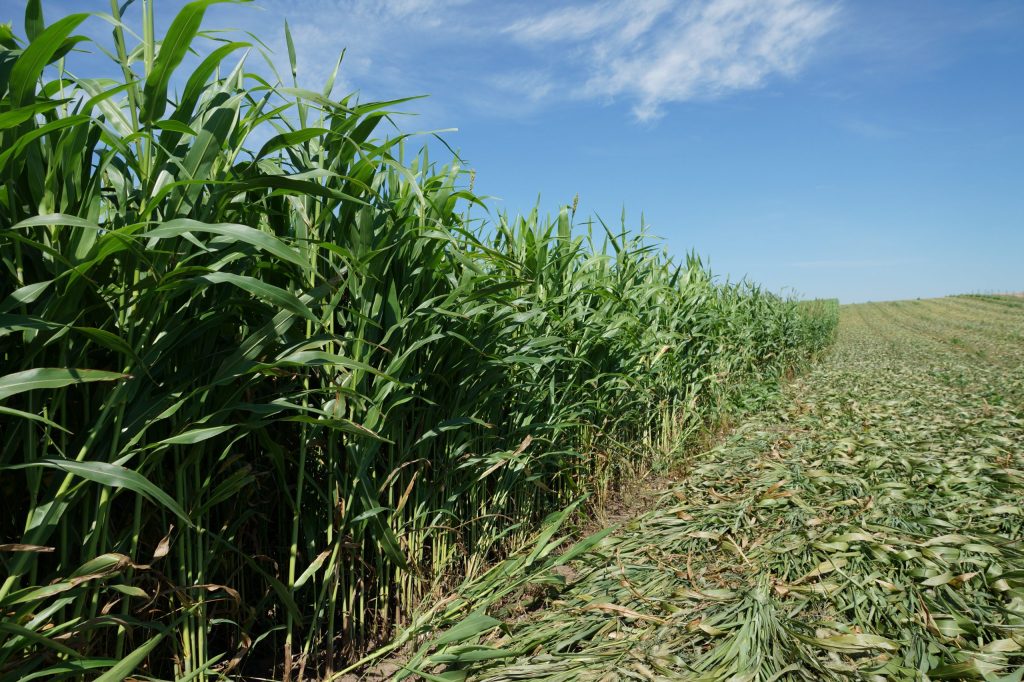
Photo: SUG R BALE BMR – Hybrid Sweet Sorghum (Male Sterile) Arrow Seed Co., Nebraska
Unlike conventional sorghum, male-sterile types don’t form grain. Instead, they pack sugars into the stalks and leaves. This results in silage with:
- Less starch but more water-soluble carbohydrates (WSC)—these sugars ferment well and help stabilize the silage.
- No need for kernel processing, which can reduce harvest costs and time.
- Higher crude protein (CP) and ash, compared to corn silage.
In this study, replacing 25% or 50% of corn silage with BMR male-sterile sorghum silage (while adjusting the diet to maintain similar nutrient levels) led to:
- 11% more dry matter intake (DMI) on average,
- Higher milk yield and energy-corrected milk (ECM), and
- Improved total digestible intake of fiber and protein at the 25% replacement level.
What’s the Catch?
- At 50% replacement, digestibility of starch, protein, and fiber was lower compared to a full corn silage diet. This was likely due to the switch from starch-rich corn silage to more dry ground corn, which digests differently in the rumen.
- DMI dropped in the corn-only group, likely due to higher starch fermentation and heat from silage spoilage during feed-out. This highlights the practical importance of silage management.
Take-Home for Producers
If you’re in a region with limited irrigation or looking to diversify your silage crops, planting BMR male-sterile sorghum could be a great option, especially if you aim to replace around 25% of your corn silage. It offers water savings, improved intake, and sustained milk production—when paired with proper ration balancing.
Keep in mind:
- Sorghum needs wilting and proper timing for harvest.
- Balancing for rumen-available starch is key when increasing ground corn in the diet.
- Avoid silage heating at feed-out—especially with higher starch silages.
As more data rolls in from real-world dairies using this silage, we’ll continue refining how to best use it. For now, this is a promising tool for those looking to stretch water, reduce costs, and maintain high-performing herds.
Footnotes
- Bean, B. (2025, March 25). Sorghum Silage: The Rising Star of Dairy Feed. Sorghum Checkoff. Retrieved from https://www.sorghumcheckoff.com/agronomy-insights/sorghum-silage-the-rising-star-of-dairy-feed/ ↩︎
- Duhatschek, D., Pilati, A.G., Mittelstadt, J.P., Isasi, J.C., Cabañas, J., Lee, A.M., et al. (2025). Effects of partially replacing corn silage with BMR male-sterile sorghum silage on dry matter intake, digestibility, and milk production in lactating dairy cows. Texas A&M University Dissertation, Department of Animal Science. ↩︎
 Texas A&M AgriLife Organic