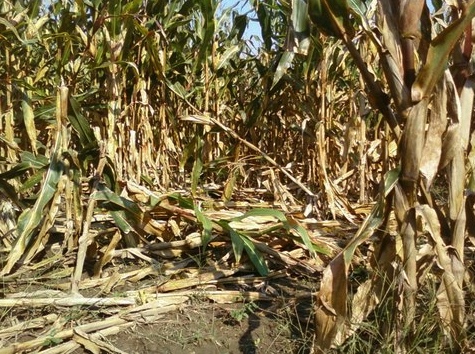
Almost all Texas crop farmers know how devastating both deer and hog damage can be to crops at all stages. There is nothing more frustrating than to see a newly emerging crop one day and a freshly “hog plowed” field the next!
Recently, we had both deer and hogs coming into the Stephenville Research and Extension Center plots and large planted pivots. They didnt seem to have any problem finding the newly planted areas and since the center is flanked by the city, highways and railroad they seem to have found easy access!
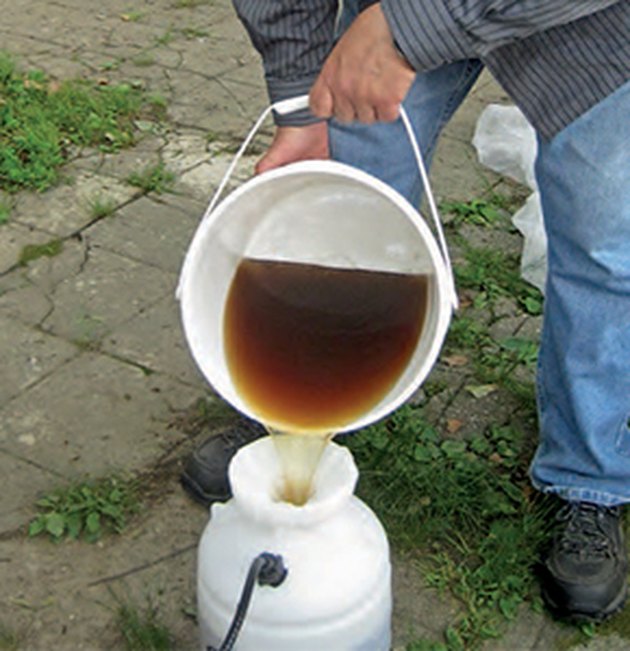
The problem was so severe that Dr. Johnny Cason, crop researcher, tried a new product from BH Genetics called Penergetic. It is OMRI Certified for organic growers. It is applied as a slurry through a regular crop sprayer. This is not a research trial by any means, just plain old farming where you have a problem and you need a fast solution. This product worked in this situation and a similar situation at the Yoakum Center with researcher, James Grichar. This might mean we need to do some more testing of this and other crop repellent products newly on the market. It sure beats going to the barber shop for bags of sweaty hair….
This past week a nationwide planning team for organic agriculture training held the 2nd of four organic training programs for NRCS personnel in Texas. This planning team is made up of NRCS national and state leaders in organics, the National Center for Appropriate Technology, Texas Department of Agriculture and Texas A&M AgriLife Extension.
The training is being conducted online and is held from 9am to 2 pm for each of 3 days. In this first training there were 27 active trainees who learned about organic agriculture, organic certification and organizations and agencies that work in organic agriculture. There are many programs and services that NRCS offers to organic producers and this organic training will help your local NRCS folks know more about you, your production and how to help!
A recent article in American Fruit Grower written by Dr. Trevor Suslow – UC Davis, has been showing up in many publications and it certainly caught my eye. As we think about summer; market gardens and farms; vegetable and fruit harvests; farmers markets and roadside stands; we have to consider what might happen with our harvests once they leave the farm. Organic producers are part of the solution to healthy food but not if we are lax in how we treat and handle the food we sell!
Organic vegetable producers face an uphill battle trying to produce a fast growing vegetable crop that demands high soil fertility, especially nitrogen, and most of our natural organic sources are low in nitrogen and that nitrogen is only slowly available. If you have been growing organically for several years you may have built up your soil N reserves through good crop rotations, use of legumes and compost but there are times when we need a biofertilizer and/or a biostimulant. Especially as you near harvest when plant requirements are at their peak it is only natural to see a plant show physical signs of nutrient stress and you know you need to do something!
Fortunately, we do have some tools in organic agriculture that are approved for use in these periods but (back to that article) Dr. Suslow’s interesting article discusses the downside to applying these tools that may surprise you. On farm experimentation with the making of “compost teas” may be the closest example of a potential problem on the small to mid-sized organic vegetable farm. There is a right way and wrong way to make compost tea. In his article he talks about this formulation being a great source of nutrients for bad bacteria and fungi. Foodborne pathogens like salmonella can be introduced into these formulations very easily and then they use the nutrients in the mix to grow to very high populations. When a grower then sprays this “compost tea” on their crop there is a real danger that these pathogens are on the produce.
How do the bad bugs get into “compost teas?” Most of the organic producers I know love to harvest rainwater and then use that rainwater in a variety of ways. One of those ways is making compost tea. Certainly the rainwater has some nitrogen in it from the rainwater and it is usually a lower pH, another benefit to microbes. But, this rainwater off a roof, can have Salmonella, E. coli and Listeria from birds or other wildlife on the roof. In general they won’t grow too much without a food source but adding your compost may be that food source.
It only seems natural that the State Extension Organic Specialist would say, “of course organics is for everyone!” There is an ever increasing demand for organic food as seen in grocery reports. My wife likes to buy organic produce because it tastes fresher. I think they pick organic produce less mature so its not as tough and also they do a better job packing it! More and more farms are getting into organic production because there is a very valid reason for this – organic PRICES are really good right now! So, Is Organics for Everyone?
I think there are two parts about “organic” we need to tackle. The first part is the “principles” of organics. In principle, organic food is great, overall tasty, healthy, and is for everyone. I encourage you to try organic food and to voluntarily use organic “ways” or “practices” in your landscape, garden and home. But, organic “practice” takes on a whole other meaning when you move into a commercial farm situation. What is commercial?
USDA National Organic Program (NOP) uses $5,000 as a cutoff. If you have less then $5,000 in gross organic sales you are not required to be certified by a USDA approved certifier. This means that you are following all the practices for organic certification but you are not certified or better said you are self-certified. You probably believe in the organic “principles” and so you follow the organic “practices” and you can label and sell your product as “certified organic.”
If you gross more than $5,000 in sales then you must be certified to sell organic. This means following all the practices outlined in the law and more than likely selling to a buyer who is also certified to handle organic products. In Texas most of our certified organic producers are in the dairy, forage crops, cotton, peanut, or rice category and they sell their commodities to organic buyers. These producers may follow the “principles” of organic production (they are a believer) but for sure they follow all organic “practices” by law and they hope to make money, because organic crops sell for more money!
What about the small to medium sized farmers market/local market vegetable/fruit producer? To be honest most of these folks are generally following the “principles” and most if not all of the “practices” but do not pay to be certified organic. They generally enjoy good prices locally, they know their customers and their customers don’t demand certified organic. Knowing the farm and farmer seems to be more important than knowing that they passed an organic inspection. Because they don’t certify they are not organic in “practice” but are certainly organic in “principle.”
I know this first-hand! My wife and I have a farm – Dry Creek Farm, and we sell locally at area farmers markets, restaurants and occasionally grocery stores. I am not certified organic but follow organic principles. Trying to sell direct to consumer means that I really can’t use either an organic or conventional chemical when I may have someone eating it in a few hours. I try to ensure that my customers trust me and the way to gain trust is just do the right thing!
So, IS ORGANICS FOR EVERYONE? Sure, but the real question is, do growers who follow organic “principles” only, need to be certified? In “practice,” only if you can realize an added value from a verified organic certification certificate!
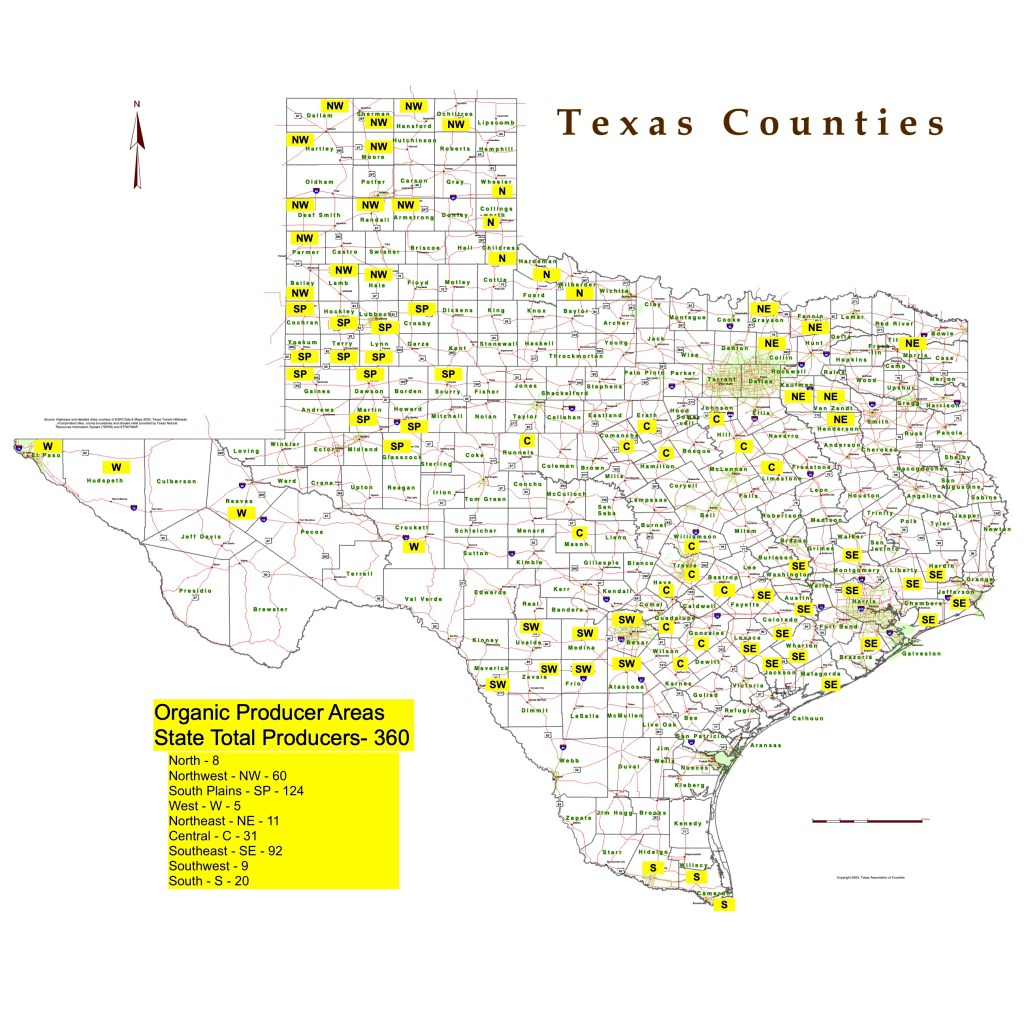
This map below shows each county that has organic producers. This helps you see where we have major organic growing areas and the legend tells you how many are in those areas. The South Plains is a huge organic cotton and peanut area, the Northwest has organic dairies with lots of organic fields and pastures, and the Southeast is home to the US organic rice production. Organic pecans ( personal favorite) are located in the Southwest along with major organic spinach production.
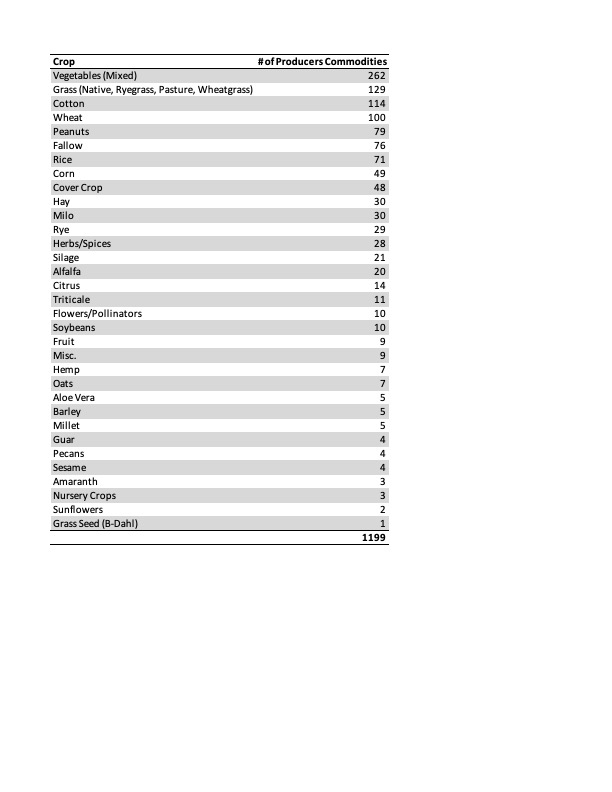
This image (below) may be a little confusing but basically every producer on the map above lists what they plan to produce on their certification application. I took that information and then added up based on fairly common crops. This doesn’t include dairy, beef or poultry but there are not that many even though they make up a large $ amount of organic production. So, there are 360 farmers and of that number 79 list peanuts as a crop. Now, the vegetable one is a little strange because some growers list many vegetable crops and I put them together. Overall, vegetables is a category that needs more producers in Texas!
You know it is pretty sad that as the Texas A&M AgriLife Extension Specialist for Organic Programs I had to get “schooled” about some resources I should have known about!
In the first picture you can see a screenshot of YouTube where Dr. Emi Kimura, Extension Agronomist in Vernon (pictured) has posted the best organic production videos around for Texas organic producers. I have been working my way through them and they are great and useful. Lots and lots of practical advice, put into practice type advice, and I recommend you take a look. Some are long so get ready to watch on one of those rainy days but it will be time well spent.



 Texas A&M AgriLife Organic