Citrus Production Down +70% in RGV

No available labor to rehab damaged groves

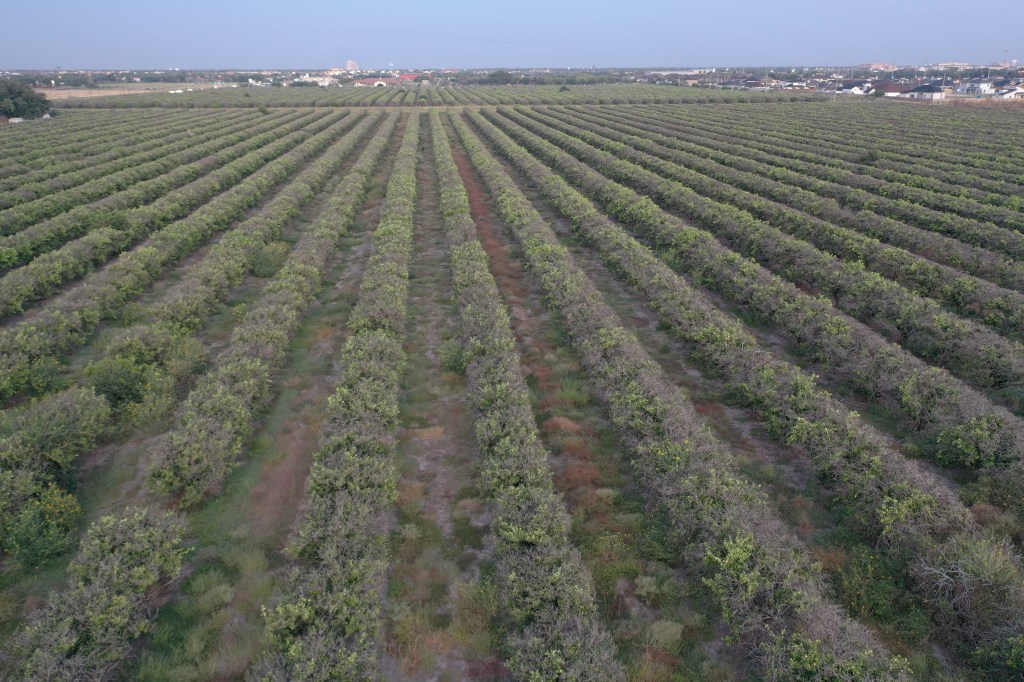
I recently had a chance to visit several organic citrus and vegetable farms in the Rio Grande Valley and the lingering effects of the February freeze are still hard to look at. In this picture above you have a grove that has been all but abandoned. The trees are mostly alive but the massive pruning that needs to happen is just not going to happen anytime soon!

I was impressed by the Holbrook’s (Dennis and Russon) organic groves. They certainly had to prune a lot of dead wood but overall the trees seem to have done better than many other groves I visited. It would be interesting to quantify the difference in the care between the two systems (organic vs conventional) and see if the visual difference is due to organic production or something else. In the Holbrook’s case they will stay organic no matter what!

TDA Organic Agricultural Industry Advisory Board

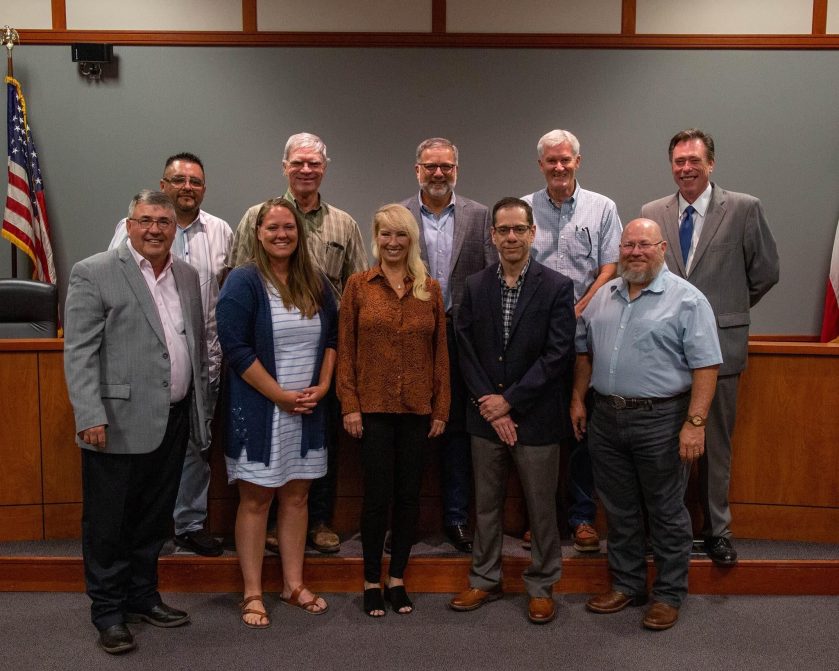
On August 23, 2021 the Texas Department of Agriculture Organic Industry Advisory Board met in Austin at the TDA building on Congress Avenue. This is the first time in over a year that the group has been able to meet in-person and discuss organics in Texas. I was privileged to have a chance to present information about my position as organic specialist with AgriLife Extension and talk about organic agriculture in Texas.

This picture shows front row left to right, Dr. Randy Harp – Higher Ed., Brandi Chandler – TDA Coordinator for Organic Certification, Victoria Velarde – Producer, Robert Morton – HEB, Scott Sroufe – TDA Marketing Specialist. Back row, Tony Sanchez – Rice Belt Warehouse, Cliff Bingham – Producer, Donald De Jong – Producer and Chairman, Bob Whitney – Extension Organic Specialist and Dan Hunter – Assistant Commissioner for TDA.

Not pictured: Juan Anciso – Extension Horticulture Specialist, Randy Brazil – Producer, Greg Devillier – Processor, Amy Griffith – Public, Jed Murray – Trade Associations, Russon Holbrook – Retail.

Organic Cost Share Program

The U.S. Department of Agriculture (USDA) has announced that organic producers and handlers can now apply for funds to assist with the cost of receiving or maintaining organic certification.  Producers can be reimbursed for expenses made between Oct. 1, 2021, and Sept. 30, 2022, including application fees, inspection costs, fees related to equivalency agreement and arrangement requirements, travel expenses for inspectors, user fees, sales assessments, and postage.  Reimbursement is up to $500 but they have announced an additional $20 million that will “complement” this cost-share program.  Details are to be announced soon.  You can sign up at your local FSA office or even better TDA is going to have an online signup.  Check this website for details. https://tinyurl.com/aznme3ry

Organic – A Word That Means Something!

Most people do not realize how seriously everyone in the National Organic Program (NOP) takes their participation in what is known as “organic agriculture.” To be organic and to grow organic and to sell anything labeled as organic is governed by laws enacted by Congress. Click on the picture above and it will take you to a website with one page. On that page it shows the % of violations that have been done by those NOP certified organic or by those not certified yet making an organic claim. USDA takes it serious!

Every organic producer in order to sell as an organic producer must be NOP certified unless gross sales are less than $5,000 and even then you must follow the law as if certified. In Texas there are approximately 384 Certified Organic Crop and Livestock Producers.

Every organic buyer, known as a handler, must be certified to handle that organic product before it is finally packaged with an organic label. In Texas there are approximately 405 Certified Organic Handlers.

In order to even use the word “organic” on a product label there are very specific USDA AMS rules listed below:

Can a product be labeled “organic” without being certified? 

  • If you make a product and want to claim that it or its ingredients are organic, your final product probably needs to be certified.
  • If you are not certified, you must not make any organic claim on the principal display panel or use the USDA organic seal anywhere on the package. (see exemption below)
  • You may only, on the information panel, identify the certified organic ingredients as organic and the percentage of organic ingredients.

What do the organic product labeling rules cover? 

  • Covers wording allowed on both the front panel and the information panel of a packaged product:
    • Principal display panel (PDP): portion of the package most likely to be seen by customers at the time of purchase.
    • Information panel (IP): includes ingredient statement (list of ingredients contained in a product, from highest to lowest percentage of final product) and other product information.

So, to say we take the word “ORGANIC” seriously might be an understatement!

Hog and Deer Repellents in Organic Crops

Almost all Texas crop farmers know how devastating both deer and hog damage can be to crops at all stages. There is nothing more frustrating than to see a newly emerging crop one day and a freshly “hog plowed” field the next!

Recently, we had both deer and hogs coming into the Stephenville Research and Extension Center plots and large planted pivots. They didnt seem to have any problem finding the newly planted areas and since the center is flanked by the city, highways and railroad they seem to have found easy access!

The problem was so severe that Dr. Johnny Cason, crop researcher, tried a new product from BH Genetics called Penergetic. It is OMRI Certified for organic growers. It is applied as a slurry through a regular crop sprayer. This is not a research trial by any means, just plain old farming where you have a problem and you need a fast solution. This product worked in this situation and a similar situation at the Yoakum Center with researcher, James Grichar. This might mean we need to do some more testing of this and other crop repellent products newly on the market. It sure beats going to the barber shop for bags of sweaty hair….

Statewide Organic Training for USDA NRCS Personnel

This past week a nationwide planning team for organic agriculture training held the 2nd of four organic training programs for NRCS personnel in Texas. This planning team is made up of NRCS national and state leaders in organics, the National Center for Appropriate Technology, Texas Department of Agriculture and Texas A&M AgriLife Extension.

The training is being conducted online and is held from 9am to 2 pm for each of 3 days. In this first training there were 27 active trainees who learned about organic agriculture, organic certification and organizations and agencies that work in organic agriculture. There are many programs and services that NRCS offers to organic producers and this organic training will help your local NRCS folks know more about you, your production and how to help!