Organic Cotton/Peanut Production Seminar to be held Jan. 26

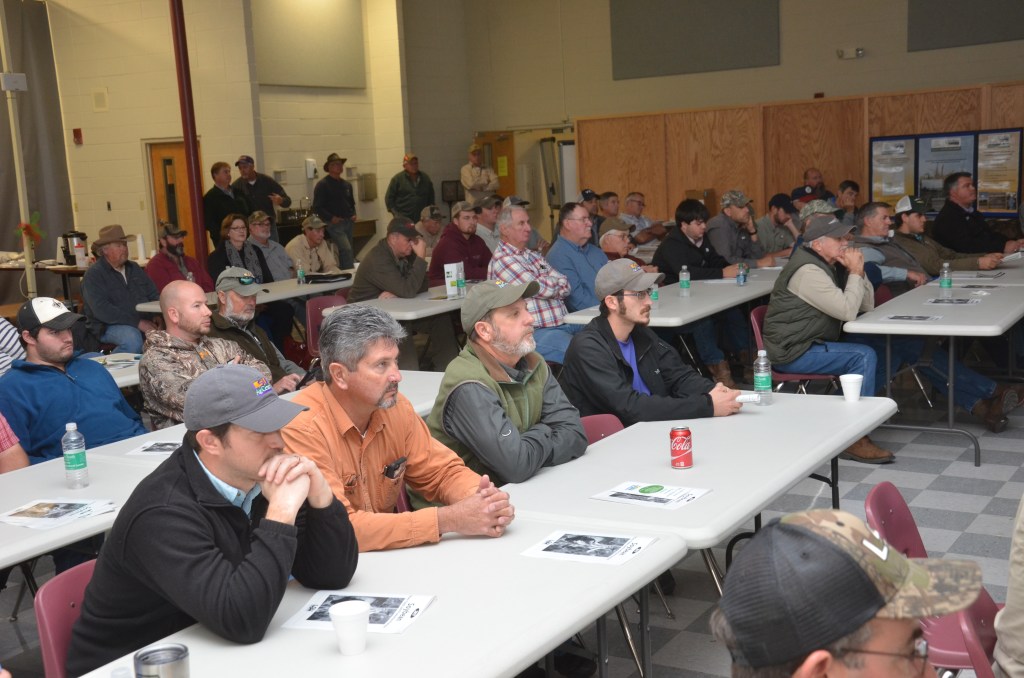
Throughout West Texas agriculture producers will be attending the first ever Organic Cotton/Peanut Production Seminar, Wednesday, January 26, 2022 in Seminole, Texas.  Organic production has continued to increase in West Texas and demand by consumers for organic peanuts and cotton is at an all-time high.

The West Texas area has developed a great reputation for their peanuts and cotton and both organic peanuts and cotton from this area are known world-wide for their outstanding quality in the organic market.  Increasing demand, high producer prices and good growing conditions are improving farmer prospects in organic agriculture.

The increasing demand and high prices has more and more peanut and cotton growers interested in learning about organic production.  Texas A&M AgriLife specialists, agents and researchers recognized the need for more education and has worked to put together this seminar to educate growers about production practices, marketing and organic rules.”

The Organic Peanut Production Seminar will be held at the Seminole Community Center, 801 N. Main, Seminole, Texas.  The seminar will be held on Wednesday, January 26 starting at 8:30 A.M. and lasting till mid-afternoon.  All peanut and cotton growers with an interest in organic production are invited to attend as well as allied peanut industry representatives.  Four (4) Continuing Education Credits will be offered to pesticide applicators who attend. To reserve a spot or for more information call me at 979.571.2086 or email me at bob.whitney@ag.tamu.edu. Download Agenda Here

The seminar will feature several well-known speakers in the organic peanut industry.  Dr. Emi Kimura, Extension Agronomist will discuss organic cotton varieties and production.  Dr. John Cason, AgriLife Peanut Researcher and Dr. Dylan Wann, IPG Peanut Breeder will discuss organic peanut varieties and production.  Dr. Cecilia Monclova, Extension Plant Pathologist will discuss organic seedling diseases and the problems with cotton FOV 4 disease.  These speakers will then form a panel to discuss organic cotton and peanut production issues with growers.  This will be followed by Dr. Katie Lewis, AgriLife Researcher discussing soil organic matter, carbon, cover crops and overall soil health.

After a sponsored lunch the program will switch to “Organic Certification Issues and How to Avoid Them,” by Brandi Chandler, Organic Certification Program Coordinator at TDA.  Dr. Pancho Abello and Will Keeling, AgriLife Ag Economists will follow with organic crop budgets to use in crop planning.  Dr. Justin Tuggle, Crop Consultant will address the common agronomic issues in organic crops in 2021 followed by Dr. Pancho Abello, Extension Economist giving farmers an Organic Crop Outlook for 2022.

Sponsors for the Organic Cotton/Peanut Production Seminar include the Texas Peanut Producers Board, Certis Bio, South Plains Compost, IPG Seed, Trico Peanut, Helena Agri-Enterprises, Algrano Peanut Shelling, Valent USA, Aqua-Yield & Texas Earth, New Deal Grain, Kunafin “the Insectary”, Viatrac Fertilizer, Wilco Peanut, BH Genetics, Marrone Bio Innovations, Mesa Irrigation, Advancing Eco Agriculture, and American Plant Food.

Today’s consumers are purpose driven!

Just type in purpose driven consumer and you will get a flood of titles about how consumers are buying with a purpose not just a good value. What does this mean especially for organic agriculture?

Fortunately, it means a lot according to a 2020 research study done by the IBM Institute for Business Value in association with the National Retail Federation. They surveyed over 18,980 consumers in 28 different countries to ask about shopping habits, drivers of brand and product choice, consumption patterns, and the willingness to change behavior based on a variety of personal values and beliefs.

The study is fascinating, and I don’t want to bore you with too many details but there are a few points worth noting. Sustainability has hit a tipping point over the last six years. Since 2014 global sustainability and environmentally responsible investment is up 68 percent and now tops 30 trillion US dollars. Over 7 in 10 consumers say it’s at least moderately important that brands offer “clean” products (78%), are sustainable and environmentally responsible (77%), support recycling (76%), or use natural ingredients (72%).

Who are purpose driven consumers? This report says, “they are consumers who select brands based on how well they align with their personal values and who are willing to “walk the talk” when it comes to sustainability, changing their behavior, and even paying more for brands that get it right.”

Within this survey, of those that said sustainability was very/extremely important, over 70% would pay a premium of 35% on average for brands that are sustainable and environmentally sound!

This is organic agriculture, and this is the purpose that drives all the organic farmers, ranchers and dairymen in the state of TEXAS!

Little things…

Sometimes it is the little things that can really make the day brighter. A few weeks ago I wrote a post about working with grass-fed dairies. If you didn’t know a grass-fed dairy only feeds forages to the dairy cows, no grain. Feeding just forages changes the composition of the milk so that the ration of omega-6 fatty acid to omega-3 fatty acid is nearly one-to-one. Conventional milk is generally 6-to-1.

Organic grass fed milk has less omega-6

This can help with cardiovascular disease, obesity and diabetes and over half of all Americans suffer from one or more of these conditions. These conditions cannot be solved entirely by medication or medical treatment – diet can be the best or only treatment and grass-fed may be an ideal part of that treatment.

Okay, what does that have to do with little things making the day brighter? Well, we are working on a project with two organic grass fed dairies to improve forage quality which in turn will improve milk production and milk components. We are trying several new clovers in both an overseeded situation like the bermudagrass you see in 2 of the pictures above or in a bare field like the other two pictures above. These clovers were planted on October 22nd and we are just now seeing some seedlings emerge a month later. Sometimes it is nothing more than a little thing to make your day a whole lot brighter!

Central Texas Junior Dairy Consortium

Graduating Central Texas JDC Class!

On Tuesday, November 9th Horizon Dairy near Hico in Hamilton County was the host of the Central Texas Junior Dairy Consortium. Horizon Dairy is owned by David De Jong and family and all the family is very involved. It a super place to host the JDC and it was super weather for a day long program.

What is a Junior Dairy Consortium? It is simple a way to provide hands-on learning experiences to educate students about the job opportunities that are available in the dairy industry. The JDC covers topics like reproduction, cow nutrition, ration formulation, milking and milking procedures, record keeping, farming and farming equipment, and expected salaries and potential jobs in agriculture and dairying.

All the students got to meet with several local dairymen and dairy industry representatives, allowing them to gain insight on the dairy industry as a whole. The students were juniors or seniors in high school and some were headed to college soon but many were about to enter the job market. They were a great bunch of students and I can assure you they are more than competent to be our future leaders!

Planting Organic Winter Forage Crops

This is the time of year that our Organic Dairy Producers have been hard at it to get those winter forages planted. Most producers are overseeding their bermudagrass pastures with a small grains like oats or wheat. Some producers like to sling out ryegrass which comes up basically on top of the soil and some like to drill in some clover seed to get a high protein legume.

In this picture you can see we are using a Brillion seeder in a field that is basically bare ground. It was a field that had been sprigged earlier in the year but the sprigs just never got going. We are using the Brillion because clover seed is so small that it just falls through a typical grain drill.

In these pictures you can see both planting and the plots we put in of the different clovers with an alfalfa at the end of the plots. Plans are to monitor growth, do some harvests throughout the season and do a final harvest at maturity. These same varieties have been overseeded in a “mix” into several bermudagrass pastures and we can harvest them growing together to see both persistence of individual species and yields in an overseeded situation.

Legume Forage Trial – Postmus Dairy
Planted: October 22, 2021
2 passes per variety – 24′ wide total
4-5 lbs./ac. per variety
1. Medium Red Clover
2. Dixie Crimson Clover
3. Yellow Blossom Sweet Clover
4 Berseem Clover Frosty
5. Barduro Red Clover
6. Alfalfa GCS Nitro Graze

Stalk Rot in Organic Corn

High Plains Corn Field

This may look like a “just harvested” corn field and it is, but with a very important difference. This field is suffering from a severe case of stalk rot!

What is stalk rot? It is a disease of the stalk that really shows up or let’s say, gets worse as the stalk is maturing or just before grain harvest. This disease can be the result of either a fungus or a bacteria infecting the plant, but getting worse as the plant goes through some sort of stress. That said, every year in almost every field of corn, there is stalk rot in some parts of the field. The disease is not hardly noticeable most years, but sometimes in some fields like this one, it can be almost 100% of the field.

According to a great publication (linked to at the bottom), “Stalk rot diseases tend to be more common in higher yielding hybrids that produce large, heavy ears. During times of stress, such as when foliar disease cause substantial loss of leaf area, these large ears may cannibalize carbohydrates from the stalk and weaken it.” Of course, a plant that is weakened but with heavy ears will lodge or fall over making harvest difficult or impossible.

If you look closely at the picture you can see that most of these plants and ears did not make it through the combine because they were already on the ground. One practice, to prevent as much loss, is to be scouting fields early, checking to see if stalks are weak or prone to break over. If there is significant damage starting to show up then harvest as soon as possible.

Unfortunately, or fortunately, this was a great corn year with great yields. This great year may have set up the plants for stress which allowed the fungi (probably fusarium) to invade plant stalks causing stalk rot. To read the publication from Nebraska Extension just click the box below.