Have you considered lifestyle as a reason for organic consumption?

Typically, there are a few concepts that people feel strongly reflect the organic buying habits of consumers. Most agree that: women buy more organic foods; people in higher economic classes buy more organic foods; and higher educated people buy more organic foods. This is the reason that you will find more organic food stores or stores that sell organic food items, located near highly affluent neighborhoods versus lower income neighborhoods.

These are accepted facts, but recently I was sent a 2022 research article published in Heliyon, which is an open-source journal available on Science Direct, that has challenged those facts. In this article, the authors look at the impacts of social class as well as lifestyle surrounding the consumption of organic foods in South Korea. They specifically are comparing income-level and education to a “lifestyle” for the decisions related to organic purchases and consumption. Lifestyle is defined as the relationship between the individual’s personality and the person’s living environment (not your education or wealth). Even though it is research in South Korea, they still closely align with what we would expect in the United States.

The premise or hypothesis for this research is that an individual’s lifestyle is likely to be associated with consumer behavior for organic food consumption and that those elements reflecting a person’s lifestyle can influence organic food consumption substantially or in research terms, be statistically significant.

For this research on lifestyle and how it influences purchases they looked at these variables – interests, opinions and activities. They utilized variables like this: an individual’s interest in organic foods, awareness of the health and environmental impacts of organic food consumption, and willingness to consume organic food at higher prices.

In layman’s terms, they found that experiences like attendance at food-related educational events; an interest in organic foods; an awareness of the impact of organic foods; and a willingness to purchase organic foods, all had a greater influence on the consumption of organic foods than did social status i.e., wealth and education. To put it simply, price may be the first reason given for not buying organic, but these other experiences can easily override price objections. We all know folks that bought something they thought was too expensive but still had reasons to want and buy it beyond price!

Basically, the more organic education we do, the purchase of organic foods and/or the consumption of organic foods will be greater across all socioeconomic classes of people. Organic is not just for the higher income/ higher educated classes of people but instead, if educated, are desired and preferred by all classes!

This is not really in-depth research as much as it is a look at some “research” findings and drawing some conclusions. They are of course open to interpretation, but for me, I think we in organic agriculture do need to educate the consumer more than has been done in the past. We also don’t need to ever say that low-income or even lower middle-income consumers are not going to purchase organic because of the price. With education, this research article would say, they are just as likely if not more likely to buy organic than the higher income-higher educated consumer!

Transition to Organic Partnership Program (TOPP)

The Transition to Organic Partnership Program (TOPP) is investing up to $100 million over five years in cooperative agreements with non-profit organizations who will partner with others to provide technical assistance and wrap-around support for transitioning and existing organic farmers. Agricultural Marketing Service (AMS) is building partnership networks in six regions across the United States with trusted organizations serving direct farmer training, education, and outreach activities.

As you can see, Texas is in the West/Southwest region. The USDA partner organization for our region is CCOF out of California. I recently had a long conversation with the two organizers of TOPP from CCOF, Jessy Parr and Adrian Fischer to discuss organic farmers in Texas and interest in transitioning to organic. As you can see from the map Texas A&M AgriLife Extension will be a partner in this effort with CCOF.

The USDA partner organizations will do the following, but they will do this through their partners in each region.

  • Connect transitioning farmers with mentors for at least one year after certification.
  • Build paid mentoring networks to share practical insights and advice.
  • Provide community building opportunities to include:
    • Train-the-mentor support
    • Technical assistance
    • Workshops and field days covering topics including organic production practices, certification, conservation planning, business development (including navigating the supply chain), regulations, and marketing
  • Help producers overcome technical, cultural, and financial shifts during and following certification.
  • Engage educational and training institutions (including crop advisors and extension agents) on organic workforce training and education and future human capital planning. 

Future of Urban Food Systems Summit held in Houston

Last Friday, September 30, I had an opportunity to speak at the Future of Urban Food Systems Summit held at the University of Houston Downtown campus. This was not my usual audience and really not my normal program topic, but it was really interesting, engaging and informative. What a wonderful group of people and many if not most, were young – much younger than me!

My topic was organic agriculture, but the title was Certified Organic: What is it and what is its value? I talked a lot about the Texas organic program including a lot of the information contained in the blogs you can read on this website. I think most of the audience were surprised at how easy it is to be certified and how many myths they had heard and believed about the organic program. The City of Houston has very few certified organic farmers and has the least organic handlers of all Texas major cities. Maybe they are about to turn that around!

On the program with me was Dr. Joe Novak, Faculty Lecturer at Rice University and before that of Texas A&M University. Joe is well known and well respected for his horticulture knowledge but more importantly for his use of gardening to improve human health. He did a fantastic job showing us all the important roles gardening and plants play in helping us all live and live better.

Also on the program was Dr. Patrick Stover, Professor of Biochemistry and Biophysics and Director of the Institute for Advancing Health through Agriculture. I have known Dr. Stover for several years and his passion for using agriculture to solve health issues in humans is fascinating. I believe he had the audience on the edge of their seats!

The day included breakout sessions and lots of discussions. To say the least it is just a start to what will be coming over the next few months and years in Houston!

Peanut Seedling Disease Trial

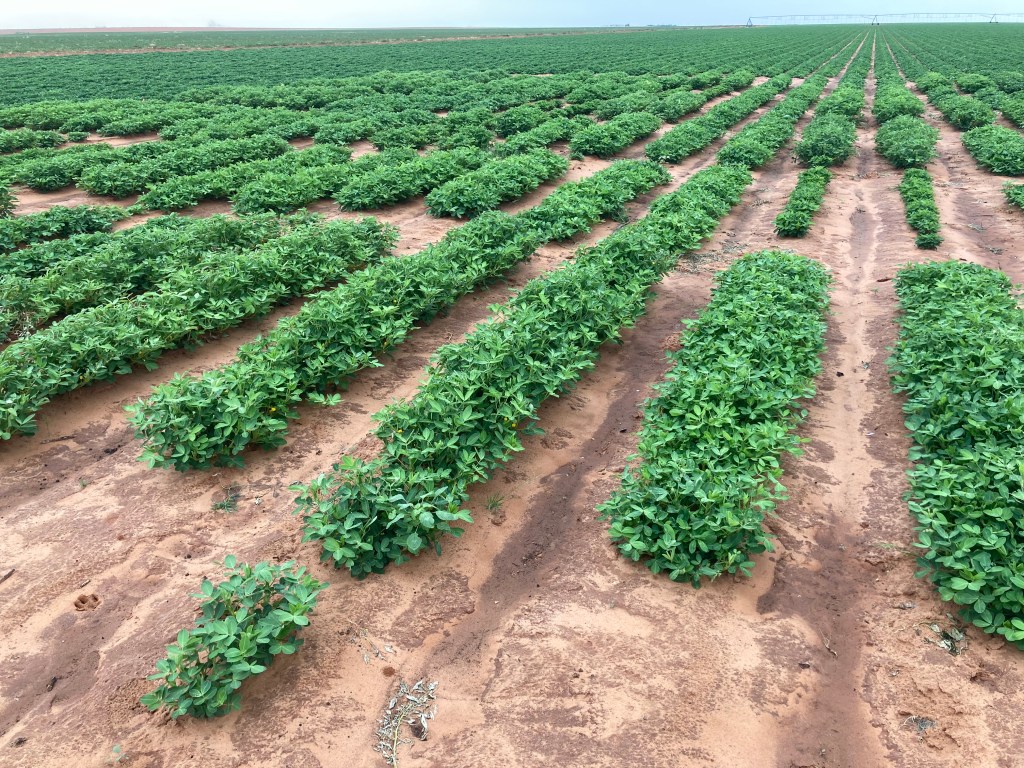
This peanut seedling disease trial was established to simply evaluate organic seed/soil treatments at plant for any sign that they might prevent a complex of seedling diseases that affect peanut seed germination.  Typically, a conventional grower has a chemical seed treatment to prevent disease, but organic growers have had very few options and so it is not unusual to be forced to replant. At $1.30 per lb. and most peanut farmers planting over 100#’s per acre, cost add up quickly!

This growing season has had strange weather and because of that the test was planted later than wanted. Both air and soil temperatures jumped significantly in May meaning we needed to irrigate before planting – which created its own set of problems. It was hoped we could put these seeds into cold, wet soils to simulate a West Texas April/early May planting but sometimes things don’t work even in the best planning.  Even though it wasn’t ideal we saw a few differences that will help us to adjust what we do in the future for more testing. Listed below are the treatments and rates for the products tested. #7 and #10 serve as checks, #7 is bare seed and #10 is conventionally treated seed with Dynasty, Syngenta Co.  

Plots were 2 rows X 25’ with 100 seed planted per row or 4 seed per 1’ of row.  There were 4 replications of each plot, randomized. Planting date was May 20, 2022, into a previous irrigated site.  0.75 inches rain fell on May 23 and plots were sufficiently moist for good germination.  Peanut seed ‘crack’ was observed on May 26. 

Trt. #CompanyProductTrt.Per acre
1Ecological LaboratoriesQuantum-EXP 1IF64 oz/ac
2Summit AgroAVIVSeed10-30 oz/100-gallon water. Soak and dry
3Summit AgroAVIVIF10-30 oz/100-gallon water.
4Certis BioDouble NickelIFDouble Nickel LC @ 8 fl oz/acre
5Certis BioDouble NickelIFDouble Nickel LC @ 16 fl oz/acre
6American Plant FoodSigma 5-3-2 BioPPI1000 lbs./ac
7 NAUntreated CheckNA NA
8CortevaBexfondIF14 oz/ac
9ValentEndoPrime (EndoMaxx is organic of EndoPrime but not available at treatment)IF2oz/Ac
10 NATreated seed check NA NA

Looking at the results, there is no statistically significant difference in any of the treatments, but trends indicate some differences especially above the untreated check #7.  Overall, we want to improve both germination percentage and stand establishment with organic product treatments. Seed germination counts were done on May 31 and no further germination occurred.  Ratings of growth were done on June 3, 6, 9 and 13.  Rating scale was 1 – 4 with a 1 being best. Organic treatments 1, 2, and 4 were all rated above the untreated check #7. This gives us a possibility of further testing to see if they continue to show an advantage.

Trt. #CompanyProductTrtRateGerm. % 5/31Plot Rating
10 NATreated seed checkSeedDynasty powder52.8751.750
1Ecological Lab.Quantum-EXP 1IF64 oz/ac45.8571.875
2Summit AgroAVIVSeed10-30 oz/100-gallon water. Soak and dry43.7502.125
4Certis BioDouble NickelIFDouble Nickel LC @ 8 fl. oz/acre44.2502.188
7 NAUntreated Check NANA43.7502.438
3Summit AgroAVIVIF10-30 oz/100-gallon water.44.1252.563
8CortevaBexfondIF14 oz/ac35.5002.813
6American Plant FoodSigma 5-3-2 BioPPI1000 lbs./ac34.6253.063
9ValentEndoprimeIF2oz/Ac32.0003.125
5Certis BioDouble NickelIFDouble Nickel LC @ 16 fl. oz/acre37.2503.188
     Average2.513

Urban Agriculture is Changing

Over the last few weeks, I have had the opportunity to be a part of conferences for “urban” audiences interested in urban agriculture in particular organic urban agriculture. There is a lot of interest in what agriculture really is, and terms like “natural,” “sustainable,” “regenerative,” and even “organic” can be confusing. Most consumers love labels but unfortunately labels begin to lose any meaning unless you define them and yes, enforce them!

Urban agriculture has many definitions and many parts.  USDA defines it as,” cultivation, processing and distribution of agricultural products in urban and suburban areas.” Even this definition can be further defined because cultivation has many different aspects; agricultural products include a multitude of things from vegetables to dairy to fish to meat, and urban and suburban are rarely well defined and can mean the 2.5 million population of Houston, Texas or the urban center of DeLeon, Texas where 2.5 thousand live! 

These problems with definitions still don’t deny that our population needs and wants local food and local food security no matter if it is small town or large city.  And this desire is fueling a resurgence of everything from backyard gardening to large scale organic rooftop agriculture atop the newest Whole Foods retail store.  All are woven together into a sense of “community supported agriculture” which has a history of being “urban agriculture” for decades.

According to Wikipedia’s definition, “Urban agriculture can reflect varying levels of economic and social development. It may be a social movement for sustainable communities, where organic growers, “foodies”, and “locavores” form social networks founded on a shared ethos of nature and community holism. These networks can evolve when receiving formal institutional support, becoming integrated into local town planning as a “transition town” movement for sustainable urban development. For others, food security, nutrition, and income generation are key motivations for the practice. In both scenarios, more direct access to fresh vegetables, fruits, and meat products through urban agriculture can improve food security and food safety.

What does urban agriculture look like?  Again, according to USDA, “Community gardens, rooftop farms, hydroponic, aeroponic, and aquaponic facilities, and vertical production are all examples of urban agriculture.” Certainly, there are backyard gardens, market gardens, and the small farm patches scattered around superhighways, streets, and buildings.  Every open piece is real estate is being discovered, evaluated, rehabilitated, and put into production much like the English allotment system so popular in Great Britain. 

Increasingly (maybe because of climate extremes), urban agriculture is now becoming Controlled Environmental Agriculture or CEA and these urban/suburban operations include low tunnels, high tunnels, shade houses, climate-controlled greenhouses, and indoor farming in warehouses, shipping containers, or even basements. Many are certifying organic, and some are not.

The demand by the urban/suburban consumer for both involvement in their own food production and knowledge about the food they purchase and consume, is driving the need for new and innovative research and education.  Never before has there been such an interest in urban agriculture with an equally intense interest in the science of agriculture and food.

What about Texas?

Texas population in 2022 is estimated to be 30.93 million people growing a little over 1% per year for the last ten years.  Out of the top 22 largest cities in the US, Texas has 6 including Houston (4th), San Antonio (7th), Dallas (9th), Austin (11th), Fort Worth (13th) and El Paso (22nd).  Included in the top 100 largest cities of the US are many of the suburbs of these major cities.  These fast-growing cities are experiencing a complete change in their makeup, their consumer trends and their eating habits.  According to the CDC and data collected through the 2019 Risk Behavior Surveillance System and compiled by Thistle©; Texas ranks 32nd out of 50 states in consumption of fruits and vegetables; 41.3% of adults eating less than one serving of fruit per day, 23.2% of adults eating less than one serving of vegetables per day, 50.5% of high school students eating less than one serving of fruit per day, and 51.7% of high school students eating less than one serving of vegetables per day.

Even though a low percentage of the 30.93 million Texans consume very many fruits and vegetables there is still a considerable number who garden and a huge number that frequent farmers markets.  The National Farmers Market Directory lists 282 local farmers markets in Texas and the Texas Department of Agriculture shows hundreds of registered farmers markets on their Go Texan website.  Most of the Texas’ markets are located in the 5 largest urban areas and attendance at each is growing by double digits year over year. 

Organic certification in Texas urban/suburban areas continues to increase with a significant increase in CEA (controlled environment agriculture) applications and organic certifications.  Leading the way are operations involved in greens production including microgreens, lettuces, and spinach.  Texas population is growing faster than the supply of local fruits and vegetable, faster than potential growers can be trained and faster than research can solve the production problems faced by both small- and large-scale urban growers. 

Finally, here is the takeaway! The explosive population growth of Texas is creating a huge demand for Texas Food and for most of these consumers Organic is their preferred “label.” Certified organic growers or even growers contemplating organic certification – NOW is your opportunity….

Cotton Varieties for Organic!

On the recent Organic Cotton and Peanut Tour in Seminole, Dr. Jane Dever presented an outstanding talk or “discussion” about developing cotton varieties for organic producers. Dr. Dever is the Cotton Breeder for Texas A&M AgriLife Research at Lubbock, and we depend on her work for new cotton varieties in this region. Dr. Dever talked about the challenges for developing cotton without genetically modified traits (GMO) since the South Plains is home to the largest “cotton patch” in the world. In order to prevent cross pollination, there must be plenty of separation from cotton with and without traits and that can be hard to do. She discussed how she is using the “okra leaf” characteristic, which is dominate in cotton, to distinguish non “GMO” cotton from GMO varieties. The picture below shows you how different the okra leaf characteristic is from normal cotton leaves. This characteristic will help breeders, seed companies and organic cotton growers know if a variety has GMO traits – it won’t have an Okra Shaped Leaf!!

Source: Plantae, American Society of Plant Biologists

Dr. Dever talked about her current cotton breeding work at the AG CARES facility, just north of Lamesa, with varieties that have potential to work well in organic systems. The poster below shows the variety test plot located at AG CARES. Just click on that image or photo and you can see a bigger picture with more of the details and a closer view of the QR code for directions. (If you know how to use your phone camera to scan QR codes!!)

On the back of the 2022 Demonstration Handout, Dr. Dever gave a great listing of previous cotton trials and all the data for each including yield, % turnout, and more. Click here to download that information!