Bareroot, Balled & Burlapped and Container Grown Plants

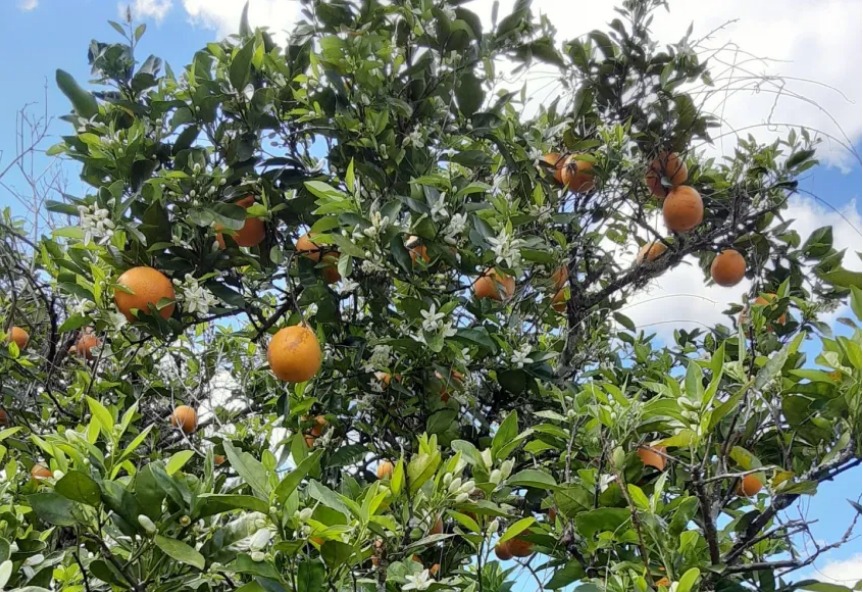
Winter is a great time to plant trees and shrubs. It is highly recommended that you put any tree or shrub out well before hot weather to give plants a time to grow some roots (yes, trees do grow roots in winter) before they have to face hot temperatures. Most fruit and nut tree nurseries in Texas are opening up for the season now and will be open through March. What a great present for Christmas even if I might be hard to put under the “tree.”

Container plants have the advantage of having all of their roots intact and ready to grow if the pot was properly cared for. Container grown plants are great but be careful! Nurseries grow plants in pots so that they can be sold easily but trees continue to grow even in a pot. This growing means that pots can become too small for the tree as it grows and so the plant becomes root-bound (stunted). To check and see if a plant is root-bound just hold the pot and lift the tree out of the pot. If the roots are just to the pot sides and no roots are circling, then the tree should be okay. When planting a container grown plant dig a hole bigger than the plant by double the width but no deeper. Remove the tree from the pot and plant into the hole as quickly as possible. Air kills the little white hair roots very fast if not put into the ground. Don’t be afraid to tamp down the soil into the hole to get good soil to root contact. Once the hole is backfilled with soil then water thoroughly to remove the air spaces.

B&B or Balled and Burlapped plants are not container grown and you need to understand that before ordering them. These plants may have been grown in a nursery or maybe even in the wild, but they were dug out of the ground so that many of the roots have been cut off. In B&B trees the soil ball is still intact and they can be very heavy. In fact, there should be about 10-12 inches of ball for every inch of tree trunk diameter. When you get a B&B plant remove all plastic including any string or twine. You can leave the burlap only if it is not plastic. If there is a wire basket you can leave it as the roots will grow right through. The biggest problem with B&B trees is that the hole is usually dug with the same tree spade that dug the tree. Tree spades leave the hole sides very slick and hard for roots to penetrate. The best hole is wider but not deeper than the ball.

Bareroot trees are just trees that have been dug very carefully in the nursery so that the roots are pretty much intact but there is no soil. As you can imagine these trees are much more fragile but without the soil they are easier to handle both for the nurseryman and you. Most bareroot trees are dug and then “healed in” at the nursery till you purchase them. To plant them be very sure you keep the roots moist at all times while you’re planting. Dig the hole as deep as the roots go and just as wide. Put the tree in the hole and backfill slowly adding dirt while you pack it. Once the hole is full you need to water well to take out air pockets. 

Bareroot trees are traditionally much cheaper than their container or balled and burlapped counterparts but bareroot trees need to be planted now in the winter before leaf growth.  Most fruit and nut trees are sold this way and almost all commercial orchards are developed using bareroot trees.  Usually, bareroot tree nurseries sell during the months of December, January, February and some into March.  Again, it is important to get these trees in the ground before they break winter dormancy so that some roots develop before leaves do.

Cotton Varieties for Organic Production

by Dr. Jane Dever, TAMU Cotton Breeder – Lubbock

Cotton harvest is wrapping up at the Texas A&M AgriLife Research and Extension Center breeding tests and plots. It was a tough year for cotton. Dr. Carol Kelly, Research Scientist and Assistant Cotton Breeder, pictured above with a plant from the nursery that has bolls, summed 2022 up with a Haiku poem:

Pretty and green field. Hot and dry summer we had. Leaves fall, no bolls, sad!

Ginning and data analysis is ongoing, but results from second year testing of candidate organic cultivars at the furrow-irrigated location in Lubbock indicate more bolls than we thought. Twenty experimental lines were tested with four commercial cultivar checks in a randomized complete block design with four replications. Test average for yield was 1,350 pounds/acre and quality, except for higher than desired micronaire (5.1), was excellent. Average fiber length, 1.22 inches; uniformity ratio, 84.1; strength, 36.1 grams/tex. Line 19-4-517 produced 1,622 pounds/acre compared to ‘FM 958’ at 1,586. Candidate for 2023 release with the first real improvement in Verticillium wilt resistance since the late ‘90s – early 2000’s, 19-4-446, produced 1,503 pounds/acre with 1.23-inch fiber length, 85.5 uniformity ratio, and 37.1 g/tex fiber strength.

Data from other locations will be available soon, so feel free to reach out to us for the results. We did not anticipate harvesting the dryland location at Lubbock but caught some late moisture and ended up with a nice test. Favorite organic candidate okra-leaf cultivar, in the third year of testing, produced almost 300 pounds on dryland compared to ‘FM 958’ at 260 pounds. We look forward to analyzing all the test and nursery data and getting fiber quality results early next year.

Happy and prosperous New Year to the organic cotton producers and community from the Texas A&M AgriLife cotton breeding team at Lubbock.

Jane Dever

Breeding Peanuts for Organic Production

by Dr. John Cason, TAMU Peanut BreederStephenville

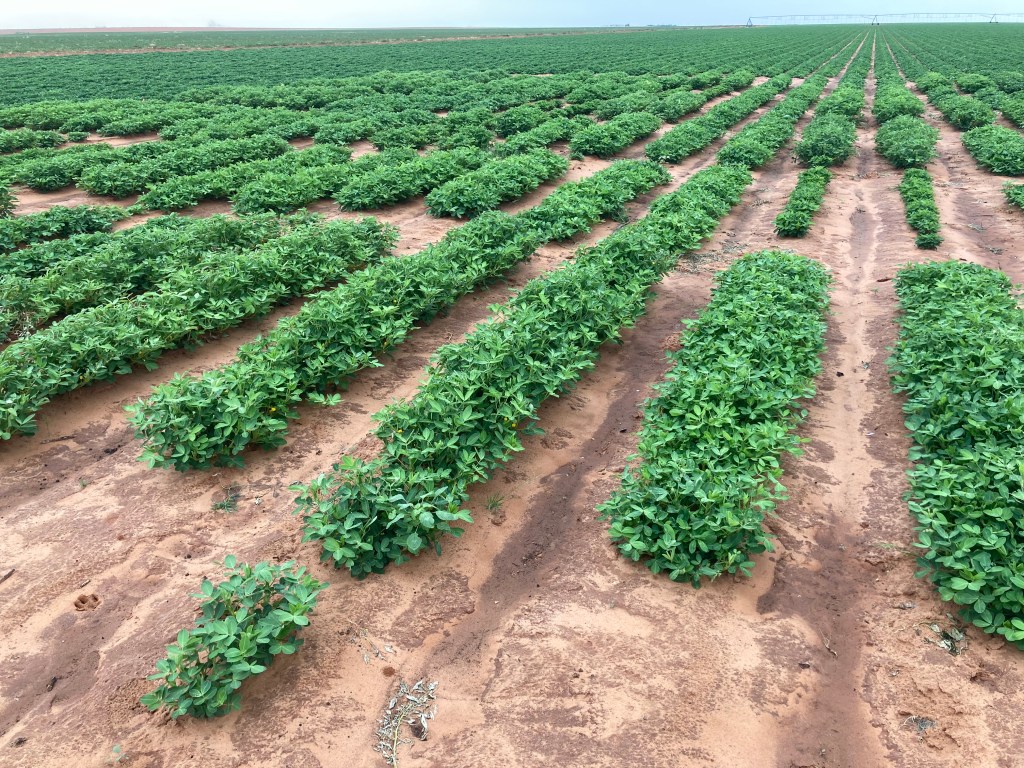
It was a tough year for all producers around the state and the Texas A&M peanut breeding program were no exception. I heard one producer say, “we had to fight for every pound of yield we got this year,” and I totally agree with him when referring to the 2022 season. Despite the challenges we continue to make headway in developing new germplasm specifically for organic production.

During the 2022 season we had organic trials in Gaines and Wilbarger Co. on certified organic farms. Being able to test our breeding lines in grower fields is crucial for identifying potential lines that will produce good yields in different areas of the state and varying management practices. One hybrid Spanish line in particular, TP210656-2-1, performed well for the second year of testing.  It yielded 4,650 lbs./acre in a really tough year compared to a test average of 3,745 lbs./acre. Additionally, It also graded 5.2% points higher that’s the test average with an average grade of 78.3 for the test. We are very excited about this line performing near the top of our tests for the second year in a row and are hopeful as more results become available for 2022, it performs as well at other locations.

HLB research in organic citrus

A grant from the U.S. Department of Agriculture’s Organic Agriculture Research and Extension Initiative (OREI) is intended to advance research to help organic citrus producers fight HLB disease. The grant awards $2.03 million to a team of scientists from the University of Florida, Texas A&M University and The Organic Center. The Organic Center is a non-profit organization convening evidence-based science on the health and environmental impacts of organic food and farming. The grant funds a four-year project.

Huanglongbing (HLB), also known as citrus greening, is the most serious disease of citrus. The disease is spread by the Asian citrus psyllid (Diaphorina citri) (ACP), which has been present in Florida since 1998. ACP transmits the bacteria to the tree when feeding on new shoots. There is no current cure for this disease and all commercial varieties of citrus are susceptible to HLB. 

“Citrus greening continues to devastate the citrus industry, and organic growers need to have organic solutions to fight this deadly disease without resorting to dangerous chemicals or genetic engineering,” said Amber Sciligo, director of science programs for The Organic Center. 

HLB is in Texas but its reach has been limited by very proactive grower programs and support. This research will be specific to organic growers who don’t use conventional chemicals for Asian citrus psyllid control but depend on preventative steps and biological controls. This research will protect two valuable resources, the Texas citrus industry and the organic citrus growers who supply consumers with a safe, organic fruit crop every year.

Peach Leaf Curl – It’s time!

Peach leaf curl, also known as leaf curl, is a disease caused by the fungus Taphrina deformans. Peach leaf curl affects the blossoms, fruit, leaves, and shoots of peaches, ornamental flowering peaches, and nectarines, and is one of the most common disease problems for Texas Peaches. The distorted, reddened foliage that it causes is easily seen in spring. When severe, the disease can even reduce fruit production substantially. If you saw leaves that looked anything like the ones above, you may want to consider treatment.

Leaf symptoms appear about 2 weeks after leaves emerge from buds. The fungus grows between leaf cells and stimulates them to divide and grow larger than normal, causing swelling and distortion of the leaf. Red plant pigments accumulate in the distorted cells as you can see in the picture above.

Why am I writing about this disease now since we won’t see it till spring? Well, this disease has gone through the summer and is on the tree now as ascospores (sexual spores) and bud-conidia (asexual spores) on the tree’s surfaces, such as leaves, buds, bark, etc. As we get into the fall and much cooler temperatures or even a frost the leaves will begin to fall off. This leaf abscission (separation of the leaf from the tree) is actually a wound. When you have a wound, you have a place for these disease spores to enter the tree. Any dew, light rain or even wind can move spores to the wound.

Treatment

So, as the leaves begin falling off or after they have all fallen off, it is time to consider a treatment. Generally, a single early treatment when the tree is dormant is effective, although in areas of high rainfall or during a particularly wet winter, it might be advisable to apply a second spray late in the dormant season, preferably as flower buds begin to swell but before green leaf tips are first visible.

Historically, the most commonly and basically only fungicide for organic growers to use are the fixed copper products (see below for a list). For all copper-containing products, the active ingredient, copper, is listed as “metallic copper equivalent,” or MCE, on the label. Various product formulations differ widely in their metallic copper content. The higher the MCE, the greater the amount of copper and the more effective the product will be. However, other factors such as coverage, use of additives as such stickers and spreaders, and frequency and duration of rain, which can wash off the copper, also will impact product effectiveness. In all cases, the copper is active only when it is wet, when the copper ions are in solution. Thorough coverage is very important but without leaves not that hard. It is really good to get a calm day, lower pressure down, try to get a mist out of your spray tips and make sure the limbs are wet.

Active IngredientTrade NameCompany
copper hydroxideKocide-2000/3000
Champ ION or WG
Certis
NuFarm
copper octanoateCuevaCertis
Copper oxychloride 23.82%  
Copper Hydroxide 21.49%
Badge X2Gowan
copper sulphate (pentahydrate)Cuproxat
Instill O
Troya
NuFarm
Sym Agro
Oro Agri

As I first said, It’s time! It’s time for all you peach growers to get that sprayer back out, purchase your spray product, and SPRAY!

Beneficials and biologicals: Two is better than one!

Above is biological insecticide – Beauveria bassiana on thrip adult.
Below is beneficial nematode – Steinernema feltiae attacking thrip larva.

Does it pay to use a biological insecticide and apply a beneficial insect at the same time? Will they compete with each other, or will they actually help each other? I recently was sent a study published in 2021 by a USDA researcher who has done some great work with both biologicals and beneficial insects. Dr. David Shapiro-Ilan is with the USDA Fruit and Tree Laboratory in Byron, Georgia. He has done some good work on biological insect control in pecan orchards and so seeing his name on this study got my attention.

The title is: Combined Effect of Entomopathogens against Thrips tabaci: Laboratory, Greenhouse and Field Trials. In this study Dr. Shapiro-Ilan and other researchers looked at the use of two different biological insecticides, Beauveria bassiana (BoteGHA ES, SPE-120, MycoTrol, Botanigard, etc.) and Metarhizium anisopliae (Novozymes was producing Met 52 EC but hard to find now). These two biological insecticides are effective, to a degree, and used for many insect species.

The researchers also looked at two beneficial nematode species for control of thrips, Heterorhabditis bacteriophora and Steinernema feltiae. These two nematodes can infect the soil dwelling stage for thrips or pre-pupae and pupae stages.

Then the researchers also looked at the additive or synergistic effects of adding a biological insecticide and a beneficial nematode together. This is where it got interesting, singularly, none of the treatments alone did as well as they did working together – a biological combined with a beneficial. In fact, the effect was dramatic and statistically significant.

The best treatment was a combination of the biological Beauveria bassiana with the Heterorhabditis bacteriophora nematode. Almost as good was the biological Metarhizium anisopliae with the Steinernema feltiae nematode. The interesting thing was that the combination of Beauveria bassiana and Heterorhabditis bacteriophora nematode had a synergistic effect on each other. They worked well together, much better than the addition of each individual’s % control! The other combinations also worked well together but the effect was additive and not synergistic, meaning that the combination was the addition of the % control of one, added to the % control of the other. Also, the combinations can be tank mixed for field applications and result in much better thrips control than either biocontrol alone. As a reminder, always apply beneficials late in the evening as temperatures are moderating.

What is the downside? The cost biocontrol can be expensive! The research trial used upwards of 1 billion nematodes per acre which would cost about $500 per acre. Most beneficial companies recommend 50 million nematodes per acre which is around $70 per acre – this is somewhat affordable. The cost of the either biological insecticide is around $75 per acre, so that the cost of both together is somewhere close to $150 per acre for thrips control in onions. Is that going to work? Depends on the cost of the onions! What this research does show is that biocontrol works and works well. Affording it is up to you!

Here is another article that looks at the benefits of using biological insecticides and beneficial insects to control aphids on spinach from Vegetable Grower News – don’t tell them I copied it so I could let you read it!